

metro
Two officers arrested after car dealer dies in police custody
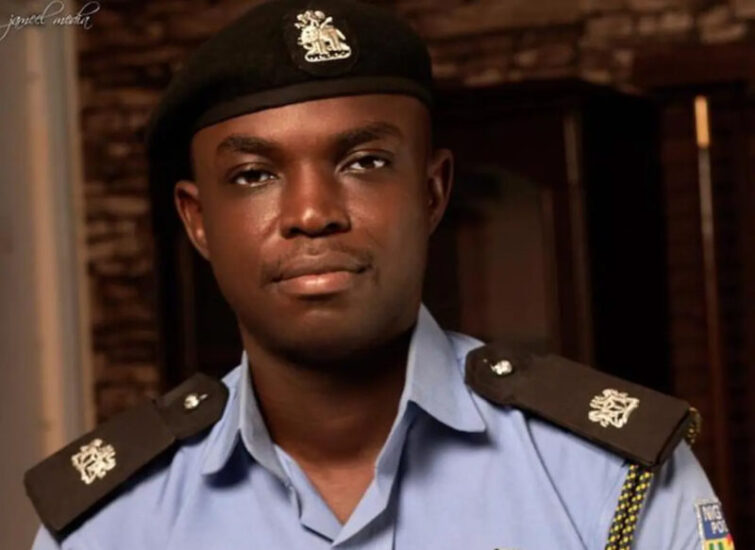
Two officers arrested after car dealer dies in police custody
The family of a car dealer, Olashile Oduga, has called for justice following his alleged death due to police torture at the Ikota Police Post in Lagos.
Speaking on behalf of the family, Oduga’s elder sister, Abisola Bakare, recounted how they were informed of his passing after contacting the estate manager where he resided in the Chevron area of Ajah.
She said, “It was my brother’s pregnant wife who called me on Wednesday afternoon, saying her husband’s line had been unreachable since Tuesday afternoon. So, I called the estate manager where he lived and asked him to check on him to find out why his phone wasn’t going through.
“It was the estate manager who then informed us that some policemen from the Ikota Police Post had arrested him on Tuesday afternoon.”
According to Bakare, her brother was involved in a dispute with a neighbor, Stasia Nora, which escalated into a physical altercation. Following the incident, Nora reported the matter to the police, leading to Oduga’s arrest.
She said the estate manager had attempted to visit Oduga at the police post on Tuesday but was denied access.
“So, I followed the estate manager to the police post on Wednesday, along with my sisters. When we arrived, I mentioned my brother’s name and told them we were informed of his arrest and detention at the post.
READ ALSO:
- Tambuwal to Tinubu: Your government lacks direction
- Real Madrid play draw with Osasuna, Bellingham sent off
- Tuface ignores mother’s call, spotted shopping with Natasha
“But the officers on duty denied having any record of him. The estate manager confronted them, insisting that Oduga was present when their men took my brother away. It was at that moment that one of the officers called the Investigating Police Officer of the post, Modinat Alaka, who directed us to Ajah Police Station because the case had been transferred there,” she explained.
Upon reaching the Ajah Police Station, Bakare found senior officers discussing the situation.
“They kept telling me, ‘Madam, sorry. Take it easy.’ I asked them, ‘Sorry for what?’ and demanded my brother’s release. Then, to my shock, the Ikota police IPO started crying.
“The Divisional Police Officer of Ajah Police Station shouted at her, ordering her to speak before he lost his temper. It was then that she told me my brother was dead,” Bakare lamented.
When she inquired about what had happened, the officer claimed that Oduga had been weak upon arrival at the station and was taken to Epe General Hospital, where he was pronounced dead.
“I asked if they had any video evidence showing him being taken to the hospital, but she said they had forgotten to take pictures. I demanded to see his body, and they told me it had been deposited at the Epe mortuary.
“The officers kept begging me, but I left the station in sorrow that Wednesday night,” she added.
Determined to take action, Bakare reported the incident to the Force Criminal Investigation Department at Alagbon that same night.
The following morning, she received a call from Ajah Police Station requesting her presence.
“When I arrived, the officers started begging again. As I was pressing for answers, some officers from Panti arrived and demanded that the case be transferred to their office.
READ ALSO:
- Police recover ritual materials from suspected killer of Kwara student
- 2027: Ganduje, El-Rufai again disagree over position of North on Tinubu
- Poly students oppose conversion of YABATECH to varsity
“They arrested the woman who fought with my brother and two policemen involved in his arrest. I followed them all to Panti that Thursday,” she stated.
At Panti, Chief Superintendent of Police Abdullahi Lateef questioned the officers involved, who claimed Oduga was detained because the altercation had resulted in an injury to the woman’s hand.
“Lateef then asked if there was any bloodstain or serious injury. They admitted that there was none, only that one of the woman’s fingernails had been removed.
“He asked if she had any visible wounds or bruises, and they said no. He then demanded to know why they had detained my brother in the first place, but the officers could not answer.
“As a result, he ordered their detention along with the woman who fought with my brother,” Bakare explained.
She added that they later visited the mortuary to inspect Oduga’s body.
“When we arrived at the mortuary on Friday, the attendant brought out my brother’s corpse. His body was covered in bloodstains and showed multiple marks of physical abuse. I even saw deep handcuff marks on his wrists, indicating that he had been severely restrained.
“We took photos and video recordings of his body and returned to Panti. Upon seeing the evidence, CSP Lateef admitted that my brother must have been tortured to death. Though he apologised to us and asked us to return home,” Bakare said.
The family has vowed to pursue justice for Oduga’s death.
“As a family, we are determined to seek justice. We will get a good lawyer for the case. All we seek is justice,” she added.
Speaking on the issue, Bakare’s husband, Ayoola, who had alerted the Lagos State Police Public Relations Officer, Benjamin Hundeyin, on social media, condemned Oduga’s death and demanded accountability.
He confirmed that the family planned to retrieve Oduga’s remains from the mortuary on Monday for burial.
Two officers arrested after car dealer dies in police custody
(PUNCH)









metro
Fatal NURTW Leadership Clash in Osun Leaves Two Dead; State Orders Park Shut Down
Fatal NURTW Leadership Clash in Osun Leaves Two Dead; State Orders Park Shut Down
As Olalekan Oyeyemi is buried in Osogbo, authorities transfer murder probe to the State Criminal Investigation Department.
metro
Lagos Power Outage: Ikeja Electric Blames TCN as Businesses, Homes Groan

Lagos Power Outage: Ikeja Electric Blames TCN as Businesses, Homes Groan
Residents and businesses in several parts of Lagos are enduring prolonged power outages, with Ikeja Electric attributing the disruption to significant constraints on the Transmission Company of Nigeria (TCN) network.
The development has triggered frustration among electricity consumers who say the prolonged blackout is disrupting household activities and commercial operations, while increasing their dependence on generators and other alternative sources of power.
Ikeja Electric, one of Nigeria’s largest electricity distribution companies, said the situation was caused by a reduction in the amount of electricity available to it from the transmission network.
According to the company, the transmission constraints have affected the volume of power it can distribute to customers across parts of its franchise area, resulting in extended periods of load-shedding.
The company said it was engaging with TCN over the situation and was working to improve supply to affected communities as soon as additional transmission capacity becomes available.
The latest disruption has affected customers in several parts of Lagos, with residents in areas including Akoka, Egbeda, Ojodu Berger, Ogudu and Shomolu reporting prolonged interruptions.
Some residents said electricity supply had been unavailable for several consecutive days, while others reported intermittent restoration followed by further outages.
The disruption has also affected small businesses and households that rely heavily on electricity for daily activities.
Business operators such as barbers, hairdressers, food vendors, cold-room operators, charging-centre owners, internet-dependent businesses and other small enterprises have been particularly affected by the unreliable supply.
For many households, prolonged outages have also affected refrigeration, water pumping, phone charging, internet access and other basic activities that depend on electricity.
READ ALSO:
- US Court Blocks Trump Visa Rule Limiting Stay of Foreign Students, Journalists
- Sokoto Shuts Mosque After Cleric Stabbing, Names Ulamas Probe Panel
- Iran Rejects US Talks as Trump’s Mixed Signals Deepen Hormuz Standoff
The situation has forced some residents and businesses to increase their use of generators, adding to operating costs at a time when fuel and other energy expenses remain high.
Some consumers have also resorted to commercial charging centres and other paid alternatives to keep phones, rechargeable devices and business equipment operational.
The latest disruption comes amid continuing challenges across Nigeria’s electricity value chain, where problems involving generation, gas supply, transmission infrastructure and distribution networks can affect electricity availability to consumers.
TCN operates the country’s transmission network, while electricity distribution companies such as Ikeja Electric are responsible for delivering available power to customers through their distribution networks.
This distinction is significant in the latest Lagos outage because Ikeja Electric has attributed the immediate supply shortfall to constraints on the transmission network, rather than announcing a fault affecting its entire distribution system.
Power interruptions in Lagos, however, have previously resulted from different causes.
Parts of the state have experienced outages linked to distribution equipment faults, infrastructure damage, planned maintenance and other incidents affecting electricity infrastructure.
Earlier disruptions in Lagos have also been associated with incidents such as tanker fires damaging electricity infrastructure, while transmission maintenance and constraints have caused supply reductions in other instances.
The varying causes mean that the duration and geographical spread of an outage can differ significantly from one community or electricity feeder to another.
Ikeja Electric has apologised to affected customers over the latest disruption and said it understands the difficulties caused by the reduced supply.
READ ALSO:
- Saudi Arabia Vows ‘Firm’ Response as Houthi Attacks Wound 13
- Peter Obi Rejects Anambra Debt Claims, Challenges Soludo Govt to Produce Evidence
- Peter Obi: Release My UNN Academic Records, I Have Nothing to Hide
The company said it was monitoring developments and engaging relevant stakeholders in an effort to restore improved electricity supply.
The latest development has again highlighted concerns over the vulnerability of Lagos residents and businesses to fluctuations in electricity supply.
For many small businesses, prolonged blackouts mean additional spending on diesel or petrol-powered generators, while households face similar costs when alternative electricity sources are required.
The disruption also comes at a time when businesses are already dealing with high operating costs, making extended reliance on generators an additional financial burden.
Consumers have increasingly called for more reliable electricity supply and better coordination among the different operators in Nigeria’s power sector.
The TCN, generation companies and distribution companies form interconnected parts of the electricity supply chain, meaning a constraint at one stage can quickly affect consumers downstream.
For Ikeja Electric customers, the immediate expectation is that transmission constraints will ease and supply will gradually improve across the affected feeders.
Until then, residents and businesses in the affected areas may continue to experience irregular electricity supply depending on available transmission capacity and the operational condition of individual distribution feeders.
The latest outage has therefore renewed the debate over Nigeria’s long-standing electricity challenges and the need for sustained investment in power generation, transmission and distribution infrastructure to provide more stable electricity for homes and businesses.
For Lagos, where thousands of businesses depend on electricity for daily operations, prolonged outages carry consequences beyond inconvenience, affecting productivity, household welfare and the cost of doing business.
Ikeja Electric said it would continue to provide updates as the situation develops and work with TCN to improve supply to affected customers.
Lagos Power Outage: Ikeja Electric Blames TCN as Businesses, Homes Groan
metro
Sokoto Shuts Mosque After Cleric Stabbing, Names Ulamas Probe Panel
Sokoto Shuts Mosque After Cleric Stabbing, Names Ulamas Probe Panel
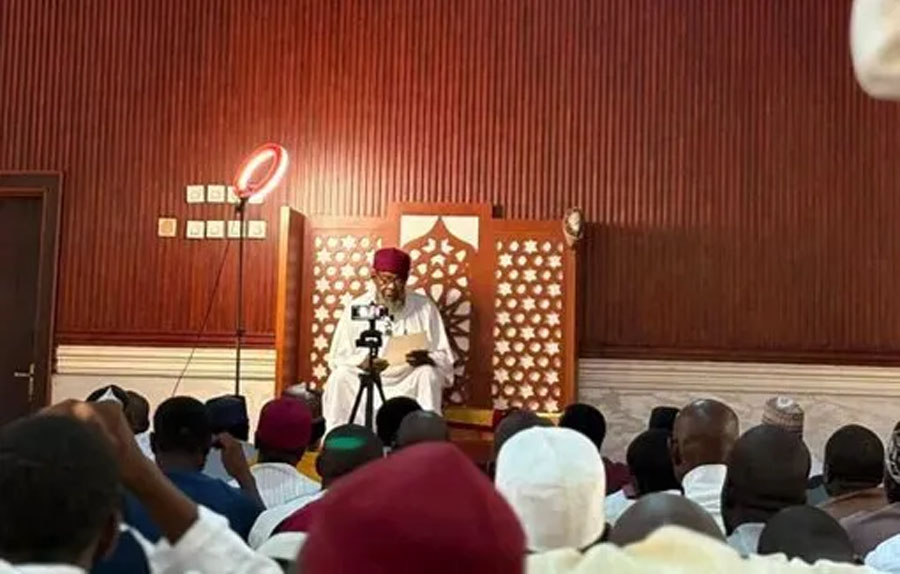
The Sokoto State Government has ordered the immediate closure of the Musa Lukuwa Jumu’at Mosque in Mabera, Sokoto metropolis, after a cleric was stabbed during Friday prayers and his attacker was killed by an angry mob.
The mosque, which the government describes as a crime scene, will remain shut until further notice. A committee of Islamic scholars (Ulamas) has also been constituted to investigate the remote and immediate causes of the incident and recommend measures to prevent a recurrence. The announcement was contained in a statement issued on Tuesday by the Director General, Media and Publicity, Government House, Abubakar Bawa.
The crisis began on Friday, September 11, 2026, shortly after Malam Musa Lukuwa led the Jumu’at prayer. A young man among the worshippers attacked the cleric, stabbing him twice in the neck and left hand. Worshippers overpowered the suspect and beat him to death before security operatives could arrive. Police spokesman DSP Ahmad Rufa’i confirmed that the cleric was rushed to the Specialist Hospital in Sokoto, where he was treated and later discharged. Lukuwa subsequently appeared in a video circulated on social media, with a plaster covering part of his neck, appealing for calm and assuring his followers that he was in stable condition. The Commissioner of Police, Hayatu Hassan Shaffa, condemned the mob action as jungle justice and urged residents to allow due process. “It is imperative that we allow the law to take its course to ensure justice is served appropriately,” Shaffa said. Security personnel have been deployed to Mabera and other flashpoints, while investigations into both the stabbing and the mob killing continue. No arrest has been made in connection with the lynching.
READ ALSO:
- Iran Rejects US Talks as Trump’s Mixed Signals Deepen Hormuz Standoff
- Saudi Arabia Vows ‘Firm’ Response as Houthi Attacks Wound 13
- Peter Obi Rejects Anambra Debt Claims, Challenges Soludo Govt to Produce Evidence
The attack was reportedly linked to a previous sermon in which the cleric cited a Hadith that some scholars, particularly those associated with the Tariqa order, considered offensive to the parents of Prophet Muhammad. Following the controversy, a young man identified as Mai Barewa allegedly threatened to kill Malam Musa Lukuwa and his senior student, Malam Murtala Assada. The cleric and his followers reported the threat to the police, leading to the suspect’s arrest and arraignment. A court later ordered that he be remanded in a correctional facility while the case remained pending. Four days before Friday’s incident, the clerics had also visited the Sokoto State Government House to submit a written complaint. The incident triggered protests and heightened tension around Sahara, Bello Way and Aliyu Jodi, with some businesses closing temporarily as security operatives moved into strategic locations. It came only days after protests erupted over the continued remand of another cleric, Dahiru Mai Barewa, who was accused of threatening Lukuwa and Malam Murtala Bello Assada. Police subsequently arrested about 20 people in connection with that protest.
The government said the committee would examine the circumstances surrounding the tension and make recommendations in the interest of peace and stability in the state. It also ordered a full investigation into the attack and the subsequent killing at the mosque. The state government further dissociated itself from any person, irrespective of status, who hides under the pretext of religion to undermine or disrespect Prophet Muhammad (PBUH), his parents, household and companions. It reaffirmed its “total obedience and respect” for the Prophet, his parents, household and companions, while urging residents to continue to show love and compassion to him. The government appealed to residents to desist from making inciting statements capable of jeopardising the peaceful coexistence for which Sokoto is known. It assured residents of its commitment to protecting the lives and property of every citizen in the state.
Malam Musa Lukuwa is an Islamic cleric from Lukuwa village in Gwadabawa Local Government Area of Sokoto State. He was among the early scholars associated with the Izala movement when it began gaining prominence in Sokoto State. He later became associated with the Salafiyya school of thought and established his own mosque, where he teaches Islamic studies and preaches to his followers. Lukuwa is known for his strict emphasis on adherence to the Qur’an and Hadith. His interpretation of religious practices, particularly issues surrounding the sighting of the crescent moon, has at times differed from the position announced by the Sultan of Sokoto. He maintains that decisions on the commencement and termination of fasting should be based on what he considers credible evidence of the sighting of the crescent, in line with the teachings of the Qur’an and Hadith.
Sokoto Shuts Mosque After Cleric Stabbing, Names Ulamas Probe Panel
-
 News2 days ago
SERAP Threatens Legal Action Over ₦126bn INEC Electoral Funds
-
 Politics3 days ago
Five Islamic Clerics Abducted After Tinubu Re-Election Prayer At Yari’s Zamfara Residence
-
 Opinion2 days ago
‘Tinubu Will Win Again in 2027’ — Charismatic Bishops’ Secretary
-
 Politics24 hours ago
2027: Northern Lecturers Back Tinubu, ASUU Disowns Endorsement
-

 metro2 days ago
Mother ‘sold daughter’s abuse videos for $300’: Nigeria child pornography case shocks nation
-
 News2 days ago
Nwifuru Dismisses Cubana Chief Priest as ‘Attention-Seeker’
-

 Sports3 days ago
‘Unacceptable’ — Arteta Furious Over Sunderland Penalty in Arsenal Win
-

 News2 days ago
Petrol Subsidy: Presidency Rejects Atiku’s Plan, Says No Going Back