
International
Ukraine Army Is Using ‘Terminator Drones’ to ‘Scare Russians’ Into Retreat

A former adviser to Ukrainian President Volodymyr Zelensky says that Ukraine’s military is using “Terminator drones” to trick Russian soldiers into thinking they are being chased by “Skynet.”
Former Zelensky aide Igor Novikov shared what he called an “uplifting story” with MSNBC host Nicolle Wallace after discussing Russian attacks on civilians in Ukraine during a Thursday interview on Deadline: White House. Novikov said that Ukrainian troops were chasing Russians using commercial drones disguised to appear similar to equipment from the fictional Skynet, the powerful artificial intelligence network that becomes self-aware and attempts to eradicate humans in Arnold Schwarzenegger’s Terminator film series.
“This clever, creative solution that our soldiers have found not to waste ammunition, not to waste artillery shells [is] … take a commercial drone, with a camera, and camouflage it to look like something out of the worst Terminator movie,” Novikov said. “So, it looks incredibly scary. Then they fly that drone around the place where the Russian soldiers are.”
“What would you do if you’re a Russian soldier and you see something that belongs to Skynet?” he continued. “You run. Where do you run to? You run to your mama. Because you don’t have your mama, you run to your base. And that way, they lead us to their bases and no camouflage works against that, and then our artillery just shoots at the base … And we don’t waste any shells.”
READ ALSO:
- Russia becomes 2nd country ever kicked off UN Human Rights Council
- No more media coverage of Nnamdi Kanu, B’Haram sponsors trials – Court
- Eight years after, court acquits Abba Moro over recruitment tragedy
In addition to the disguised commercial drones, which would not be able to launch attacks alone despite being made to appear menacing, Ukrainian forces are also using armed military drones capable of real attacks on Russian troops and military equipment.
Last month, Ukraine’s military released a video of one of its Turkish-made Bayraktar TB2 combat drones destroying equipment brought by the invading Russian army. On Wednesday, Pentagon Press Secretary John Kirby said that the U.S. had sent 100 Switchblade tactical drones to Europe for use by the Ukraine military.
A viral video shared on social media by Terminator star Schwarzenegger last month featured the actor telling Russian soldiers “the truth” about the war, asserting that they had been lied to by their government. Schwarzenegger also directly appealed to Russian President Vladimir Putin, urging him to end the war.
Schwarzenegger’s video was reportedly poorly received by Russian state media, prompting at least one reference to the Terminator series. In an opinion article published by the tabloid Komsomolskaya Pravda last month, Russian powerlifting champion Maryana Naumova complained that Schwarzenegger had decided to “side with Skynet.”
“Do you remember how in the second part of the Terminator, your hero goes back in time to prevent the creation of Skynet, which would bring the death of all mankind?” Naumova wrote, according to The Daily Beast. “Russia’s special military operation does not aim to destroy the Ukrainian people.”
“It is aimed at the neo-Nazi Skynet, which over the years has completely subjugated Ukraine and was about to turn into an uncontrollable monster, dangerous for all of its neighbors, not only for us,” she continued. “Don’t side with Skynet, Terminator.”
Newsweek reached out to the Ukrainian Ministry of Defence and the Embassy of Russia in Washington, D.C., for comment.
NEWSWEEK




International
Epstein, Ex-Israeli PM Named in Alleged Profiteering From Boko Haram Crisis

Epstein, Ex-Israeli PM Named in Alleged Profiteering From Boko Haram Crisis
A new investigative report by Drop Site News has alleged that the late American financier Jeffrey Epstein and former Israeli prime minister Ehud Barak leveraged Nigeria’s long-running Boko Haram insurgency to pursue commercial, security, and strategic interests in the country.
According to the investigation, emails released by the United States Department of Justice in 2018 show Epstein acting as a behind-the-scenes facilitator in discussions involving Jide Zeitlin, then chairman of Nigeria’s Sovereign Investment Authority, and Sultan Ahmed bin Sulayem, former chairman of DP World. The exchanges allegedly focused on attempts to secure control of key shipping terminals in Lagos and Badagry, following unsuccessful negotiations with successive Nigerian administrations dating back to 2005.
The report claims DP World was unwilling to invest in a proposed industrial zone in Nigeria without full or majority control of the adjoining port infrastructure, a demand that reportedly stalled the deal for years. Epstein, who died in a New York jail in 2019 while awaiting trial, is alleged to have helped revive talks by brokering introductions and strategic conversations.
READ ALSO:
- CBN Policies, Foreign Inflows Drive Naira to Two-Year Peak
- Edo Governor Okpebholo Names Mercy Johnson-Okojie Special Adviser
- Many Feared Dead as Suspected Lakurawa Militants Attack Kebbi Communities
Drop Site News further reported that bin Sulayem resigned on February 13 after renewed scrutiny of his past links to Epstein resurfaced publicly, intensifying attention on the historical port negotiations and the role of foreign intermediaries in Nigeria’s maritime sector.
Beyond logistics and port infrastructure, investigators highlighted what they described as near-daily correspondence between Epstein and Barak after the former Israeli leader left public office. Barak, who served as Israel’s defence minister until 2013, allegedly sought to deepen Israeli-Nigerian security cooperation, using Nigeria’s counter-insurgency battle as an entry point for Israeli-linked security, energy, and technology investments.
The report said Barak later relied on security networks in Nigeria to promote Israeli defence and surveillance firms. In 2015, Barak and a partner invested $15 million in FST Biometrics, founded by former Israeli intelligence chief Aharon Ze’evi Farkash. The firm’s Basel biometric system, originally deployed at Israel-Gaza crossings, was subsequently marketed in Nigeria as a counter-terrorism solution.
According to the investigation, the biometric technology was introduced at Babcock University as protection against Boko Haram threats, while also being pitched to African governments for broader identity management and population-control applications.
The report further cited a 2020 World Bank-supported initiative involving Israel’s National Cyber Directorate and Toka Group, a cyber-intelligence company co-founded by Barak. The partnership was presented as contributing to Nigeria’s national cybersecurity framework, but Drop Site News argued it also deepened Israeli corporate access to sensitive security architecture.
In its conclusion, the investigation alleged that a network of security interventions, port negotiations, and technology investments enabled Epstein and Barak to profit from instability associated with the Boko Haram conflict, while simultaneously advancing Israeli commercial and strategic interests in Nigeria. The outlet stressed that these claims are based on document reviews and correspondence, framing them as allegations rather than established legal findings.
Epstein, Ex-Israeli PM Named in Alleged Profiteering From Boko Haram Crisis
International
Canada Opens New Express Entry Draw for Nigerian Workers, Others

Canada Opens New Express Entry Draw for Nigerian Workers, Others
The Government of Canada has announced a new Express Entry draw, offering fresh opportunities for skilled workers from Nigeria and other eligible countries to obtain Canadian permanent residency. The latest draw underscores Canada’s ongoing efforts to attract global talent to meet labour market demands and support economic growth.
According to Immigration, Refugees and Citizenship Canada (IRCC), the new round of invitations targets candidates under the Federal Skilled Worker Program, the Federal Skilled Trades Program, and the Canadian Experience Class, all managed through the Express Entry system. Eligible applicants are ranked through the Comprehensive Ranking System (CRS), with higher scores increasing the likelihood of receiving an Invitation to Apply (ITA) for permanent residency.
READ ALSO:
- South Korea Former President Park Geun-hye Jailed for Life Over Martial Law Attempt
- Hisbah Arrests Nine Muslims for Allegedly Breaking Ramadan Fast in Kano
- Ondo Monarch Killed as Bandits Strike Akure North
This development is particularly significant for Nigerian workers, who have increasingly sought opportunities in Canada due to strong employment prospects, favourable immigration policies, and the country’s high standard of living. Applicants are advised to update profiles, review eligibility criteria, and submit supporting documents promptly, as IRCC draws often target candidates with competitive CRS scores.
The Express Entry system remains a primary pathway for skilled migration, with Canada aiming to meet ambitious immigration targets in 2026. The federal government has emphasized that these draws are part of a broader strategy to boost the Canadian workforce while supporting diversity and inclusion within the country’s labour market.
Canada has historically welcomed Nigerians in sectors including information technology, healthcare, engineering, and skilled trades, and this draw continues to open doors for qualified professionals seeking permanent residence.
Launched in 2015, Express Entry is a points-based immigration system designed to attract highly skilled foreign workers. Applicants are evaluated on education, work experience, language proficiency, and other factors. Candidates with the highest CRS scores are invited to apply for permanent residency, allowing them to live and work anywhere in Canada.
Express Entry draws occur regularly, and eligibility requirements may vary by program and draw. Skilled workers from Nigeria and other countries are encouraged to maintain updated profiles to maximize chances of selection.
Canada Opens New Express Entry Draw for Nigerian Workers, Others
International
South Korea Former President Park Geun-hye Jailed for Life Over Martial Law Attempt
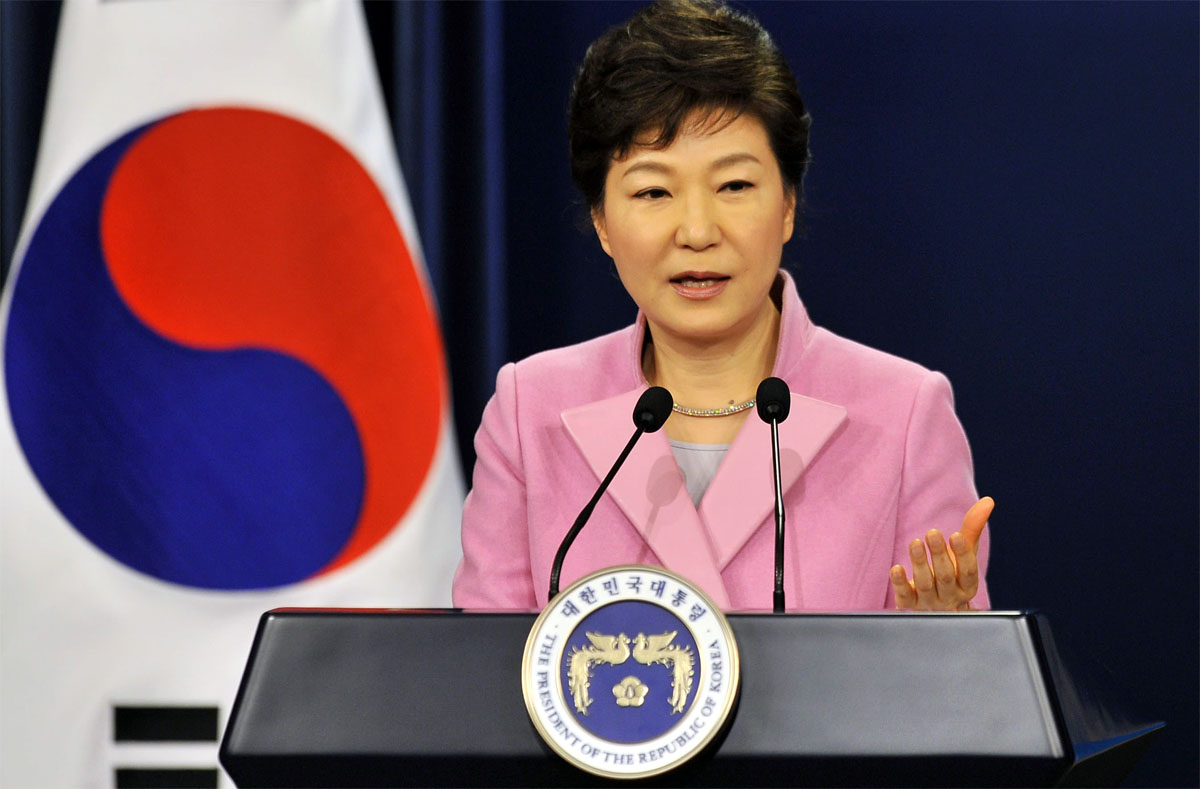
South Korea Former President Park Geun-hye Jailed for Life Over Martial Law Attempt
Former South Korean President Park Geun-hye has been sentenced to life imprisonment for her role in attempting to impose martial law during a political crisis, marking one of the most significant rulings in the country’s modern democratic history.
The Seoul Central District Court found Park guilty of abusing presidential powers, attempting to suppress dissent, and manipulating state security forces for political purposes. Prosecutors argued that her actions threatened the constitutional order and undermined democratic governance.
Park, South Korea’s first female president, was impeached in 2017 following mass protests triggered by corruption scandals and abuse-of-office allegations. The former leader has faced multiple prosecutions over the years, including charges of bribery, influence-peddling, and illegal control of state institutions.
The court emphasized that her attempt to enforce martial law was a severe violation of South Korea’s democratic principles. Legal experts have described the ruling as a clear message that executive overreach will not be tolerated, even at the highest levels of government.
READ ALSO:
- Hisbah Arrests Nine Muslims for Allegedly Breaking Ramadan Fast in Kano
- Ondo Monarch Killed as Bandits Strike Akure North
- LP Crisis Deepens as Abure Faction Rejects Otti’s Reconciliation Call
The sentence comes amid growing international attention on South Korea’s judicial independence. Analysts say the life term reinforces accountability in the country’s political system while serving as a deterrent to future leaders who might consider circumventing democratic institutions. Park may appeal the verdict to the South Korean Supreme Court, prolonging legal proceedings.
Human rights groups have praised the transparent judicial process, noting that fairness and due process remain critical, especially in politically sensitive cases. Meanwhile, the decision has reignited public debate over the balance of power between the presidency and democratic institutions in South Korea.
Background: Park Geun-hye and Martial Law Controversy
Park Geun-hye, daughter of former military ruler Park Chung-hee, governed South Korea from 2013 until her impeachment in 2017. Allegations during her tenure included attempts to deploy martial law powers to suppress opposition and consolidate control over government agencies. These efforts, combined with corruption and bribery scandals, culminated in her removal from office and subsequent criminal trials.
The case has been widely cited as a landmark test of South Korea’s democratic accountability and judicial independence, illustrating the nation’s commitment to prosecuting high-level abuses of power.
South Korea Former President Park Geun-hye Jailed for Life Over Martial Law Attempt

-

 News3 days ago
Saudi Arabia Confirms Sighting of Ramadan Crescent, Fasting Begins Wednesday
-

 metro3 days ago
Lagos Woman Shares Ordeal After Alleged Rape, Sparks Nationwide Outcry
-

 News3 days ago
Ramadan Begins in Nigeria as Sultan Confirms Crescent Sighting
-

 International23 hours ago
Canada Opens New Express Entry Draw for Nigerian Workers, Others
-

 metro3 days ago
Seven Killed in Horrific Crash at Ota Toll Gate
-

 News2 days ago
Korope Drivers Shut Down Lekki–Epe Expressway Over Lagos Ban (Video)
-

 Health2 days ago
Ramadan Health Tips: Six Ways to Stay Hydrated While Fasting
-

 metro22 hours ago
Osun Awards 55.6km Iwo–Osogbo–Ibadan Road Project to Three Contractors