
International
Ukraine braces for new offensive as Russia reinforces military in east

Ukraine and its international partners are bracing for Russia to launch a new offensive, with the Pentagon on Monday saying there are signs that the Kremlin has begun reinforcing and resupplying its forces in the eastern Donbas region as a top official in Moscow vowed there would be no letup in hostilities before the next round of peace talks.
U.S. intelligence has observed a massive Russian military convoy making its way south toward Izyum, a strategically important town in northeast Ukraine that Russia seized earlier this month and may use now as a staging point to carry out assaults on larger cities to the south, said Pentagon spokesman John Kirby. The expectation, Kirby added, is that the “same brutal tactics, that same disregard for civilian life and civilian infrastructure, will probably continue” as Russian military commanders concentrate on the Donbas.
The bleak U.S. assessment came amid renewed concerns about the potential for a chemical weapons attack, and as Austria’s chancellor, Karl Nehammer, became the first Western leader to meet face to face with Russian President Vladimir Putin since the incursion began in late February. Nehammer’s trip, according to officials in Vienna, was intended to convey to the Russian leader that, morally, Putin had already lost the war.
“This is not a friendly visit,” the chancellor said in a statement. “I have just come from Ukraine and have seen with my own eyes the immeasurable suffering caused by the Russian war of aggression.”
Amid the global outrage over accusations that Russian troops committed atrocities targeting civilians in areas around the capital, Kyiv, French law enforcement officials prepared to start working on related investigations after arriving in Ukraine on Monday. Prosecutors in France have opened multiple probes into potential war crimes committed against French nationals there.
READ ALSO:
- Hoodlums torch houses belonging to Imo Govt officials
- Father cries out over alleged detention of daughter by DSS since 2021
- Uncertainty Over Sanwo-Olu’s Second Term As Gov Awaits GAC’s Nod
President Biden, meanwhile, met virtually with Indian Prime Minister Narendra Modi and urged him not to increase Russian energy imports, as the international community seeks to impose greater financial pressure on Moscow to call off its war. Biden said after the meeting that the United States and India are in “close consultation” in managing the “destabilizing” effects of Russia’s actions.
While Russia has pulled back from the suburbs of Kyiv and other parts of northern Ukraine, Putin’s forces continue to attack elsewhere.
Russia has continued to fire artillery, rockets and mortars at the northern city of Kharkhiv, Ukrainian military officials said. Russian forces, they said, attempted on Monday to storm the city of Sievierodonetsk in the Donbas region but were unsuccessful.
In a speech relayed via video to South Korean lawmakers, Ukrainian President Volodymyr Zelensky on Monday said the Russian buildup in eastern Ukraine includes “tens of thousands of soldiers and a huge amount of equipment.” With its new offensive, he said, Russia aims to “break our national resistance.”
Zelensky highlighted the destruction in Mariupol, a port city in the south that has been bombarded for weeks.
“There are tens of thousands of dead,” the Ukrainian leader said in his address. “But even despite this, the Russians do not stop the offensive. They want to make Mariupol a demonstratively destroyed city.”
The mayor of Mariupol, Vadym Boychenko, said in an interview with the Associated Press that 10,000 civilians there have been killed. He estimated that the death toll could double amid the Russians’ unrelenting assault, which has made it difficult for rescue workers to reach the dead and the wounded.
READ ALSO:
- Funke Akindele’s marriage to singer JJC Skillz allegedly in crisis
- No resumption without meeting our demands, ASUU tells FG
- Herders ‘Dehumanised’ By Soldiers In Kaduna Not Bandits – Police, Community Leaders + VIDEO
The Pentagon also assessed that the number of people killed in Mariupol could be as high as Zelensky described.
“I don’t think anybody’s really going to know until Ukrainian authorities are able to get in there and look and see,” Kirby said. “But if you just look at the imagery, and you see how much the Russians have pounded Mariupol from the air, it’s inconceivable to imagine that there aren’t going to be civilian casualties and that it could be a significant number.”

Zohra Bensemra/Reuters Rescuers search for bodies under the rubble of a building destroyed by Russian shelling in Borodyanka, Ukraine, on April 11.
Zelensky said in a separate video address released late Monday that the government in Kyiv takes “as seriously as possible” an apparent threat to unleash chemical weapons on the Ukrainian units remaining in Mariupol, which earlier in the day claimed on social media that such an attack had already occurred there.
Kirby acknowledged that U.S. officials were aware of those claims but were unable to confirm their veracity, saying that the Pentagon would closely monitor the situation. “These reports, if true, are deeply concerning and reflective of concerns that we have had about Russia’s potential to use a variety of riot control agents, including tear gas mixed with chemical agents, in Ukraine.”
The Russian Embassy in Washington did not immediately respond to a request for comment.
Rescuers on Monday pulled seven more bodies from ruins in Borodyanka, an area northwest of Kyiv that was devastated by airstrikes. The dead there were found in the rubble of two apartment buildings, Ukraine’s emergency services agency said in a Telegram post. Nineteen victims have been removed from the rubble, according to the update, and rescue efforts continue.
A senior European Union official, Josep Borrell, said that he “witnessed the brutal, brutal aggression of the Russian troops against the civilian population” during an official visit to Kyiv with European Commission President Ursula von der Leyen, and that the E.U. would support the work of prosecutors from Ukraine and the International Criminal Court to collect evidence of possible war crimes committed by Russian forces.
Borrell, the E.U.’s high representative for foreign affairs and security policy, predicted that more bloodshed is in store as Russia masses forces in the east and prepares to intensify operations in the next days.
A senior U.S. defense official, speaking on the condition of anonymity under terms set by the Pentagon, said that it was unclear when Russia may launch the new assault but that there were signs it was preparing to do so. So far, this official said, Russia has reinforced its military posture around the city of Donetsk, where Ukrainian forces have battled Russian separatists for several years, by adding artillery units to the southwest.
The convoy now pressing south from the Russian border includes a command element, a support battalion, helicopter support and infantrymen for security, the U.S. official said, calling it “clear evidence” that Russia already is pursuing its goal to seize the Donbas after failing to take Kyiv. Russia has focused the majority of its airstrikes in recent days on the Donbas region, the official said.
Moscow’s decision to name Gen. Alexander Dvornikov as its top commander in Ukraine is unlikely to alter Russia’s tactics, U.S. officials said. Dvornikov has been dubbed the “butcher of Syria” for the violence his forces inflicted during Russia’s military campaign there in the last few years.
“We’re probably turning another page in the same book of Russian brutality,” Kirby told reporters Monday.
Russia will not pause its military operations in Ukraine before the next rounds of peace talks, Russian Foreign Minister Sergei Lavrov said Monday in an interview with state TV channel Rossiya 24. He added that while Putin had ordered a temporary halt in military action during an early round of talks between Russian and Ukrainian delegates, Moscow has since changed its stance.
READ ALSO:
- Lagos youth kills girlfriend, sleeps with corpse six days
- Ngige says FG not against new welfare package for lecturers, others
- Show respect, wthdraw from presidential race, Joe Igbokwe tells Osinbajo
“After we became convinced that the Ukrainians were not planning to reciprocate, a decision was made that during the next rounds of talks, there would be no pause until a final agreement is reached and signed,” Lavrov said.
In the interview, Lavrov also appeared to recast Moscow’s goals, saying its operations in Ukraine are meant to end a course by the United States “towards world domination.” Russian officials previously justified their invasion by calling it an effort to “denazify” Ukraine.
Amid the bloodshed, the U.N. Development Program announced a new initiative to support Ukraine over the next two years as it seeks to deal with the devastation and rebuild its institutions for a possible postwar future.
The program will provide on-the-ground services including infrastructure repair, debris removal and new ways to generate income for those who have lost their jobs, U.N. officials said. They cited earlier research finding that the war could wipe out 18 years of socioeconomic progress in Ukraine if it is not resolved decisively, and soon.
“The war in Ukraine continues to inflict immense human suffering,” UNDP Administrator Achim Steiner said in a statement. Early estimates, he said, “project that close to two decades of socio-economic progress could be lost if the war continues — with 9 out of 10 people at risk of falling into poverty.”
THE WASHINGTON POST









International
Pentagon Distances America from Iran Supreme Leader’s Death

Pentagon Distances America from Iran Supreme Leader’s Death
The United States has denied any involvement in the reported killing of Ali Khamenei, distancing itself from an Israeli military operation that allegedly eliminated the Iranian Supreme Leader and several top officials.
Speaking before the Senate Armed Services Committee, senior Pentagon official Elbridge Colby made it clear that the strike was not part of America’s military campaign.
“Those are Israeli operations,” Colby told lawmakers, firmly rejecting suggestions that Washington was directly responsible for the killing or pursuing regime change in Iran.
Colby explained that US military operations remain focused strictly on Iran’s missile capabilities, weapons production networks, and strategic military infrastructure. He emphasized that Washington’s objectives are “limited and achievable,” targeting security threats rather than Iran’s political leadership. According to US officials, American military planning is centered on curbing Tehran’s expanding missile strength and disrupting its defense manufacturing systems — not removing its top leadership.
Colby’s testimony appeared to contrast with earlier comments from Donald Trump, who had suggested that Iran’s leadership could not escape US intelligence surveillance. Trump previously hinted at close coordination between Washington and Tel Aviv, stating that Iranian leaders were being closely monitored. Those remarks fueled speculation about possible US involvement in the operation that led to Khamenei’s reported death.
READ ALSO:
- How Ikwechegh’s ₦1.15tr Interrogation Led to Tinubu’s Cabinet Shake-Up
- The world dislikes the weak, by Hakeem Baba-Ahmed
- Pastor, Wife Arrested in Bayelsa Over Alleged Rape of 13-Year-Old Girl
Israeli authorities, however, described the attack as part of a broader military campaign aimed at weakening Iran’s command structure and neutralizing strategic threats. Among the senior Iranian figures reportedly killed were Ali Shamkhani, a senior adviser to the Supreme Leader, and Mohammad Pakpour, head of Iran’s Revolutionary Guard Ground Forces.
Israeli defense sources also claimed that close family members of Khamenei — including a daughter, grandchild, son-in-law, and daughter-in-law — were killed during the strike. Iranian state authorities have yet to provide full confirmation of these reports but have condemned the attacks as acts of aggression. Israeli officials further stated that more than 49 senior Iranian military officials have been eliminated since the campaign began, describing the operation as a precision effort to disrupt Iran’s naval and missile forces.
The developments mark a dramatic escalation in Iran–Israel tensions, with growing fears of a wider regional conflict. US officials reiterated that American involvement remains limited to strategic military assets and defensive cooperation with allies. Meanwhile, diplomatic efforts at the United Nations are reportedly underway as global powers assess the implications of the reported death of Iran’s Supreme Leader.
As Washington distances itself from direct responsibility, attention is turning to the potential leadership transition in Iran and the broader geopolitical consequences of the escalating conflict.
Pentagon Distances America from Iran Supreme Leader’s Death
International
Several U.S. Warplanes Crash in Kuwait Amid Ongoing Iranian Strikes
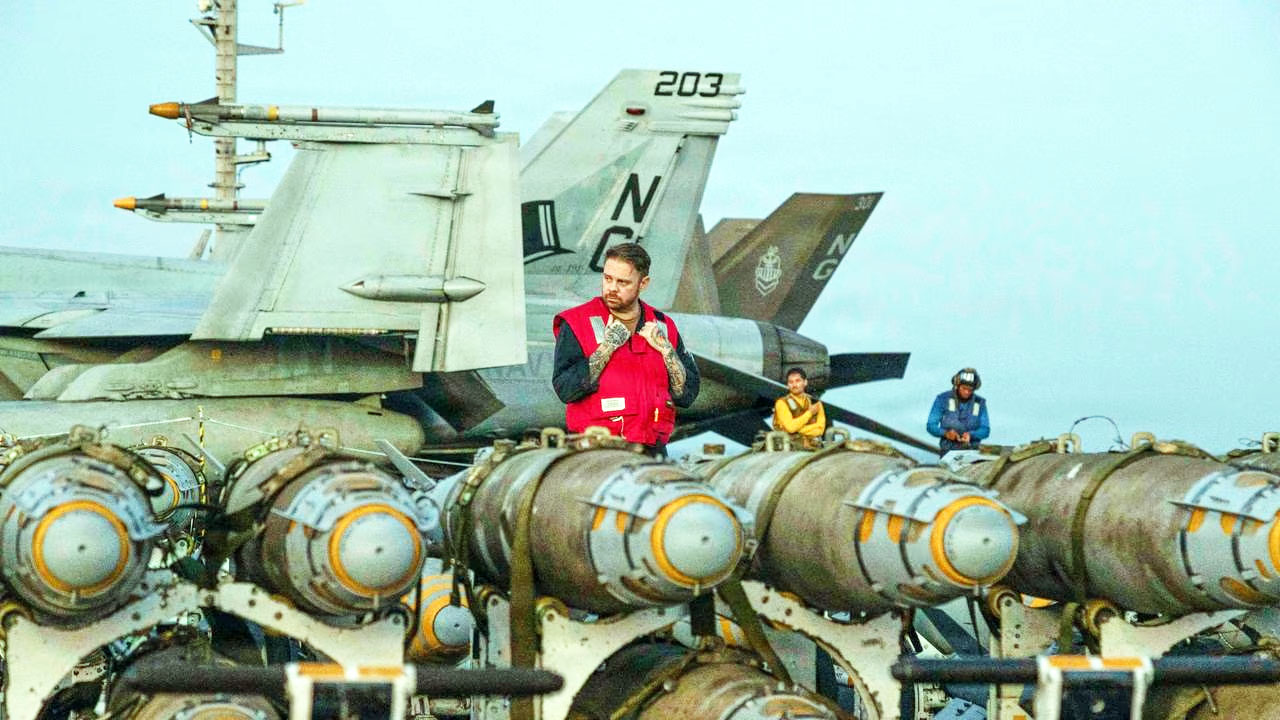
Several U.S. Warplanes Crash in Kuwait Amid Ongoing Iranian Strikes
Several U.S. military warplanes crashed in Kuwait on Monday, March 2, 2026, amid ongoing Iranian retaliatory strikes across the Gulf region, Kuwait’s Ministry of Defence confirmed.
According to the ministry, all aircrews survived, were safely evacuated, and were taken to hospitals for evaluation. Their condition is reported as stable, and an investigation into the cause of the crashes is underway.
The United States Central Command (CENTCOM) stated that three F‑15E Strike Eagle fighter jets were mistakenly shot down by Kuwaiti air defence systems during heightened aerial operations, marking a friendly-fire incident amid the ongoing U.S.–Iran conflict.
READ ALSO:
- Wike Blasts Kingibe Over FCT Council Election Remarks
- Israeli Airstrikes Kill 31 in Lebanon as Hezbollah Loses Senior Figures
- Nigeria to Receive Breakthrough HIV Prevention Drug This Month – NACA
Smoke was also reported near the United States Embassy in Kuwait City, though officials have not confirmed any direct strike on the compound. The embassy issued a security alert advising people to avoid the area due to continuing threats from missiles and drones.
The crashes coincide with Iran’s third consecutive day of retaliatory attacks following U.S. and Israeli strikes on Iranian territory, targeting military bases, infrastructure, and strategic sites across Gulf countries, including UAE, Qatar, and Bahrain. Iranian strikes have already resulted in civilian casualties, injuries, and property damage.
Kuwaiti authorities reported that debris from intercepted Iranian missiles and drones caused minor injuries to workers at the Mina Al-Ahmadi refinery. Kuwaiti air defence systems reportedly intercepted several incoming projectiles, helping prevent further casualties.
The incident highlights the risks of airspace misidentification in a region where multiple allied and hostile forces are operating simultaneously. Analysts warn that such events could escalate tensions further, particularly as Iran continues targeting U.S. and allied military assets in the Gulf.
The ongoing conflict has prompted heightened security measures across Gulf states, including embassy alerts and travel advisories, as concerns grow over the potential for a broader regional confrontation.
Several U.S. Warplanes Crash in Kuwait Amid Ongoing Iranian Strikes
International
Israeli Airstrikes Kill 31 in Lebanon as Hezbollah Loses Senior Figures
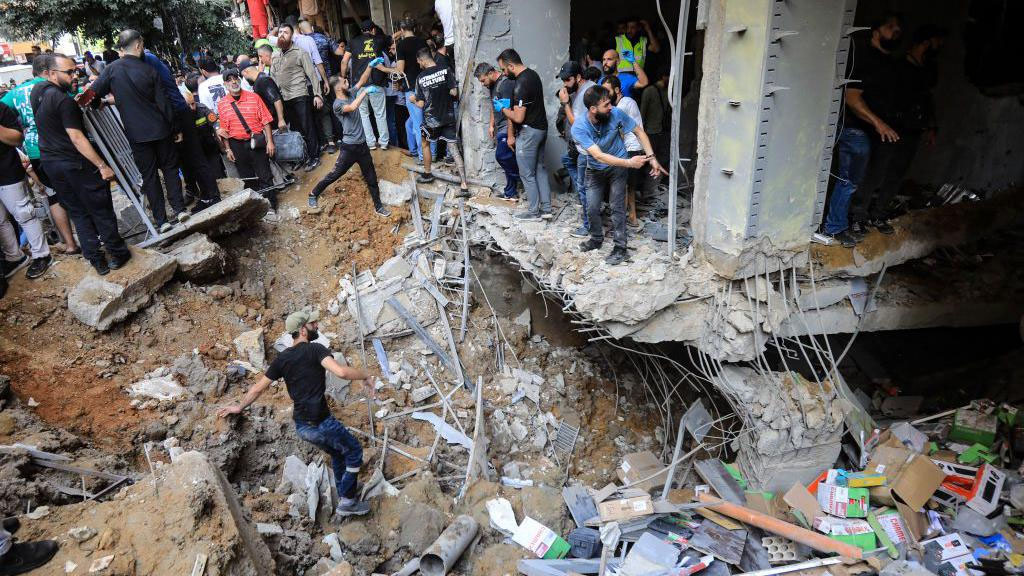
Israeli Airstrikes Kill 31 in Lebanon as Hezbollah Loses Senior Figures
Israeli airstrikes have killed at least 31 people in Lebanon, following renewed cross-border hostilities between Hezbollah and Israel, Lebanese health authorities have confirmed.
The overnight Israeli raids targeted southern Lebanon and the southern suburbs of Beirut, areas regarded as strongholds of Hezbollah. The Lebanon Ministry of Public Health said more than 100 people were injured, adding that the death toll could rise as several victims remain in critical condition.
Israel’s military said the attacks were aimed at Hezbollah infrastructure and senior operatives. The Israel Defense Forces (IDF) described the strikes as a response to recent rocket and drone fire from Lebanese territory into northern Israel, which Israeli officials said posed a direct threat to civilian communities.
READ ALSO:
- Nigeria to Receive Breakthrough HIV Prevention Drug This Month – NACA
- Iran Retaliates: Gulf States Allied With US Hit by Missiles, Drones
- Islamic Leader Warns Tinubu: State Police Could Be Used Against Opponents
Lebanese security sources reported that several senior Hezbollah figures were among those killed, though the group has not released an official list of casualties or confirmed the identities of the alleged commanders. Hezbollah has acknowledged losses but has so far withheld operational details.
Residents in Beirut’s southern districts reported multiple explosions before dawn, with thick plumes of smoke rising over residential and commercial areas. In towns close to the Israel–Lebanon border, emergency workers searched through rubble, while ambulances rushed the wounded to hospitals already under severe strain.
The latest escalation follows days of rising tension along the Israel–Lebanon frontier, marked by near-daily exchanges of fire. Hezbollah has said its cross-border attacks are retaliation for Israeli military actions elsewhere in the region, while Israel has warned it will not tolerate sustained threats to its northern border.
Security analysts warn the latest violence risks dragging Lebanon deeper into a widening regional confrontation, at a time when the country is battling economic crisis, political instability, and overstretched public services.
Despite intensifying international calls for restraint, both sides have placed security forces on heightened alert. With senior figures reportedly killed and retaliatory rhetoric hardening, fears are growing that the conflict could escalate further in the coming days.
Israeli Airstrikes Kill 31 in Lebanon as Hezbollah Loses Senior Figures

-

 metro3 days ago
Hajj, Umrah Are for Muslims Only – Scholar Urges NAHCON to Tighten Screening
-
 International2 days ago
Iran Retaliates: Gulf States Allied With US Hit by Missiles, Drones
-
 International2 days ago
Saudi Arabia Denies Lobbying US to Strike Iran as Gulf States Respond to Escalation
-
 International2 days ago
Several U.S. Warplanes Crash in Kuwait Amid Ongoing Iranian Strikes
-

 metro2 days ago
Daddy Freeze Warns Couples Over 40: ‘Avoid Moving Abroad, Especially US, UK’
-

 metro3 days ago
Four Die in Katsina Stampede During Ramadan Alms Distribution
-

 metro3 days ago
Gunmen Abduct Father of Former Ebonyi Deputy Governor on Way to Church
-
 International2 days ago
Israeli Airstrikes Kill 31 in Lebanon as Hezbollah Loses Senior Figures