
Education
UTME: 41,027 underage candidates registered, 50 caught cheating

UTME: 41,027 underage candidates registered, 50 caught cheating
The Joint Admissions and Matriculation Board (JAMB), on Friday, provided details of the 2025 Unified Tertiary Matriculation Examination (UTME) results it released earlier in the week.
JAMB Registrar, Prof. Ishaq Oloyede, at a press conference in Abuja, noted that as earlier approved by the Minister of Education, Dr. Tunji Alausa, opportunity was provided for underage candidates (16 years and below) to showcase their academic abilities.
He also recalled that at the last Policy Meeting of the admission policy of the Board, stakeholders resolved to implement the prescribed 16-year minimum age for entry into tertiary institutions, and to raise it to 18 years from 2025, but the Minister on resumption of office upheld the 16-year minimum entry age but halted the implementation of the proposal to raise it to 18 years from 2025.
“Even then, provision was made as obtainable in other climes for proven and exceptionally brilliant candidates. Unfortunately, some vested interests created a wrong impression that the Minister of Education has reviewed downward the prescribed 16-year minimum age for tertiary education.
“But in compliance with regulations regarding the stipulated minimum admissible age, the Board restricted registration to candidates who meet the stipulated criteria.
READ ALSO:
- Trump signs executive order to pay self-deportees $1,000
- Party agents ran away with LP election results — Arabambi
- Tinubu welcomes new Qatari investment initiatives in Agric
“However, it provided an opportunity for acclaimed exceptionally-gifted candidates to demonstrate their abilities as long as their performance in UTME, SSCE, P-UTME and Gifted Candidate Test, attest to their being exceptionally gifted.
“While we recognise that maturity is often correlated with biological age, we also acknowledge that there are exceptional cases.
“A total of 41,027 candidates registered for the UTME under this underage category, with assurance that they would face the consequences if they do not meet the prescribed score.
“At the end, only 467 candidates attained the minimum UTME score for exceptional candidates, and they are being processed for the remaining 3 stages of assessment.
“Successful candidates have been notified of their achievement, while those who do not meet the threshold have also been notified of their inability to meet the prescribed minimum score.”
JAMB Registrar also stated that 50 of the underage candidates were implicated in a cheating syndicate scandal.
The results for underage candidates as released by JAMB indicated that 467 candidates (1.16%) scored 320 and above; 667 candidates (1.66%) scored 300 to 319; 4, 665 candidates (11.59%) scored 250 to 299; 12, 357 (30.69%) scored 200 to 249; 15, 978 candidates (39.69%) scored 160 to 199; 5,528 candidates (13.73%) scored 140 to 159; 5,541 candidates (1.38%) scored 120 to 139; 30 candidates (0.07%) scored 100 to 119; 15 candidates (0.04%) scored below 100.
UTME: 41,027 underage candidates registered, 50 caught cheating



Education
Nigeria Education Policy Update: FG Bans SS3 Transfers, Admissions Over Exam Malpractice
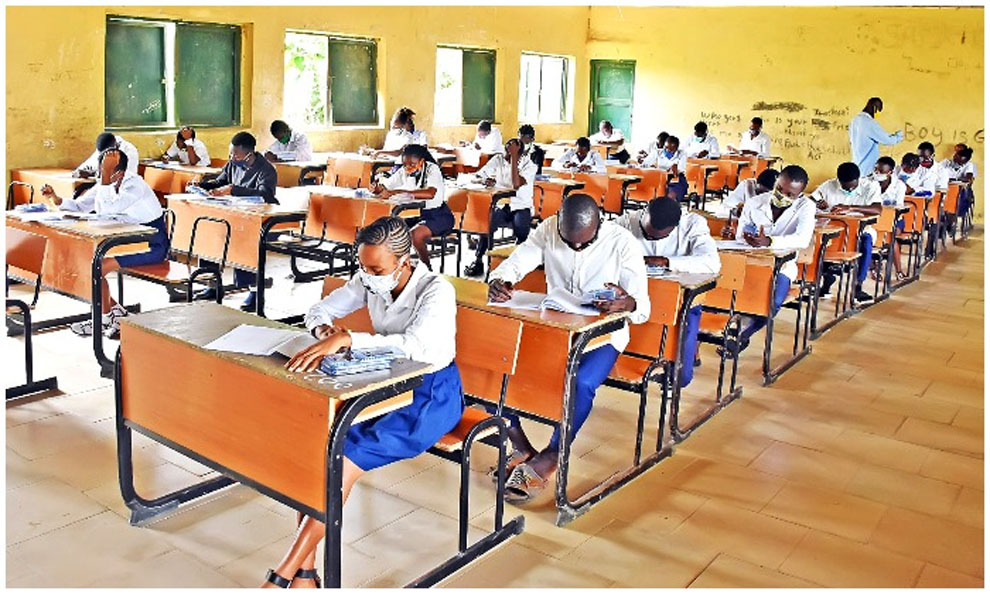
Nigeria Education Policy Update: FG Bans SS3 Transfers, Admissions Over Exam Malpractice
The Federal Government of Nigeria has announced a ban on admission and transfer of students into Senior Secondary School Three (SS3) across all public and private secondary schools, the Federal Ministry of Education confirmed.
The directive, disclosed in a statement signed by Folasade Boriowo, Director of Press and Public Relations, is aimed at tackling the rising incidence of examination irregularities, particularly the use of ‘special centres’ during external examinations, which authorities say undermine the integrity of Nigeria’s education system.
READ ALSO:
- Man Arrested for Allegedly Killing Wife in Ahiazu Mbaise Domestic Dispute
- (UPDATED) Sydney Bondi Shooting: Anti-Semitic Attack Leaves 16 Dead, 40 Injured
- Nigeria FX Market: Dollar Demand Surges, Naira Slides Slightly in Festive Season
According to the Ministry, the policy will take effect from the 2026/2027 academic session. Under the new arrangement, admissions and transfers will only be allowed into Senior Secondary School One (SS1) and Senior Secondary School Two (SS2). Admission or transfer into SS3 will no longer be permitted under any circumstances.
The measure is designed to discourage last-minute student movements to schools perceived to have advantages in examinations, a practice linked to exam malpractice. It will also enhance academic monitoring and ensure continuity in teaching and learning.
School proprietors, principals, and administrators nationwide have been directed to comply strictly with the new policy. The Ministry warned that violations would attract sanctions under existing education regulations.
The Federal Government reaffirmed its commitment to safeguarding academic standards and promoting fairness across the Nigerian education sector.
Nigeria Education Policy Update: FG Bans SS3 Transfers, Admissions Over Exam Malpractice
Education
Senate Queries WAEC’s Sudden Curriculum Overhaul, Predicts Nationwide Mass Failure
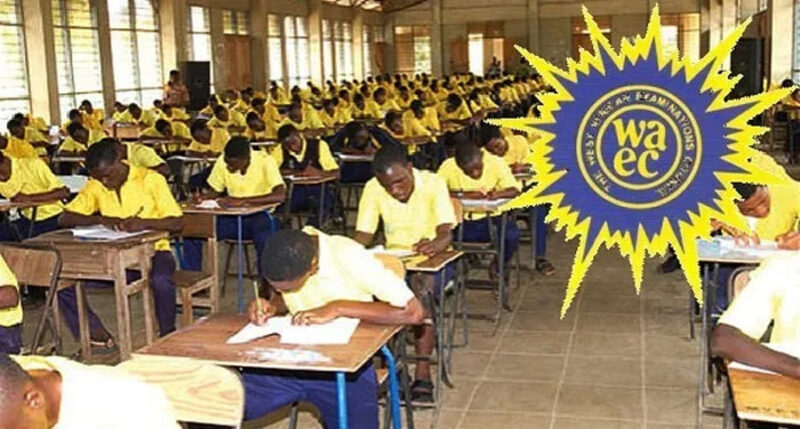
Senate Queries WAEC’s Sudden Curriculum Overhaul, Predicts Nationwide Mass Failure
The Nigerian Senate has cautioned the West African Examination Council (WAEC) against its abrupt decision to introduce a new WAEC curriculum for candidates sitting the 2026 senior secondary school certificate examination, warning that the move could trigger widespread mass failure across the country.
WAEC had initially scheduled the rollout of the revised curriculum for the 2027/2028 examination cycle, but unexpectedly shifted implementation to 2026—a development lawmakers on Tuesday described as ill-timed and poorly planned.
Leading the motion, Senator Sunday Karimi said the sudden curriculum overhaul had already resulted in the removal of key subjects such as Computer Studies, Civic Education, and other long-standing examinable courses from the WAEC syllabus. He argued that students who had spent years preparing for these subjects would now be left stranded, with their examinable subjects reduced to only six instead of the mandatory minimum of eight and maximum of nine.
Karimi maintained that neither WAEC nor the Federal Ministry of Education had demonstrated readiness for such a major policy shift, which he said violated Section 14(2)(b) of the 1999 Constitution, mandating government to safeguard citizens’ welfare, and Section 18, which guarantees equal and adequate educational opportunities.
READ ALSO:
- Court Orders Substituted Service on Nyesom Wike in ₦40bn Defamation Suit
- BREAKING: Fubara Dumps PDP for APC Amid Power Shift in Rivers Politics
- MPAC Faults U.S. Delegation for ‘Sectarian Engagement’ During Nigeria Visit
Senator Adams Oshiomhole, who seconded the motion, condemned what he described as a recurring “culture of anarchism” in Nigeria’s education policy implementation. He criticized the introduction of new subjects without adequate teachers, laboratories, equipment, or timely notification to parents and schools.
“You cannot wake up overnight and say that in June, students will be examined on subjects they have not been taught. Intentions are not enough—proper homework must be done,” Oshiomhole said, urging the Senate to summon the Minister of Education along with relevant agencies to present evidence of preparedness.
Also contributing, Senator Oluranti Adebule said major curriculum reforms must pass through the National Council on Education, which includes all state commissioners. She called for a comprehensive review of the entire curriculum process. Senator Solomon Adeola added that many new subjects—such as cosmetology, fashion design, garment making, livestock farming, GSM repairs, and solar installation—require practical facilities that most schools lack.
After a lengthy debate, Senate President Godswill Akpabio ruled that the Senate Committee on Basic and Secondary Education, the Minister of Education, and heads of relevant agencies must meet urgently to address the concerns. He noted that the Senate had already instructed that the current SS3 students be exempted from the new curriculum.
“These are very weighty issues. We cannot risk mass failure in the 2026 WAEC examinations,” Akpabio said, directing the committees to report back within two weeks.
The Senate insisted that the matter must be fully resolved before the end of the year to protect the academic future of millions of Nigerian students.
Senate Queries WAEC’s Sudden Curriculum Overhaul, Predicts Nationwide Mass Failure
Education
Parents, teachers slam Federal Ministry for forcing new subjects on SSS 3 students
Parents, teachers slam Federal Ministry for forcing new subjects on SSS 3 students
The Education Rights Campaign (ERC) and allied groups representing parents, teachers, and students have criticized the Federal Ministry of Education over its handling of the new Senior Secondary School (SSS) curriculum and the 2026 West African Senior School Certificate Examination (WASSCE).
In a press statement signed by ERC National Mobilisation Officer Adaramoye Lenin and Concerned Parents Representative Olanrewaju Akinola, the groups argued that the ministry’s clarification on subject selection fails to address the central issue: current SSS 3 students may be forced to take subjects they have not studied since SSS 1.
“The question is whether it is rational to make students take subjects they have not been taught over the past three years in the 2026 WAEC examination. Unfortunately, this is the irrationality both the Ministry and WAEC are pushing,” the statement said.
READ ALSO:
- First Lady Clashes with Governor Adeleke as Videos Go Viral in Ile-Ife
- US Lawmaker Optimistic Nigeria Can Defeat Terrorism Amid Washington Security Talks
- Nigeria’s Detained Whistleblower Recognised Globally for Exposing Police Corruption
The ERC commended the House of Representatives for passing a resolution urging the ministry to suspend the 2026 WASSCE under the new curriculum, allowing students to sit for subjects they have been learning over the past three years. The resolution highlighted that with the examination only four months away, it is academically impossible for students to adequately prepare for new subjects.
Two days after the House resolution, the ministry issued a statement signed by its Director, Press and Public Relations, which ERC described as missing the crux of the matter. The group called the ministry’s plan “irrational” and “unjust”, warning it would leave students disadvantaged and shortchanged.
ERC urged a fair and sensible approach, recommending that the new curriculum be delayed for WAEC examinations until 2028, allowing the current curriculum to run through 2027.
“While we welcome the goal of reducing subject overload, insisting on applying the new curriculum for the 2026 WASSCE is misguided and unfair to students. The Federal Ministry of Education must act responsibly and ensure value for the public’s investment,” the statement concluded.
Parents, teachers slam Federal Ministry for forcing new subjects on SSS 3 students

-

 Business2 days ago
Nigeria FX Market: Dollar Demand Surges, Naira Slides Slightly in Festive Season
-

 metro2 days ago
End Biafra Agitation, Tinubu Has Integrated Ndigbo Into National Development — Umahi
-

 International2 days ago
(UPDATED) Sydney Bondi Shooting: Anti-Semitic Attack Leaves 16 Dead, 40 Injured
-

 Politics2 days ago
Ashimolowo Casts Doubt on Obi’s Northern Support as Opposition Coalition Wobbles
-

 Politics2 days ago
Peter Obi Poised to Dump Labour Party as Leadership Crisis Worsens
-

 News10 hours ago
Trump Adds Nigeria to List of Countries Facing US Entry Restrictions Over Security Concerns
-

 metro2 days ago
Bello Turji Accuses Ex-Governors of Creating Insecurity in Zamfara, Sokoto
-
 News2 days ago
Tinubu’s Emergency Declaration Gets Supreme Court Backing in Landmark Judgment