

Business
We own the airports, foreigners should not dictate to us

“Nobody can make you feel inferior without your consent.”
Some foreign busybodies have embarked on the attempt to treat Nigeria with the sort of contempt we don’t deserve – unless we allow them. We should firmly resist the attempt.
The issue at stake is the concessioning of four Nigerian International Airports – Abuja, Kano, Lagos and Portharcourt. Incidentally, they are probably the only four profitable airports in Nigeria today. The rest, whether owned by the federal or a state government, are losing money. Most of the state government owned airports have always been nothing more than great monuments to somebody’s ego kept going by governments at great costs. The FG cannot however touch them. Even the loss generating airports are untouchable. No private investors will touch them. That is the point of this article today. Government has called for bids from the private sector for the exclusive right to manage our “crown jewels” in the aviation sector.
Ordinarily, there would have been no objections from me. I have been a long term supporter of the idea of allowing the private sector to manage such businesses. They invariably do a better job. Examples include the operations of airlines, the GSM revolution and schools. Left to NITEL, Nigerians would still not have up to one million operating lines. There is no dispute here about privatisation being a better option most of the time. However, every rule has an exception which calls for taking a closer look.
READ ALSO:
- How Buhari rescued Nigeria from collapse – Malami
- I’ll wait 24hrs to take action on Nwosu’s release — Okorocha
- Eight years after, Nigeria’s auto policy wobbles
Airports represent one of those exceptions calling for prudent concessioning. With our airports, giving them to the highest bidders might generate more revenue immediately only to give Nigerians more pain in the long term. Even the financial considerations are complex rather than simple. Here are the reasons.
Very few cities in the world are like London which has two international airports – Gatwick and Heathrow. Every other international airport enjoys an unchallenged monopoly within a large area. And, we all know the financial advantages which monopolists enjoy with respect to charges for services. It is invariably a matter of “take it; or leave it”.
You frequently don’t need to be a brilliant manager once given a monopolistic situation to make money. By its very nature, it is almost like having a licence to print as much money as the public will allow you. Consumers have no alternative. Obviously, if we are embarking on such a move our charity should begin at home; not abroad. We should allow Nigerians to have the first opportunities to enjoy our four monopolies. Is this xenophobia? Yes, it is. It is financial xenophobia – to which I readily plead guilty. Foreigners don’t do us any favours. Why should we do them any?
Nigerians should also not allow themselves to be deceived by claims of superior expertise. Already, there are Nigerians managing airports – small and big. I don’t want to disclose names now; because meanings might be read into the message. But, they will present themselves at the right time once there is a national consensus that we should allow fellow Nigerians to manage our airports.
That is not all. Airports are strategic security assets. Right now, we determine who enters our airports. Hand them to foreigners and we no longer enjoy absolute control of the ports. That cannot by any stretch of imagination be in our own interest. The feeling in some quarters that we can allow citizens of “friendly nations” to operate the airports overlooks the fact that national interests can change an ally today to an adversary tomorrow. With our airport under their control, we would have placed our country in mortal danger on account of a short-sighted decision made by us.
The strategic positions of the four airports also should caution us. Kano, Lagos and Portharcourt are located within striking distances of all our oil and gas installations, as well as our industrial centres and military units. Our fellow Nigerians can at least be trusted not to betray us and allow incursions into our country from any airport.
READ ALSO:
- It’s unethical for doctors to go on strike — Minister
- Troops arrest notorious IPOB/ESN leader in Enugu
- Islamic cleric arrested with fresh human head, slumps, dies in Ondo Police custody
THE WAY FORWARD
“Ask not what your country can do for you; ask for what you can do for your country.” US President John Kennedy, 1917-1963.
There are several steps we can take to ensure that indigenisation of airport concession is a reality.
First thing we do, let’s advise all the Senior Advocates representing various foreign interests to forget the idea of seizing our airports for their clients. I am aware that the briefs could run into upper eight figures or lower nine. That is a lot of money for anyone – even Jeff Bezos – to forgo. But, there are some ideas whose time is past. Allowing foreigners to manage our airports is one of them.
Second, if they will not give up willingly, then the Nigerian people should force them to stop; not by violence. But, by rising up in the former three regions – East, North and South – and refusing to surrender our airports to non-Nigerians. Fortunately, this is a non-partisan issue. It is not an APC versus PDP matter; a North against South affair, it is not religious or ethnic. It involves all Nigerians irrespective of who they are. So, there should be no difficulty acting as a nation to make this happen.
Third, it is probably a wise idea to allow bidders from each of the three regions – East, North and West – to have the right of first refusal. That way, nobody feels cheated by the arrangement. I have deliberately left out Abuja for now. But, once the basic idea of indigenisation of airport concessions is accepted an innovative idea for the concession of Abuja will be presented.
Fourth, the advocacy must be led by the people. In 2022, all politicians will be totally engaged with 2023 elections. Unless the Nigerian people are alert to their responsibilities, we might wake up one day to be told that non-Nigerians have won the rights to manage our airports. By then revocation of concession agreements might be impossible; or, at least costly.
READ ALSO:
- Okorocha, Imo Govt clash over Nwosu’s arrest
- Bandits kidnap five in Zaria area of Kaduna State
- Only infected persons, doctors can disclose COVID-19 status in Aso Villa – Presidency
Those of us old enough to remember should recollect what happened when Lagos state was mindlessly ordered to discontinue its metro line project in 1984 by the Federal Military Government. Millions of dollars were forfeited.
Any way we look at this matter, it is vital that we pre-empt the issue of foreigners taking over.
Finally, it is an established fact that people learn faster by doing things themselves than by observing others perform. We will never close any knowledge or skill or attitude gap by watching others doing things for us. Management of airports calls for accumulation of bodies of knowledge, skills and attitudes which can be learnt, mastered and eventually improved upon. We can only achieve global standards by rolling up our sleeves and doing things ourselves.
There is very little doubt in my mind that young Nigerians, male and female, if challenged can manage our airports up to world standards. They can master the sciences and the arts of airport management. Imagination is not lacking; neither is the desire and will. What has been lacking is the opportunity for them to do great things. Let us give them the chance now with our airports.
Vanguard









Auto
NADDC Pushes Affordable Auto Loans to Boost Vehicle Ownership, More Jobs
NADDC Pushes Affordable Auto Loans to Boost Vehicle Ownership, More Job
The National Automotive Design and Development Council has called for far-reaching reforms in vehicle financing to make car ownership more affordable while boosting local vehicle assembly, job creation and industrial development.
The Council said a properly structured financing system could turn vehicle credit from a mere consumer lending product into a major economic tool for expanding productive mobility and strengthening Nigeria’s automotive value chain.
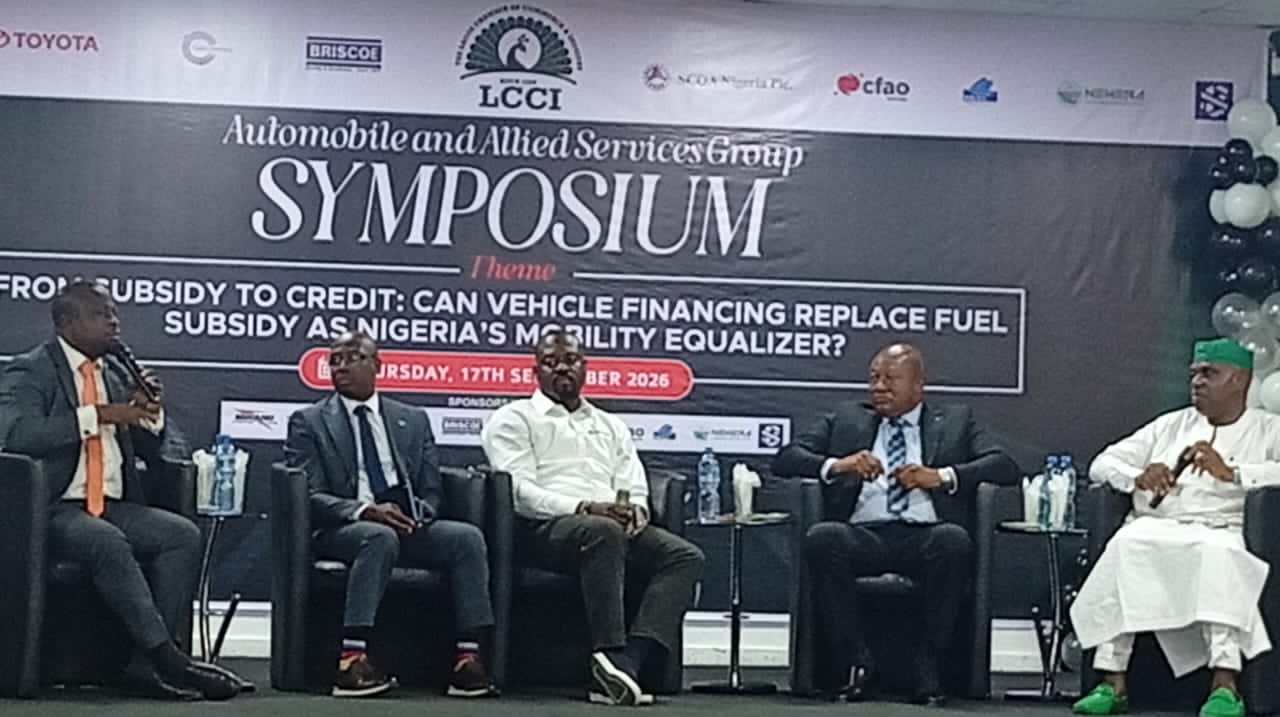
Director-General of NADDC, Otunba Joseph Oluwemimo Osanipin, stated this in an address delivered on his behalf by the Council’s Principal Information Officer, Tanko Kyumnom, at the Lagos Chamber of Commerce and Industry (LCCI) Auto Sectoral Group Symposium in Lagos.
The symposium, held on Thursday, September 17, 2026, at the Henry Fajemirokun Hall of LCCI, was themed: “From Subsidy to Credit: Can Vehicle Financing Replace Fuel Subsidy as Nigeria’s Mobility Equaliser?”
Osanipin said the growing cost of mobility had made it necessary to explore financing models that would enable individuals, businesses and transport operators to acquire vehicles without bearing the full cost of ownership upfront.
According to him, spreading vehicle payments over an agreed period could provide a more sustainable pathway to vehicle acquisition, provided that the financing products are affordable, accessible and structured around the economic realities of Nigerian consumers.
He, however, cautioned that simply making credit available would not be enough.
“Vehicle financing offers a more sustainable approach by enabling individuals, businesses and transport operators to acquire vehicles and pay for them over time,” Osanipin stated.
The NADDC DG said the bigger opportunity lies in linking vehicle financing with the growth of locally assembled and Nigerian-made vehicles.
He explained that increased access to credit for locally produced vehicles could generate wider economic benefits by stimulating demand for domestic assembly, supporting component manufacturers, creating jobs and strengthening local supply chains.
Osanipin therefore urged stronger collaboration among government institutions, financial institutions, vehicle manufacturers and other stakeholders in designing financing schemes capable of supporting both mobility access and automotive industrialisation.
The NADDC boss identified affordable vehicle loans, leasing arrangements, fleet financing, credit guarantees and appropriate interest-rate support as mechanisms that could broaden access to vehicle ownership and productive mobility.
lt also stressed the need for repayment structures that take into account the earning patterns and business realities of Nigerians, particularly transport operators and small businesses whose vehicles are directly linked to their income-generating activities.
Osanipin maintained that the objective should extend beyond increasing the number of vehicles on Nigerian roads.
“The goal is not simply to put more vehicles on Nigerian roads. It is to ensure that Nigerians can access productive mobility without placing an unsustainable burden on government finances or household incomes,” he said.
According to him, a properly structured automotive financing system could create a stronger connection between mobility, economic inclusion and domestic vehicle production.
“With the right policies and partnerships, vehicle financing can become a powerful instrument for mobility, economic inclusion and automotive industrial development,” Osanipin added.
The NADDC’s position places vehicle financing within the broader effort to build a sustainable automotive ecosystem in Nigeria—one in which access to credit supports vehicle users while also creating stronger demand for local assembly, components and associated automotive services.
Auto
Jetour T1 Storms Abuja as Automaker Accelerates Nigeria Expansion
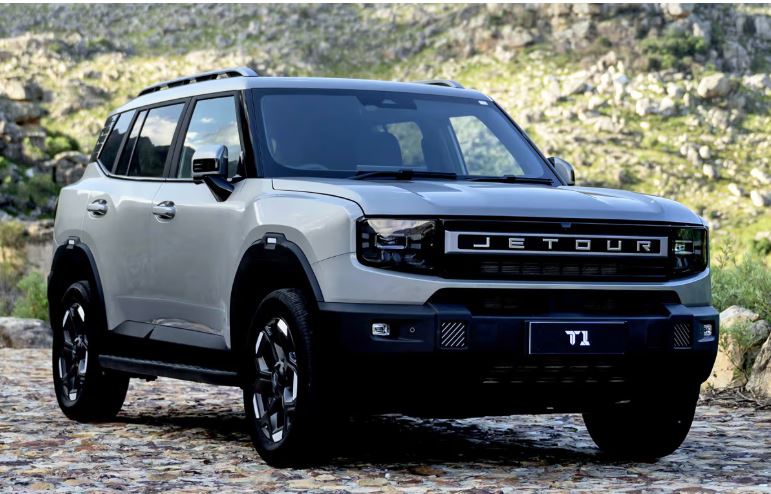
Jetour T1 Set to debut in Abuja as Expansion Gains Momentum
Following a successful debut in Lagos, Jetour Nigeria will host the Jetour Experience Abuja from September 22 to 24, 2026, positioning its all-new T1 model as a major competitor in the country’s growing adventure SUV market.
The three-day event in the Federal Capital Territory will give prospective buyers and motoring enthusiasts direct access to product demonstrations, expert-led technical sessions, and hands-on test drives.
“Strong participation, extensive test drives, and significant sales enquiries at the Lagos edition, coupled with growing demand from Abuja residents, influenced the decision to bring the experience to the nation’s capital,” the company said in a statement. The show holds at Maha Event Centre, Area 8, Garki.
To support its growing national footprint, Jetour Nigeria has established a network of seven accredited dealers: Elizade Nigeria Limited, New Era AutoVehicle Services Limited, Kojo Motors, Germaine Auto Centre, Tab Autos Limited, R.T. Briscoe Motors, and Mandilas Autos. The partnerships cover retail sales, genuine spare parts supply, and comprehensive after-sales maintenance.
READ ALSO:
- Kidnapped Female Police Officer Found Dead in Ebonyi as Suspect Leads Police to Remains
- CNN, MS NOW, Politico Sue Trump Over White House Access Ban
- JAMB Allows Candidates to Change Lost SIM, Email Addresses
The T1 enters the market with a focal point on balance—combining off-road capability with urban comfort.
The smart T1 has the following features-
Dimensions: 4,705mm (L) x 1,967mm (W) x 1,843mm (H) |; Wheelbase: 2,800mm; and
Powertrains: 1.5L Turbo / 2.0L Turbo (254 hp, 390 Nm torque).
The drivetrain is BorgWarner XWD Intelligent 4WD | 7-Speed DCT or 8-Speed Automatic. Terrain Capability: 199mm ground clearance, 600mm wading depth, and 28° approach/departure angles.
Other features include 15.6-inch HD touchscreen, Qualcomm Snapdragon 8155 platform, 8-speaker audio, 5-seater configuration with 574 litres of rear luggage space, 85 percent high-strength steel chassis alongside a Level 2 Advanced Driver Assistance System (ADAS), which includes Adaptive Cruise Control, Lane Keeping Assist, Forward Collision Warning, and Autonomous Emergency Braking.
Since its Nigerian market entry, Jetour has secured several local and international automotive honors, including Fastest Growing Auto Brand of the Year and Auto Brand of the Year.
Jetour T1 Set to debut in Abuja as Expansion Gains Momentum
Auto
Abuja Demand Rises as Jetour Brings X70 Plus Experience to FCT
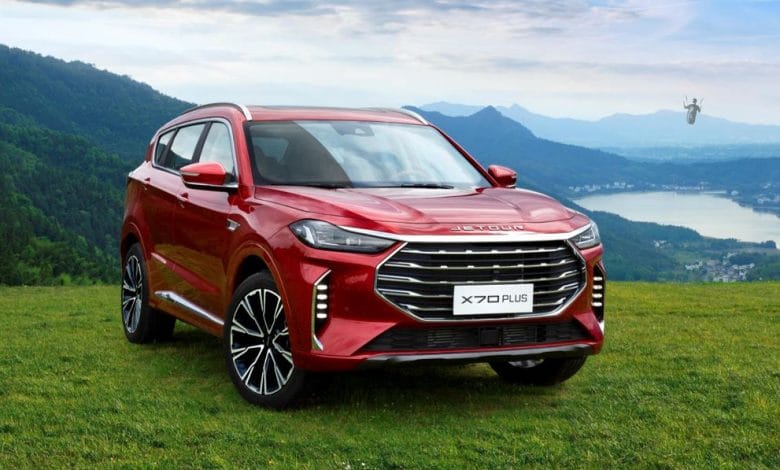
Abuja Demand Rises as Jetour Brings X70 Plus Experience to FCT
Jetour Nigeria is taking its seven-seater X70 Plus SUV to Abuja as rising interest from motorists in the Federal Capital Territory and neighbouring states fuels the brand’s latest push to deepen its presence across Nigeria.
The X70 Plus will headline the Jetour Experience Abuja, holding from September 22 to 24 at Maha Event Centre, Area 8, Garki, following the strong response recorded during the Lagos edition, where motorists turned out for test drives and made enquiries about Jetour models.
The Abuja activation is designed to give prospective buyers direct access to the X70 Plus and other models, with opportunities to test-drive the vehicles, engage product specialists and experience their technology, safety and comfort features.
The X70 Plus is positioned as a family-oriented SUV, offering seven-seat capacity and a range of features targeted at customers seeking comfort, technology and practicality.
The SUV is available with 1.5-litre and 1.6-litre turbocharged engine options, with outputs of up to 145kW and 290Nm of torque, paired with a dual-clutch automatic transmission.
READ ALSO:
- Enough Is Enough: Muslim Supporters Demand New Man United Owners
- Stray Bullet Kills 400-Level IBBU Student During Land Dispute in Niger
- Oyo Police: Student Who Died by Suicide Was Charged With Assault, Not ₦8,000 Debt
Its safety equipment includes front, side and curtain airbags, Vehicle Stability Control, Hill-Start Assist, Hill-Descent Control and a 360-degree panoramic camera with 2D and 3D viewing modes. Advanced Driver-Assistance Systems are also available.
Inside the cabin, the X70 Plus features a 10.23-inch LCD touchscreen, dual-zone climate control with air purification, wireless charging, a panoramic sunroof and an eight-speaker audio system.
Jetour Nigeria, the authorised distributor of the brand in the country, currently operates through seven accredited dealers: Elizade Nigeria Limited, Mandilas Autos, R.T. Briscoe Motors, Germaine Auto Centre, Kojo Motors, Tab Autos Limited and New Era Auto Vehicle Services Limited.
The company said the dealer network supports vehicle sales, genuine spare-parts supply and after-sales services across the country.
Jetour has also received recent industry recognition in Nigeria, including Fastest Growing Auto Brand by the Nigeria Auto Journalists Association and Auto Brand of the Year at the Nigeria Transport Lecture and Awards.
The Abuja experience is expected to provide prospective customers in the FCT and surrounding states with direct access to the X70 Plus and other Jetour models as the brand continues its national market expansion.
Abuja Demand Rises as Jetour Brings X70 Plus Experience to FCT
-

 International2 days ago
18 Suspects Transferred to US Over 2021 Killing of Haitian President Moïse
-
 Auto3 days ago
Abuja Demand Rises as Jetour Brings X70 Plus Experience to FCT
-

 metro3 days ago
Irreconcilable Developments: Wedding Cancelled 24 Hours Before Ceremony
-
 Sports3 days ago
Enough Is Enough: Muslim Supporters Demand Change of New Man United Owners
-
 Politics3 days ago
2027: NDC Predicts Wider Obi Victory Over Tinubu in Lagos
-

 Politics2 days ago
‘Join the Hunt’ — Soludo Urges Igbos to Strategically Align Ahead of 2027
-
 News2 days ago
NiMet Predicts Thunderstorms, Rain Across Nigeria Till Wednesday
-

 Sports2 days ago
Messi Fires Stunning 75th Career Free-Kick to Reach 930 Goals in Inter Miami Draw