
Opinion
When a Tax Law is an illegality, By Farooq Kperogi

When a Tax Law is an illegality, By Farooq Kperogi
What began as a routine legislative reform of the Nigerian tax system by the Bola Tinubu administration has transmogrified and metastasized into an allegation of unexampled transmutation of a duly passed law to an illegality.
It’s by now well known that a law passed by the National Assembly and assented to by the president may have been materially altered after assent and then presented to the public as binding law. If this allegation is established beyond all shadows of doubt, Nigeria would be confronting the specter of an illegality fraudulently constituted as law.
Interestingly, the discovery wasn’t brought to public notice by secretive, conscientious whistleblowers in the bureaucracy or from eagle-eyed civil society audits. It came from within the legislature itself.
A member of the House of Representatives, Abdulsammad Dasuki, raised a point of privilege after personally comparing the harmonized bill passed by both chambers with the version of the tax laws published in the official gazette. He found that the documents did not match.
His discovery was the product of days of rigorous, studious and painstaking examination of Votes and Proceedings, committee harmonization records and the gazetted text. He realized that he voted for one thing, but the country was being governed by another.
That intervention sparked a chain reaction. Other lawmakers requested certified true copies of the assented bill to verify whether the president had signed the same text that was now in circulation. According to multiple reports, those requests were denied.
The refusal to release certified copies deepened suspicion and transformed what could have been dismissed as a clerical misunderstanding into a full-blown institutional crisis.
When legislators are blocked from seeing the law that they passed and that the president signed, the issue verges on criminal constitutional transgression that must not be swept under the carpet.
While full official disclosure is still pending, several discrepancies have been repeatedly cited by lawmakers, journalists and civil society groups. These include expansions of the discretionary powers of tax authorities beyond what the National Assembly approved, alterations to reporting and oversight obligations, changes in enforcement thresholds, and adjustments that potentially increase executive control over revenue administration.
READ ALSO:
- AFCON 2025: Mali Fight Back to Draw With Hosts Morocco in Rabat
- AFCON 2025: Salah’s Spot Kick Seals Egypt’s Knockout Spot Against South Africa
- 2026 World Cup: FIFA Throws Out Nigeria’s Appeal Against DR Congo
These are not innocent, unintentional clerical slips. They go to the meaning, scope and intent of the law. In short, they change who has power to tax Nigerians, how that power is exercised and to whom it is accountable.
The distinction matters. All legislative systems experience clerical errors. A misplaced word or a misnumbered section does not invalidate a statute. But when alterations confer new powers, remove safeguards, or shift institutional balance, they cross from error into illegality.
A gazette cannot lawfully create what the legislature did not enact or what the president did not assent to. Publication is supposed to merely provide evidence of the existence of the law. It can invent a law that hasn’t been passed.
The official responses so far have been evasive and contradictory. Government representatives initially insisted that there was only one authentic version of the law and that claims of alteration were partisan, ill-natured rumors. But that posture is difficult to reconcile with subsequent developments.
For example, a December 26, 2025, press statement signed by Akin Rotimi, House Spokesman and Chairman of the House Committee on Media and Public Affairs, said the National Assembly has now constituted an ad hoc committee to investigate the sequence of events from harmonization to assent to gazetting.
More tellingly, Rotimi said, the leadership of the legislature has directed that the tax laws be re-gazetted and that certified true copies of the versions duly passed by both chambers be issued.
Re-gazetting is not a neutral act. It is an implicit admission that the existing gazette cannot be confidently treated as an accurate record of legislative intent. If nothing were amiss, there would be nothing to authenticate. The attempt to frame this as a routine administrative clarification rings hollow. Laws are not re-gazetted in the absence of doubt about their authenticity.
Supporters of the government have urged the public to trust the president’s integrity and to avoid speculation. The issue, however, is not whether the president is personally trustworthy but whether the law now being enforced is the law he signed. No amount of rhetorical reassurance can substitute for producing the signed text and allowing a side-by-side comparison with the gazetted version.
There is no precedent in the world that I have found for this kind of illegality. In the United States, the much-cited Deficit Reduction Act controversy of 2006 involved a discrepancy between House and Senate versions due to a clerical transmission error. The president signed the enrolled bill that was presented to him.
Courts upheld it under the enrolled bill doctrine, which treats the signed text as conclusive. Crucially, there was no claim that the law was altered after presidential assent.
READ ALSO:
- Cancer Patient Appeals for Second Wife for Husband, Cites Sexual, Health Challenges
- ACF Awaits Full Details Before Commenting on US–Nigeria Airstrikes in Sokoto
- FG Confirms Debris from US–Nigeria Joint Airstrikes on ISIS in Sokoto Fell in Offa
In the Philippines, in 1964, there was a case where the wrong version of a bill was signed by the president. Legislative leaders later disowned the enrolled copy and treated the signature as invalid. Again, the error occurred before or at assent, not after. Once discovered, it was confronted as a mistake. It wasn’t normalized.
Nigeria’s case, if the allegations are borne out, is more disturbing. Here, the claim is that the president signed the correct bill but that the authoritative law published afterward materially departs from it.
Comparative constitutional practice offers no comfort here. Stable legal systems do not recognize post-assent textual mutation as valid law. Where gazetting errors occur, they are corrected. They do not become the basis for enforcement.
This raises an unavoidable question: why would anyone alter a law after it has been passed and signed? Motives can only be inferred from circumstantial evidence, but the inferences are troubling.
Expanding the powers of tax authorities in a period of fiscal stress creates incentives for bureaucratic overreach. Removing or weakening legislative-oversight provisions reduces accountability. Centralizing discretion in the executive arm simplifies revenue extraction while insulating decision makers from scrutiny. These are not abstract possibilities. They align closely with the specific alterations that have been alleged.
There is an even more unsettling implication. If a major tax reform law can be altered after assent without immediate detection, what confidence can citizens have in the integrity of other statutes? Nigeria has passed hundreds of laws over the years, many of them technical, complex and rarely scrutinized line by line after gazetting. The discovery of this discrepancy raises the chilling possibility that post-assent alterations may not be unprecedented in practice.
That possibility should alarm every Nigerian regardless of political affiliation. Law is the foundation of collective life. If the text of the law is unstable, if it can be surreptitiously modified after constitutional procedures have been completed, then legality itself becomes provisional. Governance slides from rule of law to rule by document manipulation.
The seriousness of this violation cannot be overstated. If officials altered the tax law knowingly, they did not merely breach administrative rules. They subverted the Constitution. Such conduct would amount to forgery, abuse of office and an assault on democratic sovereignty. It would mean that Nigerians are being taxed under provisions that were never lawfully enacted.
This is why a thorough, transparent investigation is not optional. It must establish a clear documentary chain: the harmonized bill passed by both chambers, the exact text transmitted for assent, the document signed by the president and the version published in the gazette. Any divergence must be accounted for, step by step, with named responsibility. Institutional reviews that end in vague recommendations will not suffice.
If culpability is established, punishment must be severe. Anything less would invite repetition. As I always say, there is no greater enabler of habitual relapses into the same crime than the absence of consequences for committing the crimes.
The alteration of law after assent is not a victimless bureaucratic shortcut. It is a constitutional crime with nationwide consequences. Deterrence requires more than quiet corrections. It requires accountability that is visible, proportionate and unmistakable.
This episode can either be buried under procedural language and political loyalty, or it can become a moment of constitutional self-correction. A tax law that is an illegality cannot be the foundation of fiscal reform. The integrity of the lawmaking process is itself a public good. Without it, no reform, however well intentioned, can claim legitimacy.
When a Tax Law is an illegality, By Farooq Kperogi
Kperogi is a renowned columnist and United States-based Professor of Journalism






Opinion
Super Bowl: Can Africa Spring Up anew?
Super Bowl: Can Africa Spring Up anew?
With a landmass of approximately 9.83 million km² and a population of 334–336 million as of 2025—making it the third-largest country in the world—the United States is massive. It is four times the size of Algeria, Africa’s largest country, and dwarfs Nigeria, the continent’s most populous nation.
The United States is a titan among nations. Who knows—perhaps neologists will coin a new term if the U.S. eventually purchases or forcefully takes Greenland from Denmark, further surging its landmass and population. When this massive scale fuses with unparalleled infrastructure, world-class venues, and a vast market, the USA becomes an ideal host for international sporting events with strong returns on investment.
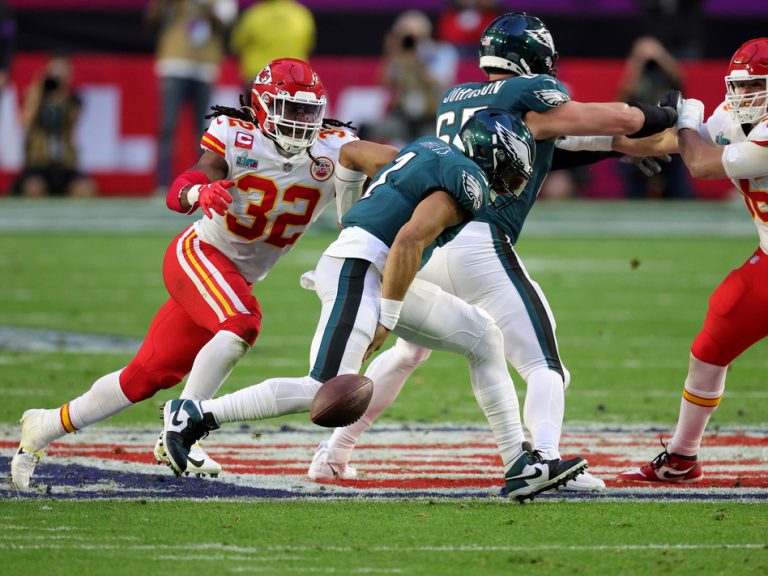
Between 1904 and 2025, the USA hosted one FIFA World Cup (with another to be co-hosted in 2026 with Mexico and Canada), four Summer Olympics, four Winter Olympics, and one FIBA Basketball World Cup. Unlike soccer, which is still finding its footing in the United States—even with Major League Soccer (MLS) having existed for 30 years—American football is the undisputed number-one sport. The Super Bowl—born from Lamar Hunt’s “light-bulb moment”—is the crown jewel. The Super Bowl has become what sociologists call a secular ritual, binding the social fabric of Americans together.
Beyond the Vince Lombardi Trophy, the Super Bowl has evolved into a global marketing masterpiece. From the famous 1984 Apple commercial introducing the Macintosh, which is studied in MBA classes worldwide, to the 1979 Mean Joe Greene Coca-Cola commercial that showed genteel human warmth winning over fearsomeness, the intentionality of brands going head-to-head with rivals has been a recurring feature of every Super Bowl.
While the USA is always attractive for hosting events, the Super Bowl’s success pivots on intellection that results in ingenious marketing. For the recent Super Bowl LX on February 8, 2026, two brands mirrored David Ben-Gurion’s principle of “taking the fight to the enemy.” Pepsi and Anthropic’s Claude entered with an offensive strategy: Claude’s AI ad—“Ads are coming to AI. But not to Claude.”—was a calculated strike in the competitive AI market, while Pepsi’s polar bear blind test revived the sulphurous rivalry with Coca-Cola. Many companies use their ad slots to build brand identity and equity or announce arrival in the business world.
Where does Africa stand in this Super Bowl business and sports calculus? While developed nations are making groundbreaking launches with chutzpah and creativity from creative shops—all resulting in a participatory economy—Africa’s involvement is largely an on-the-field display of Négritude spirit and ravenous passion.
For Africa, the Super Bowl has become a “badge of honor” through representation. Mohammed Elewonibi, a Nigerian raised in Canada, was the first player of African origin to win a Super Bowl (XXVI, 1992, with the Washington Redskins). Since then, nearly 41 players of Nigerian origin or heritage have won—the most of any African country—including six who tasted victory with the recent Seattle Seahawks: Uchenna Nwosu, Nick Emmanwori, Boye Mafe, Jaxon Smith-Njigba (of Nigerian and Sierra Leonean roots), Jalen Milroe, and Olu Oluwatimi.
Yet, as impressive as African athletes are in making the continent proud, we have blatantly failed to translate that audience engagement into commercial windfalls like the Super Bowl on home soil. It is appalling that most of Africa’s sporting events—the Durban July Handicap, Senegalese wrestling (Laamb), or the Safari Rally—have not fully harnessed the intersection of sports and marketing. Even the Africa Cup of Nations (AFCON), despite its 3.45 billion cumulative viewers (far surpassing the Super Bowl’s ~125–127 million), lacks comparable marketing prestige. Why are there no global product launches during our matches? Why aren’t AI giants capitalizing on Africa’s tech startup boom?
Africa is being fed celery when it deserves the whole salad. This asymmetry stems from structural economic factors, but the genie is out of the bottle—we must be forward-looking. To turn African sporting events into “goldmines,” we must reinvent the industry, much as Cirque du Soleil did for the circus. Facing declining audiences, rising costs, and fierce competition, it lost its grip on the circus business. Cirque, however, escaped the dying circus business by reinventing it.
By viewing competition through a new lens, Africa can transform massive viewership into unparalleled economic advantage and value. Just as Cirque du Soleil created uncontested market space, African sports must adopt what W. Chan Kim and Renée Mauborgne called a “Blue Ocean Strategy”—creating uncontested market space and making competition irrelevant. Much as we can not compete toe to toe with advanced economies , we should not follow them like zombies.
In their book Blue Ocean Strategy: How to Create Uncontested Market Space and Make the Competition Irrelevant, the authors highlight how companies in “red oceans” fight for shrinking profits in crowded, defined markets. African sports events currently sit in those crowded red oceans. To elevate them, we need disruptive leaders willing to venture into untapped markets, create new demand, and unlock unlimited growth opportunities.
Joseph Pine and James Gilmore, in their book The Experience Economy, wrote about the need to transform commodities into experiences. As Africans, we have been able to move our sporting events from the commodity stage to the third stage—service delivery—but the experience stage is the North Star we should aspire to reach.
Our cultures, as varied as they are, define us. Despite dilution by Western civilization, our culture stands uneroded, like the mountains that litter our landscape and serve as a canopy to preserve our common heritage. This means our forefathers took culture into the realm of experience—something we are still grappling with in our sporting spectacles today. For us to make headway, our cultures—already bubbling with experience—must mix seamlessly with our sporting spectacles.
Now is the time to merge cultural events like the Eyo Festival, Argungu Festival, Gnaoua World Music Festival, Osun Osogbo Festival, Meskel Festival, and others with our sporting spectacles—that is the Blue Ocean Strategy. This can only be achieved through close collaboration between leaders in sports administration and marketing professionals selling experiences, and the time is now. As this is done, a line from David Diop’s poem Africa—“That is your Africa springing up anew”—would fill our lips.
The experience stage is the nirvana!
Toluwalope Shodunke
Can be reached via tolushodunke@yahoo.com
Super Bowl: Can Africa Spring Up anew?
Opinion
Dele Momodu vs. Fani-Kayode: The pot fighting the kettle
Dele Momodu vs. Fani-Kayode: The pot fighting the kettle
Tunde Odesola
(Published in The PUNCH, on Friday, March 27, 2026)
Back in the Italy of 44 BC, there lived a babalawo called Spurinna. Spurinna was a haruspice. In ancient Rome, a haruspice was a priest or soothsayer who practised divination by inspecting the entrails–specifically the liver and gallbladder–of sacrificed animals, to interpret the messages of the gods. Spurinna was popular in his time and was much sought after. He was like Nigeria’s present-day A-list religious leaders.
So, it was to Spurinna that the Roman military general, Julius Caesar, went when the exceptionally important month of March beckoned. In ancient Rome, March was the first month of the year and the start of military campaigns and farming seasons. Caesar offered a bull for sacrifice; Spurinna inspected its entrails, communed with the gods, who showed him that the sacrificed bull lacked a heart, a metaphor for the pool of blood ahead.
Therefore, the diviner went up to Caesar, hit his staff on the ground, and warned, “Roman General, I see danger in March! Beware of the Ides of March! Danger lurks, Caesar. Yes, the Ides of March, beware!” And he left.
But, Caesar, engrossed in statecraft, never remembered the warning until the day the siegecraft of his enemies subdued him at the Senate, and he fell to their swordcraft, as he was stabbed 23 times by his fellow senators, crying, “Et tu, Brute,” at the final stab. Ironically, the assassination that was meant to save the Roman Republic from Caesar’s dictatorship led to its end, giving rise to the Roman Empire.
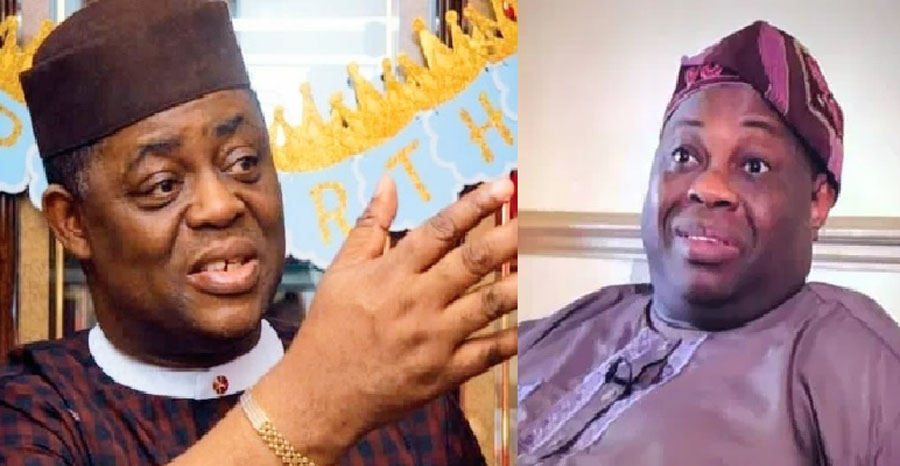
Just like Caesar, two Nigerian politicians, Chief Dele Momodu and Chief Femi Fani-Kayode, in the March of 2026, forgot the Ides of March. They threw caution to the wind and engaged each other in a dogfight that members of the National Union of Road Transport Workers had outgrown. The bloodless power tussle between the forces of Alhaji Tajudeen Baruwa and Alhaji Musiliu Akinsanya aka MC Oluomo over control of the national headquarters of the NURTW in Abuja a few days ago shows that ‘Up National’ members are far more civil than many Nigerian political leaders.
If we share the same parentage, both Momodu and Fani-Kayode, at 65, should pick pieces of meat ahead of me at the family table. Ẹ̀gbọ́n Momodu should pick meat before ẹ̀gbọ́n Fani-Kayode because he arrived in the world five months before FFK. By reason of age, both should talk before me in family gatherings. And, I should wash the plates and pots if the three of us had a family cookout, and there was no Reno Omokri, who I’m older than, around. But when old men fight dirty and disrobe themselves in the marketplace, society allows their younger brother to separate them, exorcise the March Madness and call a spade by its proper name.
I knew FFK between 2009 and 2010 when he eyed the governorship of Osun State on the ticket of the Peoples Democratic Party. In a field brimming with Ife-born political heavyweights such as Senator Iyiola Omisore, former Attorney General and Commissioner for Justice, Chief Niyi Owolade; former Nigerian Ambassador to Cuba, Senator Segun Bamigbetan-Baju; former Commissioner for Education, Prof Muib Opeloye, etc, the young Fani-Kayode stood little chance in emerging the PDP candidate, despite the ‘it is our turn’ clamour by Ife. Femi Fani-Kayode aspired and failed.
Like FFK, Momodu, in 2011, ran for the nation’s presidency on the platform of the National Conscience Party, losing in his ward, where he got just one vote, according to a Vanguard newspaper report. In the PDP presidential primaries, which he contested in 2022, Momodu, who bought the PDP presidential primary form for N50 million, lamented the monetisation of Nigeria’s electoral process. He magnanimously donated copies of his magazine, Ovation, at the PDP primaries. But, for his troubles, Momodu got the type of fat zero mischievous teachers draw in the books of dullard students. PUNCH newspaper reported that no delegate voted for Momodu.
When glitz and glam fuel political aspiration, and public service becomes trackless like a snake crawling on a mountain, prefixes such as ‘former governorship aspirant’ and ‘former presidential candidate’ become mere tickets to the corridors of power.
Though both Fani-Kayode and Momodu never won an election, both are streetwise. Both are grandmasters of Nigeria’s prebendal politics. They understand perfectly how the crooked Nigerian system works. They know the power of visibility, timing and positioning. They understand power and its laws. Both know that most Nigerian men and women of power are vulnerable, lonely and insecure creatures who need public validation to ease the guilt their conscience suffers from years of public mismanagement. The brains of Bob Dee and FFK calculate better than the best Casio calculators.
When FFK wants something from you, you cannot survive his pressure. During the administration of President Goodluck Jonathan, FFK would daily bombard me with press statements. One day, after speaking with me a couple of times on various press statements, he called me yet again. So, I sighed and sounded sleepy. Quick-minded, FFK noticed the drop in the cadence of my voice and said something like this, “Tunde, I have spoken to you many times today, and on each occasion, your voice was different. How many voices do you have?” I smiled at the other end of the phone, and intoned silently to myself, “I go let you kill me with PDP stories, abi?”
For someone who started from scratch, Momodu’s life story resonates with the rags-to-riches tales of resilience and consistency among never-say-die Nigerians. For this, I choose Momodu’s plastic spoon over Fani-Kayode’s silver spoon. Momodu’s youthful life leaves a noticeable trail of labour and salary, while FFK’s life reflects connection and affluence. But that is where my admiration for Momodu stops. The Yoruba say ‘kò sí bí ọ̀bọ ṣe ṣorí, tí ìnàkí o ṣé…’, meaning that there are similarities in the features of the monkey and the gorilla.
‘Trouble dey sleep, yanga go wake am’ when Momodu, in a television interview, said the President and Commander-in-Chief of the Armed Forces, Bola Tinubu, was a civilian image of former military dictator, General Sani Abacha, the rogue. An angry Fani-Kayode, who had just been named ambassador-designate to Germany by Tinubu, argued that comparing a democratic government to a military regime was a distortion of history. Thus, FFK threw down the gauntlet and flung his hat into the ring, but an unfazed Momodu laced his gloves and rolled on his side into the ring, barechested. No way, we die here today!
For calling Tinubu, Fani-Kayode’s current benefactor, a dictator, FFK opened the Book of Remembrance to Chapter 1, and recalled how Dele is ‘friend and brother’ bagged a Third Class degree in Yoruba, and how the late Chief MKO Abiola picked him up from the gutter, washed him, and employed him. Not done yet, Femi, the son of Remi, flipped the Book of Remembrance to Chapter 2, recollecting how unhinged, emotional and illogical his friend, Dele, could be, stressing that he (FFK) had been loyal to the President, unlike Bob Dee, whom he accused of being a back-biter, untrustworthy, and ungrateful individual.
FFK said, “Unlike Dele, I did not benefit from him (Tinubu) for close to 40 years, eat from his plate, collect handouts from him, stayed in his house, claim to be his brother and yet refuse to support him in achieving his dream of becoming president.” The former aviation minister went on to call his publisher friend a glutton, saying Momodu’s big size was evidence of his gluttony.
Momodu roared back. He grabbed the Book of Response, and read from Chapter 7, saying, “He (Femi Fani-Kayode) went to Cambridge University…but became an enfant terrible, fighting anyone and anything in sight. All supplications and intercessions by friends and family on his behalf have failed to cure his malady. And this is the man President Tinubu is about to unleash on Germany as an ambassador of the Federal Republic of Nigeria, for God’s sake.”
Bob Dee did not stop. He attacked Omokri, who was in the same boat with FFK over the issue. He said, “I was going to ignore these two, but later decided to respond to them just in case they thought they could bully me into silence and submission. No, they can’t. They both have no credibility whatsoever.
“Together, they have expressed the worst views ever about Bola Tinubu that they will never be able to erase in a million years, except the world finally comes to an end. The only reason I could adduce for Tinubu’s tolerance of both irritants is desperation and his inability to find better people to do the dirty jobs. The brains of these ones have been configured to say anything and delete immediately.
“I have never disparaged Tinubu in my life. I have never called him a murderer. I have never called him a drug baron or addict. I’m intelligent enough not to say what I have no proof of. Only morons talk without thinking. I thank God for a good upbringing. I do not fight like pigs. And I have a job and manage my modest income. I’m not seeking government appointments. I know how many times Femi and Reno have reached out to me, privately, either begging for publicity or apologising for attacking me publicly.”
But Omokri denied the claims of him reaching out to Momodu, challenging the Edo-born politician to make his claims public. He said the only time he reached out to Momodu was when he urged the opposition stalwart to carry blood thinners such as aspirin along with him because of sudden death associated with frequent flying. He maintained that the Tinubu administration had recorded giant strides in economic growth and security. “Based on the aforementioned statistics devoid of emotions, I put to you that your claims are alarmist and a misrepresentation of the true state of Nigeria and the health of our democracy,” Omokri said.
If you think the Momodu–FFK-Omokri fight is a contest between democracy and dictatorship, you are missing the point. No, it’s beyond such smokescreens. Neither is it a struggle between light and darkness, nor is it a tussle between good and evil.
The fight among the estranged friends and the younger Omokri could be deconstructed through a layered prism. Sitting smugly at the heart of the fight is the degeneration of elite political communication, battle over access to power, struggle for relevance in political-media space, egocentrism, and the fleeting nature of loyalty.
While Momodu put the loyalty of Fani-Kayode and Omokri to the test of integrity, and found them both falling short, FFK’s recall of how close Momodu was to the late MKO Abiola, and how he (Momodu) later went back and associated with the family of the late dictator, Sani Abacha, after Abiola died, put a big question mark on the honour of Momodu. The pot knows when the kettle whispers.
In October 2025, a former Mayor of Blanco, Texas, Mike Arnold, labelled Omokri a “pathological, habitual liar’ and ‘social media influencer’ who misrepresents facts for political gains. Arnold, the founder of Arise Africa International, was formerly associated with Omokri, but broke up the friendship after enumerating instances of ‘constant, calculated lying’ by Nigeria’s ambassador-designate to Mexico.
Arnold accused Omokri of screaming ‘Christian genocide’ during the administration of President Muhammadu Buhari, but turned around to call it a hoax under Tinubu, accusing Omokri of possessing the penchant to flip to the side that holds the fattest chequebook.
Omokri never responded to Arnold’s accusations, even as the former mayor accused the ambassador-designate of begging him to cease fire. Uhmm, Omokri, renowned for his caustic wit and quick fingers on the keypad, has never said ‘pim’ in response to Arnold. Does silence mean guilt? Abi, where has Omokri’s courage gone? Arnold said many other unprintable things about Omokri, but Omokri is my aburo, so I won’t drag him.
The fight of the Three Lions is not in the interest of Nigeria. All three men are public brands, not just political actors. So the quarrel is also a market contest over visibility. Momodu typifies elder-journalist candour; FFK typifies gladiatorial loyalty; Omokri typifies data-driven regime advocacy. FFK and Omokri write not just to wound Momodu, and vice versa, but each writes to reassure his own constituency that he is still indispensable.
The roforofo fight shows that proximity to power in Nigeria speaks the language of outrage, where defenders of incumbency no longer defend policy but often attack dissent as betrayal. It also exposes how fast media and social reaction change once policy debates become public discourse, with the way attention shifted from Tinubu’s alleged authoritarian tendencies to personal attacks.
None of Momodu, Fani-Kayode and Omokri was fighting for Nigeria. The three of them are fighting for power.
Email: tundeodes2003@yahoo.com
Facebook: @Tunde Odesola
X: @Tunde_Odesola
Dele Momodu vs. Fani-Kayode: The pot fighting the kettle
Opinion
OPINION: Refining Without Relief: Nigeria In The Midst Of Global Oil Wars!
OPINION: Refining Without Relief: Nigeria In The Midst Of Global Oil Wars!
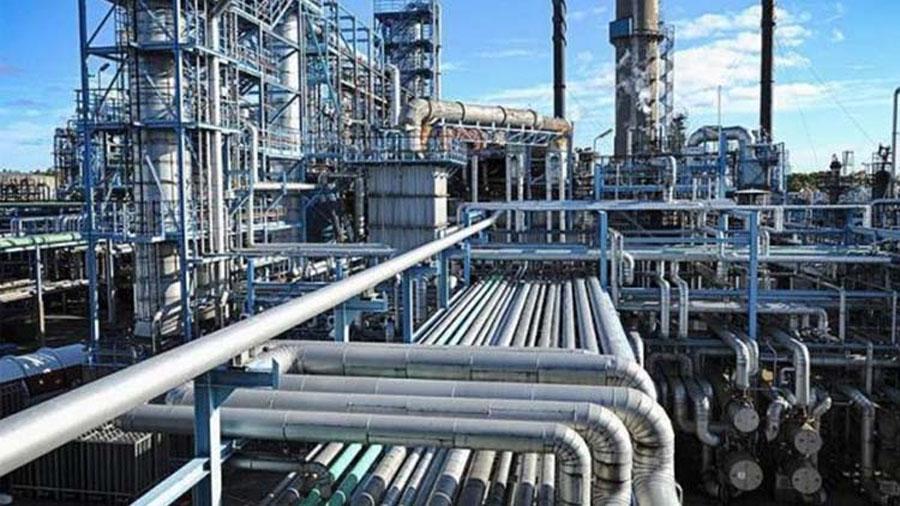
The vision was bold. The expectation was clear. And the promise was powerful. When the Dangote Refinery began operations, it was hailed as Nigeria’s long-awaited escape from decades of energy contradiction, which involves exporting crude oil while importing refined fuel at high costs. It was meant to guarantee supply, stabilise prices, conserve foreign exchange, and most importantly, deliver relief to ordinary Nigerians.
What appears to be a distinct contradiction is that, despite months into its operation, a different reality is emerging, with fuel prices rising sharply. Inflationary pressures are intensifying. This occurrence has forced Nigerians to ask a difficult question once again, one that calls for an urgent answer.: Why does a country that produces and refines crude oil still suffer the consequences of global oil shocks?
Looking at the trend, it is clear that the answer lies not just in geopolitics, but in the deeper structure of Nigeria’s oil economy, where global pricing, policy gaps, and now the looming risk of monopoly intersect.
With the recent development, the latest alarming surge in petrol prices has been driven largely by escalating tensions in the Middle East. This is particularly the U.S-Israel strikes on Iran and retaliatory measures from Tehran. A well-known fact is that at the centre of the crisis is the Strait of Hormuz, a vital oil transit route through which a significant portion of global supply flows. Any disruption, even a speculative one, triggers immediate spikes in crude prices.
Within a week, oil prices jumped from the mid-$60 range to nearly $120 per barrel. For global markets, this is expected. For Nigeria, it is devastatingly ironic. This is because, despite having crude oil in abundance and despite refining it locally, Nigeria remains fully exposed and this has continued to re-echo the same ironic question.
In a rare moment of corporate candor, the refinery’s leadership acknowledged this reality. The plant is deeply affected by global shocks. Crude oil, even when sourced locally, is priced at international benchmarks. Shipping costs have surged dramatically, from about $800,000 per tanker to as high as $3.5m. Insurance premiums have climbed, and logistics have become significantly more expensive, with total costs further driving higher.
READ ALSO:
- Labour Party Zones 2027 Presidential Ticket to South, Bars Northern Aspirants
- US Under Fire Over Alleged $1bn Immigration Fees Without Services
- Mohamed Salah Confirms Liverpool Exit After Nine Years at Anfield
Even more revealing is the refinery’s sourcing structure. Only about 30 per cent – 35 per cent of crude comes from the Nigerian government supply under the crude-for-naira framework. A significant portion is still purchased in U.S. dollars on the open market, while another 30 per cent – 40 per cent is sourced internationally, including from the United States and other regions. This means the refinery is not insulated; it is integrated into the global oil system. The implication is unavoidable as local refining has not translated into local pricing control.
The impact on Nigerians has been immediate and severe as petrol prices have surged from under N800 earlier in the year to over N1,200, and in some regions, it is even more alarming when the prices skyrocketed close to N1,400 per litre. Within weeks, multiple price increases have been recorded, driven largely by global crude price spikes and rising logistics costs. Doubtless, the country has witnessed the consequences ripple across the economy as transport fares rise, food prices increase, businesses struggle with higher operating costs, and inflation accelerates.
The development has attracted the attention of the labour unions and the organised private sector, prompting them to raise concerns and alarm about the consequences of job losses, business closures, and worsening hardship if the trend continues with each passing day, witnessing a daily increase and causing possible artificial scarcity.
Nigeria remains trapped in a painful contradiction. It produces crude oil. It refines crude oil. Yet it cannot protect its citizens from global oil volatility. As Aliko Dangote himself acknowledged, Nigeria has no direct role in the conflict driving these price increases, yet it bears the consequences due to global economic interdependence.
In a real sense, this is the deeper tragedy, as Nigeria has achieved capacity without control.
At the heart of the issue is a structural reality, crude oil is priced globally, not locally. Even under the crude-for-naira arrangement, pricing is benchmarked against international rates. This means refineries pay global crude prices, fuel prices reflect global market conditions, and domestic consumers absorb international shocks. In essence, Nigeria has moved refining home without bringing pricing sovereignty with it.
READ ALSO:
- MultiChoice Sets March 29 for AMVCA 2026 Nominees Reveal
- Court Orders Meta to Pay $375m Over Child Safety Misleading Claims
- Tinubu Govt Launches Unified System to Lift 50 Million Nigerians Out of Poverty
To be fair, the Dangote Refinery has played a stabilising role. Nigeria still enjoys relatively lower petrol prices compared to many global markets. In several countries, supply disruptions have led to panic buying and rationing, while Nigeria has maintained a consistent supply. As the refinery’s CEO aptly noted, what is worse than $120 oil is no oil. The refinery has prevented scarcity, but it has not prevented high prices. Availability, in this case, has not equated to affordability, which is the painful part for the citizens.
While much of the current debate focuses on pricing, another critical issue is quietly taking shape, which is the risk of market concentration. Dangote Refinery deserves credit for its scale and ambition, but scale brings power, and power demands oversight. If fuel importers are gradually pushed out and no competing refineries emerge at scale, Nigeria could find itself transitioning from a public sector monopoly to a private sector dominance led by a single player.
Nigeria has seen this pattern before. In the cement industry, increased domestic production did not necessarily translate into lower prices. Limited competition allowed prices to remain elevated despite local capacity. The same risk now looms in the downstream oil sector. Without competition, price-setting power becomes concentrated, supply risks increase, and consumer protection weakens. In a country with fragile regulatory institutions, this is not a theoretical concern; it is a real and present danger.
No one should perceive this wrongly, because it is important, however, not to misplace blame. It should be made known that the Dangote Refinery is not a charity; it is a private enterprise operating within market realities. It must recover its investment, manage costs, and deliver returns. Its exposure to global pricing is not a failure of intent but a function of the system within which it operates.
READ ALSO:
- Colleagues, Community Rally GoFundMe for Nigerian Nurse Killed in US Wrong-Way Crash
- Kwankwaso Set to Join ADC Wednesday as Defection Talks Intensify
- Makoko Crisis: Falana Condemns Forced Evictions, Warns Lagos Govt
The real issue lies in the structure of the market and the absence of sufficient competition.
It is no longer news that Nigeria’s downstream sector is now largely deregulated following the removal of fuel subsidies. While deregulation has reduced government fiscal burden and encouraged private investment, it has also exposed consumers to price volatility and limited the scope for intervention, as this has continued to cause pain. Markets, in theory, deliver efficiency, but in practice, they require competition and effective regulation to function properly. Without these, deregulation can simply replace one form of inefficiency with another.
Nigeria does not need to weaken Dangote Refinery; it needs to multiply it. The goal should be to build a competitive refining ecosystem to replace one dominant structure with another. The truth is not far from this, as part of a lasting solution, it requires encouraging new refinery investments, removing bottlenecks for players such as BUA and modular refineries, ensuring transparent crude allocation, providing open access to pipelines and storage infrastructure, and enforcing strong antitrust regulations.
Competition remains the most effective regulator of price, which is sacrosanct and it protects consumers, strengthens supply security, and reduces systemic risk.
This must also be perceived beyond competition, which calls for the government to act strategically. The fact is that when supplying crude to local refineries at discounted or stabilised rates, expanding naira-based transactions, and introducing temporary relief measures during global crises are all viable options that must be put into consideration. Energy is too critical to be left entirely to market forces, especially in a developing economy where millions are highly vulnerable to economic shocks.
It is time that Nigerians understood that the nation’s refining crisis has been decades in the making, and it cannot be solved by a single refinery, no matter how large. If asked, it will be said that this is a fact that can’t be argued. The Dangote Refinery is undoubtedly a turning point, but it will only remain so if it is embedded within broader systemic reform. Otherwise, Nigeria risks replacing one form of dependency with another, from import dependence to domestic concentration.
The question is no longer whether Nigeria can refine crude oil. It can. The real question is whether Nigeria can build a system that ensures fair pricing, competitive markets, consumer protection, and economic resilience, as these are exactly the core answers.
If global conflicts continue to dictate local fuel prices, if monopoly risks go unchecked, and if citizens remain vulnerable despite abundant resources, then the promise of local refining will remain unfulfilled, as it will bring no expected relief.
What is playing out is the well-known fact that in refining, as in democracy, concentration of power is dangerous. And in both, the strongest safeguard remains the same, competition, transparency, and institutions that serve the public interest.
OPINION: Refining Without Relief: Nigeria In The Midst Of Global Oil Wars!
—Blaise, a journalist and PR professional, writes from Lagos and can be reached via: blaise.udunze@gmail.com

-

 Entertainment3 days ago
Funke Akindele, Toyin Abraham Spark Reactions Over Alleged Snub at Iyabo Ojo’s Premiere
-

 Education2 days ago
WAEC Releases 2026 WASSCE Timetable for School Candidates
-

 Auto2 days ago
Lagos NURTW Chairman Sego Distributes Exotic Cars, Luxury Items to Cabinet Members (Video)
-

 metro2 days ago
Cars Torched as South Africans Protest Alleged Nigerian ‘Igbo King’ Coronation
-
 News3 days ago
UK Raises Visa Costs, Tightens Immigration Rules From April 8
-

 Railway1 day ago
Easter train: NRC increases Lagos-Ibadan trips, offers free Osun holiday transit
-

 Sports2 days ago
Osimhen Among Highest-Paid African Footballers in 2026 — See Full List
-

 Education2 days ago
JAMB Releases 2026 UTME Mock Results, Delists Over 20 CBT Centres