

News
1966 coup: Ohanaeze denies any planned apology to Fulani

1966 coup: Ohanaeze denies any planned apology to Fulani
Ohanaeze Ndigbo has denied any plans by Ndigbo to apologise to the Fulani community over the 1966 coup in Nigeria.
It was reacting to a viral audio indicating that Ndigbo were making moves to apologize to the Fulani community over the incident.
The apex Igbo socio-cultural organisation described the viral audio as wicked, false and malicious.
The January 15, 1966 led by Major Kaduna Nzeogwu and called ‘Igbo coup’ in some quarters because the major participants were from Eastern Nigeria, killed 22 people including then sitting Prime Minister Tafawa Balewa, many other senior politicians, senior army officers of northern extraction and their wives.
However, the coup was not well received by some northern soldiers led by then – Lt. Cols Murtala Muhammed and TY Danjuma who staged a counter-coup in July 1966.
The counter-coup resulted in the murder of Nigeria’s first military Head of State, General Johnson Aguiyi-Ironsi, and Lt Colonel Adekunle Fajuyi (who was hosting a visiting Aguiyi-Ironsi as Western Region Governor) in Ibadan.
Reacting to the voice note in Owerri, the Imo State capital, the President General of Ohanaeze, Chief Emmanuel Iwuanyanwu, maintained that the Igbo were not responsible for the coup in 1966 and, therefore, have no reason to apologise to anyone.
Iwuanyanwu also said all Igbo governors were calling for IPoB leader Nnamdi Kanu to be released from custody.
Kanu is facing trial for alleged secession and treason before a Federal High Court in Abuja.
“I was shocked to read a voice message alleging that we held a retreat in Enugu State, and it was poorly attended and that at the meeting we said we were going to Sultan of Sokoto to apologize to them for the killing of Ahmad Bello and the other things that happened in the 1966 coup.
“The voice message was false, malicious and wicked,” Iwuanyanwu stated.
READ ALSO:
- Real Madrid win 36th La Liga title as Girona beat Barcelona
- NNPC blames fuel scarcity on panic buying, marketers deny allegations
- FG threatens to stop funding tertiary institutions with poor performance
“Part of what we agreed in that retreat was that we are going to publish a book called; ’This is our story’. It will tell our story starting from the time of war till this moment. So, as a father, I will forgive those who did the evil voice message. So far, Ugwuh has apologized and I have forgiven him.”
READ ALSO:
- Don’t impose assistants on Finidi — Udeze warns NFF
- Lagos issues 48hr quit notice to Ikoyi Towers’ illegal squatters
- Lagos issues 48hr quit notice to Ikoyi Towers’ illegal squatters
On Nnamdi Kanu, the Ohanaeze leader said, “I have done a lot, I am the one who started the move to free Kanu, and many were bold to join me because they have respect for me. All our governors are calling for Kanu to be released.”
Meanwhile, the Igbo-Biafra Nationalists has said it would not accept any plan to apologize to any person or group of persons over the issues surrounding the coup.
The Convener of the group, Uche Mefor, denounced any such suggestion or plan of extending apologies to the Fulani community.
He said, “Our attention has been drawn to a purported shameful plan by some unscrupulous individuals from the South-East, contemplating the notion of extending an olive branch to the Fulani community, seeking forgiveness for the events surrounding the military coup of 1966.
“Such contemplation, however, must be met with resounding condemnation and a vehement refusal to tow such an ignoble, abominable path to destruction.
“The Igbo-Biafra Nationalists and the Indigenous People of Igbo Nation for Self-Determination categorically denounce any such suggestion or plan, whether genuine, perceived, or manipulated, of extending apologies to the Fulani community.”







News
Pastor Apologises to Wife, Women Over Past Affairs, Steps Back From Ministry
Pastor Apologises to Wife, Women Over Past Affairs, Steps Back From Ministry
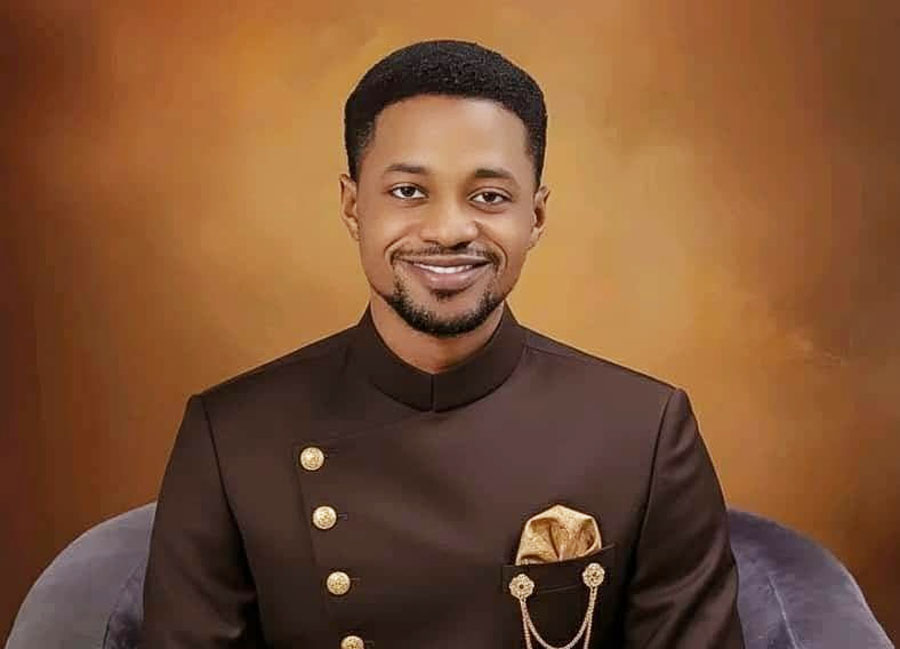
Apostle Sam Adegoke, a newlywed pastor of Elijah Generation Church, Akure, Ondo State, has stepped back from public ministry after apologising over past sexual relationships and allegations surrounding his conduct with women.
Adegoke announced his decision in a statement, saying he had chosen to withdraw from public ministry and social media to reflect on his actions, seek counsel and take steps towards making amends.
The pastor acknowledged that he had been involved in sexual relationships with women before his marriage, describing his conduct as wrong and expressing regret over the consequences of his actions.
He said the fact that the relationships occurred before his marriage did not excuse his behaviour, adding that he was seeking spiritual guidance as well as pastoral and professional counselling.
Adegoke also apologised to the women involved, as well as his wife, family, church members, colleagues and others who had placed their trust in him as a spiritual leader.
He said stepping back from public ministry was necessary to allow him to confront his past, make appropriate changes and demonstrate genuine repentance through his actions.
READ ALSO:
- Troops Take Down Zamfara Bandit Kingpins Baban Love, Mai Zamani, Three Others
- FG Gives N250m To Families Of 37 Miners Who Died In NSCDC Custody
- Tompolo’s PBAT Movement Suspends Campaign Over Ondo Military Crash
The pastor further said he was willing to remain under appropriate spiritual, pastoral and professional accountability during the process.
His decision followed the emergence of leaked WhatsApp conversations in which several women allegedly accused him of having sexual relationships with female church members over several years.
Some of the allegations reportedly concerned relationships that allegedly occurred shortly before his wedding. Adegoke admitted to past sexual relationships but did not publicly address every allegation contained in the leaked conversations.
The women also reportedly raised concerns about the welfare of female members of the church and alleged that some women had left the congregation over the pastor’s conduct.
Adegoke, however, said his immediate focus was on accepting responsibility for his past actions and undergoing the process he considered necessary for genuine change.
He appealed for prayers and said he wanted to approach the situation with humility, integrity and accountability, while making amends where appropriate.
The controversy has drawn significant attention because of its timing, coming shortly after the pastor’s marriage and amid renewed scrutiny of the allegations concerning his past relationships.
The pastor and his wife have reportedly disabled comments on their respective Instagram accounts following the development.
Pastor Apologises to Wife, Women Over Past Affairs, Steps Back From Ministry
News
Iwo Son Becomes Yorubaland’s First Muslim Professor of Arabic Without Secondary School
Iwo Son Becomes Yorubaland’s First Muslim Professor of Arabic Without Secondary School
Prof. Razaq Abubakre’s remarkable journey from self-study to academic excellence
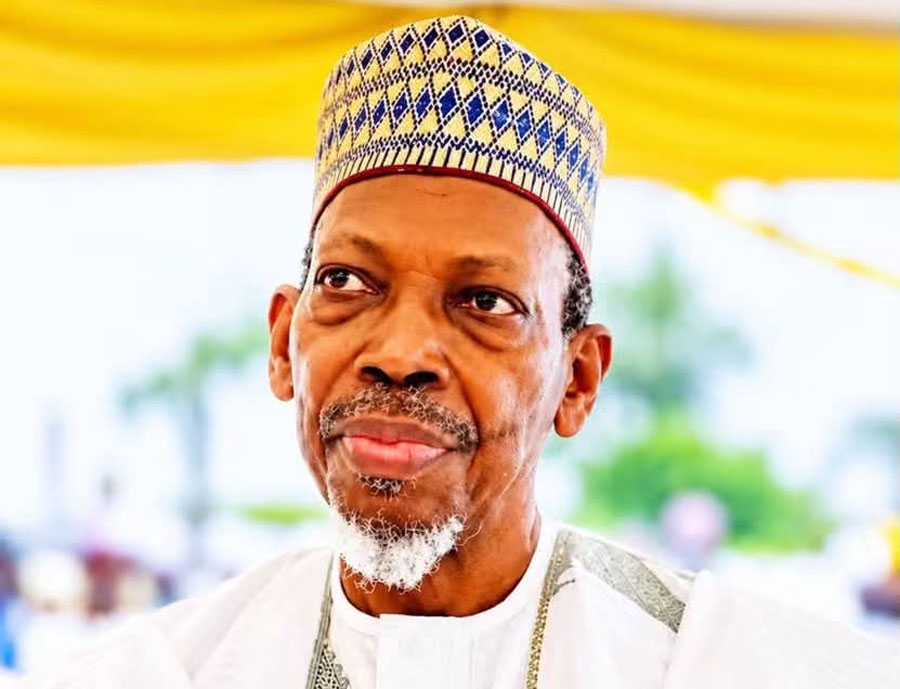
The remarkable story of Professor Razaq Deremi Abubakre, an indigene of Iwo, Osun State, has continued to inspire generations, particularly for his extraordinary journey from a humble educational background to the pinnacle of Arabic scholarship in Nigeria.
Born on January 20, 1948, in Iwo, Abubakre rose to become the first Muslim Professor of Arabic in Yorubaland, a feat that established his place among the foremost scholars of Arabic and Islamic studies in the country.
What makes his achievement even more remarkable is the unusual path through which he attained academic excellence.
Available biographical accounts indicate that Abubakre did not attend a conventional secondary school. Instead, he pursued much of his early education through Arabic and Islamic learning, self-study and personal discipline.
His determination eventually paid off when he obtained distinctions that enabled him to proceed to the University of Ibadan, where he studied Arabic and graduated with First Class honours.
In an interview published by The PUNCH, Abubakre recalled how he returned to formal schooling after leaving in 1961 and was placed in Year Three in 1966. He said he subsequently performed exceptionally well, before later taking the University of Ibadan entrance examination for a Certificate in Arabic and Islamic Studies in 1969.
His academic journey later took him to the School of Oriental and African Studies (SOAS), University of London, where he pursued doctoral studies in Arabic Literature under a Commonwealth Scholarship and completed his PhD in 1980.
READ ALSO:
- Troops Take Down Zamfara Bandit Kingpins Baban Love, Mai Zamani, Three Others
- FG Gives N250m To Families Of 37 Miners Who Died In NSCDC Custody
- Tompolo’s PBAT Movement Suspends Campaign Over Ondo Military Crash
In 1989, Abubakre was appointed a Professor of Arabic at the University of Ilorin, at the age of 41, cementing his place in the history of Arabic scholarship in Yorubaland.
But beyond his own academic accomplishments, perhaps the most enduring part of Abubakre’s legacy is the number of scholars and intellectuals he taught and mentored.
Among those associated with him as students are Professor Ishaq Oloyede, former Vice-Chancellor of the University of Ilorin and current Registrar of the Joint Admissions and Matriculation Board (JAMB); Professor Muhammad Shafi’u Abdullahi, former Registrar of the National Board for Arabic and Islamic Studies (NBAIS); and Professor Amidu Olalekan Sanni, former Vice-Chancellor of Fountain University.
Others include Professor Abdul-Rasheed Na’Allah, former Vice-Chancellor of the University of Abuja, as well as Professors K.K. Oloso and Muhibbu-Din Opeloye, who served at different times as commissioners in Oyo and Osun states respectively.
Academic records and scholarly publications also attest to Abubakre’s influence on the development of Arabic and Islamic scholarship in Nigeria. A University of Ibadan research publication, for instance, lists him alongside Professor Ishaq Oloyede and other prominent scholars as products of the Arabic-Islamic educational tradition.
Abubakre’s career has extended beyond the classroom. He served as Vice-Chancellor of Al-Hikmah University, Ilorin, and held several academic and administrative responsibilities, while also contributing extensively to scholarship through books, journal articles and international academic engagements.
His story therefore goes beyond the title of professor.
It is a story of determination, self-education, intellectual discipline and mentorship.
For Iwo, it is also a story of a son of the ancient town who rose from an unconventional educational beginning to become a major figure in Arabic scholarship and a mentor to generations of academics.
Professor Abubakre’s journey demonstrates that the circumstances of one’s beginning do not necessarily determine the height of one’s achievement.
From Iwo to the University of Ibadan, from there to SOAS in London and eventually to professorial leadership in Nigeria, his life remains an enduring testimony to the power of knowledge, perseverance and purposeful mentorship.
At a time when educational opportunities are increasingly available to millions of young Nigerians, the story of the Iwo-born scholar offers another important lesson: great intellectual achievements can emerge from the most unlikely beginnings when determination is matched with discipline and opportunity.
Iwo Son Becomes Yorubaland’s First Muslim Professor of Arabic Without Secondary School
News
President Tinubu Mourns 32 NAF Personnel in Ondo Jet Crash, Orders Immediate Probe
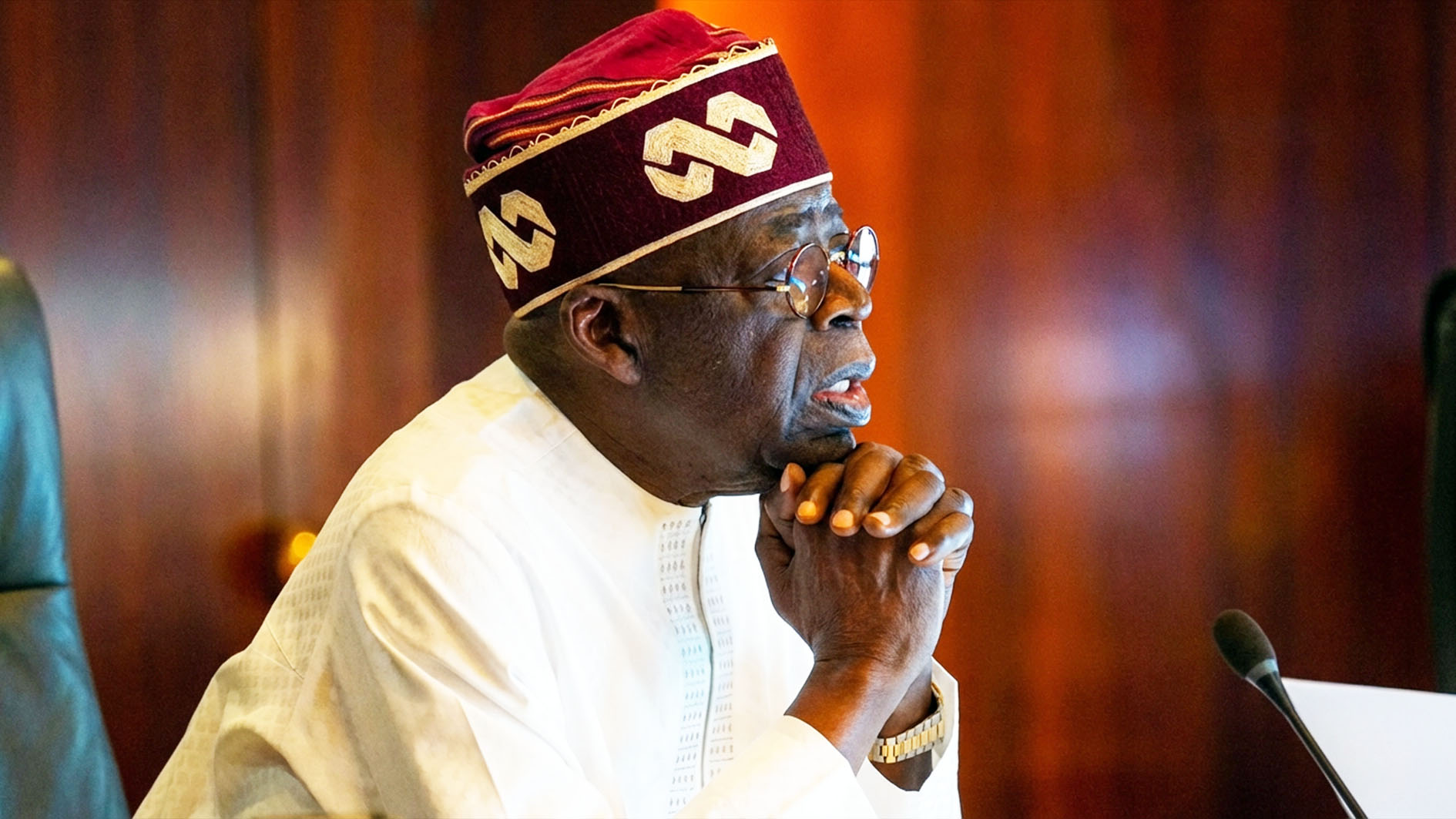
President Tinubu Mourns 32 NAF Personnel in Ondo Jet Crash, Orders Immediate Probe
President Bola Ahmed Tinubu has expressed profound grief over the crash of a Nigerian Air Force ATR-42 aircraft near a naval base in the Igbokoda area of Ondo State, which claimed the lives of all 32 personnel on board.
The tragic incident occurred on Monday morning when the aircraft, on a routine mission from Benin to Lagos, went down shortly before reaching its destination. The victims include 25 passengers and seven crew members.
In a statement released by his Special Adviser on Information and Strategy, Bayo Onanuga, the President described the incident as “a painful moment for our Armed Forces and for the entire nation.”
“Our Air Force personnel put their lives on the line every day to secure Nigeria. Their sacrifice will never be forgotten,” Tinubu said.
The President extended his deepest condolences to the families of the deceased, the Chief of the Air Staff, Air Marshal Sunday Kelvin Aneke, and the entire Nigerian Air Force community.
READ ALSO:
- Benue Boat Mishap: Catholic Priest Among Four Dead, Nine Missing
- Rivers Police Arrest OSPAC Operative Over Alleged Killing, Secret Burial
- Adeleke Signs New Law to Regulate Motor Parks Across Osun
President Tinubu revealed that he had received a briefing from the Chief of Air Staff and has directed an immediate and thorough investigation into the cause of the crash to prevent future occurrences.
“I have directed the Nigerian Air Force to immediately commence a thorough investigation into the cause of the crash to prevent future occurrences,” he stated.
The President commended the Nigerian Air Force for activating an immediate Search and Rescue operation following the accident, as well as the swift response of first responders and the Ondo State Government at the crash site.
“I pray for the repose of the souls of the gallant officers and for Almighty God to grant their families and the Nigerian Air Force the fortitude to bear the unfortunate loss,” Tinubu said.
He further assured the Nigerian Air Force of the continued support of his administration as they continue their vital role in securing the nation.
The crash marks one of the deadliest air disasters involving Nigerian military personnel in recent years, casting a shadow over the nation’s security apparatus. The Nigerian Air Force is expected to release further details as the investigation gets underway.
President Tinubu Mourns 32 NAF Personnel in Ondo Jet Crash, Orders Immediate Probe
-
 metro3 days ago
‘I Thought I Was Dead’ — Hairstylist’s Daring Escape From Kidnappers After Benin-Ore Ambush
-

 metro1 day ago
Tragedy Strikes FMC: Medical Director Loses Two Daughters—A Doctor and a Pharmacist—Within 48 Hours
-

 metro1 day ago
Transporters Urge IGP Disu to Arrest Illegal Highway Tax Collectors
-

 metro3 days ago
Court Restricts Osun Accounts Over $13.9m Arbitration Award
-
 Politics1 day ago
2027: Soludo Govt Accuses Peter Obi Of Plot To Destroy APGA
-
 metro1 day ago
Army, DSS, Amotekun Kill ISWAP Commander Planning Attacks in Southern Nigeria
-

 Entertainment2 days ago
“Sometimes, I Wonder Why I Married My Husband” — Omotola
-
 News1 day ago
BREAKING: Many Feared Dead as Helicopter Crashes in Ondo Community