

International
25 arrested after prison attacks in France

25 arrested after prison attacks in France
No fewer than twenty-five people were arrested in police raids across France on Monday, following a series of coordinated prison attacks that shook the government earlier this month, according to a source familiar with the case.
According to AFP, the early morning arrests occurred outside of Paris, as well as in Marseille, Lyon, and Bordeaux.
This month, unidentified assailants targeted multiple jails and other facilities around France, torching cars, spraying the entryway of one prison with automatic gunfire, and leaving enigmatic inscriptions.
The assaults have embarrassed the right-wing government, whose tough-talking justice and interior ministers, Gérald Darmanin and Bruno Retailleau, have promised to step up the campaign against narcotics and drug-related crimes.
President Emmanuel Macron has guaranteed that the attackers will be “found, tried, and punished”.
French anti-terror prosecutors, who are in charge of the probe due to the coordinated nature of the attacks, announced 22 arrests on Monday, with three more made later in the day.
According to the BFMTV channel, several of the arrests occurred inside jails, with alleged operation leaders, who are thought to have commanded them from within, being retrieved from their cells for questioning by police.
The anti-terror prosecutor’s office and the office for the battle against organised crime, known by its abbreviation JUNALCO, stated that the attacks were “likely” to be part of “very serious organised crime”.
READ ALSO:
- BREAKING: Court sentences late gospel singer Osinachi’s husband to death by hanging
- Rice prices fall amid influx from Benin Republic – Report
- Rape: Father, step-dad, doctor charged for procuring abortion for minor
According to the prosecutors, the inquiry has made “significant progress” in identifying potential attackers and instigators.
They claimed they have identified approximately 15 assaults between April 13 and 21, but more attacks have been reported at other jails; however, no links can be established at this time.
Almost 200 investigators have been deployed during the two-week investigation.
Justice Minister Darmanin has accused people involved in drug trafficking of being responsible.
“Thank you to magistrates and law enforcement for arresting the alleged perpetrators of the attacks against prison officers and our country’s prisons early this morning,” Darmanin said on X on Monday.
“We remain committed to the law and to the Republic in our relentless fight against drug trafficking.”
Darmanin has suggested a link with his intention to imprison 200 of France’s 700 most dangerous drug dealers in two high-security prisons.
Retailleau also complimented the investigators, complimenting their “great professionalism” that “made it possible to achieve results in a very short time”.
The raids occur as the French parliament’s upper and lower houses prepare to vote this week on a law aimed at ratcheting up the fight against drug traffickers, with the goal of final passage.
On April 13 in Agen, southwestern France, the tag “DDPF” — standing for “Rights of French Prisoners” — appeared next to seven cars set on fire in the car park of a prison staff training centre.
This was followed by a series of arson attacks targeting prison staff cars and other assaults, and a jail near the southern city of Toulon, France, was sprayed with automatic gunfire.
While some of the attacks followed the pattern of organised crime, others were evocative of ultra-left methods, according to a police source.
25 arrested after prison attacks in France












International
Kemi Badenoch: I Don’t Want Migrants Turning UK Into Nation Of ‘Little Ghettos’

Kemi Badenoch: I Don’t Want Migrants Turning UK Into Nation Of ‘Little Ghettos’
UK Conservative Party leader Kemi Badenoch has warned against the emergence of what she described as “little ghettos” of separatist migrant communities in Britain, arguing that newcomers must integrate and respect the country’s culture and values.
Badenoch made the remarks while opening the Conservative Party’s annual conference in Birmingham, where she set out her vision for rebuilding the party and Britain.
Speaking about immigration and integration, the Conservative leader said she wanted Britain to remain a “high-trust” society in which people coming into the country accept the social expectations and responsibilities that come with living there.
“I don’t want lots of little ghettos of separatist communities where they are recreating the place that they came from. That will ruin the United Kingdom,” Badenoch said.
She added that Britain was “not a dormitory” or “a hotel” and argued that migrants who come to the country, including those who come primarily to work, should respect British culture and values.
Badenoch stressed that she was not advocating race-based citizenship, saying Britain had never operated such a system. However, she argued that British culture, norms and expectations remained important to maintaining social cohesion.
READ ALSO:
- Trump Approves Firing Squad Execution For Fort Hood Shooter Nidal Hasan
- Nigeria Climbs Africa Investment Ladder, Overtakes Four Nations
- Ogun Crash: Nine Die As Bus Collides With Truck On Ijebu-Ode-Ore Road
“It is not just about the values and the principles,” she said, arguing that the way people conduct themselves and the expectations they share also form part of British culture.
The remarks form part of Badenoch’s broader attempt to establish a tougher Conservative Party position on immigration, integration and national identity as the party seeks to regain political ground.
She has also acknowledged failures by previous Conservative governments to deliver promised reductions in immigration. In her newly published policy document, The Right Way, she argues that the party needs clearer principles and a more consistent approach to government.
The Conservatives are also proposing tougher conditions for migrants seeking permanent settlement in the UK, including changes to the rules governing indefinite leave to remain.
Badenoch’s comments have drawn attention because of the sensitivity surrounding immigration and multiculturalism in Britain, with critics arguing that language about migrant communities risks stigmatising minority groups.
Her supporters, however, say the emphasis on integration rather than race is intended to reinforce a shared national identity and social cohesion.
The debate comes as immigration remains a major political issue in the UK, with the Conservatives facing pressure from Reform UK over migration while the Labour government continues to face questions over legal and irregular immigration.
Badenoch, who became Conservative leader in November 2024, used the conference to present her party as a political alternative focused on economic growth, stronger national security, reduced bureaucracy and stricter immigration policies.
Her comments on migrant communities are expected to remain a significant part of the Conservatives’ political message as the party seeks to redefine its approach to immigration, integration and British identity.
Kemi Badenoch: I Don’t Want Migrants Turning UK Into Nation Of ‘Little Ghettos’
International
Trump Approves Firing Squad Execution For Fort Hood Shooter Nidal Hasan
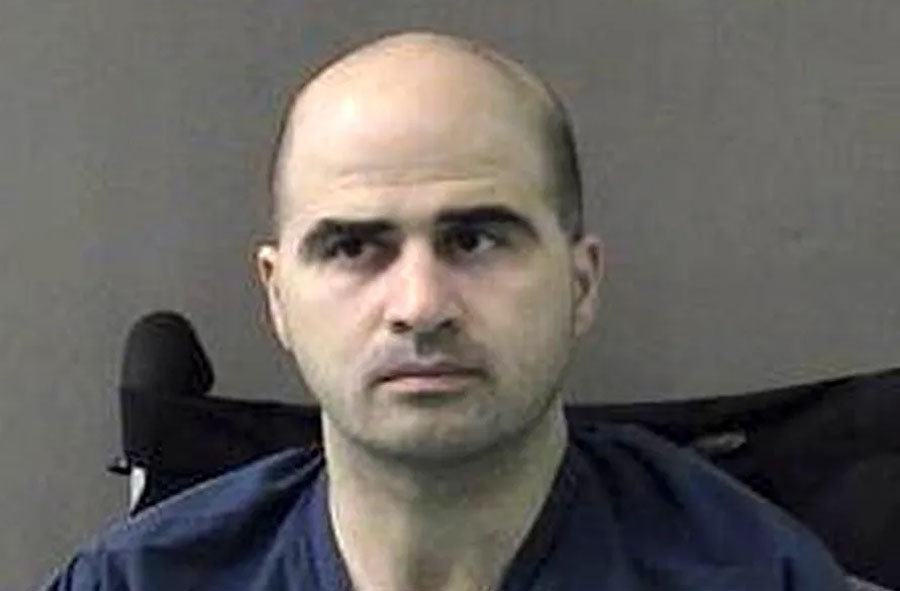
Trump Approves Firing Squad Execution For Fort Hood Shooter Nidal Hasan
President Donald Trump has approved the execution by U.S. Army firing squad of former Army Major Nidal Malik Hasan, who was sentenced to death for the 2009 mass shooting at Fort Hood, Texas, that left 13 people dead and 32 others wounded.
The Pentagon announced the decision on Monday, saying Defense Secretary Pete Hegseth had recommended the firing-squad execution and Trump approved it.
Pentagon spokesman Sean Parnell said the Secretary of the Army would determine the date and location of the execution.
Hasan, a former Army psychiatrist, opened fire at a medical facility at Fort Hood on November 5, 2009, shortly before he was due to deploy to Afghanistan.
The attack killed 12 active-duty soldiers and one retired serviceman, while 32 others were wounded. Hasan was shot and seriously injured by a responding civilian police officer and has been partially paralysed since the attack.
READ ALSO:
- Nigeria Climbs Africa Investment Ladder, Overtakes Four Nations
- Ogun Crash: Nine Die As Bus Collides With Truck On Ijebu-Ode-Ore Road
- Gunmen Open Fire At Lagos Bus Stop, Kill NURTW Member, Injure Three
A military jury convicted Hasan in 2013 of 13 counts of premeditated murder and 32 counts of attempted premeditated murder and sentenced him to death.
During his court-martial, Hasan represented himself and did not call witnesses in his defence. He acknowledged that he carried out the shooting and argued that his actions were intended to protect Muslims whom he believed were being targeted by U.S. military operations.
Hasan has remained on military death row at the U.S. Disciplinary Barracks at Fort Leavenworth, Kansas, while pursuing legal challenges to his conviction and sentence.
Trump’s approval does not mean the execution will take place immediately. Further legal and administrative procedures remain, and Hasan could seek relief through the federal courts, potentially delaying the execution.
If carried out, Hasan’s execution would be an extraordinary event in the history of the U.S. military justice system.
The U.S. military has not carried out an execution since 1961, when Army Private John Bennett was hanged. The last known U.S. military execution by firing squad took place in 1945.
The decision also comes amid renewed debate in the United States over methods of execution. The Trump administration has expanded the available methods for carrying out federal executions, while recent difficulties surrounding lethal injection have intensified scrutiny of capital punishment.
Hasan’s case has remained one of the most prominent military death-penalty cases in the United States since the Fort Hood attack nearly 17 years ago.
The Army is now expected to determine when and where the execution will take place, subject to the remaining legal process.
Trump Approves Firing Squad Execution For Fort Hood Shooter Nidal Hasan
International
UK Threatens to Expel 27 Israeli Diplomats as Jerusalem Consulate Standoff Escalates
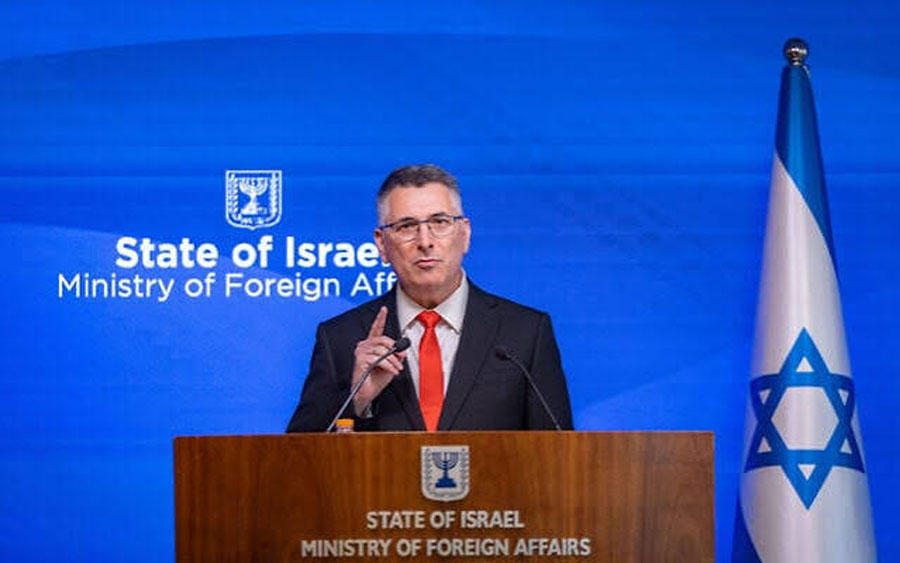
UK Threatens to Expel 27 Israeli Diplomats as Jerusalem Consulate Standoff Escalates
The UK-Israel diplomatic crisis has escalated to its most dangerous level in decades, with Britain threatening to expel 27 Israeli diplomats if Israel proceeds with its plan to shut down the British consulate in East Jerusalem this Thursday. The extraordinary standoff—sparked by UK sanctions on illegal Israeli settlements—now threatens to sever one of the West’s most strategically important bilateral relationships. According to reports confirmed by The Jerusalem Post and The New Arab, British Ambassador to Israel Simon Walters personally delivered the warning to Israeli officials: for every British diplomat forced out of the East Jerusalem consulate, London will expel one Israeli diplomat from its embassy in London. With 27 British staff members facing expulsion, Israel’s London embassy—which has already been without an ambassador since September 2025—could be effectively gutted. The UK Foreign Office declined to comment on the reported threat, while Israeli diplomatic sources told The Jerusalem Post there was “no reason for us to address speculation regarding decisions other countries might make in the future.”
Behind the scenes, UK National Security Adviser Jonathan Powell made a quiet visit to Israel last week in a desperate attempt to prevent the closure, three sources told Reuters. The talks failed to produce an agreement to keep the consulate open, and the British government did not disclose the visit.
The confrontation traces back to September, when UK Foreign Secretary Ed Miliband announced sweeping trade sanctions on goods from illegal Israeli settlements in the occupied West Bank. In a dramatic statement to Parliament, Miliband accused the Israeli government of turning a “blind eye” to what he called “ethnic cleansing” by settler terrorists. “The British government agrees that there is ethnic cleansing of Palestinians in areas of the West Bank, perpetrated by settler terrorists,” Miliband said. “All too often the Israeli government has turned a blind eye to this, and worse members of it have made statements and taken actions to support the forced displacement of Palestinians.” The UK settlement sanctions, announced in coordination with France and Canada, will ban imports from illegal settlements and target companies and individuals providing “construction, infrastructure, financing, or real estate for settlement expansion.” According to the House of Commons Library, the measures will take effect within six to nine months, with the import ban applied geographically based on settlement postcodes. Britain specifically cited the Israeli government-backed E1 settlement project—which would effectively sever the West Bank from East Jerusalem—as a key factor undermining the two-state solution.
READ ALSO:
- President Tinubu Mourns 32 NAF Personnel in Ondo Jet Crash, Orders Immediate Probe
- Tragedy Strikes FMC: Medical Director Loses Two Daughters—A Doctor and a Pharmacist—Within 48 Hours
- BREAKING: Many Feared Dead as Helicopter Crashes in Ondo Community
Israeli Foreign Minister Gideon Sa’ar announced a series of countermeasures on September 8, calling the UK sanctions “morally distorted” and accusing Britain’s ruling Labour Party of interfering in Israel’s upcoming October 27 general election. The Israeli retaliation included closing the British Consulate General in East Jerusalem within 30 days, removing British representatives from the US-led International Gaza Support Center in Kiryat Gat, ending British participation in training Palestinian Authority security forces in Ramallah, and barring 12 British officials deemed “anti-Israel” from entering Israel, including 11 MPs and a lawyer. Sa’ar framed the measures as a necessary response to what he called a “hostile Labour government.” “Israel has nothing against the British people,” he said. “Unfortunately, a hostile Labour Government is in office, systematically acting against the State of Israel, and it has left us with no choice but to finally respond.”
The British Consulate General in East Jerusalem is not a routine diplomatic post. Established in 1838—110 years before the founding of Israel—it operates separately from the UK embassy in Tel Aviv and handles relations with Palestinians in East Jerusalem, the West Bank, and Gaza. The consulate is located in the Sheikh Jarrah neighborhood. The UK, like most of the international community, does not recognize Israeli sovereignty over East Jerusalem, which Israel occupied in 1967 and later annexed in a move not recognized internationally.
The UK sanctions on Israel have drawn fierce criticism from within the British Jewish community. Chief Rabbi Sir Ephraim Mirvis called the measures a “dark day for British Jews,” warning they could “embolden those, at home and abroad, who use hatred as a weapon against Jews.” Miliband, who describes himself as a “proud British Jew,” rejected the chief rabbi’s claim directly. Asked on BBC Radio 4 whether Mirvis was wrong, Miliband replied: “Yes, I am saying I don’t agree with the chief rabbi, somebody over whom I have great respect.” He added: “Anyone who holds British Jews, or indeed Jews around the world, responsible for the actions of the Israeli government is engaging in antisemitism, pure and simple.” The Board of Deputies of British Jews said it followed the announcement with “deep regret,” warning that deteriorating UK-Israel relations could “further inflame community tensions.”
The standoff has been further inflamed by domestic political developments in Britain. On Sunday, the UK Green Party voted to declare Zionism a form of racism, passing the motion by 1,022 votes to 813 at its annual conference. Israel’s foreign ministry declared the resolution “a clear antisemitic text” and announced that Foreign Minister Sa’ar was barring Green Party leader Zack Polanski from entering Israel. Israeli President Isaac Herzog called the Green Party decision “a disgrace,” while Labour Party chair Bridget Phillipson described it as “shameful.”
With the consulate closure deadline set for Thursday, both sides appear entrenched. Israel’s Foreign Ministry has confirmed the consulate will close “as announced.” Two sources told Reuters that while talks were still ongoing, an agreement before the deadline was unlikely. If Israel proceeds and the UK follows through on its threat, the expulsion of 27 Israeli diplomats would mark an unprecedented rupture in British-Israeli relations. Israel’s embassy in London has already been without an ambassador since September 2025. The loss of 27 additional diplomats would effectively gut the mission. A Western diplomat told The Guardian that the closure would set a “dangerous precedent” for the status of diplomatic missions monitoring the status quo in Jerusalem, emphasizing that the UK does not recognize Israeli sovereignty over the city under international law. The coming days will determine whether this UK-Israel diplomatic crisis escalates further—or whether a last-minute compromise can pull both nations back from the brink.
UK Threatens to Expel 27 Israeli Diplomats as Jerusalem Consulate Standoff Escalates
-

 metro2 days ago
‘I Thought I Was Dead’ — Hairstylist’s Daring Escape From Kidnappers After Benin-Ore Ambush
-

 metro1 day ago
Tragedy Strikes FMC: Medical Director Loses Two Daughters—A Doctor and a Pharmacist—Within 48 Hours
-

 metro3 days ago
Tension as Kidnappers Threaten to Kill Abducted Oyo Corps Members
-

 metro1 day ago
Transporters Urge IGP Disu to Arrest Illegal Highway Tax Collectors
-
 metro2 days ago
Court Restricts Osun Accounts Over $13.9m Arbitration Award
-
 Politics1 day ago
2027: Soludo Govt Accuses Peter Obi Of Plot To Destroy APGA
-

 metro1 day ago
Army, DSS, Amotekun Kill ISWAP Commander Planning Attacks in Southern Nigeria
-

 Entertainment2 days ago
“Sometimes, I Wonder Why I Married My Husband” — Omotola