

Auto
Rolls-Royce, Daewoo gave my father breakthrough – Lanre Shittu Motors MD, Taiwo Shittu

Rolls-Royce, Daewoo gave my father breakthrough – Lanre Shittu Motors MD, Taiwo Shittu
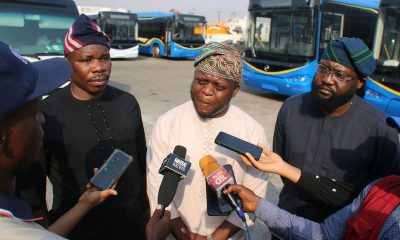
Lanre Shittu Motors’ Managing Director, Mr Taiwo Shittu, was recently crowned Nigeria’s Auto Personality of the Year and the late father and founder of the auto company received a posthumous award for his developmental strides in the sector.
The MD, in this interview, reflects on the implications of these awards, the genesis of the company and its current state as well as other automotive industry issues
How do you feel winning the Auto Personality of the Year award?
First, I have to express gratitude to Almighty Allah. I thank Him for the opportunity given to me. I feel happy to be so honoured. I know now people are watching everything everyone is doing in the industry. This award, I know, is as a result of hard work. This also means working harder henceforth. One has set the pace; one cannot therefore afford to lower the standards or go down.
I also see this as an opportunity to do more for the industry and ensure that it does not collapse.
Where do you hope to take the company in the next five years?
I give God the glory for what we’ve done so far. The credit goes to my late father Alhaji Razaq Alanni Olanrewaju Shittu, for building the brand name. There is nothing like a good name. If you don’t leave anything for your children other than a good name, the sky is the limit for them. In our own case, he left us money and the good name.
We can’t thank him enough for leaving us with a good name. You can imagine that everywhere we turn to in the country, once we mention we are Lanre Shittu’s sons, we are ushered in immediately. People would say ‘Your father was a good man. He won’t cheat if you did any business with him. His word was his bond; he never broke his promises’. I have heard this many times. And the only thing we can do is to build on this legacy.
In the next five years, I see us growing the LSM brand name to become a sought-after brand in Nigeria. We are starting off with the commercial vehicles. Already, we have the LSM-branded CNG buses, 100 per cent CNG buses, in Nigeria. Right now, we are penetrating the market with the CNG buses. We want to bring in the smaller buses – the 18-seater and 11-seater buses (korope). We have the pickup too, which is also a commercial vehicle, lined up.
From experience, I can tell you that once the commercial sector has tested and found your brand worthy, it will be very easy to migrate to the passenger cars.
When the commercial vehicles are doing well and there is no downtime, you are in business. By the time you bring in the passenger vehicles, it will be a walkover.
One of the reasons we are coming out with the LSM brand is to immortalise our late father’s name.
We see ourselves taking a big chunk of the commercial vehicle segment in Nigeria in the next five years and making the LSM a household name in Nigeria. Lanre Shittu Motors as a company is a household name already, doing other automakers brands. But we want to shift the focus to the LSM brand with high after-sale service. We had represented a lot of brands in the past such as Mack, Yutong, Sany and JAC; we have learnt so much in 43 years from the industry on how to build a brand to penetrate the market – the support, communication. The good name and goodwill will be added advantage for us.
What is the secret behind the success of the Lanre Shittu Motors even after the demise of the founder?
I will say it’s God; the good legacy left behind by the founder, our father, and the unity among the 20 of us – his children, for trusting and believing in me to lead the business. A lot businesses collapse after the death of the owners. Once a business founder is dead, the next you hear is that a fight has broken out and while one person is taking the arm, another is claiming the leg, the other is going for the body. And in six months, the whole empire is gone down.
In our case, we have 20 siblings that are cooperative and believe in my ability to lead the business with my other brothers.
We had a father who never spoiled us. He taught us sincerity, commitment and accountability. All these are coming to play to make his business and legacies live after his death. Our target is to make it live to the next generation; that’s when we can say we are really successful.
What is the relationship between Lanre Shittu Motors and the Mack truck brand in Nigeria?
We still buy spare parts from Mack to support the truck brand in Nigeria. We sold the last Mack truck in Nigeria. No other auto company aw we speak has brought any Mack truck into the country. We are still supporting the brand. Some of my teams are in big oil and gas companies in the South-South catering to their Mack trucks. Our mission is to be one of the best auto solution providers with perfect after-sale service in the country. So we still support every brand that we have done in the past with after-sale service. That way, it will be easier for us to shift the customers to our own newer brand. It is the support they are buying now, not the brand.
Are the Mack trucks sold eight years ago still on the road in Nigeria?
Yes, they’re still on the road. I sold 30 Mack trucks last month.
Are you partnering other automakers to produce the LSM brand of vehicles?
We are partnering reputable automakers. For us at the LSM, we are careful not to select as partners anyone not in the top three of the segment of vehicle we’re doing in that country. For instance, in the our pickup segment, we are going to China for the selection of partners. Our target is for the first or the second in that country’s pickup.
Where are you in the CNG buses now?
For the CNG buses, we are assembling in our own brand name LSM. This is a new opportunity. It was a big risk we took; but it’s a risk that is paying off because we believe in the government of President Bola Ahmed Tinubu. We knew when he said fuel subsidy was gone, the next thing would be CNG-powered vehicles. It was clear that Nigerians would not run to electric vehicles as an immediate option.
Electric vehicles can only be driven by solar in this country. The high inflation has knocked off the national electricity grid to drive the EVs. You need an investment of over N300 million to have a commercial electric charging station. How many Nigerians can afford this?
Are you saying Nigeria is not ripe for electric vehicles?
Nigeria is ripe for EVs but we’re not yet there. But we’re there on CNG, with the government leading the initiative and abundance of natural gas. I see a lot CNG stations fast coming up. Lagos, Benin, Abuja, Kano, Port Harcourt and Ilorin among others are cities where CNG refilling stations are springing up.
The CNG idea is taking shape. A trip to the South-East now costs N53,000 per person (I was told). But with N72,000 of CNG, you can almost fill the tank of a bus and drive to the East conveniently. With a mass transit CNG bus, you can take a large number of people to a 400km destination on N72,000 worth of CNG. You cannot get that anywhere.
Apart from the high capacity CNG buses, our 18-seater and 11-seater will come out early next year. Thereafter, we will move into the passenger vehicles.
Are you planning to go into the coaches for long distance travel?
We missed the business this year. It requires adequate planning. We intend to go into it next year. It should be around September next year in preparation for the end of the year travels.
How did your father, founder of LSM, Alhaji Olanrewaju Shittu, start the automobile business?
He started the automobile business small, with three vehicles at Aguda, in the Surulere area of Lagos.
It was from a shoe business that he switched over to the auto business.
In starting, he travelled with his wife out of the country to buy things including vehicles around 1978. He bought the vehicles in Valencia, Spain.
Shoe and car business are not related. How did he suddenly develop interest in automobile business?
He just felt like changing his line of business. It was Debasco Motors Chairman, Otunba Babatunde Onakoya, that put him through. Debasco was a big auto company in Lagos at that time.
My father was seen as creditworthy, so people trusted him and were always willing to give him vehicles on credit.
He would go to Ogbomosho to buy six vehicles, by would come back to Lagos with additional six vehicles on credit. They had no doubt that he would pay back quickly.
Sometimes, he would travel as far as Kaduna to buy 12 cars from PAN, he would be the last driving the last vehicle while others were ahead driving all the way to Lagos.
This gave the auto company the strength to grow fast from the three vehicles he started with.
Which brand gave him a breakthrough?
It’s Daewoo and Rolls Royce that gave him a real breakthrough. That is why we have the signs of the two brands engraved on the wall of the LSM office at Alaka Lagos.
Lanre Shittu Motors was the only one selling the Rolls Royce then. That was in the 1990s.
Was he a car freak?
Yes, he loved cars. He used to have a Rolls Royce. But no longer had it before he died. What he had was a Mercedes-Benz Mayback. His car garage was not packed full. Even though he was a car dealer, he changed his main car every 10 years. He was a very prudent man. At the beginning of his adult life, he had many cars; in the middle, he was prudent It was at the end that he bought some flashy cars such as Lexus L600, MayBack 650 engine – at that time only he and ex-President Muhammadu Buhari had that car. He bought the car then because there were three weddings in the family. By time he died, the car had only ran 600 miles. He also had a Ford Expedition, which he liked to drive. He had a Lexus LX570 First Edition almost the same time.
He was a family-oriented man.







Auto
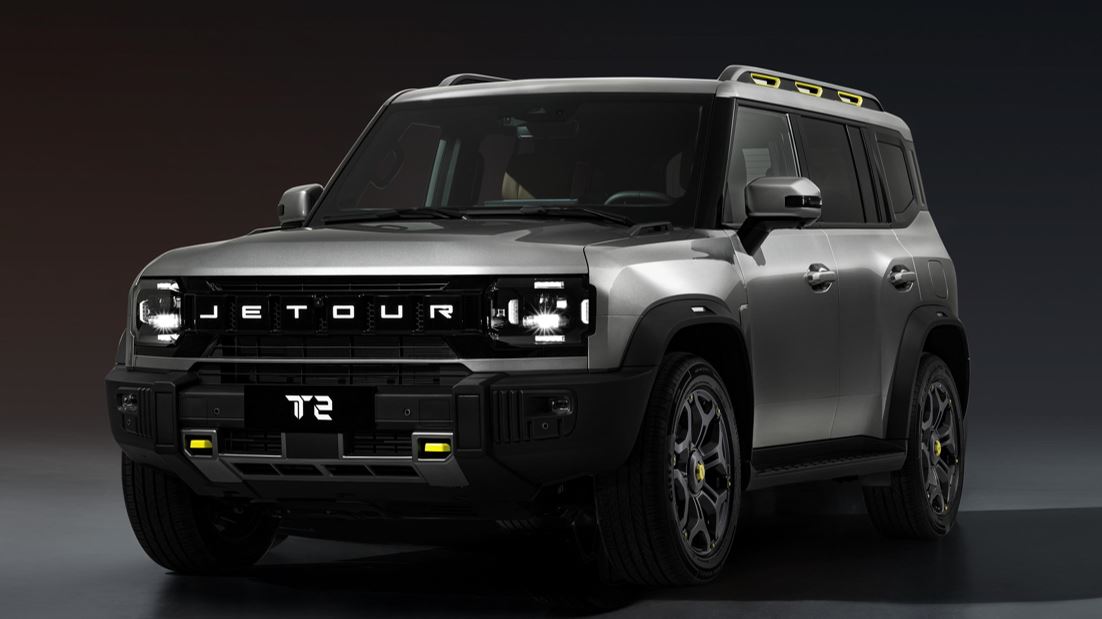
Jetour Set to Storm Abuja Show with Rugged Luxury T2
Jetour Set to Storm Abuja Show with Rugged Luxury T2
Abuja is set for a taste of rugged luxury as Jetour Nigeria puts its adventure-ready T2 SUV in the spotlight at the Jetour Experience Abuja from September 22 to 24, 2026, giving motorists in the Federal Capital Territory and neighbouring states an opportunity to test its blend of off-road capability, premium comfort and advanced technology.
The three-day showcase at Maha Event Centre, Area 8, Garki, will feature test drives, live demonstrations and direct interaction with Jetour product specialists, offering prospective buyers a closer look at the T2 and other models in the automaker’s growing Nigerian line-up.
Positioned as a premium SUV combining off-road capability with comfort and advanced technology, the Jetour T2 is designed for motorists seeking a vehicle capable of handling both city driving and challenging terrain.
Jetour Nigeria is distributing the T2 and other models via its seven accredited dealers — Elizade Nigeria Limited, New Era AutoVehicle Services Limited, Germaine Auto Centre, Kojo Motors, Mandilas Autos, R.T. Briscoe Motors and Tab Autos Limited.
The T 2 SUV is powered by a 2.0-litre turbocharged engine producing 254 horsepower and 390 Nm of torque. The engine is paired with a seven-speed dual-clutch transmission and BorgWarner sixth-generation intelligent four-wheel-drive system.
It also features five driving modes — Eco, Sport, Mud, Rock and X Smart — designed to provide improved adaptability across different road and terrain conditions.
Measuring 4,758mm in length, 2,006mm in width and 1,880mm in height, the SUV offers 220mm ground clearance and a 70-litre fuel tank, giving it the capability for extended journeys and off-road adventures.
Inside the cabin, the T2 combines rugged styling with modern comfort, featuring ergonomic seating and a 15.6-inch touchscreen infotainment system with Apple CarPlay, Android Auto and intelligent voice control.
Its safety and driver-assistance features include a 360-degree panoramic camera, rear parking sensors, Lane Departure Warning, Blind Spot Detection, Anti-lock Braking System and Emergency Brake Assist.
The SUV also comes with off-road crawl control as well as push-button and remote-start functions.
The Abuja experience follows Jetour Nigeria’s recent showcase in Lagos as the automaker continues to expand its presence and customer reach across the country.
With its combination of performance, technology, safety and luxury, the Jetour T2 is expected to attract motorists seeking an SUV capable of combining everyday urban mobility with adventure and off-road driving.
Auto
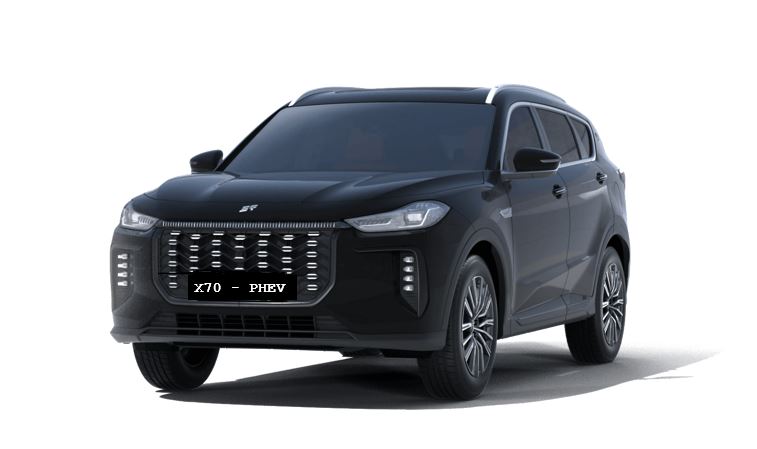
Jetour Targets Abuja Market with X70 PHEV as Nationwide Expansion Gathers Pace
Jetour Targets Abuja Market with X70 PHEV as Nationwide Expansion Gathers Pace
Jetour Nigeria is taking its hybrid SUV offensive to Abuja, with the X70 Plug-in Hybrid Electric Vehicle (PHEV) set to headline the three-day Jetour Experience from September 22 to 24 as the automaker accelerates its drive to expand its footprint and capture a larger share of Nigeria’s fast-evolving mobility market.
The Abuja showcase, coming on the heels of a strong Lagos edition that generated significant consumer interest, test drives and sales enquiries, is designed to bring Jetour’s latest technologies closer to customers in the Federal Capital Territory and neighbouring states.
The event at Maha Event Centre, Area 8, will give prospective buyers and auto enthusiasts the opportunity to test-drive the X70 PHEV and other Jetour models while interacting with product specialists and experiencing their technology, safety features, performance and comfort firsthand.
According to the company, expanding the showcase to the Federal Capital Territory was a direct response to rising demand from residents in Abuja and neighbouring states.
READ ALSO:
- ASUU Crisis Deepens: Lagos Universities Join UNIBEN, Taraba on Indefinite Strike
- Lagos Power Outage: Ikeja Electric Blames TCN as Businesses, Homes Groan
- US Court Blocks Trump Visa Rule Limiting Stay of Foreign Students, Journalists
To bolster buyer confidence, Jetour Nigeria—the country’s sole authorised distributor—backs the X70 PHEV with a five-year or 150,000-kilometre warranty.
The distributor operates through an accredited nationwide dealer network, including: Elizade Nigeria Limited,
New Era Auto Vehicle Services Limited, Kojo Motors, Germaine Auto Centre, Tab Autos Limited, R.T. Briscoe Motors, and Mandilas Autos.
The X70 PHEV pairs a 1.5-litre turbocharged engine with a 19.43kWh battery and a dedicated hybrid transmission. Designed to balance performance with fuel efficiency, the vehicle supports fast, slow, engine, and regenerative braking charging options—reducing reliance on external charging infrastructure.
Jetour’s rapid growth in the Nigerian market has earned both private and corporate patronage, driven by competitive pricing, high specification levels, and an expanding service footprint. The brand was named “Fastest Growing Auto Brand of the Year” at the 2024 Nigeria Auto Journalists Association (NAJA) Awards.
With the X70 PHEV leading the Abuja showcase, Jetour aims to deepen customer engagement and consolidate its position in the local automotive market.
Jetour Targets Abuja Market with X70 PHEV as Nationwide Expansion Gathers Pace
Auto
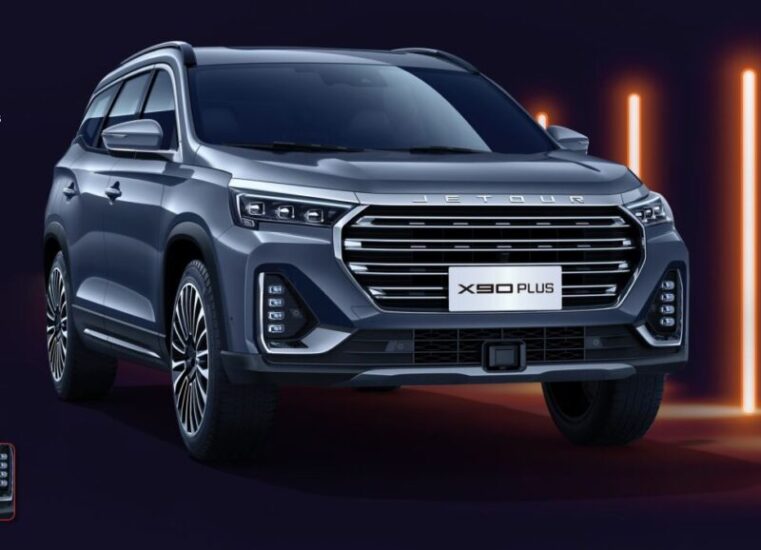
X90 Plus Leads Jetour’s Abuja Drive for Bigger SUV Market Share
X90 Plus Leads Jetour’s Abuja Drive for Bigger SUV Market Share
Jetour Nigeria is taking its premium SUV battle to Abuja, with the seven-seater X90 Plus set to headline the Jetour Experience Abuja from September 22 to 24, as the automaker moves to capture a larger share of Nigeria’s fast-growing high-end family SUV market.
The three-day motoring showcase will give prospective buyers, families and auto enthusiasts in the Federal Capital Territory and neighbouring states an opportunity to experience the X90 Plus and other models in the Jetour range through test drives and hands-on demonstrations.
The Abuja showcase follows the success of the brand’s earlier Jetour Experience in Lagos, where strong customer interest, inquiries and sales momentum reportedly encouraged the company to take the initiative to the Federal Capital Territory.
Jetour Nigeria said growing demand from customers in Abuja and neighbouring states was a major factor behind the decision to expand the experience to the northern market.
Positioned as a full-sized family SUV, the X90 Plus is designed for executives and families seeking a combination of space, technology, performance and comfort without the price tag associated with some luxury SUVs.
The model is offered with 1.6-litre and 2.0-litre turbocharged engines paired with a seven-speed dual-clutch transmission. The powertrain produces up to 254 horsepower and 390Nm of torque.
Inside the cabin, the X90 Plus features a 12.3-inch LCD touchscreen infotainment system, panoramic sunroof, Sony premium audio system and wireless charging.
Its safety and driver-assistance features include a 360-degree panoramic camera, Forward Collision Warning, Lane Departure Warning and electronic stability systems.
Jetour’s growing profile in Nigeria has also earned the brand recognition from the Nigeria Auto Journalists Association (NAJA), which named it Fastest Growing Auto Brand, while it was also recognised as Auto Brand of the Year at the Nigeria Transport Lecture.
To support its expanding customer base, Jetour Nigeria, the sole authorised distributor, operates through seven accredited dealer partners across the country: Elizade Nigeria Limited, Mandilas Autos, R.T. Briscoe Motors, Germaine Auto Centre, Kojo Motors, Tab Autos Limited and New Era Auto Vehicle Services Limited.
The Abuja Experience is expected to provide Jetour with another platform to engage potential customers and reinforce its position in Nigeria’s increasingly competitive SUV market.
-
 Politics3 days ago
2027: Northern Lecturers Back Tinubu, ASUU Disowns Endorsement
-

 metro3 days ago
Police Arrest Mother Over Alleged Brutal Abuse of 7-Year-Old Girl in Anambra
-

 Sports2 days ago
‘I Was Never the Chosen One’ — Dembele Responds to Mbappe
-
 International1 day ago
Islamic Council Condemns Attempted Attack on Holy City of Mecca
-

 metro2 days ago
Lagos Power Outage: Ikeja Electric Blames TCN as Businesses, Homes Groan
-

 Education2 days ago
JAMB Moves 2027 UTME Time — Here’s What Candidates Need To Know
-
 News1 day ago
Keep Politics Out of My Office — Ogbomoso Grand Chief Imam Warns Politicians, Bloggers
-
 Politics2 days ago
2027: APC Governors Reject Wike’s Rainbow Coalition, Insist on Party Loyalty