

News
World Bank approves Tinubu’s $632m loan request
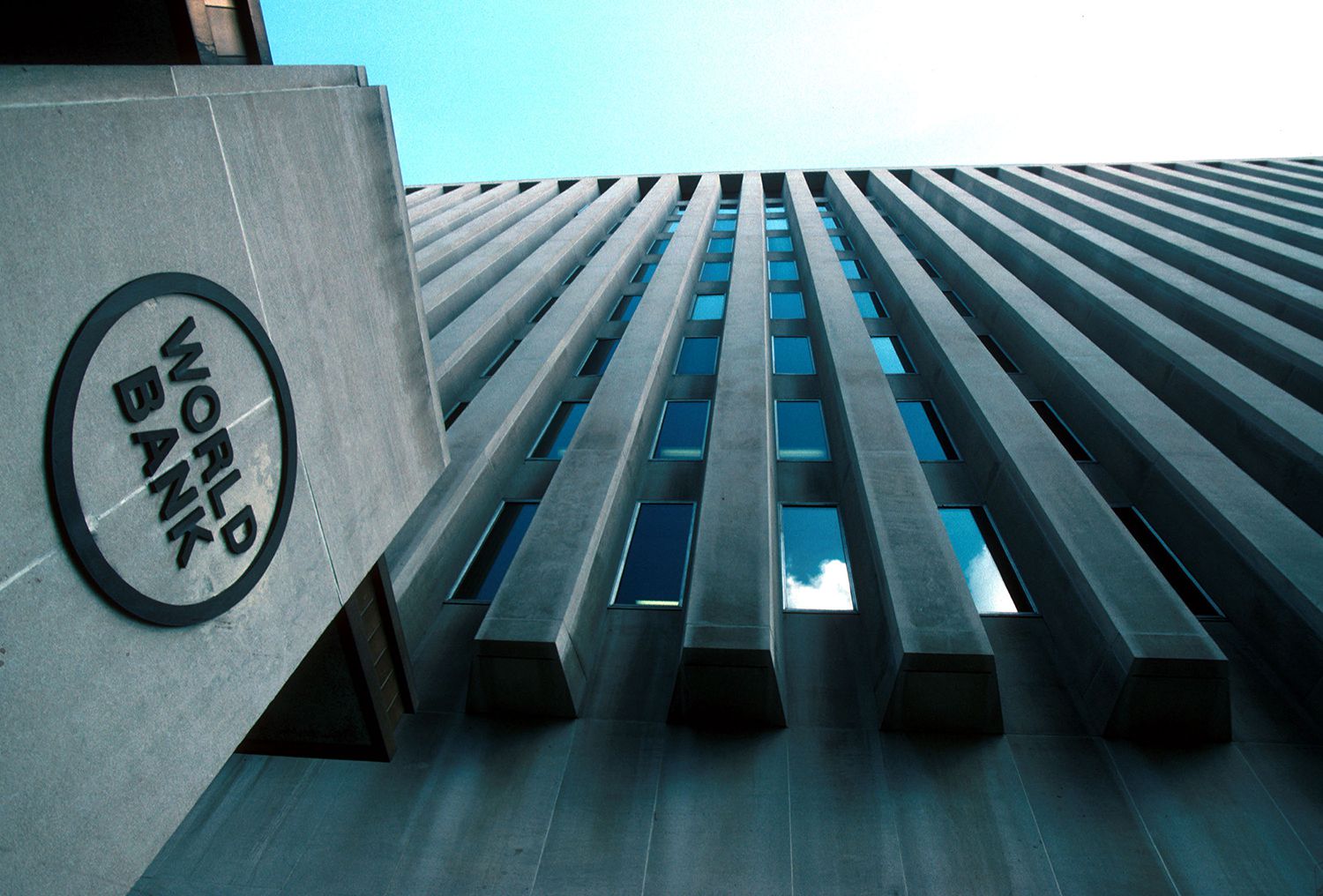
World Bank approves Tinubu’s $632m loan request
The World Bank is poised to approve $632 million in new loans to Nigeria today (Monday), amid growing concerns over the country’s expanding debt profile.
The loans are intended to support important sectors such as nutrition enhancement and quality basic education.
According to data obtained from the World Bank’s website on Sunday, the two loans scheduled to be approved today are $80 million for the Accelerating Nutrition Results in Nigeria 2.0 initiative and $552 million for the HOPE for Quality Basic Education for All programme.
Both projects are now in the negotiating phase and are likely to gain final clearance later today.
These new loans are part of the World Bank’s overall strategy to support Nigeria’s development agenda, which focuses on healthcare, education, and community resilience.
The loans will support the government’s efforts to improve nutrition and education for Nigerian children.
Additionally, the World Bank approved a $500 million loan for Nigeria’s Community Action for Resilience and Economic Stimulus Programme on March 28, 2025, a significant step towards addressing the country’s economic challenges through expanded access.
The initiative, formally known as the NIGERIA: Community Action (for) Resilience and Economic Stimulus Programme, is intended to give critical support to households impacted by economic downturns while also strengthening community resilience.
The initiative focuses on vulnerable populations, providing assistance to households and small companies to help them cope with economic difficulties.
READ ALSO:
- Okada rider allegedly stabbed to death by wife over money
- Police rescue two persons abducted in Lagos
- Miyetti Allah accuses Benue community of poisoning 20 cows
The loan clearance is likely to considerably boost Nigeria’s efforts to revive the economy through grassroots backing, especially given current issues such as inflation and high living costs.
The stimulus plan will prioritise enhancing food security and developing economic possibilities for the populations most affected by recent economic changes.
This decision came after a delay in distributing funds for a previous loan aimed at poor and vulnerable Nigerians.
Further investigation by The PUNCH revealed that the World Bank disbursed around $315 million to Nigeria from the $800 million allocated for the National Social Safety-net Program Scale Up.
Nigeria is yet to receive further funding from the World Bank for this loan project, which was approved in December 2021. The delay in grant release is most likely due to fraud detected under the initiative.
In honour of the 2023 International Day for the Eradication of Poverty, President Bola Tinubu unveiled a social safety net programme that will distribute N25,000 to 15 million households over the course of three months.
The Federal Ministry of Humanitarian Affairs and Poverty Alleviation was responsible for managing the $800 million World Bank loan initiative.
However, due to allegations of embezzlement, the federal government was forced to stop the cash transfer program for further investigation and reform.
Betta Edu, a former humanitarian minister, was previously suspended for misappropriating N585 million set aside for palliative care distribution.
READ ALSO:
- Wike’s aide slams Atiku, says it’s too late to buy integrity
- Reps Committee recovers N21.4bn from four oil companies
- West African juntas impose levy on imported goods ECOWAS nations
Furthermore, Sadiya Umar-Farouq, Edu’s predecessor, was under investigation by the EFCC. The former minister is being investigated for allegedly laundering N37.1 billion during her stint as minister.
The World Bank also imposed sanctions on people and businesses discovered to be engaging in fraud under the initiatives.
According to the World Bank’s official website, this will bring Nigeria’s total approved loans to $9.25 billion over three years, indicating a growing reliance on multilateral funding to support critical sectors of the economy such as infrastructure, healthcare, education, and financial resilience.
A review of Nigeria’s World Bank loan approvals since 2023, under President Bola Tinubu’s government, reveals a huge rise in funding commitments.
In 2023, the World Bank approved $2.7 billion in loans for renewable energy, women’s empowerment, education, and the power sector. In 2024, funding approvals totalled $4.32 billion for various projects.
This increase was largely due to Nigeria’s growing need for financial assistance to stabilise the economy amid fiscal pressures and rising public debt.
Under President Bola Tinubu’s administration, the World Bank granted around 11 different credit projects for Nigeria.
In less than two years, the federal government has acquired loans from the World Bank totalling $7.45 billion, raising concerns about the mounting debt burden. According to data from the Debt Management Office, the World Bank’s portion of Nigeria’s external debt is $17.32 billion as of the third quarter of 2024.
The International Development Association is owing the majority of this debt, which amounts to $16.84 billion, or 39.14 per cent of Nigeria’s total external debt.
The International Bank for Reconstruction and Development, another World Bank subsidiary, is owing $485.08 million, or 1.13 per cent.
While the planned World Bank loans may give much-needed budgetary relief, concerns persist about the country’s mounting debt burden.
According to recent data from the Central Bank of Nigeria, the country has spent $5.47 billion servicing external debt in the last 14 months, underscoring the strain on its foreign reserves.
World Bank approves Tinubu’s $632m loan request






News
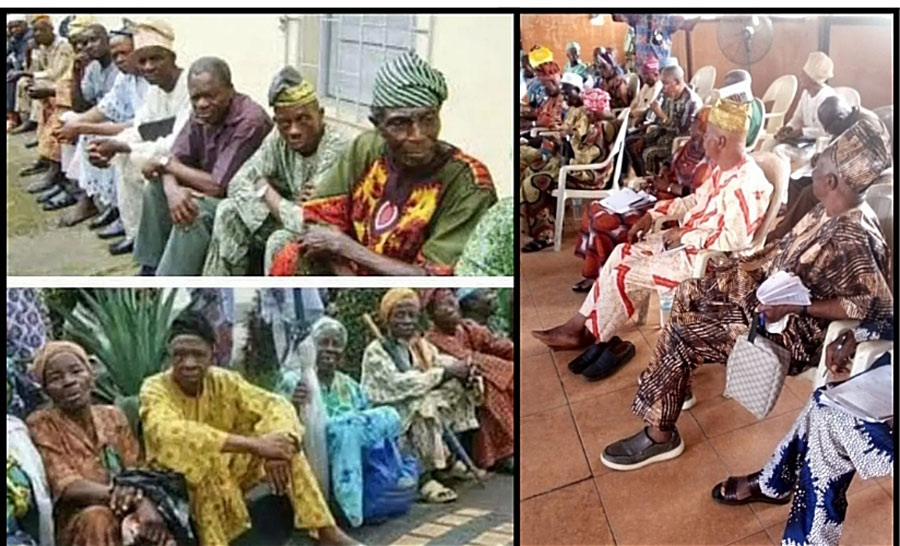
Lagos Pensioners Draw Battle Line with Government Over Pension Enhancement
News
Tinubu Suspends Three Permanent Secretaries, Orders Arrest Over Fake Agency in SGF Office

Tinubu Suspends Three Permanent Secretaries, Orders Arrest Over Fake Agency in SGF Office
The Independent Corrupt Practices and Other Related Offences Commission (ICPC) uncovered the “National Brands Development and Made-in-Nigeria Special Project Office,” which allegedly operated without presidential approval within the Office of the Secretary to the Government of the Federation. The President has ordered the immediate arrest of the agency’s promoter and the suspension of three top civil servants.
President Bola Tinubu has ordered the immediate suspension of three permanent secretaries and directed the arrest of the promoter of a newly uncovered fake government agency operating within the premises of the Office of the Secretary to the Government of the Federation (OSGF). The discovery was announced on Friday by the Chairman of the Independent Corrupt Practices and Other Related Offences Commission (ICPC), Dr Musa Adamu Aliyu, SAN, during a briefing with State House correspondents at the Presidential Villa, Abuja.
The illegal entity, identified as the National Brands Development and Made-in-Nigeria Special Project Office, was found to have been allocated office space within the OSGF complex without presidential authorisation and in violation of existing regulations. The ICPC chairman explained that the discovery was made during the commission’s broader investigation into the earlier uncovered fake Presidential Foreign Intervention Promotion Council (PFIPC) and other procedural weaknesses in the public service.
READ ALSO:
- Troops Arrest Female Gunrunner, Recover AK-47 in Plateau
- Why Atiku’s subsidy gambit rattles Tinubu, By Farooq Kperogi
- Tinubu’s order: EFCC lifts freeze on Osun government accounts
According to Aliyu, the fake agency was promoted by Prince George Buchi Nwabueze, who was found to have allegedly operated under several variations of his name, including George Nathan, George Nathan Nwabueze, Honourable George Buchi Nwabueze, and George Nwabueze. The investigation also uncovered the alleged involvement of suspected collaborators within the OSGF who may have facilitated the agency’s operations.
Following the ICPC’s briefing, President Tinubu directed the immediate arrest of Nwabueze and the suspension of three permanent secretaries: M.S. Danjuma, Engineer Nadungu Gagare, and Richard P. Pheelangwah. The ICPC has engaged with officials of the OSGF to gather vital information regarding the unauthorised office, and the investigation remains active.
The latest discovery comes barely weeks after the exposure of the fictitious Presidential Foreign Intervention Promotion Council (PFIPC), whose self-styled Director-General, Adeniyi Adeyemi Matthew, is currently facing prosecution over allegations of forgery and impersonation. An interim ICPC report submitted to President Tinubu on August 6 had also identified two other fictitious bodies: the FCT Investment Promotion Agency and the Foreign Investment Promotion Agency and Public-Private Partnership. With Friday’s announcement, the National Brands Development and Made-in-Nigeria Special Project Office becomes the fourth fake agency uncovered by the anti-corruption commission in connection with the scandal since early April.
The ICPC chairman commended President Tinubu for directing a forensic audit of government processes and a wider policy audit of federal ministries, departments, and agencies, describing the move as a proactive step towards strengthening governance and closing loopholes that could facilitate abuse within the public service. The investigation is expected to focus not only on the individuals behind the purported agency but also on the institutional weaknesses that allowed an unauthorised entity to gain access to federal government premises.
Tinubu Suspends Three Permanent Secretaries, Orders Arrest Over Fake Agency in SGF Office
News
N3.14 Trillion Spent on Electricity Subsidy in 31 Months – FG
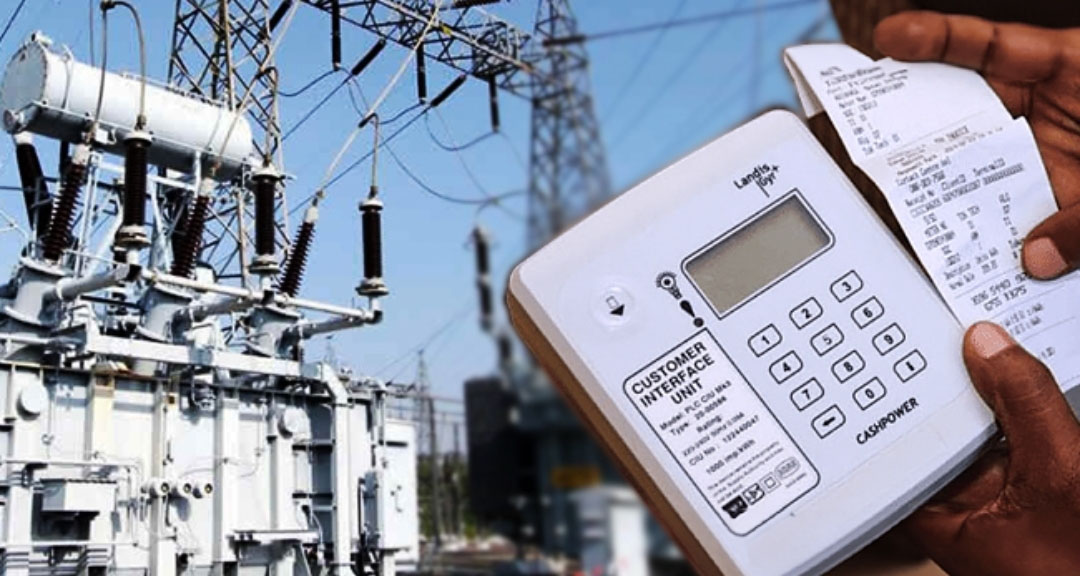
N3.14 Trillion Spent on Electricity Subsidy in 31 Months – FG
The Federal Government says the massive spending shielded consumers from the full impact of tariff hikes, but critics question the value amid persistent blackouts and plans to phase out subsidies by 2027.
The President Bola Tinubu-led Federal Government has disclosed that it spent N3.14 trillion on electricity subsidies between June 2023 and December 2025, according to figures contained in its latest economic reform scorecard. The government said the intervention was designed to protect electricity consumers from the full effect of tariff increases as reforms in the power sector continued.
The electricity subsidy was among N30.64 trillion in additional spending pressures incurred by the Federal Government during the 31-month period. The figures were released by the Ministry of Finance following a presentation by Taiwo Oyedele, Minister of Finance and Coordinating Minister of the Economy.
According to the ministry, electricity subsidy payments rose sharply from N177 billion in 2023 to N1.48 trillion in 2024, representing an increase of more than 740 per cent. By December 2025, the subsidy bill stood at N1.47 trillion, indicating a marginal 1.14 per cent decline compared with the previous year.
Other major spending pressures recorded during the period included N9.39 trillion for wage adjustments and minimum-wage increases, N9.37 trillion arising from the impact of exchange-rate movements on external debt servicing, and N6.47 trillion for strategic infrastructure projects.
READ ALSO:
- 100 Days in Captivity: Borno Families Beg Tinubu, Zulum to Rescue 78 Abducted Students
- Hamzat warns workers against spending over 40% of income on rent
- Newlywed Woman Remanded for Allegedly Stabbing Husband to Death Over Party Dispute in Kano
The government said it mobilised N20.4 trillion in additional resources to partly finance the increased expenditure. The funds comprised N5.43 trillion from the Federal Government’s share of estimated petrol subsidy savings, N3.12 trillion in additional revenues, and N11.85 trillion raised through incremental borrowing. Despite these resources, the government said there was still a funding shortfall of N10.24 trillion, which had to be accommodated within the existing revenue base.
Despite the substantial subsidy spending, electricity supply deteriorated during the same period. According to the Nigerian Electricity Regulatory Commission (NERC), the Federal Government incurred an electricity tariff subsidy of N358.32 billion in the first quarter of 2026 alone. The subsidy bill averaged more than N119 billion per month as the government maintained its freeze on end-user electricity tariffs at July 2024 rates.
NERC explained that because electricity tariffs remain below cost-reflective levels, the government continues to subsidise the difference between the actual cost of power generation and the approved tariffs charged to consumers. Under the current Distribution Companies’ Remittance Obligation (DRO) framework, electricity generation companies invoiced the 11 DisCos a total of N689.72 billion during the quarter. However, only N331.40 billion was billed to the DisCos, leaving the government to cover the remaining N358.32 billion. The subsidy accounted for 51.95 per cent of the total generation invoice during the period.
The commission clarified that the lower subsidy payment in Q1 2026 did not result from the introduction of cost-reflective tariffs but rather from a decline in electricity purchased by the distribution companies during the quarter. According to the report, average available generation capacity fell by 17.45 per cent, dropping from 5,400.38MW in the fourth quarter of 2025 to 4,457.96MW in the first quarter of 2026. Total electricity generation also declined by 9.64 per cent to 8,883.47GWh.
The subsidy disclosure has drawn criticism from organised private sector groups. The Lagos Chamber of Commerce and Industry (LCCI) questioned the impact of the N15.8 trillion in petrol subsidy savings and criticised the N3.14 trillion electricity subsidy, saying it appeared to contradict the logic behind electricity tariff reforms and highlighted the high power costs that continue to burden businesses.
NERC has warned that the current subsidy regime leaves the Federal Government exposed to uncertain and potentially rising financial obligations. “The open-ended nature of the subsidy exposes the FGN to indeterminate subsidy obligations due to volumetric risk and changes in generation costs arising from changes in the generation mix, particularly with an increase in thermal generation,” the commission stated.
The disclosure comes against the backdrop of the Federal Government’s plan to gradually withdraw electricity subsidies from 2027. In July, Joseph Tegbe, Minister of Power, said the government had no immediate plan to increase electricity tariffs, explaining that subsidy payments would be gradually phased out from next year while ensuring that Nigerians continued to benefit from existing arrangements. “I promise you, next year, by God’s grace, we will put a stop to this so-called subsidy in the power sector,” Tegbe said.
The government has also proposed establishing a Power Consumer Assistance Fund (PCAF) , established under the Electricity Act 2023, as the preferred mechanism for delivering targeted subsidies directly to vulnerable electricity users. The initiative is designed to channel financial support through consumers’ electricity accounts or other verified identity-linked platforms, improving transparency in subsidy administration while boosting investor confidence in the sector.
However, analysts note that ending the subsidy without imposing another sharp tariff increase will require widespread metering, lower transmission and distribution losses, improved collections, reliable supply, and targeted protection for poorer households. The government is also working to clear debts owed to power generation companies, with GenCos reportedly owed about N6.5 trillion and receiving only about 35 per cent of their monthly invoices.
In April 2024, NERC raised electricity tariffs for Band A customers from N66 to N225 per kilowatt-hour. The affected consumers were expected to receive at least 20 hours of electricity daily, while the adjustment was projected to reduce the government’s subsidy burden by about N1.14 trillion in 2024. Despite this adjustment, the subsidy bill for 2024 and 2025 combined still reached nearly N3 trillion.
N3.14 Trillion Spent on Electricity Subsidy in 31 Months – FG
-
 metro1 day ago
Lagos Police arrest five suspected telecom vandals, recover truckload of iron rods
-
 Politics3 days ago
2027: Senator Saliu Mustapha quits APC after losing Kwara governorship ticket
-
 Politics3 days ago
Donald Duke Recounts How IBB Warned Obasanjo About Atiku: ‘This One Cannot Rule Nigeria’
-

 Politics1 day ago
Opposition Unity Cracks as Atiku, Obi, Kwankwaso Diverge on 2027 Strategy Against Tinubu
-

 metro3 days ago
Tinubu FBI records: Agency seeks secret court filing over safety, investigative methods
-

 Politics3 days ago
2027: Wike Declares Adeleke Belongs to Tinubu Camp, Predicts ‘Largest Rainbow Coalition’
-

 Entertainment3 days ago
“We Don’t Want to See You in Edo Again” — Gov Okpebholo’s Aide Declares War on Davido
-

 metro1 day ago
Lagos Moves to Tackle Housing Deficit, Inaugurates 2026 World Habitat Day Committee