

News
Buhari’s govt borrowed $400bn to stabilise naira – Senator Adeola

Buhari’s govt borrowed $400bn to stabilise naira – Senator Adeola
Chairman of the Senate Committee on Appropriation, Senator Solomon Adeola (popularly known as Yayi), has claimed that the administration of former President Muhammadu Buhari borrowed more than 400 billion dollars in a bid to stabilise the naira against the US dollar.
Speaking at the 2nd Edition of the Town Hall Meeting/Mega Empowerment and Thank You Tour held in Ayetoro, Yewa North Local Government Area of Ogun State, Adeola, who represents Ogun West, said Buhari’s government also spent trillions of naira on fuel subsidy, benefitting a small fraction of the Nigerian population.
Highlighting the critical economic decisions made under President Bola Tinubu’s leadership, Adeola credited the removal of fuel subsidy and the floating of the naira as actions that saved Nigeria from economic collapse.
According to the senator, past efforts to defend the naira led to significant borrowing and subsidy payments, but Tinubu’s administration has reversed that trend.
He said, “When the president assumed office, he carried out two major policies that hit Nigerians hard. We now heave a sigh of relief. “First, he removed the fuel subsidy. He removed the fuel subsidy because the subsidy payment ended up in the hands of people who are less than 1% of Nigerians. Yearly, the former president would have to borrow huge amount of money in the tune of trillions of naira in order to pay fuel subsidy.
READ ALSO:
- 12 Niger’s soldiers killed in Sahel deadly ambush
- Japa: Akwa Ibom to administer oath on health workers
- Lady flees after poisoning lover to death at Lagos hotel
“But when the current President, my father, Bola Ahmed Tinubu, assumed office, the payment of subsidy elapsed the day the immediate past president handed over power to Tinubu. So, there was no fund budgeted for the continuous payment of the subsidy. The government that left had stopped subsidy payment and when our father (referring to Tinubu) got to power, he said he could no longer afford to be borrowing huge amount of money that will end up in the hands of less than 1 percent of the country’s population, whereas the payment is made for all Nigerians.”
Adeola explained that under the current policy, market forces now determine fuel prices, discouraging the misuse of subsidy benefits.“Today, anyone can bring in fuel and sell it at your own price as far as it pays off. One person can own ten cars and the country is expected to pay subsidy on all the cars. But if there is no subsidy, your cars won’t be more than one or two,” he said.
He also addressed the second major policy change:“The second policy has to do with the floating of the naira. Before, in order to stabilise the dollar to naira rate, we have to borrow money. We borrowed to suppress it.By the time this government assumed office, the amount borrowed is well above 400 billion dollars. In order to stabilise dollar to naira rate, we were also paying subsidy. That President had to stop that.”
Adeola noted that as a result of these bold reforms, “Nigerian economy is now flowing in the right direction.” He appealed for continued patience and support for Tinubu’s administration, saying the economic policies were beginning to yield tangible benefits.
Buhari’s govt borrowed $400bn to stabilise naira – Senator Adeola









News
World Bank Raises Nigeria Growth Forecast, Demands More Jobs, Poverty Reduction

World Bank Raises Nigeria Growth Forecast, Demands More Jobs, Poverty Reduction
The World Bank has upgraded its economic growth forecast for Nigeria, citing improving macroeconomic stability, stronger investor confidence and a gradual recovery in private investment under President Bola Ahmed Tinubu’s reforms.
In its latest Africa Economic Update, the bank raised Nigeria’s 2026 growth forecast to 4.3 per cent, up from an estimated 4.0 per cent growth in 2025.
It also projected that the Nigerian economy would expand by 4.4 per cent annually in 2027 and 2028, reflecting expectations of continued improvement in economic activity.
The World Bank said Nigeria was among nearly three-quarters of sub-Saharan African countries whose growth outlooks were upgraded, attributing the broader improvement to years of economic reforms and better macroeconomic management.
For Nigeria, the bank pointed to progress in restoring macroeconomic stability, stronger external balances, improved fiscal revenues, increased investor confidence and a gradual recovery in private investment.
Nigeria’s economy expanded by 4.43 per cent year-on-year in the second quarter of 2026, according to official data, with agriculture and services recording stronger performances.
However, the World Bank cautioned that faster economic growth alone would not be enough to significantly improve living standards.
READ ALSO:
- Flood Submerges Enugu Road, Strands School Children, Passengers
- US Proposes $70,000 OPT Fee for Nigerians, Other Foreign Students
- EFCC Re-Arraigns Two Over Alleged £110,000 Money Laundering, ₦500m Fraud
It said the country’s next major challenge was to translate economic growth into productive jobs, higher household incomes and lower poverty.
The bank estimates that about 3.5 million people enter Nigeria’s labour force every year, putting enormous pressure on the economy to generate sufficient and sustainable employment opportunities.
It warned that the significance of Nigeria’s improving growth outlook would increasingly depend on whether economic expansion results in increased investment, business growth, higher productivity and better-paying jobs.
The World Bank’s latest assessment also showed that poverty remains a major concern. It estimated that 69.6 per cent of Nigerians lived below the lower-middle-income poverty line of $4.20 a day in 2025, while about 123 million people, or 50.8 per cent of the population, lived in extreme poverty under the bank’s cited measure.
The lender said improving macroeconomic conditions had created an opportunity for Nigeria to move from economic stabilisation towards expanding productive capacity and improving living standards.
It, however, warned that rising government spending ahead of the 2027 elections could undermine the momentum of recent reforms if fiscal discipline weakens.
The bank also stressed the importance of greater private-sector investment, improved electricity supply, transport and logistics, digital infrastructure, access to finance, agricultural productivity and a better business environment.
It said investments in education, skills, healthcare and early-childhood development would also be critical to improving the productivity of Nigeria’s future workforce.
Beyond Nigeria, the World Bank raised its forecast for sub-Saharan Africa to 4.3 per cent growth in 2026, up from 4.1 per cent in 2025 and 0.3 percentage points above its April projection.
The bank said the region still faced significant risks from geopolitical tensions, climate shocks, tighter financial conditions, insecurity and declining development assistance.
It also urged African governments to invest in artificial intelligence and digital technologies, saying affordable AI applications in areas such as education, agriculture, healthcare, finance and small businesses could help boost productivity and create more jobs.
For Nigeria, the message is increasingly clear: maintaining macroeconomic stability is only the first stage of the recovery, while the bigger test will be whether the reforms deliver jobs, income growth and meaningful poverty reduction for households.
World Bank Raises Nigeria Growth Forecast, Demands More Jobs, Poverty Reduction
News
BREAKING: NLC Shuts Down Abuja Indefinitely Over FCT Teachers’ Promotion Dispute
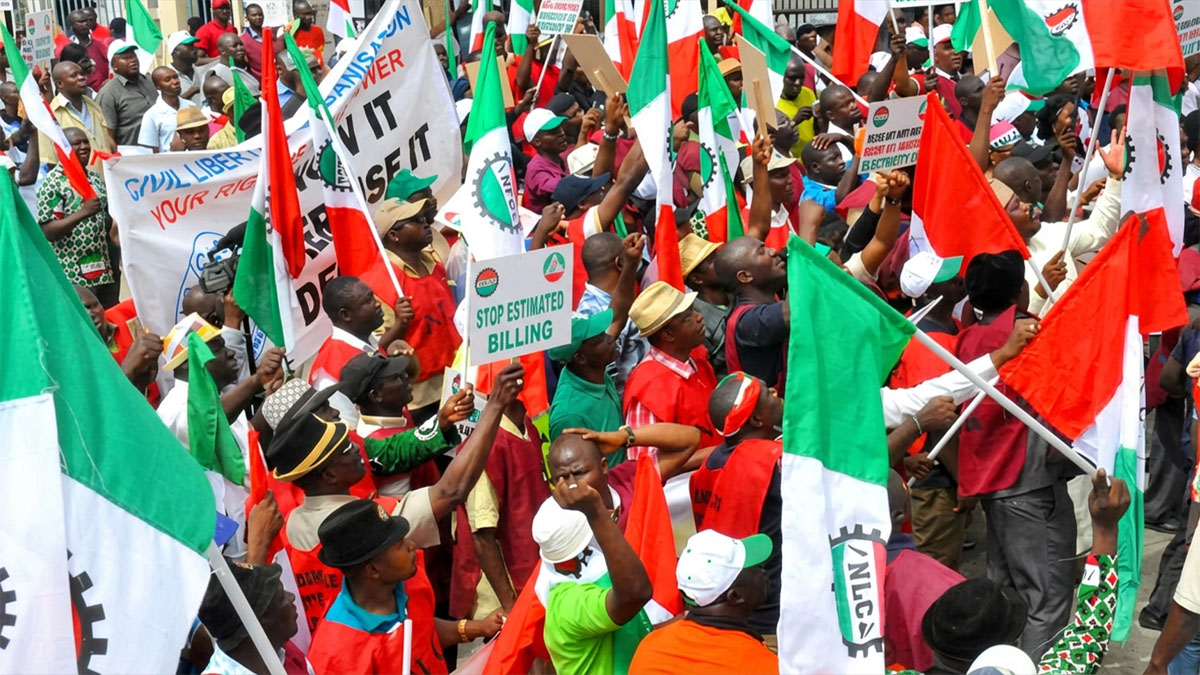
BREAKING: NLC Shuts Down Abuja Indefinitely Over FCT Teachers’ Promotion Dispute
The Federal Capital Territory was thrown into an indefinite industrial crisis on Wednesday as the Nigeria Labour Congress, NLC, ordered workers across Abuja to withdraw their services over unresolved disputes surrounding the promotion and career progression of teachers.
The strike, which took effect on Wednesday, October 7, 2026, followed the expiration of a seven-day ultimatum issued to the Federal Capital Territory Administration, FCTA, after months of disagreements over teachers’ welfare, promotion procedures and the treatment of senior education officials.
The NLC FCT Council said it was compelled to resort to industrial action after rejecting the response of the FCTA to its demands, describing the administration’s position as “ambiguous, dismissive and totally unacceptable.”
The directive, issued in a communique signed by the NLC FCT Council Chairman, Comrade Knabayi S. Adalo, directed the congress’s affiliate unions to mobilise their members for the indefinite action until the outstanding issues are resolved.
At the heart of the dispute is the controversial “vacancy clause”, which makes the promotion of teachers subject to the availability of vacant positions.
The labour movement argues that the condition has resulted in career stagnation for qualified teachers who have met the requirements for advancement but are unable to move to the next cadre because of the absence of vacancies.
The NLC maintains that teachers, recruited specifically to teach under the FCT Universal Basic Education Board and FCT Secondary Education Board, should not be subjected to a promotion arrangement designed for core civil servants or pool officers.
The dispute has been building for months. In September, the NLC gave the FCTA a seven-day ultimatum to resolve the grievances, following earlier protests by teachers over the vacancy requirement and concerns surrounding the 2025 promotion examination.
Among the union’s demands is the removal of the vacancy requirement from the promotion process for teachers. It is also demanding that teachers who were eligible for promotion in 2025 but were unable to take the examination be allowed to sit for the exercise before or alongside the 2026 candidates.
The NLC is further demanding the reversal of redeployment and demotion letters issued to some directors in the education sector, citing the Harmonised Retirement Age for Teachers in Nigeria Act, 2022.
The union has also called for changes involving the management of the FCT education agencies, including the FCT Universal Basic Education Board and FCT Secondary Education Board.
The FCTA, however, has previously defended its administrative decisions, saying its policies on promotion, redeployment and other personnel matters are guided by existing civil service regulations and ongoing reforms in the education sector.
An FCTA official also defended the redeployment of senior education administrators, citing relevant federal guidelines.
The labour dispute has also exposed divisions within the organised labour movement in the territory. The Academic Staff Union of Secondary Schools, ASUSS, FCT Chapter, an affiliate of the Trade Union Congress, has reportedly distanced itself from the strike, maintaining that the FCTA has the authority to deploy personnel and that promotion should take account of established vacancies and available resources.
With the NLC now declaring the action indefinite, the dispute threatens to disrupt schools, government offices and other public services across the nation’s capital.
The union has urged parents, residents, civil society organisations and other stakeholders to press the FCTA to resolve the issues, insisting that the industrial action will continue until its demands are satisfactorily addressed.
The NLC’s latest position is unequivocal: without a resolution of what it considers the fundamental grievances affecting teachers, the strike will continue indefinitely.
News
20 Years After Father’s Death in Air Crash, NAF Officer Loses Husband in Another Crash
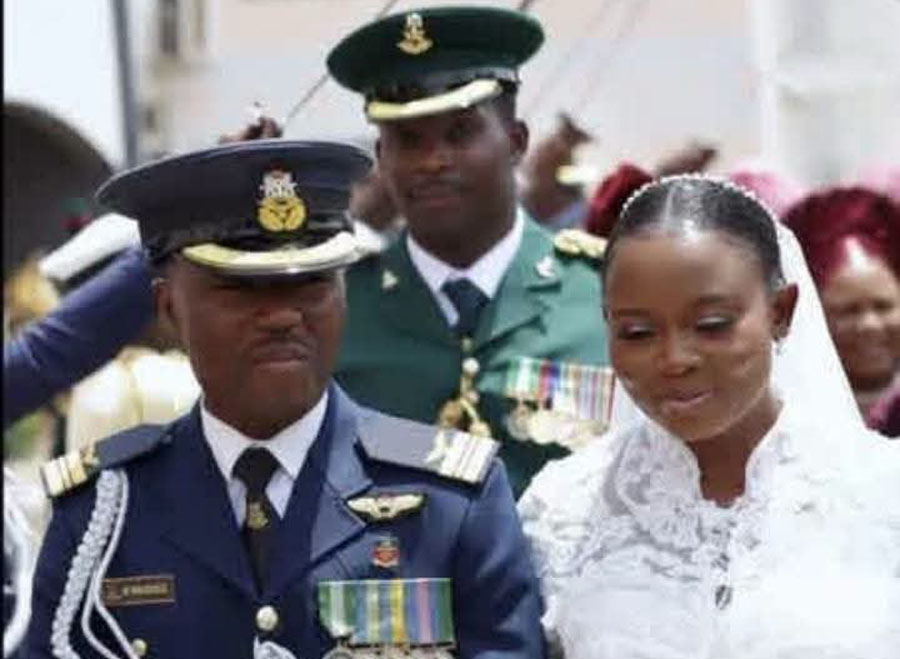
20 Years After Father’s Death in Air Crash, NAF Officer Loses Husband in Another Crash
A Nigerian Air Force family has been hit by another devastating tragedy, 20 years after the reported death of a senior officer in a military aircraft crash in Benue State.
Flight Lieutenant Damilola Adekunle is reportedly the daughter of the late Wing Commander E. O. Adekunle, who was among the Nigerian military personnel killed in an aircraft crash in Benue State in 2006.
The incident occurred on September 17, 2006, when a Nigerian Air Force Dornier 228 aircraft crashed in the Oko area of Vandeikya Local Government Area of Benue State.
The aircraft was carrying senior military officers reportedly travelling towards Cross River State. Thirteen military personnel were killed in the crash, including Wing Commander Adekunle, who was reported to have been serving as co-pilot.
Twenty years later, tragedy has reportedly struck the family again.
According to reports following the latest Nigerian Air Force aircraft crash, Flight Lieutenant Adekunle recently married Squadron Leader Ahamefule Aham Man-Ugwueje.
The marriage reportedly took place on September 19, 2026.
Barely three weeks later, Man-Ugwueje was among the Nigerian Air Force personnel killed in the crash involving NAF 931 at Igbokoda in Ondo State on October 5, 2026.
READ ALSO:
- Ondo High Chief Shot Dead During Colleague’s Burial, One Arrested
- ‘We Are Ignorant, We Don’t Read’ — NAFDAC DG Raises Food Safety Concerns
- 2027: Obi Makes U-Turn, Vows to Restore Fuel Subsidy If Elected
The Nigerian Air Force has identified Man-Ugwueje among the personnel who lost their lives in the incident. He was reportedly serving as the aircraft’s co-pilot.
The reported connection between Flight Lieutenant Adekunle and the late Wing Commander Adekunle has given the tragedy an especially painful dimension.
If the family relationship reported in accounts of the incident is confirmed, it would mean that Adekunle lost her father in a Nigerian Air Force aircraft crash in 2006 and, two decades later, lost her newly married husband, also a Nigerian Air Force pilot, in another crash.
The timing is particularly poignant, as Man-Ugwueje reportedly died just 16 days after his marriage to Flight Lieutenant Adekunle.
The latest crash has claimed the lives of several Nigerian Air Force personnel whose identities have been officially released by the Service, prompting condolences from across the country and renewed attention to the risks associated with military aviation.
For the family of Flight Lieutenant Adekunle, however, the tragedy carries a deeply personal history.
Twenty years after the loss of a father in a military aircraft accident, she is reportedly facing the loss of her husband in another.
While the Nigerian Air Force has officially identified the personnel who died in the latest crash, details of the reported family relationship between Flight Lieutenant Adekunle and the late Wing Commander Adekunle are being reported with caution pending independent confirmation.
The fallen officers will be remembered for their service to the nation.
Newstrends extends its condolences to the families, colleagues and loved ones of all the Nigerian Air Force personnel who lost their lives in the crash.
20 Years After Father’s Death in Air Crash, NAF Officer Loses Husband in Another Crash
-
 metro2 days ago
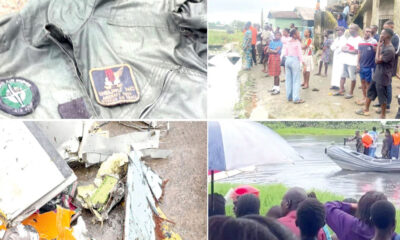
Ondo Air Tragedy: Soldiers, Families Among 32 Killed In NAF Crash
-

 metro3 days ago
27-Year-Old Woman Allegedly Kills Newborn Hours After Giving Birth in Abuja
-

 metro2 days ago
Gunmen Open Fire At Lagos Bus Stop, Kill NURTW Member, Injure Three
-
 News3 days ago
President Tinubu Mourns 32 NAF Personnel in Ondo Jet Crash, Orders Immediate Probe
-
 metro3 days ago
No Survivors Found in Ondo NAF Plane Crash — Ondo Governor
-
 metro3 days ago
Adeleke Signs New Law to Regulate Motor Parks Across Osun
-

 Politics3 days ago
2027: Ajaero Questions Tinubu, Atiku, Obi’s Economic Approach, Highlights Adebayo’s Ideas
-

 metro2 days ago
Ogun Crash: Nine Die As Bus Collides With Truck On Ijebu-Ode-Ore Road