

International
Trump appeasing Putin with pressure on Ukraine, Biden tells BBC
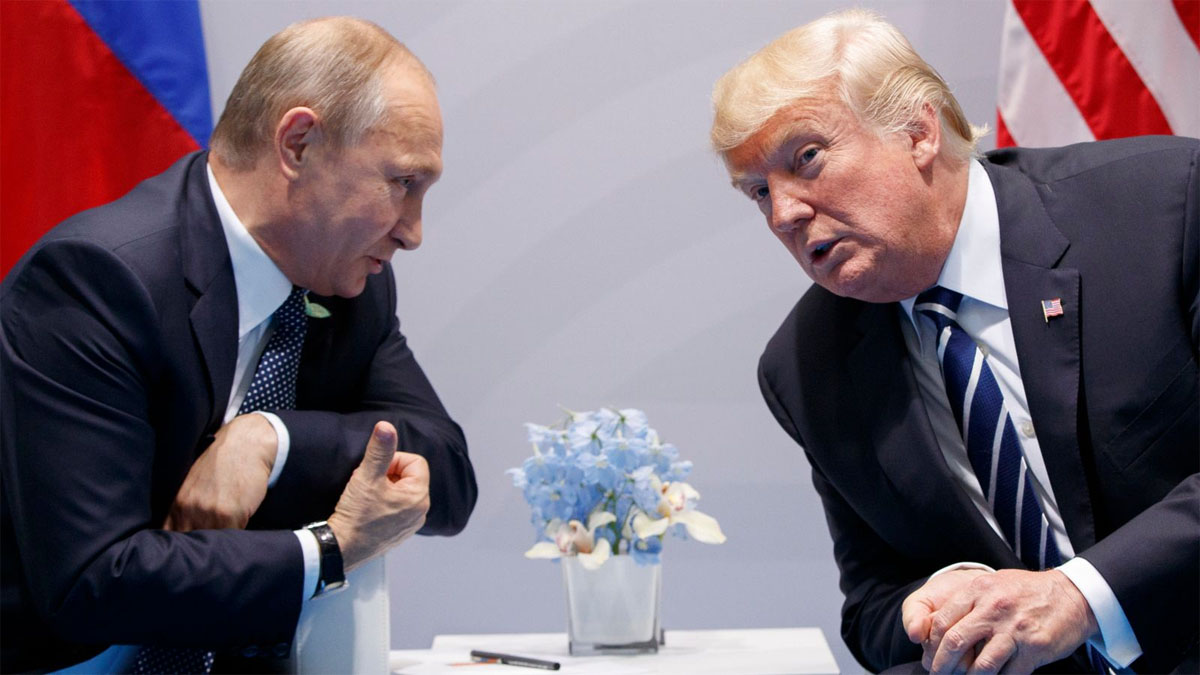
Trump appeasing Putin with pressure on Ukraine, Biden tells BBC
Joe Biden has told the BBC that pressure from the Trump administration on Ukraine to give up territory to Russia is “modern-day appeasement” in an exclusive interview, his first since leaving the White House.
Speaking in Delaware on Monday, he said Russian President Vladimir Putin believed Ukraine was part of Russia and “anybody that thinks he’s going to stop” if some territory is conceded as part of a peace deal “is just foolish”.
Biden, who spoke as Allied nations mark the 80th anniversary of VE Day this week, said he was concerned about US-Europe relations breaking down under President Donald Trump, which he said “would change the modern history of the world”.
In a wide-ranging interview with BBC Radio 4’s Today programme, Biden was challenged on his own record on Ukraine as well as his decision to end his 2024 re-election bid late in the race after a stumbling debate performance stoked concerns over his fitness and plunged the Democratic Party into crisis.
Biden dropped out less than four months before the November election, and when pushed on whether he should have left sooner and allowed more time for a replacement to be chosen, he said: “I don’t think it would have mattered. We left at a time when we had a good candidate.”
“Things moved so quickly that it made it difficult to walk away. And it was a hard decision,” he said. “I think it was the right decision. I think that… it was just a difficult decision.”
Asked about the current administration’s treatment of US allies, the former president condemned Trump’s calls for the US to take back the Panama Canal, to acquire Greenland and to make Canada the 51st state.
READ ALSO:
- Nnamdi Kanu wanted Benue, Kogi to join Biafra, says DSS witness
- Drones strike Kyiv, Moscow, as Putin plans WW2 parade
- US court rejects Trump bid to revoke migrants’ status
“What the hell’s going on here? What president ever talks like that? That’s not who we are,” he said. “We’re about freedom, democracy, opportunity, not about confiscation.”
On Ukraine, Biden was challenged on whether he gave enough support to Kyiv to ensure they could win the war as opposed to just resist Russia’s full-scale invasion. During three years of fighting, his White House shifted its position on the use of US-supplied weapons and lifted some restrictions over time.
“We gave them everything they needed to provide for their independence, and we were prepared to respond, more aggressively, if Putin moved again,” he said.
Biden was also asked about comments from the Trump administration suggesting Kyiv must give up some territory in order to secure a peace deal that would put an end to fighting.
US Vice-President JD Vance recently laid out the US vision for a peace plan in Ukraine, saying it would “freeze the territorial lines… close to where they are today”.
He said Ukraine and Russia “are both going to have to give up some of the territory they currently own”. Defence Secretary Pete Hegseth has echoed that message, saying a return to Ukraine’s pre-2014 borders is “unrealistic”.
“It is modern-day appeasement,” Biden said on Monday, a reference to the policy of former British Prime Minister Neville Chamberlain, who sought in the late 1930s to appease Adolf Hitler’s demands in a failed attempt to avoid a catastrophic all-out war in Europe.
He also expressed concern that “Europe is going to lose confidence in the certainty of America and the leadership of America”.
The continent’s leaders, he added, were “wondering, well, what do I do now?… Can I rely on the United States? Are they going to be there?”
Trump has said he expects Russia to keep the Crimean peninsula, which was illegally annexed by Moscow in 2014, and last month he accused Ukraine’s leader Volodymyr Zelensky of harming peace negotiations when Zelensky rejected the suggestion.
READ ALSO:
- 20-year-old man stabs father to death in Jigawa
- FEC okays Nigeria’s membership of Asian Infrastructure Bank
- Woman arraigned in Kano court for marrying 2 husbands
Reports suggest recent US proposals for a truce settlement not only include formal US recognition of Crimea as part of Russia, but also de facto US recognition of Russian control of other occupied areas in Ukraine. The White House has not publicly confirmed the details.
“I have no favourites. I don’t want to have any favourites. I want to have a deal done,” Trump said last month when asked about recognition of Russian sovereignty over Crimea.
“Yes, of course, [the Ukrainians] are angry that they were invaded,” VP Vance told Fox News last week. “But are we going to continue to lose thousands and thousands of soldiers over a few miles of territory this or that way?”
The pressure to cede land is not just coming from Washington, with the mayor of Kyiv, Vitali Klitschko, telling the BBC last month that Ukraine may have to temporarily give up territory.
Discussing Putin, Biden said: “I just don’t understand how people think that if we allow a dictator, a thug, to decide he’s going to take significant portions of land that aren’t his, that that’s going to satisfy him. I don’t quite understand.”
He also said he feared some countries in the Nato alliance that border Russia may “just say we’ve got to make an accommodation” to Putin if Ukraine ultimately gives up land.
Trump has long resisted continuing the level of US military support that Biden gave to Ukraine, arguing that his ultimate aim is to end the bloodshed. He has previously said Zelensky played Biden “like a fiddle”.
Tensions between the White House and the Ukrainian leader exploded into public view in February, when Trump and Vance berated Zelensky and demanded he show more gratitude for years of US support during an extraordinary televised meeting in the Oval Office.
READ ALSO:
- EFCC denies confirming VDM’s arrest to BBC
- Group exposes plot against Tinubu’s minister
- Trump govt offers $1,000 to migrants who voluntarily deport
“I found it sort of beneath America in the way that took place,” Biden said of the meeting.
Trump and his top officials have repeatedly criticised European countries for not spending enough on their own defence and relying too heavily on US support.
The US is by some margin the largest single donor to Ukraine, but European countries combined have spent more money, according to the Kiel Institute, a German-based think tank tracking support for Kyiv.
“I don’t understand how they fail to understand that there’s strength in alliances,” Biden said of the Trump administration on Monday. “There’s benefits… It saves us money overall.”
When asked about President Trump’s first 100 days in office, which has seen a whirlwind of executive actions as well as sweeping cuts to the size and spending of the federal government, Biden touted his own record and sought to draw a stark contrast between when he left office and now.
“Our economy was growing. We were moving in a direction where the stock market was way up. We were in a situation where we were expanding our influence around the world in a positive way, increasing trade” he said of state of the country when he left the White House in January.
Trump, meanwhile, says he is driving a needed overhaul of the world’s relationship with the US, rebalancing trade, controlling illegal immigration and making government more efficient. He celebrated the 100-day milestone with a triumphant speech last week. What does Biden make of the start to Trump 2.0?
“I’ll let history judge that,” he said. “I don’t see anything that was triumphant.”
Trump appeasing Putin with pressure on Ukraine, Biden tells BBC
BBC











International
Trump Tells Supporters to ‘Cheat Like Hell’ Ahead of US Election

Trump Tells Supporters to ‘Cheat Like Hell’ Ahead of US Election
US President Donald Trump has made an unusual appeal to his supporters ahead of the November 3 election, telling them to turn out with their families and friends while declaring that he would “cheat like hell.”
Trump made the comments during a Republican gathering in Dallas, Texas, where he led attendees through a mock pledge intended to encourage them to support him and participate in the election.
After asking the crowd to raise their right hands and repeat after him, Trump urged his supporters to help bring their relatives and friends to the polls.
READ ALSO:
- MURIC fires back at Peter Obi: Forget Sallah ceremony, free Nigerian Muslims
- Fani-Kayode Condemns Fresh Killing of Two Nigerians in South Africa
- FG Targets 2 Million Creative Jobs by 2030
He then made the controversial remark while discussing voter registration, saying he was unconcerned about whether he was registered and accusing his political opponents of being bigger “cheaters.”
Trump went on to encourage supporters to vote either on November 3 or before election day, ending the pledge with an appeal to God.
The president also joked that supporters who failed to vote could face divine punishment, telling the crowd they would “go to hell” if they did not turn out.
The remarks came as Trump sought to energise Republican voters ahead of the election, in which control of Congress is also at stake.
His comments are likely to attract attention because of the language he used during an event aimed at mobilising voters, particularly his reference to cheating and his claims about the conduct of his opponents.
Trump Tells Supporters to ‘Cheat Like Hell’ Ahead of US Election
International
France Train Derailment Injures 44, 18-Year-Old Woman in Critical Condition

France Train Derailment Injures 44, 18-Year-Old Woman in Critical Condition
At least 44 people were injured after a passenger train carrying 186 people derailed in northwestern France on Friday evening, with an 18-year-old woman among those injured and reported to be in critical condition.
The Rouen-Caen regional train derailed at about 7:45 p.m. local time near Cléon, in the Seine-Maritime department of Normandy, while travelling between the cities of Rouen and Caen.
The incident triggered a major emergency response, with authorities deploying about 130 firefighters, five medical teams and 80 emergency vehicles to the scene.
A mass-casualty emergency plan was activated to coordinate the rescue operation and treatment of those injured.
According to Rouen prosecutor Sébastien Gallois, 44 passengers were injured in the France train derailment, including the 18-year-old woman who was airlifted to Rouen University Hospital in critical condition.
The other 43 injured passengers were treated for less serious injuries.
The initial estimate of the number of injured passengers was lower, but the figure was revised to 44 after emergency teams completed their assessment of passengers at the scene.
Transport Minister Philippe Tabarot said the train was travelling between Rouen and Caen when the accident occurred.
A passenger identified as 24-year-old Louis described the moments before the train accident in France as frightening.
He said the train first experienced several jolts before the movement became increasingly violent.
“Suddenly there were a few jolts, and then after about three seconds it got stronger and stronger,” he told ICI Normandie radio.
READ ALSO:
- Ondo Herbal Drink Tragedy: Survivor Vows Never to Drink Again as Death Toll Tops 30
- Sokoto Cleric Stabbed Twice in Neck After Juma’at Prayer, Attacker Killed
- Woman disguises as Muslim woman in Niqab to steal in Ado-Ekiti market, video sparks outrage
“I couldn’t stay in my seat any more. The windows partially shattered; the stones from the track came into the carriage. It was really shocking. I’m still shaking,” he said.
A police source said the train may have struck an unidentified object shortly before it derailed. However, authorities have not established whether the object was responsible for the accident.
The cause of the Cléon train derailment therefore remains under investigation.
The Rouen prosecutor said drug and alcohol tests conducted on the train driver were negative.
Police and railway investigators have begun examining the train, the railway infrastructure and the circumstances surrounding the derailment to determine what caused the accident.
The railway operator, SNCF Réseau, suspended traffic on the affected line and switched off electricity to the tracks to allow emergency workers to operate safely.
“The priority is to care for the passengers and then to restore safe operating conditions,” SNCF Réseau said.
The disruption affected rail services along the Rouen-Caen route, while other services connecting Caen with Le Havre were also affected.
Rail authorities worked to arrange alternative transport for passengers whose journeys were disrupted while emergency and investigative operations continued at the accident scene.
Passengers who were not seriously injured were moved away from the crash site as emergency teams attended to those requiring medical attention.
The prefecture urged members of the public to stay away from the affected area to allow rescue workers and investigators to carry out their duties.
The accident caused significant disruption to rail services across the region, with authorities prioritising the safety of passengers and the restoration of the affected railway line.
The investigation is expected to establish whether the train’s contact with the unidentified object, a problem with the railway infrastructure or another factor contributed to the derailment.
As of the latest reports, there were no fatalities recorded in the accident, while the 18-year-old woman remained in critical condition and the other injured passengers were receiving medical attention.
Authorities said investigations into the France train accident were continuing.
France Train Derailment Injures 44, 18-Year-Old Woman in Critical Condition
International
Five Dead After Coach Carrying Dutch Tourists Overturns in Switzerland

Five Dead After Coach Carrying Dutch Tourists Overturns in Switzerland
A holiday trip in Switzerland has ended in tragedy after a coach carrying 45 Dutch adults overturned in the eastern part of the country, killing five people and injuring the remaining passengers.
The crash occurred on Thursday afternoon on the road linking Susch and Zernez in the Graubünden region. Police said the vehicle went off the roadway while passing through an area where construction work was taking place before overturning.

Three of those injured are in serious condition, while another 37 people sustained less severe injuries. The driver, who is also Dutch, survived the crash but was among those taken for medical treatment.
READ ALSO:
- Yari: God Chose Me to Lead Tinubu’s 2027 Campaign
- Iran’s President Seeks End to War as US Tightens Economic Pressure
- Woman disguises as Muslim woman in Niqab to steal in Ado-Ekiti market, video sparks outrage
Authorities have begun investigating the incident and are working to establish what caused the coach to leave the road.
Tour operator Oad said the company was devastated by the deaths and described the incident as a deeply shocking tragedy.
The crash took place close to Zernez, a popular gateway to Switzerland’s National Park, a large Alpine nature reserve in the Engadine valley.
Five Dead After Coach Carrying Dutch Tourists Overturns in Switzerland
-

 metro1 day ago
Woman disguises as Muslim woman in Niqab to steal in Ado-Ekiti market, video sparks outrage
-

 metro3 days ago
Police Arrest Woman Over Fake OPay Shutdown Notice
-

 Politics3 days ago
Amaechi will be caged politically, Wike shouldn’t bother about Ikwerre votes — Wihioka
-

 metro3 days ago
Residents Cry Out Over Poorly Constructed Entrance of Ademola Abiola Street, Demand Urgent Intervention
-

 Politics3 days ago
Remi Tinubu Appeals To South-East Voters, Says She Wants To ‘Enjoy Nigeria’ In Old Age
-

 Politics3 days ago
Breaking the Cycle of Collective Guilt: When a Ruling Party Voice Backs Peter Obi
-

 Business18 hours ago
Dangote: ₦525 Refinery Shares Could Rise to ₦10,000
-

 News2 days ago
AI on the Roads: LASTMA Turns to China to Fix Lagos Traffic