

Feature
My boss slept with my wife, her sister and their mother

My boss slept with my wife, her sister and their mother
I’m not sure I truly want to tell this story.
Every time I think about it, something in me starts to spiral.
My mind begins to churn, everything all at once.
I search for understanding, hoping to grasp what drives a man to do certain things. But I come up blank.
And in that void, I feel like I’m losing my grip.
The chaos I’m talking about, the trouble it might’ve stayed hidden, it might’ve never surfaced if I hadn’t gone drinking with some friends.
We were just passing time. Laughing, toasting and ranting until one of them, drunk and loose-lipped, let something slip.
I thought it was the babble of a man too far gone. Turns out, it was the truth. The kind of truth that rearranges your life. You want me to start from the beginning?
Where is the beginning, exactly? I don’t know. But maybe if I keep talking, you’ll be able to find it for me.
Caught stealing
So, yes, I was caught stealing. I’m not proud of it. It’s a chapter I carry with shame.
But I was young. Hungry. And hopeless. My friends convinced me to join them on a warehouse job.
The plan was reckless: we’d blend in with the hired off-loaders while goods were being moved, get ourselves locked inside, and then sneak out at midnight with as much as we could carry.
It sounded brilliant at the time. We pulled it off, got inside, fooled everyone. We got locked in, just as planned.
But the part they didn’t tell me? There were dogs. Fierce, trained ones. And night guards. Real ones. Not the sleepy kind.
We couldn’t get out.
The dogs barked like they were announcing our sins to heaven, all night long.
READ ALSO:
- Radio Nigeria goes off air in Kogi as robbers attack station
- Aid trucks start moving from Egypt to Gaza
- Family loses 10 members in Niger boat accident
- WAFCON: After beating Morocco, Super Falcons sweep awards as Rashidat bags MVP, Nnadozie best goalkeeper
By morning, the guards found us and held us—not for the police, but for their boss. The one they called ‘Chairman.’
They wanted him to see us first.
And that’s when everything changed.
Chairman arrived mid-morning, flanked by two senior staff and the kind of quiet authority that makes grown men straighten their backs. We were lined up like cattle—myself and the two other boys who’d been caught—and I was bracing myself to be marched straight to the police.
But Chairman didn’t yell.
He simply looked at us and asked, “Why steal when you could work?” I was stunned.
Nobody talks to a thief like that. But I told him the truth: I was a driver, had lost my job, and was desperate.
He paused, looked me in the eye, then turned to the guards. “Let him drive for us. And give his friends offloading work,” he said.
Rescued
Just like that, we were rescued. Not punished. Given a second chance.
And from that moment, Chairman became something close to sacred in my life.
If he hadn’t stepped in, I might have ended up in jail or worse. You don’t forget people who pull you from the pit.
I worked with him for almost five years: First as a truck driver, moving goods across Nigeria from company to warehouse.
Then, after his personal driver died in a car accident, I took over that role. I became his shadow. Wherever Chairman went, I followed.
And I never forgot what he did for me. I was loyal. Fiercely so.
Now Chairman had a ‘woman friend’ everyone knew about her. Her name was Alhaja.
And though Chairman was married, his relationship with Alhaja went beyond business.
She was one of our suppliers, handled contracts, and frequently involved Chairman in her deals.
As his driver, I often took him to discreet guesthouses.
He and Alhaja would go in, stay a few hours, and emerge separately—each stepping into their own car like nothing happened.
We never spoke of it. Chairman never said a word about her, and I never asked.
READ ALSO:
- Group accuses CSOs of misinformation on Benue crisis
- Southwest plane drops 300ft to avoid midair collision
- Many killed as tipper runs into pedestrians in Anambra
- FG orders nationwide sacking of unqualified teachers
I kept my eyes front, stayed in my lane. Her driver and I would sometimes park beside each other, silent, waiting for our bosses to finish whatever business they were conducting. Then, one day, I saw her daughter. Muyi.
She was familiar.
Turned out, we went to CMS Grammar School together. I hadn’t seen her in years.
We reconnected. Laughs turned to calls. Calls turned into meet-ups. Before long, we were seeing each other.
Secretly.
Marrying daughter
Months in, I asked Chairman himself if he’d speak to Alhaja on my behalf. I wanted to marry her daughter. And that, right there, is where the next chapter begins. I knew my place. I was a driver. Muyi was the daughter of Alhaja, my Chairman’s woman friend.
It would’ve been considered out of line for someone like me to even speak to her romantically.
But Muyi wasn’t the type to shy away from what she wanted. And what she wanted, apparently… was me.
We didn’t even court for long. She got pregnant. And you can’t hide pregnancy.
So, I went to Chairman.
I told him, “Sir, this is the situation… Please help me speak to Alhaja. I want to marry her daughter.”
Everything happened quickly. Pa pa pa. We did the nikkai. Muyi became my wife officially.
Then, one evening after a long day driving Chairman around, I decided not to go straight home. I stopped at a joint with some colleagues from work. It was my usual thing, order pepper soup, take it home to Muyi. She was pregnant and often craved spicy soups.
I asked the service girl to prepare it, but she was slow. And I, three bottles in, was loud. “Abeg, hurry up. My wife is pregnant. I’m taking this home to her.”
Chairman’s head
That’s when my friend, equally drunk, laughed and said, “The baby will have Chairman’s head. The rest of the body will be yours.”
I froze.
“What did you say?” I asked.
He repeated it, casually.
I lost it. I lunged at him. We fought. We were separated, but what he said, that sentence, became the turning point for me.
When I got home, I told Muyi what had happened. I expected her to wave it off, maybe say drunk people talk nonsense. But she said nothing.
Nothing.
That silence lit a fire between us. Quarrels followed. I couldn’t shake the feeling, especially knowing her mother and Chairman were involved. When I confronted her about that, she claimed she didn’t know.
How could she not know?
Everyone knew.
Then much later, too late, she confessed.
Her mother had introduced her to Chairman. He had slept with her. And with her older sister, Aiyi.
She said it was before we met. Before we met, she said. As if that would clean the stain. Tell me. What kind of man sleeps with a mother and both of her daughters?
I was sick. I didn’t know what to do with myself.
And remember, I am still Chairman’s personal driver. Every time he asked after my wife, I wondered: Was he picturing her naked? Was he recalling what they did?
I was spiraling.
But what could I do? Leave my job—and go back to what? Back to stealing?
Leave my wife, and say what? That her past poisoned our present? I’m stuck.
I still don’t know what to do and a part of me thinks our new baby may not be mine.
My boss slept with my wife, her sister and their mother
Vanguard












Feature
Silenced No More: A Survivor’s Story of Abuse by His Mother
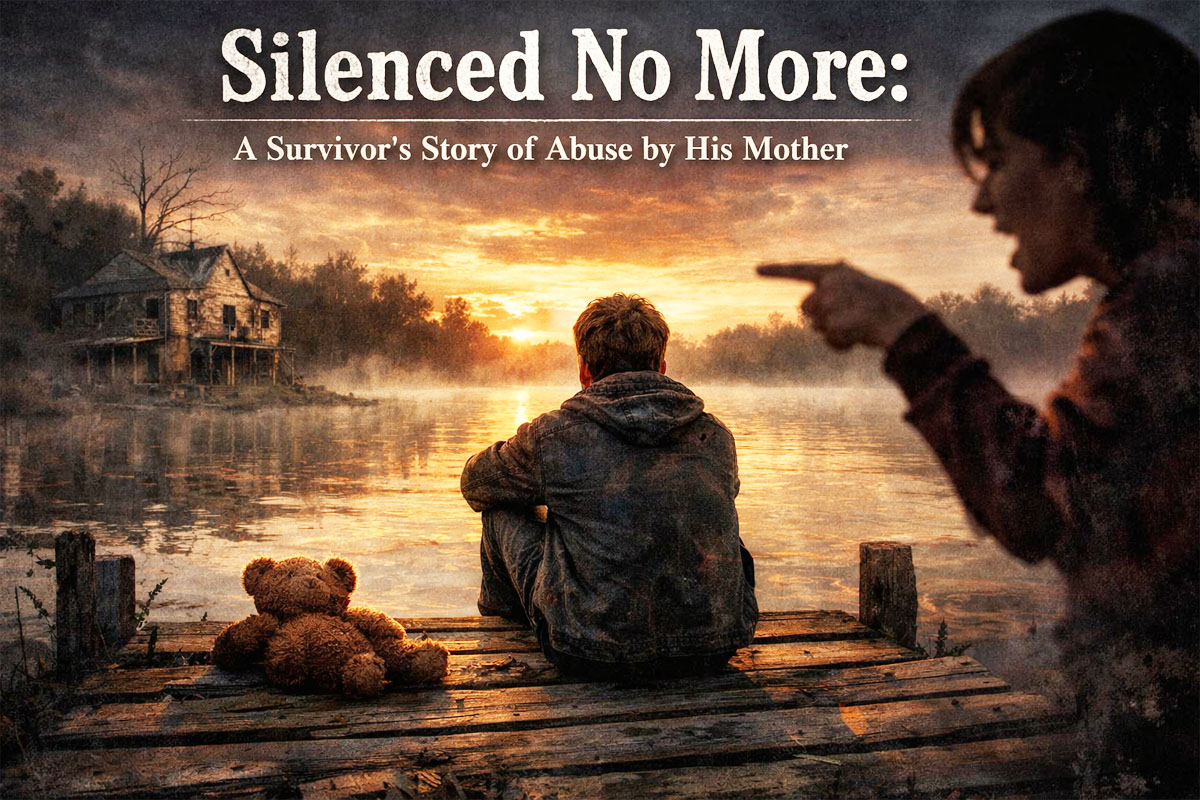
Silenced No More: A Survivor’s Story of Abuse by His Mother
People rarely talk about women abusing their sons. What society hears more often are stories of fathers abusing their daughters.
Both are horrific, both leave deep psychological wounds, and both are often met with silence or disbelief. Too often, the victims, not the perpetrators, are the ones shamed to silence.
My story is no different but I have decided not to remain silent.
The people I trusted to love, nurture, and protect me were the ones who harmed me. For many years, I lived with shame, worthlessness, and thoughts of ending my life. I felt like a mirror shattered into pieces. Therapy helped me gather some of those pieces, but I know I will never be completely whole.
Shock
When I told you that my mother sexually abused me, you were shocked. I understand. That reaction, disbelief, confusion, is exactly what my mother counted on. It is almost unthinkable to say, even more unthinkable to report, that your own mother abused you.
As a child, I didn’t even have the language to understand what was happening. I didn’t know the word “incest.” I only knew that what she did was wrong. She didn’t need to make me swear to keep it secret, the beatings were enough. She beat me so severely at times that I fainted.
You asked if she was my biological mother. Yes. She was.
I was her fifth and last child.
READ ALSO:
- Rivers Police ‘Octopus Strike Force’ Accused of Extorting ₦150,000 From Lagos Traveller
- Trump: Winning the war, losing the world, by Dele Sobowale
- Ozoro Festival Controversy: 15 Suspects Arrested, Community Denies Rape Claims
How did it begin?
My earliest memories place it around age five, though the physical abuse started even earlier. As a toddler, whenever I tried to hug her, she would hit me so hard I would run away crying and hide in another room. Yet to the outside world, she appeared to be a good mother; she cooked, cleaned, and walked me to school. I envied other children who spoke lovingly about their mums. I never had that.
When she began climbing into my bed, I was terrified. She would lie beside me naked and ask me to touch her. As a child desperate for affection and terrified of her anger, I obeyed. I thought that maybe, if I did what she wanted, she would stop beating me, stop belittling me, stop crushing my confidence.
Dad afraid too
I could not tell my father. He was afraid of her too. He never caught her in the act, and I knew he wouldn’t believe me even if I told him…several years ago when I was in my 40s and I told him about it, he did not believe me. He always took mother’s side, even when she beat me for the smallest things. He never protected me.
The abuse continued from age five until I was 14. By then, I had grown physically strong enough to shout at her to leave me alone.
Silenced No More: A Survivor’s Story of Abuse by His Mother
Feature
Save As You Earn: Relief for businesses, individuals as new tax laws take effect
Save As You Earn: Relief for businesses, individuals as new tax laws take effect
In this piece, TUNDE AJAJA examines the potential impact of the New Tax Laws on businesses, taxpayers, government revenue and national development
The dawn of each day meets Mr Sulaimon Jegede in the queue at one of the busy motorparks in Ojodu area of Lagos. In spite of the accumulated fatigue of previous days and other untoward treatments that could compel him to take a deserved break, the burden of fending for himself and his family compels him to not miss his schedule every morning.
But as a tricycle rider in Lagos, Nigeria’s commercial capital, that driver’s seat is not a place of comfort but a hot seat where survival is negotiated, not only with passengers, but also with local government tax officials on one hand, and ruthless, state-backed transport union revenue collectors who impose all kinds of taxes and levies on people like him.
Daily, as he rides through excessive heat, rain, and traffic snarls, he, like others, are routinely forced to a stop, not by anxious passengers, but local government tax officials who only see him as revenue source and union revenue collectors who view his modest income as mere settlement for faceless park overlords. “It’s about N1,200 every day, and it’s sometimes more than that, and it’s like that in most parts of the state. If you calculate the amount spent on those tickets in a month, it’s a substantial amount. Imagine how much they make from every tricycle,” he added.
“Over the years, paying multiple levies or taxes is the norm,” he stated with an air of bottled helplessness. “Whether it’s the LG officials and their representatives or the union boys, the harassment is unabated, the extortion predictable, and the injustice institutionalized. It’s as if we are working for them.”
Ordinarily, his rickety tricycle seemed like a testament to its many years of toiling, but its faded paint, missing side mirrors and wiper, broken rear headlight and contoured body bear witness to the relentless attack by the yobs – a familiar treatment meted out to drivers who fail to part with money quickly.
Jegede lamented that on most days, the money he makes from his Ojodu/Ojota/Oregun route thins out quickly through the fees and taxes, such that after deducting fuel costs, what often remains is hardly enough to justify the day’s outing. Yet, he’s constrained to return the next day.
Sadly, for most drivers on Lagos roads – from danfo drivers to mini-bus drivers and tricyclists, as well as traders and small business owners in many parts of the city, servicing government and non-state actors in one breath is a familiar experience. These are in addition to the manner these actors breach public peace and sometimes truncate the businesses of unyielding persons.
A report by The FATE Institute, titled ‘Unlocking prosperity for Nigeria’s NMSMEs Through Tax Reforms’ showed that not less than 33.2 per cent of nano businesses are forced to pay most of their taxes and levies to non-state actors. “Nano businesses tend to be more vulnerable to the activities of non-state actors,” it added.
READ ALSO:
The report noted further that nationwide, multiple taxation is a major hurdle to the growth of many businesses, including logistics and transportation. The report, in fact, found that transportation and logistics sub-sector is significantly affected by multiple taxation, whether they operate intra-state or inter-state.
It added, “Because transportation involves moving people and goods from one state to another, players in the sector interface with different tax and revenue-collecting agents, at state and local government levels and at the interstate level. For this reason, these players are subjected to multiple taxes. In fact, in the survey, the sector had the highest share (60 per cent) of businesses that said multiple taxation was an important factor that negatively affected their businesses in the last one year.”
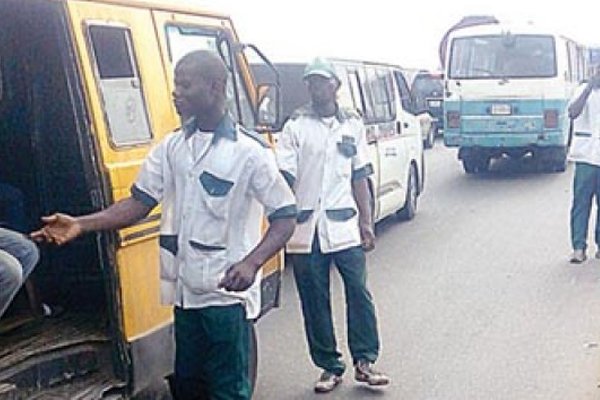
Lagos-NURTW-members-collecting-money-from-comercial-bus-drivers. Source Niche
At the 53rd annual conference of the Institute of Chartered Accountants of Nigeria in Abuja, the Chairman of the Presidential Committee on Fiscal Policy and Tax Reforms, Mr Taiwo Oyedele, disclosed that over 62 taxes were officially enforced on MSMEs by different levels of government, with an additional 108 informal taxes. He explained that some of these taxes could make life difficult for individuals struggling to survive.
While speaking at the Integrated National Financing Framework Core Working Group Retreat in October, Oyedele said, “The vulnerable people are overtaxed in Nigeria. Go on the street and see the vulcanizer, the pure water seller and the market trader, they pay about six to seven levies every day. It can’t make sense. We cannot become a wealthy country by taxing poverty.”
Similarly, in its MSME Survey 2024, PricewaterhouseCoopers revealed that in addition to inadequate access to finance and poor infrastructure, another major challenge affecting the growth of businesses is multiple taxation. “Multiple taxes are arbitrarily charged. During collection, business owners also experience harassment,” it added.
However, in an interesting twist of events, the era of multiple taxation, accompanied by revenue loss, harassment and violence, seems to be coming to a definite end, thanks to the sweeping tax reforms by the Federal Government to modernize the tax system. The reform, undertaken by the Presidential Fiscal Policy and Tax Reforms Committee, sought to, among others, harmonise the over 60 multiple taxes and levies, remove tax provisions that impede business and economic growth, and improve revenue collection efficiency, for a better tax system.
At the end of the exercise, four new tax laws emerged; Nigeria Tax Act (NTA) 2025, Nigeria Tax Administration Act (NTAA) 2025, Nigeria Revenue Service (Establishment) Act (NRS) 2025, and the Joint Revenue Board of Nigeria (Establishment) Act (JRB) 2025.
Meanwhile, on account of the NTA, effective January 1, 2026, nano businesses like Jegede’s and millions of small businesses in Nigeria are now exempted from the Companies Income Tax (CIT), Capital Gains Tax (CGT), and even the newly introduced development levy.
Relief for 39 million small businesses
Indeed, Part 9, Section 56 (a) of the NTA states that small companies are to pay zero per cent tax in respect of their total profit, while any other company is at the rate of 30 per cent. In addition, Section 59 (1) states that ‘a development levy of four per cent is imposed on the assessable profits of all companies chargeable to tax, other than small companies and non-resident companies.’
Meanwhile, the Act defines a small company as one that earns an annual gross turnover of N100m or less (as against the previous N25m) with total fixed assets not exceeding N250m, excluding businesses providing professional services.
These imply that the 39 million small businesses operating across Nigeria, which account for about 96 per cent of businesses and about 85 per cent of employment, are now exempted from taxes, and can focus on growth and consolidation. It also implies that more Nigerians can save more money or use them for other things that benefit them directly.
“A major thrust of the reform is the elimination of nuisance taxes – those that yield minimal revenue, are costly to administer, and disproportionately affect the poor and small businesses. The focus will now shift to high-yielding and broad-based taxes that are relatively easy to collect,” says KPMG in its analysis of the new laws.
The World Bank had lamented in October that many households were struggling with eroded purchasing power and that about 139 million Nigerians live in poverty, a significant increase from the 87 million recorded in 2023. Expectations are therefore high that this tax exemption would help to free more funds for Nigerians, pull many more out of poverty and strengthen SMEs, often regarded as the backbone of the informal economy.
Speaking recently on the impact of the new tax on small businesses at an event in Lagos, Oyedele said, “If we make life easy for them, the nano becomes micro, micro becomes small, small becomes medium, medium becomes large, and large becomes multinational.”
Furthermore, the prevalent harassment, humiliation and intimidation of small business owners and even other taxpayers by informal revenue collectors deployed by various local and state government agencies would cease to exist, as Section 4 (b) and (c) of the NRS Act 2025 vests the Service with the power to administer all revenues accruing to the government.
For example, at several interstate borders across the country, like the Ojodu Berger border between Ogun and Lagos states on the Lagos-Ibadan Expressway, vehicles carrying goods are subjected to violent harassment by informal revenue collectors wielding sticks and other weapons.
With the new Act, however, small business owners, traders and artisans who have been overburdened by multiple taxes are now protected from extortion, they are able to do their business without fear and, more importantly, have more funds at their disposal while their purchasing power is strengthened.
The Joint Revenue Board, in a communique on December 10 restated its commitment to eradicating the menace of non-state actors in the nation’s revenue administration value chain, as it calls on the Office of the National Security Adviser and all relevant security agencies to take immediate steps towards eliminating illegal collection of taxes, levies, rates and charges, especially at the sub-national level.
Business registration as an incentive

A tricycle operator being cleared by a revenue collector Source – Daily Trust
Meanwhile, findings have indicated that the tax exemption for small businesses would serve as an incentive for many to formalize their business registration. This is also because up to N100m revenue from business transactions paid into private accounts may be taxed under the income tax, whereas such amount could be tax-free if paid into a corporate account of a small business.
“You now have the motivation to formalise your business, because you have tax benefits rather than the disadvantages we used to see,” Oyedele said. “Tax is only the icing on the cake; formalisation forces businesses to become more organized, and every informal business that formalises and grows supports inclusive national growth.
“If big companies grow by 40 per cent, few will feel it, but if the informal sector grows by two per cent, all Nigerians feel it.”
Large companies not left behind
In the current tax regime, large companies pay 30 per cent as Company Income Tax. In addition, they pay multiple sectoral taxes and levies, including three per cent of their assessable profit as Tertiary Education Tax; one per cent of their profit before tax as NITDA levy; 0.25 per cent of their PBT as NASENI levy; 0.005 per cent of their net profit as Police Trust Fund levy; and 10 per cent of their dividend as Withholding tax on profit distribution. They also pay one per cent of their contract sum as Content Development levy; another one per cent of their payroll cost as NSITF/ECA as payroll cost; and one per cent of staff cost as Industrial Training Fund.
Despite the agitation by business owners and analysts that the growing tax burden on large companies was crippling businesses and slowing down investment, two additional taxes; one per cent of their profit as Tertiary Healthcare Development levy and another one per cent of their net profit as NYSC Scheme levy, were proposed for companies to pay.
But by virtue of Section 59 (1) of the Nigeria Tax Act 2025, all the additional sectoral taxes and levies have been harmonized into a single development levy of four per cent. Subsection (2) states further that the NRS shall collect the levy and pay it into a special account created for that purpose’, while subsection (3) stipulates how the revenue from the levy should be distributed among the identified agencies.
Meanwhile, Oyedele hinted in a post on X that Nigeria was set to reduce the CIT on large companies from 30 per cent to 25 per cent, adding that in addition to lower corporate tax, large companies would enjoy VAT credits on their costs. “In short, everyone – individuals, SMEs, and large companies – benefits from a reduced tax burden,” he added.
In its assessment of the impact on large companies, Sobowale, Medidem & Bello law firm noted, “Clearer rules and reduced duplication (e.g., Development Levy replacing overlapping sectoral levies) reduce compliance overheads; Tax credits and Research and Development deductions (in line with Section 165) encourage long-term capital investment and innovation; and improved dispute resolution procedures and streamlined refunds reduce friction with tax authorities and enhance business planning.”
Boost for ease of doing business
The NTA ensures that businesses and service providers, like lawyers, estate surveyors, accountants can get input credit from the VAT they paid on items like plants and equipment. Oyedele noted, “Majority of Nigerians will be far better off, including businesses. Any business that has taxable supply, meaning that the things you sell either carries VAT or zero VAT, in that case, it is refunded from January 2026.
“For example, if you set up a factory and you spend money on plants and equipment, under the old law, you bear the VAT. From January 2026, the VAT is refunded. This is also bringing down the cost of doing business, and it is for all businesses and service providers like lawyers, accountants who never got any input credit for VAT before. All they need to do is to keep records. This amounts to huge reduction in cost and cash flow benefit to businesses.”
Relief for most workers vis-a-vis Personal Income Tax
In addition to reducing the tax burden on businesses, the new tax law also introduced a progressive tax regime that reduces the tax burden on low income earners and makes high income earners pay more in taxes.
Globally, Personal Income Tax is said to be one of the taxes people dread most, owing largely to people’s natural reluctance to part with their income amid competing needs, and issues around the fairness, transparency and effective use of tax revenue by the government.
For example, the enthusiasm with which Emmanuel Joseph looked forward to his payday, over the years, has continued to wane. A junior staff with a company in Ogun State, he says he stretches his limited income monthly to cover the ever-increasing tuition fees for his children, a plethora of utility bills and an extended family to look after.

Louts-trying-to-extort-a-truck-driver. Source The Guardian
He noted that every time he looked at his payslip, he always saw his Pay As You Earn as an invisible hand that was taking away the extra money he needed to give his children a better life. “Shortly after my Youth Service Corps programme, I got a job with a company and my annual salary was N900,000. When I got my first payslip and I calculated the deductions, I found that my annual tax was around N45,000 close to my monthly salary. Yet, the road to my house is in bad shape, poor power supply and no potable water. For me, that amount I pay as tax can do a lot for my family.”
However, on account of the new tax regime, Joseph says he feels relieved as his income falls within those to get tax relief, giving him additional money monthly. “I know that N45,000 seems like a little amount, but it means something to my family,” he noted.
Section 58 under the Fourth Schedule of the NTA exempts persons earning N800,000 per annum from tax. This implies that individuals earning the national minimum wage of N70,000 per month or less are exempted from PIT, annual gross income up to ₦1.2m is exempted and there is reduced PAYE tax for those earning annual gross income up to ₦20m.
Oyedele noted that most workers would pay less tax when the new law takes effect. “Under the new tax laws, about 98 per cent of workers in both the public and private sectors are expected to pay less or no PAYE/personal income tax,” he added.
Towards a broader tax net
In spite of Nigeria’s large, active population, there have been concerns over the number of active individual taxpayers in the country.
In 2017, the then Minister of Finance, Mrs Kemi Adeosun, disclosed that out of an estimated 69.9 million taxpayers, there were only 40 million active taxpayers, most of whom were on PAYE whose taxes were deducted from source. Only 214 people in the entire nation pay taxes of more than N20m, all of which are in Lagos. These practices harm Nigeria.”
In what appeared to be a worsening trend, Oyedele stated a few days ago that there were less than 10 million active individual taxpayers in the country. Speaking at the Tax Reform Summit 2026 in Lagos, he noted, “In Nigeria today, the number of active individual taxpayers is under 10 million for the whole country. I think that is the number we should have for Lagos State alone, and we need to make that possible.”
But now, in both the NTA and NTAA, there are various provisions to add other eligible taxpayers to the tax net for the purpose of compliance with tax obligations. For example, Section 29 of the NTAA compels banks and other financial institutions to prepare quarterly returns to the relevant tax authority regarding any individual’s cumulative transactions in a month amounting to N25m or more, or a body corporate cumulative transactions amounting to N100m or more.
KPMG stated in its analysis of the reform, “Overall, the NTA appears to have significantly broadened the tax base to ensure that a wider range of economic and business activities are brought within the tax net. This expansion may lead to some increase in the government’s tax revenue.”
Leveraging data to boost revenue
To ensure that eligible persons pay correct taxes, and to ease tax administration, the FIRS has disclosed that for individuals, their NIN automatically serves as their Tax ID, while for registered companies, their CAC RC number would serve the purpose.
In a previous interview, Oyedele had told our reporter that Nigeria could boost its tax revenue with fewer taxes and wider tax net, even without increasing the rates. He had said the country needed to embrace tax intelligence and data to minimize evasion.
He had said, “The major reason why people pay taxes in many developed countries is that they don’t have a choice, because everything is monitored. You buy a car, you can’t drive it until you register it. Who registers it? Government. You buy land. Who gives the title? Government. You want to travel abroad, where do you get a passport from? Government. You also own a bank account, and the government has full sight of everything.
“What they do in countries where they are serious about tax is to collect those data and connect the dots. So, if a family has two cars and one house, they have three children, they have travelled abroad before and they have a child in a school in the US or UK and they buy foreign exchange from the CBN to pay bills. The government would then collate all the information. When you connect the dots through data, it reduces the ability of people to hide and not pay tax.”
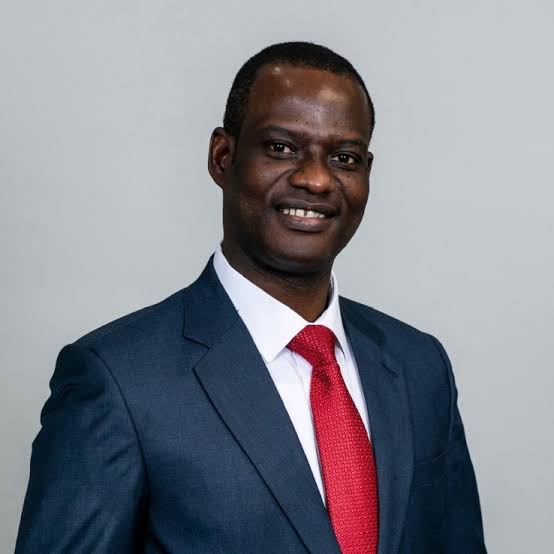
Oyedele
It is noteworthy that Nigeria ranks among the wealthiest countries in Africa. In a ranking by Henley & partners, Nigeria has the third highest High Net Worth Individuals (after South Africa and Egypt); with 8,200 persons having over $1m; 23 having over $100m and three having $1bn.
Interestingly, despite having a larger population than South Africa at about 64 million people, compared to Nigeria’s 230 million people, the National Treasury and the South African Revenue Service said the country raked in 1,855.3 billion Rand (about USD111.12bn) in the 2024/2025 financial year, while Nigeria’s total revenue for 2024 was N21.6tn (about USD14.91bn).
This didn’t start today; it in fact reflects an inefficient tax collection by Nigeria. In 2020, Nigeria generated a total revenue of N7tn, out of which Personal Income Tax was a miserly N1.3tn, whereas South Africa generated a whopping N11tn (naira equivalence) Personal Income Tax alone the same year.
Oyedele, who was then the Fiscal Policy Partner and West Africa Tax Leader at PwC, told our reporter that Nigeria needed a progressive tax that would be properly enforced.
Speaking on the disparity between Nigeria and South Africa’s revenues at the time, he stated, “The problem is that we are not enforcing the taxes we have, particularly for the wealthy people; I mean the middle class and the upper class. When I say wealthy people, I’m not talking about billionaires, because there are not many of them; I’m talking about people who have about N10m to N50m or people who are worth N30m and about N200m. There are many people in that category.
“In South Africa, if you earn N2m or less in a year, you are completely exempted from personal income tax. So, from their top 60,000 citizens, they collected about N6tn equivalence. This means the money that South Africa makes from 60,000 citizens is more than the entire revenue of the Federal Inland Revenue Service and all the internal revenue services in the 36 states combined.”
Harmonized tax for efficiency
An additional gain of the tax reform is the reduction of the number of taxes and levies individuals and businesses are expected to pay. Previously, the Federal Government had 14 taxes, state governments had 25 taxes, while local governments administered 21 taxes, totalling 60 taxes, which aided multiple taxation, revenue loss and free reign of informal collectors.
The tax reforms, which led to the repeal of 12 Tax Acts (Section 196), and consequential amendments to 14 Acts (Section 197), is expected to significantly streamline the taxes, make administration easier, unify collection and boost efficiency and monitoring.
PwC said in its Tax Insight Series and Sectoral Analysis, “These new laws aim to streamline tax administration across all levels of government, clearly define the roles of public sector organisations, and promote greater transparency in revenue collection. By integrating these entities more fully into the national tax framework, the reforms seek to build a more unified, efficient, and accountable system.”
NTA may reduce food prices
While it has been said that logistics, multiple taxes, cost of input like fertilizers are some of the factors fueling high cost of food, there are indications that food prices may drop in 2026 when the tax laws take effect. This is because Section 186 (h) exempts the purchase, hire, rental or lease of tractors, ploughs and other equipment used for agricultural purposes from Value Added Tax.
Furthermore, according to Section 187, taxable supplies such as (a) food items, (d) fertilizers, (e) locally produced agricultural chemicals; (g) locally produced animal feeds; (h) live cattle, goats, sheep and poultry; and (i) agricultural seeds and seedlings would attract zero per cent VAT.
“The impact of this is that businesses selling these goods and services can recover their VAT costs, despite the zero rate which was previously not possible by law,” PwC stated in its analysis.
Deterrence for defaulters
In the run-up to the 2023 general elections, Nigeria witnessed what qualified as government’s complicity in tax evasion by prominent persons. Politicians who had been evading tax but were desperate to get tax clearance certificates for submission to the Independent National Electoral Commission were asked by the FIRS to pay a nominal amount, depending on the offices they were contesting.
Rather than prosecute them for evasion, the government merely gave them a tap on the wrist to go and sin no more.
Speaking in Lagos at the Integrated National Financing Framework Core Working Group Retreat in October, Oyedele said Nigeria had for a long time taxed vulnerable people while allowing the upper middle class, the elite and politicians to evade tax. “We cannot continue like that anymore,” he declared.
In addition to individuals who evade tax, some government agencies collect PAYE and withholding tax from contractors without remitting, while some businesses collect taxes without remitting.
In a 2021 interview, Oyedele had told our reporter, “I have been a tax practitioner in Nigeria for about 20 years and I have yet to hear about one person that has gone to jail for not paying taxes. So, it’s a big problem.”
Therefore, unlike in the past, the new tax laws make ample provision for offences and penalties, like parts I, II and III under Chapter Four of the NTAA 2025. For example, Section 100 (1) states that a taxable person who fails or refuses to register for tax under Section 4 of the Act shall be liable to pay an administrative penalty of (a) 50,000 in the first month in which the failure occurs; and (b) 25,000 for each subsequent month in which the failure continues.
Also, Section 107 prescribes sanctions and/or imprisonment for persons who collects any tax and fails to remit the amount by the 21st day of the following month.
Clearing Impediments that undermine trust
Amid the raging controversy over claims that the versions of the tax bills signed by President Bola Tinubu and gazetted differ from the ones passed by the National Assembly, there are increasing calls for the matter to be thoroughly investigated and culpable persons brought to book. Some analysts described the action as forgery and criminal, while calling on the government to suspend the implementation.
In her call for the immediate suspension of the implementation, popular economist and former Managing Director of the World Bank, Mrs Oby Ezekwesili, in a post on X on Tuesday said, “The proper and only thing that should commence on January 1, 2026 is an inquiry process that will inspire the confidence of Nigerians and reset the grounds for an expedited legislative process for a Tax Reform Act owned by the citizens because it passes the test of credibility and legitimacy.”
Meanwhile, the President in a statement on Tuesday said the implementation would proceed as planned. He stated, “Our administration is aware of the public discourse surrounding alleged changes to some provisions of the recently enacted tax laws. No substantial issue has been established that warrants a disruption of the reform process. Absolute trust is built over time through making the right decisions, not through premature, reactive measures.”
In a related development, KPMG in its report identified certain potential concerns that need to be addressed. For example, on the four per cent development levy on businesses, it said certain categories of companies previously exempted from the sectoral taxes due to the nature of their business were now liable to pay.
PwC also noted, “The Act seeks to balance the need for increased government revenue with the imperative to foster economic growth and protect vulnerable groups. Measures such as the exemption of small companies from key taxes, the introduction of a more progressive personal income tax regime, and the zero-rating of essential goods and services for VAT purposes, all reflect a commitment to fairness and inclusivity. Ultimately, the success of these reforms will depend on effective implementation, sustained stakeholder engagement, and institutional capacity.”
Many Nigerians insist that one way to earn the trust of taxpayers, beyond forced implementation, is transparency and the urgent need for government at all levels to shun wasteful spending of scarce resources on pleasures and personal aggrandizement. Also in the face of opposition to the provisions of the new laws, analysts have called for sustained enlightenment of the public.
Save As You Earn: Relief for businesses, individuals as new tax laws take effect
Feature
Ooni most supreme traditional ruler in Yorubaland — Elebuibon

Ooni most supreme traditional ruler in Yorubaland — Elebuibon
Renowned Ifa priest, Araba Ifayemi Elebuibon, has spoken on rift between the Ooni of Ife, Oba Adeyeye Ogunwusi, the Alaafin of Oyo, Oba Abimbola Owoade.
According to him, the Ooni remains the most supreme traditional ruler in Yorubaland.
Speaking in an interview with Vanguard, Elebuibon said the current tussle between the Ooni and Alaafin had no basis in Yoruba tradition, stressing that colonial interference and modern politics were responsible for the division.
“The Ooni is the father of all Yoruba monarchs, including the Alaafin. Traditionally, the relationship is like that of a father and son. The supremacy battle never existed until the advent of colonialism and later, political manipulation,” he said.
He said while the Oyo Empire rose to prominence under Oranmiyan in the 16th and 17th centuries, it did not diminish the Ooni’s position as the spiritual head of the Yoruba race.
“Oranmiyan’s exploits outgrew those of his father, but that never made him superior. The origin of the Yoruba race is Ile-Ife, not Oyo,” Elebuibon declared.
Ge said the British colonial authorities deliberately created rivalries among Yoruba monarchs to strengthen their control, citing the signing of treaties with the Alaafin while still recognizing the Ooni’s spiritual authority.
READ ALSO:
- Sowore: Retired police officers fault IGP, accuse him of protecting criminals
- El-Rufai says he is not contesting any position in 2027
- FBI investigates Minneapolis school shooting as anti-Catholic hate crime
On the modern dimension of the dispute, Elebuibon said, “This tussle is more of politics than history. Successive Oonis and Alaafins, especially Oba Sijuwade Olubuse and Oba Lamidi Adeyemi, fought bitter battles that nearly divided the Yoruba Council of Obas. Today, loyalists close to the thrones are fueling the current disagreements.”
He appealed to Oba Ogunwusi and the current Alaafin, Oba Abimbola Owoade, to put unity above rivalry for the progress of Yorubaland.
“It is not in the interest of our people globally for this supremacy conflict to continue. The Yoruba nation’s development depends on their cooperation,” he warned.
The Ifa priest also urged groups such as the Oyo Legacy to avoid inflaming tensions, insisting that no Oba should contest supremacy with the Ooni.
On resolving the dispute, Elebuibon pointed to Ifa divination as a spiritual tool. “Ifa has always provided solutions in times of crisis. The Ooni will soon embark on the Olojo Festival, where he will pray for peace in Yorubaland. I am confident this issue will be part of his prayers.”
He concluded by reminding both monarchs of their responsibility: “They went through their rites properly; they know the right thing to do. Those instigating conflict around them must allow peace to reign.”
Ooni most supreme traditional ruler in Yorubaland — Elebuibon
-

 metro2 days ago
Palace Chaos: Police Say Cultists Targeted Davido, Not Gov Adeleke, in Deadly Osogbo Shooting
-

 Auto3 days ago
New Mercedes-Benz Atego’s technology, performance raise benchmark in Nigeria’s truck business
-
 metro2 days ago
PFIPC Scandal: Tinubu Orders Forensic Probe as ICPC Uncovers Multiple Fake Agencies
-

 Business3 days ago
Fuel subsidy: FG records N20.4tn extra resources, spends N30.6tn, says Oyedele
-

 Politics3 days ago
2027: Peter Obi lost his chance when he left ADC for NDC – Fayose
-
 Politics2 days ago
Atiku Dismisses Obasanjo’s Political Clout, Says Ex-President Has ‘No Electoral Value’
-

 News2 days ago
Tinubu orders transfer of EFCC cash recoveries, N242bn unclaimed dividends to NELFUND
-

 metro3 days ago
Armed Men Raze ADC Chieftain’s House, Beat Family Members in Rivers Attack