NELFUND loans will cover students tuition, dept charges — Minister
The federal government has announced sweeping reforms in Nigeria’s education sector, including a unified fee structure for universities and full coverage of student fees under the Nigerian Education Loan Fund, NELFUND.
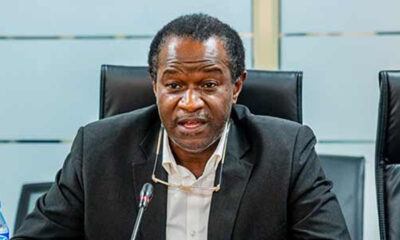
The Minister of Education, Dr. Maruf Olatunji Alausa, who disclosed this at a recent media parley in Abuja, emphasised that the changes were aimed at improving transparency, fairness and accessibility across higher institutions.
Dr. Alausa assured parents and students that NELFUND loans would fully cover all fees charged by tertiary institutions, including tuition, departmental charges, and other related costs.
“The federal government, through NELFUND loans, will ensure that no student is denied access to education due to financial challenges,” he said.
He added that the initiative was designed to create equal access to higher education, particularly for students from disadvantaged backgrounds, while easing financial burdens on families and guaranteeing uninterrupted learning.
On the broader reforms, the minister announced that all Nigerian universities would soon operate under a standardised and unified fee structure.
This, he explained, would eliminate arbitrary charges and inconsistencies across institutions. “With NELFUND loans supporting students, every fee will be clearly defined, transparent, and uniform across our universities,” he noted.
Dr. Alausa also highlighted the role of technology in transforming the education sector. He pointed to efforts to integrate artificial intelligence in classrooms, deploy solar-powered infrastructure, provide tablets to teachers, and expand digital literacy for students.
According to him, local tech companies are already developing innovative tools to support these reforms.
“Technology must play a central role in reshaping our education system. Leveraging AI, digital platforms, and solar solutions will not only improve lesson delivery but also prepare Nigerian students for global competitiveness,” he said.
The minister further underscored the need for accountability in the system, calling for stricter enforcement of the Exam Malpractice Act, discipline for erring lecturers and stronger oversight by university governing councils.
He also called for a review of Nigeria’s overloaded curriculum, warning that the current structure dilutes focus and must be streamlined for relevance.
While acknowledging the importance of mother tongue in early learning, he cautioned that linguistic diversity, especially in Northern Nigeria, poses challenges to implementation. He urged stakeholders to seek balanced approaches that prioritize learning outcomes.
Commending the Tertiary Education Trust Fund, TETFund, for its role in financing educational projects, Dr. Alausa reiterated the government’s commitment to modernisation, accountability, and sustainability in education.
“Since assuming office, our reforms have been bold, forward-looking, and focused on building an education system that Nigerians can be proud of,” he concluded.
As part of these reforms, Dr. Alausa announced new measures directly benefiting both students and staff of tertiary institutions. These include:
Launch of a Tertiary Institution Staff Support Fund: The fund is designed to enhance the welfare and professional development of academic and non-academic staff in universities, polytechnics, and colleges of education. Each staff member will be eligible to receive up to ¦ 10 million, capped at 33.3 per cent of their gross annual salary. The loans may be used for transportation, medical support, and micro-enterprise ventures such as poultry farming.
Payment of Earned Academic Allowance, EAA: After nearly two decades of delay, the federal government fulfilled its obligation to university lecturers with the disbursement of ¦ 50 billion in June 2025 as the first tranche of the EAA.
National Student Loan Programme via NELFUND: While one of President Bola Tinubu’s signature policies, its implementation and targeting, especially in northern Nigeria, had been closely coordinated with the Ministry of Education.
The application portal for the programme, managed by NELFUND, first opened on May 24, 2024, offering interest-free loans to eligible students in public tertiary institutions to cover tuition and upkeep.
By July 24, 2025, NELFUND reported that more than ¦ 77 billion (US$50 million) had been disbursed to 396,252 students across 210 tertiary institutions nationwide. Applications for the 2023/2024 academic session closed on February 21, 2025, while the portal for the 2024/2025 cycle opened on February 22, 2025.
NELFUND loans will cover students tuition, dept charges — Minister
LASU, LASUED, LASUSTECH Shut as ASUU Begins Indefinite Strike
Students at three Lagos State-owned universities are facing an indefinite interruption of academic activities after ASUU declared a strike over unresolved demands.
LASU, LASUED and LASUSTECH are affected by the industrial action announced by the union’s Joint Campus Group.
ASUU said it had given the Lagos State Government 14 days from August 31 to address its concerns. According to the union, the deadline expired without a concrete plan or meaningful dialogue.
The union had also issued a final warning on September 10, but said the September 13 deadline passed without talks.
Its main demand is for Lagos State to domesticate and implement the December 2025 Federal Government-ASUU agreement across the three institutions.
ASUU also wants the implementation of welfare provisions, including the Consolidated Academic Tools Allowance for serving and retired academic staff.
The union said the strike would continue until negotiations produce a satisfactory outcome. It also urged students and parents to remain calm.
While the dispute has led to a fresh shutdown in Lagos, another ASUU branch has suspended its strike in Plateau State.
The Plateau State University branch reached an agreement with the state government on issues including the 2025 agreement, outstanding arrears, staff accommodation and other demands. Members are expected to return to academic activities from midnight on September 16.
Meanwhile, ASUU at Taraba State University has issued a fresh 14-day ultimatum to the Taraba State Government. The notice runs from September 14 to September 28 and concerns outstanding provisions of the 2025 Federal Government-ASUU agreement.
LASU, LASUED, LASUSTECH Shut as ASUU Begins Indefinite Strike
ASUU Crisis Deepens: Lagos Universities Join UNIBEN, Taraba on Indefinite Strike
The Academic Staff Union of Universities (ASUU) has not declared a nationwide indefinite strike. However, the union’s national leadership has issued a fresh threat to resume its suspended national strike without notice, while at least three university branches are currently on indefinite strike over unresolved welfare disputes with state governments.
The confusion stems from a wave of branch-level industrial actions that began in early September 2026, combined with an emergency National Executive Council (NEC) resolution warning that a nationwide shutdown could be activated “within the shortest time possible” if governments fail to honour the 2025 Federal Government-ASUU agreement.
The ASUU branches at the three Lagos State-owned universities declared a total, comprehensive, and indefinite strike on September 15, 2026, after the state government allowed a 14-day ultimatum to lapse without initiating dialogue. The unions’ principal demand is the full domestication and implementation of the December 2025 ASUU-FGN agreement, including the Consolidated Academic Tools Allowance (CATA) and critical welfare protections for both active and retired academic staff. The strike has the full backing of the ASUU national leadership, and the union stated it will not be suspended until the state government signs, domesticates, and implements the applicable provisions of the agreement in full.
The UNIBEN ASUU branch is continuing its indefinite strike, which began on September 9, 2026, over the alleged underpayment of August 2026 salaries. A congress held on September 11 resolved that the strike would continue because the university administration failed to provide clear details of what was paid, what was outstanding, and when it would be paid. University management insists the Federal Government paid August salaries in full, and that the payment in question was CATA, not salary.
ASUU at Taraba State University resumed an indefinite strike following the state government’s failure to implement an agreement reached on January 17, 2025. On September 14, the branch issued a final 14-day ultimatum to the Taraba State Government, which will expire on September 28, 2026, if outstanding provisions are not addressed. The union had previously suspended a planned strike in August to allow the university’s combined convocation ceremonies to proceed.
The UNIZIK ASUU branch suspended its indefinite strike on September 11, 2026, after the university management paid the complete August 2026 salary. The strike had been declared on September 7 over the non-payment of full August salaries. The branch directed all members to resume academic and administrative duties immediately.
At the national level, ASUU has threatened to reactivate its suspended nationwide strike if the Federal Government and state governments fail to urgently resolve outstanding issues. This decision followed an emergency NEC meeting held at the University of Abuja on September 5, 2026. ASUU President, Prof. Christopher Piwuna, stated that unless immediate and concrete steps are taken, the union “will not accept any blame for calling out its members on a nationwide strike action within the shortest time possible”. The unresolved issues include three-and-a-half months of withheld salaries from the seven-and-a-half months withheld under the previous administration, unremitted third-party deductions (pension contributions, cooperative funds, and ASUU check-off dues) allegedly withheld for several months, breaches of university laws and autonomy, and the worsening conditions of the academic profession.
ASUU commended governors who had commenced implementation of the 2025 agreement, singling out Abia State Governor Alex Otti for praise, noting he publicly announced full adoption and apologised for bureaucratic delays. The union also listed Bauchi, Ekiti, Ogun, Benue, Yobe, Adamawa, Kebbi, Katsina, and Borno as states where implementation had commenced. It noted pledges to begin in Kano, Edo, Plateau, Taraba, Gombe, and Bayelsa in September or October 2026.
Former Vice President Atiku Abubakar challenged President Bola Tinubu to account for savings from petrol subsidy removal, arguing that the renewed university crisis exposed a contradiction in the government’s reform claims. Atiku said Nigerians had endured unprecedented cost-of-living increases while public universities remained underfunded and lecturers were again threatening to strike.
ASUU Crisis Deepens: Lagos Universities Join UNIBEN, Taraba on Indefinite Strike
JAMB Moves 2027 UTME Time — Here’s What Candidates Need To Know
The Joint Admissions and Matriculation Board (JAMB) has adjusted the schedule for the first session of the 2027 Unified Tertiary Matriculation Examination (UTME), moving the arrival time for candidates from 6:30am to 7:30am.
Under the revised arrangement, candidates taking part in the first session will be expected to arrive at their designated Computer-Based Test (CBT) centres by 7:30am, while the examination will commence at 8:30am and end at 10:30am.
JAMB said the adjustment was introduced in response to concerns over the safety and convenience of UTME candidates, particularly those who travel long distances to their assigned examination centres.
The Board said the earlier 6:30am arrival requirement could force some candidates to embark on their journeys before dawn, exposing them to avoidable transportation and security risks.
The decision to move the arrival time was reached during JAMB’s 2026 Management and Information Technology Retreat, held in Ikot Ekpene, Akwa Ibom State, from September 6 to 11.
The retreat brought together JAMB management, state coordinators, heads of outstation offices and other relevant officials to review the Board’s operations and consider measures for improving the conduct of future examinations.
According to the Board, concerns had been raised about the safety implications of requiring candidates to report at examination centres as early as 6:30am, especially where candidates have to travel considerable distances.
JAMB said the one-hour adjustment would allow candidates more time to travel to their centres during daylight and could also reduce the pressure associated with early-morning transportation.
The Board also indicated that the adjustment could help reduce UTME absenteeism, as some candidates who encounter transportation difficulties or live far from their assigned centres may find it easier to arrive under the revised arrangement.
The new 7:30am reporting time applies to the first UTME session, with the examination itself scheduled to begin at 8:30am.
JAMB said other sessions would continue according to the examination schedule to be released as part of the preparations for the 2027 exercise.
The latest decision is part of broader efforts by the examination body to improve the safety, efficiency and overall experience of candidates sitting the annual university entrance examination.
JAMB has increasingly placed emphasis on the need to make its examination processes more efficient while addressing logistical challenges associated with the movement of millions of candidates across the country.
The 2027 UTME is expected to involve candidates from across Nigeria and other countries where Nigerian candidates are permitted to sit for the examination.
The adjustment will be particularly significant for candidates who are assigned to CBT centres outside their immediate communities, as the later arrival time gives them an additional hour to complete their journeys before reporting for accreditation and other pre-examination procedures.
Candidates are, however, expected to follow the specific instructions contained in their examination slips and other official communications from JAMB once the full examination schedule is released.
The Board is expected to provide further information on 2027 UTME registration, examination dates, registration centres, approved CBT centres, candidate requirements and session allocations as preparations progress.
Prospective candidates have also been advised to rely on official JAMB announcements and avoid unverified schedules circulated on social media or other unofficial platforms.
The latest change does not mean that candidates should arrive late at their assigned centres. Those scheduled for the first session will still be expected to report by 7:30am to allow sufficient time for verification and other procedures before the examination begins at 8:30am.
JAMB’s decision is therefore expected to provide some relief to candidates and families concerned about the risks associated with very early-morning travel, while helping the Board maintain an orderly start to the 2027 UTME.
JAMB Moves 2027 UTME Time — Here’s What Candidates Need To Know