Don’t judge us by outcome of August 16 by-election - ADC - Newstrends
Connect with us

Politics

Don’t judge us by outcome of August 16 by-election – ADC

Published

on

ADC leadership crisis deepens as court dismisses objections by David Mark, Aregbesola
ADC.s David Mark, Atiku Abubakar and Rauf Aregbesola

Don’t judge us by outcome of August 16 by-election – ADC

The African Democratic Congress (ADC) has said that the party should not be judged by the results of the recent by-elections held across 16 constituencies.

Elections were held on Saturday, August 16, to replace lawmakers who died or resigned following the 2023 general election.

According to the Independent National Electoral Commission (INEC) findings, the ADC did not win any seats, while the ruling All Progressives Congress (APC) secured 12 of the 16 seats in nine states.

The All Progressives Grand Alliance (APGA) gained two seats in Anambra, the Peoples Democratic Party (PDP) one in Oyo, and the New Nigeria Peoples Party one in Kano.

Speaking on Channels Television’s ‘Politics Today’ on Wednesday, African Democratic Congress (ADC) spokesman Bolaji Abdullahi ascribed the party’s success to the time of the election and the ADC’s level of preparation.

READ ALSO:

When asked why the ADC performed poorly in the by-election, Bolaji explained, “We’ve explained it, we’ve issued a statement, we’ve talked about it several times. For us, the election happened less than a month after we came into the party. Most of the candidates, we didn’t even know them, and that’s why we said we cannot judge the ADC by that.

“You’re just talking about us transitioning into establishing our real leadership at this time. So, the by-election that you talked about happened too early in terms of transition for the party. So, we don’t want to be judged by the outcome of that election; there are other elections coming, and we will be ready for those.”

Meanwhile, in its initial reaction to the election results, the ADC blamed its low performance on widespread violence and vote buying and claimed irregularities committed by the ruling party.

The party stated that the election was characterized by vote-buying, ballot box snatching, voter intimidation, violence, and an alleged failure of the Bimodal Voter Accreditation System, or BVAS.

Don’t judge us by outcome of August 16 by-election – ADC

Loading

Politics

Atiku Disowns Aide, Vows to Restore Subsidy — But With a Crucial Difference

Published

on

Atiku Disowns Aide, Vows to Restore Subsidy — But With a Crucial Difference
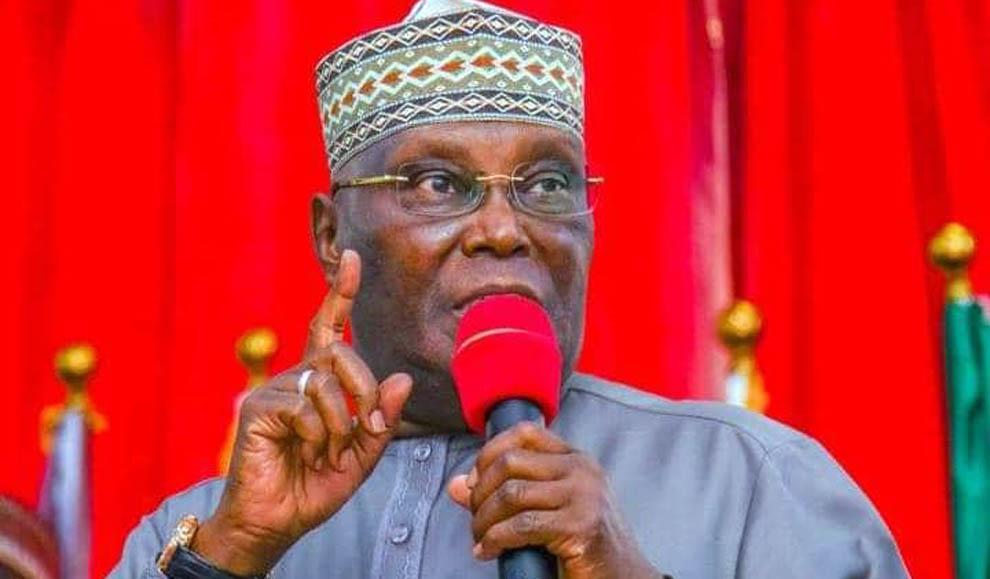
Former Vice President of Nigeria, Alhaji Atiku Abubakar

Atiku Disowns Aide, Vows to Restore Subsidy — But With a Crucial Difference

Presidential candidate clarifies policy position after media aide’s interview sparks confusion, drawing clear line between proposed targeted intervention and old fuel subsidy regime.

The political landscape was thrown into a brief confusion on Tuesday when Paul Ibe, a media aide to former Vice President Atiku Abubakar, appeared on African Independent Television (AIT) and suggested that his principal would restore petrol subsidy if elected in 2027, but would gradually phase it out after the economy recovers. That statement, however, did not sit well with the presidential candidate of the African Democratic Congress (ADC). Hours later, Atiku Abubakar publicly disowned Ibe’s comments, stating unequivocally that his media aide was not speaking on his authority. Speaking while receiving the Osun State leadership of the ADC in Abuja, Atiku declared that one of his press aides had contradicted him in a policy statement as far as subsidy is concerned, and he wanted to repeat categorically that when he said he would return to subsidy, he would. He emphasised that Nigeria is rich enough to look after the welfare of its citizens and made it clear that the aide was not speaking on his own authority.

Taking to his official X account, the former vice president doubled down on his commitment, framing it as a moral and economic imperative for a nation blessed with vast resources. He declared that on the question of subsidy, his position had not changed and would not change, insisting that he would restore it and that a nation as blessed as Nigeria has no business abandoning its citizens to hardship. He argued that Nigeria is rich enough to look after her own. He linked the fuel subsidy debate directly to the everyday struggles of ordinary Nigerians, describing the chain reaction triggered by high energy costs. He stated that he believes the wealth of a nation is not measured by how much government collects, but by how much the money in the pockets of its people can buy. He expressed his desire for wages to have value again, for farmers to move produce without transport swallowing their profits, for families to fill their baskets without emptying their pockets, and for businesses to produce, employ and prosper. He added that when fuel rises, transport rises; when transport rises, food rises; and when food rises, families suffer, and he vowed to break that wretched chain that has defined the national life in the nearly four years of Tinubu’s presidency.

READ ALSO:

While the headline-grabbing statement from Atiku was a firm “I will restore subsidy,” his campaign team quickly moved to provide critical context to prevent what they described as “unauthorised, imprecise and materially misleading” interpretations of his policy. In a statement, Atiku’s Senior Special Assistant on Public Communication, Phrank Shaibu, explained that the candidate is not proposing a return to the old, opaque import-subsidy system that was abolished by President Bola Tinubu in 2023. Instead, Atiku advocates for a “targeted, capped, transparently budgeted and independently audited subsidy” designed to support domestic refining and production. Shaibu stressed that for the avoidance of doubt, policy belongs to the candidate, not the spokesperson, and that their responsibility as communicators is to explain Atiku’s position accurately, not create formulations capable of confusing Nigerians or handing opponents convenient talking points. To drive the point home, Shaibu employed an analogy, stating that you do not remove scaffolding because the calendar says so; you remove it when the building can stand securely on its own. This suggests that t

he subsidy intervention under an Atiku administration would be phased out gradually based on concrete economic indicators—such as expanded domestic refining capacity, stable fuel supply, and improved market competition—rather than an arbitrary date. Atiku himself reinforced this distinction by declaring that he would not restore the import racket but would restore relief.

This incident has reignited the fuel subsidy debate, placing it at the centre of the 2027 presidential election campaign. President Bola Tinubu’s decision to abolish petrol subsidy at his inauguration on May 29, 2023, triggered a sharp increase in petrol prices and contributed to a broader cost-of-living crisis in Nigeria. Atiku’s camp argues that the current administration’s reforms, including the liberalisation of the foreign exchange market, have transferred the burden of economic shock to households and businesses. They are positioning the 2027 election as a choice between what they term “Expensive Nigeria versus Affordable Nigeria.” The ADC presidential candidate argues that Nigerians have not benefited sufficiently from the savings associated with the subsidy removal and that the government has failed to provide adequate palliatives to cushion the impact.

The controversy has drawn sharp reactions from across the political spectrum. While Atiku’s camp frames the policy as a pragmatic approach to easing hardship and boosting local production, critics have accused

him of proposing a retrogressive policy. The Presidency has previously criticised the proposal, arguing that returning to any form of subsidy could undermine local refining, threaten jobs, and increase foreign exchange losses. The debate is expected to intensify as the 2027 election draws nearer, with both sides seeking to define the economic narrative.

To cut through the confusion, here is a clear breakdown of what Atiku Abubakar is actually proposing regarding his subsidy policy as clarified by his campaign. First, it is not a return to the old system, meaning the proposed intervention is not the previous import-subsidy regime that was fraught with corruption and leakages. Second, it is targeted at domestic production, so the subsidy will be designed to support local refining capacity, ensuring that crude oil is processed within Nigeria. Third, it will be capped, transparent, and audited, meaning the new model will have clear financial limits, public transparency, and independent audits to prevent abuse. Fourth, it will feature a performance-based phase-out, so the withdrawal of the subsidy will be tied to measurable improvements in the economy, domestic refining, and market stability, not a fixed timeline.


Atiku Disowns Aide, Vows to Restore Subsidy — But With a Crucial Difference

Loading

Continue Reading

Politics

2027: Sanwo-Olu’s Aide Accuses Atiku of Using Subsidy to Turn Nigerians Against Tinubu

Published

on

2027: Sanwo-Olu's Aide Accuses Atiku of Using Subsidy to Turn Nigerians Against Tinubu
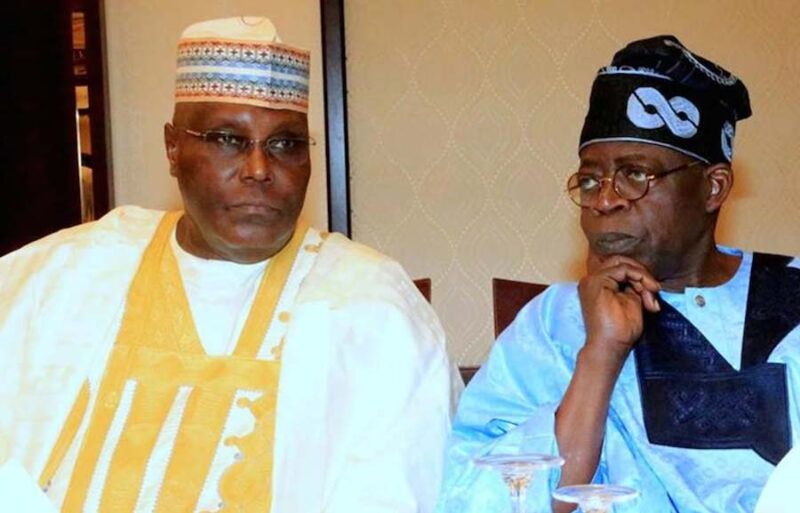
President Bola Ahmed Tinubu and Alhaji Atiku Abubakar

2027: Sanwo-Olu’s Aide Accuses Atiku of Using Subsidy to Turn Nigerians Against Tinubu

Jubril Gawat, Senior Special Assistant on New Media to Lagos State Governor Babajide Sanwo-Olu, has accused former Vice-President Atiku Abubakar of attempting to weaponise the fuel subsidy debate to turn Nigerians against President Bola Tinubu, as the political war of words over the controversial policy intensifies ahead of the 2027 elections. Gawat said this while reacting to Atiku’s promise to restore petrol subsidy if elected president in the 2027 general election. The presidential candidate of the African Democratic Congress (ADC) had last week pledged to restore the subsidy, arguing that its removal had not translated into improved living conditions for Nigerians. Atiku said although he initially did not oppose the decision to remove the subsidy, developments since its removal had changed his position.

“I initially did not oppose the removal of the fuel subsidy. But now that it has been removed, where is the money?” Atiku asked. He also promised to recover funds allegedly stolen from the subsidy scheme, saying his administration would prosecute those responsible for the diversion of public funds. “If I win the presidential election, I will restore the subsidy. And anyone who stole Nigeria’s subsidy funds must return the money,” he said.

Reacting to the pledge, Gawat described the return of subsidy as a major setback to initiatives established following its removal, including the Nigerian Education Loan Fund (NELFUND). “For me, away from other very important issues, bringing back subsidy to knock off a solid initiative like NELFUND is already a big negative to any right thinking person,” Gawat said on X on Tuesday. He argued that the subsidy debate should no longer be part of the country’s policy discussions, suggesting that Atiku’s position was politically motivated. “I also believe the issue of subsidy should not even be on any form of discussion table anymore, the person that brought it believes he can use it to rile up the people against Mr President, same person shockingly commended Mr President in a series of tweets when subsidy was removed,” he said. Atiku had also argued that funds previously spent on subsidising petrol could have been channelled into critical sectors including healthcare, education, security and youth empowerment. “Now it has been removed. Where is the money? If the funds were used to improve healthcare, education, insecurity, security and youth empowerment, things would have been better,” he said.

READ ALSO:

The Tinubu administration has maintained that the subsidy removal was a “difficult but necessary decision” that has created fiscal space for the three tiers of government. According to the Federal Ministry of Finance, the subsidy savings have mobilised N15.827 trillion for the Federation between June 2023 and December 2025. Of this amount, states received approximately N9.17 trillion in additional allocations and local governments received about N6.66 trillion. Net FAAC distribution rose from N10.846 trillion in 2023 to N21.897 trillion in 2025, representing a 102% increase. The government has also pointed to the NELFUND initiative as one of the tangible benefits of the subsidy removal. According to the Minister of Information and National Orientation, Mohammed Idris, the reform scorecard showed that about N6.47 trillion had been spent additionally on strategic infrastructure, while more than N400 billion had been committed to social investment programmes, including NELFUND and CREDICORP. Idris warned against calls to restore petrol subsidy, asking whether the country could afford to choose petrol subsidy over programmes such as student loans and consumer credit for young people. He noted that Nigeria spent about $10 billion on petrol subsidies in 2022, at a time when oil production and government revenues were declining. “A reinstatement of the subsidy could also reduce funding available for roads, railways, electricity and security, while limiting government’s ability to invest in healthcare, education and social protection,” Idris said.

Atiku has intensified his criticism of the Tinubu administration’s handling of the subsidy removal, describing it as “one of the biggest economic frauds sold to Nigerians.” In a statement issued by his Senior Special Assistant on Public Communication, Phrank Shaibu, the former vice-president made several key arguments against the current policy. Atiku argued that while the Tinubu administration claims to have abolished subsidy, the Nigerian National Petroleum Company Limited’s (NNPCL) audited accounts tell a different story. He cited that NNPCL recorded approximately N4.84 trillion as “energy-security expenses” in 2023 and about N7.13 trillion in 2024. Atiku contended that these figures represent a continued government intervention in petrol pricing, merely renamed to avoid political backlash. “Nigerians do not eat semantics. Whether government calls it subsidy, under-recovery, shortfall or energy security, public resources were being used to bridge a gap between economic cost and the price at which petrol was sold. You cannot abolish subsidy at the podium and resurrect it in the accounts under an alias,” he said.

READ ALSO:

Atiku has also accused the administration of applying a double standard, granting fiscal incentives to petroleum investors while denying relief to struggling households. He cited the Deep Offshore Oil and Gas Projects Incentives framework, under which qualifying petroleum developments can receive production tax credits beginning at $3 and $4.50 per barrel. “Tinubu stood at Eagle Square and declared that subsidy was gone. This is the fraud at the heart of Tinubunomics. That is not reform; it is an upside-down economy. You cannot subsidise capital and criminalise relief for citizens. That is not economic reform. It is classic economic apartheid,” he said.

Paul Ibe, an aide to Atiku, has said the former vice-president would restore petrol subsidy if elected president in 2027, but phase out the intervention after the economy improves. Ibe said the proposed measure would be temporary and designed to give Nigerians and businesses room to recover, stimulate economic activity and improve productivity. “We are not returning to Egypt. We are not going back to the old regime that was opaque,” Ibe said. He explained that crude oil would be supplied to local refiners at a discounted price, enabling them to produce petrol and diesel at lower costs, which would eventually translate into lower pump prices for consumers. He criticised the Tinubu administration for removing petrol subsidy alongside other major economic reforms without, in his view, allowing the economy sufficient time to adjust. “No surgeon, no doctor would carry out two or more serious major surgeries, one after the other. They would do one, allow the patient to recuperate, and then undertake the second, or the third,” Ibe said.

The Presidency has also responded to Atiku’s criticisms, with Special Adviser on Media and Public Communications Sunday Dare describing Atiku’s stance as an act of “political apostasy.” Dare accused the former vice-president of flip-flopping on the issue, pointing out that Atiku had advocated for subsidy removal during the 2023 presidential campaign. “To watch a self-styled statesman, who less than four years ago cast himself as an uncompromising apostle of market-driven reform, scramble to promise the reintroduction of petrol subsidies is nothing short of political apostasy,” Dare said.

Dr. Gbenga Olawepo-Hashim, Accord Party presidential candidate, also directed his criticism at Atiku, challenging the ADC candidate over his new position on subsidy removal. Hashim described Atiku as one of the earliest major political advocates of subsidy removal during the Fourth Republic, arguing that his current position required an explanation. “Atiku’s recant on subsidy removal without an apology is dishonesty. If you change your position because circumstances or evidence have changed, tell Nigerians why you changed,” Hashim said. However, Hashim, who has consistently opposed subsidy removal, argued that a targeted and transparent subsidy should be restored to protect citizens and productive sectors from severe economic shocks.

With the 2027 general election approximately five months away, the subsidy debate has become a defining issue. Atiku’s camp has framed his proposal as a central plank of the Atiku Economic Recovery Plan, positioning him as a champion of the poor against what they describe as Tinubu’s “brutally savage capitalism.” Meanwhile, the Tinubu administration and the APC have warned that reversing the reforms without a credible alternative could undermine investor confidence, worsen fiscal pressures, and jeopardise the economic gains being pursued by the administration.


2027: Sanwo-Olu’s Aide Accuses Atiku of Using Subsidy to Turn Nigerians Against Tinubu

Loading

Continue Reading

Politics

2027: APC Denies Withdrawing Tinubu Campaign Council List Amid Controversy

Published

on

2027: APC Denies Withdrawing Tinubu Campaign Council List Amid Controversy
Felix Morka, APC National Publicity Secretary

2027: APC Denies Withdrawing Tinubu Campaign Council List Amid Controversy

The All Progressives Congress has rejected reports that it withdrew the list of members of its 2027 Presidential Campaign Council, describing the claims as unfounded rumours. Felix Morka, the party’s National Publicity Secretary, made the clarification on Tuesday morning in an interview with TheCable, dismissing speculation that President Bola Tinubu had ordered a review of the 223-member list. Morka stated that rumours are not news and that if there is any reason to update the list, it would be announced properly. His comments came amid reports that the presidency had been compelled to review the composition of the campaign council due to what sources described as “anomalies capable of embarrassing the campaign.”

The APC unveiled its 2027 Presidential Campaign Council on Saturday, August 22, 2026, with President Bola Tinubu named as chairman and Vice-President Kashim Shettima as vice-chairman. Other key appointments included Senator Abdulaziz Yari, former Zamfara Governor, as Director-General and Governor Hope Uzodimma, Imo State Governor and Progressive Governors Forum Chairman, as Secretary. The full list comprises 223 members spread across various directorates. However, the composition has generated significant controversy, particularly over the inclusion of serving public officials and individuals facing corruption allegations. Betta Edu, the former Minister of Humanitarian Affairs and Poverty Alleviation who was suspended by Tinubu in January 2024 over allegations of financial malfeasance, was named Director of Women Mobilisation. She was subsequently investigated by the Economic and Financial Crimes Commission (EFCC), though the outcome of the probe has not been made public.

READ ALSO:

Similarly, Ngozi Olejeme, former Chairperson of the Nigeria Social Insurance Trust Fund (NSITF) board, was appointed Zonal Director for Election Planning, Coordination and Mobilisation for the South-South. She is facing an ongoing EFCC probe over an alleged N1 billion money-laundering offence. Zacch Adedeji, Executive Chairman of the Nigeria Revenue Service (NRS), was named Deputy Director of Fundraising, with sources questioning the appropriateness of including a serving head of a revenue agency in a partisan campaign structure.

Several prominent APC figures were notably absent from the list, raising concerns among party stakeholders. Festus Keyamo (SAN), Minister of Aviation and Aerospace Development, who served as spokesman and Director of Public Affairs for the 2023 campaign council, was omitted, as was Simon Lalong, former Plateau State Governor and Director-General of the 2023 APC Presidential Campaign Council. Other notable omissions include Benjamin Kalu (Deputy Speaker of the House of Representatives), Nuhu Ribadu (National Security Adviser), and former Governors Yahaya Bello, Gbenga Daniel, and Ibikunle Amosun. Some sources described these omissions as “sheer errors,” while others attributed them to oversight or political calculations.

Party sources have revealed that the list suffers from three major defects that prompted calls for review: inclusion of individuals with alleged corruption cases, exclusion of experienced party figures who could add value to the campaign, and omissions through mere oversight in the compilation process. A source in the presidency confirmed to Daily Trust that the list was being reviewed due to concerns about the inclusion of “people who are supposed not to be there” and the exclusion of those “that would add value to the campaign.” However, sources indicated that the leadership positions – including the Director-General and Secretary – would remain intact, with adjustments likely limited to the membership composition.

Babafemi Ojudu, a chieftain of the APC, also criticised the composition of the campaign council, pointing out the presence of what he described as “former sinners” on the list. In a statement posted on his official Facebook page, Ojudu observed that the list contained “saints and former sinners, the tried and the tired, reformers and those still awaiting reform.” He said that there are people whose names inspire confidence and others whose names inspire a quick check on one’s wallet, adding that a campaign seeking the confidence of Nigerians should not appear to be offering political sanctuary to every controversial figure who can command a convoy, finance a rally or mobilise a forest.

Reports indicate that the inauguration date for the campaign council has not been announced because there is a need to fine-tune the list of members. A source told Daily Trust that everything is being done in the Villa regarding the review, but noted that such adjustments are not unprecedented. For the 2023 elections, the first list of campaign council members was also recalled and fine-tuned before inauguration. Despite reports of a review, Morka has maintained that the party has not officially withdrawn the list. His clarification leaves the recently announced composition as the latest officially documented structure of the APC‘s 2027 presidential campaign, pending any formal amendment by the party.

2027: APC Denies Withdrawing Tinubu Campaign Council List Amid Controversy

Loading

Continue Reading

Trending