

Politics
We can’t do anything about early campaigns for 2027 – INEC
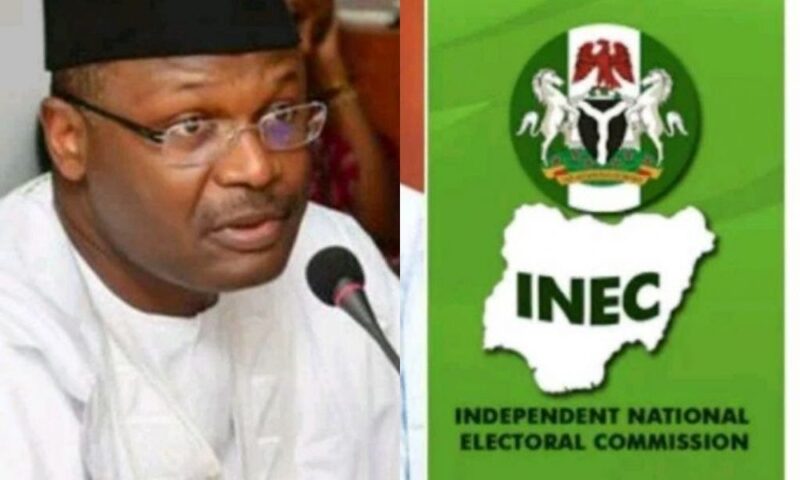
We can’t do anything about early campaigns for 2027 – INEC
The Independent National Electoral Commission (INEC) has issued fresh caution to political actors against early commencement of campaign ahead of the 2027 general election, but admitted that it is constrained by law from sanctioning politicians involved in the illegal act.
The commission’s Chairman, Mahmood Yakubu, who expressed concerns particularly decried the commencement of campaign ahead of off-season governorship elections, FCT Area Council elections and the 2027 general elections.
“Quite correctly, Nigerians expect INEC, as registrar and regulator of political parties, to act in the face of the brazen breach of the law on early campaign. However, the major challenge for the commission is the law itself,” Yakubu said.
The INEC boss said while section 94(1) of the Electoral Act 2022 prohibits campaigns earlier than 150 days before polling, the law provides no sanction for such breaches, hence political actors have ceaselessly violated it..
He specifically frowned at the incidences of aspirants using cultural festivals and religious gatherings to drop hints about their ambitions, explaining that they often disguised as appreciation or philanthropy.
In his remarks at the stakeholders roundtable on premature political campaign in Abuja yesterday, Yakubu said: “The idea of Section 94(1) of the Electoral Act 2022 prohibiting the commencement of campaign earlier than 150 days is to prioritise governance over electioneering from one electoral cycle to another.
“However, political parties, candidates and their supporters seem to be perpetually in election mood even when the electoral commission is yet to release the timetable and schedule of activities for elections or ahead of the timeframe provided by law.
READ ALSO:
- Israeli airstrikes kill 35 people in Yemen
- Tinubu directs FEC committee to implement measures for food prices crash
- Qatar says Netanyahu must be ‘brought to justice’ over strikes
“Around the country, we have seen outdoor advertising, media campaigns and even rallies promoting various political parties and candidates.
“These actions and activities undermine the commission’s ability to track campaign finance limits as politicians, prospective candidates and third-party agents expend large amount of money that cannot be effectively monitored before the official commencement of campaigns.”
While revealing why its hands are tied, the commission’s boss said: “Quite correctly, Nigerians expect INEC, as registrar and regulator of political parties, to act in the face of the brazen breach of the law on early campaign.
“However, the major challenge for the commission is the law itself. Sections 94(2) of the Electoral Act 2022 imposes sanctions, albeit mild (a maximum amount of N500,000 on conviction), on any political party or a person acting on its behalf who engaged in campaigns 24 hours before polling day.
“However, there is no sanction whatsoever concerning breaches for campaigns earlier than 150 days to an election. Here lies the challenge for the commission in dealing with early campaigns by political parties, prospective candidates and their supporters.
“In a sense, the problem of early campaigns in Nigeria is not new. The seeming inability of the commission and other regulatory agencies to deal with the menace within the ambit of the existing electoral legal framework calls for deep reflection.
“It is in this context that the commission considered it appropriate to convene this meeting in which legislators, leaders of political parties, civil society organisations, experts, practitioners and regulators will brainstorm on the way forward,” he said.
READ ALSO:
- Businesses suffer as national grid collapses again
- INEC recognises Mark, Aregbesola as ADC chairman, secretary
- Tinubu to address world leaders at UN General Assembly Sept 24
INEC national commissioner and Chairman Board of the Electoral Institute (BEI), Abdullahi Abdul Zuru, said early campaigns are one of the most worrying challenges of Nigeria’s democracy.
He said aspirants often use cultural festivals, religious events, billboards, branded vehicles and even social media influencers as fronts for premature campaigns.
“When aspirants or parties compete to dominate visibility long before the official campaign period, it distorts fairness and raises the cost of political competition,” Zuru said.
He added that the trend distracts elected officials from governance, erodes public confidence in the electoral system, and fuels cynicism about the rule of law.
“We must refine the regulatory framework so that what constitutes premature or early campaigning is more clearly defined in today’s digital age,” he added.
In his presentation titled: “Towards addressing the challenges of premature election campaigns in Nigeria, former INEC Chairman, Attahiru Jega, said premature campaigning has regrettably remained inadequately regulated and become increasingly widespread.
“Although the Nigerian electoral legal framework contains some provisions regulating election campaigns, as it provides for the period of commencement and end of campaigns, regrettably, premature campaigning has remained inadequately regulated and has become increasingly widespread.
“It has been characterized mainly by the display of posters featuring politicians, across political parties, but especially of incumbents, at both federal and state levels, literally ‘jumping the gun’, some two years before the official election/campaign period.
“Many, if not most of these, are what can be termed as ‘third-party’ campaigns, ostensibly carried out by candidates’ support groups, with dubious financing, most likely in crass violation of campaign financing legislations.
“Premature campaigns consist of, not only erection of billboards with candidates portraits and messages soliciting votes and/or endorsements; but they also include, using public media and resources to advertise records of ‘achievements’ of incumbents, or use of official positions and commissioning of projects for electioneering purposes,” he argued.
We can’t do anything about early campaigns for 2027 – INEC






Politics
Yayi Ancestry Row: Stepmother Sets Record Straight as Legal Battle Looms

Politics
No Office of the First Lady Under My Presidency, Vows Omoyele Sowore
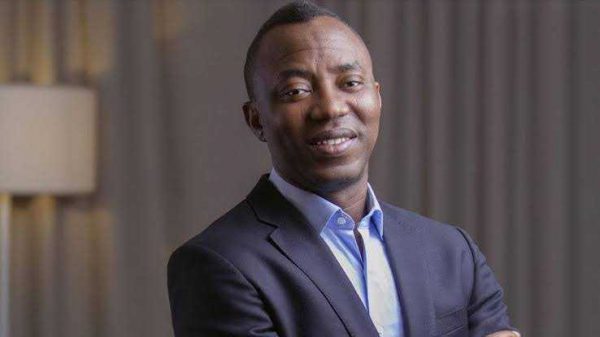
No Office of the First Lady Under My Presidency, Vows Omoyele Sowore
The AAC candidate pledges to slash governance costs by ₦4 trillion, abolish gubernatorial security votes, and end unconstitutional spending.
African Action Congress (AAC) presidential candidate Omoyele Sowore has pledged to eliminate the Office of the First Lady if he wins the 2027 presidential election, describing the ceremonial post as an unconstitutional drain on national resources. Sowore emphasized that Nigeria’s 1999 Constitution provides no legal standing or budgetary allocation for the spouse of the head of state.
Consequently, Sowore clarified that while entering the State House will not alter his marriage, his administration will refuse to assign official duties, staff, or public funds to his spouse.
Instead, he promised to champion women’s voices across all levels of government by appointing qualified female leaders to legitimate, constitutional offices rather than maintaining a ceremonial platform.
He condemned the continued allocation of taxpayer revenue to unofficial positions, arguing that such expenditures divert critical capital from infrastructure and social welfare.
Furthermore, the AAC candidate outlined a comprehensive austerity framework intended to slash the cost of governance by approximately ₦4 trillion. Central to this strategy, Sowore vowed to initiate constitutional amendments to outlaw discretionary security votes for state governors, a long-debated pool of funds historically shielded from public accounting.
Ultimately, he insisted that transferring these discretionary funds directly into state treasuries will help governments pay public sector wages consistently and fund vital public services.
No Office of the First Lady Under My Presidency, Vows Omoyele Sowore
Politics
Otti: I Won’t Become Political Godfather After Leaving Office
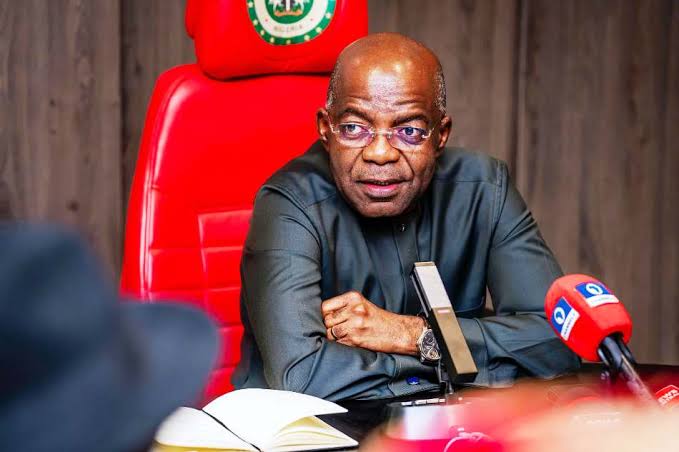
Otti: I Won’t Become Political Godfather After Leaving Office
Abia State Governor Alex Otti has said he will not become a political godfather or impose a successor on the state after completing his second term in 2031.
Otti spoke in Umuahia on Thursday while receiving former Social Democratic Party governorship candidate Ngozi Johnson-Chukwunenye and her supporters into the Labour Party.
The governor said he would prefer a successor to emerge based on merit and competence rather than what he described as a “sit-tight” approach to political leadership.
“I don’t want to be a godfather, and I don’t tolerate godfathers” Otti said, adding that political stakeholders should consider those capable of doing the job before supporting a candidate.
He also reiterated that he does not plan to seek another elective position after his second term, saying younger people should be given opportunities to take up leadership roles.
Otti Highlights Youth Leadership Programme
The governor said his administration was already preparing young people for future leadership through initiatives such as the Abia Leadership Academy.
According to him, more than 1,080 people aged between 16 and 25 had recently graduated from the academy.
Otti said the programme was intended to help prepare a new generation of leaders rather than encourage prolonged political control by individuals.
Meanwhile, he said his administration would continue extending its development projects beyond Aba and Umuahia into other parts of the state.
He said the government initially focused on the two major cities before moving into the hinterland with additional projects.
Otti: I Won’t Become Political Godfather After Leaving Office
-

 International3 days ago
Islamic Council Condemns Attempted Attack on Holy City of Mecca
-
 News3 days ago
Keep Politics Out of My Office — Ogbomoso Grand Chief Imam Warns Politicians, Bloggers
-

 metro2 days ago
Niger Mosque Abductions: Terrorists Execute 30 of 500 Captive Muslim Worshippers
-

 Business2 days ago
Fuel Prices Climb to ₦1,500 per Litre Across Nigeria, Sparking Calls for Urgent Action
-

 News3 days ago
Blue Line Rail, Hospitals Get Boost as Lagos Approves ₦200bn Bond and Budget Reordering
-
 Entertainment3 days ago
BREAKING: Olu Jacobs Dies at 84, Atiku Mourns Cultural Icon
-

 News2 days ago
OAU Investigates Death of Final-Year Student as Police Begin Probe
-

 News22 hours ago
ECOWAS Biometric Card Expands as Seven Countries Begin Rollout