

International
Venezuela opposition leader Maria Corina Machado named Nobel Peace Prize winner
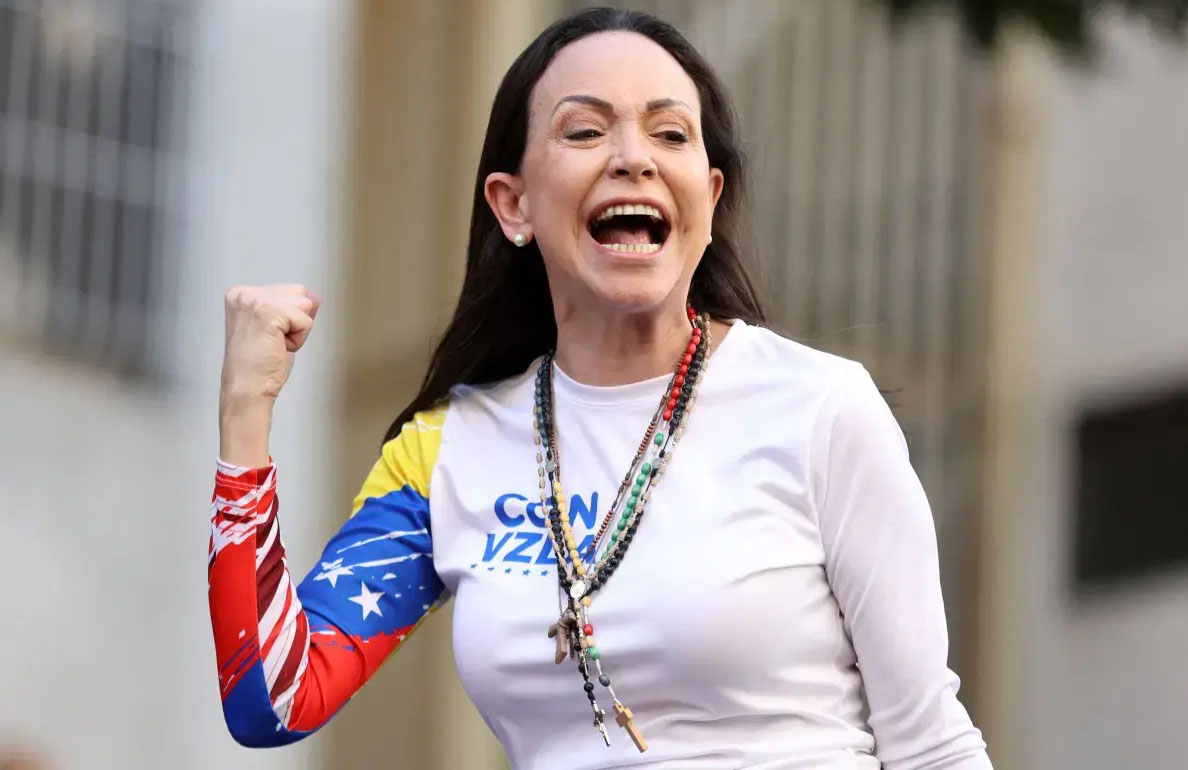
Venezuela opposition leader Maria Corina Machado named Nobel Peace Prize winner
Venezuelan opposition leader and pro-democracy campaigner Maria Corina Machado has won the Nobel Peace Prize.
The committee praised her for her “tireless work promoting democratic rights… and for her struggle to achieve a just and peaceful transition from dictatorship to democracy”.
It said she had resisted death threats and been forced into hiding in her fight against President Nicolas Maduro – widely considered a dictator.
“When authoritarians seize power, it is crucial to recognise courageous defenders of freedom who rise and resist,” Nobel added.
The committee said Ms Machado had stayed in Venezuela despite personal risk, calling it a “choice that has inspired millions of people”.
“Democracy depends on people who refuse to stay silent, who dare to step forward despite grave risk,” it said.
There was speculation Donald Trump had an outside chance despite nominations closing less then two weeks after he started his second term.
The president claims he has stopped seven wars since then – an assertion widely disputed – and last month said “everyone says that I should get the Nobel Peace Prize”.
Israeli Prime Minister Benjamin Netanyahu also put the president’s name forward for the award in July.
The White House criticised the Nobel committee’s decision on Friday.
“President Trump will continue making peace deals, ending wars, and saving lives. He has the heart of a humanitarian, and there will never be anyone like him who can move mountains with the sheer force of his will,” spokesman Steven Cheung said in a post on X.
“The Nobel Committee proved they place politics over peace.”
READ ALSO:
- Gov. Mbah, 24 Lawmakers, 260 Councillors, entire Exco set to dump PDP for APC
- Army investigates officer’s death after fire incident in Akwa Ibom
- Nnamdi Kanu will get what he deserves – Tinubu’s spokesman
Nina Graeger, director of the Peace Research Institute Oslo, told Sky News if Mr Trump’s Gaza peace deal leads to “a lasting and sustainable peace… the committee would almost certainly have to take that into serious consideration in next year’s deliberations”.
‘Extraordinary example of courage’
Ms Machado, 58, was lauded by the Nobel committee as “one of the most extraordinary examples of civilian courage in Latin America in recent times”.
Writing on X after her win was announced, she said: “This immense recognition of the struggle of all Venezuelans is an impetus to conclude our task: to conquer Freedom.
“We are on the threshold of victory and today more than ever we count on President Trump, the people of the United States, the peoples of Latin America, and the democratic nations of the world as our main allies to achieve Freedom and democracy. Venezuela will be free!”
Her candidacy for last year’s election was blocked by the Maduro regime but she backed Edmundo Gonzalez, the leader of another party.
Opposition groups organised hundreds of thousands of volunteers to observe voting, despite risks to their safety, and ensured tallies were recorded “before the regime could destroy ballots and lie about the outcome”, added the Nobel committee.
President Maduro, who has been in power since 2013, claimed a third term despite exit polls pointing to a decisive opposition win.
He said his re-election was a triumph of peace and stability and claimed the electoral system was transparent.
READ ALSO:
- Police officer forgets cap in student’s car after extorting N99,000 from him
- Macron warns Israeli settlements threaten Palestinian state
- Police hand over body of Canadian who died in Lagos hotel to relative
Ms Machado disputed the result and said Edmundo Gonzalez had recorded an “overwhelming” victory.
The country’s highest court upheld the result – but the United Nations said it wasn’t impartial or independent.
Antony Blinken, the US secretary of state at the time, said America had “serious concerns”, while the UK said it was “concerned by allegations of serious irregularities in the counting”.
Nobel said Ms Machado first stood up for free and fair elections more than 20 years ago, when she called for “ballots over bullets”, and had campaigned on issues such as judicial independence and human rights.
A Nobel video on social media recorded her reaction on the other end of the line when she got the call telling her she had won.
“Oh my God… I have no words,” she said.
“I thank you so much, but I hope you understand this is a movement, this is an achievement of a whole society. I am just one person. I certainly do not deserve it,” she added.
It’s currently unclear whether she will be able to travel to Norway for the official ceremony on 10 December.
The committee painted a bleak picture of Ms Machado’s home country, saying many in Venezuela – which has the world’s largest oil reserves – live in serious poverty after it went from a “relatively democratic and prosperous country to a brutal, authoritarian state”.
“The violent machinery of the state is directed against the country’s own citizens,” it said, noting about eight million people had left the country – many of them heading north to try to enter America.
Venezuela opposition leader Maria Corina Machado named Nobel Peace Prize winner
Skynews




International
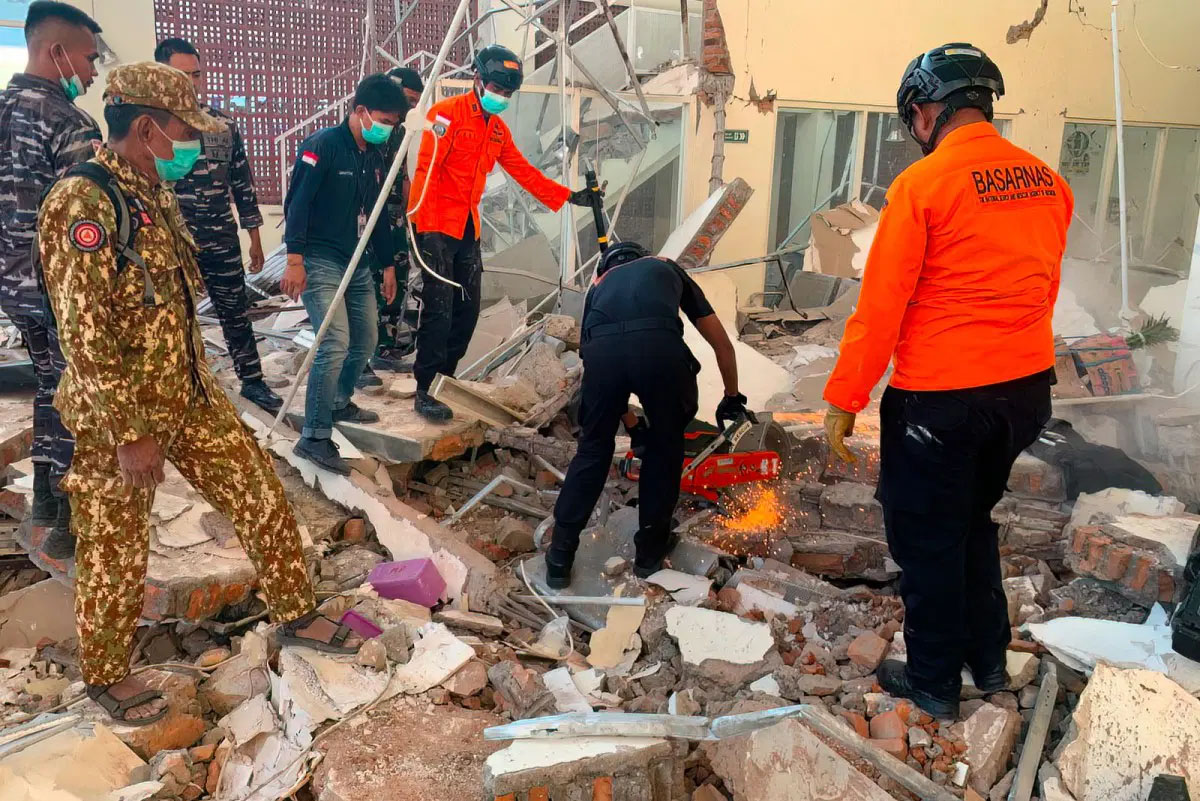
Indonesia Earthquake: Death Toll Rises to 38 as Rescue Teams Battle Landslides, Aftershocks
International
Netanyahu Calls UK ‘Islamic Republic of Britain,’ Sparks Outrage Over Islamophobic Remark
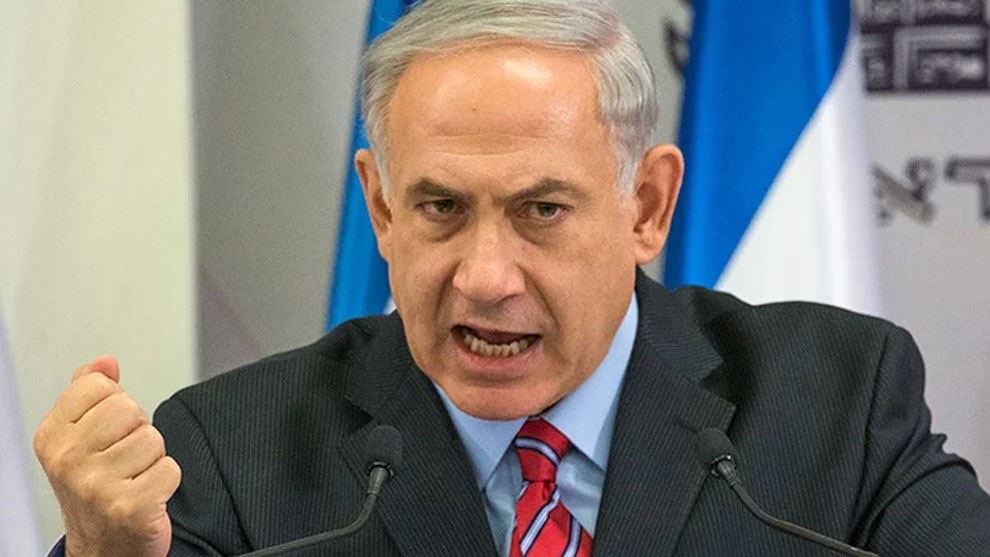
Netanyahu Calls UK ‘Islamic Republic of Britain,’ Sparks Outrage Over Islamophobic Remark
Israeli Prime Minister Benjamin Netanyahu has sparked a diplomatic firestorm after referring to the United Kingdom as the “Islamic Republic of Britain” during a podcast interview, drawing sharp condemnation from British Jewish leaders and former government officials while underscoring growing tensions between the two long-standing allies. Netanyahu made the remarks during an appearance on the Israeli podcast Melech Blitzer Haim, which aired on Thursday, August 13, 2026. The Israeli leader was discussing British media coverage of Israel, contrasting what he described as the “positive” reporting by journalist Randolph Churchill during the 1967 Six-Day War with the current British political climate.
“Try finding that in Britain today. What’s called ‘the Islamic Republic of Britain’,” Netanyahu said, according to translated comments published by Israeli media.
When the podcast host asked whether “all of Europe isn’t already like that,” referring to demographic changes and the growth of Muslim communities across the continent, Netanyahu responded, “Yes.” He then invoked remarks previously made by US Vice President JD Vance, stating: “Someone said that the first Islamic republic with nuclear weapons will be the Islamic Republic of Britain… so we’re making sure there won’t be another one in Iran.”
READ ALSO:
- “Obi Is a Regional Champion” — Dino Melaye Explains Why He Can’t Be President
- Adeleke Campaign Council Protests Release of APC Assembly Candidate Arrested with Gun in Osun
- Omo-Agege Escapes Assassination Attempt in Usiefrun, Six NDC Members Injured
The remarks were immediately condemned by British and Irish Jewish leaders, who accused Netanyahu of using divisive and irresponsible language at a time of heightened social tensions. “At a time when antisemitism, anti-Muslim hatred and social division are causing real fear across our country, language of this kind is dangerous and irresponsible,” said Rabbi Charley Baginsky and Rabbi Josh Lev, co-leads of the Movement for Progressive Judaism. “Prime Minister Netanyahu does not speak for British Jews. His words do not represent us.”
Gavin Barwell, a former Downing Street chief of staff under Prime Minister Theresa May, described the remarks as “blatant Islamophobia” and questioned whether Netanyahu could still be regarded as a friend of Britain. “Let’s hope everyone will now shed the pretence some still cling to that this man is any friend of Britain,” Barwell wrote on X. British broadcaster Piers Morgan also weighed in, sharing a clip of the remarks on X and calling Netanyahu an “idiot.” The post attracted hundreds of thousands of views and sparked a wider online dispute, with Israeli Channel 14 correspondent Omri Haim responding: “Yes, he is the idiot. How is Birmingham doing? Don’t come crying when you feel the water boiling, frog.” Israeli opposition politician Avi Dabush, running for the Knesset as a Democrats party candidate, also criticised the remarks, writing on X: “That’s what happens when there’s a horrific diplomatic failure, and an inability to rally countries in the world in favor of our interests.” Dabush noted that Britain is a member of the UN Security Council “six times the size of Israel.”
Netanyahu’s comments come amid increasingly strained relations between Israel and Britain, despite the countries’ traditionally strong ties. Tensions have escalated since the Labour Party returned to power in the UK in 2024. Under former Labour Prime Minister Keir Starmer, Britain paused free trade talks with Israel and suspended some arms export licences. The UK has also imposed sanctions on far-right Israeli cabinet members Itamar Ben-Gvir and Bezalel Smotrich. Last year, Britain joined France and Canada in recognising a Palestinian state.
Current British Prime Minister Andy Burnham recently apologised for Labour’s initial response to Israel’s actions in Gaza, saying the party was too slow to call for a ceasefire. Burnham has indicated he would pursue further sanctions on individuals and entities involved in violence in Gaza and consider measures to ban trading goods with illegal settlements. “We’ve got to do more to put pressure on the Israeli government,” Burnham said.
Rodwan Abouharb, associate professor of international relations at University College London, described Netanyahu’s comments as a “new low” in UK-Israel relations, while suggesting they could also serve Netanyahu’s domestic political interests as he faces a fractured governing coalition ahead of Israel’s October 27 election. Chris Doyle, director of the Council for Arab-British Understanding, said on X: “Netanyahu will say anything. This is as ridiculous as stating that Israel is a democracy that abides by the rule of law for all its citizens; or that it has the most moral army in the world.”
Netanyahu Calls UK ‘Islamic Republic of Britain,’ Sparks Outrage Over Islamophobic Remark
International
Iran rejects US claims that Strait of Hormuz has reopened
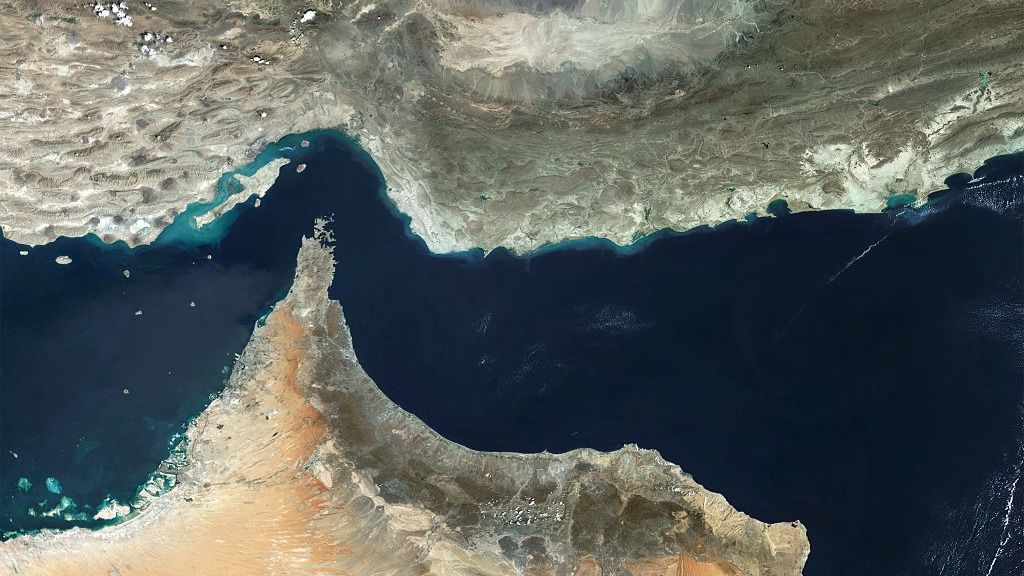
Iran rejects US claims that Strait of Hormuz has reopened
Iran has rejected claims by U.S. officials that the Strait of Hormuz has reopened, insisting that the strategic waterway remains closed to normal commercial shipping until its conditions are accepted.
The Persian Gulf Strait Authority (PGSA), the Iranian body responsible for maritime traffic through the waterway, said repeated statements from Washington did not change the situation.
“Claims and repeated posts by U.S. officials that the Strait of Hormuz is no longer blocked do not change the reality,” the authority said in a post on X.
The PGSA maintained that the Strait of Hormuz remains blocked and will not be reopened until Iran’s conditions are accepted.
The latest development followed a claim by U.S. President Donald Trump that the United States had “total control” of the strategic waterway and would maintain that control.
Trump said in a post on Truth Social that the U.S. naval blockade around Iran had created a “wall of steel” and suggested that Tehran lacked the ability to challenge the American military presence.
Iran has rejected the assertion, with its officials continuing to maintain that Tehran controls passage through the waterway.
The dispute comes amid an ongoing confrontation between the United States and Iran, with Washington maintaining a naval blockade of Iranian ports while Tehran has restricted most shipping through the Strait of Hormuz.
READ ALSO:
- Oyinlola Denies Adeleke’s Car Gift Claim: “Osun Govt Gave Me the Car, Not You”
- Tinubu Rejects Blame Game, Vows to Revive Refineries with Profitability Focus
- Scores of Terrorists Killed, 60 Arrested in Nationwide Military Operations
U.S. Defense Secretary Pete Hegseth said Washington could maintain the naval blockade of Iran indefinitely by rotating military vessels in and out of the region. The United States says the blockade is intended to restrict Iranian shipping while allowing non-Iranian vessels to pass.
Iranian officials, however, have said the Strait of Hormuz will not fully reopen unless the United States changes its position and accepts Tehran’s demands.
Iran’s newly appointed Supreme National Security Council secretary, Mohsen Rezaei, said the United States must end the war, address Iran’s frozen assets and support an end to hostilities across the region, including in Lebanon and Gaza.
Rezaei also said other Iranian demands had been communicated to Washington through mediators.
Meanwhile, Iran and Oman are discussing a possible arrangement for shipping through the Strait of Hormuz. However, Iranian Foreign Ministry spokesman Esmaeil Baghaei said any agreement between Tehran and Muscat on a new route would be separate from the question of reopening the strait itself.
That distinction is significant because reports earlier this month suggested that Iran and Oman were close to an arrangement that could facilitate commercial shipping through the waterway. Reuters reported that the proposed deal would not, by itself, lead to the reopening of the strait, as Iran has tied the move to broader issues involving the U.S. blockade and the war.
Despite Washington’s claim of control and Tehran’s insistence that the waterway remains blocked, vessels have continued to move through the Strait of Hormuz in limited numbers.
According to shipping data reported by Reuters, nine commodity vessels transited the strait on Thursday, compared with five the previous day. However, the figure remained below the August average of about 12 vessels a day. Most of the vessels that passed through used routes controlled by Iran.
The current traffic levels remain dramatically below normal.
The disruption has forced energy companies and traders to explore alternative arrangements. Reuters reported that TotalEnergies’ trading arm, Totsa, was offering Iraqi crude for loading at locations outside the Strait of Hormuz as buyers remained reluctant to send vessels to terminals inside the waterway because of security concerns.
The Strait of Hormuz is one of the world’s most important energy shipping routes, connecting the Persian Gulf with the Gulf of Oman and the Arabian Sea.
Any prolonged disruption threatens the movement of crude oil, petroleum products and liquefied natural gas from major energy producers in the Gulf to international markets.
The continuing restrictions have therefore raised concerns over global oil supplies, shipping costs and energy prices, particularly as the United States and Iran remain unable to reach a lasting agreement.
The crisis has also affected financial markets. Reuters reported that Gulf stock markets were mixed amid concerns over the prolonged disruption, while Brent crude remained elevated as investors assessed the risk of further escalation.
The situation has become increasingly complicated by competing claims over who controls the waterway.
While President Donald Trump maintains that the United States has “total control” of the Strait of Hormuz, Iranian authorities insist that Washington has not taken control of the passage and that vessels must comply with Iranian requirements to transit the area.
For now, the conflicting claims have not translated into a return to normal shipping. Maritime traffic remains restricted, diplomatic efforts involving Iran, Oman and the United States remain unresolved, and Tehran continues to insist that the Strait of Hormuz will not be fully reopened until its conditions are met.
Iran rejects US claims that Strait of Hormuz has reopened
-

 News2 days ago
FG to Attach 300 NYSC Corps Members to CNG Workshops for Skills Training
-
 metro2 days ago
Seven Miners Killed in Plateau Mining Pit Collapse, Renewing Urgent Calls for Safety Reform
-
 International2 days ago
Iran Had Detailed Intel on Trump’s Location Before Secret Turkey Escape
-

 metro3 days ago
Nigeria Needs Competent, Ethical Young Leaders, Says HAVEK Leadership Academy
-
 Politics2 days ago
INEC reprints Osun ballot papers, result sheets, includes SDP candidate
-

 Sports2 days ago
WAFCON: Chawinga sisters fire Malawi into historic final
-
![[UPDATED] Osun Election: Police Arrest Lawmaker with 200 PVCs, 146 Suspected Electoral Mercenaries](https://newstrends.ng/wp-content/uploads/2026/08/1786781299004-400x240.jpg)
![[UPDATED] Osun Election: Police Arrest Lawmaker with 200 PVCs, 146 Suspected Electoral Mercenaries](https://newstrends.ng/wp-content/uploads/2026/08/1786781299004-80x80.jpg) Politics4 hours ago
Politics4 hours agoOsun Decides: Over 100 ‘Imported’ Voters Arrested With New PVCs
-

 Education1 day ago
JAMB Aggregate Score 2026/2027: How Nigerian Universities Calculate Your Admission Chances