
Education
Lagos Rejects JAMB’s 150 Cut-Off Mark, Sets 185 for State Universities

Lagos Rejects JAMB’s 150 Cut-Off Mark, Sets 185 for State Universities
The Lagos State Government has announced that candidates who score below 185 in the Unified Tertiary Matriculation Examination (UTME) will not be admitted into any of the state-owned universities, despite the lower benchmark approved by the Joint Admissions and Matriculation Board (JAMB).
The Commissioner for Tertiary Education, Tolani Sule, disclosed this on Wednesday during a ministerial press briefing held at the Bagauda Kaltho Press Centre in Alausa to mark the third anniversary of Governor Babajide Sanwo-Olu’s second term in office.
Sule rejected JAMB’s approved minimum cut-off mark of 150 for university admissions, describing it as too low for institutions owned by Lagos State.
“To us in Lagos State, the cut-off marks approved by JAMB look too low for our universities. None of our three universities is admitting any student who scored below 185 in the UTME,” the commissioner stated.
He argued that Lagos State could not afford to lower its educational standards to align with states classified as educationally disadvantaged.
“For JAMB to announce 150 as the cut-off mark out of the 400 obtainable marks in the UTME for this year’s admission seekers is very low. Lagos cannot be considered educationally disadvantaged to the extent of bringing its cut-off mark down to meet what Sokoto or Zamfara states require,” Sule added.
READ ALSO:
- Nigerian Professor Jailed 70 Months in US Over $1.4m Fraud
- Why South-East Won’t Support Peter Obi’s One-Term Presidency Proposal — Ikonne
- Presidency Attacks Peter Obi Over ‘One-Term’ Promise, Questions His Political Loyalty
The development comes after JAMB and heads of tertiary institutions approved 150 as the minimum benchmark for university admissions during the 2026 policy meeting on admissions into tertiary institutions across Nigeria.
However, under Nigeria’s admission system, universities retain the right to set higher cut-off marks depending on competitiveness, available spaces and institutional standards.
Lagos State currently operates three major universities: Lagos State University (LASU), Lagos State University of Education (LASUED), and Lagos State University of Science and Technology (LASUSTECH).
According to Sule, the expansion from one state university to three was part of Governor Sanwo-Olu’s broader strategy to improve access to higher education while maintaining quality.
“Increasing our universities from one to three is still part of what the governor is doing to provide more educational platforms and opportunities for Lagos residents,” he said.
“And increasing the number to four is still part of this effort by the state government to give all admission seekers the opportunity to get tertiary education in Lagos.”
The commissioner also revealed that the Lagos State Government was already working with the Ministry of Health on legislation to establish a University of Medicine and Health Sciences in the state.
If established, the proposed institution would become the fourth state-owned university in Lagos and is expected to strengthen medical education, healthcare research and manpower development in Nigeria’s commercial capital.
Sule stressed that the state government would continue investing heavily in education infrastructure, academic staffing and improved access to tertiary education without compromising standards.
Education stakeholders say Lagos State’s decision may increase competition among candidates seeking admission into its institutions, particularly LASU, which remains one of Nigeria’s most sought-after public universities.
The announcement also comes amid concerns over the performance of candidates in recent UTME examinations.
Recent statistics released by JAMB showed that a significant percentage of candidates scored below 200 in the last UTME exercise, sparking nationwide debate over declining academic performance and admission standards.
Despite criticism from some stakeholders, JAMB has maintained that the 150 benchmark merely represents the minimum national requirement and does not prevent universities from adopting higher standards.
Lagos Rejects JAMB’s 150 Cut-Off Mark, Sets 185 for State Universities





Education
PCN Raises Novena University’s Doctor of Pharmacy (Pharm.D) Admission Quota to 120
PCN Raises Novena University’s Doctor of Pharmacy (Pharm.D) Admission Quota to 120
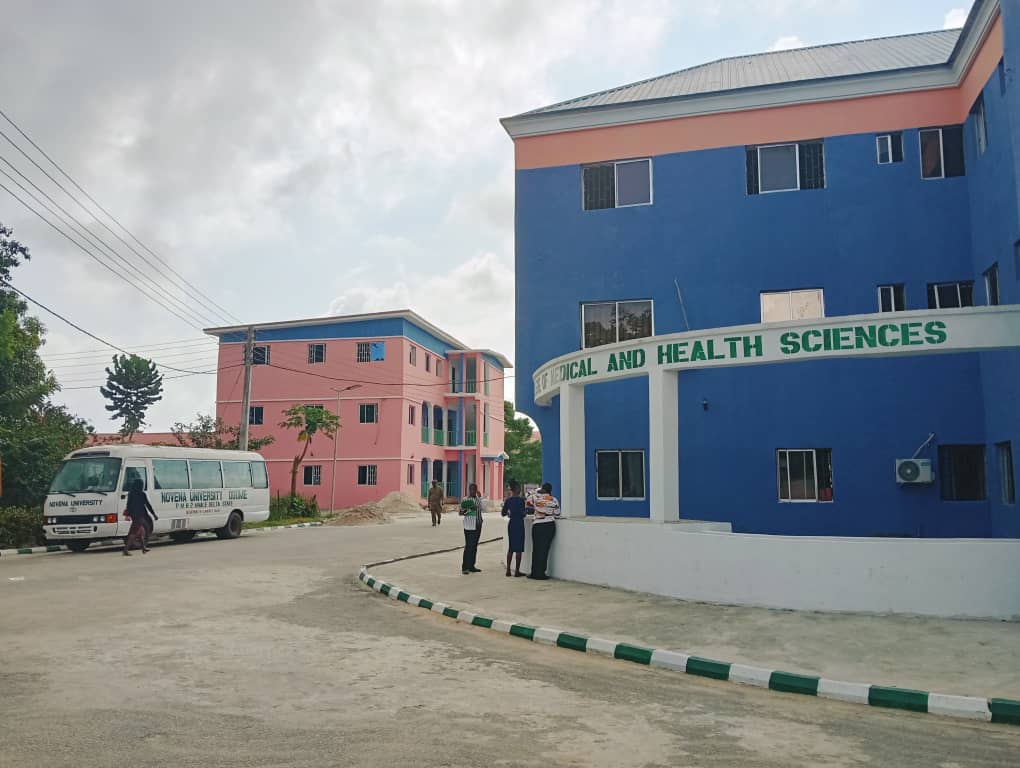
Novena University, Ogume, Delta State, has secured a major boost for its healthcare training capacity following the approval by the Pharmacy Council of Nigeria (PCN) to increase the admission quota for its Doctor of Pharmacy (Pharm.D) programme to 120 students.
The approval, conveyed in a letter signed by the Registrar of the Pharmacy Council of Nigeria, Pharm. Ibrahim B. Ahmed, followed a comprehensive verification and monitoring exercise carried out by the Council at the university’s Faculty of Pharmacy.
As the statutory regulator of pharmacy education in Nigeria, the Council said the decision was based on its satisfaction with the remarkable improvements recorded in the faculty’s physical infrastructure, teaching facilities and human resources.
The increased quota is expected to expand access to pharmacy education for aspiring students while supporting the Federal Government’s drive to strengthen the training of healthcare professionals across the country.
The development further reinforces Novena University’s growing reputation as one of Nigeria’s leading private institutions for medical and health sciences education.
READ ALSO:
- Trump Claims US Military Ended ‘Slaughter of Christians’ in Nigeria
- PCN Raises Novena University’s Doctor of Pharmacy (Pharm.D) Admission Quota to 120
- US-Iran ceasefire under threat as fresh strikes rock Middle East
Established as the first private university in Delta State, Novena University has continued to consolidate its position through the delivery of accredited undergraduate and postgraduate programmes across a wide range of disciplines, such as Medicine, Dentistry, Pharmacy, Nursing, Optometry, Medical Laboratory Science, Public Health, Law, Computer Science, Software Engineering, Accounting, Business Administration, Mass Communication, Political Science, Intelligence and Security Studies, Biochemistry, Microbiology, Pharmacology, Physiology and Anatomy.
Reacting to the approval, the Vice-Chancellor, Professor Godwin Nduka, expressed appreciation to the Pharmacy Council of Nigeria for its effective regulatory and supervisory role.
He reaffirmed the university’s commitment to continually investing in academic excellence, modern facilities and quality manpower development to meet Nigeria’s healthcare and national development needs.
Professor Nduka noted that the latest approval aligns with the university’s vision of complementing government efforts in producing highly skilled professionals capable of driving national growth and improving healthcare delivery.
PCN Raises Novena University’s Doctor of Pharmacy (Pharm.D) Admission Quota to 120
Education
2026 BECE Results Out as NECO Announces Re-sit Dates
2026 BECE Results Out as NECO Announces Re-sit Dates
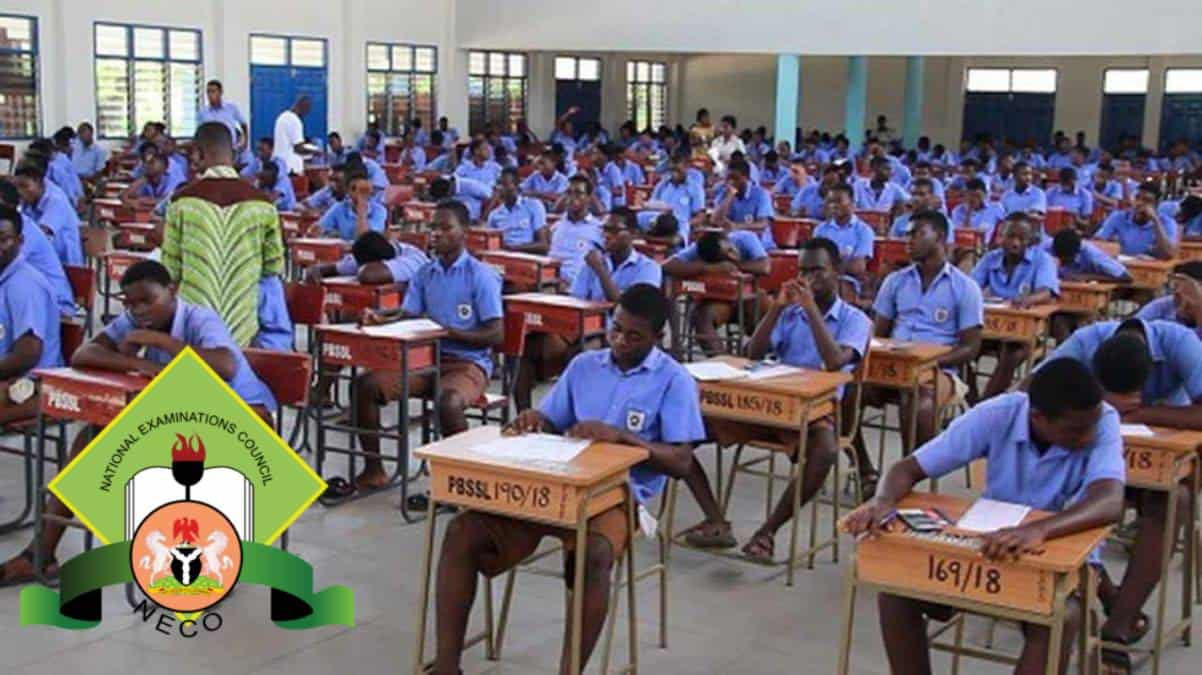
The National Examinations Council (NECO) has officially released the results of the 2026 Basic Education Certificate Examination (BECE), with a total of 186,291 candidates participating in the examination conducted across Nigeria and five foreign countries.
The announcement was contained in a statement issued on Thursday by NECO’s Acting Director of Information and Public Relations, Azeez Sani, following the successful conclusion of the 2026 BECE Award Committee Meeting held at the Council’s headquarters in Minna, Niger State.
According to NECO, candidates sat for examinations in 12 subjects during the exercise, which took place between April 20 and April 30, 2026.
The examination body stated that the release of the 2026 BECE results followed the approval of the Award Committee after reviewing reports on the conduct of the examination, the marking process, and the compilation of candidates’ scores.
The Award Committee meeting was chaired by Dr Folake Olatunji-David, Director of Basic Education at the Federal Ministry of Education, who represented the Minister of Education, Dr Tunji Alausa.
READ ALSO:
- Army Arrests Suspected Terrorist Supplier, Seizes 150 Combat Boots in Zamfara
- One Dead, 10 Rescued as Three-Storey Building Collapses in Lagos
- Plumptre Debunks Super Falcons Exit Claims, Warns Fans About Scammers
Speaking at the meeting, Olatunji-David expressed satisfaction with the procedures leading to the successful conduct of the examination and the release of the results, commending NECO for maintaining standards in the administration of the assessment.
The meeting was attended by NECO management officials, representatives of the Federal Ministry of Education, and selected secondary school principals from across the country.
The Basic Education Certificate Examination (BECE) serves as the final assessment for students completing Junior Secondary School education and is a key requirement for placement into Senior Secondary School One (SSS1).
Meanwhile, the Award Committee approved July 22 and July 23, 2026, for the conduct of the BECE Re-sit Examination in Mathematics and English Studies.
NECO explained that the re-sit examination is specifically designed for candidates with conditional deficiencies in either Mathematics, English Studies, or both subjects.
According to the Council, the initiative provides affected candidates with an opportunity to correct deficiencies and obtain the certification required for progression into senior secondary school without repeating an academic year.
The examination body noted that the re-sit policy remains part of its efforts to support students facing challenges in core subjects while ensuring they continue their educational journey without unnecessary setbacks.
Education stakeholders have welcomed the move, describing it as a practical intervention that offers deserving students a second chance to meet admission requirements into SSS1.
NECO urged candidates, parents, and school administrators to access the results through approved channels and ensure all result details are properly verified.
The Council also reaffirmed its commitment to conducting credible and transparent examinations through improved assessment processes, enhanced monitoring systems, and strict compliance with examination regulations.
With the release of the NECO BECE 2026 results, thousands of students across Nigeria can now proceed with preparations for their transition into senior secondary education, while eligible candidates prepare for the upcoming re-sit examination.
2026 BECE Results Out as NECO Announces Re-sit Dates
Education
Teachers’ Union Demands Safe Rescue of Victims Before Schools Reopen in Oyo
Teachers’ Union Demands Safe Rescue of Victims Before Schools Reopen in Oyo
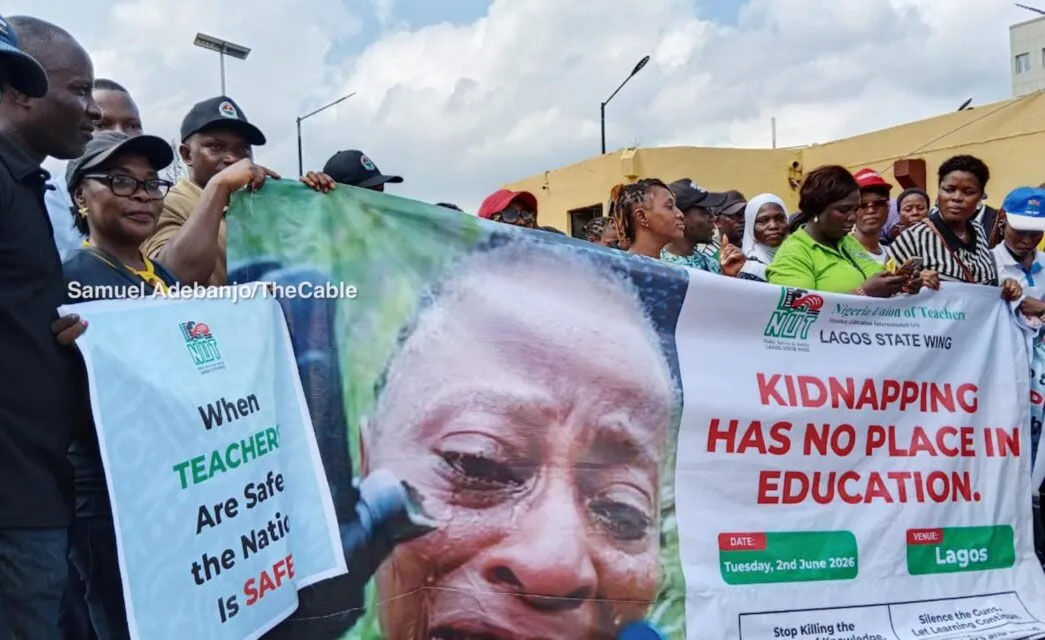
The Nigeria Union of Teachers (NUT) in Oyo State has declared that public schools across the state will remain closed until the government puts in place strong and verifiable security measures to protect both teachers and students following the recent mass abduction in Oriire Local Government Area.
The union said the decision followed the May 15 attack in which armed men invaded schools in parts of Oriire, abducting more than 40 students and teachers and killing at least two educators, an incident that has deepened fear and disrupted academic activities across the state.
The Oyo State chapter of the Nigeria Union of Teachers (Nigeria Union of Teachers) said the worsening insecurity forced its members to withdraw from classrooms indefinitely, warning that schools have become unsafe for both learners and educators. According to the union, the strike was not declared immediately after the attack. It said it initially engaged relevant authorities in hopes of a swift response but later concluded that the security situation had not improved enough to guarantee a safe return to classrooms.
Speaking in Ibadan, NUT Secretary, Mr. Olukayode Salami, said the reopening of schools now depends on two major conditions: the safe rescue of all abducted victims and the implementation of effective preventive security measures to stop future attacks. He said teachers would not return to classrooms until there is clear evidence of improved protection in vulnerable communities, especially in rural areas that have become frequent targets of attacks. Salami added that the emotional and psychological impact of the abduction has made it difficult for teachers to continue normal academic activities, noting that fear and panic have taken over many school environments.
READ ALSO:
- Military Free 47 Hostages from ISWAP Enclave in Lake Chad Region
- Galatasaray Reject €125m Bid for Victor Osimhen
- Nigeria, UK Strengthen Defence Ties as Senior British Military Officer Visits Maiduguri
- Kwara Poly Suspends Lecturer for Flogging IJMB Exam Candidates
The union urged the government to urgently strengthen school security, especially in high-risk communities, stressing that educational institutions must no longer be treated as soft targets. It also called for increased security patrols, intelligence gathering, and joint operations involving conventional security agencies and local security groups to prevent further attacks. Salami stressed that the responsibility of protecting lives and property rests with the government, insisting that visible security presence is necessary to restore confidence among teachers, students, and parents.
The union disclosed that it has held several meetings with government officials and security stakeholders, leading to agreed action plans aimed at improving school safety across the state. However, it said it is still awaiting full implementation of these measures, particularly in vulnerable local government areas close to forested regions where recent attacks occurred.
As a result of the ongoing strike and security concerns, many schools in affected areas remain shut indefinitely, with no official timeline yet for reopening. Stakeholders have warned that academic activities may not resume fully until the government demonstrates clear commitment to securing schools and restoring public confidence. The union maintained that while schools cannot remain closed forever, safety must come before academic calendars.
Teachers’ Union Demands Safe Rescue of Victims Before Schools Reopen in Oyo
-

 Business1 day ago
Tinubu Approves Free CAC Registration for 250,000 MSMEs Nationwide – How to Apply
-

 metro2 days ago
Why men should marry a second wife after 25 years — Morayo Afolabi-Brown’s husband
-

 metro3 days ago
VIDEO: “Your husband’s death is not up to two years, but you’ve sold his properties” — King Mitchy to Mr Ibu’s wife
-
 metro2 days ago
Police kill four kidnappers, rescue five victims in Lagos-Ogun joint operation
-

 News2 days ago
Trump Claims US Military Ended ‘Slaughter of Christians’ in Nigeria
-
 Education2 days ago
PCN Raises Novena University’s Doctor of Pharmacy (Pharm.D) Admission Quota to 120
-

 News1 day ago
300 CSOs Mobilise Against Ex-FUOYE VC’s Ambassadorial Nomination Over Sexual Harassment Allegations
-

 metro2 days ago
JUST IN: Nigerian Army redeploys 18 generals in nationwide shake-up (Full list)