

metro
Documents Expose How Disputed Presidential Council Secured Approval to Recruit 300 Staff

Documents Expose How Disputed Presidential Council Secured Approval to Recruit 300 Staff
Fresh documents have revealed that the Federal Government (FG) approved the recruitment of 300 personnel for the controversial Presidential Foreign Intervention Promotion Council (PFIPC) in August 2025, despite the Presidency later declaring that the council was not officially recognised under President Bola Tinubu’s administration.
The revelation has raised fresh concerns over the council’s legal status, the recruitment process, budgetary allocations and the level of official approval it received before being publicly disowned by the Presidency.
A letter dated August 7, 2025, issued by the Office of the Head of the Civil Service of the Federation (OHCSF), granted the PFIPC a waiver to recruit staff despite the Federal Government’s existing embargo on general recruitment into the federal civil service.
The approval, signed by the Director of Organisation Design and Development, Mimi Abu, was also copied to the Office of the Secretary to the Government of the Federation (OSGF) and stated that the waiver was based on the council’s 2025 Approved Establishment.
Under the approval, the council received permission to recruit 10 directors on Grade Level (GL) 17, 20 assistant directors on GL15 and 44 administrative officers across different grade levels.
The waiver also covered the recruitment of 45 planning officers, 32 commercial officers, 22 investment promotion officers, 26 accountants, 13 procurement officers, 12 information officers, 11 programme analysts, 10 legal officers, 10 motor drivers/mechanics, nine executive officers (Accounts), nine executive officers (General Duties), seven data processing assistants, six statisticians, six technical officers in engineering disciplines, five data processing officers and three confidential secretaries.
READ ALSO:
- Tinubu Lightens Mood, Calls First Lady ‘Iya Alakara’ After Viral Akara Debate
- Trump Weighs Entry Restrictions for Pregnant Foreign Visitors After Supreme Court Ruling
- Ogun 2027: Group Rejects Yayi’s Governorship Bid, Endorses Adebutu
In the approval letter, the Head of Service’s office directed the council to obtain clearance from the Budget Office of the Federation before commencing recruitment, comply with the Federal Character Principle and reserve five per cent of available positions for persons living with disabilities.
The letter also warned the council not to exceed the approved number of recruits and instructed that officials of the Head of Service’s office should supervise the recruitment exercise to ensure compliance with the waiver.
Just one day after receiving the approval, PFIPC Director-General Adeniyi Adeyemi publicly thanked President Tinubu in a social media post, claiming the administration had approved the recruitment.
“Mr President, we are growing because you believe in us,” Adeyemi wrote.
He also announced plans to establish PFIPC offices in all 36 states and the Federal Capital Territory (FCT), alongside 127 international offices, which he said would promote Nigerian businesses and attract foreign direct investment.
However, the council’s activities came under intense scrutiny on June 11, 2026, when Chief of Staff to the President, Femi Gbajabiamila, issued an official statement distancing the Presidency from the PFIPC.
Gbajabiamila stated that the council was not recognised by the Federal Government and had no legal authority to operate on behalf of President Tinubu’s administration.
The Presidency’s disclaimer triggered widespread questions about how the council secured official recruitment approval, operated from a government office and appeared in the federal budget despite its disputed status.
The controversy deepened further after reports indicated that the PFIPC was allocated approximately ₦1.3 billion in the 2026 Appropriation Act, including ₦802.98 million for personnel costs, ₦200 million for overhead expenditure and ₦300 million for capital projects.
Reports also showed that Adeyemi had been operating from an office within the Federal Secretariat in Abuja, where he hosted diplomats, government officials and foreign investors while organising several official engagements under the council’s name.
Meanwhile, presidential spokesman Bayo Onanuga disclosed that the Nigeria Police Force has filed an eight-count criminal charge against Adeyemi over allegations including impersonation, forgery and related offences.
Reacting to the Presidency’s position, Adeyemi rejected claims that the PFIPC lacked official recognition and called on President Tinubu to establish an independent panel to investigate the dispute.
He further alleged that the controversy began after he refused to surrender 48 per cent of the council’s take-off grant to unnamed individuals.
Adeyemi also claimed he paid ₦400 million to secure his appointment as Director-General and still had an outstanding balance of ₦200 million.
The Presidency has not publicly responded to those allegations, which remain unverified.
The emergence of the recruitment approval documents has intensified calls for a thorough investigation into the PFIPC, particularly regarding its legal status, recruitment process, budgetary allocation and the circumstances under which it obtained official approvals before later being disowned by the Presidency.
The matter is expected to remain under public and legal scrutiny as criminal proceedings against Adeyemi continue and lawmakers sustain oversight of federal agencies and public expenditure.
Documents Expose How Disputed Presidential Council Secured Approval to Recruit 300 Staff








metro
Enugu Man Recounts How HIV Argument Allegedly Led to Girlfriend’s Death
Enugu Man Recounts How HIV Argument Allegedly Led to Girlfriend’s Death
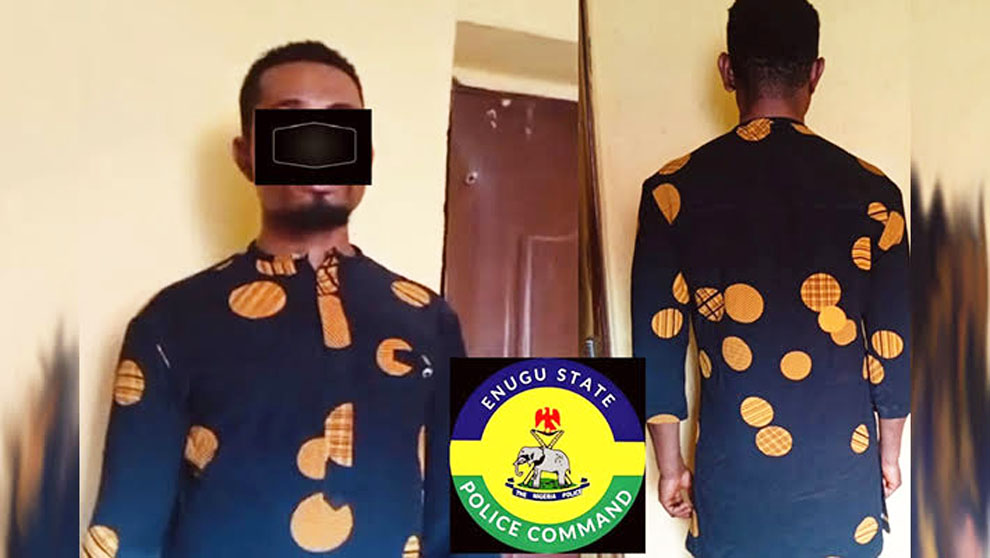
A 30-year-old man, Okpara Chibuike Emmanuel, has told the Enugu State Police Command how he allegedly killed his 27-year-old girlfriend, Chinyere Rosemary Ugwu, after an argument involving allegations over HIV infection.
Emmanuel gave the account during an interview with the Enugu State Police Public Relations Officer, SP Daniel Ndukwe, in a video released by the command on Friday.
The police identified Ugwu as a Medical Laboratory Science graduate of the Institute of Management and Technology (IMT), Enugu, who had recently completed her National Youth Service Corps (NYSC) programme.
According to Emmanuel, the incident occurred around midnight on September 19, 2026, at his residence in Olympic Layout, One-Day area of Enugu.
He said the argument started after he told Ugwu that he could treat people living with hepatitis C, HIV and syphilis. Emmanuel alleged that Ugwu then accused him of infecting her with HIV, leading to a heated argument that escalated into a physical confrontation.
The suspect claimed Ugwu picked up a pestle and began hitting him, after which he said he took the object from her and struck her, causing her to collapse.
READ ALSO:
- 10 Things to Know About Amos Dangut, Nigerian Appointed WAEC Registrar
- Olu Jacobs Laid to Rest in Lagos as Dignitaries, Nollywood Stars Honour Screen Icon
- Court Remands Man Accused of Impersonating JAMB Registrar in Kuje Prison
Emmanuel further told the police that he subsequently used a machete to inflict injuries on her wrist, head and neck.
The police said the latest investigation revealed that the suspect’s account went beyond the initial allegation that he had used a pestle. According to the command, he also allegedly used a machete during the incident.
After the alleged killing, Emmanuel said he wrapped Ugwu’s body in a black nylon bag and moved it into the toilet of the apartment. He said he then locked the toilet and the master bedroom before leaving.
The remains were later discovered after neighbours reportedly noticed an offensive odour coming from the apartment. The neighbours forced their way inside and found the decomposing body.
Police had earlier said Emmanuel was apprehended by residents and was subsequently rescued from an angry mob before being re-arrested by officers attached to the Awkunanaw Division.
The remains were evacuated to a mortuary for preservation and autopsy, while the investigation continued. (Premium Times Nigeria)
During the police interview, Emmanuel also admitted damaging Ugwu’s Samsung phone, saying he feared that it could be used to trace him. He said her iPhone had already been switched off after she complained that it was faulty.
The suspect said he first met Ugwu through Facebook in 2023 and that they resumed their relationship after she returned to Enugu in 2026. He claimed that he intended to marry her and had discussed the relationship with her mother.
Emmanuel also suggested that he was not fully aware of his actions at the time of the incident and appealed for forgiveness and mercy.
However, Ugwu’s family has disputed reports that she was killed simply because of an HIV-related disagreement, insisting that the circumstances surrounding her death require a thorough and independent investigation.
READ ALSO:
- Lagos Coastal Road Crash: One Killed, Three Seriously Injured
- Military Personnel Begin Receiving FG-Approved Salary Increase
- Trump Threatens Iran With ‘Very Hard’ Response Over Flydubai Attack
Her immediate elder sister, Kenechi Maryam, said members of the family were present during an interview involving Emmanuel and the Commissioner of Police. She said the suspect’s accounts about the injuries and weapons allegedly used raised questions that the family wanted investigators to resolve.
According to the family, Emmanuel initially spoke about using a pestle but later mentioned a machete when questioned about injuries to Ugwu’s head and neck.
The family has called on the police, medical personnel and other relevant authorities to establish the actual cause of death, the nature of the injuries and what weapon or object caused them.
The family has also urged journalists and members of the public not to treat the alleged HIV dispute as an established motive until investigators have completed their work. (ThisDay.com.ng)
The Commissioner of Police in Enugu State, Mamman Bitrus Giwa, has assured Ugwu’s parents and siblings that justice would be served. The command said the victim’s family had been identified and interviewed as part of the ongoing investigation.
The commissioner has directed investigators to conclude the case and ensure that the suspect is charged to court after the investigation.
The police have also urged members of the public, particularly young women, to inform trusted relatives or friends of their whereabouts when visiting or spending time with people they know.
The allegations against Emmanuel remain subject to investigation and possible court proceedings, while the circumstances surrounding Ugwu’s death have yet to be fully established.
Enugu Man Recounts How HIV Argument Allegedly Led to Girlfriend’s Death
metro
Court Remands Man Accused of Impersonating JAMB Registrar in Kuje Prison
Court Remands Man Accused of Impersonating JAMB Registrar in Kuje Prison
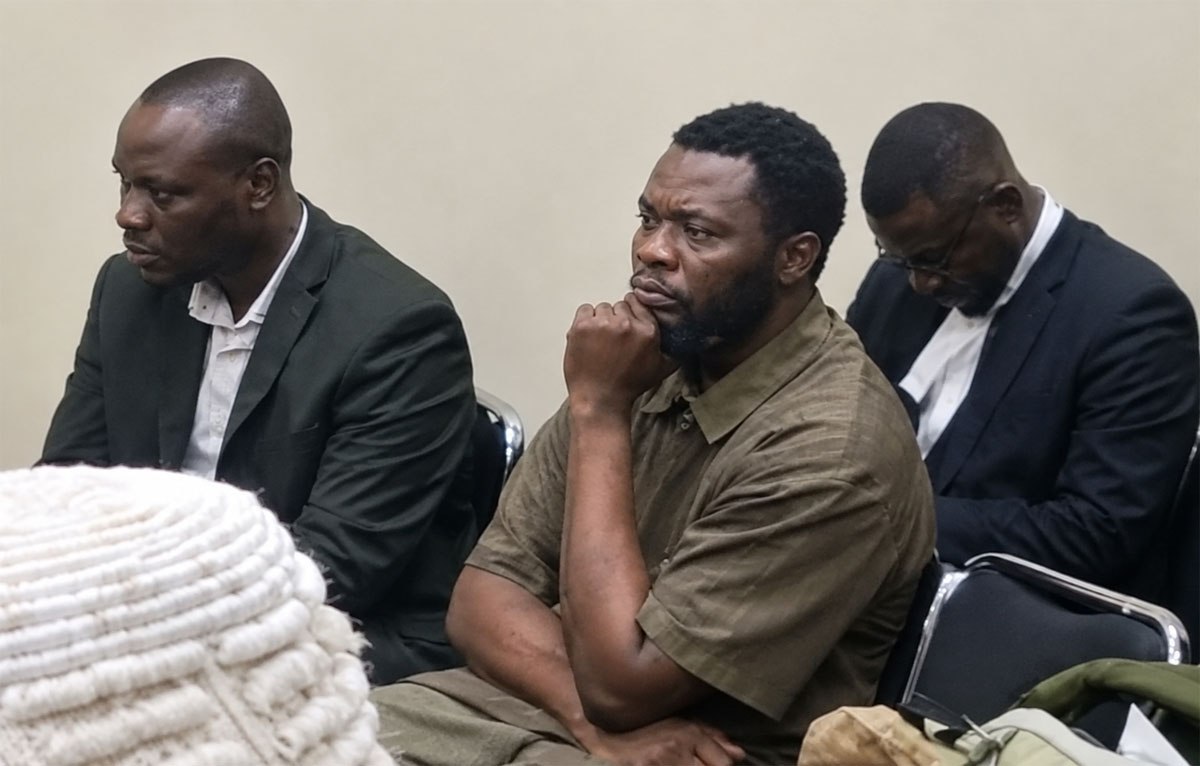
The Federal High Court in Abuja has ordered the remand of Arinze Nwogba in the Kuje Correctional Centre over allegations that he impersonated the Registrar of the Joint Admissions and Matriculation Board (JAMB), Prof. Segun Aina.
Justice Salim Ibrahim ordered that Nwogba remain in custody pending a ruling on his bail application. The court fixed October 7, 2026, for ruling on the bail request and October 19 for the commencement of trial. (Vanguard News)
The case was brought by the Inspector-General of Police in a six-count charge marked FHC/ABJ/CR/612/2026. The charge was dated September 18 and filed on September 21, 2026.
Nwogba, who was arraigned before the court, pleaded not guilty to all six counts.
The police alleged that Nwogba and other suspects still at large fraudulently impersonated the JAMB Registrar in 2026 by using Prof. Aina’s name and photograph on platforms including WhatsApp, Truecaller and LinkedIn.
According to the prosecution, the alleged syndicate used the identity to approach unsuspecting members of the public with purported offers of government and JAMB-related contracts.
READ ALSO:
- Lagos Coastal Road Crash: One Killed, Three Seriously Injured
- Military Personnel Begin Receiving FG-Approved Salary Increase
- Trump Threatens Iran With ‘Very Hard’ Response Over Flydubai Attack
Investigators alleged that the suspects directed prospective victims to communicate through a WhatsApp number and claimed that the Federal Ministry of Education had approved the supply of 200 HP laptops as part of a digitisation programme.
The prosecution further alleged that victims were asked to pay N900,000 as an initial processing or “handshake” fee, with another N3 million allegedly demanded for payments purportedly meant for senior officials in the Ministry of Education.
Police investigations reportedly led to Nwogba’s arrest in Abakaliki, Ebonyi State, in August.
The prosecution told the court that Nwogba allegedly operated under the name Dr Stephen Igwe and provided bank details to facilitate the alleged transactions.
Investigators also alleged that an Access Bank account linked to a deceased person was provided for the payment of the requested money. Police said Nwogba told investigators that the account belonged to his late nephew, who died in April 2026 and was buried in July.
The police further alleged that Nwogba admitted forwarding the account details to a cousin identified as Nnabuife Nwekpa, whom investigators described as the alleged principal suspect in the operation.
Nwekpa remains at large, according to the prosecution, while efforts are reportedly ongoing to arrest him.
The case followed a petition by the JAMB Registrar concerning the alleged unauthorised use of his identity and photograph to deceive members of the public.
At Friday’s proceedings, Nwogba’s lawyer, Christian Ejike, urged the court to grant his client bail on liberal terms. The prosecution opposed the application, arguing that there was a risk that the defendant could evade trial if released.
The prosecution also told the court that its witnesses and exhibits were ready and that it was prepared to proceed with the case.
Justice Ibrahim, after hearing arguments from both sides, adjourned the bail ruling to October 7 and fixed October 19 for trial.
The allegations against Nwogba remain before the court, and his plea of not guilty means that the prosecution must prove the charges beyond reasonable doubt.
Court Remands Man Accused of Impersonating JAMB Registrar in Kuje Prison
metro
Police Identify 27-Year-Old NYSC Graduate Allegedly Killed by Boyfriend

Police Identify 27-Year-Old NYSC Graduate Allegedly Killed by Boyfriend
The Enugu State Police Command has identified a 27-year-old woman allegedly killed by her boyfriend as Chinyere Rosemary Ugwu, a graduate of Medical Laboratory Science from the Institute of Management and Technology (IMT), Enugu.
Ugwu, who recently completed her National Youth Service Corps (NYSC) programme, was allegedly killed by her boyfriend, 30-year-old Okpara Chibuike Emmanuel, in Enugu.
The suspect was arrested after the discovery of Ugwu’s remains at his residence in the Olympic Layout, One-Day area of Enugu.
According to the police, the incident allegedly occurred on September 19, 2026. Ugwu’s remains were reportedly discovered after neighbours became suspicious of an offensive odour coming from the suspect’s apartment.
The police said neighbours forced the door open and found the deceased’s remains concealed in the toilet. Emmanuel was reportedly apprehended by residents before police officers arrived and took him into custody.
The command had earlier alleged that an argument between the couple over claims relating to HIV infection preceded the incident. Police said the suspect told investigators that he struck Ugwu on the head with a pestle during the confrontation.
However, the circumstances surrounding the death remain under investigation, and the suspect’s account has not been established as fact by a court.
READ ALSO:
- Lagos Coastal Road Crash: One Killed, Three Seriously Injured
- Military Personnel Begin Receiving FG-Approved Salary Increase
- Trump Threatens Iran With ‘Very Hard’ Response Over Flydubai Attack
Ugwu’s remains were reportedly taken to a mortuary for preservation and autopsy as investigators work to establish the circumstances and cause of her death. The police have not announced the outcome of the autopsy.
In a fresh update, the Enugu police command said investigators had established the identity of the deceased and identified her parents and siblings, who were subsequently interviewed as part of the investigation.
The Commissioner of Police, Mamman Giwa, also met with members of Ugwu’s family and the suspect. The commissioner assured the family that the command would conduct a thorough investigation and pursue justice in accordance with the law.
The family has also reportedly called for a comprehensive investigation, questioning the suggestion that the alleged killing should be attributed solely to an HIV-related disagreement.
The police said Emmanuel has been interviewed by investigators as efforts continue to establish the full circumstances surrounding Ugwu’s death.
The command urged members of the public, particularly women, to remain vigilant in their relationships and when meeting people they know. It advised people to keep trusted relatives or friends informed about their whereabouts and to take warning signs in potentially dangerous situations seriously.
The police said further information would be released as the investigation progresses.
Police Identify 27-Year-Old NYSC Graduate Allegedly Killed by Boyfriend
-
 metro1 day ago
Workers to Begin Nationwide Warning Strike Over Petrol Price, Wage Award
-

 metro2 days ago
Osogbo Food Bonanza: Angry Customers Loot Warehouse After Operators Vanish
-

 metro2 days ago
$2.1m Land Suit: Court Orders Wike’s Son to Produce American Passport
-

 metro2 days ago
Two Nigerians Jailed 15 Years Over $2.4m US Cyber Fraud
-

 News2 days ago
Tinubu Returns After 30 Days in Europe, Says ‘I’m Healthy and Ready to Work’
-
 Business1 day ago
Dangote Sets 40-Month Deadline for $16bn East Africa Refinery in Kenya
-

 Business2 days ago
Dangote Draws Battle Lines as Fuel Import Fight Heads Back to Court
-

 metro2 days ago
Flood Cuts Off Part of Agbarho-Ughelli Road, Strands Commuters in Delta