

Entertainment
‘I didn’t eat or bathe for four days,’ Peller says after police detention

‘I didn’t eat or bathe for four days,’ Peller says after police detention
Popular Nigerian TikTok content creator Habeeb Hamzat, widely known as Peller, has opened up about his experience in police custody, alleging that he spent nearly four days in detention without food or access to a bath following his arrest by operatives of the Lagos State Police Command.
The social media influencer made the claims in a series of posts shared on his Snapchat account shortly after regaining his freedom, describing the experience as the most difficult ordeal of his life.
According to Peller, the conditions in detention left him physically exhausted and emotionally shaken, adding that he had never experienced anything similar before.
“I am ugly now. I can’t show my face yet. Omo, I sleep cell for almost four days. It has never happened to me before in my life,” he wrote.
Peller and his associate, Bello Oladipo, were arrested on July 2, 2026, along the Lagos-Calabar Coastal Road in the Lekki area of Lagos after police officers intercepted their vehicle, which allegedly had no registration number plate.
The encounter reportedly escalated when Peller began recording the interaction with his mobile phone. He later alleged that one of the officers pulled his shirt and pointed a gun at him during the incident.
However, the Lagos State Police Command disputed the allegation, insisting that the duo obstructed officers who were carrying out their lawful duties during a routine operation.
The command subsequently charged Peller and Oladipo before a Lagos Magistrate Court on July 7 on a three-count charge bordering on conspiracy to resist public officers, obstructing police officers in the discharge of their lawful duties, and conduct likely to cause a breach of public peace by allegedly threatening and filming police officers during the operation.
READ ALSO:
- US Names 124 Nigerians for Deportation in “Worst of the Worst” Criminal Crackdown
- Oyo school abduction: Bandits threaten to kill abducted pupils if troops advance
- Presidency Slams Peter Obi’s ‘False Intimidation Claims’
Both defendants pleaded not guilty to the charges.
Following their arraignment, the court granted each defendant ₦500,000 bail with two sureties. The magistrate directed that one of the sureties must be a blood relative, while both sureties are required to present tax clearance certificates covering the previous two years. The case was adjourned until August 11, 2026, for further hearing.
Reflecting on his days in detention, Peller claimed he neither ate nor bathed throughout the period, saying fellow inmates jokingly referred to him as their “001” shortly after he was brought into the cell.
“As dey put me for cell, people wey dey cell talk say, ‘You be our 001 now.’ Omo, I burst laugh once. I no follow anybody talk till I comot.
“001 wey una wan give water beans.
“I no chop for four good days. I no bath,” he wrote.
His account has sparked widespread reactions across social media, with many users expressing sympathy over his alleged experience, while others urged that the legal process be allowed to run its course.
The incident has also reignited public debate about police-citizen encounters, the treatment of suspects in detention, and the growing role of smartphones and social media in documenting interactions between law enforcement officers and members of the public.
As of the time of filing this report, the Lagos State Police Command had not publicly responded to Peller’s latest allegations regarding the conditions of his detention. His claims remain personal allegations that have not been independently verified, while the criminal charges against him and his co-defendant are still before the court.
The case is expected to resume on August 11, when the court will continue hearing the charges against the two defendants.
‘I didn’t eat or bathe for four days,’ Peller says after police detention








Entertainment
Ogogo’s First Wife Opens Up: Why He Asked Me to Quit Acting After Marriage
Ogogo’s First Wife Opens Up: Why He Asked Me to Quit Acting After Marriage
Entertainment
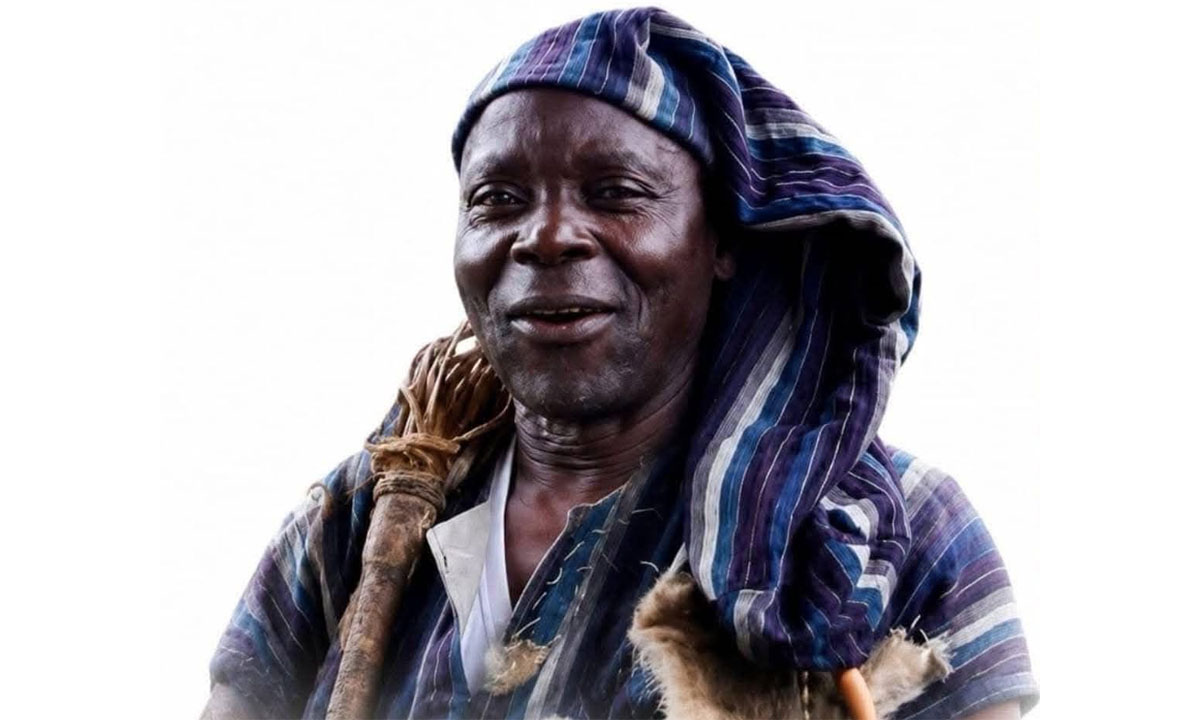
Veteran Yoruba actor, Ijala master Alabi Ogundepo dies at 84
Veteran Yoruba actor, Ijala master Alabi Ogundepo dies at 84
Veteran Yoruba actor and traditional poet Alabi Ogundepo, renowned for his mastery of Ijala poetry, has died at the age of 84.
Ogundepo reportedly died on Monday, August 24, 2026, after a lifetime devoted to Yoruba culture, language, literature and traditional arts.
His death was announced by his daughter, Dupe Ogundepo-Falana, in a statement issued on behalf of the family.
The family described Ogundepo as a “remarkable literary voice” whose poetry and writings demonstrated a deep appreciation for Yoruba culture, tradition, history, language and the broader human experience.
The family expressed gratitude to individuals, institutions, traditional leaders and members of the literary community who had contacted them to offer condolences and support following the death.
They also appealed for privacy and prayers as they mourned the veteran performer and cultural custodian.
The family said details of the funeral arrangements would be announced at a later date.
Born in Saki, Oyo State, Ogundepo established himself as one of the respected voices in Yoruba oral literature, combining acting, poetry and cultural expression throughout his career.
He became particularly recognised for his exceptional command of Ijala, the traditional poetry and chant associated with Yoruba hunters.
Ijala is an important form of Yoruba oral tradition through which performers recount histories, praise individuals, celebrate nature and animals, and express the values, experiences and worldview of the community.
Ogundepo’s mastery of the art helped expose wider audiences to the richness of Yoruba indigenous poetry and contributed to efforts to preserve an important aspect of the culture’s oral heritage.
READ ALSO:
- US Intensifies Military Training for Nigerian Troops in Bauchi
- Awujale: Fusengbuwa Ruling House sues Abiodun, kingmakers over stalled selection
- “He Must Be Mad” — Oyedepo Slams Sheikh Jingir Over Claim Nigeria Is an Islamic Nation
His contribution, however, extended beyond Ijala performance. Through his writings, acting and cultural activities, he helped document and promote aspects of Yoruba indigenous knowledge and oral tradition for younger generations.
Over the years, Ogundepo earned recognition as a respected Yoruba cultural figure, using his artistic work to promote the Yoruba language and preserve traditional forms of expression at a time when indigenous oral traditions face increasing pressure from changing cultural and social influences.
As an actor, he also became part of the long tradition of performers who helped bring Yoruba stories, characters, customs and values to wider audiences through theatre and film.
Those who knew him also remembered him for his wisdom, dignity, compassion and willingness to mentor younger people interested in Yoruba literature and cultural expression.
His influence therefore extended beyond his performances, with his counsel, friendship and commitment to cultural preservation touching the lives of artists, writers, scholars and members of his community.
The death of the 84-year-old Yoruba actor and Ijala master represents a significant loss to Nigeria’s indigenous cultural and literary community.
His passing comes with renewed attention to the importance of preserving Yoruba oral literature, particularly traditional art forms such as Ijala that carry generations of history, knowledge and cultural identity.
Through his performances, writings and mentorship, Ogundepo left behind a body of work that is expected to continue inspiring artists, writers, cultural researchers and younger practitioners.
For many admirers of Yoruba traditional poetry, his legacy will remain closely associated with his distinctive contribution to Ijala and his lifelong commitment to keeping indigenous culture alive.
The family has asked the public to respect its privacy during the mourning period and said further information about his burial will be made available in due course.
Veteran Yoruba actor, Ijala master Alabi Ogundepo dies at 84
Entertainment
Tears Flow in Ilaro as Nollywood Veteran Ogogo Is Laid to Rest

Tears Flow in Ilaro as Nollywood Veteran Ogogo Is Laid to Rest
Family, colleagues, and fans gathered in Ilaro, Ogun State, on Monday to bid an emotional farewell to veteran Nollywood actor Taiwo Hassan, popularly known as Ogogo, who was buried according to Islamic rites following his death from stage-four cancer at the age of 66.
OGUN STATE, Nigeria – Tears flowed freely in Ilaro, Ogun State, on Monday as the remains of veteran Nollywood actor Taiwo Hassan, affectionately known as Ogogo, were taken to their final resting place. An emotional atmosphere pervaded the burial site as family members, friends, colleagues, and sympathizers gathered for the funeral ceremonies of the 66-year-old actor. A video of the funeral procession showed mourners carrying Ogogo’s remains toward the burial location in accordance with Islamic tradition. The actor’s remains had been transported to his hometown of Ilaro a day earlier, following his death on Sunday, August 23, 2026, at approximately 3 p.m. The burial prayer took place at 10 a.m. at the Asade Agunloye Pavilion in Ilaro, as announced by the Ilaro Chief Imam. A lying-in-state ceremony was held at the Pavilion from 11:00 a.m. on Monday, attended by family, colleagues and well-wishers.
Among those attending the burial was Ogogo’s close friend and colleague, Yinka Quadri, who was seen crying excessively as mourners tried to console him. The heartbreaking sequence highlighted the anguish of the actor’s colleagues and loved ones as they bid him farewell. Videos of Quadri’s emotional breakdown, alongside Jide Kosoko and other colleagues, were widely shared on social media. Yinka Quadri had shared a decades-long friendship and bond with Ogogo, and the two actors were born in the same year, making Ogogo’s death a particularly painful loss for Quadri. His grief was palpable as Ogogo’s remains were carried for the final burial rites.
READ ALSO:
- Flood Submerges Homes, Destroys Property Worth Millions in Akwa Ibom Communities
- Subsidies or Student Loans? Minister Poses Tough Questions to Critics
- Police vow to arrest killers of 10 officers slain in Kebbi gun battle
Prominent Nollywood actors arrived in Ilaro for the funeral, including Jide Kosoko, Fathia Balogun (also known as Faithia Williams), Femi Adebayo, Mr Latin, and Toyosi Adesanya. Ireti Osayemi, Bisi Omo Logbalogba, Dele Odule, Olaiya Igwe, Rafiu Balogun, and Bisi Ibidapo-Obe were also in attendance, along with other colleagues, family members, and friends. Jide Kosoko, who announced Ogogo’s death on Sunday, had stated that the actor’s remains would be transported to Ilaro, where the burial would take place on Monday. The Ilaro Muslim Community arranged the burial prayer for the legendary actor.
Ogogo died just days after his daughters, Kaira and Lima Taiwo, made an emotional public appeal for medical help for their father, who was suffering from stage-four cancer. In a viral video, Kaira pleaded for help, saying, “I no want my papa to die” and revealed that doctors had advised the family that they could no longer administer chemotherapy due to his condition. Kaira disclosed that the family was not seeking financial assistance but wanted medical experts or anyone with the expertise to treat her father. She revealed that hospitals had refused to treat him and that although he had secured an Indian visa, he was declared unfit to fly abroad for treatment. She also disclosed that Senator Solomon Olamilekan Adeola, popularly known as Senator Yayi, had been footing the bill for Ogogo’s treatment. Before his death, Ogogo reportedly received hundreds of offers of medical, spiritual and other forms of assistance from Nigerians, colleagues and well-wishers. Yinka Quadri had disclosed that more than 300 people, and possibly over 500, contacted the family with offers of assistance.
The actor was a towering figure in Nigeria’s film industry, particularly for his work on Yoruba-language films, with a career stretching more than four decades. He appeared in over 100 films and became one of the most recognizable faces in Yoruba cinema. Ogogo’s breakthrough role came in 1995 with “Owo Blow,” directed by Tade Ogidan, which earned him the Best Actor of the Year award at the 1997 THEMA Awards and turned him into a household name almost overnight. Other notable films that defined his career include “Agbelebu” (1995), “Danfo Driver” (1995), “Okan Soso” (2004), “Ekun-Ayo” (1996), “Omin” (2008), “Elewon” (2009), “Omo Ghetto” (2010), and “Bank Alert” (2023). His role as Alaafin Ademuyiwa in Kunle Afolayan’s 2022 Netflix film “Aníkúlápó” introduced him to a global audience and earned him a Best Supporting Actor nomination at the 2023 Africa Magic Viewers’ Choice Awards (AMVCAs). He reprised the role in the sequel, “Aníkúlápó: Rise of the Spectre” (2024), marking one of the final major roles of his career.
Before his acting career took off, Ogogo worked as a mechanic in 1981. He later worked at the Water Corporation for about 13 years before leaving in 1994 to pursue acting full-time. He attended Christ Church School in Ilaro for his primary education and Gazikia College in Lagos for his secondary education. Ogogo came from a family of twins – his forefather was a twin, his father was a twin, and his mother gave birth to twins four times. He was the last surviving of his parents’ twins. His parents had 13 children, of whom only three survived. He was also a trained boxer, a skill he did not hide. The actor had previously spoken about battling chronic ulcer for six to seven years, describing it as one of the darkest chapters of his life. As the Yoruba film industry mourns the loss of one of its most beloved figures, Ogogo’s legacy as a talented actor, dedicated filmmaker, and cultural ambassador will continue to inspire generations of Nigerian creatives.
Tears Flow in Ilaro as Nollywood Veteran Ogogo Is Laid to Rest
-

 metro3 days ago
Lagos Police arrest five suspected telecom vandals, recover truckload of iron rods
-

 Entertainment2 days ago
Veteran Nollywood Actor Taiwo Hassan ‘Ogogo’ Dies at 66 After Cancer Battle
-

 metro2 days ago
MUSCOYS Honours Pioneering Educationist with Commendation Award
-

 Politics3 days ago
Opposition Unity Cracks as Atiku, Obi, Kwankwaso Diverge on 2027 Strategy Against Tinubu
-

 metro3 days ago
Lagos Moves to Tackle Housing Deficit, Inaugurates 2026 World Habitat Day Committee
-

 metro23 hours ago
LASG Moves to Fix Ikotun Junction, Seeks Community Support
-

 metro3 days ago
2027: Over 500 Northern Muslim Clerics Endorse Tinubu for Second Term
-
 Politics3 days ago
2027: Alfindiki tackles Atiku over Tinubu’s FBI records