
metro
Amotekun hunts ritualists as Osun sex worker vomits blood after proposed threesome

A sex worker living in Ofatedo, Osun State has reportedly developed strange illness by vomiting blood, after an encounter with some suspected ritualists in a hotel around West bypass, Osogbo.
Some residents of Adetunji Estate, Osogbo, who spoke to our correspondent on Sunday explained that the victim, whose identity could not be immediately ascertained, was dumped by some unknown men at the entrance to the street late on Friday, almost unconscious.
A resident, who simply identified herself as Tope, during an interview with The PUNCH on Sunday, explained that immediately the lady was seen struggling to move after she was dropped by a motorcycle in the area, men of Amotekun Corps were contacted.
Speaking further on the incident, the Field Commander, Osun Amotekun Corps, Mr. Amitolu Shittu, said after receiving distress call, he led the team that visited the scene.
READ ALSO:
- Woman arrested for hiding drug in food for boyfriend
- We’ll fight purported banning of Hijab in S’West schools — MSSN
- MSSNLagos mourns as ex-national president, Prof Huseini Abdulkareem
Shittu, who said the victim was able to explain what transpired between her and three suspected ritualists, who had taken her from another hotel located in Ofatedo area, said while still being interrogated, the lady suddenly started vomiting blood.
He further said, “I led the team that visited entrance to Adetunji Estate that evening. Before she started vomiting blood, the lady told me she was living in Ofatedo, though an indigene of Sagamu in Ogun State.
“She said three men had taken her from another hotel in Ofatedo and took her to a hotel around West Bye pass. At the hotel, they told her she would have sex with the three of them, but the lady said she told them she could only have sex with two men.
“While bathing with one of the men, the suspected ritualist hit the lady with a charm on the head and she became almost unconscious.”
“She was still talking to me when she started vomiting blood. Because it was late, I asked the night guard working in the area to watch over her, while I arrange ambulance. By the time I returned to the scene, that her friend she told me of, had brought a bus to carry her. It was such a pathetic story.”
Shittu said operatives of the corps already had some leads through the mobile phone of the victim and promised that the suspects would be apprehended.
Punch













metro
Ibadan: Police Arrest Masquerade Over Alleged Killing of 24-Year-Old Resident
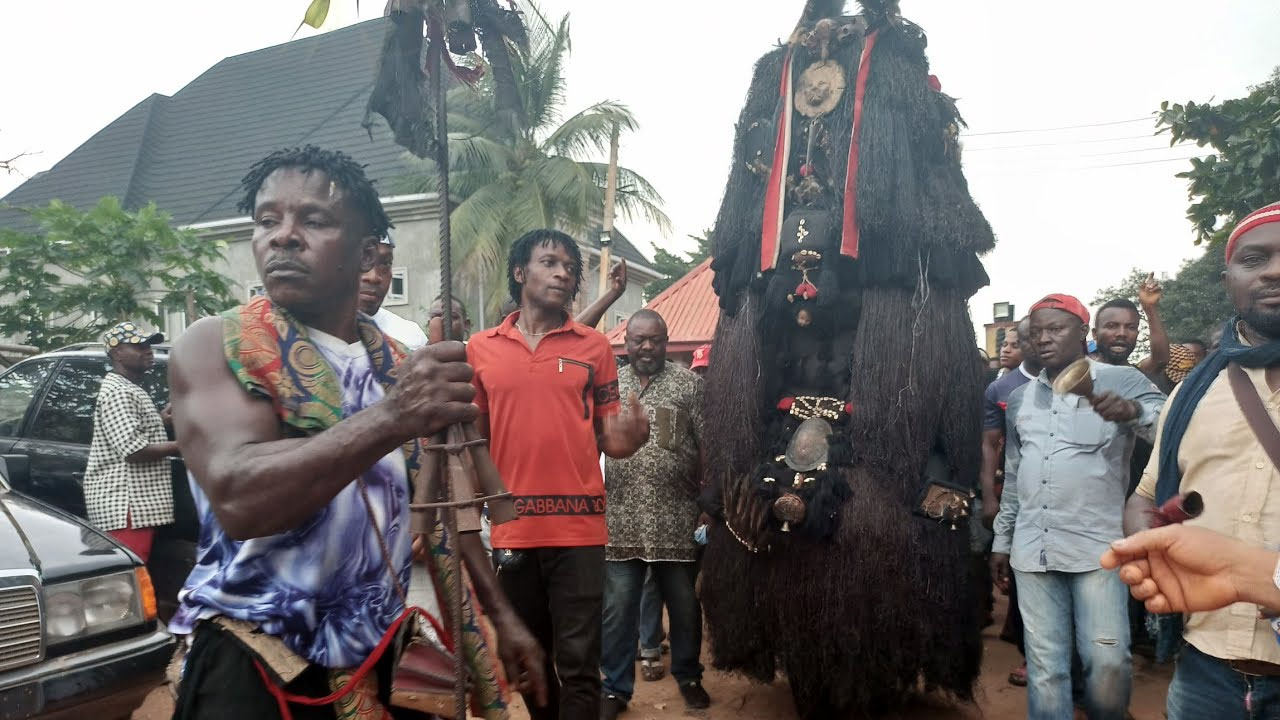
Ibadan: Police Arrest Masquerade Over Alleged Killing of 24-Year-Old Resident
The Oyo State Police Command has arrested a masquerade identified as Asoleke in connection with the alleged killing of a 24-year-old man, Sefiu Kehinde, during a traditional procession in the Labiran area of Ibadan on Sunday, July 5, 2026.
The Command has launched a full-scale investigation into the incident, while four other suspects believed to have participated in the attack remain at large. According to a statement issued on Monday by the Police Public Relations Officer, DSP Ayanlade Olayinka, the case was reported at the Mapo Divisional Police Headquarters on Sunday by a woman identified as Mrs Aderemi. She reported that at about 4:00 p.m., she received a distress call from her elder sister informing her that the Asoleke masquerade and its followers had attacked her younger brother while parading through the neighbourhood.
The police statement revealed that the masquerader and its followers allegedly attacked Mr Kehinde with axes and cutlasses, inflicting severe injuries on various parts of his body. Police operatives from the Mapo Division, led by the Divisional Police Officer, swiftly responded to the report and evacuated the victim to a hospital for urgent medical attention. However, he was unfortunately confirmed dead on arrival by the medical doctor on duty. The command added that investigators processed the crime scene, documented relevant evidence, and took photographs as part of their investigation. The deceased’s family subsequently requested and obtained the release of the corpse for burial in accordance with Islamic rites.
READ ALSO:
- Bauchi: Suspected Political Thugs Kill Islamiyya Teacher Over Poster Dispute
- Deregulation or Exploitation? FG Warns Fuel Marketers on Excessive Petrol Pricing
- Elumelu to exit UBA board after 12 years as Emmanuel Nnorom takes over as chairman
The Oyo State Commissioner of Police, CP Abimbola Ayodeji Olugbenga, has directed that the case be transferred to the State Criminal Investigation Department (SCID) for a thorough and comprehensive investigation. The police have assured residents that efforts are ongoing to apprehend the fleeing suspects and have appealed to members of the public to provide credible information that could assist the investigation. According to Daily Post, the Olubadan of Ibadanland, Oba Rasidi Ladoja, had earlier warned masquerades and their followers against involvement in any form of violence, stating that the festival is neither an avenue to settle old scores, engage in supremacy contests, nor carry out retaliatory attacks.
This incident has renewed concerns over violence sometimes associated with traditional masquerade processions in parts of Nigeria, where clashes and attacks during festivals have occasionally resulted in deaths and injuries. Traditional masquerade festivals remain an important aspect of Yoruba cultural heritage, but several celebrations have been marred by violent confrontations involving masqueraders, rival groups, residents, and passers-by. Rights advocates have continued to call for stricter enforcement of public safety regulations during traditional celebrations, insisting that cultural practices should not endanger lives or infringe on the rights of residents. The Oyo State Police Command has reaffirmed its commitment to protecting lives and property and vowed to ensure that all those found culpable are brought to justice.
Ibadan: Police Arrest Masquerade Over Alleged Killing of 24-Year-Old Resident
metro
Bauchi: Suspected Political Thugs Kill Islamiyya Teacher Over Poster Dispute
Bauchi: Suspected Political Thugs Kill Islamiyya Teacher Over Poster Dispute
A middle-aged Islamic studies teacher, Ustaz Ridwan Dauda, has been stabbed to death by suspected political thugs in Bauchi metropolis following a heated argument over the pasting of a politician’s campaign poster on his building wall.
The tragic incident occurred on Sunday in the Karofin-Madaki neighbourhood, around the JEDCO transformer area, leaving a father of five dead and a community in shock. Eyewitnesses reported that Dauda had objected to a man pasting a politician’s poster on the wall of his building, but the individual ignored his warning and continued with the action.
The suspect subsequently called an associate who arrived at the scene and also began pasting posters, escalating the situation into a heated confrontation. During the argument, one of the thugs reportedly produced a dagger and stabbed Dauda in the chest before fleeing the scene. Residents rushed the wounded teacher to a hospital, but he succumbed to his injuries on the way.
Community members described Ustaz Rilwanu as a kind and hardworking individual who supported his family through various means. Aside from teaching at the Islamiyya school, he took on menial jobs, including security guarding and breaking firewood, to care for his wife and five children. A resident, Bukhari Mu’azu Abubakar, who posted his condolences on Facebook, called on security agencies to conduct a thorough investigation to uncover the remote and immediate causes of the unfortunate incident. He also urged community elders and leaders to take measures to prevent future occurrences and advised that politicians and their supporters should be stopped from defacing private properties with campaign materials.
READ ALSO:
- Deregulation or Exploitation? FG Warns Fuel Marketers on Excessive Petrol Pricing
- Elumelu to exit UBA board after 12 years as Emmanuel Nnorom takes over as chairman
- UEFA condemns FIFA’s Balogun suspension reversal
- AGF contradicts Presidency, says PFIPC has no operational CBN account
This incident echoes previous tragedies in Bauchi State, highlighting a troubling pattern of election-related violence. In 2018, two youths were killed in separate locations—Jahun and Wanka streets—during clashes over the pasting and destruction of political campaign posters belonging to rival aspirants. Bauchi has also experienced numerous other violent conflicts over the years, often linked to ethno-religious tensions and political manipulation. In 1991 and 1994, the Tafawa Balewa area witnessed violent clashes that claimed hundreds of lives, with political and religious dimensions intertwined. Nigerian politicians have admitted that the country’s religious divide is often exploited, with political leaders manipulating youths to attack opponents. Recent incidents have also raised concerns about political thuggery in the state. In May 2026, suspected political thugs attacked vehicles belonging to members of the Peoples Democratic Party during a governorship candidate affirmation event in Bauchi, vandalising cars and destroying campaign materials. The police confirmed the attack and arrested two suspects in connection with the violence.
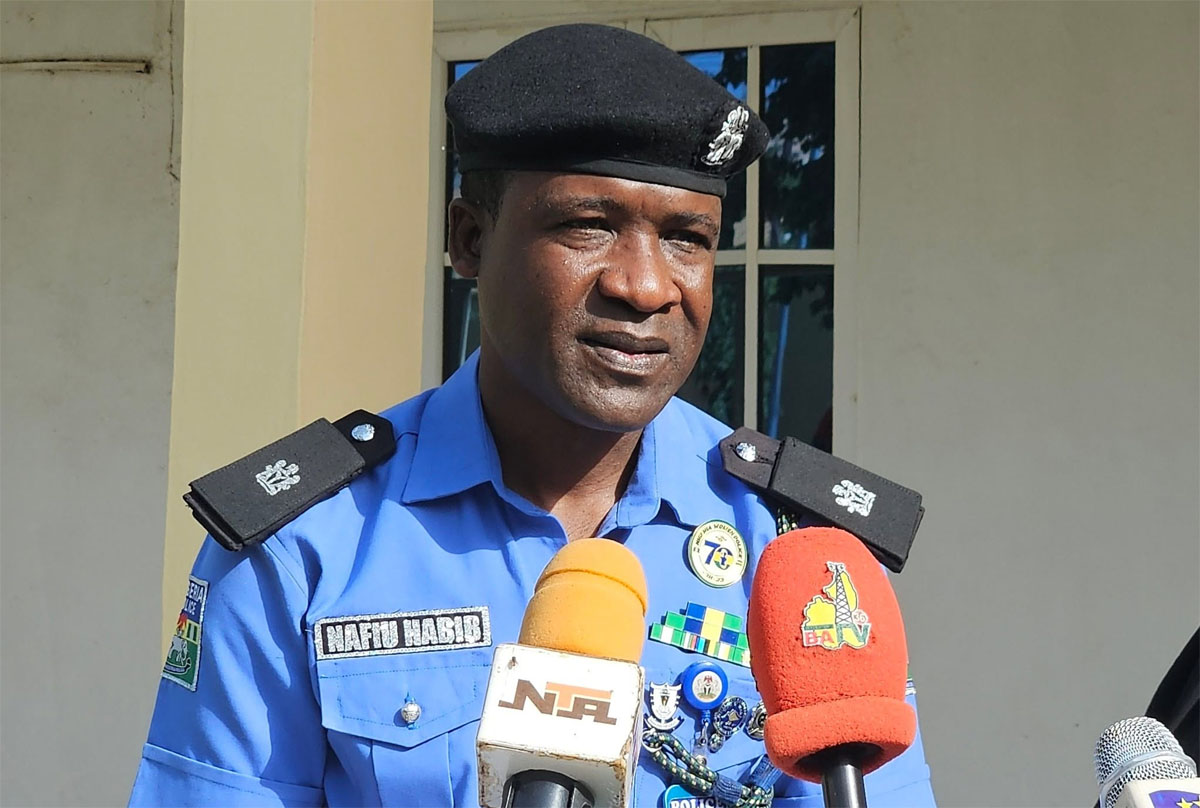
As of the time of filing this report, the Bauchi State Police Command had not officially confirmed the latest killing. The Police Public Relations Officer, SP Nafiu Habib, did not respond to messages seeking comment on the development. This stands in contrast to the police’s response to previous incidents of political violence in the state, where the command issued statements confirming attacks and announcing arrests.
Residents of Karofin-Madaki have called on security agencies to apprehend and prosecute the assailants, stressing that justice for the Dauda family must be pursued without delay. The community remains in mourning over the senseless killing of a man who was simply defending his property from political defacement, leaving behind a wife and five children. The incident has also reignited calls for stronger measures to regulate political campaign activities and prevent thugs from exploiting the political season to intimidate and harm residents.
Bauchi: Suspected Political Thugs Kill Islamiyya Teacher Over Poster Dispute
metro
AGF contradicts Presidency, says PFIPC has no operational CBN account

AGF contradicts Presidency, says PFIPC has no operational CBN account
The controversy surrounding the Presidential Foreign Intervention Promotion Council (PFIPC) has deepened after the Office of the Accountant-General of the Federation (OAGF) contradicted an earlier statement by the Presidency, insisting that the council has no operational account with the Central Bank of Nigeria (CBN) and has not received any government funds.
The clarification comes days after the Presidency alleged that Prince Adeniyi Adeyemi, who presented himself as the Director-General of the PFIPC, fraudulently opened a CBN account by allegedly using forged documents to mislead officials of the Accountant-General’s office.
Presidential spokesman Bayo Onanuga had stated that police investigations revealed Adeyemi used fake appointment letters and forged official documents to facilitate the opening of the account. He, however, maintained that investigators found no evidence that public funds were paid into it.
However, responding to the development, the OAGF said the account was never activated, making it impossible for the council to receive any allocation from the Federal Government.
The agency’s Director of Public Relations, Bawa Mokwa, explained that while an application to open a CBN account was initiated after Adeyemi presented an appointment letter linked to an existing government institution, the process never progressed beyond the preliminary stage.
According to him, the names of the authorised signatories required to complete the account opening process were never submitted, preventing the account from becoming operational.
READ ALSO:
- 15 killed, 17 injured in fatal Kwara trailer crash as FRSC blames driver fatigue
- Netanyahu insists on Hamas disarmament before Gaza reconstruction
- ON THE IMPLEMENTATION OF THE ASUU-FGN 2025 AGREEMENT
“The account has not seen the light of day. It has not received one kobo because it was never fully activated. The Accountant-General has not released any money because there is no operational account for such payment,” Mokwa said.
Mokwa stressed that the existence of a budgetary provision for an agency does not automatically entitle it to receive public funds.
He explained that although the PFIPC appears in the 2026 Appropriation Act, every government agency must satisfy statutory financial and administrative requirements before any allocation can be released.
The OAGF also dismissed reports that salaries had been paid to officials or workers of the council.
According to Mokwa, federal agencies cannot recruit staff or process salary payments without obtaining approvals from the Federal Character Commission, the Budget Office of the Federation, and the Federal Civil Service Commission, after which employees must be enrolled on the Integrated Payroll and Personnel Information System (IPPIS).
He said none of those requirements had been fulfilled by the PFIPC, making it impossible for any employee of the council to receive salaries from the Federal Government.
“If an agency is granted a waiver to recruit, it must still obtain approvals from the relevant agencies before presenting staff details to the Accountant-General. Without those approvals, not even one employee can be captured on the payroll,” he added.
The controversy first emerged after the Presidency publicly disowned the PFIPC, insisting that no such agency exists under the administration of President Bola Tinubu.
The Presidency further alleged that Adeyemi forged appointment letters, official State House documents and the signature of the Chief of Staff to the President, Femi Gbajabiamila, while presenting himself as the council’s Director-General.
According to presidential officials, the issue came to light in October 2025 after the Nigerian Investment Promotion Commission (NIPC) alerted authorities that the purported council was performing functions similar to those legally assigned to the commission.
The Office of the Chief of Staff subsequently petitioned security agencies, leading to investigations, Adeyemi’s arrest and his ongoing prosecution on allegations bordering on forgery, impersonation and related offences.
Despite the Presidency’s insistence that the PFIPC does not legally exist, fresh questions emerged after the 2026 Appropriation Act listed the Presidential Economic Advisory Council/Presidential Foreign Intervention Promotion Council under the Presidency with a budgetary allocation of about ₦1.3 billion.
The allocation reportedly includes funding for personnel, overhead and capital projects, raising questions about how an agency described as non-existent found its way into Nigeria’s approved national budget.
The apparent contradiction has triggered widespread reactions from opposition politicians, lawyers, governance experts and civil society organisations, many of whom have demanded greater transparency from the Federal Government.
Critics have also questioned reports that the council allegedly operated from offices within the Federal Secretariat and interacted with several government institutions before it was disowned by the Presidency.
With the OAGF now insisting that no operational CBN account exists and that no public funds have been released to the council, attention has shifted beyond the criminal allegations against Adeyemi to broader concerns over Nigeria’s budgeting process, inter-agency coordination and administrative oversight.
Observers say the conflicting official positions underscore the need for a comprehensive explanation from the Federal Government on the legal status of the PFIPC, the circumstances surrounding its inclusion in the national budget and the safeguards in place to prevent similar controversies.
Meanwhile, Adeyemi’s criminal trial is continuing, while calls for an independent investigation into the entire PFIPC saga continue to gather momentum.
AGF contradicts Presidency, says PFIPC has no operational CBN account
-

 metro3 days ago
FG Clears N39.6bn Pension Arrears for Former NITEL, PHCN, Bank Workers
-

 metro2 days ago
Inside the Fake Agency Scandal: Staff Detail How Adeyemi’s ‘Presidential Council’ Operated Without Work or Direction
-

 metro2 days ago
Islamic Scholar Cautions Students Against Wasteful ‘Signing-Out’ Shirt Tradition
-

 metro3 days ago
ISI Muslim Parents Reject Appeal Court Verdict, Head to Supreme Court Over Hijab Ban
-

 metro3 days ago
NANS to Tinubu: Don’t Sack Gbajabiamila Over Unproven PFIPC Allegations
-

 Business11 hours ago
NNPCL cuts petrol price as Dangote Refinery competition intensifies
-

 International11 hours ago
US to closely monitor Nigeria’s 2027 elections, tie future support to religious freedom
-

 metro2 days ago
Army-UNIOSUN Clash: University Faults Military’s Position on Alleged Hostel Assault