

News
Buratai: Terrorism may persist for another 20 years in Nigeria

- JNI laments criminals reign of terror
Terrorism might persist in Nigeria for another 20 years, the Chief of Army Staff, Lt. Gen. Tukur Buratai, has said.
This came just as Jama’atu Nasril Islam (JNI) led by the Sultan of Sokoto, Alhaji Muhammad Sa’ad Abubakar, lamented the reign of terror by criminals and sympathised with the government and people of Borno State over the gruesome murder of 43 rice farmers in Zabarmari, Jere Local Local Government Area of the state last Saturday.
Buratai gave his view on his verified Facebook page some days after Boko Haram terrorists killed 43 rice farmers in Borno State.
“There is general misunderstanding of what insurgency and terrorism entail. There is likelihood of terrorism persisting in Nigeria for another 20 years,” he stated.
Buratai added, “It only depends on the level of escalation and the appropriate responses by all stakeholders both civil and military authorities; also by both local and international actors.
“Citizens responsibility is equally important and imperative. All must cooperate to contain the lingering insecurity. Let there be collective action and responsibility.”
The JNI on Wednesday lamented the Saturday massacre in Borno in a statement, saying Nigerians were now at the mercy of criminals with nowhere safe.
It described Saturday’s killing of rice farmers as “a senseless act”.
According to the group, bandits now control many northern communities and set rules that must be obeyed.
The group urged the Federal Government to stop paying lip service to security matters.
It asked Imams across the country to embark on special prayer against insecurity five times a day.
A statement by the JNI’s Secretary-General, Dr Khalid Abubakar Aliyu, quoted the Sultan as saying, “Wanton killings, acts of banditry, kidnapping for ransom, high rate of unemployment among the youths, rape and all forms of terrorisms have now become the ‘new trend’ in our communities.
“Nigerians have become so much terrified, as nowhere is safe; the home, the farms and the roads. Bandits now rule in many communities, they set rules that must be obeyed.
“Jama’atu Nasril Islam (JNI) under the leadership of Alhaji Muhammad Sa’ad Abubakar, the Sultan of Sokoto and the President-General, identifies with the government and people of Borno State over the gruesome massacre of innocent rice farmers in Zabarmari, Jere Local Government, which was the height of bloodletting ever committed in recent history.
“Forty-three human beings as reported by the media were slaughtered without any intervention by the security forces in the area. The senseless act stands condemned in the strongest of terms.”
According to the JNI, it is unfortunate that the common man is now caught in-between two contending phenomenon: when he goes to the farm, he gets killed and when he stays at home he dies of hunger.
It stated, “It should be known that this singular act of Zabarmari was a calculated attempt to instill fear among farmers and jeopardise the frantic efforts of returning Internally Displaced Persons (IDPs) to their localities by the Borno State government under the leadership of Governor Babagana Umar Zulum.
“For how long would we continue to live a life in fear? For how long can we continue to wait in vain? For how long shall we continue to condemn acts of terrorism without any concerted efforts in ending it?
“For how long would we continue to remain indolent? And for how long can we continue to remain hopeless in a precarious situation such as what we are in presently?
“Our heartrending condolences to the families of those martyred in the Zabarmari massacre, the people and government of Borno State and Nigeria in general.
“Moreover, all that was needed immediately the incidence occurred was a proactive measure by the Federal Government, such as a prompt visit within 24 hours to the affected areas.
“This will assuage the affected communities to have more confidence in their leaders, seeing that they are not left alone in their ordeal and it will also send a strong signal to insurgents that the government is ready to go to any length to protect its people.”
The group commended the “tireless efforts” of Governor Zulum, praying Allah “to continue to guide and protect him, being a true servant-leader”.










News
OAU Investigates Death of Final-Year Student as Police Begin Probe

OAU Investigates Death of Final-Year Student as Police Begin Probe
Obafemi Awolowo University (OAU), Ile-Ife, Osun State, is investigating the death of a final-year student of the institution.
The student, Oluwole Oluwosegun, was studying Materials Science and Engineering at the university.
According to the university’s Public Relations Officer, Olarewaju Abiodun, the incident occurred on Tuesday afternoon at the student’s off-campus residence around the Damico area of Ooni Layout, Ile-Ife.
After receiving the report, the university’s Quick Response and Security (QRS) Team went to the location. The team also contacted the Nigeria Police, after which officers from the ‘A’ Division in Moore, Ile-Ife, joined them at the scene.
The university later took the student to its Health Centre, where a medical doctor confirmed his death.
READ ALSO:
- 57-Year-Old Man Arrested Over Sexual Abuse of Stepdaughter in Edo
- US-Based Nigerian Lawyers Disbarred: Full List of Fraud, Theft and Misconduct Cases
- Katsina Police Rescue Two Kidnapped Women, Arrest Suspected Kidnappers
Police Begin Investigation
Following the incident, university authorities handed relevant information and items recovered from the scene to the police to support their investigation.
The police have since begun inquiries into the circumstances surrounding the student’s death.
Meanwhile, the university said it had informed the appropriate student affairs authorities to provide necessary follow-up, particularly regarding the welfare and emotional support of students affected by the incident.
Vice-Chancellor Professor Simeon Bamire also expressed condolences to the student’s family, friends, classmates and colleagues.
The university further encouraged students facing severe emotional distress, relationship difficulties, financial pressure or other personal challenges to seek help from trusted people and available university support services.
Professor Bamire reaffirmed the institution’s commitment to the welfare of its students and staff, stressing that no student should feel they must face overwhelming difficulties alone.
OAU Investigates Death of Final-Year Student as Police Begin Probe
Education
Niger State Urges Local Communities to Protect Newly Completed Public Schools

Niger State Urges Local Communities to Protect Newly Completed Public Schools
Basic education officials deliver modern classrooms to help children learn safely, kicking off an ambitious statewide renovation drive.
State education leaders in Niger State are calling on neighborhood residents and parent groups to take good care of newly renovated primary schools.
On Wednesday, the head of the Niger State Universal Basic Education Board, Dr. Ibrahim A. Liman, reminded communities that public classrooms belong to everyone, warning that state funding can only make a lasting difference when local people watch over these shared spaces.
To prepare for handing over the keys, board officials visited Zango Primary School in Kontagora and Richard Lander Primary School in New Bussa. These two locations are the first to finish out of seven model schools currently under construction.

During their visits, team members inspected classrooms to make sure builders followed high safety standards, while encouraging neighbors to keep the grounds secure, tidy, and ready for pupils.
Furthermore, state officials explained that these building projects are part of a larger plan to improve early education across every community. Alongside these new classrooms, the board is starting repair work on about 400 primary schools throughout the state.
In addition to fixing desks and roofs, authorities are upgrading classroom teaching tools and supporting teachers. As a result, children across all backgrounds will have safe, welcoming spaces to learn and grow together.
Niger State Urges Local Communities to Protect Newly Completed Public Schools
Health
Adamawa Health Officials Report 20 Deaths from Suspected Diphtheria Cases
Adamawa Health Officials Report 20 Deaths from Suspected Diphtheria Cases
Parents and caregivers are advised to seek early medical help and update childhood vaccinations as response teams expand outreach.
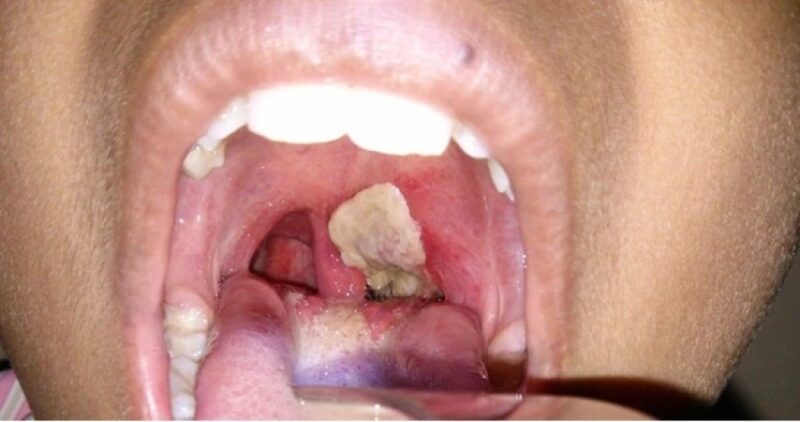
Health authorities in Adamawa State are responding to a diphtheria outbreak that has caused 20 deaths across 13 local government areas. Speaking on Wednesday, State Epidemiologist Jones Steven Kadabiyu confirmed that health workers have recorded 126 suspected cases throughout the state, with six patients currently receiving medical care in local hospitals.
Diphtheria is a serious bacterial illness that spreads through airborne droplets from coughing or close personal contact. It mainly affects the throat and airway, causing sore throats, mild fevers, swollen neck glands, and difficulty swallowing or breathing.
READ ALSO:
- Kara Bridge Repairs, Multiple Crashes Trigger 14-Hour Gridlock on Lagos-Ibadan Expressway
- 2027: Court Gives Atiku Seven Days to Serve Tinubu Through APC in Eligibility Suit
- 2027: Northern Students Back Tinubu, Pledge Campus-to-Campus Mobilisation
Health officials emphasized that the biggest risk to patients has been waiting too long to visit a health center, as some families try informal remedies at home first before seeking professional medical attention.
The state government is working alongside health partners to track new cases, provide specialized antibiotics and treatments, and protect medical workers and family members.
Officials stressed that while diphtheria can affect people of any age, young children are the most vulnerable to serious complications. Parents and guardians are strongly encouraged to ensure their children are up to date on their routine vaccines and to visit the nearest clinic immediately if anyone develops throat swelling or breathing issues.
Adamawa Health Officials Report 20 Deaths from Suspected Diphtheria Cases
-

 Politics3 days ago
2027: Northern Lecturers Back Tinubu, ASUU Disowns Endorsement
-

 metro3 days ago
Police Arrest Mother Over Alleged Brutal Abuse of 7-Year-Old Girl in Anambra
-

 Sports2 days ago
‘I Was Never the Chosen One’ — Dembele Responds to Mbappe
-

 International1 day ago
Islamic Council Condemns Attempted Attack on Holy City of Mecca
-

 Education2 days ago
JAMB Moves 2027 UTME Time — Here’s What Candidates Need To Know
-

 News1 day ago
Keep Politics Out of My Office — Ogbomoso Grand Chief Imam Warns Politicians, Bloggers
-

 metro2 days ago
Lagos Power Outage: Ikeja Electric Blames TCN as Businesses, Homes Groan
-

 Politics2 days ago
2027: APC Governors Reject Wike’s Rainbow Coalition, Insist on Party Loyalty
You must be logged in to post a comment Login