

News
Reverse electricity tariff increase in seven days or face legal action, SERAP tells Buhari

The Socio-Economic Rights and Accountability Project (SERAP) has slammed a seven-day ultimatum on President Muhammadu Buhari to direct the Minister of Power, Goddy Jedy-Agba, and the Chairman/CEO of the Nigerian Electricity Regulatory Commission (NERC), Prof. James Momoh, to reverse the recent increase in electricity tariff.
SERAP also asked the President to investigate the spending of public funds as ‘investments and bailouts’ by successive governments on electricity distribution companies (DisCos) and generating companies (GenCos) since 2005.
It said the President should cause the prosecution of cases of corruption and mismanagement of funds in such spending.
Following a reported approval by the Nigerian Electricity Regulatory Commission (NERC), electricity tariffs were increased by the DisCos in the country in December 2022.
Several prepaid customers were said to have confirmed the increase. But Minister of Power and NERC have neither confirmed nor denied the increase.
SERAP, in the letter dated January 7, 2023 and signed by its Deputy Director, Kolawole Oluwadare, said, “The increase in electricity tariff would exacerbate the extreme poverty across the country, and undermine the ability of millions of Nigerians to satisfy basic human needs.
The letter read in part, “The increase is unjustified, especially given the unreliable, inefficient and poor quality of electricity in the country. Rather than providing electricity discounts to poor Nigerians, successive governments continue to give bailouts to electricity companies.
“We would be grateful if the recommended measures are taken within seven days of the receipt and/or publication of this letter. If we have not heard from you by then, SERAP shall consider appropriate legal actions to compel your government to comply with our request in the public interest.
“Your government should have used the report by the National Bureau of Statistics (NBS), which shows damning revelations that some 133 million Nigerians are poor as a basis to improve access to regular electricity supply, and extend electricity to remote rural households.
“The latest increase in electricity tariff is coming on the heels of the NBC report which shows that over half of the population of Nigeria are multi-dimensionally poor and cook with dung, wood or charcoal, rather than cleaner energy. High deprivations are also apparent nationally in sanitation, time to healthcare, food insecurity, and housing.
“Access to regular electricity supply would improve the quality of life of the population. Electricity is an essential public service but millions of Nigerians continue to pay the price for corruption in the electricity sector–staying in darkness, but still made to pay crazy electricity bills. Electricity supply remains inadequate and irregular.
“Regular and uninterrupted access to electricity is a fundamental human right. Your government has legal obligations to ensure that the operations of NERC and electricity companies do not impair the effective enjoyment of the right.
“Access to affordable electricity services is a prerequisite for improving the condition of people living in poverty. It is a means to generate other important services that mitigate poverty, bearing in mind that access to electricity facilitates the eradication of poverty.
“The hike in tariff would increase financial burdens for socially and economically vulnerable Nigerians and further marginalize and disproportionately affect them, and exacerbate their vulnerability to discrimination.
“The failure of successive governments and high-ranking government officials to prevent widespread and systematic corruption in the electricity sector and to bring suspected perpetrators to justice is the primary cause of the exploitation of electricity consumers.
“Investigating the spending on investments and bailouts by successive governments in DISCOS and prosecuting anyone suspected of corruption and mismanagement of public funds, and recovering any proceeds of crime would end a culture of impunity in the power sector, and improve access to and affordability of electricity in Nigeria.
“Successive governments have failed to increase power generation and provide Nigerians with regular and uninterrupted electricity supply, with many electricity contracts shrouded in secrecy, and trillions of Naira going down the drain.
“Section 14(2)(b) of the Nigerian Constitution of 1999 [as amended] provides that, ‘the security and welfare of the people shall be the primary purpose of government.
“Under Section 16(1)(a)(b), your government has the obligations to ‘harness the resources of the nation and promote national prosperity and an efficient, a dynamic and self-reliant economy’, and to ‘secure the maximum welfare, freedom and happiness of every citizen.
“Nigeria has also ratified the African Charter on Human and Peoples’ Rights and the International Covenant on Economic, Social and Cultural Rights, which recognize legally enforceable economic and social rights, such as the rights to education, health, safe food and clean water, security, and shelter.
“Your government also has legal obligations to ensure that socially and economically vulnerable Nigerians including the 133 million the NBC documents as poor enjoy non-discriminatory access to basic household services including electricity.
“Under Chapter 2 of the 1999 Constitution of Nigeria dealing with Fundamental Objectives and Directive Principles of State Policy, high-level public officials have a clear obligation to ‘eradicate all corrupt practices and abuse of power. Furthermore, the constitution prohibits the exploitation of Nigeria’s human and natural resources for any reasons other than for the good of the community.
“Articles 5 and 9 of the UN Convention against Corruption also impose legal obligations on your government to ensure proper management of public affairs and public funds, and to promote sound and transparent administration of public affairs.
“The African Commission on Human and Peoples’ Rights has adjudged the failure of the states to provide basic services such as electricity as violating the right to health.”





News
INEC Under Fire as Missing Voters’ Register Sparks 2027 Election Transparency Row
INEC Under Fire as Missing Voters’ Register Sparks 2027 Election Transparency Row
The Independent National Electoral Commission (INEC) has come under scrutiny after explaining why Nigeria’s preliminary voters’ register was not uploaded to its official website during the period scheduled for public scrutiny, despite being displayed physically at registration areas across the country.
The development has triggered concerns about transparency and compliance with the Electoral Act 2026 as preparations gather momentum for the 2027 general elections.
INEC National Commissioner and Chairman of the Information and Voter Education Committee, Mohammed Haruna, reportedly explained that the register had been made available at the wards but was not uploaded to the commission’s website.
“The voter register has been published, but in the wards. It just wasn’t published on our website,” Haruna was quoted as saying by *The PUNCH*.
The explanation followed complaints that the commission’s online portal did not provide access to the preliminary register during the period designated for voters to check their registration details and raise objections where necessary.
INEC had announced that the preliminary voters’ register would be displayed nationwide from October 9 to 15, 2026, to enable registered voters to verify their details and submit claims or objections concerning errors, omissions or questionable entries.
The controversy has raised questions about whether physical display alone satisfies the legal requirements for the exercise, particularly for voters who cannot easily travel to their registration areas.
In a separate explanation reported by *Premium Times*, Haruna said the commission was receiving and compiling claims and objections arising from the physical display of the register.
According to the report, INEC planned to prepare a clean copy for publication by December 15, 2026.
However, the proposed date has not, by itself, resolved concerns about why the preliminary register was unavailable online during the stipulated period for public scrutiny.
Section 19(1) of the Electoral Act 2026 requires INEC to designate a seven-day period for public scrutiny of the voters’ register, with copies made available at registration areas and on its official website or another website established for that purpose.
The provision is designed to give registered voters and other interested persons an opportunity to identify errors, omissions and questionable entries before the register is finalised. It also provides a framework for claims and objections concerning the inclusion or omission of names and the correction of personal details.
Section 19(5) prescribes a penalty for an INEC official who fails to display or publish the register as required. The provision specifies a fine of ₦100,000, imprisonment for up to six months, or both.
The central legal question is whether displaying the register physically without making it available online during the stipulated period satisfies the requirements of the law. The controversy has therefore placed the commission’s handling of the exercise under renewed scrutiny.
Former Vice-President Atiku Abubakar has also criticised INEC over the absence of the preliminary register from its website, calling for the list to be made accessible so that voters can verify whether their names and personal details have been properly captured.
Atiku’s position is that announcing the total number of registered voters is not sufficient to enable individuals to determine whether their names appear correctly on the register. Voters need access to the detailed list to identify omissions and other discrepancies and take appropriate steps to address them.
The controversy has added to concerns among political stakeholders and election observers about the accessibility of electoral information ahead of the 2027 polls.
It comes after INEC announced that Nigeria’s national register of voters had exceeded 103 million following the completion of the three phases of the Continuous Voter Registration exercise and subsequent biometric checks.
INEC Chairman, Professor Joash Ojo Amupitan, disclosed the figure during an engagement with media executives in Abuja in early October. The registration exercise recorded more than 10.7 million new registrants across its three phases, subject to the commission’s verification processes.
Although the aggregate figure provides an indication of the size of Nigeria’s voting population, it does not enable individual voters to confirm whether their names and personal details have been correctly captured. That is why the preliminary display is an important safeguard against errors, omissions and questionable entries.
The absence of online access has practical implications for voters who live far from their registration areas or cannot easily visit INEC offices. Making the register available online would allow them to check their details more conveniently and identify corrections that may be required.
Online publication would also provide political parties, election observers and other stakeholders with an additional means of scrutinising the register and raising concerns through the appropriate procedures.
Although INEC maintains that the preliminary register was displayed physically at registration areas, questions remain about the failure to upload it to the website during the announced period and the implications for public access and electoral transparency.
With preparations for the 2027 general elections gathering momentum, the commission faces pressure to clarify the circumstances surrounding the omission and explain how affected voters will be able to exercise their rights to scrutiny and objection.
INEC’s reported plan to publish a clean copy by December 15, 2026, is expected to attract close attention from political parties, civil society organisations and the public.
However, the planned publication does not automatically settle questions about whether the earlier exercise complied with the law. The commission’s explanation, the timing of online publication and the practical access available to voters remain central to the debate over the credibility and transparency of Nigeria’s electoral process.
INEC Under Fire as Missing Voters’ Register Sparks 2027 Election Transparency Row
News
Bill Clinton condemns anti-Muslim prejudice, cites Qur’an’s message of coexistence
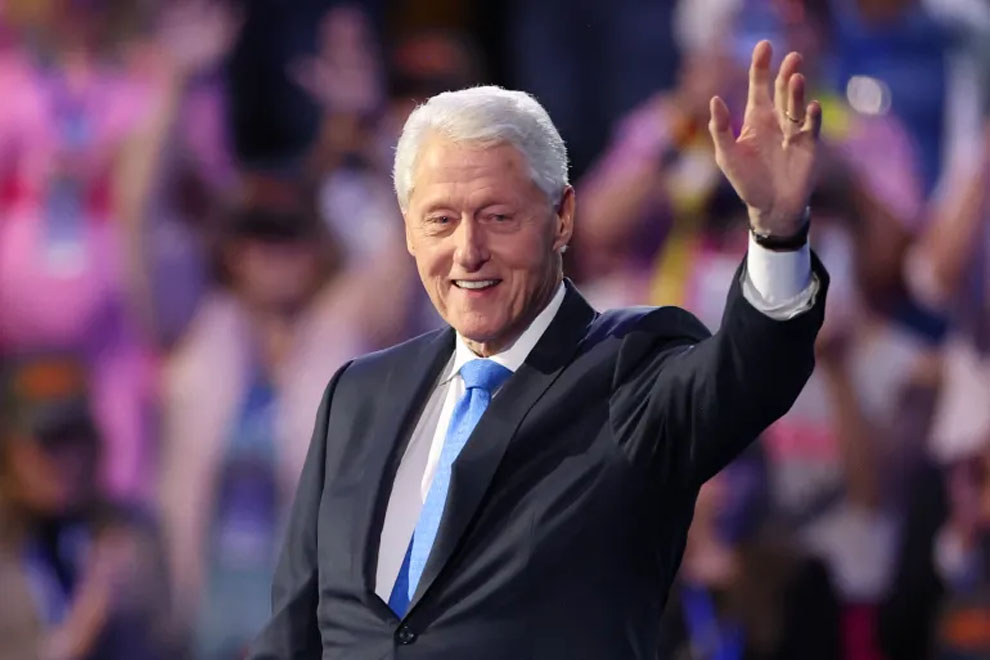
Bill Clinton condemns anti-Muslim prejudice, cites Qur’an’s message of coexistence
Former US president recalls daughter Chelsea’s experience reading Islamic holy book, says people should not be denigrated because of their faith
Former United States President Bill Clinton has condemned discrimination against Muslims, declaring that he is tired of people being denigrated simply because of their religious beliefs.
Clinton made the remarks on Tuesday, October 20, 2026, while speaking at an interfaith gathering at Koinonia Worship Center in Florida, where he cited a passage from the Qur’an that encourages mutual understanding among people of different backgrounds.
The former president recalled how his daughter, Chelsea Clinton, introduced him to the message after reading the Qur’an from beginning to end when she was 15 years old.
According to reports of his speech, Clinton used the experience to highlight the importance of religious tolerance, peaceful coexistence and the need to resist prejudice against people because of their faith.
“I’m tired of people denigrating Muslims for being Muslims,” Clinton said.
He argued that religious differences should not become a basis for hostility and that people should not be judged collectively on account of the actions of individuals who share their faith.
“There are bad actors in every faith because we’re all flawed human beings,” he added.
Clinton also expressed weariness with religious wars and cultural conflicts, calling attention to the need for greater understanding across religious and cultural boundaries.
READ ALSO:
- MURIC Applauds Army as Mogadishu Cantonment Mosque Reopens After Week-Long Closure
- Atiku Condemns Attack on Edo Comedian Over Refusal to Support Tinubu
- US Declares Two Nigerians Wanted Over $3.1m Medicare Fraud, Drug Offences
Recounting his daughter’s experience, Clinton said Chelsea had read the Qur’an from beginning to end at the age of 15 and subsequently drew his attention to a passage concerning humanity’s diversity and the relationship between different peoples.
The passage, identified as Qur’an 49:13, is found in Surah Al-Hujurat, which teaches that Allah created humanity from a male and a female and made people into nations and tribes so that they might know one another.
The verse further states that the most honoured in the sight of Allah is the most righteous.
Clinton paraphrased the passage as a message that people were created differently not to despise one another, but to become acquainted with and learn from one another.
His reference to the verse formed a central part of his argument against religious prejudice, emphasising that differences in faith, ethnicity and culture should encourage understanding rather than discrimination.
The Qur’anic passage is widely associated with the Islamic principle of human dignity and the recognition of diversity among peoples.
Clinton’s remarks challenged the tendency to associate the actions of individuals with entire religious communities. By observing that wrongdoing occurs among followers of different faiths, he argued against treating Muslims or members of any other religious group as collectively responsible for the misconduct of particular individuals.
His comments also drew attention to the consequences of religious and cultural divisions, which can deepen mistrust and encourage hostility between communities.
The former president’s position, as reported from the event, was that people should be assessed as individuals rather than denigrated merely because they belong to a particular religion.
The remarks have attracted attention because they place the Qur’an’s message of mutual understanding at the centre of a public discussion about anti-Muslim prejudice in the United States.
Clinton spoke at the Florida gathering against the backdrop of political controversy surrounding comments about Muslim political figures in the United States.
Reports on the event linked his remarks to the debate surrounding Abdul El-Sayed, a Muslim Democratic candidate seeking election to the United States Senate from Michigan, who has faced criticism from political opponents.
President Donald Trump has reportedly used the term “jihadist” in referring to El-Sayed, drawing attention to the use of religiously charged language in American political discourse.
Clinton’s comments, however, focused on the broader issue of denigrating Muslims because of their faith and the need to promote understanding across religious communities.
The event also featured David Jolly, the Democratic candidate for governor of Florida, whose campaign was the political context for Clinton’s appearance.
The gathering brought together religious and political issues, with the former president using the occasion to speak about inclusion, tolerance and the dangers of defining people through religious hostility.
Following the circulation of Clinton’s remarks, some social media posts attributed additional statements to him and his daughter, including claims that Chelsea described the Qur’an as a “miraculous book” and declared that all negative things said about Muslims were lies.
However, those additional statements have not been established by the available reports of Clinton’s speech.
What is supported by the reported remarks is that Clinton recalled Chelsea’s reading of the Qur’an, cited the message of Surah Al-Hujurat 49:13 and condemned the denigration of Muslims because of their religious identity.
The distinction is important because a genuine statement can be accompanied by unverified additions as it spreads across social media.
Clinton’s documented message remains a call for religious tolerance and mutual understanding, rather than evidence that every statement contained in the viral version was made by him or his daughter.
The passage Clinton cited, Qur’an 49:13, states in part that Allah made humanity into nations and tribes so that people may know one another. The verse places human diversity within a moral framework in which righteousness, rather than ethnic or social identity, determines a person’s standing before Allah.
For Muslims, the passage is a reminder that differences among peoples should not automatically become grounds for contempt or discrimination.
Clinton’s decision to invoke the verse in condemning anti-Muslim prejudice has therefore brought renewed attention to its message of recognition and coexistence.
His remarks also underscore the importance of verifying quotations attributed to public figures, particularly when religious issues and politically sensitive debates are involved.
Bill Clinton condemns anti-Muslim prejudice, cites Qur’an’s message of coexistence
Source: Al Jazeera, Siasat and other published reports on Clinton’s October 20, 2026, remarks at Koinonia Worship Center, Florida.
News
41 Days in Bandits’ Den: Five Islamic Clerics Still Held After Tinubu Re-Election Prayer Trip
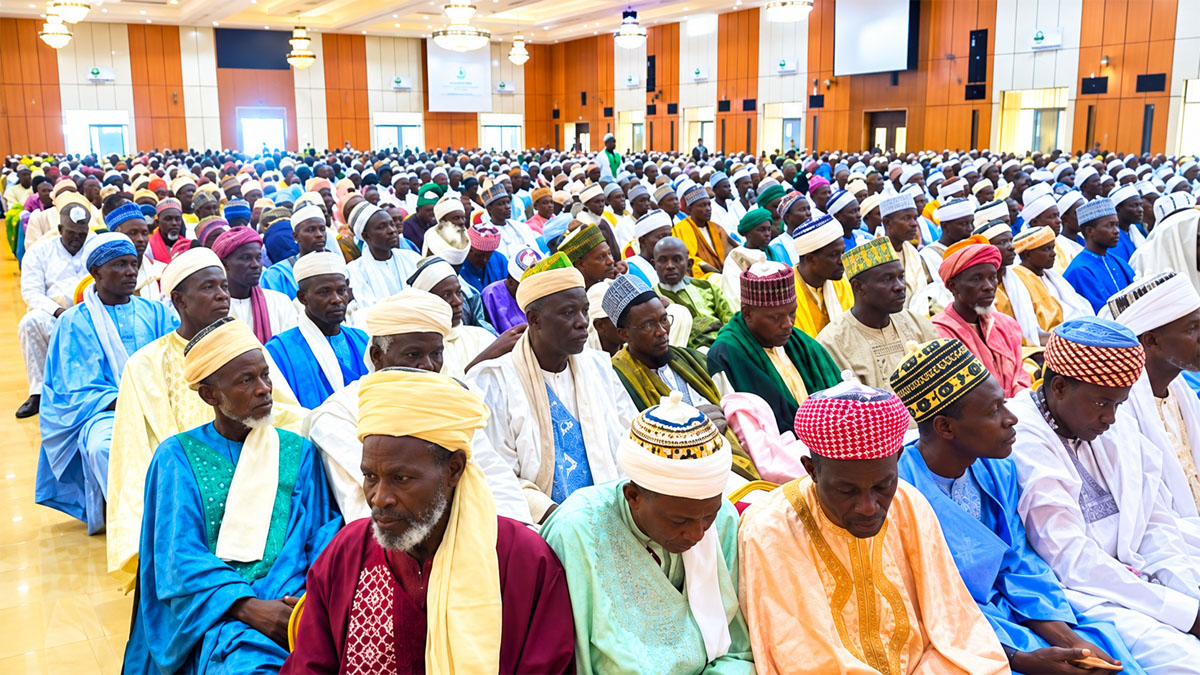
Five Islamic clerics abducted by suspected bandits in Zamfara State have remained in captivity for 41 days, renewing concerns over their safety and the persistent threat of kidnapping in Nigeria’s North-West.
The continued detention of the clerics was disclosed on Friday by conflict reporter Bakatsine, who appealed to Nigerians to continue praying for their safe return.
In an update shared on social media on October 23, 2026, Bakatsine said the Islamic scholars were still in the hands of their abductors and expressed hope that they would reunite with their families.
The clerics were reportedly abducted on September 12, 2026, while travelling towards Talata Mafara Local Government Area for a special prayer gathering organised in connection with President Bola Tinubu’s 2027 re-election bid.
The gathering was associated with Senator Abdul’aziz Abubakar Yari, a former Zamfara State governor and the Director-General of Tinubu’s re-election campaign council.
Reports identified the five clerics as Imam Yahuza, Magawata Abdullahi, Malam Shehu Dakko, Imam Bala Fagon and Na’ibi Tasi’u. They were said to have travelled from communities in Bakura and Talata Mafara local government areas to attend the gathering.
READ ALSO:
- Saudi Executions: Truth Behind Viral Kissing Claim
- MURIC petitions Oyo police over 2019 murder of Muslim cleric in Fiditi
- NEC Targets Cheaper Fares, Food Prices in 90-Day Plan to Ease Nigerians’ Hardship
However, the Nigerian Army clarified shortly after the incident that the clerics were not abducted at Yari’s residence, contrary to some initial reports. According to the military, intelligence indicated that the victims were seized while travelling from the Sububu Forest axis in Bakura towards Talata Mafara.
The Zamfara State Police Command also confirmed the incident, stating that armed men had intercepted the clerics’ vehicle along the Dakko–Damri feeder road in Bakura Local Government Area and that efforts were underway to rescue them.
There were initial reports that six Islamic clerics had been abducted, although the latest reports identifying those still in captivity named five victims.
Reports following the abduction indicated that the kidnappers demanded a ransom of ₦100 million from the victims’ families before the amount was reportedly reduced to ₦30 million during negotiations. However, there has been no confirmed public update on the progress of the negotiations or whether the demand has been met.
As of Friday, October 23, there was no confirmed information that the clerics had been released. Their current whereabouts and condition also remained unclear.
The prolonged captivity has heightened concerns over the security situation in Zamfara State, where armed groups have continued to abduct travellers and residents for ransom.
The incident has also drawn attention to the risks faced by people travelling between rural communities in the state, despite security operations aimed at curbing banditry.
Families of kidnapped victims and residents of affected communities have repeatedly called for stronger security measures and more effective rescue operations to prevent further abductions and secure the release of those still being held.
Bakatsine’s latest appeal has renewed calls for continued public concern over the fate of the five clerics as their families await news of their safe return.
41 Days in Bandits’ Den: Five Islamic Clerics Still Held After Tinubu Re-Election Prayer Trip
-

 News3 days ago
EFCC Opens Recruitment for Nigerians, Sets Age Limits for Four Job Categories
-
 News3 days ago
41 Days in Bandits’ Den: Five Islamic Clerics Still Held After Tinubu Re-Election Prayer Trip
-
 Politics2 days ago
2027: APGA Chairman Says South-East Must Back Tinubu to Secure Igbo Presidency
-
 Politics3 days ago
2027: Remi, Seyi Tinubu Reportedly Differ Over APC Youth Mobilisation
-
 Politics3 days ago
Igbo Presidency: Soludo Tells South-East to Back Tinubu for Future Power Shift
-
 metro3 days ago
Police Arrest Suspect Eight Months After Retired Teacher’s Killing in Ogun
-

 Sports3 days ago
Kane Beats Yamal to Win Major Football Award Ahead of Ballon d’Or Ceremony
-

 metro2 days ago
Borno: Troops Kill 15 Terrorists in Midnight Air Strike