

metro
Fuel scarcity bites harder as marketers adjust pump price to N195 in Abuja, N185in Lagos

• Supply dropped by 40% – IPMAN
It was confusion galore yesterday in the oil sector after Major Oil Marketers Association of Nigeria (MOMAN) increased the price of petrol to N185 per litre while the Minister of State Petroleum Resources, Chief Timipre Sylva, denied any such increase.
Mobil, Conoil, TotalEnergies, Nipco, Enyo, Forte and NORTH-WEST filling stations in Lagos adjusted their pump price early yesterday to reflect N185 per litre against N169 previously.
Motorists in Lagos who had queued for several hours at the filling stations were shocked to see the adjusted price.
Some marketers, who preferred anonymity, told the News Agency of Nigeria (NAN) that the federal government had begun the subsidy withdrawal, urging marketers to adjust their pump price.
READ ALSO:
- PDP suspends Nnamani, seven others for anti-party activities
- Three lawmakers, others injured in Benue governor convoy accident
- CBN insists on Jan 31 deadline to phase out old naira notes
The marketers claimed that government might have commenced a gradual removal of petrol subsidy.
No fuel price increase, says Sylva
However, Minister of State Petroleum Resources, Chief Timipre Sylva, denied any increase in the price of Premium Motor Spirit (PMS).
He said in a statement through his Senior Adviser (Media & Communications), Horatius Egua, that President Muhammadu Buhari has not approved any price increase for PMS.
His words: “President Muhammadu Buhari has not approved any increase in the price of PMS or any other petroleum product for that matter. There is no reason for President Muhammadu Buhari to renege on his earlier promise not to approve any increase in the price of PMS at this time.
“Mr President is sensitive to the plight of the ordinary Nigerian and has said repeatedly that he understands the challenges of the ordinary Nigerian and would not want to cause untold hardship for the electorate.
“Government will not approve any increase of PMS secretly without due consultations with the relevant stakeholders.
“The President has not directed the Nigerian Midstream and Downstream Petroleum Regulatory Authority (NMDPRA) or any agency for that matter to increase the price of fuel.
“This is not the time for any price increase in pump price of PMS.
“What is playing out is the handiwork of mischief makers and those planning to discredit the achievements of Mr President in the oil and gas sector of the economy.
“I appeal to Nigerians to remain calm and law abiding as the government is working hard to bring normalcy to fuel supply and distribution in the country.”
Other stakeholders feign ignorance of hike
Other critical stakeholders either feigned ignorance of the development or were out of reach to respond to reporters’ enquiries.
Several sources in the Nigeria Midstream Downstream Petroleum Regulatory Agency (NMDPRA), the industry regulator, said they were not aware of any price increase.
NMDPRA’s spokesman, Kimchi Apollo, could also not be reached on his mobile phone for comments.
The Executive Secretary of the Major Oil Marketers Association of Nigeria (MOMAN), Clement Isong’s mobile phone was also “not reachable.”
READ ALSO:
- Nigerians disappointed by conduct of political actors – Abdulsalami
- Niger Delta group writes Buhari over alleged complicity of Naval personnel in oil theft
- Old age comes with aggression: Be patient with your parents (an appraisal of Qur’an17 : 23-24)
The Chief Communications Officer, NNPCL, Garba Deen Muhammad, did not respond to the calls put through to him.
The National President, Independent Petroleum Marketers Association of Nigeria (IPMAN), Chinedu Okonkwo, in a telephone chat with The Nation, said he was in the dark as to the directive leading to the price hike.
“We have not been communicated by any official or regulator on the N185 per litre petrol price, so we are also in the dark on this like every other Nigerian.
“Government has also not said anything about it openly. So I cannot comment on what I am not aware of. Mmaybe by Monday we will have a clearer picture of the development,” Okonkwo said.
The development has fueled speculations that the federal government may have subtly begun the removal of subsidy on petrol and by extension, a complete deregulation of the sector, which for long has been the clamour of both MOMAN and IPMAN.
In 2022, the federal government spent over N6 trillion on subsidy.
But Okonkwo said the sector remained regulated.
He said: “For us as IPMAN, we are still in the regime of subsidy. But I tell you, deregulation is the way to go on this matter.
“We should pray for the availability of the product, because when it is not available, you will be tempted to look for it in any way.
“The operating environment is very harsh even to NNPC, because they import the product and dollar is increasing in value against the naira. Everything around petrol is ‘dollarised’ even for charges that we pay for locally like NIMASA and NPA charges.
“All the other costs associated with petrol are also charged in dollar. Government needs to remove the dollar business around petrol especially for those we can do locally. When this is done, prices will also go down.”
Supply to oil marketers down by 40% – IPMAN
Speaking on Channels Television yesterday on the fuel scarcity, IPMAN deputy president, Zarma Mustapha, admitted that there was some confusion in the sector and independent marketers do not “really understand what is going on.”
He also said supply to marketers by private depots has dropped by about 40 per cent.
The volume of petrol imported by NNPC, according to him, has been affecting ‘paucity of the funds’ of the federal government.
He said: “Because of that, the supply that we receive as marketers at the loading points, we believe we don’t get what we usually get – even 50 per cent of what we get.
READ ALSO:
- Gunmen attack UNIZIK students in hostels, rape many, steal valuables
- Tragedy as gunmen kill husband, wife, four children, behead others in fresh Benue attack
- Banks to pay N1m fine daily for not picking new naira notes
“Some [time] in July, August, the volume of liftings we had and what we have today has dropped by about 50 percent or 40 per cent.”
Mustapha added that the lingering presence of queues at fuel stations across the country could be due to the high cost of the subsidy.
“We are just assuming maybe the volume of the products they are bringing in – the more the volume, the more the cost of the subsidy.”
“It doesn’t seem that they are bringing in more. If they’re bringing in more, we would be having the same volume that we usually get at the loading point.
“As of today, with what is trending at the private depots, the volume available is not enough. The private depots also contribute by not giving the product as it is being regulated by the NNPC.”
The IPMAN deputy president said the regulatory body would be in the best position to answer the public and give details on why and how the price was adjusted to the new one.
“The price was not done to only appease the marketers but to ensure that the supply chain is being sustained, because the marketers are also in business and you can’t lift a product, resell it and you’re not making any returns on it, I don’t think anybody will continue to do that.
“We’re in a very dicey situation. NNPC imports, distributes to private depots and note that we independent marketers don’t have the depots as I am talking to you today, I brought the product from a depot in Lagos at N247 per litre to be transported down to far North at the cost of N50 to N60 per litre. Not the fancy prices we are seeing.
“Even we ourselves as independent marketers, we don’t understand what is really happening. We have raised our concerns to the regulatory bodies and have told them what we’re experiencing.
“We are supposed to get this product at N148 but we are buying at N220 and it keeps increasing.N240 in Lagos, N235 in Warri, N240 in Port Harcourt, in Calabar it is as high as N250 per litre for marketers, and you buy and transport yourself to where your retail outlet is.
“There is a lot of confusions in the industry, which the government must come in and address these confusions so that the common man can get the product for the approved price. We cannot buy the product between 220 to 240 naira, transport it for about N50, which is already N300, then expect the marketer to sell to the public for N200 or N190. It is not realisable.”
Stop fuel diversion, trucks hijack to end fuel scarcity, ANRPM tells FG
The Association of Nigeria refineries Petroleum Marketers (ANRPM) advised the federal government to check fuel diversion and hijack of trucks to end the current scarcity of fuel in some parts of the country.
It also cautioned marketers and distributors against engaging in petroleum products diversion and trucks hijacking.
South-West Zonal Chairman of the ANRPM, Hon Iwalewa Olatubosun, said in Akure yesterday that the association was ready to join the fight against products adulteration, pipeline vandalism, oil theft, illegal bunkering and sundry criminal activities in the oil sector
Olatubosun said the association would take stringent measures to ensuring that any of its members caught perpetrating the act would be dealt with in accordance with the law.
The fuel scarcity persisted yesterday across the country.
The filling stations that had fuel sold at various prices ranging between N250 and N400 per litre.
Road side hawkers also kept exploiting motorists who could not afford to queue and buy at a cheaper price.
Fuel was available in many parts of Edo State but at high prices.
A litre cost as much as N400 in Kaduna black markets.
Lagos back-pedals on order restricting sales
The Lagos State Government withdrew its order stopping filling stations on the state’s highways from dispensing fuel by 4.00pm.
The government had on Thursday, ordered all filling stations on the state’s highways to operate between 9.00am and 4.00pm each day.
However, Transportation Commissioner, Frederic Oladeinde, in a statement yesterday said government had noticed the reactions generated by its directive to major and independent petroleum marketers operating on major roads.
He said the measure was to stop the traffic congestion that had resulted from their activities and that it was not to compound the hardship motorists and commuters had experienced because of the lingering fuel shortage.
“Following assurances from some of the offending filling stations, the 9am to 4pm restriction will no longer be enforced.
“For the avoidance of doubt, filling stations are not restricted from doing their business, but fuel marketers have a responsibility to ensure that their activities do not cause any disruption whatsoever to traffic flow. It is against the law to impede the free flow of traffic on our roads.
“Traffic Management Agencies have been directed to invoke the law should any marketer be found to have allowed queues on its premises spill onto major roads in a disorderly manner that impedes traffic flow,” Oladeinde said.










metro
Transporters Urge IGP Disu to Arrest Illegal Highway Tax Collectors
Transporters Urge IGP Disu to Arrest Illegal Highway Tax Collectors
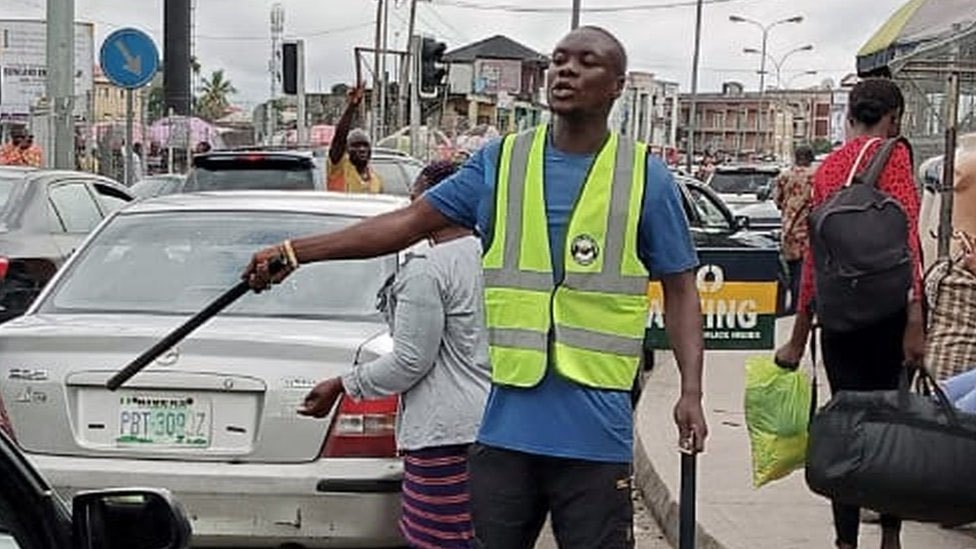
Transport operators have urged Inspector-General of Police Olatunji Disu to deploy personnel to enforce a Federal High Court order directing the removal of illegal roadblocks and revenue-collection points on federal highways across Nigeria.
The Heavy Duty Haulage and Transporters Welfare Association of Nigeria made the appeal in a letter to the IGP, requesting police action against individuals and groups allegedly operating unauthorised tax and levy collection points on major highways.
The association specifically requested the deployment of 20 police personnel to enforce the court order and arrest persons found collecting taxes, levies or other charges through illegal roadblocks.
The request followed a Federal High Court judgment delivered in Abakaliki, Ebonyi State, directing the police and relevant revenue authorities to remove roadblocks, checkpoints, barriers and other obstructions mounted on federal highways for the purpose of revenue collection.
Justice Hillary I. O. Oshomah, in the judgment delivered on July 13, 2026, ordered the authorities to supervise or ensure the immediate dismantling of unauthorised revenue-collection points on federal highways, expressways and roads.
READ ALSO:
- Army, DSS, Amotekun Kill ISWAP Commander Planning Attacks in Southern Nigeria
- 2027: Soludo Govt Accuses Peter Obi Of Plot To Destroy APGA
- MURIC Accuses OAU International School of Restricting Hijab-Wearing Students
The court also directed the police to arrest, detain, investigate and prosecute persons, groups or authorities found to have erected or operated such roadblocks in violation of relevant tax laws.
The transporters said enforcement of the order would help address what they described as illegal taxation, extortion and harassment of road users, particularly commercial transport operators.
National Chairman of the association, Oraka Nnaemeka, and Secretary-General, Ayobami Makinde, said unauthorised collections along highways had placed additional financial pressure on truckers and other transport operators.
According to the association, the proliferation of roadside levies increases the cost of transporting goods and could ultimately contribute to higher prices for consumers.
The group therefore called on the Nigeria Police Force to implement the court order and protect legitimate transport operators from unauthorised revenue collectors and other individuals obstructing the movement of goods.
The association also argued that removing illegal checkpoints would improve the efficiency of the nation’s road transportation system and reduce delays faced by trucks travelling between states.
The court case involved Ayobami Makinde, Musamad Nigeria Limited and the Incorporated Trustees of Heavy Duty Haulage and Transporters Welfare Association, Bwari, Abuja, against the Nigeria Police Force, the Nigerian Army and the Joint Revenue Board.
The demand comes amid longstanding complaints from transport operators about multiple taxation and illegal levies imposed on commercial vehicles travelling across Nigeria.
The transporters are now seeking immediate police enforcement of the court order, particularly on federal highways where unauthorised revenue collection remains a concern for operators moving goods across the country.
Transporters Urge IGP Disu to Arrest Illegal Highway Tax Collectors
metro
Army, DSS, Amotekun Kill ISWAP Commander Planning Attacks in Southern Nigeria
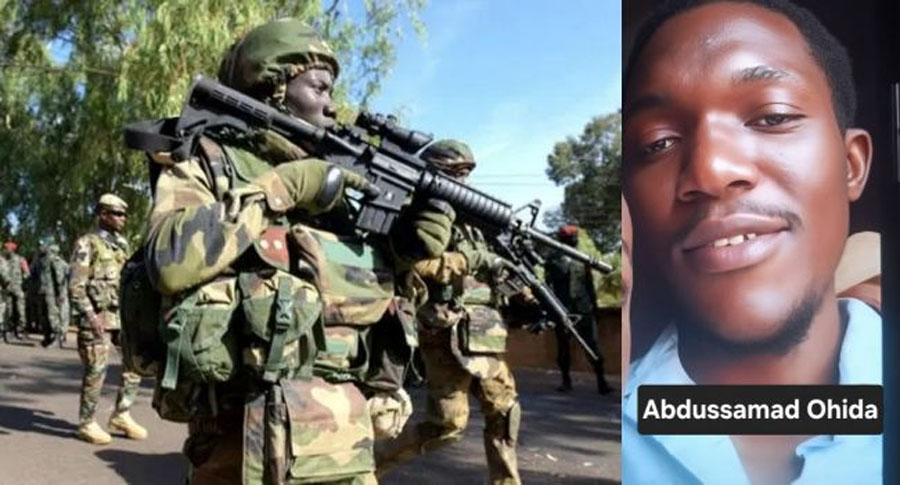
Army, DSS, Amotekun Kill ISWAP Commander Planning Attacks in Southern Nigeria
A joint operation involving the Nigerian Army, Department of State Services (DSS) and the Western Nigeria Security Network (Amotekun) has killed a senior Islamic State West Africa Province (ISWAP) commander, Abdussamad Ohida, also known as Anwar, in Owo, Ondo State.
Ohida was reportedly killed alongside other members of the terrorist group during an intelligence-led operation targeting an ISWAP hideout in Owo forest.
Security sources said the operation disrupted alleged plans by the group to launch terrorist attacks in southern Nigeria during the forthcoming Christmas and New Year period and cause disruption ahead of the 2027 general elections.
The intelligence that led security agencies to Ohida was reportedly developed by the DSS and strengthened by information obtained during the interrogation of Abu Ikrimah, also known as Abu Uwais, a former ISWAP leader in Central Nigeria who was arrested in 2023.
Ohida had reportedly served as Ikrimah’s deputy before taking on a more prominent leadership role following his arrest. Security sources said he subsequently coordinated ISWAP activities across parts of the North-Central and southern regions of Nigeria.
The intelligence was reportedly corroborated with assistance from security partners in the United Kingdom, leading to the operation in Owo.
Ohida had previously been linked by Nigerian authorities to several deadly attacks across the country.
Government sanctions records identify Abdulsamat Abdulkareem Ohida as a senior ISWAP commander, or Qaid, operating in Okene. He was also linked to the June 5, 2022 attack on St Francis Catholic Church in Owo, where worshippers were killed and others injured.
READ ALSO:
- 2027: Soludo Govt Accuses Peter Obi Of Plot To Destroy APGA
- MURIC Accuses OAU International School of Restricting Hijab-Wearing Students
- Israeli Forces Reportedly Destroy School, Burn Homes in Southern Lebanon
He was further linked to the July 11, 2022 attack on Kuje Correctional Centre in Abuja, as well as attacks on security formations in Kogi and Niger states.
Security sources also attributed to him the December 31, 2025 attack on the Ipele Divisional Police Station in Owo, during which several weapons were reportedly stolen before the facility was destroyed with explosives.
Other attacks attributed to the commander include the July 28, 2022 attack on a military checkpoint along the Suleja-Zuba Road in Niger State, the April 23, 2022 attack on Ogaminana Police Station in Adavi Local Government Area of Kogi State, and the February 7, 2022 attack on the Okene Area Command Police Station.
The December 24, 2020 attack on a naval checkpoint in Okene, which reportedly killed two naval personnel, was also linked to him by security sources.
The latest operation is significant because of concerns over the expansion of terrorist networks into southern Nigeria, away from areas traditionally associated with insurgent activity.
Security sources described Ohida’s reported death as a major setback for the ISWAP network in the region and said the operation had disrupted plans for further attacks.
However, authorities have yet to publicly release a comprehensive account of the operation, including the exact number of other ISWAP members reportedly killed or the full details of the intelligence and military engagement.
The operation comes amid intensified efforts by Nigerian security agencies to prevent terrorist groups from establishing footholds in the South-West and other parts of southern Nigeria, particularly as the country approaches the festive season and the 2027 elections.
Army, DSS, Amotekun Kill ISWAP Commander Planning Attacks in Southern Nigeria
metro
MURIC Accuses OAU International School of Restricting Hijab-Wearing Students
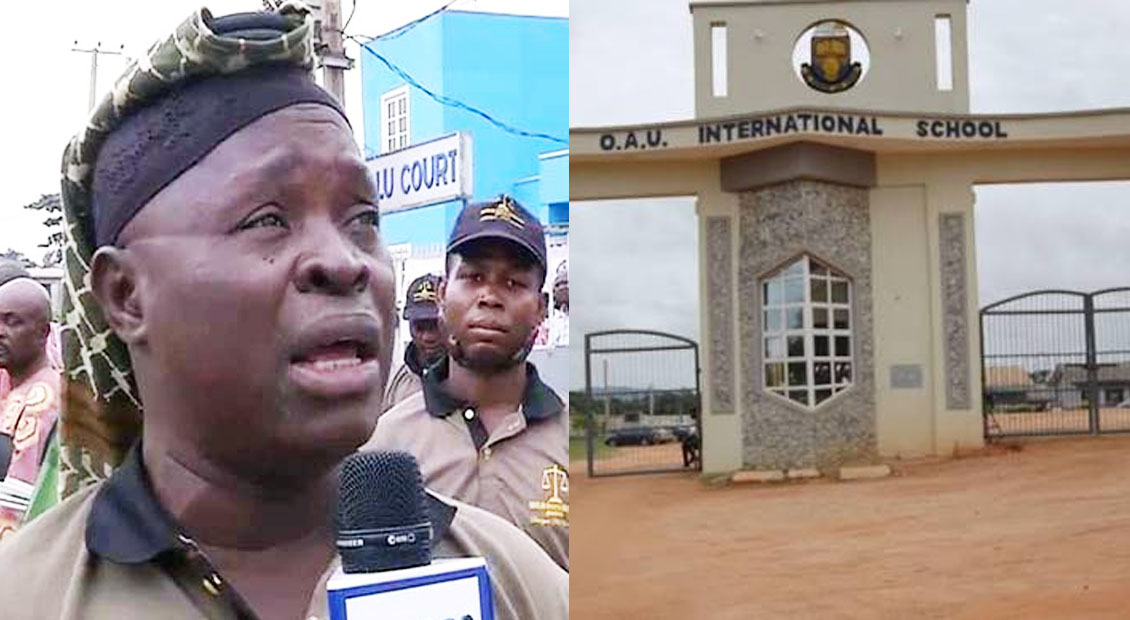
MURIC Accuses OAU International School of Restricting Hijab-Wearing Students
The Muslim Rights Concern (MURIC) has accused the management of the International School, Obafemi Awolowo University (OAU), Ile-Ife, Osun State, of restricting hijab-wearing Muslim students from accessing the school premises.
MURIC alleged that female Muslim students were locked out of the school for several days after authorities reportedly insisted that they remove their hijabs before being allowed into the compound.
The organisation condemned the alleged action and called for the immediate lifting of what it described as a restriction on the use of hijab by Muslim students.
In a statement issued on Monday, October 5, 2026, MURIC Executive Director, Professor Ishaq Akintola, said the affected students eventually returned to school without their hijabs after they were allegedly informed that the matter would not be considered until the next meeting of the university council in December.
Akintola described the development as discriminatory and argued that it raised concerns about religious freedom, girl-child education and the rights of Muslim students.
READ ALSO:
- Israeli Forces Reportedly Destroy School, Burn Homes in Southern Lebanon
- Nine Zamfara Lawmakers Dump APC for ADC Ahead of 2027
- Temi Nkem Wins N160m BBNaija Season 11 Grand Prize
He cited Section 38 of the Nigerian Constitution, which guarantees freedom of thought, conscience and religion, and argued that school regulations should not be applied in a manner that violates constitutionally protected religious rights.
“The argument that the use of hijab violates the school’s rules does not hold any water,” Akintola said, maintaining that Muslim students should be allowed to observe their faith while pursuing their education.
MURIC also questioned the reported circumstances surrounding the restriction and urged OAU and the International School authorities to clarify the policy governing religious attire at the institution.
The organisation further expressed concern about the effect of the dispute on the affected students, who it described as underage girls, and their parents.
According to MURIC, preventing students from attending school over their religious attire could undermine efforts to reduce the number of out-of-school children in Nigeria.
The group also rejected what it said could be the argument that the school’s internal rules supersede constitutional protections, insisting that institutional regulations must conform to the country’s laws.
MURIC called on the OAU authorities to address the dispute through dialogue and respect for religious diversity, warning that continued disagreement over the issue could create tension between the university community and residents of Ile-Ife.
The organisation alleged that the action could amount to discrimination against Muslim students, but those allegations have not been independently established.
MURIC therefore demanded that any restriction on hijab-wearing students at OAU International School be lifted immediately and that the affected students be allowed to attend classes without being required to abandon their religious attire.
The group said resolving the matter in a manner that protects the students’ rights would help preserve peaceful coexistence and OAU’s reputation as a major Nigerian educational institution.
MURIC Accuses OAU International School of Restricting Hijab-Wearing Students
-

 metro2 days ago
NYSC Kidnap: Abductors Demand N950m for 19 Prospective Corps Members in Imo
-

 Politics2 days ago
2027: Oshiomhole Dares Opposition Over ₦500 Petrol Promise, Says APC Will Take Argument to Nigerians
-

 Entertainment3 days ago
Olu Jacobs Laid to Rest in Lagos as Dignitaries, Nollywood Stars Honour Screen Icon
-
 metro2 days ago
N500 Petrol, Wage Award: Public Sector Workers Begin Warning Strike
-
 metro2 days ago
Amaechi: Tinubu’s Policies Made My Mother’s Drugs Unaffordable
-

 metro1 day ago
‘I Thought I Was Dead’ — Hairstylist’s Daring Escape From Kidnappers After Benin-Ore Ambush
-
 metro2 days ago
Tension as Kidnappers Threaten to Kill Abducted Oyo Corps Members
-

 Entertainment2 days ago
Less Than Four Months After Wedding, Jarvis Threatens Peller With Lawsuit Over Second-Wife Plan