

metro
No plan to enforce traffic laws using Shari’a – FRSC

No plan to enforce traffic laws using Shari’a – FRSC
…Sector commander face sanctions over suggestion
Bauchi State Sector Commander of the Federal Road Safety Corps, Mr Yusuf Abdullahi, is set to face a disciplinary panel for advocating the application of Sharia (Islamic law) in punishing traffic law offenders.
Corps Marshal of the FRSC, Dauda Biu, has dissociated the FRSC from the suggestion that the corps could introduce Shari’a to reinforce the enforcement of traffic laws among motorists.
He immediately ordered the Bauchi sector commander to report to the national headquarters Abuja, for necessary administrative action.
This was disclosed in a statement issued on Saturday morning by the Corps Public Education Officer, Bisi Kazeem.
The statement is titled ‘FRSC does not seek introduction of Sharia law in the enforcement of traffic regulations’.
It read in part, “The Federal Road Safety Corps wishes to dissociate itself from a baseless and unfounded opinion currently published on different news platforms, linking the Corps to seeking the introduction of Sharia law to complement existing extant regulations on enforcement of traffic rules and prosecution of offenders.
“The public is to note that the entire statement does not in anyway, reflect the position of the Federal Road Safety Corps.
“The Corps Marshal, Dauda Ali Biu, has recalled with immediate effect, the Sector Commander to the National Headquarters Abuja, for necessary administrative action because the Sector Commander through the quoted statements has breached the FRSC regulations and the Standard Operating Procedures
“Without any reservation, it is key to inform the general public that the Federal Road Safety Corps is a government agency with statutory responsibilities for road safety administration in Nigeria and sensitive to the country’s multi-religious as well as heterogeneous ethnic composition.”
It stressed that the FRSC is neither a religious nor a sectional organisation.
“Our lead agency role is shielded in our strict compliance with established regulations duly passed by the National Assembly. As such, the public is humbly called to disregard the entire content of the opinion,” it stated.
No plan to enforce traffic laws using Shari’a – FRSC







metro
Oyo Police Arrest Six Over Alleged Production, Circulation Of €8,900 Counterfeit Currency

Oyo Police Arrest Six Over Alleged Production, Circulation Of €8,900 Counterfeit Currency
The Oyo State Police Command has arrested six suspects over the alleged possession, circulation and production of counterfeit Euro currency in Ibadan, the state capital.
The arrests followed a township patrol operation carried out by police operatives around the Labo-Wesley area of Ibadan, where officers intercepted a motorcycle carrying three men.
According to the Police Command, the incident occurred at about 7:30pm on September 1, 2026, when the patrol team stopped the motorcycle and conducted a search of the occupants.
The search reportedly led to the recovery of 89 pieces of suspected counterfeit €100 notes, with a total face value of €8,900.
The suspects were identified by the police as Tijani Saheed, 50, who was allegedly found in possession of the suspected counterfeit currency; Oni Oladapo, 67, who allegedly supplied the money; Adebayo Saheed, 52, who was also travelling on the motorcycle; and Hammed Karemu, 25, the motorcycle rider.
READ ALSO:
- LSSC Boss Meets Teen Squash Star Over Viral Video, Promises Action on LG Hurdle
- US passport policy: Trump administration considers new checks on parents’ citizenship status
- Exposed: Atiku’s $1.2m-a-Year Adviser Once Jailed in US
The Command said investigations were ongoing to establish the specific roles allegedly played by each of the suspects and determine how the suspected counterfeit currency entered circulation.
The police further said preliminary investigations led the suspects to allegedly provide information about the location where the suspected fake Euro notes were purchased.
Acting on the information, police operatives reportedly conducted a forensic search of the premises and recovered several items suspected to have been used in the production of counterfeit currency.
The operation also resulted in the arrest of an alleged producer of the suspected counterfeit notes, bringing the total number of suspects arrested in connection with the investigation to six.
The police said the suspects remained in custody and were cooperating with investigators as the probe continued.
The Command said the investigation would seek to establish the full extent of the alleged operation, including the source of the suspected counterfeit notes, the process through which they were allegedly produced and the possible involvement of other individuals.
The suspects are expected to be charged to court after the conclusion of the investigation, according to the police.
The development highlights the efforts of law enforcement agencies to tackle economic and financial crimes, particularly activities involving the production and circulation of suspected counterfeit currency.
The Commissioner of Police in Oyo State, CP Abimbola Ayodeji Olugbenga, commended the officers involved in the operation for their vigilance and professionalism.
Olugbenga assured residents and business owners that the Command would continue to intensify operations against criminal networks involved in economic and financial crimes across the state.
He also urged members of the public to remain vigilant and provide useful information to the police that could assist in identifying and disrupting criminal activities.
The Oyo Police Command advised residents to report emergencies through the Oyo State Call Response Centre toll-free line, 615, or the Command Control Room numbers 08081768614 and 07055495413.
The Command said cooperation between residents and security agencies remained important in preventing the circulation of counterfeit currency and other forms of financial crime.
Oyo Police Arrest Six Over Alleged Production, Circulation Of €8,900 Counterfeit Currency
metro
Exposed: Atiku’s $1.2m-a-Year Adviser Once Jailed in US
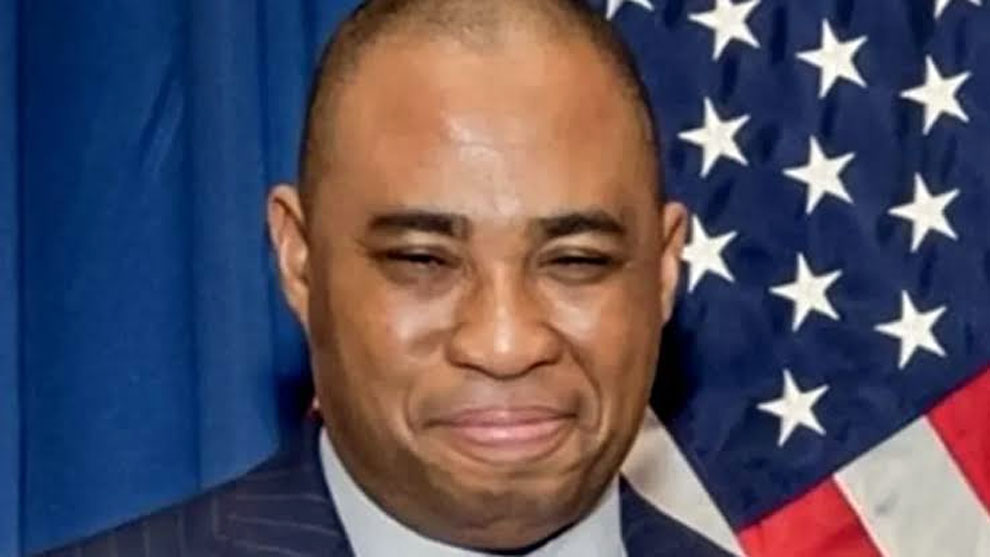
Exposed: Atiku’s $1.2m-a-Year Adviser Once Jailed in US
—Court records reveal 180-day sentence for 2003 domestic violence case as policy adviser registers under FARA for former VP
Fresh court records have linked Nigerian-born American policy adviser Karl-Marx Edward Okeke-Von Batten III to a 2003 domestic violence conviction in Washington, D.C., even as he registers as a policy adviser to former Vice President Atiku Abubakar under a $1.2 million annual agreement. Documents obtained by The Gazelle News detail a two-decade legal trail involving Okeke-Von Batten, who now operates through the lobbying firm von Batten-Montague-York, L.C., with a principal business address at 1300 Pennsylvania Avenue NW, Suite 700, Washington, D.C. The records reviewed include his 2003 assault conviction and jail term, his 2004 U.S. naturalisation, a 2006 name-change petition, a 2014 divorce proceeding in Texas, and his 2026 Foreign Agents Registration Act (FARA) filing on behalf of the former vice president.
According to court documents, Okeke-Von Batten—then identified as Karl M.E. Okeke—was involved in a domestic violence case with Cynthia D. Murphy following the start of their romantic relationship in April 2003. On July 4, 2003, Murphy attended a party at Okeke’s apartment. An argument later broke out. The court record states that Okeke burst through a bathroom door, ordered Murphy to leave, and inside the bedroom allegedly dragged her by her legs and arms, hit her repeatedly in the face, kicked her legs and buttocks, and pushed her against a wall. A police officer who observed the confrontation determined that Murphy appeared suicidal and transported her to a psychiatric emergency room and later to George Washington University Hospital. On July 7, 2003, Murphy filed a petition for a Civil Protection Order (CPO) against Okeke, resulting in a Temporary Protection Order. Okeke filed a cross-petition against her on July 15.
READ ALSO:
- Two Filipino Seafarers Killed in Strait of Hormuz Tanker Attack
- Lagos households to get 36GB monthly data as FG launches TV audience measurement
- NFF crisis: FIFA delays approval of Normalisation Committee, plans Nigeria visit
Okeke was convicted of assault on December 10, 2003, and sentenced to 180 days in jail. On January 30, 2004, the trial court entered mutual CPOs against both parties and found Murphy in criminal contempt for violating the temporary order in October 2003. She received a 30-day suspended sentence. The trial court had based the CPO against Murphy on its finding that her initial refusal to leave Okeke’s apartment amounted to unlawful entry. In explaining the decision, the trial judge criticised Murphy’s conduct, stating: “There is no doubt in my mind that if [Ms.] Murphy had behaved as a mature, rational, sober, intelligent adult, that we would not be here today.” The judge also said he believed Murphy had brought upon herself whatever happened in the apartment, while expressing sympathy over the harm she suffered.
Murphy appealed the decision to the District of Columbia Court of Appeals in case No. 04-FM-0579. The appeal was filed on May 24, 2004, before Associate Judge Blackburne-Rigsby. The matter was ultimately reversed and remanded, with the mandate issued on July 25, 2008. The Appellate Court held that unlawful entry could constitute an “offence upon a person” under the District of Columbia’s Intrafamily Offence Act because the law was intended to protect public safety as well as property. However, it ruled that the trial judge had improperly applied the law in entering the CPO against Murphy. The Appellate Court therefore reversed the order and directed the trial court to vacate it. The court upheld Murphy’s criminal contempt conviction for violating the Temporary Protection Order and remanded her request for counsel fees for reconsideration.
On March 16, 2006, Okeke filed a petition at the District of Columbia Superior Court to change his name from Karl-Marx Edward Okeke III to Karl-Marx Edward Okeke-Von Batten III. An order of publication was issued the following day, requiring publication once a week for three weeks. The case was closed on December 6, 2006, after being dismissed for want of prosecution. His certificate of naturalisation identifies him as Karl Marx Edward Okeke III, born on October 20, 1976, with Nigeria listed as his former nationality. The certificate records his naturalisation on March 14, 2004, at the U.S. District Court for the District of Columbia.
A decade later, on April 7, 2014, Karl-Marx Okeke filed for divorce against Cynthia Okeke in Harris County, Texas. The case, Cause No. 201419183, was heard by the 310th District Court, presided over by Judge Sonya L. Heath. A substituted-service order was signed on August 26, 2014, before the matter proceeded to a non-jury trial on September 24. A default judgment was signed on September 29, 2014, with the docket indicating that each party was to bear their own costs. The case is listed as finally disposed, with no appeals, transfers, post-trial writs, notices or cost statements recorded.
The FARA registration, No. 7130, lists Atiku Abubakar as the foreign principal and states that Okeke-Von Batten is to receive $1.2 million annually. It was signed by “Kare Von Batten” on April 1, 2026, and received by the National Security Division’s FARA Registration Unit the same day. The filing marked political activity as “No” and referred to an appendix for details of the services to be provided to Atiku. It also disclosed two $5,000 political contributions made by Okeke-Von Batten to the DC GOP on March 26, 2026.
The documents establish a legal record spanning more than two decades, covering Okeke-Von Batten’s 2003 domestic violence proceedings, 2004 naturalisation, 2006 name-change petition, 2014 divorce, and 2026 FARA registration as a representative of Atiku Abubakar. However, the documents reviewed do not provide details of the specific services covered by the $1.2 million annual agreement beyond referring to an appendix. They also do not establish any connection between the earlier court proceedings and his 2026 FARA registration. When contacted, neither Atiku Abubakar’s media office nor Okeke-Von Batten had responded to inquiries at the time of filing this report.
Exposed: Atiku’s $1.2m-a-Year Adviser Once Jailed in US
metro
Lagos households to get 36GB monthly data as FG launches TV audience measurement
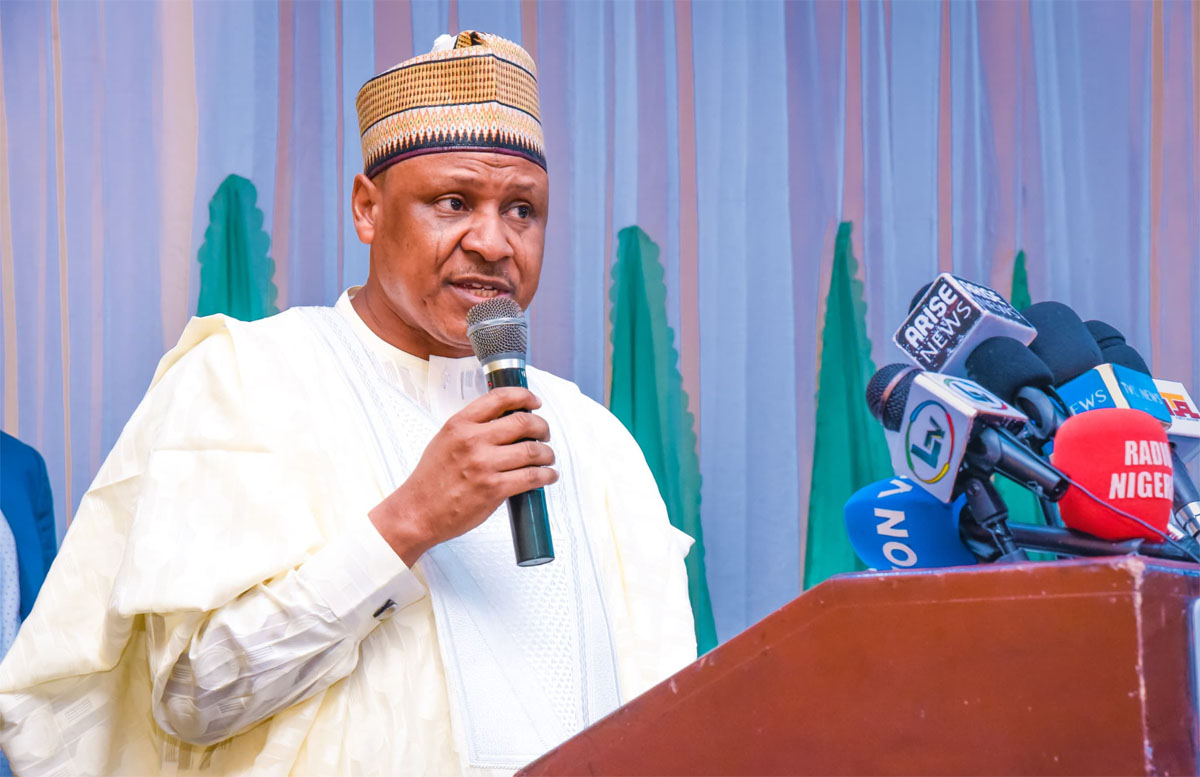
Lagos households to get 36GB monthly data as FG launches TV audience measurement
Selected households in Lagos State are set to receive 36GB of mobile data every month for participating in the Federal Government’s new Television Audience Measurement System (AMS).
The initiative marks the beginning of the first phase of Nigeria’s new national audience measurement programme, designed to provide more accurate data on television viewing habits and strengthen the country’s broadcasting and advertising industries.
The programme is being implemented by the National Broadcasting Commission (NBC) under the FreeTV brand as part of the Federal Government’s broader efforts to modernise Nigeria’s broadcasting sector and advance its Digital Switch Over (DSO) programme.
The Minister of Information and National Orientation, Mohammed Idris, represented by the Director-General of the Advertising Regulatory Council of Nigeria (ARCON), Olalekan Fadolapo, disclosed details of the initiative at a press briefing in Lagos.
Idris said a reliable TV audience measurement system would provide the data needed to improve decision-making across Nigeria’s media and creative industries.
According to the minister, credible audience data can strengthen investor confidence, support the production of quality Nigerian content and create opportunities across the media and creative economy.
He noted that the broadcasting industry extends beyond television stations, pointing to the large ecosystem of journalists, producers, filmmakers, actors, advertisers, technology providers and other professionals who depend on the sector.
The minister said the new system would help stakeholders understand who is watching, what they are watching and when they are watching, making the information valuable to broadcasters, advertisers, content producers, investors and regulators.
Unlike the traditional diary-based system, in which viewers record their own television viewing habits, the new Peoplemeter technology will automatically capture viewing information from participating households.
Selected households will have Peoplemeter devices and data-enabled routers installed in their homes.
The equipment will passively collect television viewing information and transmit the data securely to a central data centre, where it can be processed and analysed.
READ ALSO:
- NFF crisis: FIFA delays approval of Normalisation Committee, plans Nigeria visit
- Two Grandfathers Among Five Arrested Over Alleged Motorcycle Theft Syndicate in Calabar
- Mama G Advises Parents: Don’t Shield Children from Life’s Struggles
The system is expected to provide more accurate information on viewing patterns, including the programmes audiences watch and the periods during which they watch them.
Patrick Gomes, Chief Operating Officer of First Media and Entertainment Integrated Limited (FMEIL), the technical partner implementing the system, said participating households would receive 36GB of data monthly as an incentive.
The monthly data incentive is currently valued at about N11,000, according to information provided on the programme.
Gomes explained that the data is intended to support the internet and browsing needs of households participating in the audience measurement panel.
He added that the programme would also provide a quarterly incentive based on participants’ level of compliance with the requirements of the system.
Households that consistently comply with the programme’s requirements would receive higher quarterly incentives, while households with lower levels of compliance would receive a corresponding proportion of the incentive.
The Federal Government has, however, clarified that the 36GB monthly data is not a general free-data scheme for Lagos residents.
Only households selected and enrolled as part of the official audience measurement panel will qualify for the incentive.
The selection of participating households is based on the findings of Nigeria’s first nationwide Establishment Survey, which was completed in the first half of 2023.
The survey covered about 60,000 households across Nigeria’s 36 states and the Federal Capital Territory, including approximately 7,000 households in Lagos.
The survey provided the statistical foundation for identifying households that could participate in the audience measurement panel and help generate representative television viewing data.
READ ALSO:
- Atiku Vows to Scrap NELFUND, Offers Student Debt Forgiveness if elected
- Ogun Pastor Dies in Crash Hours After Allegedly Killing Wife in Domestic Dispute
- Edo Police Arrest Cleric Accused of Making ‘Protective Charms’ for Kidnap Gangs
The Lagos rollout followed technical testing and a proof-of-concept pilot conducted in selected homes.
Results from the pilot were presented to stakeholders in Abuja in the second quarter of 2024 before the programme moved towards the wider deployment phase.
Director-General of the National Broadcasting Commission, Charles Ebuebu, described the rollout as a major milestone for Nigeria’s broadcasting ecosystem.
He said the system would provide accurate and passive tracking of audience consumption patterns while addressing transparency challenges within the broadcasting and advertising markets.
The introduction of the Peoplemeter system could significantly change the way television audiences are measured in Nigeria.
For years, broadcasters and advertisers have relied on audience measurement methods that have faced concerns over accuracy, transparency and the ability to capture changing viewing habits.
The new technology is expected to provide more consistent data by capturing viewing behaviour directly rather than relying solely on participants to remember and report what they watched.
The data could have a major impact on the Nigerian advertising market, where audience figures are important in determining advertising placement, campaign reach and the value of television platforms.
Advertisers could use the information to identify programmes and channels that attract specific audiences, while broadcasters could use the data to demonstrate their reach and make better decisions about programming.
Content producers could also benefit from more reliable information about audience preferences.
By knowing which programmes and genres attract particular audiences, producers and investors could make more informed decisions about where to commit resources.
The system could consequently encourage greater investment in Nigerian content, entertainment, news, education and other forms of locally produced programming.
The Federal Government expects the programme to complement the ongoing Digital Switch Over initiative, which is aimed at transitioning Nigeria from analogue television broadcasting to digital terrestrial television.
The FreeTV platform is central to the government’s digital broadcasting strategy and is intended to provide Nigerians with access to free-to-air digital television services.
The audience measurement system is being rolled out in phases.
Following the launch in Lagos, the second phase is expected to extend the programme to Abuja, Port Harcourt and Kano, while a third phase will cover other major media markets across Nigeria’s six geopolitical zones.
The eventual objective is to establish a national television audience measurement system capable of providing reliable data across different regions and demographic groups.
The nationwide deployment is expected to give regulators, broadcasters, advertisers and investors a clearer understanding of Nigeria’s television market.
It could also provide a more transparent basis for determining advertising rates and evaluating the performance of television programmes.
Officials believe the availability of credible audience data will ultimately strengthen Nigeria’s broadcasting industry and contribute to the growth of the wider creative economy.
The initiative also reflects a broader shift towards technology-driven data collection within Nigeria’s media sector.
For participating households, the immediate benefit will be the monthly 36GB data incentive, alongside the possibility of additional quarterly incentives for consistent compliance.
For the wider industry, however, the more significant development is the transition from a traditional diary-based measurement model to an automated Peoplemeter system.
As the programme expands beyond Lagos to other major media markets, the Federal Government will be hoping that the system delivers the accurate and transparent audience data needed to improve investment, advertising, content production and regulation in Nigeria’s television industry.
The success of the programme will ultimately depend on the ability of the authorities and technical partners to maintain accurate data collection, protect participants’ privacy and ensure that the selected households remain representative of Nigeria’s diverse television audience.
If successfully implemented nationwide, the new TV audience measurement system could become an important foundation for the future of Nigeria’s broadcasting, advertising and creative industries.
Lagos households to get 36GB monthly data as FG launches TV audience measurement
-
 metro2 days ago
Lagos Govt Warns Husbands: Forcing Sex on Wife Can Lead to Life Imprisonment
-
 Education2 days ago
JAMB, WAEC introduce one-off ₦4,000 WASSCE result verification for admission seekers
-
 metro2 days ago
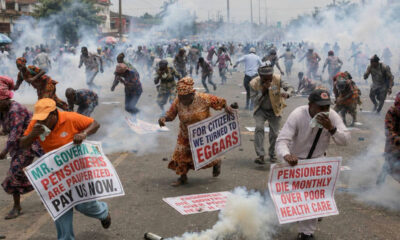
Lagos pensioners tear-gassed during protest as Sowore demands justice
-

 Politics2 days ago
Gunmen kill Kano APC chairman, two others in fresh Bebeji attack
-

 News2 days ago
Ilorin Youth Group Demands Disbandment of Iru-Ekun Over Alleged Obstruction of Tani-Olohun’s Arrest
-
 Politics2 days ago
2027: Donald Duke warns divided opposition could hand Tinubu victory
-

 Auto22 hours ago
Uber exits Nigeria after 12 years
-

 Entertainment3 days ago
“I Cursed the Pastor” — Yemi Solade Reveals Why He Quit Church 13 Years Ago