

News
Olubadan: Balogun insists Olakulehin unfit to rule
Olubadan: Balogun insists Olakulehin unfit to rule
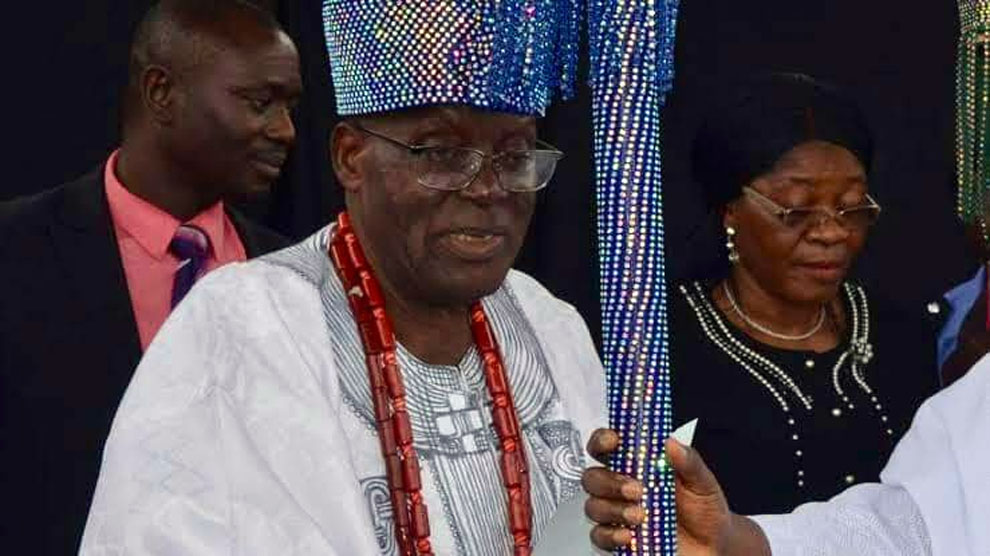
THE Otun Balogun of Ibadanland, Oba Abimbola Ajibola, on Tuesday, declared that the Olubadan-designate, Oba Owolabi Olakulehin, is still ill and not physically fit to rule at the moment.
The revered Olubadan stool became vacant on March 14 after the demise of Oba Lekan Balogun, who reigned for two years and died at the age of 81.
Oba Ajibola, who addressed newsmen at his Sanyo private residence in Ibadan on Tuesday, claimed that Olakulehin was not healthy and should not be installed as the Olubadan yet.
However, a member of the Olakulehin family, who preferred anonymity because he was not authorised by the family to officially react, countered Oba Ajibola.
He said, “There is no law that states that Baba cannot become Olubadan. Baba is old, there is no doubt about that, just as many of the kingmakers are also old.
“You were clamouring that he should present himself physically and he did. Some of the kingmakers saw him, they took photographs which you newsmen used in your papers. Is Olubadan stool for the Olympics fitness? We know the ages of those who had become Olubadan.
“What the Otun Balogun is saying has no basis. He knows he will be the direct beneficiary if Baba is disqualified. There is no reason to want someone ahead of you disqualified because you want to attain the position. We should all learn to wait for our time. God’s time is the best.”
But Oba Ajibola, while addressing journalists, said, “Why the hurry? Someone (Olakulehin) we have not seen. He has not spoken with us. He has not spoken with the Ibadan people.
“I am his second-in-command, I’m his lieutenant. He has not called me to say, ‘My Otun, I’m back. So, tell your people. And when are you seeing me?’ They are just forcing him because of their selfish interest.”
Speaking on the meeting held at the private residence of Chief Bode Amoo in the Agodi Government Reserved Area in Ibadan, on Monday, Oba Ajibola said, “They said we called a meeting and we have endorsed him (Olakulehin). I’m not part of that. I’ve told them my mind that I won’t be part of that illegality. We know Baba Olakulehin is the next Olubadan, but let us allow him to get well.
READ ALSO:
- Obasanjo calls for restructuring of Nigeria
- Lagos fire updates: NEMA confirms 2 houses collapse, 14 buildings razed
- Our medical team tried to rescue policeman who died on Abuja-Kaduna train – NRC
“Has anybody seen him since last Friday? Those who went there after Friday were unable to see him. They are forcing this man. We should allow him to get well.”
He maintained that Oba Olakulehin was packaged last Friday to deceive the people to achieve personal gains.
“You journalists too should go and interview him (Olakulehin). You should remember during the time of Oba Balogun, he was in Mapo and debunked the rumour that he was blind and deaf. Olakulehin is being packaged. He cannot recognise anybody. Where has he spoken? Who did he speak to? Even those (crowned obas) who went there just sat down.
“They didn’t say anything. We know he is our leader and they told me before visiting him last Friday but I told them Baba has not called me. I wish the best for Ibadan, but let’s follow due process. That’s what we are saying,” he insisted.
Oba Ajibola explained further that after Friday’s visit by some members of the Olubadan-in-Council, nobody had seen the Olubadan-designate.
“Those who went there, even the lawyer said they didn’t see him. So, this is not about nomination. Allow this man to get well. Let him be physically fit. No law says if you don’t nominate Oba in Ibadan before 21 days, you won’t nominate Oba again in Ibadan or that’s the end of the world.
“The governor has a say. He is the custodian of the law. He is the chief executive of this state. I’ve asked them why they are in haste. They came here and I told them, why are you rushing this man? I said the man is not okay now.”
The Otun Balogun said he would not attend any meeting called at the instance of the Olubadan-designate until Governor Seyi Makinde intervened.
“I will never attend any meeting until the governor says something on this issue. The governor has the power to appoint a physician, or medical practitioner to check the health condition of our incoming monarch before they start anything. He must be in good condition, medically fit and sound. He must be able to move around and talk to the people.
READ ALSO:
- UCL: Arsenal 2-2 Bayern: Harry Kane on target as Trossard rescues draw for Gunners
- UCL: Real Madrid, Man City settle for 3-3 draw in thrilling encounter
- Super Falcons overpower defiant S’Africa, qualify for first Olympics in 16 years
“So, the update so far now is that we have not got an Olubadan. They are just trying to wake him [Olakulehin] up. They are forcing this man. They know the man is not well. So, why are they forcing the man? I wish he could talk by himself. This is what I want from my people. Olubadan must be able to recognise his people. These are my people, he must be able to speak with his people,” Ajibola said.
The PUNCH gathered that the next-in-line of succession will nominate the Olubadan-designate at a meeting of the kingmakers, where the choice will be ratified and the name sent to the Oyo State Governor for ratification and approval.
Oba Ajibola is the next in line after Oba Olakulehin on the Balogun line.
Efforts to speak with the son of the Olubadan-designate, Sumbo Owolabi, were unsuccessful as his mobile lines were switched off.
Oba Ajibola and the Ekerin Olubadan, Oba Hamidu Ajibade, The PUNCH gathered, were conspicuously absent at the meeting held at Chief Amoo’s residence on Monday.
It will be recalled that Oba Ajibade had, while speaking to newsmen after a meeting of the kingmakers on Monday, March 25, 2024, at Mapo Hall, Ibadan, said, “I, as the Ekerin Olubadan, have not seen him. I went to his house, I didn’t see him. Many of us have been to his house. Maybe as a Yoruba man, he is getting prepared for the royal assignment somewhere. Don’t forget he is Balogun from the lineage of the warriors. It is not easy to be number one.”
Speaking further, Oba Ajibade said, “If anybody is not well or has been incapacitated in whatever form, even if you’re not from Ibadan, will you allow that person to ascend the throne? We will ensure that anybody who wants to become our Oba can walk well and can talk. He must be someone that we can discuss with.”
Section 10(2) of the Chiefs Law of Oyo State 1957, now Section 14 (2) Cap 28 Laws of Oyo State of Nigeria 2000, stated the criteria to meet for a recognised chieftaincy title to which the Olubadan of Ibadanland belongs: “No person shall be qualified to be a candidate for a recognised chieftaincy title who suffers from serious physical infirmity, or has under any law in force in Nigeria been found or declared to be a lunatic or adjudged to be of unsound mind, or has, in any part of the Commonwealth been convicted of an offence involving dishonesty and sentenced to imprisonment therefore, and has not been granted a free pardon,” the section is quoted to have said.
Olubadan: Balogun insists Olakulehin unfit to rule
PUNCH


News
Nigerian Universities Have Not Expired, Only Teaching Methods, Professor Tells Ojuolape
Nigerian Universities Have Not Expired, Only Teaching Methods, Professor Tells Ojuolape
Emeritus professor argues that outdated curriculum delivery, not university courses, is responsible for graduates’ skills gaps
A Professor Emeritus of Human Capital and Comparative Education, Olawale Adetokunbo Ajayi, has faulted the claim that most courses offered by Nigerian universities have become obsolete, arguing that the major problem lies in outdated teaching methods, inadequate practical training and poor implementation of education reforms.
Ajayi, a former Dean of the Faculty of Education, made the submission in a rejoinder to an article by Adesola Adefemi Ojuolape titled “Most Courses in Nigeria’s Universities Have Expired,” in which the writer criticised the relevance of university programmes to contemporary economic realities and employment opportunities.
While acknowledging the concerns raised by Ojuolape, the professor maintained that declaring university courses obsolete could mislead students and parents into abandoning valuable academic disciplines instead of demanding reforms that would make them more relevant to the modern economy.
He described Ojuolape’s argument as 70 per cent correct but incomplete, insisting that the distinction between an outdated course and an outdated method of teaching it was critical to the future of Nigerian higher education.
According to him, disciplines such as Philosophy, History, Sociology, Religious Studies and Literature remain relevant globally, with graduates of these programmes finding opportunities in technology, consulting, international development, research and other sectors.
“My dear Adesola, no course is inherently expired. It is the delivery that has expired,” Ajayi argued.
He cited universities such as Harvard University, the University of Oxford and the National University of Singapore as examples of institutions that continue to teach traditional academic disciplines while integrating modern analytical tools, practical applications and industry-relevant competencies into their programmes.
READ ALSO:
- Kano: Soldiers Kill Two Kidnappers, Rescue Victim, Recover ₦10m
- Oyo Baby Trafficking Scandal: Mother, Doctor Arrested Over Alleged ₦2m Sale of Infant
- Nairobi Mother Says Husband Abandoned Her During Childbirth, Paid Dowry for Another Woman
The professor argued that the same discipline could produce vastly different outcomes depending on how it was taught, the resources available to students and the opportunities provided for practical experience.
Using History as an example, he contrasted an approach centred on memorising historical dates with one that incorporates geographical information systems, digital archiving, oral history and documentary filmmaking.
He said the latter approach could equip graduates with skills applicable to cultural preservation, digital media, research and documentary production.
Ajayi also referred to Germany’s dual vocational education model, which combines classroom instruction with workplace experience, to demonstrate the importance of connecting academic learning with the demands of industry.
He maintained that Nigeria’s challenge was not necessarily a shortage of relevant courses but a failure to implement reforms designed to bridge the gap between theoretical knowledge and practical competence.
Professor acknowledges shortcomings in Nigerian universities
Despite challenging Ojuolape’s central argument, Ajayi agreed that Nigerian universities face serious problems in curriculum delivery, employability and the commercial sustainability of some academic programmes.
He criticised what he described as the continued dominance of theoretical instruction over practical learning, arguing that graduates needed more opportunities to apply classroom knowledge to real-world problems.
The professor also expressed concern about the failure of some lecturers to update their teaching materials and methods in response to technological and economic changes.
Reflecting on his years in academia, Ajayi admitted that some lecturers had continued to rely on teaching notes that were developed decades earlier.
He described such practices as a failure of the education system to prepare successive generations of students adequately for contemporary challenges.
The academic further questioned the cost structure of some university programmes, particularly where institutions charged substantial fees without providing adequate practical facilities, industry exposure or specialised learning resources.
He argued that universities must demonstrate the value they offer students rather than relying solely on the prestige of academic qualifications.
However, he cautioned against treating every humanities or social science programme as economically useless simply because it did not require expensive laboratories or specialised equipment.
Calls for universities to embrace practical training
As part of his recommendations, Ajayi urged Nigerian universities to adopt what he described as a triple-helix model that would connect classroom learning, industry and community problem-solving.
Under the proposed approach, departments would be expected to develop practical projects that allow students to apply their knowledge while addressing real-world needs.
READ ALSO:
- Akpabio Under Fire as Senators Move to Secure His Return as Senate President in 2027
- Lamine Yamal Shines as Barcelona Thrash Real Betis 5-2
- Tinubu Scraps Recruitment Waiver Requirement for Federal Universities
For instance, he suggested that Mass Communication departments could operate campus radio stations, Sociology departments could establish data centres serving local governments, while Theatre Arts departments could develop digital production studios.
He argued that such initiatives would help students acquire practical experience before graduation while creating opportunities for departments to generate revenue and serve their communities.
Ajayi maintained that universities should move beyond producing graduates who possess theoretical knowledge but struggle to demonstrate their competence in professional environments.
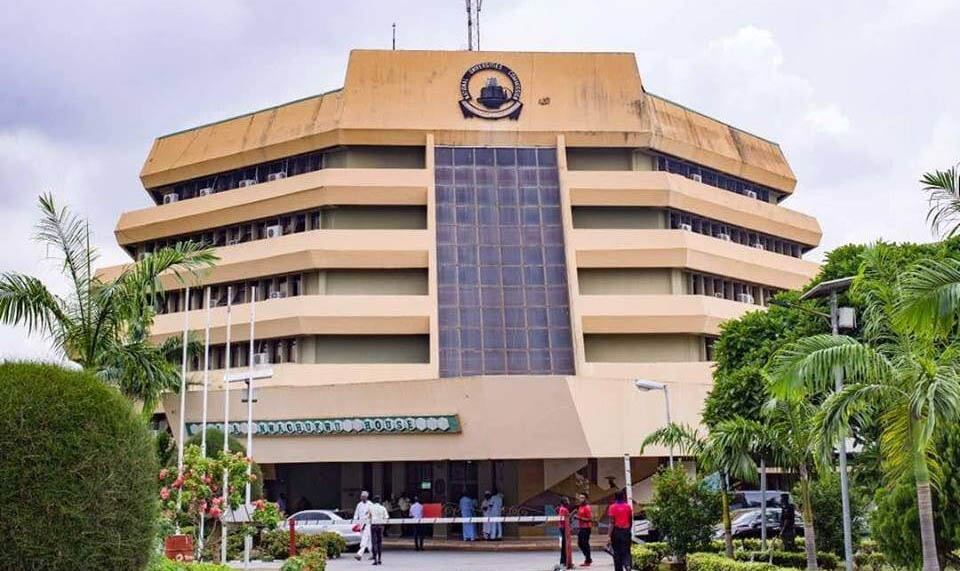
He also called for stronger implementation of the National Universities Commission’s Core Curriculum and Minimum Academic Standards, known as CCMAS, which provides a framework for undergraduate curriculum development.
According to him, the effectiveness of such reforms depends on how consistently universities translate policy provisions into actual teaching, learning and assessment practices.
Lecturers urged to update their skills
The professor also called for mandatory professional development for university lecturers, arguing that academic staff must continually update their knowledge and acquire skills relevant to changing professional environments.
He proposed that lecturers should undertake industry placements and demonstrate new competencies as part of their career development.
Ajayi argued that academic promotion should not depend exclusively on journal publications but should also recognise practical projects, professional certifications and evidence of engagement with industry.
He cited digital tools such as Turnitin, SPSS, Canva and learning management systems as examples of technologies that could support modern teaching, research and assessment.
The professor maintained that lecturers who fail to adapt risk leaving students poorly equipped for workplaces increasingly shaped by digital technology and artificial intelligence.
Students advised to combine degrees with practical skills
Ajayi advised university students against viewing academic qualifications and practical skills as competing alternatives.
Instead, he encouraged them to combine specialist knowledge in their chosen disciplines with complementary competencies that could improve their employability.
He suggested that Sociology students could pursue data analytics, History students could learn documentary filmmaking, while English graduates could develop copywriting and digital communication skills.
According to him, the approach would produce graduates with deep knowledge in one discipline and broader capabilities across other areas.
He argued that a university degree could remain valuable if students used their years of study to build both academic knowledge and demonstrable practical competence.
The professor also urged parents to look beyond course titles when selecting institutions for their children, advising them to investigate the quality of teaching, available facilities, industry partnerships and practical opportunities offered by individual universities.
He maintained that the same academic programme could produce different career outcomes depending on the quality of the institution delivering it.
Government urged to fund measurable outcomes
On government policy, Ajayi called for a funding approach that rewards universities for demonstrable results rather than relying predominantly on student enrolment figures.
He proposed that institutions and departments should be assessed on their contributions to innovation, entrepreneurship and the resolution of community problems.
He argued that higher education funding should support practical learning facilities, research infrastructure and programmes that connect universities with industry.
The professor also identified an opportunity for Ojuolape’s intervention to stimulate a broader national debate on graduate employability and curriculum reform.
He suggested that universities should publish employment outcomes for their graduates and that relevant agencies should strengthen monitoring of academic standards and practical training.
Such measures, he argued, would help parents, prospective students and policymakers make better-informed decisions about university education.
Warns against abandoning humanities
Ajayi cautioned that interpreting Ojuolape’s article as a call to abandon traditional academic disciplines could have unintended consequences.
He argued that technical competence without critical thinking, historical awareness, ethical judgement and communication skills could leave graduates ill-equipped to contribute responsibly to society.
He warned against creating an education system in which students from less privileged backgrounds were channelled towards basic vocational occupations while children from wealthier families retained access to advanced academic and technological opportunities.
According to him, vocational and technical education deserve respect, but they should complement rather than replace a broad and balanced education system.
“Skills without citizenship breeds skilled criminals,” he argued, stressing the importance of combining professional competence with ethical and civic responsibility.
He urged policymakers to pursue reforms that give students access to both academic knowledge and practical skills, irrespective of their social or economic backgrounds.
Concluding his rejoinder, Ajayi commended Ojuolape for drawing attention to the problems facing Nigerian universities but urged him to distinguish between the failure of an education system and the value of education itself.
“We built this system. We must reform it, not burn it,” he said.
He added that the goal should be to produce graduates who can combine education with practical competence to lead, innovate and contribute to national development.
The rejoinder therefore shifts the debate from whether university courses should be scrapped to how Nigerian institutions can improve teaching quality, strengthen practical training and ensure that graduates possess skills relevant to the changing economy.
Editorial note: The statistics and international comparisons cited in the original rejoinder have been attributed to its author and have not been independently verified for this report.
Nigerian Universities Have Not Expired, Only Teaching Methods, Professor Tells Ojuolape
News
Akpabio Under Fire as Senators Move to Secure His Return as Senate President in 2027
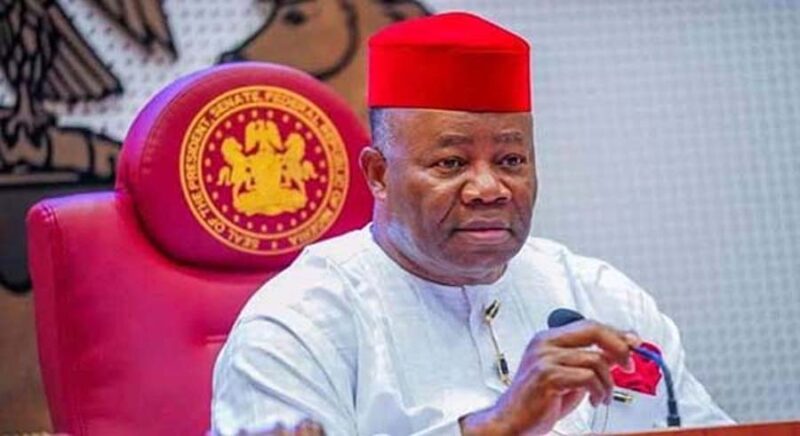
Senate President Godswill Akpabio is facing growing criticism over efforts to secure another term in office, following a controversial move by the current Senate to endorse the return of its leadership in the 11th National Assembly.
The controversy erupted after senators declared that there was “no vacancy” in the Senate presidency, a position critics have described as undemocratic and an attempt to influence the leadership of a future legislature before Nigerians elect a new National Assembly.
The development has intensified political discussions ahead of the 2027 general elections, with questions being raised about the independence of the legislature, the authority of incoming senators and the growing contest for control of the Senate.
At its sitting on Thursday, October 15, 2026, the Senate backed Akpabio’s return as Senate President in the next National Assembly, which is expected to be inaugurated in June 2027.
The motion was moved by Senate Chief Whip Tahir Monguno and seconded by Senator Cyril Fasuyi. It received majority support through a voice vote.
The resolution also endorsed Deputy Senate President Barau Jibrin and other principal officers for another term, subject to their re-election into the Senate.
However, the move has drawn objections from critics who argue that the leadership of the 11th Senate should be determined by the lawmakers elected into the chamber, rather than through a resolution adopted by the outgoing Senate.
READ ALSO:
- Lamine Yamal Shines as Barcelona Thrash Real Betis 5-2
- Tinubu Scraps Recruitment Waiver Requirement for Federal Universities
- FG Begins Rollout of 3,700 Telecom Towers to Connect 20m Nigerians
One of the critics, identified as Epelle in reports, described the move as an affront to democratic principles, arguing that the Senate presidency was not a hereditary position that could be reserved for an incumbent.
Epelle maintained that the office must be contested and decided by senators in accordance with the rules and democratic procedures governing the National Assembly.
The Legislative Advocacy Network (LAN) has also opposed the move. Its coordinator, Benjamin Joseph, argued that the leadership of the next National Assembly should emerge from considerations such as legislative performance, institutional independence and public confidence, rather than political loyalty or the desire to retain existing officeholders.
The criticism centres on whether the current Senate can legitimately declare its leadership positions effectively reserved before the next general election and the inauguration of a new legislature.
Although the resolution signals support for Akpabio within the current Senate, it does not automatically guarantee his return. The next Senate will have its own membership, and its elected members will determine who occupies the offices of Senate President and Deputy Senate President.
Akpabio has meanwhile stepped up efforts to secure political backing for his second-term ambition. At the inauguration of the APC Presidential Campaign Council, he appealed to President Bola Ahmed Tinubu to support his bid to return as Senate President in 2027.
His appeal has added another dimension to the debate over the influence of the Presidency and the ruling All Progressives Congress (APC) in determining the leadership of the National Assembly.
Akpabio has also warned governors against seeking other political offices while still occupying their current positions. The remarks were widely interpreted as a warning directed at Imo State Governor Hope Uzodimma, who is seeking election to represent Imo West Senatorial District in 2027.
Uzodimma’s senatorial ambition has fuelled speculation about a possible contest for the Senate presidency if he wins a seat in the next National Assembly. Reports have also highlighted opposition from Federal Capital Territory Minister Nyesom Wike, who has said he would not support Uzodimma’s reported ambition to lead the Senate.
The emerging rivalry underscores the political calculations surrounding the next Senate leadership, particularly within the APC, where support from party leaders and influential political figures could shape negotiations but cannot replace the formal choice of senators.
For Akpabio, securing another term will depend not only on his political alliances but also on winning re-election to the Senate and obtaining the support of enough senators-elect when the 11th National Assembly convenes.
The backlash over the “no vacancy” resolution has therefore placed the question of Senate leadership in 2027 at the centre of a wider debate about legislative independence, internal democracy and the right of a new parliament to choose its own presiding officers.
As the election approaches, the contest is likely to intensify, with Akpabio’s supporters seeking to consolidate their position and critics insisting that the next Senate presidency must be decided by the lawmakers elected to serve in the 11th National Assembly.
Akpabio Under Fire as Senators Move to Secure His Return as Senate President in 2027
News
2027: ADC Faction Disowns Atiku, Rejects G-100 Alliance Amid Party Crisis
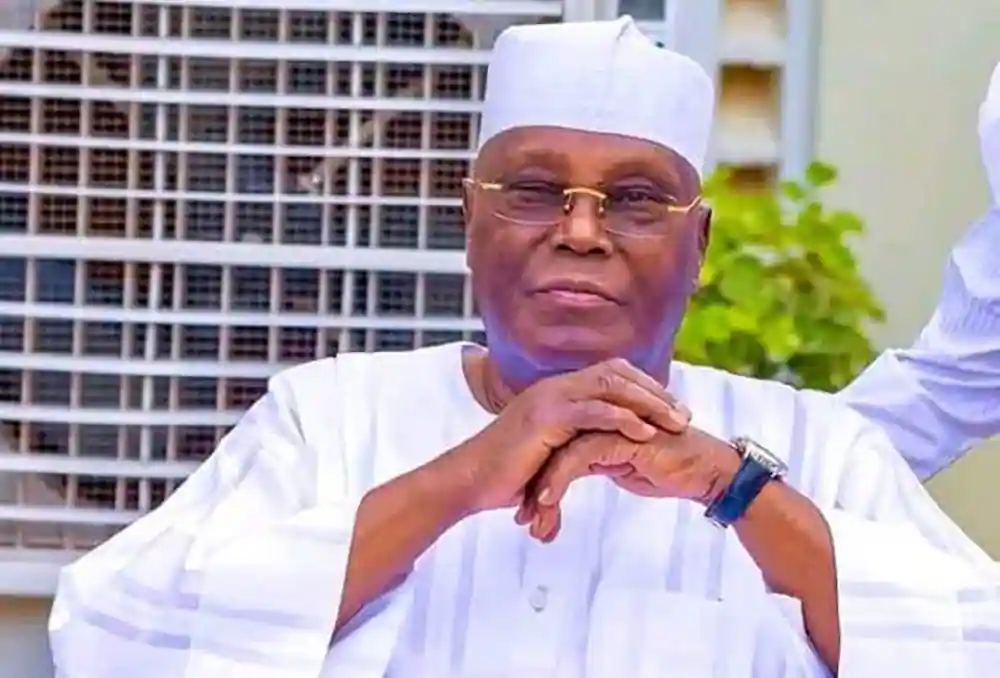
ABUJA — A fresh leadership dispute has emerged within the African Democratic Congress (ADC) after a faction led by Nafiu Bala Gombe disowned former Vice-President Atiku Abubakar as its presidential candidate for the 2027 general elections and rejected any alliance with the G-100 opposition coalition.
The faction insisted that it would not allow its political platform to be used to advance arrangements it had not authorised, warning Atiku and individuals associated with the G-100 against presenting him as its flagbearer.
In a statement, Gombe accused some elements within the G-100 coalition and Atiku of allegedly attempting to pressure the faction into a political alliance or merger ahead of the elections.
He maintained that the faction would protect the party’s identity, organisational structure and political independence rather than surrender its platform to the ambitions of individual politicians.
“The African Democratic Congress is NOT, and will NOT, be in any alliance, merger, or coalition with any political party ahead of the 2027 general elections,” the faction declared.
Gombe also issued a direct warning to Atiku, urging the former vice-president to stop presenting himself as the faction’s presidential candidate or speaking on its behalf.
The development comes amid continuing divisions over the leadership and direction of the ADC as opposition politicians explore ways to challenge the ruling All Progressives Congress (APC) in 2027.
READ ALSO:
- Omoda, Jaecoo Storm Europe as Global Sales Surge 123% to 73,421
- 16-Year-Old Girl Recounts Horror of Hookup Encounter, Says Man Threatened Her With Knife, Acid
- Ex-Super Eagles Coach Westerhof Battles Colon Cancer in Critical Condition, Wife Seeks Help
The G-100 initiative has been involved in discussions aimed at improving cooperation among opposition forces, including proposals for a common platform or a single presidential candidate capable of mounting a stronger challenge to the ruling party.
However, the discussions have encountered resistance from political figures unwilling to abandon their presidential ambitions in favour of a consensus candidate.
Atiku’s position within the ADC has also become a point of contention between rival factions. While the Gombe-led group rejects his candidacy, the faction led by former Senate President David Mark has recognised him as its presidential candidate.
The ADC’s publicly available announcements previously stated that Atiku won its presidential primary and that his name, alongside that of former Rivers State governor Rotimi Amaechi as running mate, was submitted to the Independent National Electoral Commission (INEC).
The competing claims underscore the importance of distinguishing the Gombe faction’s position from that of the rival ADC leadership. The latest statement does not, by itself, establish that the entire party has withdrawn its endorsement of Atiku.
Meanwhile, the ADC’s National Publicity Secretary, Bolaji Abdullahi, said the party’s discussions facilitated by the G-100 were focused on electoral cooperation rather than necessarily producing a single presidential candidate.
The clarification highlights the differences between efforts to coordinate opposition parties and proposals requiring individual candidates to withdraw from the presidential race.
For Atiku, who is seeking another opportunity to contest Nigeria’s highest political office, the controversy presents an additional challenge as opposition groups negotiate their strategies ahead of the 2027 elections.
The dispute also raises questions about the ADC’s ability to maintain unity while managing rival leadership claims, coalition negotiations and competing political interests.
With the election approaching, the resolution of the party’s internal disagreements could prove significant to its preparations and its prospects of presenting a united opposition front.
For now, the Gombe-led faction has maintained that it will pursue its political objectives independently and will not accept an alliance or candidate arrangement it considers unauthorised.
2027: ADC Faction Disowns Atiku, Rejects G-100 Alliance Amid Party Crisis
-

 metro3 days ago
₦130m Toyota Tundra Wrecked: Lagos Dealer Questions Police Over Suspect’s Release
-

 News3 days ago
₦200m Fake Alcohol Packaging Uncovered as NAFDAC Raids Aba Market
-
 metro2 days ago
Suspended Archbishop Ibezim Drags Anglican Primate to Court, Challenges Six-Month Leave
-
 Sports2 days ago
Real Madrid Demand Tebas’ Exit After Explosive Nazi Propaganda Row
-
 Entertainment2 days ago
ToluwaniSings’ Final Hours: Aide Reveals Desperate Search Across 8 Hospitals
-
 Education3 days ago
Nigerian Universities Producing Certificate Holders, Not Problem-Solvers, Says Ojuolape
-

 metro2 days ago
Imodi-Ijebu Muslim Community Bets on 20 Chiefs to Drive Education, Economic Growth
-
 Politics2 days ago
2027: Kwankwaso Signals Fuel Subsidy Comeback as NDC Vows to Crash Petrol Prices