

metro
Ex-Konga boss Nick Imudia didn’t commit suicide – Family

Ex-Konga boss Nick Imudia didn’t commit suicide – Family
The family of the late former Chief Executive of e-commerce giant, Konga, Nick Imudia, has challenged reports claiming he died by suicide.
According to the Family, investigationweare still ongoing on the cause of his death as suicide had been ruled out.
Leadership reports that debunking news reports that Imudia had called his brother and daughter with instructions before his death, the family, in a statement signed by Dr. Anthony N. Imudia, said reportage of the news of the one-time Konga CEO’s death whilst the family was in the hospital trying to resuscitate him was suspicious.
“The family of Nick Imudia is unhappy with the unprofessional manner the media has wrongly characterised the reporting of Nick Imudia’s death as suicide. This is also supported by the Lagos State Commissioner of Police’s office that has vowed to investigate the sudden death of Nick. Neither did Nick call his brother in America with instructions on how to distribute his wealth, nor placed a call to his daughter with any instructions.
How come the news was reported so hastilly (less than 3 hours from his death) before his family members even knew about it and the medical team was still trying to resuscitate him at the hospital! The Imudia family wonders!”
READ ALSO:
Stating that the former Konga CEO comes from a close-knit family where support abounds, the family added
“Nick never showed any sign of stress and he was not diagnosed as depressed at any point. The thought of suicide in the manner portrayed and hastilly reported by the news media is suspect. Nick Imudia, until his death was the Group CEO of D.light International with Headquarters in Nairobi, Kenya, where he was residing. He managed the company’s worldwide operations from Nairobi. Nick was full of life and people that worked closely with him or met him in the last hours prior to the incident surrounding his death were shocked with the media attributing his death to ‘suicide’.
He was on a short visit to Lagos after a brief trip to the Netherlands and was to return to Nairobi a day after his sudden death. Nick made his initial career mark with Nokia, the Finnish based Telecommunication Company before he was transferred from Helsinki to manage Nokia Asia operations in Singapore.
Later in his career with Nokia, he was appointed as the Managing Director of Nokia – West and Central Africa. When Microsoft bought Nokia, he opted to leave the company. Looking for a new challenge, he became the CEO of Konga Nigeria where he reengineered the company’s operation.
At his prime age and the level of his achievements, people who knew Nick well are all shocked and do not accept the characterization of his death as suicide. Members of Nick’s family do request the media and the general public to allow them to grief their loved one without any unfounded rumour of the circumstances surrounding his death.”
Ex-Konga boss Nick Imudia didn’t commit suicide – Family











metro
Oyo Police Arrest Three After Viral Assault on Nigerian Truck Drivers
Oyo Police Arrest Three After Viral Assault on Nigerian Truck Drivers
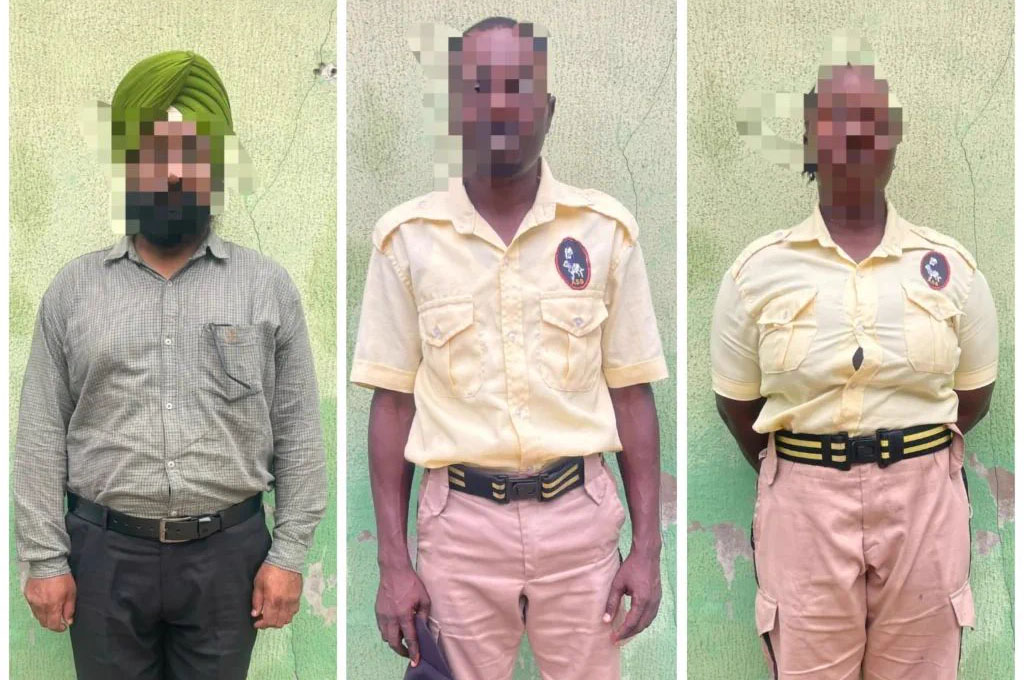
The Oyo State Police Command has arrested three suspects, including an Indian national and two security operatives, over the alleged assault of two Nigerian truck drivers at the premises of Karma Agric Feeds and Foods Limited in Ibadan.
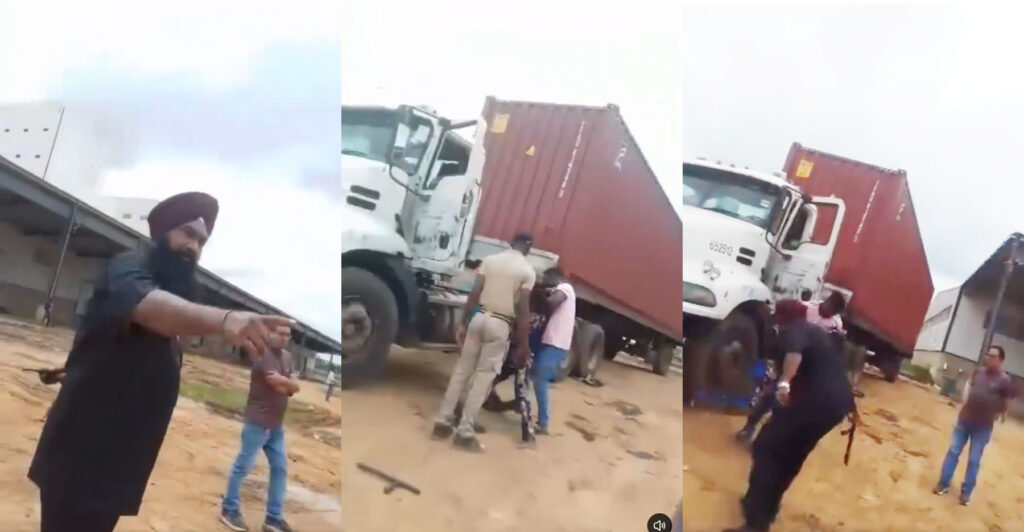
The arrests followed widespread public outrage over a viral video showing the drivers being beaten during a confrontation at the company’s facility along the Lagos-Ibadan Expressway.
The suspects were identified as Harjit Singh, 46, an Indian national associated with the company, and two security operatives attached to the facility, Olowu Oluwadamilare and Sodeke Olamide.
The police said Commissioner of Police Abimbola Ayodeji Olugbenga directed detectives to identify and apprehend those involved after the command became aware of the video at about 8:30 a.m. on Tuesday, October 13.
In a statement issued by the Police Public Relations Officer, DSP Ayanlade Olayinka, the command said preliminary investigations indicated that the confrontation stemmed from a disagreement over where a truck delivering goods to the company should be parked.
According to the police account, the dispute began on Saturday when the truck driver reportedly objected to a designated parking space because he feared it could damage the vehicle’s tyres.
The truck owner, Akinpelu Sarafa, 47, reportedly told investigators that the driver was compelled to park in the designated area, after which one of the tyres burst.
The disagreement allegedly escalated when the driver requested a replacement tyre but the company declined.
READ ALSO:
- 2027 Elections: INEC Reveals Why Pantami, Adebutu, Others Were Excluded
- IPOB Denies Monday Sit-at-Home Return, Challenges Police to Produce Evidence
- FG Moves to Expand CNG Vehicle Production, Targets Cheaper Transport Fares
The driver subsequently used the truck to block the company’s entrance, triggering a physical confrontation involving the drivers, security operatives and the Indian national, according to the police.
The confrontation was captured in a video that circulated widely on social media, attracting condemnation from Nigerians who called for the arrest and prosecution of those responsible.
The footage appeared to show a man striking one of the drivers with a stick while other individuals restrained and kicked another man who was on the ground. Some people at the scene were also heard demanding the truck keys.
The video prompted renewed calls for authorities to protect Nigerian workers from violence and ensure that commercial disagreements are resolved through lawful means.
The two drivers were subsequently identified as Ridwan Olajide, 34, and Taiwo Yinusa, 37. Both were admitted to a hospital in the Academy area of Ibadan for medical attention.
According to the police, the investigating officer visited the hospital and obtained statements from the victims as part of efforts to establish the circumstances surrounding the incident.
VIDEO: Outrage as Indian National Assaults Nigerian Truck Drivers in Lagos
The command said the three suspects had been arrested while investigations continued to determine their individual roles in the alleged assault and establish the culpability of everyone involved.
The case has been transferred to the Special Enquiry Bureau at Eleyele, Ibadan, for further investigation and necessary action in accordance with the law.
The police also urged members of the public to remain calm and allow investigators to complete their work, assuring residents that anyone found culpable would be dealt with under the law.
The incident has generated broader concerns about the safety and treatment of truck drivers and other transport workers, whose services are essential to moving goods between factories, warehouses, markets and distribution centres.
Commercial disputes involving damaged vehicles, loading delays, parking arrangements and compensation claims can create tensions between drivers and businesses. However, such disagreements do not justify physical violence, and the police investigation is expected to establish how the confrontation escalated and who was responsible.
The Association of Maritime Truck Owners has also condemned the reported assault and called for accountability, stressing that disputes involving truck operators should be handled through lawful and peaceful channels.
The latest arrests mark a significant development in the case following the public reaction to the viral footage and calls for an investigation.
While the arrests represent an important step in establishing the facts, the suspects have not been convicted of any offence. The police said investigations were ongoing, with further action to be taken in accordance with the law.
The Oyo State Police Command reiterated its commitment to protecting lives and property and ensuring that the law applies equally to individuals and organisations.
Members of the public with relevant information about the incident can contact the Oyo State Call Response Centre on its toll-free line, 615, or the police command control room on 08081768614 and 07055495413.
Oyo Police Arrest Three After Viral Assault on Nigerian Truck Drivers
metro
IPOB Denies Monday Sit-at-Home Return, Challenges Police to Produce Evidence
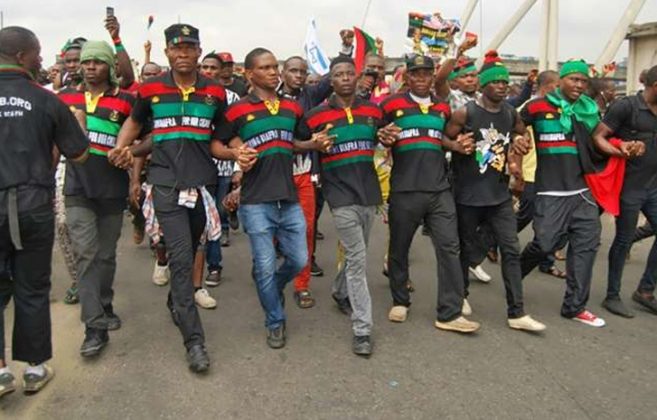
The Indigenous People of Biafra (IPOB) has denied plans to resume enforcement of the Monday sit-at-home order across Nigeria’s South-East, describing reports of a planned return as false and challenging the police to provide evidence to support the allegations.
The group’s spokesperson and Media and Publicity Secretary, Emma Powerful, made the clarification in a statement issued on Monday, October 12, 2026, following reports of a purported police intelligence document alleging that IPOB and its security wing, the Eastern Security Network (ESN), planned to resume enforcing the order from that date.
Powerful rejected the allegations contained in the purported intelligence report, which was reportedly dated October 9 and attributed to the Deputy Inspector-General of Police in charge of the Force Intelligence Department.
He described the document as fabricated and accused the Nigeria Police Force of working with politicians and former members of IPOB’s disbanded Directorate of State to circulate what he called misleading information about the group.
“There is no voice note. There is no order from IPOB or ESN to resume any sit-at-home. There is no plan by this movement to enforce anything on the people of the South-East or Imo State,” Powerful said.
He maintained that IPOB’s stated objective remained the pursuit of Biafran self-determination through what the group described as peaceful and lawful means.
READ ALSO:
- FG Moves to Expand CNG Vehicle Production, Targets Cheaper Transport Fares
- 2027: Adeleke’s Camp Promises 1.5 Million Votes for Tinubu in Osun
- APC Expands Tinubu’s Campaign Council, Names Wike, Adeleke, Soludo
The spokesperson also challenged the police to produce verifiable evidence supporting the allegations, including the original recording of the purported message, its source and the basis for linking it to IPOB or ESN.
The group further alleged that the circulation of the report, alongside claims about an anonymous voice recording and the withdrawal or redeployment of security personnel in parts of the South-East, could create an atmosphere of fear and insecurity.
Powerful urged the Federal Government to focus on addressing economic hardship, unemployment and insecurity rather than spreading what the group described as propaganda. He also reiterated IPOB’s demand for the release of its leader, Nnamdi Kanu, whose continued detention the group disputes.
The reported intelligence document and the allegations surrounding it had raised concerns about the possible return of Monday shutdowns, which have disrupted commercial activities, education and transportation in parts of the South-East in recent years.
IPOB announced the cancellation of the Monday sit-at-home directive in February 2026, following a directive attributed to Kanu. The group called on residents to reopen markets, return to work and send children to school without fear.
However, the practice has remained a source of concern in some communities, where fear of attacks and threats by armed individuals has continued to affect economic and social activities.
The latest denial comes amid efforts by state governments and community leaders to restore normal activities on Mondays. Authorities in the region have repeatedly urged residents and business owners to resume their daily routines while calling for improved security.
As of the publication of this report, the police response to IPOB’s latest challenge and the authenticity of the purported intelligence document had not been independently established.
Residents are therefore advised to rely on verified announcements from relevant authorities rather than unconfirmed messages circulating on social media.
IPOB Denies Monday Sit-at-Home Return, Challenges Police to Produce Evidence
metro
Five Injured as 40-Foot Truck Rams Two Buses on Lagos-Ibadan Expressway
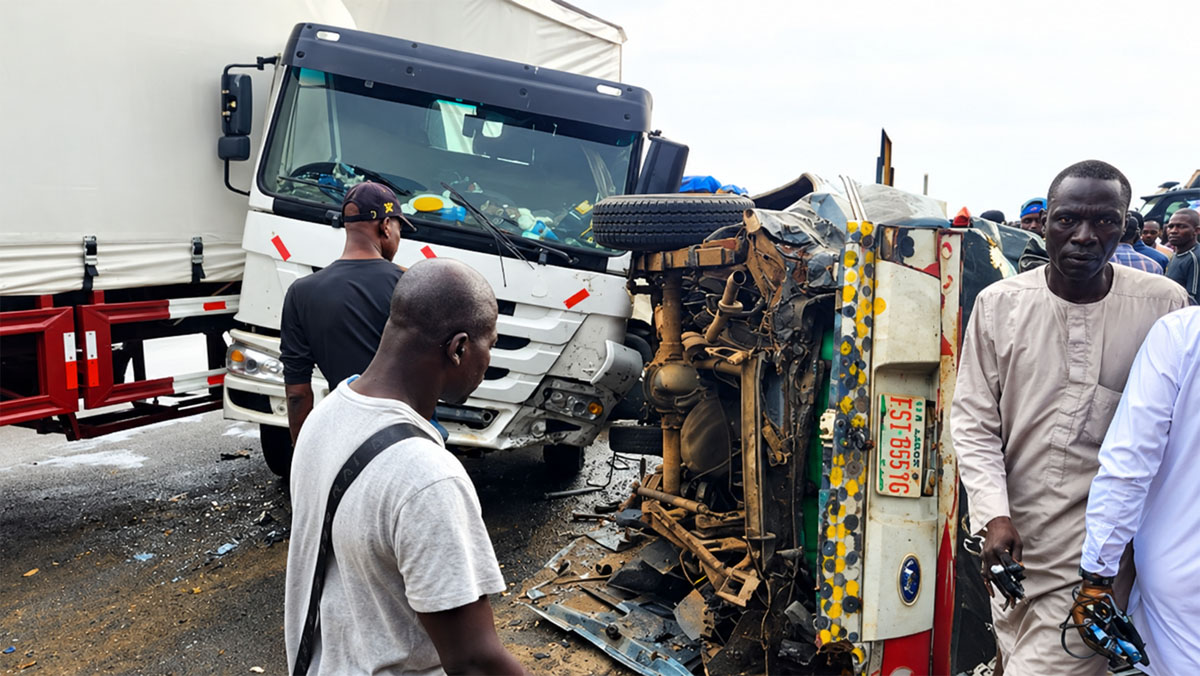
Five Injured as 40-Foot Truck Rams Two Buses on Lagos-Ibadan Expressway
Five people have sustained serious injuries after a 40-foot truck crashed into two commercial buses around Ojodu-Berger on the Lagos-Ibadan Expressway in Lagos State.
The accident reportedly occurred at about 1:45 p.m. on Tuesday, October 13, 2026, near the Berger Pedestrian Bridge, inward Kara Bridge, causing significant traffic congestion along the busy highway.
The Lagos State Traffic Management Authority (LASTMA) said the truck, identified as a 40-foot HOWO vehicle, collided with an interstate commercial Mazda bus and a Toyota Hiace bus, both carrying passengers.
According to the agency, its operatives stationed around the Ojodu-Berger axis responded to the crash and rescued five seriously injured people, comprising three women and two men, including a driver.
The victims were taken to the Lagos State Emergency and Trauma Centre at Toll Gate for medical assessment and treatment. Motorists assisted in transporting the injured, accompanied by LASTMA officials, while police officers from the Isheri Division also supported the rescue operation.
READ ALSO:
- 2027: Tompolo Unveils 57 Tinubu Campaign Vehicles, Warns Lagosians Against 2023 Repeat
- Shell Exits Nigeria’s Gas Distribution Business, Sells Stake to Vaaris Energy
- Delta Tragedy: Man Allegedly Kills Wife, Dies by Suicide After Land Dispute
The collision triggered a traffic backlog extending towards Otedola Bridge, disrupting movement along the expressway, which connects Lagos with Ogun State and other parts of the South-West.
LASTMA officials managed traffic around the affected area and worked to remove the damaged vehicles from the carriageway to prevent further incidents and restore normal movement.
The vehicles involved, including the truck, were subsequently handed over to the police for investigation into the circumstances surrounding the crash. The precise cause of the collision had not been established in the available reports.
LASTMA urged operators of heavy-duty vehicles to ensure their trucks were properly maintained and roadworthy before travelling. The agency also advised drivers to observe speed limits, comply with traffic regulations and follow instructions from traffic officials, particularly along busy highways.
The incident adds to a series of serious road crashes involving heavy-duty vehicles reported on Lagos roads in recent weeks, renewing concerns about vehicle safety and the risks posed by collisions involving trucks and passenger buses.
Motorists travelling through Ojodu-Berger, Kara Bridge and the Otedola axis were advised to exercise caution and anticipate delays while traffic officials managed the aftermath of the crash.
Five Injured as 40-Foot Truck Rams Two Buses on Lagos-Ibadan Expressway
-

 metro2 days ago
₦8.7bn Erosion-Control Budget Gap Raises Questions as Anambra Gullies Expand
-
 Politics2 days ago
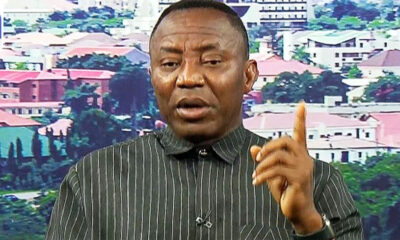
Obi Positioning for SGF Role Under Atiku’s ADC Ticket – Sowore
-
 International3 days ago
US Names 24 More Nigerians in Fresh Fraud, Money Laundering Crackdown
-

 metro2 days ago
How Bandits Demand ₦300m Ransom for Abducted Kaduna Couple, Baby in Viral Video
-
 metro2 days ago
Child Soldiers, Baby Factories: US Raises Alarm Over Official Complicity in Nigeria
-

 Politics2 days ago
Okonkwo Alleges Return of Subsidy, Accuses NNPC of Plotting Trillions in ‘Lost Profit’
-

 metro2 days ago
2027 Elections: Atiku Demands Names of INEC Ballot Printers, Questions Secret Contracts
-

 Africa3 days ago
Djibouti Boat Disaster: 139 Migrants Dead, Dozens Missing