

Aviation
Customs ground bank’s jet over unpaid import duty
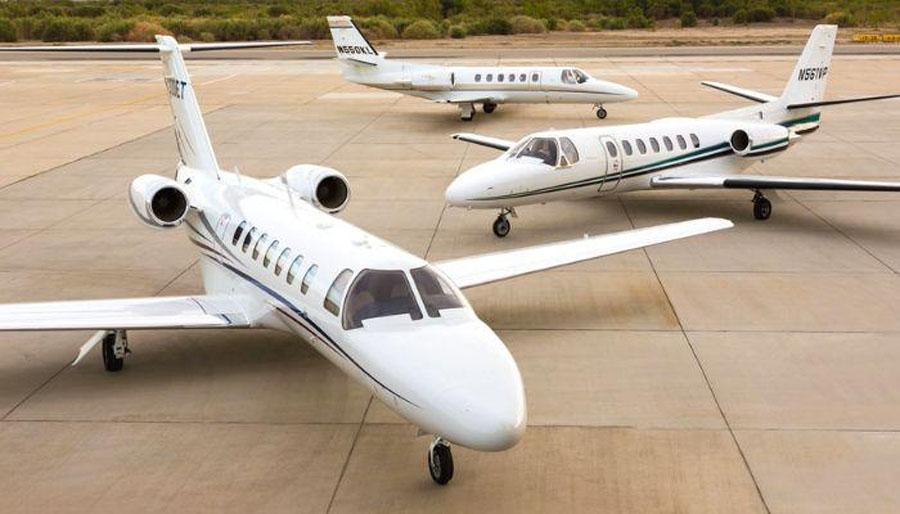
Customs ground bank’s jet over unpaid import duty
The Nigeria Customs Service has grounded a United States-registered Gulfstream G650ER jet belonging to a leading Nigerian bank over unpaid import duty.
This, according to a PUNCH report signalled the commencement of government’s clampdown on owners of private jets over unpaid import duty running into billions of naira.
The development came barely two weeks after the NCS began a one-month verification of private jet owners in the country.
The exercise, which began on June 19, 2024, is expected to end on July 19, 2024.
In a public notice by the Customs, the exercise aims to identify private jet operators that have illegally imported aircraft into the country without paying the necessary import duties.
The customs had recovered about N2bn into the government coffers when a similar exercise was carried out in 2019.
At least 80 private jet owners are expected to present their import documents and aircraft certificate of registration to the Customs in Abuja during the one-month exercise.
Although the grounding of private jets which fail to pay the necessary import duty is expected to begin after the one-month Customs verification exercise, findings showed that moves by some operators to export their aircraft might have forced the NCS to begin the clampdowns on some private jet operators.
The Nigeria Customs Service had last week said some operators of foreign registered private jets were temporarily flying their aircraft out of the country apparently in a bid to evade the exercise.
However, findings by The PUNCH on Sunday disclosed that a luxury Gulfstream G650ER plane belonging to a tier-1 bank had been grounded at Lagos airport over unpaid import duties reportedly estimated at N1.9bn.
READ ALSO:
- Ex-Konga boss Nick Imudia didn’t commit suicide – Family
- Four terrorists killed, one surrenders weapons to military in Borno
- Katsina gov queries district heads who shunned Sallah celebration
It was learnt that the NCS had written the Nigerian Civil Aviation Authority and the Nigerian Airspace Management Agency asking them to cancel the flight clearance approval given to the private aircraft.
Our correspondent gathered that the agencies had received the letters to distrain the US-registered Gulfstream G650ER with registration number N331AB and manufacturer’s serial number 6487.
The bank is reportedly owing about N1.9bn in unpaid import duties to the government on two formerly owned private jets (Gulfstream G450 and Gulfstream G550 aircraft), which according to sources have since been taken out of the country.
It was also understood that the assessment of N1.9bn was based on a verification exercise carried out by the NCS in 2021.
It was learnt that going by the current exchange rate, the N1.9bn might be raised to about N6bn. Aircraft import duties are computed based on prevailing exchange rate.
NCAA and NAMA officials said they had received the cancellation of the previously granted flight clearance approval for the Gulfstream G650ER aircraft.
According to the letter, the luxury aircraft which cost over $65m, was found to have contravened the Federal Government’s import duty regulations and as such denied the necessary Export Permit by the Customs Service Area Command at the Murtala Muhammed Airport, Lagos.
A copy of the letter written to the NCAA and NAMA, which was sighted by one of our correspondents, was titled “Re: cancellation of flight clearance approval for Gulfstream G650ER with registration N331AB and manufacturer’s serial number 6487.”
The letter read in part, “The above subject matter refers. The Nigeria Customs in its drive for enhanced revenue collection decided to do a verification exercise on private airlines operating in Nigeria.
“The verification aims to identify privately owned aircraft that were inappropriately imported into the country. This will enable the Service to perfect these Imports and collect revenue accruable to the Federal Government.
“The above-cited aircraft has been found to have contravened the Federal Government’s import duty regulations and as such denied Export Permit by the Customs Service (MMIA Command).
“In furtherance to the above, we are soliciting your kind co-operation and assistance to deny flight clearance approval”
The Comptroller General, NCS, Adewale Adeniyi, had two weeks ago said a good number of private jets were leaving the country as the verification began.
Adeniyi, who disclosed this while speaking in an interview with Arise Television, stated that since the exercise started, only a few owners have shown up.
“Very few of them (private jet operators) have showed up for verification and we gather intelligence that a good number of them are leaving Nigeria since the announcement was given because they would not want to be verified,” he said.
The CGC explained that the service introduced the private jet verification exercise because more private jets were operating outside the ambits of the law.
“We have seen so many of these aircraft flying and our record tends to show that only a few of them have shown up to pay duty and this is why we are bringing this verification up,” he said.
The CGC disclosed that data obtained from the Nigerian Civil Aviation Authority revealed that though many private jets were operating in the country, only a few had paid customs duties.
Adeniyi explained that when the exercise started sometime in 2019, the service realised N2bn.
“Recall this was not the first time we did it. We did something close to this in 2019 and the exercise fetched us as much as N2bn within the short time that we did it.
“We discovered that there are more private jets that are operating in Nigeria but have not been brought under the ambit of the law. So the data that we got from the NCAA shows that only very few of them paid customs duty to operate in Nigeria,” he stated.
According to the customs boss, the international aviation regulations show that private jets flying in the country are obliged to pay duty.
“If they are here for a brief period in the Nigerian airspace and return, they are not obliged to pay any duty; that is, if they are here on a temporary importation visit. But once they are here and are used within Nigeria, they are liable to pay duty,”
The CGC reiterated that the verification exercise was meant to confirm “aircraft operating within the ambit of the law and those that are operating outside the law.”
READ ALSO:
- Bandits abduct traditional ruler, others in Kaduna
- Toyota Nigeria delights customers at maiden Toyota Motor Show (with photos)
- How I killed UNIBEN graduate, eight others – Suspect
According to a Customs notice, private aircraft owners are expected to bring some documents for the verification exercise, namely aircraft Certificate of Registration, Nigerian Civil Aviation Authority’s Flight Operation Compliance Certificate, NCAA’s Maintenance Compliance Certificate, NCAA’s Permit for Non-Commercial Flights, and Temporary Import Permit (if applicable).
The latest clampdowns on operators of improperly imported private jets came more than one year after the Federal Government suspended the action.
In the past three years, the government had planned to recover import duty running into billions of naira from some private jet operators who had used certain technical loopholes to evade the payment of import duty.
A few private jet owners paid the mandatory import duty after the Hameed Ali-led NCS took some significant steps to recover the revenue. However, several owners and operators of private jets in the country have yet to pay the statutory duty.
Many private aircraft operators in the country have allegedly explored technical loopholes in the regulation to fraudulently obtain a Temporary Import Permit from the Nigeria Customs Service instead of paying the statutory import duty on their imported aircraft.
The TIP, which is valid for an initial period of 12 months, can be extended by six months twice, according to the regulations.
However, several operators of private jets in the country have continued to extend the TIP indefinitely, a development that prompted the Customs to effect past clampdowns.
According to new findings, no fewer than 80 private jet operators are expected to present their aircraft import documents for verification during the one-month exercise.
The TIP has been described by some stakeholders as a fraudulent means of evading the mandatory import duty. Importers of private jets, especially foreign registered private jets, are expected to pay five per cent of the value of the private jet as import duty.
READ ALSO:
- Police arrest VeryDarkMan over defamation allegations
- One killed, five injured in France wedding attack
- Auto assemblers seek N100bn intervention fund for vehicle acquisition
However, due to the high cost of private jets, some owners often prefer not to pay the import, according to Customs officials.
Instead, the operators prefer to obtain a TIP under the guise that the aircraft is coming into the country for a temporary period, quoting the International Civil Aviation Organisation Convention Article 24 which focuses on Customs waiver for commercial aircraft operating in a country temporarily.
But the new leadership of Customs appears poised to get all operators to pay the import duty.
Unconfirmed sources said the government might get close to N100bn in unpaid import duty on imported private aircraft due to the high exchange rate.
This analysis is however dependent on whether the Customs chooses to implement the 25 per cent penalty fee such aircraft owners are meant to pay for delayed payment. The 25 per cent penalty fee is in addition to the statutory five per cent import duty.
Meanwhile, National Public Relations Officer, NCS, Abdullahi Maiwada, recently confirmed the verification exercise, which began two Wednesdays ago.
Sometime in 2021, about 17 owners of foreign-registered private jets, comprising top business moguls, leading commercial banks, and other rich Nigerians, dragged the Federal Government to court, seeking to stop the grounding of their planes over alleged import duty default.
This came after the Federal Government approved the decision of the Nigeria Customs Service to ground about 91 private jets over their alleged refusal to pay import duties running to over N30bn.
The NCS had in 2021 embarked on a review of import duties paid on private jets brought into the country since 2006.
At the end of the 60-day exercise, 57 private jets, which had licences for commercial charter operations, were cleared and issued Aircraft Operators Certificates by the Customs.
However, 29 private jets, whose owners came for the verification, were found to be liable to pay the import duty.
The Customs also compiled a list of another 62 private jets whose owners failed to appear for the verification exercise but were found liable for import duty payment.
Customs ground bank’s jet over unpaid import duty
PUNCH









Aviation
Fani-Kayode Counters Keyamo, Defends Atiku Over Nigeria Airways Collapse
Fani-Kayode Counters Keyamo, Defends Atiku Over Nigeria Airways Collapse
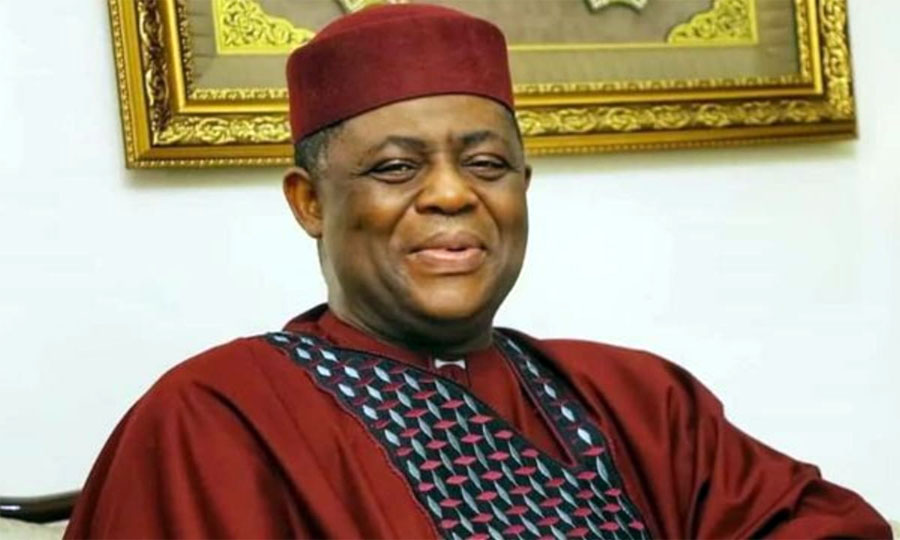
Former Minister of Aviation, Femi Fani-Kayode, has challenged the criticism of former Vice-President Atiku Abubakar by the Minister of Aviation and Aerospace Development, Festus Keyamo, over the liquidation of Nigeria Airways and the non-payment of pension arrears owed to its former workers.
Fani-Kayode, who served as Minister of Aviation in 2006, argued that the defunct national carrier’s collapse resulted from years of mismanagement, corruption, mounting debts and operational failures that predated the return of former President Olusegun Obasanjo to democratic rule in 1999.
He made the remarks in a response to Keyamo’s statement on October 14, 2026, in which the aviation minister accused Atiku of hypocrisy over the airline’s liquidation in 2004 and the subsequent failure to pay its former employees their pensions and gratuities.
Keyamo had said President Bola Tinubu approved and released ₦36 billion to settle outstanding pension liabilities owed to former Nigeria Airways workers, adding that beneficiaries had begun receiving payment alerts.
In his response, Fani-Kayode acknowledged the Tinubu administration’s efforts to settle the outstanding liabilities but maintained that the history of the airline’s collapse required a broader examination of events preceding its liquidation.
According to him, Nigeria Airways was already in a critical state before Obasanjo returned to office in 1999.
Fani-Kayode recalled that when Obasanjo left office as military head of state in 1979, Nigeria Airways had 32 functional aircraft, experienced pilots and crew members, a competent management team and an accountable board of directors.
He said the airline was then regarded as a source of national pride but had deteriorated considerably over the following two decades.
By the time Obasanjo returned as elected president in 1999, Fani-Kayode claimed, only one aircraft remained, and it was not operational. He attributed the airline’s deterioration to years of alleged corruption, poor management and the disappearance of company assets.
He maintained that the liquidation process, which was completed in 2004, followed years of financial insolvency, operational collapse and unsuccessful attempts to rescue the airline.
Fani-Kayode also cited the withdrawal of the International Finance Corporation from privatisation-related efforts as part of the difficulties encountered in attempts to revive the company.
He said Obasanjo’s administration had little choice but to liquidate the airline rather than continue committing public funds to an organisation he described as having become practically irredeemable.
The former minister, however, acknowledged that the liquidation left thousands of former employees and their families facing prolonged financial hardship because their pension entitlements remained unpaid.
Recounting his own involvement in the matter, Fani-Kayode said a committee chaired by the then Head of the Civil Service of the Federation, Yayale Ahmed, recommended the release of funds to pay the pensioners.
He said that, as aviation minister in 2006, he presented a memorandum to the Federal Executive Council seeking approval for the payment of the outstanding entitlements and argued that settling the liabilities was the right thing to do.
However, according to him, the proposal was rejected after some members of the cabinet opposed it on the grounds that former management teams and boards of Nigeria Airways had contributed to the airline’s destruction.
Fani-Kayode said he disagreed with that position but acknowledged that those who supported payment were outnumbered during the deliberations.
He added that the issue was revisited under the late President Umaru Musa Yar’Adua, whose administration paid a substantial number of the pensioners. The administration of former President Muhammadu Buhari also made further payments, he said.
Commending Keyamo for the latest intervention, Fani-Kayode said he was pleased that the remaining pension liabilities had finally been addressed, while expressing regret that the payments had taken so many years.
He described the suffering endured by the former workers as immense and reiterated that paying their entitlements had always been the appropriate course of action.
On Atiku’s role in the Federal Executive Council deliberations, Fani-Kayode said he knew the position the former vice-president had taken during the debate but declined to disclose it publicly.
He argued that the eventual decision was a collective responsibility of the administration, adding that members of the government had to share the consequences of the outcome.
Fani-Kayode’s intervention has added another dimension to the political disagreement surrounding Nigeria Airways’ collapse, the handling of its former workers’ pension entitlements and the responsibilities of successive administrations.
While Keyamo credited the Tinubu administration with clearing the outstanding pension arrears, Fani-Kayode’s account focused on the airline’s long decline, the difficulties surrounding earlier efforts to pay its former employees and the involvement of successive governments in addressing the liabilities.
The dispute has also renewed attention on the fate of former Nigeria Airways workers, many of whom endured years of uncertainty while awaiting their retirement benefits.
Fani-Kayode Counters Keyamo, Defends Atiku Over Nigeria Airways Collapse
Aviation
FAAN reinstates Bolt at airports, denies fixing taxi fares

FAAN reinstates Bolt at airports, denies fixing taxi fares
The Federal Airports Authority of Nigeria (FAAN) has cleared Bolt to resume operations at all airports under its management after reaching an operational agreement with the ride-hailing company.
The development follows growing complaints from travellers over the temporary disruption of e-hailing services at Nigerian airports, with passengers raising concerns about higher transportation costs and reduced options for getting to and from airports.
FAAN also apologised to passengers affected by the disruption, acknowledging that the temporary interruption caused inconvenience and increased transportation difficulties for some travellers.
In a statement by its Director of Public Affairs and Consumer Protection, Henry Agbebire, FAAN said it had listened to the concerns raised by passengers and made the necessary adjustments following constructive engagements with Bolt.
The authority said the agreement with Bolt provides an operational framework that allows the company to resume services while complying with requirements relating to airport security, passenger safety, accountability and orderly transportation.
FAAN’s latest announcement marks a significant development after the authority had faced mounting public criticism over restrictions affecting e-hailing operations at some of the country’s airports. FAAN had earlier maintained that it had not imposed a blanket ban on Bolt, Uber or other e-hailing platforms, but said operators needed to work within an appropriate framework for airport operations. (FAAN)
According to FAAN, airports are highly regulated environments, making it necessary for commercial transportation providers to operate under arrangements that give the authority adequate visibility over vehicles, drivers and passenger pick-ups.
READ ALSO:
- Probe Me Over $16bn Power Spending If You Have Evidence – Atiku Dares FG
- 20-Year-Old Arrested for Allegedly Macheting Father to Death in Anambra
- How Filling Station Sold Me Water Instead Of Petrol – Lagos Resident Recounts Ordeal
The authority said it had been dealing with challenges including passenger solicitation, touting, random pick-ups, unregulated commercial transportation and concerns about safety, security and accountability.
FAAN said these challenges had become more complicated in situations where drivers operate across multiple ride-hailing platforms, prompting the authority to strengthen its oversight of commercial transportation within airport premises.
At the centre of the controversy is the Airport Car Hire Rank Management System (ACHRAMS), which FAAN introduced to bring greater structure and visibility to airport car-hire operations.
FAAN stressed that ACHRAMS is not an e-hailing application and was not created to compete with Bolt, Uber or any other mobility platform. Rather, the authority describes it as an airport-specific system for managing car-hire ranks, dispatch, identification and operational oversight within FAAN-managed airports. (FAAN)
The authority has also rejected suggestions that ACHRAMS was introduced to create a monopoly in airport transportation.
FAAN said it supports competition and does not intend to prevent passengers from choosing between different transportation providers.
The controversy intensified after passengers began complaining about the cost of airport taxi fares, particularly during the period when access to conventional e-hailing services was disrupted.
Reports from Lagos indicated that some passengers were being quoted fares as high as N30,000 for trips from Murtala Muhammed International Airport to parts of Ikeja, while travellers reported substantially lower prices through alternative ride-hailing services. (Aboki Forex)
FAAN, however, has denied claims that it fixed or introduced the airport taxi fares being discussed.
The authority said the fares existed independently of ACHRAMS and were not newly created by the system. According to FAAN, ACHRAMS merely brought greater visibility and transparency to existing airport taxi rates, making the applicable charges more apparent to passengers.
FAAN acknowledged that the comparison with the lower prices many travellers had become accustomed to through e-hailing platforms understandably fuelled public concern over the cost of airport transportation.
The authority said its actions were motivated by regulatory, safety and security considerations, rather than economic interests.
It nevertheless acknowledged that the immediate effect of the temporary disruption was significant for passengers.
FAAN therefore apologised to travellers and said it appreciated their patience and understanding while discussions with e-hailing operators continued.
The authority said the resolution with Bolt demonstrates that it is possible to maintain the integrity and security of the airport environment while preserving the convenience and freedom of choice associated with e-hailing services.
The latest development is also consistent with FAAN’s earlier position that it wanted to establish a workable framework rather than permanently exclude e-hailing companies from airports. On August 20, the authority said discussions with operators were aimed at resolving issues involving passenger safety, security, operational visibility, accountability and the management of pick-up activities. (FAAN)
Bolt’s own airport guidance already requires its drivers operating at Murtala Muhammed International Airport to comply with FAAN rules, including using designated parking areas for pick-ups and drop-offs. Bolt also warns drivers that violations of airport rules can result in penalties or vehicle impoundment. (Bolt)
Bolt’s official Nigeria platform also lists several Nigerian airports where airport transfers are available, including Murtala Muhammed International Airport, Nnamdi Azikiwe International Airport, Mallam Aminu Kano International Airport, Port Harcourt International Airport and Sam Mbakwe International Airport. (Bolt)
FAAN said it remains in discussions with other e-hailing operators and expects outstanding engagements to be concluded in the coming days.
The authority reiterated that passengers remain free to choose from available authorised transportation options that best meet their needs.
FAAN said its responsibility is to ensure that whichever authorised service passengers choose operates within a safe, secure, orderly and accountable airport environment.
The reinstatement of Bolt is expected to give air travellers greater choice and restore access to app-based transportation at FAAN-managed airports, while the authority continues efforts to regulate commercial transportation without compromising passenger safety and convenience.
FAAN assured travellers that their safety, security, convenience and overall airport experience would remain at the centre of its decisions.
FAAN reinstates Bolt at airports, denies fixing taxi fares
Aviation
Keyamo Issues One-Week Ultimatum to Airlines Over Debt Repayment Plans
Keyamo Issues One-Week Ultimatum to Airlines Over Debt Repayment Plans
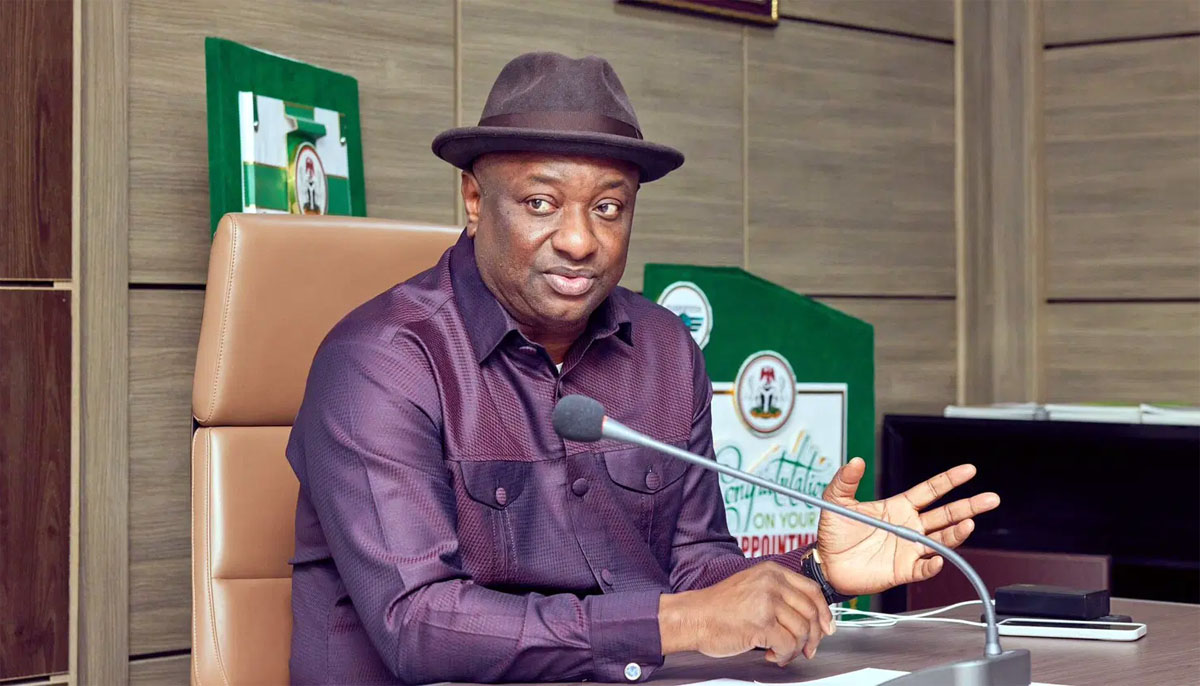
The Minister of Aviation and Aerospace Development, Festus Keyamo, has given airlines operating in Nigeria one week to agree on realistic repayment plans with aviation agencies over their outstanding financial obligations. This directive was part of resolutions reached at an emergency stakeholders’ meeting convened by Keyamo on Thursday, August 13, 2026, to address the recent industrial dispute between aviation sector unions and some airlines. The meeting followed the temporary suspension of industrial action by aviation unions on Tuesday, August 11, 2026, which disrupted operations at some airports across the country, causing widespread concern among passengers and stakeholders. The emergency meeting was attended by representatives of airlines, aviation sector unions, and heads of aviation agencies, including the Nigeria Civil Aviation Authority (NCAA), the Federal Airports Authority of Nigeria (FAAN), and the Nigerian Airspace Management Agency (NAMA). The Minister emphasized that the era of impunity in the aviation sector is over and that airlines must take responsibility for their financial obligations while working with the government to resolve outstanding debts amicably.
According to a statement signed by the Permanent Secretary, Ministry of Aviation and Aerospace Development, Mahmud Adam Kambari, the NCAA and other aviation agencies were directed to obtain payment schedules from airlines, taking into consideration their operating costs and prevailing economic realities. The statement emphasized that the Directors of Finance and Accounts of all aviation agencies were to meet individually with the affected airlines and agree on realistic repayment plans within one week. The resolution is aimed at addressing financial obligations owed by airlines to aviation agencies while preventing the disputes from escalating into further industrial action and disruption of air travel. The Minister stressed that the repayment plans must be realistic and achievable, as the government is not interested in empty promises but in concrete actions that will restore financial sanity to the sector. Airlines that fail to comply within the stipulated timeframe would face drastic actions, including the possible grounding of aircraft and suspension of operating licenses.
READ ALSO:
- [ICYMI] How Nigerian Medical Doctor Was Promoted to Captain in US Army
- JAMB Aggregate Score 2026/2027: How Nigerian Universities Calculate Your Admission Chances
- Davido Halts London Concert, Threatens to Walk Off Stage Over Fan’s Disrespect to Staff
The emergency meeting was convened in response to a growing industrial dispute between aviation sector unions and some airlines. The unions had threatened industrial action over issues including the unionisation of airline workers and the alleged refusal of some airlines to allow their employees to join trade unions. The dispute escalated to the point where aviation unions temporarily suspended industrial action on Tuesday, August 11, 2026, which had disrupted flight operations at some Nigerian airports, causing significant inconvenience to passengers and raising concerns about the stability of the aviation sector. The disruption had heightened fears over possible widespread cancellations and delays, prompting the Minister to intervene swiftly to prevent a full-blown crisis that could have paralyzed air travel across the country.
The stakeholders also reached an agreement on the contentious issue of unionisation among airline workers. The Minister affirmed the right of workers to decide whether or not to belong to trade unions, stressing that such decisions should be made directly by the workers rather than through airline management. Consequently, the NCAA was directed to ensure that aviation unions have direct access to workers of all airlines solely for the purpose of distributing union forms to enable employees to indicate whether they wish to unionise. The ministry warned that any airline that prevents the unions from having such direct access would face sanctions from the NCAA, including possible fines or suspension of operating licenses. This resolution represents a significant victory for workers’ rights in the aviation sector and ensures that employees can exercise their freedom of association without interference from employers.
The stakeholders further resolved that another meeting would be convened in one month to review progress made in implementing the resolutions and assess the state of the aviation sector. The statement described the resolutions as collective decisions of all parties at the meeting, emphasizing the collaborative approach taken to resolve the disputes. The Minister, while assuring stakeholders of the Federal Government’s commitment to a safe and viable aviation sector, reiterated President Bola Tinubu’s commitment to maintaining a safe, efficient, peaceful, and sustainable aviation industry. This commitment aligns with the broader agenda of the current administration to reform critical sectors of the economy and ensure the welfare of workers and the public. The Minister also noted that the government would continue to engage with stakeholders to address other challenges facing the industry, including infrastructure decay, multiple taxation, and the high cost of aviation fuel.
The latest intervention comes after the aviation unions temporarily suspended their industrial action following the disruption of flight operations at some airports on Tuesday. The dispute had heightened concerns over possible disruptions to air travel and the financial pressures facing airlines operating in the country. Airlines now have until August 20, 2026, to agree on repayment plans with aviation agencies. The Ministry has set up a task force to review the submissions and ensure compliance. Airlines that fail to meet the deadline or fail to reach acceptable repayment agreements will face sanctions, which could include suspension of operating licenses, grounding of aircraft, prohibition from accessing government facilities, and legal action to recover outstanding debts. The Ministry has also directed the NCAA to ensure that aviation unions have direct access to airline workers to distribute unionisation forms, and any airline found obstructing this process will face sanctions. This development marks a significant step in the Minister’s broader efforts to reform the aviation sector, improve financial accountability, and ensure that airlines operate within the framework of the law.
Keyamo Issues One-Week Ultimatum to Airlines Over Debt Repayment Plans
-

 metro1 day ago
Army Major, Soldiers Killed in ISWAP Ambush in Yobe State
-

 Politics3 days ago
Buhari Feared Tinubu Presidency, Resisted Pressure to Back Him – Baba-Ahmed Claims
-
 News3 days ago
FG Challenges World Bank’s 124% Debt-to-Revenue Warning, Cites Rising Income
-

 metro3 days ago
NAFDAC Probes Corps Member’s Death at Enugu Camp as Fake Drug Claims Emerge
-
 metro3 days ago
Ogun House Fire Horror: Husband Arrested After Wife Dies Following Domestic Dispute
-
 metro1 day ago
Breaking: Afenifere Leader Pa Fasoranti Dies at 100
-

 Entertainment3 days ago
Nollywood Mourns as Actress, Beauty Queen Tenia Abraham Dies at 32
-

 News3 days ago
NLC, Falana Mobilise Nigerians Against Petrol Price Hike, Mount Pressure on Tinubu Govt