

International
Normalcy restored after global IT outage disrupted airlines, banks operations

Normalcy restored after global IT outage disrupted airlines, banks operations
DUBAI: Air passengers across the Arabian Gulf and around the world faced delays, cancellations and problems checking in as airports and airlines were caught up in a massive IT outage that also affected industries ranging from banks to media companies.
The travel industry was among the hardest hit with airports around the world, including Tokyo, Amsterdam, Berlin and several Spanish airports reporting problems with their systems and delays.
In Saudi Arabia’s capital city Riyadh, King Khalid International Airport reported disruptions on some flights, prompting authorities to set up a plan to use alternative systems.
The airport urged passengers to contact airlines before heading to the airport.
Saudi airline, flynas, apologized and reported disruptions in some flights, which led to take-off delays and slow online services
“The airline is currently working with the service provider and all concerned parties to fix the issue and provide alternative systems to ensure that operations resume as soon as possible,” flynas said in a statement.
“We also apologize to our guests for the confusion caused by this global outage that is beyond our control. We thank them for their understanding of this emergency circumstance.
“We affirm flynas’ commitment to preserving the rights of travelers and compensating them in accordance with the Customer Rights Protection Regulations of the General Authority of Civil Aviation,” it added.
The operator of Dubai International Airport, one of the world’s busiest airports and hub of Emirates airline, said on Friday the airport was operating normally again after a global system outage affected the check-in process of some airlines.
Saudi Arabia’s National Cybersecurity Authority issued a statement early Saturday saying that the impact of the outage to the Kingdom had been limited, adding that the authority has put in place exceptional measures to monitor threats and cyber risks and to respond to any cyber incidents if they occur.
Dubai Airports said in a statement the outage had impacted some airlines operating from terminals 1 and 2 but that the check-in process had been switched to an alternative system, which allowed normal processes to swiftly resume.
READ ALSO:
- Israel’s presence in occupied Palestinian territories illegal – UN court
- Rivers: Appeal Court dismisses suit against Tinubu, Fubara, others
- Dele Momodu, Doyin Okupe disagree over Tinubu administration’s policies
Flydubai, which operates out of Terminal 2, said that its operations had not been impacted.
Etihad Airways, which operates from Abu Dhabi’s Zayed International Airport, similarly said it was operating normally but that there could be limited delays across its network.
In a statement, a spokesman for Wizz Air Abu Dhabi said the company was monitoring closely the ongoing situation with IT outages due to a third-party provider affecting the aviation sector worldwide.
“We advise that all passengers arrive at the airport at least three hours before their scheduled departure time.
“Our teams are working closely with the relevant stakeholders across our network to ensure a seamless travel experience for all our passengers. Thank you for your patience and co-operation.”
And Kuwait International Airport said some flights had been impacted by the outage.
Carriers, media companies, banks and telecoms firms around the world reported on Friday that system outages were disrupting their operations.
A spokesperson for the Dubai-based national carrier Emirates said they were aware of the global IT disruption and are monitoring the situation closely.
“At this time, there has been no impact on Emirates’ flight operations,” she added.
But warned: “There may be delays to some flight timings later today, due to knock-on effects from delayed departures from some airports around our network.”
“Customers can check our website and app for the latest flight information, and are advised to update their contact details on their booking.”
In a statement released on social media platform X, the UAE Ministry of Foreign Affairs said some of its systems had been impacted by the outage.
“Please be informed of a global technical issue that has affected some of the Ministry of Foreign Affairs’ electronic systems, including MoFA’s attestation service. We advise users to refrain from conducting any transactions until this issue is resolved,” the statement read.
International airlines, including Ryanair, Europe’s largest airline by passenger numbers, warned of problems with their booking systems and other disruptions.
The Saudi Data & AI Auhthority confirmed it had not been affected by the outage.
In a statement posted on X it said: “SDAIA confirms that its systems and the national systems hosted by it in the Kingdom are not affected by the technical failure that struck most countries of the world today.”
READ ALSO:
- Fed govt unveils roadmap for Africa’s digital revolution under AfCFTA
- Refinery: Dangote defends product quality, says diesel 80% better than imported ones
- Arrest Philip Shaibu now over airport shooting, Edo govt tells police
In a statement, Crowdstrike holdings said it was actively working with customers impacted by a defect found in a single content update for windows hosts. “Issue has been identified, isolated and a fix has been deployed,” the statement said.
According to an alert sent by Crowdstrike to its clients and reviewed by Reuters, the company’s “Falcon Sensor” software was causing Microsoft Windows to crash and display a blue screen, known informally as the “Blue Screen of Death”.
The alert, which was sent at 0530 GMT on Friday, also shared a manual workaround to rectify the issue.
The Swiss Federal Office for Cyber Security (BACS) confirmed that a faulty update or misconfiguration by cybersecurity firm CrowdStrike had led to international tech outages. “The BACS is aware of the outages mentioned and has received corresponding reports from various companies and critical infrastructures,” the BACS said in a statement.
“A faulty update or misconfiguration by CrowdStrike is leading to these system outages. The BACS is in contact with the companies affected.”
However, cybersecurity agencies said there was no information to suggest the outage was a cyber security incident.
The office of Australia’s National Cyber Security Coordinator Michelle McGuinness and France’s cybersecurity agency said there was no evidence that a global IT outage was caused by a cyberattack.
“The teams are fully mobilised to identify and support the affected entities in France and to understand… the origin of this outage,” the national cybersecurity agency (ANSSI) said, adding “There is no evidence to suggest that this outage is the result of a cyberattack.”
The outages rippled far and wide, wreaking havoc on global computer systems. Microsoft users worldwide, including banks and airlines, reported widespread outages, hours after the technology company said it was gradually fixing the issue which affected access to Microsoft 365 apps and services.
The UAE foreign ministry said the global cyber outage had affected some of its electronic systems and it advised users to avoid any transactions till the issue has been resolved. It urged citizens abroad to contact their airlines before heading to the airports to avoid delays.
The UAE’s Telecommunications and Digital Government Regulatory Authority issued a statement, warning Crowdstrike users of a “technical issue” with the “software update.”
“We advise users of the program to hold off on any updates or downloads of CrowdStrike software until the issue is resolved.”
Major travel disruptions
Major US air carriers including Delta, United and American Airlines grounded all flights early on Friday over a communication issue, according to the Federal Aviation Administration.
“All… flights regardless of destination” were grounded due to the “communication issues,” the FAA said in a notice to airlines.
The UK’s largest rail franchise was facing “widespread IT issues” on its four train lines said, warning of possible cancellations.
“We are currently experiencing widespread IT issues across our entire network”, the four lines operated by Govia Thameslink Railway (GTR) posted on X.
Other transport systems across the UK and Ireland faced similar IT issues, with Ryanair experiencing disruption due to “a global third party IT outage”.
British airports including London Luton and Edinburgh warned of longer waiting times for passengers because of the glitch, while Sky News television was temporarily off air.
READ ALSO:
- BREAKING: FCCPC fines Meta platforms $220m over ‘discriminatory practices’ in Nigeria
- Catholic priest reportedly flogs women, choir members in Enugu
- Notorious drug traffickers arrested in Imo
Passengers at Britain’s Edinburgh Airport were unable to use automated boarding pass scanners, and monitors at security displayed a message saying “server offline”, a Reuters witness reported.
Edinburgh Airport was checking boarding passes manually, the witness said.
A health booking system used by doctors in England was also offline, medical officials said on X on Friday.
The global outage was not being treated as a malicious act, a UK government security source said.
The source, speaking on condition of anonymity, said security experts were not treating it as a cyber-related security issue.
Similarly, passengers at Dusseldorf airport are facing disruptions to Eurowings’ check-in and boarding processes due to the malfunction.
Hong Kong Airport Authority said airlines affected by a Microsoft outage had switched to manual check-in and flight operations have not been affected.
Three Indian airlines announced disruptions to their booking systems on Friday, matching widespread technical problems reported by flight operators around the world.
“Our systems are currently impacted by a Microsoft outage,” budget carrier IndiGo said in a post on social media platform X, with airlines Akasa Air and SpiceJet also reporting technical issues.
Turkish Airlines cancelled 84 flights after the IT outage, while Air France said it also suffered IT disruption, but not at Paris airports.
Spanish airport operator Aena on Friday also reported a computer systems “incident” at all Spanish airports which may cause flight delays.
“We are working to solve it as soon as possible. Meanwhile, operations are continuing with manual systems,” the airport operator said in a post on X platform.
In Berlin, airport authorities have halted all flights until 10 a.m. (0800 GMT) due to a technical fault, a spokesperson said.
Earlier on Friday, airport operator BER said in a post on social media platform X that check-ins were delayed due to the error.
The spokesperson did not give details about the nature of the problem.
Amsterdam’s Schiphol Airport, one of Europe’s busiest hubs, was also affected by the global cyber outage, a spokesperson said.
“The outage has an impact on flights flying from and to Schiphol,” he said, adding that it was not yet clear how many flights were affected.
READ ALSO:
- Ndume defends outburst against Tinubu, says ‘I stand by statements’
- Kano govt gives reinstated Emir of Gaya appointment letter
- FG gets ASUP 15-day ultimatum on HND, degree dichotomy
The outage also wrought havoc on IT systems across Australia on Friday, with the country’s national broadcaster, its largest international airport, and a major telecommunications company reporting issues.
Australia’s National Cyber Security Coordinator said the “large-scale technical outage” was caused by an issue with a “third-party software platform.”
National broadcaster ABC said its systems had been crippled by a “major” glitch.
Photos posted online showed large queues forming at Sydney Airport, which said some airline operations and terminal services had been affected.
Some self-checkout terminals at one of the country’s largest supermarket chains displayed error messages.
Telecommunications firm Telstra also said some of its systems had been disrupted.
Major companies report outage
The website DownDectector, which tracks user-reported Internet outages, recorded growing outages in services at Visa, ADT security and Amazon, and airlines including American Airlines and Delta.
Microsoft 365 posted on X that the company was “working on rerouting the impacted traffic to alternate systems to alleviate impact in a more expedient fashion” and that they were “observing a positive trend in service availability.”
Australian outages reported on the site included the banks NAB, Commonwealth and Bendigo, and the airlines Virgin Australia and Qantas, as well as Internet and phone providers such as Telstra.
News outlets in Australia — including the ABC and Sky News — were unable to broadcast on their TV and radio channels, and reported sudden shutdowns of Windows-based computers.
Normalcy restored after global IT outage disrupted airlines, banks operations
ARAB NEWS with Agencies












International
Nigeria Secures UN Human Rights Council Seat With 172 Votes
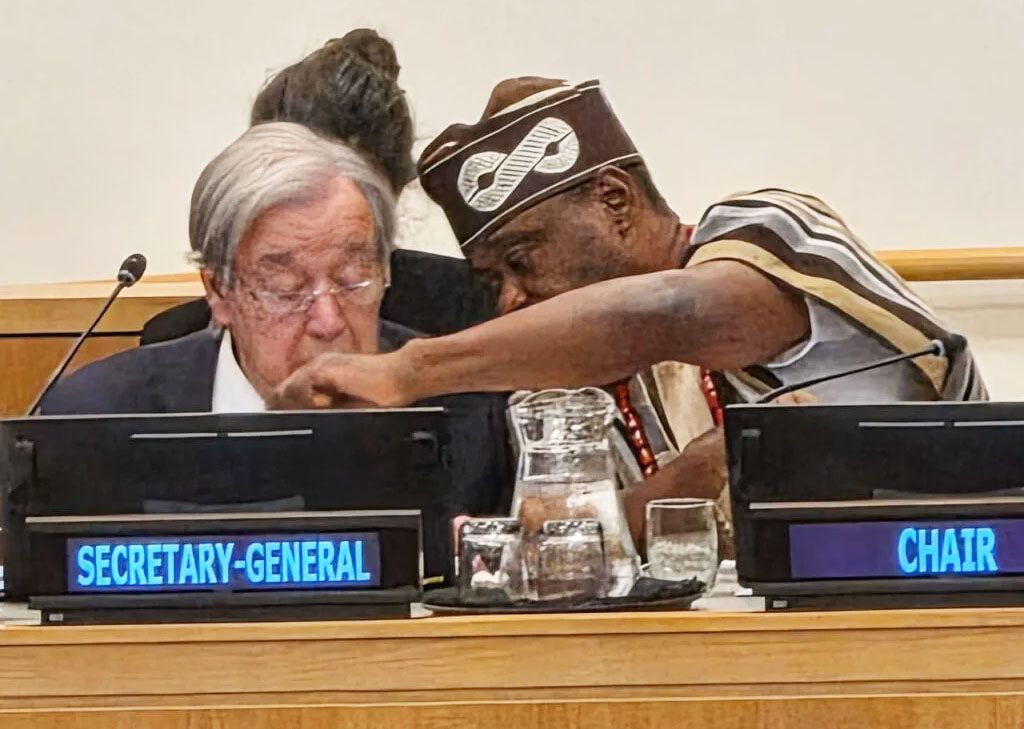
Nigeria has secured a seat on the United Nations Human Rights Council (UNHRC) after receiving 172 votes in an election by the UN General Assembly, earning the country a three-year term on the international body responsible for promoting and protecting human rights worldwide.
The election was held on Tuesday, October 13, 2026, at the United Nations headquarters in New York. Nigeria will serve on the 47-member council from January 1, 2027, to December 31, 2029.
Nigeria was among 15 countries elected to the council for the new term. The other successful candidates included Zambia, Ghana, Burundi, Brazil, the Dominican Republic, Uruguay, Germany, Ireland, Japan, Jordan, Kuwait, Nepal, Moldova and Ukraine.
Among the African candidates, Zambia received 177 votes, Ghana secured 173, Nigeria obtained 172, while Burundi received 160 votes.
The election gives Nigeria an opportunity to participate in international deliberations on human rights standards, alleged violations and measures aimed at improving the protection of fundamental freedoms across the world.
However, the process has attracted criticism from human rights organisations because the election was uncontested. Regional groups nominated exactly as many candidates as there were available seats, meaning there was no competitive ballot among rival candidates within the respective groups.
The UN Human Rights Council is an intergovernmental body based in Geneva, Switzerland. Established in 2006, it is mandated to address human rights violations, promote respect for fundamental freedoms and make recommendations to governments and the international community.
READ ALSO:
- Houthi Missile Targeting Riyadh Shot Down as Debris Injures Four, Damages 15 Homes
- Outrage as Israeli Settlers Torch Mosque, Burn Vehicle in Occupied West Bank
- Attempted Suicide: ‘If You Survive, We’ll Jail You’ – Akpabio
The council comprises 47 member states elected by the UN General Assembly through a secret ballot. Its seats are allocated among five regional groups to ensure geographical representation, and members serve staggered three-year terms.
The body examines human rights situations in individual countries, conducts its Universal Periodic Review of UN member states and considers complaints and reports concerning alleged abuses. It can also appoint independent experts, establish commissions of inquiry and authorise fact-finding missions to investigate serious allegations.
Although the council plays an important role in international human rights oversight, it does not operate as a criminal court and cannot independently impose criminal sentences on individuals accused of abuses.
Nigeria’s election comes amid continuing international scrutiny of human rights conditions in several countries, including concerns about police conduct, accountability, freedom of expression and the treatment of vulnerable groups.
The selection of countries with contested human rights records has been criticised by advocacy organisations, which argue that uncontested elections can weaken accountability and reduce pressure on candidates to demonstrate their commitment to protecting fundamental rights.
The criticism has also raised questions about how elected countries will use their positions on the council to address allegations of abuses and support international human rights standards.
For Nigeria, membership offers a platform to contribute to debates on issues such as unlawful killings, torture, discrimination, the rights of women and children, freedom of expression and the protection of civilians during armed conflicts.
The country will also be expected to participate in council sessions, consider resolutions and engage with other member states on international human rights concerns.
Nigeria’s three-year membership begins in January 2027. Its performance on the council will be watched alongside its domestic human rights record, including how authorities address allegations of misconduct and strengthen accountability and protection for citizens.
The election is therefore both a diplomatic achievement for Nigeria and an opportunity for the country to demonstrate its commitment to the principles the council was established to uphold.
Nigeria Secures UN Human Rights Council Seat With 172 Votes
International
Houthi Missile Targeting Riyadh Shot Down as Debris Injures Four, Damages 15 Homes

Houthi Missile Targeting Riyadh Shot Down as Debris Injures Four, Damages 15 Homes
Saudi Arabia’s air defences have intercepted and destroyed a Houthi ballistic missile targeting Riyadh, as debris from earlier missile interceptions injured four people and damaged about 15 residential homes in the Saudi capital.
The developments were announced on Wednesday, October 14, 2026, amid escalating attacks involving Saudi Arabia and Yemen’s Houthi armed group.
Major General Turki Al-Maliki, spokesman for the Saudi-led coalition supporting Yemen’s internationally recognised government, confirmed that a ballistic missile launched towards Riyadh had been intercepted and destroyed.
Saudi authorities subsequently lifted danger warnings issued for Riyadh and Al-Kharj Governorate through the country’s National Early Warning Platform, indicating that the immediate threat covered by those alerts had passed.
The missile interception came after loud explosions were heard over Riyadh late on Tuesday as Saudi air defences engaged incoming aerial threats.
According to the Saudi Civil Defence, debris from two previously intercepted cruise missiles fell on residential areas, injuring four people and causing material damage to approximately 15 homes.
The injured comprised two women, a man and a child. Authorities said the debris caused limited damage to the affected properties, while images released by Saudi officials showed damage inside residential buildings.
READ ALSO:
- Outrage as Israeli Settlers Torch Mosque, Burn Vehicle in Occupied West Bank
- Attempted Suicide: ‘If You Survive, We’ll Jail You’ – Akpabio
- Yamal Inspires Barcelona Comeback to Sink Osimhen’s Galatasaray
Emergency services responded to the incident, and the relevant authorities implemented established safety procedures. The four injuries were attributed to falling missile fragments rather than a direct impact from the intercepted missiles.
The latest interception was part of a broader series of missile and drone attacks targeting Saudi Arabia. The Saudi-led coalition reported intercepting threats over Riyadh and other parts of the kingdom, including Dhahran and Al-Kharj.
Saudi officials also reported that three drones had been destroyed north of Riyadh on Tuesday.
In a separate incident, Saudi Arabia’s Energy Ministry confirmed that an administrative building belonging to state-owned oil giant Saudi Aramco in Dhahran, in the kingdom’s Eastern Province, was struck on Tuesday evening, causing what authorities described as a limited fire.
The ministry said there were no casualties from the fire. Reports indicated that the building was part of the Aramco headquarters complex, which houses offices associated with the company’s extensive oil and energy operations.
The Houthis have claimed attacks against Saudi strategic and energy facilities, including Aramco installations and King Khalid International Airport in Riyadh. The latest developments have raised further concerns about the security of civilian areas and critical infrastructure across the kingdom.
Saudi Arabia has vowed to respond to attacks against its territory. The Saudi Cabinet, chaired by Crown Prince Mohammed bin Salman, condemned the attacks and reaffirmed the kingdom’s commitment to protecting its security and freedom of navigation in the Red Sea and the Bab al-Mandab Strait.
The renewed confrontation has also prompted military action by the Saudi-led coalition in Yemen. On Tuesday, the coalition announced operations targeting facilities it said were being used to support Houthi attacks. It issued warnings urging civilians to stay away from designated locations.
The Houthis, who control Yemen’s capital, Sanaa, have said their attacks are retaliation for Saudi military operations against them. The conflict has intensified after years of intermittent fighting and has increased concerns about the potential impact on regional stability, energy supplies and international shipping.
The latest missile interception in Riyadh underscores the continuing threat posed by missiles and drones in the conflict. Although the ballistic missile targeting the capital was destroyed, falling debris from earlier interceptions demonstrated the risks to residents even when air defences successfully engage incoming weapons.
Saudi authorities have not reported further casualties from the latest ballistic missile interception. The situation remains tense as the kingdom continues to monitor and respond to incoming aerial threats.
Houthi Missile Targeting Riyadh Shot Down as Debris Injures Four, Damages 15 Homes
International
Outrage as Israeli Settlers Torch Mosque, Burn Vehicle in Occupied West Bank
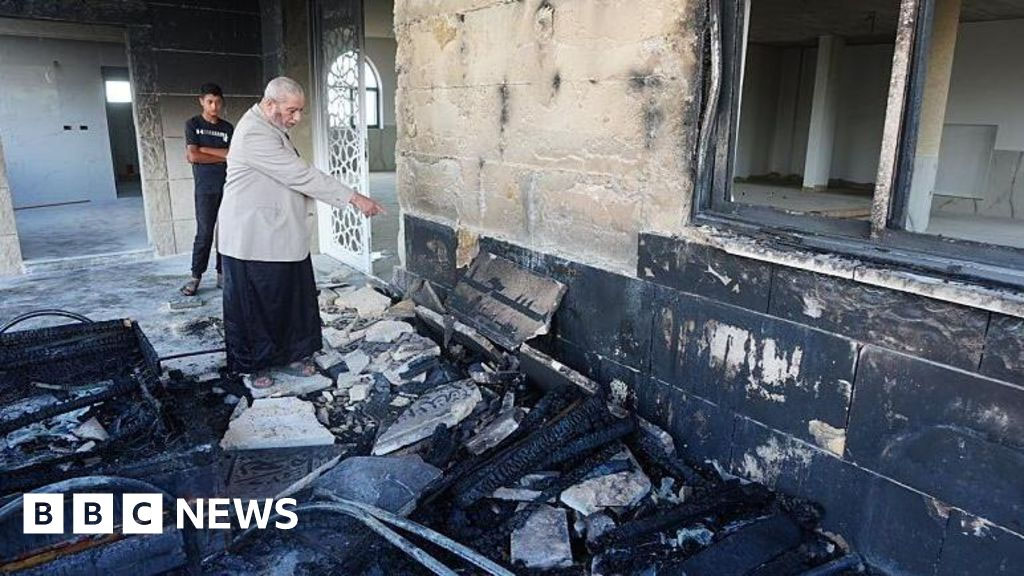
Israeli settlers have reportedly set fire to a mosque, a vehicle and an olive tree in a Palestinian village in the occupied West Bank, in an attack that has renewed concerns about violence against Palestinian communities and religious sites.
The incident occurred in the early hours of Wednesday, October 14, 2026, when a group of settlers raided Mikhmas, also spelt Mukhmas, northeast of occupied Jerusalem.
According to the Palestinian news agency WAFA, the Jerusalem Governorate reported that dozens of settlers entered the village shortly after midnight and set fire to a mosque and a nearby olive tree. A vehicle was also completely burned during the attack.
Reports from the scene showed damage to the mosque’s entrance. No injuries were reported in the initial accounts of the incident.
Mohammed Kanaan, a member of Mikhmas’ municipal council, told Anadolu Agency that the attackers set fire to a prayer room and a vehicle at about 2 a.m. local time. He said residents alerted the relevant authorities and requested the intervention of firefighting crews.
Reports also indicated that nationalist and racist slogans were spray-painted on the mosque and other buildings in the village. The extent of the damage and whether anyone had been arrested in connection with the attack were not immediately clear.
READ ALSO:
- Attempted Suicide: ‘If You Survive, We’ll Jail You’ – Akpabio
- Yamal Inspires Barcelona Comeback to Sink Osimhen’s Galatasaray
- Press Freedom: Judge Blocks Trump’s Ban on Three Major US Media Outlets
The attack adds to continuing concerns over Israeli settler violence in the occupied West Bank, where Palestinian residents have reported assaults, intimidation, property destruction and attacks on farmland.
The incident is particularly sensitive because it involved a Muslim place of worship. Religious sites and civilian property are protected under international humanitarian law, and deliberate attacks against them raise serious legal concerns.
The latest incident also comes amid the annual olive harvest, an important source of income for many Palestinian farming families. The Palestinian Colonization and Wall Resistance Commission said on Monday that it had documented 136 attacks linked to the olive harvest since the beginning of October. The reported incidents included beatings, intimidation, gunfire, theft of olives and farming equipment, and damage to trees.
The burning of the mosque in Mikhmas follows other reported arson attacks on mosques in the West Bank in recent months. In July, two mosques in the Palestinian villages of Qusra and Kour were set on fire following deadly clashes in the territory.
Reuters reported at the time that the Israeli military had confirmed evidence of arson and graffiti at the affected mosque sites and condemned attacks on religious places. The incidents prompted renewed calls for measures to prevent further attacks and hold those responsible accountable.
The wider situation in the Israeli-occupied Palestinian territory remains tense, with attacks by settlers and Israeli military operations contributing to insecurity for residents. Palestinian officials have repeatedly called for stronger protection of communities and accountability for attacks on civilians and their property.
The circumstances surrounding Wednesday’s mosque attack remain under investigation, and it was not immediately clear whether Israeli authorities had announced arrests or opened a formal inquiry.
The incident has once again highlighted concerns over the safety of Palestinian religious sites, homes and agricultural land, as calls grow for effective action against violence in the occupied West Bank.
Outrage as Israeli Settlers Torch Mosque, Burn Vehicle in Occupied West Bank
-

 metro3 days ago
₦8.7bn Erosion-Control Budget Gap Raises Questions as Anambra Gullies Expand
-

 Politics2 days ago
Obi Positioning for SGF Role Under Atiku’s ADC Ticket – Sowore
-

 metro2 days ago
How Bandits Demand ₦300m Ransom for Abducted Kaduna Couple, Baby in Viral Video
-
 metro3 days ago
Child Soldiers, Baby Factories: US Raises Alarm Over Official Complicity in Nigeria
-

 News3 days ago
Fuel Subsidy May Ease Hardship Today, But Could Cripple Nigeria’s Economy Tomorrow — FG
-

 metro3 days ago
2027 Elections: Atiku Demands Names of INEC Ballot Printers, Questions Secret Contracts
-

 Politics2 days ago
Okonkwo Alleges Return of Subsidy, Accuses NNPC of Plotting Trillions in ‘Lost Profit’
-

 metro2 days ago
How Military Air Strike Crushed ISWAP Attack Plot, Killed Over 40 Fighters in Borno