
Education
HND graduates without industry training evidence won’t go for service – NYSC

HND graduates without industry training evidence won’t go for service – NYSC
The National Youth Service Corps has said that graduates of polytechnic and monotechnics must show evidence of mandatory one-year industrial training before they can be mobilised for national service.
Speaking during an interview on with newsmen on Saturday, NYSC coordinator in Lagos, Yetunde Baderinwa, said that the agency has discovered that some graduates shunned the industrial training.
Baderinwa disclosed that NYSC had issued a circular to that effect, adding that tertiary institutions must confirm students’ observation of the industrial training before the commencement of their HND programme.
The NYSC official said, “It has been noticed in recent times that some graduates of polytechnics and monotechnics do not observe the mandatory one-year IT before being admitted for the HND programme. The one-year IT is a prerequisite for HND.
READ ALSO:
- NELFUND lists 6 institutions to receive students loan
- Rwanda shuts 4,000 churches over noise pollution, others
- Police hunt man who escaped to Nigeria after rape sentence in UK
“They must undergo the one-year IT with evidence of completion before going for HND, and institutions must confirm this before admitting them for HND.
“The directive will take effect from the next orientation camp, and we will not register any candidate who did not complete or undergo the process.”
She said that the measure would promote the sanctity of Nigeria’s education system.”
According to Ms Baderinwa, prospective corps members who are HND graduates will be required to present evidence of completion of the IT before being registered at any NYSC orientation camp
HND graduates without industry training evidence won’t go for service – NYSC











Education
FG Ends Physical Certificate Verification as Process Goes Fully Digital

FG Ends Physical Certificate Verification as Process Goes Fully Digital
The Federal Government has announced the full automation of the authentication and evaluation of academic credentials, marking a major shift in Nigeria’s education verification system and officially ending physical verification processes.
The reform was disclosed by the Federal Ministry of Education in a statement issued on Friday by its Director of Press and Public Relations, Boriowo Folasade, describing the initiative as part of efforts to strengthen transparency, improve data management, and enhance service delivery in the education sector.
According to the ministry, the new system aligns with the Federal Government’s broader digital transformation agenda, aimed at leveraging technology to improve efficiency, reduce delays, and ensure the integrity of academic records.
With the new policy, all applications for academic credential authentication and evaluation will now be processed strictly online through the ministry’s official verification portal.
Applicants are required to register and upload supporting documents via the official platform: essverify.education.gov.ng, while also contacting their awarding institutions to forward academic transcripts directly from official institutional email addresses to ess1@education.gov.ng for verification and processing.
READ ALSO:
- Trump Says Iran Agrees to Hand Over Enriched Uranium in Nuclear Deal Talks
- OPM Founder Suspends Marriage Plan for Autistic Daughter After 1,000 Applications
- MTN Nigeria Suspends Airtime Loan Service
The ministry stressed that physical visits to its offices for certificate authentication are no longer required, as the entire process has been moved to a fully electronic system.
Officials explained that the digital transition is expected to significantly reduce processing time, streamline administrative procedures, and strengthen the credibility of academic verification across Nigeria.
The policy is also aimed at addressing long-standing challenges of certificate fraud and document falsification, which have affected both employment verification and academic mobility.
Education stakeholders say the reform could improve Nigeria’s global academic credibility by aligning its credential verification system with international digital standards increasingly used by universities and employers worldwide.
The ministry added that safeguards have been integrated into the system to ensure data security and prevent manipulation, while also improving coordination between educational institutions and government agencies.
The move forms part of wider education sector reforms focused on digitisation, transparency, and improved public service delivery across federal institutions.
FG Ends Physical Certificate Verification as Process Goes Fully Digital
Education
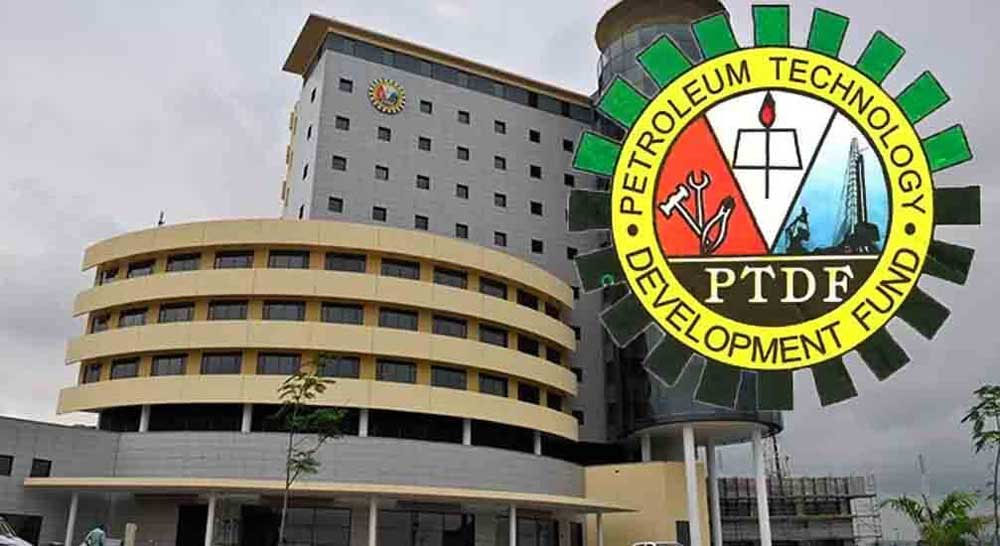
PTDF Screens 243 PhD Applicants in Port Harcourt
PTDF Screens 243 PhD Applicants in Port Harcourt
The Petroleum Technology Development Fund (PTDF) has commenced the screening of 243 PhD applicants from Nigeria’s South-South region in Port Harcourt, Rivers State, under its 2026/2027 Overseas Scholarship Scheme, as part of efforts to boost local capacity in Nigeria’s oil and gas sector and reduce capital flight.
The screening exercise, held at the PTDF Centre for Skills Development and Training, is part of a nationwide selection process designed to identify qualified candidates for advanced studies in critical areas of the petroleum industry.
Speaking during the exercise, PTDF’s Deputy Manager, Internal Audit, Mr. Daddy Ogiri Obonin, said the initiative reflects the Fund’s renewed commitment to developing indigenous technical manpower required to drive growth and innovation in the oil and gas sector.
He revealed that the scholarship scheme has been restructured with the introduction of a split-site model, which allows beneficiaries to undertake a significant portion of their studies within Nigeria, while maintaining academic collaboration with international institutions.
According to him, the new approach is aimed at reducing the high cost of overseas education, limiting capital flight, and addressing the long-standing issue of beneficiaries remaining abroad after completing their studies.
Obonin noted that PTDF has invested in upgrading its training facilities, including its centres in Kaduna and Port Harcourt, to meet global standards and support high-level research and innovation.
READ ALSO:
- US Lawmaker Accuses Nigerian Security of Complicity in Attacks on Christian Communities
- Hajia Sofuratu Seghosime Emerges ICAN President-Elect
- ADC Expels Nafiu Bala, Leke Abejide, Ratifies David Mark-Led Leadership
He explained that the reform has already begun to influence application patterns, with fewer candidates opting for fully funded overseas programmes as the Fund prioritises knowledge retention and local industry impact.
The screening process covers a wide range of disciplines including engineering, geosciences, environmental studies, energy economics, and management, reflecting the evolving needs of Nigeria’s energy sector, especially in areas such as sustainability, energy transition, and resource optimisation.
PTDF also reaffirmed that its selection process remains transparent, merit-based, and guided by the Federal Character principle, ensuring equitable representation of candidates across the country.
In recent years, the Fund has increasingly aligned its scholarship priorities with national energy goals, focusing on areas such as gas development, renewable energy, and digital innovation to enhance efficiency and competitiveness in the petroleum industry.
Also speaking, one of the panelists, Dr. Hafisat Lawal, commended the quality of research proposals presented by applicants, noting that many candidates demonstrated strong, interdisciplinary approaches to addressing real-world challenges in the oil and gas sector.
She highlighted that even candidates from non-traditional backgrounds, including law, health, and education, showed clear relevance to industry needs through innovative research topics.
One of the applicants, Alete Godwin, a chemical engineer researching the extraction of bioethanol from solid waste, described the screening process as thorough and professional, expressing confidence in the fairness of the exercise.
The PTDF Overseas Scholarship Scheme remains one of Nigeria’s flagship human capital development programmes, having sponsored thousands of Nigerians for postgraduate studies in leading institutions worldwide.
However, concerns over brain drain and capital flight have prompted reforms such as the split-site model, which aims to ensure that investments in education translate into local economic growth and industry development.
Experts believe the restructured programme could play a critical role in bridging skill gaps, strengthening research capacity, and boosting indigenous participation in Nigeria’s oil and gas industry.
PTDF Screens 243 PhD Applicants in Port Harcourt
Education
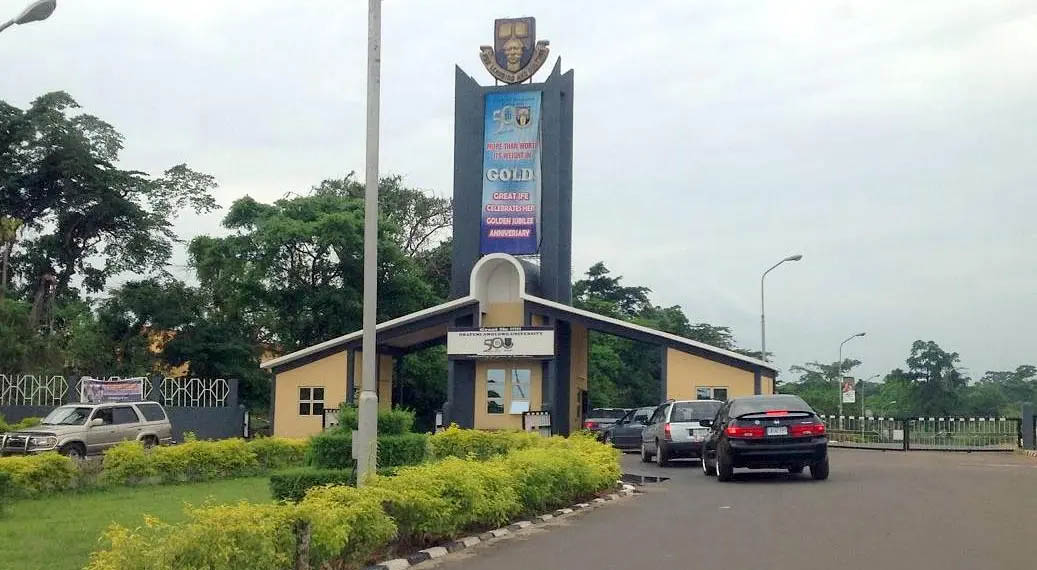
OAU Students Begin 72-Hour Lecture Boycott Over Transport Crisis
OAU Students Begin 72-Hour Lecture Boycott Over Transport Crisis
Students of Obafemi Awolowo University have commenced a 72-hour lecture boycott over what they describe as an “inadequate and poorly implemented campus transportation system,” disrupting academic activities across the institution.
The protest, scheduled from April 14 to April 16, 2026, was declared by the Students’ Union Government (SUG) following a congress held on April 9 and subsequent leadership deliberations, amid mounting frustration over mobility challenges on campus.
In a statement jointly signed by SUG President, Adelani David, and Secretary-General, Habeeb Oke, the union directed all students to suspend academic activities during the period.
“The union shall embark on a total 72-hour lecture boycott… All academic activities are to be boycotted throughout this period,” the statement read.
The students said the decision followed weeks of persistent transport difficulties, which they claim have significantly disrupted lectures, examinations, and general movement within campus.
At the centre of the controversy is the university’s new transport policy tied to vehicles donated by Nigeria’s First Lady, Oluremi Tinubu. The intervention involved the provision of about 80 compressed natural gas (CNG) buses and tricycles aimed at improving mobility for students and staff.
READ ALSO:
- Ghanaian Footballer Dominic Frimpong Shot Dead in Berekum Chelsea Bus Attack
- Man Allegedly Kills Two Sisters, Five-Year-Old Daughter in Ondo
- Fake Image of Governor Alia Bowing to Sultan Sparks Controversy, Palace Reacts
However, the SUG argued that the rollout has instead worsened commuting conditions. Students cited insufficient vehicles, overcrowding, long queues, extended waiting times, and poor route coverage as major challenges under the new system.
The union also criticised the university’s decision to restrict intra-campus transport to the newly introduced vehicles, noting that the removal of previously available commercial transport operators has further limited options.
According to the students, the situation is particularly difficult for those living off-campus, who now face fewer and more expensive alternatives outside the university’s transport network.
Despite several engagements with the university management, the SUG said there has been no immediate relief. Authorities reportedly described the challenges as part of a transitional “teething phase,” while promising that more buses would be deployed in the coming months to improve efficiency.
The students, however, insist that the current conditions are unsustainable for a campus population estimated at over 35,000, prompting the boycott as a form of pressure.
Among their demands are the deployment of additional buses, temporary reinstatement of the previous transport system, and the inclusion of student representatives in transport policy decisions.
They also called for a more flexible, hybrid transport model that accommodates both university-operated vehicles and private operators to ensure seamless mobility within and around campus.
The union warned that failure by the university management to address these concerns within the 72-hour window could trigger a larger protest.
“The leadership shall review the situation at the end of the boycott. Further actions such as a possible mass protest or march will be considered if our demands are not met,” the statement added.
The development highlights growing concerns about campus transportation in Nigerian universities, with stakeholders stressing that efficient mobility is essential for academic productivity and student welfare.
OAU Students Begin 72-Hour Lecture Boycott Over Transport Crisis

-

 metro3 days ago
Arise News Yet to Confirm Reported Suspension of Rufai Oseni
-

 metro2 days ago
Tension in Osogbo as Protesters Demand Respect for Court Judgments in LG Dispute
-
 metro1 day ago
UNILAG Lecturer Sexual Assault Trial: Student Testifies in Lagos Court
-

 International3 days ago
World Leaders Gather in Paris Over Strait of Hormuz Crisis
-

 metro1 day ago
Grandfather in police net for impregnating granddaughter
-

 Politics2 days ago
Obesere’s Wife Sekinat Adelakun-Akande Declares for 2027 Ibadan Reps Race
-

 International1 day ago
US Senate Rejects Measure to Limit Trump’s Iran Military Powers
-
 News3 days ago
Lafarge Convicted of Terrorism Financing by French Court in Landmark Case