

metro
ICPC recovers N4bn stolen funds in 24 hours

ICPC recovers N4bn stolen funds in 24 hours
Dr Musa Aliyu, Chairman of the Independent Corrupt Practices and Other Related Offences Commission (ICPC) said that within the last 24 hours, the commission had recovered about N4 billion stolen by public office holders.
He also the commission will deploy Artificial Intelligence (AI) to fight corruption.
Aliyu, a Senior Advocate of Nigeria (SAN) said this on Thursday in Abuja, on the sideline of the One-Day National Anti-Corruption Coalition (NACC) Members Hybrid Interactive Forum.
”Today, I want to underscore the potential of technological solutions in promoting accountability and good governance.
”Technology can work wonders because it is not biased like humans. It can help us tackle challenges if we use it properly and effectively.
”This technology, as I have mentioned, has the capability to address numerous issues.
”We know there are digital platforms that sometimes, unfortunately, contribute to corruption
”However, I can tell you that in the last 24 hours, we have been able to recover four billion Naira of public funds, which were diverted into private accounts,” he said.
According to him, it is alarming to see how much money is being misappropriated, and some individuals have billions of naira in their possession for personal gain.
”It is a shocking reality that people are hoarding public funds, instead of using them for the benefit of the nation.
READ ALSO:
- JUST IN: Petrol price to drop as marketers pay N766/litre for Dangote PMS
- Prison official kills colleague over food in Bauchi
- Coca-Cola to invest $1bn in Nigeria, company’s president visits Tinubu
”As a commission, we are utilising technology and management systems to restore confidence in the fight against corruption.
”We are committed to ensuring transparency in this endeavour,” he said.
Aliyu said that there were systemic flaws in the country, especially regarding public spending.
He said that there was the need to invest in technology that could help minimise the challenges of corruption, particularly in public procurement.
”By implementing tech-driven processes, we can reduce practices like contract inflation.
”Using technologies like blockchain can help eliminate manipulation and ensure the integrity of public procurement.
”Data analytics are also crucial. The data we rely on is often outdated or inaccurate, which causes inefficiency.
”By embracing AI, we can easily convert certain processes to be more transparent and effective,” Aliyu said.
He underscored the importance of implementing preventive strategies to combat corruption.
”This is why social integrity and capacity building are essential. Civic engagement and public education are key to ensuring that people understand their rights and responsibilities.
”When citizens are aware, they can hold public officers accountable. We must empower our people. Four or five years ago, we could have seen this transformation if we had started then.
READ ALSO:
- 29 suspected internet fraudsters arrested in Abuja
- Nigeria’s Ilenikhena sinks Barcelona with late goal for Monaco
- E-CMR: Police to stop checking vehicles documents on the road
”There is the need to ensure that the systems we build today withstand the test of time and foster respect for human rights and dignity.
”We need to build a culture that discourages corruption and promotes ethical governance,” he said.
He also called on the National Assembly to ensure speedy passage of the Whistle Blowing Act, adding that to fight corruption, there was the need to protect whistle blowers.
Mr Muhuyi Magaji, the Chairman Kano State Public Complaints and Anti-corruption Commission, said that fighting corruption was a collective responsibility.
Magaji said that when citizens joined hands against corruption, the monster would be easily defeated.
”When people own the fight against corruption, that is when it will always be strengthened. It is not for us at the government level to fight corruption alone.
”It needs the involvement of all, it is a collective fight so the occasion itself is a very important,” he said.
Mr Demola Bakare, Acting Director, Public Enlightenment and Education, ICPC, urged the participants at the forum to fight corruption without sentiment.
Bakare advised them to also have a deep knowledge of the Act that established the commission to enable them discharge their responsibility effectively
He said that fighting corruption was like a marathon race that needed perseverance and endurance to win.
Bakare pledged the support of the anti-graft agency to all the stakeholders, in winning the war against corruption in the country.
ICPC recovers N4bn stolen funds in 24 hours
(NAN)








metro
Kwara Police Deny Shooting Motorcyclist at Oyun Bridge, Explain Viral Video

Kwara Police Deny Shooting Motorcyclist at Oyun Bridge, Explain Viral Video
The Kwara State Police Command has denied reports that its officers shot a 23-year-old motorcyclist during an incident at Oyun Bridge in Ilorin, saying the viral video that triggered the allegation did not accurately reflect what happened.
The command said Abdurasaq Lukman was not shot but sustained minor injuries after he allegedly rode at high speed and knocked down a police officer during a routine patrol and stop-and-search operation.
The clarification was issued on Wednesday by the command’s Public Relations Officer, SP Adetoun Ejire-Adeyemi, following the circulation of a video on social media suggesting that the motorcyclist had been shot by police personnel.
According to the police, the incident occurred around Oyun Bridge, on the highway leading towards the Kwara State Polytechnic, where officers were conducting patrol and stop-and-search duties.
The command identified the police officer involved as Corporal Saka Azeez, saying Lukman allegedly knocked him down while riding at high speed.
The impact, according to the police account, left Corporal Azeez with serious head injuries and a fracture, while Lukman sustained minor injuries.
Other officers at the scene reportedly intervened and took both the injured police officer and the motorcyclist to a medical facility for treatment.
READ ALSO:
- Police Probe Alleged Self-Kidnapping of Adeleke’s Aide in Osun
- Tinubu, Fani-Kayode Face Proposed $36m US Lawsuit Over Alleged Threats
- Osun APC Warns Adeleke Govt Over Alleged Victimisation of Local Govt Workers
The police said Lukman was treated and discharged but remains in police custody to assist with investigations into the incident.
Corporal Azeez, however, remains under medical care and is expected to undergo further medical examinations and scans to determine the full extent of his head injuries.
The command stressed that no person was shot during the incident, directly contradicting the claims accompanying the viral video.
The video had generated concern online, with earlier reports alleging that a young man had been shot by police officers around the bridge following an altercation involving police personnel and some young people reportedly believed to be students of the polytechnic.
Those earlier claims were not reflected in the police’s subsequent account of the incident.
Kwara State Commissioner of Police, CP Ojo Adekimi, urged members of the public to exercise caution when sharing unverified information, particularly material circulating on social media.
He said the command recognised citizens’ concerns about police activities but stressed the importance of verifying information before sharing it in order to prevent unnecessary anxiety and misunderstanding.
The police clarification does not, however, end the investigation into the circumstances surrounding the incident.
With Lukman still in police custody and Corporal Azeez receiving medical treatment, the outcome of the investigation is expected to provide further details about the events at Oyun Bridge.
For now, the Kwara Police Command maintains that the motorcyclist was not shot, but was injured in a collision with the police officer, while the motorcyclist remains in custody as the investigation continues.
Kwara Police Deny Shooting Motorcyclist at Oyun Bridge, Explain Viral Video
metro
Police Probe Alleged Self-Kidnapping of Adeleke’s Aide in Osun

Police Probe Alleged Self-Kidnapping of Adeleke’s Aide in Osun
The Osun State Police Command is investigating an alleged self-kidnapping involving Shakirulahi Babatunde, a media aide to Governor Ademola Adeleke, amid claims that the incident was intended to obtain money from government officials.
The controversy began after Babatunde reportedly sent a message claiming that he had been kidnapped, prompting the state government to alert the police.
According to Governor Adeleke’s spokesperson, Olawale Rasheed, an incident report was immediately lodged with the police on the instruction of the governor’s Chief of Staff, Kazeem Akinleye.
The matter was subsequently referred to the Anti-Kidnapping Squad of the Osun State Police Command, which commenced an investigation into the circumstances surrounding the reported abduction.
The development took a different turn after allegations emerged that Babatunde may have staged the incident himself in an attempt to extort money from the Osun State Government.
Reports said the alleged incident occurred in Ede, Osun State, with claims that the aide remained in a hideout while contacts were made concerning the purported kidnapping.
The state government has confirmed that the matter is under investigation but has rejected allegations that senior officials of the Adeleke administration are attempting to interfere with the process.
READ ALSO:
- Tinubu, Fani-Kayode Face Proposed $36m US Lawsuit Over Alleged Threats
- Osun APC Warns Adeleke Govt Over Alleged Victimisation of Local Govt Workers
- 18 Suspected Bandits Killed as Security Forces Foil Mass Kidnap in Katsina
Rasheed said the government had no reason to frustrate an investigation into a case that it had itself reported to the police.
He also denied reports that Akinleye or other officials attempted to influence police officers or pay them to suppress the investigation.
The spokesperson said the administration would wait for the outcome of the police probe before taking any further action.
The controversy has also triggered a fresh exchange between the Osun State Government and the All Progressives Congress (APC).
The opposition party alleged that some government officials initially publicised the reported kidnapping on social media and blamed opposition elements before the circumstances surrounding the case changed.
The APC further alleged that Babatunde was arrested by police officers attached to the Dugbe Division in Osogbo after he was allegedly traced to a hideout.
The party also claimed that the aide confessed to staging the alleged kidnapping.
However, the reported confession has not been independently established by a detailed public statement from the police.
The Osun State Police Command had not publicly released a comprehensive account of the alleged arrest, the circumstances surrounding the discovery of the aide or any confession attributed to him as of the latest reports.
The government has therefore urged the public to allow law enforcement authorities to complete their investigation rather than rely on competing claims surrounding the incident.
The case has attracted attention because of Babatunde’s position as a media aide to Governor Adeleke and the wider political tension between the APC and the Osun Government.
The allegations also come against the background of continuing political disputes in Osun following the 2026 governorship election, won by Adeleke.
For now, the police investigation remains central to determining what happened and whether the reported kidnapping was deliberately staged.
While the state government says it promptly reported the matter and has denied interfering with the probe, the APC has raised allegations about the handling of the incident and called for a transparent investigation.
Until the police release their findings or a court makes a determination, claims that Babatunde deliberately staged his own kidnapping or sought to obtain money through the alleged abduction remain allegations.
Police Probe Alleged Self-Kidnapping of Adeleke’s Aide in Osun
metro
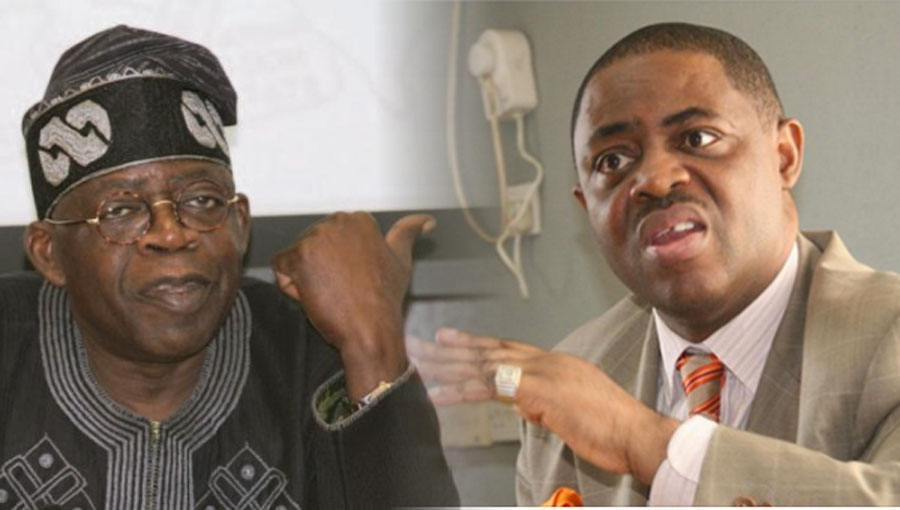
Tinubu, Fani-Kayode Face Proposed $36m US Lawsuit Over Alleged Threats
Tinubu, Fani-Kayode Face Proposed $36m US Lawsuit Over Alleged Threats
A United States-based lobbying firm, Von Batten-Montague-York, L.C., has announced plans to file a $36 million federal lawsuit against President Bola Ahmed Tinubu and Nigeria’s Ambassador-designate to South Africa, Femi Fani-Kayode, over alleged threats against the firm’s principal, Dr Karl Von Batten.
The firm, which is working for former Vice-President Atiku Abubakar, said it had been cleared and authorised to proceed with the proposed case at the United States District Court for the District of Columbia.
In a statement issued on Wednesday, the firm alleged that the planned action arose from threats to kidnap and physically harm Von Batten, which it attributed to Fani-Kayode.
It further alleged that the threats formed part of what it described as an organised criminal conspiracy involving the Nigerian Presidency.
The allegations have not been established by any court, and the proposed complaint had not been confirmed as filed in the US federal court as of Wednesday.
The firm said the proposed lawsuit would rely on provisions of District of Columbia tort law, the Foreign Sovereign Immunities Act (FSIA), the Justice Against Sponsors of Terrorism Act (JASTA) and the Anti-Terrorism Act (ATA).
It said the case involving President Tinubu would also raise questions concerning foreign sovereign immunity and head-of-state immunity while he remains in office.
READ ALSO:
- 18 Suspected Bandits Killed as Security Forces Foil Mass Kidnap in Katsina
- Police Arrest Two Arms Dealers, Recover 300 Rounds of Ammunition in Kaduna
- Petrol Depot Prices Fall as Dangote, Marketers Cut Rates, Pump Price Reduction Looms
The firm further announced plans to engage immigration authorities in the United States, United Kingdom and European Union after filing the case, asking them to consider whether Fani-Kayode’s travel or visa status should be reviewed in light of the allegations.
However, any decision on immigration or visa matters would rest with the relevant government authorities.
The proposed lawsuit follows an escalating dispute between Von Batten-Montague-York and Fani-Kayode over the firm’s campaign concerning historical United States records linked to allegations involving President Tinubu.
The firm has in recent months pursued Freedom of Information Act (FOIA) requests and litigation seeking access to US government records relating to Tinubu’s past dealings with American law-enforcement agencies.
It has also publicly criticised the Nigerian President and said it had shared documents concerning the matter with officials in the administration of US President Donald Trump, members of Congress and congressional staff.
Fani-Kayode has responded forcefully to the lobbyist’s campaign and has denied threatening to kidnap or harm Von Batten.
The former Aviation Minister said nobody was interested in killing or kidnapping Von Batten and accused him of making false claims against President Tinubu and the Nigerian government.
Fani-Kayode also said he intended to challenge Von Batten’s claims through lawful means.
The dispute has attracted additional attention because of the political relationship between Von Batten’s firm and Atiku Abubakar, who is seeking to challenge Tinubu politically.
Von Batten-Montague-York has presented the proposed litigation as a response to alleged threats against its principal, while Fani-Kayode has rejected the allegations.
The $36 million lawsuit remains at the proposed-litigation stage. The firm’s announcement that it had been authorised to proceed does not by itself establish that a federal complaint has been filed or that the allegations have been proven.
If the complaint is filed, the US court would have to consider the claims and any jurisdictional or immunity issues raised by the defendants. The filing itself would not establish the truth of the allegations.
For now, the central claims remain disputed, with Von Batten-Montague-York alleging threats of kidnapping and physical harm, while Fani-Kayode denies making such threats. There has been no court finding establishing the alleged conspiracy or threats.
Tinubu, Fani-Kayode Face Proposed $36m US Lawsuit Over Alleged Threats
-

 News3 days ago
NiMet Predicts Thunderstorms, Rain Across Nigeria Till Wednesday
-

 News2 days ago
NLC Backs ₦500 Petrol Demand, Workers Propose ₦500,000 Salary
-

 Auto3 days ago
Jetour T1 Storms Abuja as Automaker Accelerates Nigeria Expansion
-

 Politics2 days ago
Obi vs Soludo: ₦86.67bn Handover Figure Meets ₦127.37bn Debt Claim
-

 metro3 days ago
How Nigerians Can Get Federal High Court Affidavit Online Without Visiting Court
-

 Education3 days ago
JAMB Allows Candidates to Change Lost SIM, Email Addresses
-
 metro3 days ago
Kidnapped Female Police Officer Found Dead in Ebonyi as Suspect Leads Police to Remains
-

 metro3 days ago
Lagos Mechanic Lured With Mercedes Repair Job, Hacked to Death in Bush