

metro
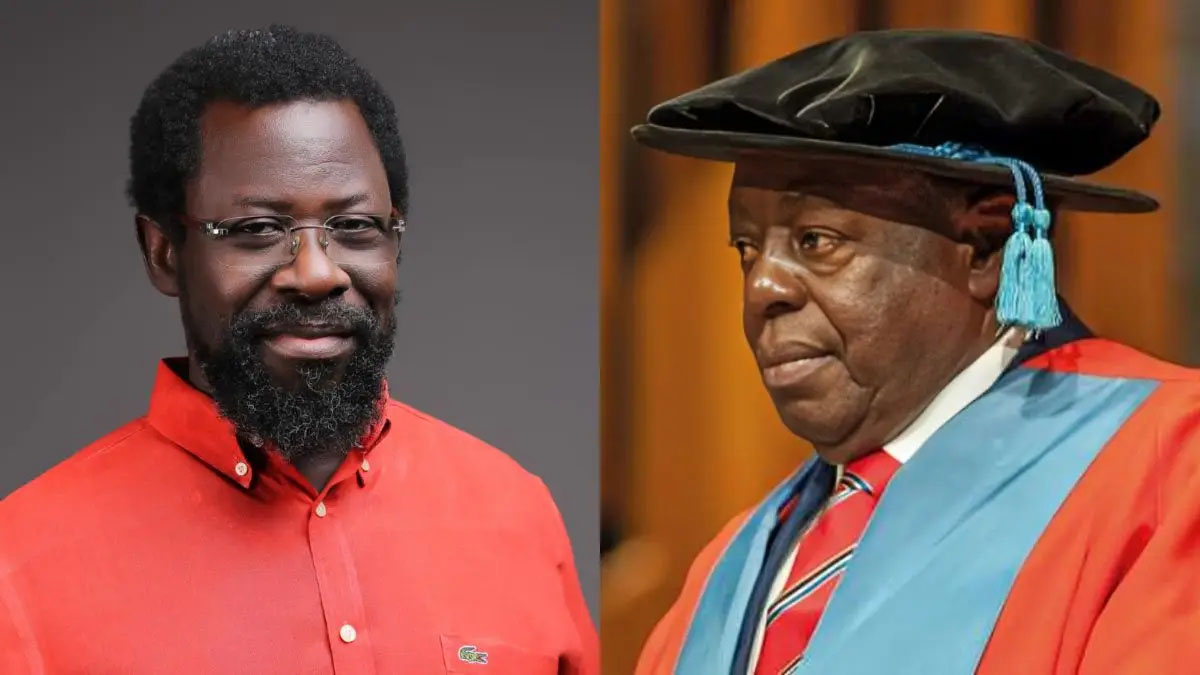
ALLEGED DEFAMATION: Read full petition by Afe Babalola that sent Dele Farotimi to prison
ALLEGED DEFAMATION: Read full petition by Afe Babalola that sent Dele Farotimi to prison
A High Court in Ado-Ekiti, the Ekiti State capital, on Wednesday remanded the human rights lawyer in prison.
His remand followed his arraignment by the police over a petition by Chief Afe Babalola in which he accused the Lagos State-based lawyer of defamation of character and cyberbullying.
Farotimi was arrested in his chamber in Lekki area of Lagos State by operatives of the Ekiti State Police Command.
The petition by Aare Babalola, dated November 9, 2024, to the Commission of the Ekiti State Police Command reads in full:
Dear Sir,
CRIMINAL DEFAMATION OF AARE AFE BABALOLA, AFE BABALOLA & CO AND HER LAWYERS BY DELE FAROTIMI
I write to report the criminal defamation of myself, my law firm Afe Babalola & Co and my lawyers in person of Olu Daramola SAN and Ola Faro by one Dele Farotimi in his book titled ‘NIGERIA AND ITS CRIMINAL JUSTICE SYSTEM’ published by Dele Farotimi publishers in respect of Suit no: SC/146/2005: Major Muritala Gbadamosi Eletu & Ors V.H.R.H Oba Tijani Akinloye & Ors.
SUIT NO: SC/146/2005: MAJOR MURITALA GBADAMOSI ELETU & ORS V. H.R.H OBA TIJANI AKINLOYE & ORS (2013) 15 NWLR PART 1378.
We were solicitors to the Gbadamosi Eletu family in the case of Major Muritala Gbadamosi Eletu & Ors V. H.R.H Oba Tijani Akinloye & Ors.
The Appellants lost the case at the High Court and the Court of Appeal before briefing my law firm to represent them at the Supreme Court.
The Appellant in this suit were Defendants at the High Court. The subject matter of the suit was 254 hectares of land at Osapa Eti-Osa Local Government Lagos sold to the late Gbadamosi Bamidele Eletu in 1977 by the Ojomu family. The said parcel of land was later acquired by Lagos State Government after it was sold to the Gbadamosi Bamidele Eletu by the Ojomu family.
The Ojomu family contested the acquisition against Lagos State Government in Suit No: ID/1883/89 wherein the court set aside the acquisition by the Lagos State Government. The Ojomu family then instituted the suit at the High Court of Lagos State claiming that title to the land had reverted to the Ojomu family despite the earlier sale of the land to late Gbadamosi Bamidele Eletu.
We represented the Eletu family and Judgement was delivered by the Supreme Court on 13/7/2013 in favour of the Eletu family wherein the Supreme Court held that: “Where a party has fully divested himself of all interest in land, no right vests in him to deal with the same property by way of further alienation anymore. He is caught by the maxim, nemo dat quod non habet; that is, he cannot give that which he no longer has. In the instant case, it was unfortunate that the respondents claimed title to the whole of their family land compulsorily acquired by the Lagos State Government including the portion earlier sold to the father of the appellants and in which they were in effective possession. The claim so made without disclosing the truth and excluding the said portion so sold was clearly made in bad faith and smacked of insincerity. It was very unconscionable and consequently against the principles of equity and good conscience.”
READ ALSO:
- Uganda: Arsenal fan shot dead for celebrating win over Manchester United
- Sanwo-Olu denies claims Lagos will benefit most from Tax Reform Bills
- Senate won’t back down on Tax Reform Bills – Akpabio
The Supreme Court also held that: “A court of law should not allow itself to be used as an engine for the perpetration of fraud, in whatever guise.”
A copy of the judgment is hereby attached as annexure 1.
VARIATION OF JUDGEMENT
Honourable Justice Kumai Bayang AKA AHS JSC wrote the lead judgement. His Lordship erroneously limited the land of the Appellants to 10 hectares (24.17 acres) in respect to Suit no: M/779/93 whose subject matter was part of the 254 hectares owned by the Eletu family.
We immediately filed a motion for variation of the judgement of the Supreme Court pursuant to Order 8 Rule 16 of the Rules of Court. The said motion was heard and ruling delivered on 18/3/2014 granting statutory right of occupancy to the Appellants in respect to the entire 254 hectares sold to late Gbadamosi Bamidele Eletu by the Respondents.
A copy of the ruling is hereby attached as annexure 2.
ENFORCEMENT
Upon the delivery of the Judgement, our client surreptitiously employed the services of S.B Joseph & Co to enforce the judgement before we applied for variation of the judgement with the intention of not paying our professional fees.
The judgement was however varied on 18/3/2014 as earlier stated.
NEW SUIT BY ESTATES/PERSONS AFFECTED BY THE JUDGEMENT
Several residential estates were affected by the judgement of the Supreme Court among which were Pinnock Estate, Beach Resort, NICON Estate, Friends’ Colony Estate and Victory Park Estate etc. Dele Farotimi was lawyer to one of the Estates.
The affected estates and individuals immediately filed fresh suits against the Eletu family with the purpose of frustrating the judgement of the Supreme Court.
The Eletu family were lured by the affected estates to settle some of the suits behind our law firm despite being counsel on record by filing terms of settlement with the aim of denying us our professional fees. This was admitted by Dele Farotimi in page 73 of his book ‘NIGERIA AND ITS CRIMINAL JUSTICE SYSTEM’.
INTERVENTION BY LAGOS STATE GOVERNMENT
The Lagos State Government issued a publication indicating their awareness of the Supreme Court judgement and the need for the State to intervene in order to maintain public peace and order. The Lagos State Government invited us for several meetings with respect to compromising the judgement of the Supreme Court.
The said judgement was eventually compromised and the Eletu family were compensated by the Lagos State Government so as to avoid a massive dislocation of persons and communities directly affected by the Judgement.
DEFAMATION BY DELE FAROTIMI
Sometime on 2/11/2024, one of our lawyers while travelling through Murtala Muhammed Airport bought a book by Dele Farotimi titled ‘NIGERIA AND ITS CRIMINAL JUSTICE SYSTEM’ published by Dele Farotimi publishers. He read the said book and immediately brought it to my attention. Many of my lawyers also bought the said book and read same.
We received several calls from professional colleagues, friends and family members who watched a program on Channel’s TV wherein Dele Farotimi was interviewed with respect to the said book where he made several defamatory statements against myself, my law firm Afe Babalola & Co (Emmanuel Chambers), Olu Daramola SAN and Ola Faro Esq.
READ ALSO:
- Trial of Auxiliary for attempted murder, armed robbery stalled
- Police clash with motorcycle riders in Lagos
- NAF airstrikes hit bandit camps in Zamfara, many notorious leaders killed
We also received several calls from persons who saw excerpts of the book and interview on several social media platforms.
The said defamatory statements are detailed below:
“That Aare Afe Babalola corrupted the Supreme Court to procure a fraudulent judgement in the service of his client” See page IX.
“That Aare Afe Babalola, Olu Daramola, Olu Faro and the law offices of Afe Babalola & Co, (Emmanuel Chambers) compromised the Supreme Court and the remaining semblance of integrity it might have had when they went back to the Supreme Court and got the Court to swim in the sewer of corruption and shameful self-Abnegation”. See page X.
“That Afe Babalola libeled me and the fact of the libel became known to me in a suit against Lawal Pedro SAN”. See page X.
“That I sued Afe Babalola SAN for libel and he leveraged his influence in the Judiciary to deny me justice”. See page X.
“That I have always been familiar with the fact of our perversion as a People and I have few illusions about equity and justice reigning in Nigeria but I had always assumed that there were lines that should never be crossed. I have however been slapped awake by the brazenness of the judicial brigandage unleashed on hapless citizens, corporate, and individuals by the Nigerian Supreme Court, acting under the direction of Aare Afe Babalola. At least five Justices of the Apex Court have been identified as guilty of odious corruption and or gross incompetence. Either is sufficient to have them removed from their office and this is my petition to the Nigerian people and most definitely to the NJC”. See pages 10 to 11.
“The first we knew of the magic been put together by Afe and his elves must have been around the middle of July”. See page 49
“While all this was going on, we had a meeting in the law office of Afe Babalola in Magodo, where Olu Daramola SAN made himself unavailable, and had us meet with Olu Faro, a younger counsel…..but Olu Faro Esq was remarkably insolent and assured that we were made aware of just how powerful the law office he worked for believed itself to be and how much above the law and the practice of law they believed themselves to be”. See page 52
“The judgement of the court was unanimous in giving judgement to the Eletu………..But Justice Rhodes-Vivour laid a foundation for the fraud that was to come. He spoke of an unextinguished equitable interest in 254 hectares”. See page 52 to 53.
“We quickly realized that the law office of Afe Babalola & Co, Emmanuel Chambers had outsourced the judgement execution to another law office, the firm of 5.B Joseph & Co the firm had fraudulently and deliberately concealed the judgement of AKA’AHS and had underlined the words of Justice Rhodes Vivour to deceive and perhaps mislead Atilade or as is more likely, Atilade was always a part of the original fraud”. See page 56.
READ ALSO:
- 2027 presidency: Goodluck Jonathan’s posters flood Kano
- Over 500 terrorist leaders eliminated in one year – DHQ
- ECOWAS court orders FG to pay torture victim N5m
“But even as Atilade J. played the contrition game, she was already part of the game plan being staged together by the grandmaster of judicial corruption in Nigeria, Afe Babalola. I have come to the conclusion that the required form of the application and her ruling were all part of the insidious plans of Afe Babalola, his band of crooked lawyers and coterie of crooked/incompetent justices of the Supreme Court”. See page 59.
“The battle to quash the warrant opened my eyes to the extent of the rot in the court system and I came to the knowledge of the sickening realities of the systemic putrefaction. The Supreme Court’s Judgement was doctored by the confederation of lawyers in Afe Babalola’s chambers and the law offices of S.B Joseph & Co and the end desired by the confederacy was sought with the active connivance of the head judge of the Lagos Division, Atilade J.”. See page 60.
“As the mountain of evidence in prove of the Eletus’ fraud began to pile up and in view of the order that Atilade had granted quashing the fraudulent warrant that she had issued and as Afe came to realize how useless the original judgement had become, Afe went back to the accomplices at the Supreme Court and this is the only logical explanation for the shameless and brazen review of the fraudulent judgement by the second seating of the court where the justices destroyed whatever doubt one might have harbored of either corruption and/ or incompetence”. See page 64.
“It was around this time we began to hear rumors of a return to the Supreme Court by Afe Babalola and his magical elves and the rumors became real when I got a call from Tokunbo Williams SAN, who informed me of the receipt of a motion on notice before the Supreme Court, seeking to correct an error in the judgement reproduced below”. See page 64.
“But apparently, we had underestimated the extent of the putrefaction of the Supreme Court and the extent of Chief Afe Babalola’s corrupt reaches into the innards of the Supreme Court”. See page 64.
“It was around this time we began to hear rumors of a return to the Supreme Court by Afe Babalola and his magical elves and the rumors became real when I got a call from Tokunbo Williams SAN, who informed me of the receipt of a motion on notice before the Supreme Court, seeking to correct an error in the judgement reproduced below”. See page 64.
“But apparently, we had underestimated the extent of the putrefaction of the Supreme Court and the extent of Chief Afe Babalola’s corrupt reaches into the innards of the Supreme Court”. See page 64.
“The quashed warrant of execution became the basis of Afe Babalola latest excursion to the Supreme Court and the error of my acceptance of the Corrupt offer of an exparte application to quash the warrant for “Documentary Irregularity” became obvious to me. I knew before the motion was heard, that the court was working to the conclusion desired by Aare Afe Babalola”. See page 67.
“The Lagos crowd had been snookered into a corner by the exertions of my chambers and we had demolished the original fraud that was hatched before Afe secured the first of the two judgements……….The Supreme Court cannot hide behind the incompetence of counsel as it has a duty to examine its own appalling intellectual indolence, corruption or incompetence”. See page 70.
“But the court as though enthralled by whatever Afe the Circus Master had Promised the Justices, acted with utmost carelessness about the integrity of the court, the interest of the citizens and the State that they had been sworn to protect. The conspiracy was always a step ahead of us because some of the clients mistook key members of the confederacy of friends and helpers”. See pages 70 to 71.
“The Attorney General had been dragged into the matter. The brutal attempt at enforcement of the original judgement against organized estates and corporate establishments had served to galvanize extremely critical and sensitive mass of the affected peoples and this was when Afe Babalola lost his influence on the Eletus and the Lagos Mafia whose original brief to procure enforcement of the judgement became the dominant force in the conspiracy muscling out the Afe gang. With Afe Babalola rendered impotent, Lawal Pedro muscled in on the queue”. See page 71.
“…… she knows more about the case that culminated in the Supreme Court Judgement and she also knew everything that I had known about the Eletus fraud and Afe Babalola’s shenanigans”. See page 76.
“But Afe knew that he could get the Supreme Court to do whatever he wanted and to rule however he asked. Pedro knew this too and he being the original Lagos boy, showed Afe a bit of Lagos magic. Afe Babalola and the Eletus might have killed the buffalo but had no way from feeding from the carcass. We have turned the corrupt triumph at the Supreme Court into a pyrrhic victory and it was at this point that Pedro craftily inserted himself into the plot”. See page 80.
READ ALSO:
- Military retirees protest unpaid entitlements at Finance ministry headquarters
- Aircraft carrying Borno deputy gov catches fire after take-off
- Four lawmakers dump LP for APC
“If Afe Babalola might be likened to the lion, Lawal Pedro and the Lagos gang are the originally Africa wild hyenas. They literally chased Afe Babalola off his skill. They repackaged the conspiracy, cut the losses and went for the lower hanging fruits”. See page 80.
“This was enough until ‘eedi’ (karma) caught up with Afe Babalola; he dragged Lawal Pedro before the Lagos High Court and the Eletus before ICPC”. See page 81.
“Sometimes in 2016, I started hearing rumblings of some serious fight between Chief Afe Babalola and Lawal Pedro. I was told that Chief Afe Babalola had written a petition to the LPDC, alleging that Lawal Pedro had railroaded his client Gbadamosi Eletu, into an agreement that circumvents his own legal agreement with the Eletus. About same time, I also heard that the ICPC had been pressed into action against the Eletus, Lawal Pedro and S.B Joseph, which seemed quite incongruous, given the fact that the Eletus were not public officers this event stirred an interest in me. I got my popcorn at the ready and waited to be entertained by the squabbling thieves”. See page 81.
“When Amina Augie JSC railed against Chief Afe Babalola’s professional conduct, or misconduct in the Bayelsa case, she did so either as an ostrich or out of ignorance. Afe has been corrupting the Supreme Court from ages past and had led it to commit the most egregious acts of evil and wanting injustice. Afe knows what her ladyship does not know or pretend not to know: that justice does not live in the Nigerian court or you can get the court to do whatever you want, as long as you know who to speak with and who to pay”. See page 83.
“Afe’s letter to Tunde Phillips, then CJ of Lagos State showed how frustrated he had become about the inability to execute the fraudulent judgement. In spite of the fact that he asked the Supreme Court to do what it had never done before……. the Eletus had formed a new confederacy and had neither room or use for Afe Babalola, who had overestimated his own importance to the plot and failed to discern that he had defectively become unnecessary to the new plotters”. See page 84.
“Afe is so enmeshed in his corruption that he has lost all sense of propriety and or fairness”. See page 84.
“I have absolutely no interest in taking Afe Babalola’s corrupt money but I was not going to allow a corrupt, amoral man, devoid of any integrity, to define me for posterity when none of us will be around to dispute the hagiographic account of the event”. See page 84
“Afe Babalola was imperial by the suit I filed in court it was designed to blow open the tawdry details of his dirty deals with the Supreme Court…..it was a thing to be having a quarrel among thieves, each knew how far they might push their claim but it is quite another thing to get into ‘roforofo’ fight with a man seemingly incapable of walking way from a fight”. See page 85.
READ ALSO:
- Bitcoin races above $100,000 mark on Trump appointment
- Court jails Lagos pastor, wife, shut church over N52m fraud
- MURIC reiterates opposition to Oyedepo’s private airstrip
“But there was a second incentive.This was the promise to get rid of the nuisance that my libel suit against Afe represented. I knew when I knew when I was filing the suit, that Afe was not in a position to ever defend the suit. He has no defense and he never anticipated that I will ever become aware of his libel and if he did, he wasn’t concerned about what a mere mortal like me could do to a god like him. Afe was offered assurances that he need not worry about the case. The conspirators had it in hand and would extinguish the fire.” See page 88.
I sued Afe Babalola because I was always going to blow his dirty, tawdry secrets. I did not know how long any of us had to live and I did not want to be dealing with the idiotic arguments that I could envision, of Afe’s proteges, arguing that I was slandering the dead if the book was to be published after his demise. He is already well in his 80s. I have offered him the opportunity to defend himself. He went to extra ordinary lengths to deny me my day in court”. See page 93.
The book ‘NIGERIA AND ITS CRIMINALJUSTICE SYSTEM’ is hereby attached as annexure 3.
All these statements are false and incorrect written deliberately to destroy my reputation. Dele Farotimi referred to me severally in his book as the Doyen of the legal profession.
The book has been circulated all over the country particularly in Ekiti State where so many persons who respect me as an elder state man has expressed their disdain as a result of the defamatory statement made by Dele Farotimi. The book has also been massively distributed online and has reached many persons globally who have expressed concern by Dele Farotimi’s intention to damage my hard-earned reputation. This is contrary to Section 374 of the Criminal Code.
These Statements are contrary to Section 373 and 375 of the Criminal Code which forbids any one from making defamatory statement which is likely to injure the reputation of any person by exposing him to hatred, contempt or ridicule or likely to damage any person in his profession or trade by an injury to his reputation.
The said statements are meant to lower myself, my law firm and my lawyer’s self-esteem in the eyes of members of the society and also to expose us to hatred, contempt or ridicule in the eyes of right-thinking members of the society.These statements were intended to cause right thinking persons in the society to shun and avoid me, my law firm and my lawyers.
The statements were made with the purpose of discrediting my law firm and ridicule us within the legal profession in order to injure our hard-earned reputation and financial credit.
The statements have caused many of our clients to stay away from us and seek the services of other law firms.
These defamatory statements have aroused the anger of right-thinking members of the society particularly members of the legal profession against me, my law firm and my lawyers.
These statements are likely to set the legal profession and the society at large ablaze in a way that can disturb public peace.
MY REPUTATION AND MY LAW FIRM
With every sense of modesty, I am one of the most distinguished legal luminaries of my generation, renowned both in Africa and globally for my profound contributions to the legal profession and the advancement of education. With over six decades of uninterrupted legal practice, my career is a testament to exceptional dedication, integrity, strategic advocacy, and visionary leadership.
I am a highly accomplished advocate, with some of the most celebrated cases in Nigerian legal history, representing high-profile clients, including government institutions, multinational corporations, and individuals. My advocacy spans domestic and international courts including contributions as a consultant to the Federal Government of Nigeria, World Bank, and various conglomerates. My extensive experience includes my role in arbitration, both locally and internationally, where I remain a respected authority.’ appeared in numerous landmark cases, shaping Nigerian jurisprudence and establishing myself as one of the nation’s most formidable legal minds.
My influence goes beyond the courtroom. As the Founder of Afe Babalola & Co. (Emmanuel Chambers), one of Nigeria’s leading law firms, I have trained over 300 lawyers, including 14 Senior Advocates of Nigeria (SANs), judges, and attorneys-general, making my chambers one of the most significant contributors to the legal profession in Nigeria. My exceptional litigation skills and legal acumen earned me the prestigious title of Senior Advocate of Nigeria (SAN) in 1987, cementing his place at the pinnacle of legal practice in the country. I currently have 7 senior advocates in chambers.
READ ALSO:
- 61 aircraft will join NAF fleet next year – Air chief
- I love London, it is my city, says Pastor Tobi, after losing UK deportation battle
- Exclusion of private university students from loan scheme unjust – JABU Vice-Chancellor
I am a renowned scholar and author. I have authored several authoritative legal texts, including Injunctions and Enforcement of Orders and Law and Practice of Evidence in Nigeria. My contributions to legal education extend to teaching at the Nigerian Institute of Advanced Legal Studies and delivering lectures at prestigious universities such as the University of Lagos and the University of lbadan. My popular column, YOU AND THE LAW, published in the Nigerian Tribune, reflects my commitment to educating the public on legal matters.
Beyond my legal practice, I have made extraordinary strides in education. My experience as Pro-Chancellor and Chairman of the Governing Council of the University of Lagos (2001-2007) spurred me to establish Afe Babalola University Ado-Ekiti (ABUAD). ABUAD has quickly become a beacon of academic excellence, integrity, setting new standards in Nigeria’s educational system. My efforts in education has been recognized globally, with numerous honorary degrees from universities including the University of London, University of Lagos and Ekiti State University.
My leadership in academia and law has earned me numerous accolades, including the Officer of the Federal Republic (OFR), Commander of the Order of the Niger (CON), and international recognition such as the Queen Victoria Commemorative Award at the Socrates Awards in Oxford, UK I was named Africa Man of the Year on Food Security and awarded an Honorary Doctor of Management by the Federal University of Technology, Akure. My groundbreaking achievements continue to inspire generations of lawyers and leaders across Africa and beyond.
In addition to my legal and educational contributions, I remain a committed philanthropist and advocate for reform in various sectors. My vast experience, unmatched expertise and unwavering commitment to excellence make me a trailblazer in the fight for truth, fairness and justice.
Key Achievements: Senior Advocate of Nigeria (SAN),1987. Officer of the Federal Republic (OFR). Commander of the Order of the Niger (CON). Pro-Chancellor and Chairman of the Governing Council, University of Lagos (2001-2007). Founder and Chancellor, Afe Babalola University, Ado-Ekiti (ABUAD). Queen Victoria Commemorative Award winner, Oxford UK Fellow, Nigerian Institute of Advanced Legal Studies. Honorary Doctor of Laws from the University of London, Ekiti State University, University of Lagos, and more.
My law firm was established in 1965 and has been nurtured and sustained by the finest legal values including integrity, advocacy, fairness, discipline and justice.
DELE FAROTIMI’S ADMISSION OF CRIME
It is necessary to bring it to your notice that Dele Farotimi admitted to have unlawful access to and corrupted the judiciary when he wrote in page 58 of his book as follows:
“The original Motion prepared by my office was a Motion on Notice. We prepared this and readied our processes to be filed, and then word came to us vide the Ojomu’s palace. Atilade had asked that we filed the motion exparte; this was to avoid a lengthy delay she assured her messengers to me, as having the motion papers served on Afe Babalola & Co will only serve to prolong the resolution of the problems created either by her corruption and or incompetence. My reasoned arguments against the exparte motion were not countenanced by the clients. They all just wanted the mess over and done with. Multi billion naira investments were being undermined by the situation. And several lives were being disrupted they argued”.
DISREGARD FOR RULE OF LAW
It is understandable why Dele Farotimi threw caution into the winds in writing his defamatory book. He stated in page 41 of the book, his uttermost disregard for the rule of law as follows:
“It was during one of our heated sessions that I declared my philosophy of law and I believe it was also the day that we began to understand the strength of our synergy and the value and efficiency of our then emergent partnership. I explained to him that I did not read law to follow the rules.”
CONCLUSION
We hereby humbly request that you use your good office to investigate the matter and stop Dele Farotimi from further damaging my reputation, the reputation of my law firm and that of my lawyers.
We also request that all existing hard copies of the said book should be recovered by the police while we take other necessary legal actions against Dele Farotimi.
In addition, his admission of corrupting the judiciary should also be investigated.
We request that this should be treated with utmost urgency in order to preserve the dignity of the temple of justice and the legal profession.
Yours faithfully
Aare Afe Babalola SAN
Founding Partner
Afe Babalola & Co.
ALLEGED DEFAMATION: Read full petition by Afe Babalola that sent Dele Farotimi to prison









metro
FG Declares Thursday Public Holiday for Nigeria’s 66th Independence Anniversary
FG Declares Thursday Public Holiday for Nigeria’s 66th Independence Anniversary
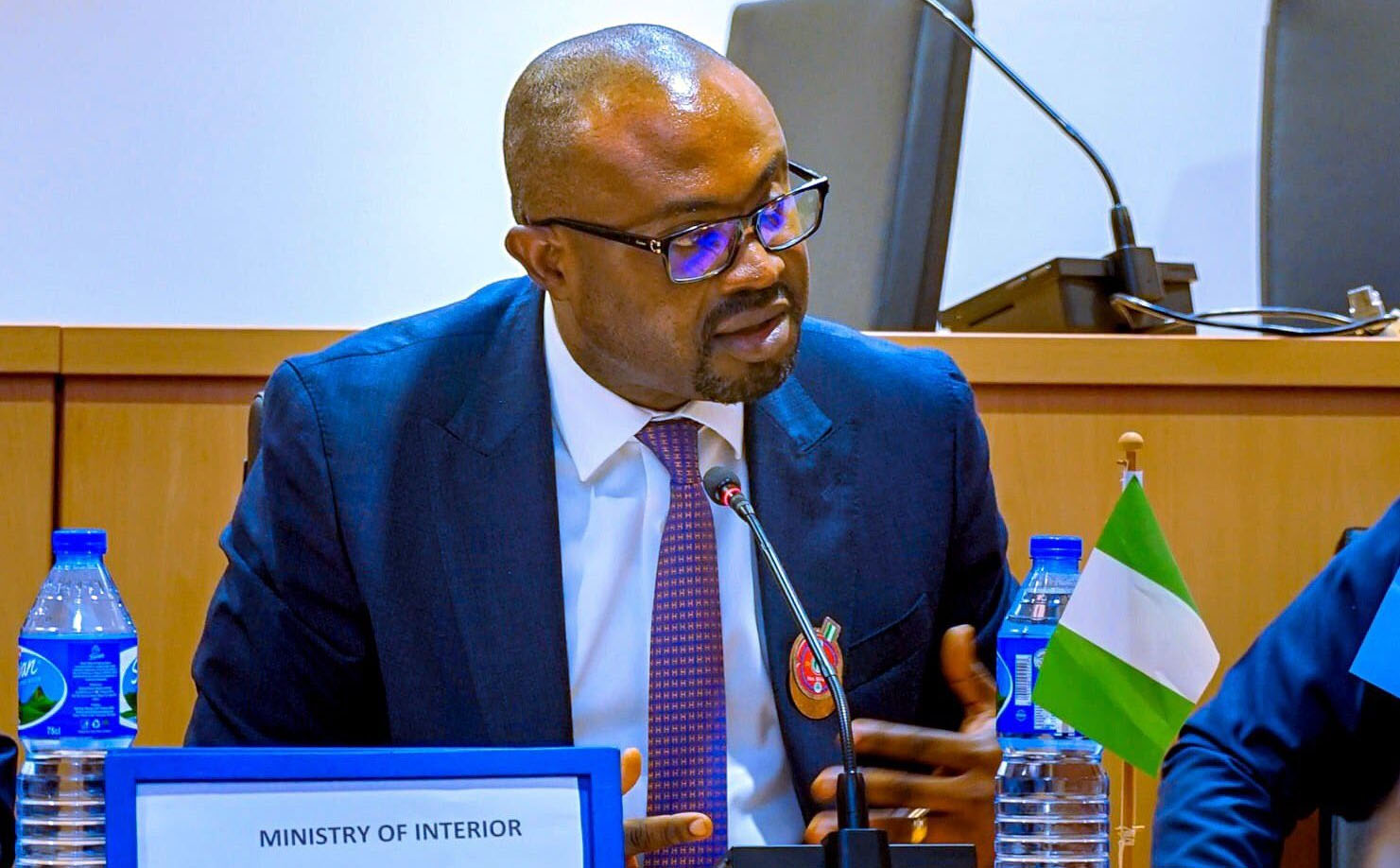
The Federal Government has declared Thursday, October 1, 2026, a public holiday to mark Nigeria’s 66th Independence Anniversary.
The Minister of Interior, Olubunmi Tunji-Ojo, announced the declaration on behalf of the Federal Government on Wednesday, congratulating Nigerians at home and abroad on the national celebration.
The minister urged Nigerians to use the occasion to promote national unity, patriotism, peaceful coexistence and mutual respect, while reflecting on the sacrifices of the country’s founding fathers and heroines.
Tunji-Ojo said peace and stability remained important to national development and called on citizens to remain committed to building a stronger and more prosperous Nigeria.
The minister also assured Nigerians that the Federal Government remained committed to strengthening national security, improving public safety and creating an environment where citizens could live and work with confidence.
The 2026 celebration marks 66 years of Nigeria’s independence, following the country’s attainment of independence from British colonial rule on October 1, 1960.
READ ALSO:
- Flood Cuts Off Part of Agbarho-Ughelli Road, Strands Commuters in Delta
- Dangote Draws Battle Lines as Fuel Import Fight Heads Back to Court
- Tinubu Returns After 30 Days in Europe, Says ‘I’m Healthy and Ready to Work’
The Federal Government is marking the anniversary under the theme, “From Reforms to Stability: Consolidating Nigeria’s Renewed Hope for Shared Prosperity.” The anniversary programme was earlier announced as a low-key celebration.
As part of the programme, an Independence Day Public Lecture is scheduled for Wednesday, September 30, while President Bola Ahmed Tinubu is expected to deliver a nationwide broadcast on Thursday, October 1.
The President is also expected to participate in other anniversary activities in Lagos, including the premiere of a documentary on the late businessman and politician MKO Abiola at the National Theatre.
The Federal Government has urged Nigerians to use the Independence Day celebration to reflect on the country’s journey since 1960 and renew their commitment to a united and peaceful Nigeria.
The October 1 public holiday applies nationwide, giving workers and other citizens an official day off to commemorate Nigeria’s Independence Day.
FG Declares Thursday Public Holiday for Nigeria’s 66th Independence Anniversary
metro
Five Remanded Over ‘Tinubu Must Go’ T-Shirts in Borno

Five Remanded Over ‘Tinubu Must Go’ T-Shirts in Borno
Five men have been remanded in custody in Maiduguri, Borno State, after they were arraigned over the alleged printing and wearing of “Tinubu Must Go” T-shirts.
The defendants — Baba Aji Gremami, 44; Mustapha Abba Yemen, 28; Abbacha Mohammed Ali, 32; Adam Umar Gubio, 21; and Abdulhamid Mohammed, 21 — were arrested on September 25 around the West End Roundabout area of Maiduguri, according to a First Information Report issued by the State Criminal Investigation Department.
Police alleged that the five men conspired to print and wear the T-shirts bearing the inscription “Tinubu Must Go”, with the intention of causing a breach of public peace in the area.
They were subsequently charged with criminal conspiracy, inciting disturbance, disturbance of public peace and thuggery under Sections 60, 78, 79 and 392 of the Borno State Penal Code.
The defendants appeared before the Chief Magistrate Court I in Maiduguri and pleaded not guilty to the allegations. Their lawyers subsequently applied for bail.
The court remanded the five men in custody and adjourned the matter to October 6, 2026, for a ruling on the bail application. The substantive case was also listed for October 26, 2026.
The police case centres on the alleged intention behind the production and wearing of the shirts, with the authorities maintaining that the conduct was capable of causing a breach of public peace. The charges, rather than the political slogan alone, form the basis of the criminal proceedings.
READ ALSO:
- Flood Cuts Off Part of Agbarho-Ughelli Road, Strands Commuters in Delta
- Dangote Draws Battle Lines as Fuel Import Fight Heads Back to Court
- Tinubu Returns After 30 Days in Europe, Says ‘I’m Healthy and Ready to Work’
The arrests have generated controversy, particularly over the balance between freedom of expression and public-order laws.
Amnesty International condemned the detention, arguing that wearing a shirt expressing political dissent should not, by itself, constitute a criminal offence. The organisation called for the men’s release and urged the authorities to protect the rights to freedom of expression and association.
The African Democratic Congress (ADC) in Borno State also condemned the arrests. The party said the men were being detained for expressing a political opinion and called for their immediate release. The party’s position is separate from the police allegations before the court.
There have also been claims that the arrests were politically directed, including an allegation that a senior political figure in Borno ordered the action. However, such claims have not been independently established, and the police report cited in the case does not establish that a political figure ordered the arrests.
The development comes as political activity increases ahead of the 2027 general elections, with opposition parties and supporters using different platforms to express criticism of the Federal Government and promote alternative political positions.
The case has consequently drawn attention to the application of freedom of expression, political dissent and public-order laws in Nigeria.
For now, the five men remain defendants in an ongoing criminal case. They have pleaded not guilty, and the allegations against them have yet to be determined by the court.
Five Remanded Over ‘Tinubu Must Go’ T-Shirts in Borno
metro
FG Targets 24-Hour Electricity in Lagos, Abuja, Kano, Others
FG Targets 24-Hour Electricity in Lagos, Abuja, Kano, Others
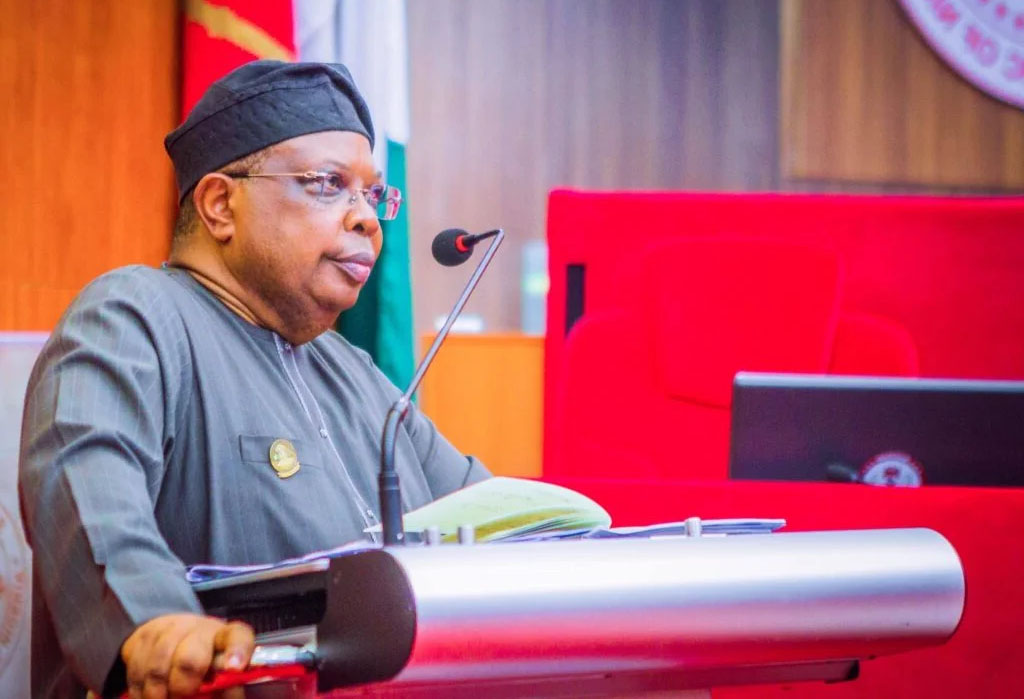
The Federal Government has begun discussions with electricity distribution companies on plans to establish Energy Zones aimed at delivering stable 24-hour electricity supply to homes, businesses and industries in major high-demand areas across Nigeria.
The proposed zones will initially focus on the Lagos axis, Abuja-Kaduna-Kano corridor and Enugu-Port Harcourt corridor, according to the Minister of Power, Joseph Tegbe.
Tegbe disclosed the plan after a strategic meeting with the leadership of selected electricity distribution companies (DisCos) as the government intensifies efforts to improve reliability across the power sector.
The proposed Energy Zones are designed to address bottlenecks at the distribution end of the electricity supply chain and ensure that more of the power generated and transmitted through the national grid reaches consumers.
Tegbe said the country’s power challenge extends beyond generation and transmission, stressing that the ability of distribution companies to take up available electricity and deliver it to homes, businesses and industries remains a major constraint.
He said the proposed zones would help close that gap, unlock additional commercial and industrial demand and improve the revenue and collection performance of DisCos.
The government also plans to expand electricity infrastructure in high-demand areas so that supply capacity can grow alongside the needs of Nigeria’s expanding economy.
The Energy Zones proposal comes as the government reports recent improvements in electricity generation and transmission. Tegbe said generation and transmission had risen above 5,000 megawatts (MW) in recent weeks, compared with about 3,700MW to 4,700MW before June, with generation reaching a reported peak of 5,330MW in August and September.
READ ALSO:
- Flood Cuts Off Part of Agbarho-Ughelli Road, Strands Commuters in Delta
- Dangote Draws Battle Lines as Fuel Import Fight Heads Back to Court
- Tinubu Returns After 30 Days in Europe, Says ‘I’m Healthy and Ready to Work’
However, the minister has acknowledged that higher national generation figures do not automatically translate into reliable electricity for every community because of problems across the transmission and distribution networks.
The government has therefore been prioritising infrastructure repairs and upgrades along major electricity corridors. Tegbe previously said transformers commissioned at Apapa, Ijora, Alausa and Lekki in Lagos had unlocked 672MW of transmission capacity, while a 300MVA transformer at Katampe in Abuja added another 240MW.
The government has also been working to increase electricity metering. Tegbe said about 350,000 meters were installed during his first 100 days in office, bringing cumulative installations to more than one million by August 2026.
He also said the resolution of legal issues surrounding the AMMON smart-meter programme had cleared the way for procurement of about 1.4 million additional smart meters.
The minister has identified the Lagos, Enugu-Port Harcourt and Abuja-Kaduna-Kano corridors as priority areas for stabilisation, alongside plans for a proposed Transmission Super Grid.
The focus on Lagos reflects the state’s substantial industrial and commercial electricity demand. The Federal Government has been conducting technical assessments along major industrial corridors, including the Lagos-Sagamu corridor, to identify infrastructure problems affecting power delivery.
The government has also been pursuing targeted projects to improve electricity supply to industrial areas. In Abuja, Tegbe said the Idu Industrial Area was being targeted for a 50MW electrification project, with the first 10MW phase expected by December 2026 and the remaining capacity planned for 2027.
The proposed Energy Zones are expected to complement such targeted interventions by concentrating infrastructure and distribution improvements in areas where electricity demand is already high.
The initiative is also expected to support manufacturing, businesses and industrial production, with the government linking more reliable electricity to economic growth, job creation and industrialisation.
However, the Federal Government has not announced a specific implementation date, capacity target or detailed infrastructure investment plan for the proposed Energy Zones. The 24-hour electricity supply therefore remains a government target under the initiative and should not be interpreted as a guarantee that consumers in Lagos, Abuja, Kano or the other identified areas will immediately receive uninterrupted power.
The proposed zones also come against the backdrop of continuing financial and operational challenges in the electricity market. Tegbe said the government had mobilised about N1.23 trillion to address part of the sector’s accumulated debt burden.
He has also said the government currently has no plan to increase electricity tariffs, with the immediate focus instead on improving supply reliability, strengthening infrastructure, metering consumers and addressing financial weaknesses across the power value chain.
The minister has acknowledged that many Nigerians are still without reliable electricity, despite reported improvements in generation and transmission. He said the government would continue to focus on incremental improvements rather than promise a quick solution to the sector’s longstanding problems.
Representatives of the Abuja Electricity Distribution Company (AEDC), Ikeja Electric, Eko Power, Ibadan Electricity Distribution Company (IBEDC) and Sahara Energy Group participated in the latest discussions on the proposed Energy Zones.
The Federal Government now intends to work with the participating electricity companies on strengthening distribution infrastructure and ensuring that available electricity can be delivered more efficiently to high-demand customers.
For consumers, the key issue will be whether the proposed investments can translate improvements recorded at the generation and transmission levels into more dependable electricity at the distribution and household level.
For now, the 24-hour electricity plan remains at the development and engagement stage, with the government yet to provide a firm rollout date or detailed specifications for the proposed Energy Zones.
FG Targets 24-Hour Electricity in Lagos, Abuja, Kano, Others
-

 metro2 days ago
Osogbo Food Bonanza Turns Nightmare as Discount Vendor Vanishes With Customers’ Millions
-

 metro2 days ago
24 Hours in Darkness: Iju Ishaga Residents, Businesses Count Losses as Ikeja Electric Fails to Restore Power
-

 News3 days ago
Agbede Mourns Baba Alado, Says Mushin Has Lost Pillar of Peace
-

 Education2 days ago
FG Releases 2026–2028 Approved Textbooks, Introduces QR Codes for Tracking
-

 Sports1 day ago
Nigeria XI vs Guinea-Bissau: Awoniyi, Lookman, Adams Lead Super Eagles Attack
-
 News2 days ago
Breaking: Tinubu Ends Extended European Vacation, Departs Paris for Nigeria
-

 Politics3 days ago
Why I Can No Longer Defend Peter Obi’s Lifestyle – Okonkwo
-

 metro1 day ago
Hamzat Clarifies Lagos Traffic ‘Lifestyle’ Remark After Backlash