

Politics
APC dares INEC, says March 26 convention will hold

The ruling All Progressives Congress, APC, may dare the Independent National Electoral Commission, as it has vowed to proceed with its March 26 National Convention.
The party has dismissed a letter written to it by INEC on the need to give the commission a fresh 21-day notice for its national convention slated for March 26.
It faulted INEC’s position that the letter by the acting Chairman Caretaker Extraordinary Convention Planning Committee, CECPC, Governor Abubakar Sani Bello, is legally defective.
The party also clarified that Yobe State Governor, Mai Mala Buni, remained the National Chairman of the CECPC, saying the Niger State Governor, Abubakar Sani Bello, is only operating in an acting capacity.
The spokesman for the party’s CECPC, Mr Ismaila Ahmed, disclosed this at a news conference in Abuja, on Friday.
He said, “It is pretty simple. I don’t know why this is a complicated issue for a lot of people to understand. Since the inception of this CECPC on June 25 2020, whenever the chairman is not around and Governor Sani Bello is around, he acts on behalf of the chairman.
“He is our acting chairman and that has always been the case. That has never changed. And now we have a Convention on 26th March, the Chairman wrote a letter for his leave to go for medical treatment. Those are two emergencies. He has a medical emergency that cannot wait for the Convention and we have a Convention that cannot wait for him to be healthy. So, one has to leave for the other.
“The chairman transmitted a letter and Governor Bello has been acting as appropriate. He is acting with the full authority of the CECPC and with the full authority of the stakeholders and leaders of the party and with the full consent and knowledge of Governor Mai Mala Buni. If anybody has any issues with any of our decisions, you can take it to court. For now, we know we are doing it with the full backing of the law. There is no ambiguity in this.”
According to him, the APC has given appropriate notice to INEC for its March 26 national convention.
He said the party had earlier intimated the commission of its intent to conduct its national convention on February 26 and that what is now required for its new date of March 26 is simply a notice of an adjustment and not a fresh 21-day notice.
“I am not only a youth leader or an interim Spokesperson for the party, I am also a lawyer and we have served a notice to INEC for the 26th of February earlier and we served that notice on 5th February. That was the required 21 days. If you are going to make any adjustment to that date, all you need is a letter making an adjustment to the date.
“We don’t need another 21 days and that letter was written about two weeks ago. Immediately we realized that we couldn’t hold it on the 26th of February.
“The moment the CECPC agreed on the 26th March, that letter was written to INEC and they have accepted the letter. So, that is long gone. It is not an issue. The issue of the date of the Convention is not an issue, not in INEC, not certainly with us. That is settled. It is sacrosanct. We have complied with all the requirements and we have notified INEC as appropriately expected of us.”
Buni had visited President Muhammadu Buhari, in London, to tell his side of the story on happenings in the APC and to hear directly from the head of state on his status in the CECPC.
He reportedly went to London from his sick bed in Dubai.
INEC had in a letter dated March 9, 2022 and signed by its Secretary, Rose Oriaran-Anthony, drew the attention of the APC to the need to comply with extant regulations.
The letter read, “Please refer to your letter Ref. APC/NHDQ/INEC/019/022/32, dated 8th March 2022.
“The Commission draws your attention to the fact that the notice for the meeting was not signed by the National Chairman and National Secretary of the CECPC (Buni and Akpanudoedehe) contrary to the provision of the Article 1.1.3 of the Commission’s Regulations and Guidelines for Political Party Operations (2018).
“Furthermore, the APC is reminded of the provision in Section 82(1) of the Electoral Act 2022 which requires ‘at least 21 days’ notice of any convention, congress, conference, or meeting convened for the purpose of ‘merger’ and electing members of its executive committees, other governing bodies or nominating candidates for any elective offices.’
“While hoping these issues are noted for compliance, please accept the assurance of the Commission’s warm regards.”
On the National Executive Committee meeting slated for next Thursday, the party said it would ratify the March 26 Convention date and update the house on the journey so far.
Ismaila Ahmed said the party’s Legal Adviser, Prof. Tahir Mamman, would address the public once some issues regarding the NEC meeting are clarified, adding that notices had been sent out for the NEC meeting.
The CECPC has excluded its National Secretary, Senator John James Akpanudoedehe, from the list of members saddled with fresh responsibilities.
Ahmed said, “I was tasked with the responsibility for Media and Publicity; Prof. Tahir Mamman will be overseeing the Legal Department; Hon. Stella Okotete and Senator Yusuf Abubakar Yusuf will be overseeing the Organizing Department, and then Dr James Lalu and Chief David Lyon will oversee the Finance Department; and former Senate President, Ken Nnamani and Senator Abba Ali will be overseeing the Policy, Strategy and Research Department.”
Meanwhile, immediate past Director-General of the Progressive Governors’ Forum, Salihu Lukman, has asked the party to probe some governors who he accused of working with Governor Buni to frustrate the party from holding its national convention.
He said, “There are known collaborators of His Excellency Mai Mala who have colluded with him to ensure that all attempts to organise the APC National Convention are blocked.
“Three governors who are known and must also be called upon to account for their roles in undermining decisions to organise the APC National Convention are His Excellency Yahaya Bello of Kogi State, His Excellency Hope Uzodimma of Imo State and His Excellency Dapo Abiodun of Ogun State.
“There are other party leaders, including Senator Uzo Kalu who have actively supported His Excellency Mai Mala to undermine the decision to organise the National Convention of the party. March 17, 2022, APC NEC should initiate processes of a disciplinary hearing in line with provisions of the APC Constitution to sanction all these leaders, if found guilty.”




Politics
APC Sweeps Enugu LG Election, Wins All 17 Chairmanship, 260 Councillorship Seats
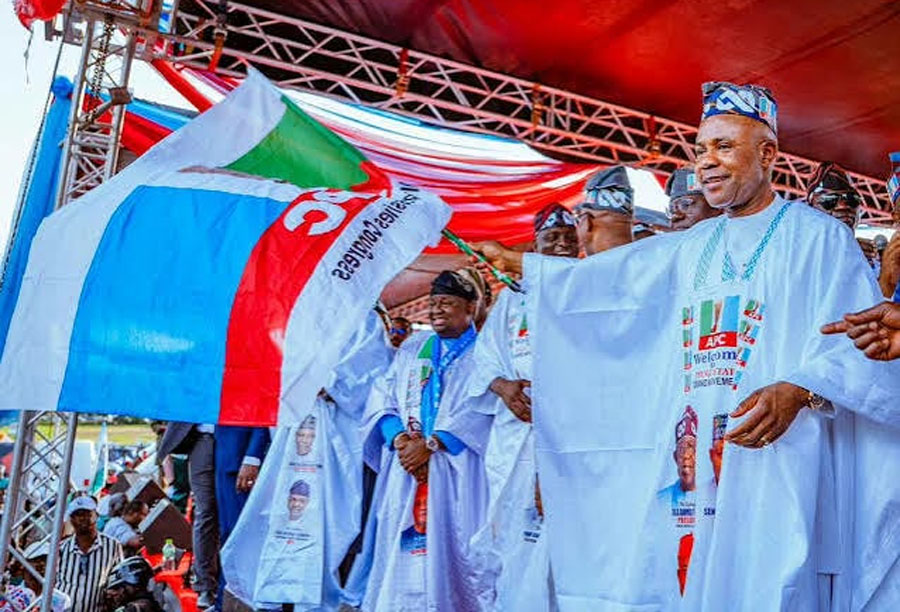
APC Sweeps Enugu LG Election, Wins All 17 Chairmanship, 260 Councillorship Seats
The All Progressives Congress (APC) has won all 17 local government area chairmanship seats and all 260 councillorship positions in the Enugu State local government election held on Saturday, September 26, 2026.
The results were declared on Sunday by the Chairman of the Enugu State Independent Electoral Commission (ENSIEC), Professor Christian Ngwu, after the completion of the collation exercise.
Ngwu announced that APC candidates secured the highest number of valid votes in all 17 local government areas and were consequently returned as elected chairmen. The commission also declared APC candidates winners of the 260 councillorship positions across the state’s 260 wards.
The outcome gives the APC control of the elected leadership of all 17 local government councils and the 260 political wards in Enugu State.
The election was contested by seven political parties, with voters choosing council chairmen and councillors across the state.
READ ALSO:
- Five Arrested Near US-Used RAF Fairford in UK Terror Probe
- Kano Upgrades Five PHCs to General Hospitals, Begins Assessment
- Iran Claims Capture of Second US Underwater Drone in Strait of Hormuz
Declaring the results, Ngwu said the successful candidates had satisfied the requirements of the law and recorded the highest number of valid votes in their respective constituencies.
He congratulated the winners and urged them to regard their election as a call to duty and an opportunity to serve the people. He also commended security agencies and other stakeholders who participated in the electoral process.
The declaration followed an election that recorded low voter turnout in several parts of the state. Reports from Enugu metropolis indicated that only a small number of voters were present at some polling units, while electoral materials arrived late at some locations.
The election also took place under significant movement restrictions. The state government and security agencies had restricted vehicular and human movement across Enugu on election day as part of measures to maintain security and ensure a peaceful exercise. Essential workers, accredited election officials and other authorised persons were exempted from the restriction.
Security agencies had also deployed personnel across the state’s 17 local government areas and 260 wards ahead of the election, while political parties, candidates and their supporters were urged to avoid electoral malpractice and actions capable of disrupting the exercise.
The 2026 result marks a change from the previous Enugu local government election held on September 21, 2024, when the Peoples Democratic Party (PDP) won all 17 chairmanship seats and all 260 councillorship positions.
With ENSIEC’s declaration and the presentation of certificates of return, the commission has concluded the announcement of the Enugu LG election results, confirming the APC’s sweep of the state’s 17 councils and 260 wards.
APC Sweeps Enugu LG Election, Wins All 17 Chairmanship, 260 Councillorship Seats
Politics
2027: Lagos APC Steps Up Grassroots Mobilisation Ahead of Atiku, Obi Challenge

2027: Lagos APC Steps Up Grassroots Mobilisation Ahead of Atiku, Obi Challenge
The Lagos State chapter of the All Progressives Congress (APC) has intensified preparations for the 2027 general elections, with the party strengthening its grassroots mobilisation across senatorial districts, local government areas, wards and polling units.
The move comes as political parties continue to build their campaign structures ahead of the elections, with Atiku Abubakar and Peter Obi among the presidential candidates listed for the 2027 contest.
For the 2027 presidential election, Atiku Abubakar is the presidential candidate of the African Democratic Congress (ADC), while Peter Obi is the presidential candidate of the Nigeria Democratic Congress (NDC). Obi’s running mate is Rabiu Musa Kwankwaso, who is also contesting on the NDC ticket.
The Lagos APC leadership says its immediate priority is to strengthen the party’s organisation at the grassroots and maintain regular engagement with voters across the state.
APC Lagos Chairman Cornelius Ojelabi said the party would decentralise its mobilisation efforts, placing particular emphasis on activities at the polling-unit level.
He described the strategy as “Operation Man Your Polling Booth”, under which party members would take responsibility for mobilisation and coordination around their respective polling areas.
READ ALSO:
- Deputy Director’s Death: NLC Shuts Delta Secretariat, Begins Indefinite Strike
- 2027: NDC State Chairmen Reject Obi-Kwankwaso Movement’s Parallel Structures
- South Africa: 27 Killed, 26 Injured in Separate Mass Shootings
Ojelabi also said the party was targeting five million votes in Lagos from a projected electorate of about seven million. The five-million figure is an APC campaign target and should not be interpreted as an independently verified forecast of the party’s eventual votes.
The mobilisation drive follows the inauguration of a 1,235-member Lagos APC campaign council for the 2027 elections.
Governor Babajide Sanwo-Olu was named chairman of the campaign council, while Deputy Governor Obafemi Hamzat serves as deputy chairman and former Senator Musiliu Obanikoro as Director-General.
The wider campaign arrangement also includes prominent Lagos APC figures, including former governors Babatunde Fashola and Akinwunmi Ambode, who have been assigned roles within the party’s advisory and mobilisation structures.
The broader APC campaign structure also places emphasis on grassroots engagement and mobilisation, youth mobilisation, women mobilisation, community support and other areas.
Hamzat has urged party campaigners to rely on facts, data and verifiable records when engaging voters, saying campaign messages should focus on policies, projects and measurable achievements.
The Lagos APC has also directed its 2027 candidates to suspend overseas travel until after the election, with the party saying candidates should remain available for campaign and grassroots mobilisation activities.
Ojelabi has similarly called on party members to conduct their campaigns peacefully and avoid violence, hatred and other conduct that could undermine the electoral process.
The renewed Lagos APC grassroots mobilisation comes against the background of the 2023 presidential election in the state, when Peter Obi, then the Labour Party candidate, secured 582,454 votes, while Bola Tinubu of the APC polled 572,606 votes.
The political landscape has since changed significantly.
For the 2027 presidential election, Atiku is contesting under the ADC, while Obi is contesting under the NDC, with Kwankwaso as his running mate.
The new party alignments have also produced different campaign structures from those that existed during the 2023 election.
Within the NDC, the party has given Obi and Kwankwaso a role in nominating key officials of the presidential campaign council, while the separate Obi-Kwankwaso Movement has also developed its own support structure.
The relationship between the NDC’s formal structures and the Obi-Kwankwaso support movement has generated differing positions among party officials in some states, although other state chapters have said they are working harmoniously with the support groups.
Against this backdrop, the Lagos APC is focusing on consolidating its own grassroots political structure, with particular attention to senatorial districts, local government areas, wards and polling units.
Lagos remains a significant focus of national politics because of its large electorate and its importance in presidential and state-level elections.
As preparations continue, the APC and opposition parties are building their campaign machinery, mobilising supporters and seeking to strengthen their presence among voters across the state ahead of the 2027 elections.
2027: Lagos APC Steps Up Grassroots Mobilisation Ahead of Atiku, Obi Challenge
Politics
2027: NDC State Chairmen Reject Obi-Kwankwaso Movement’s Parallel Structures
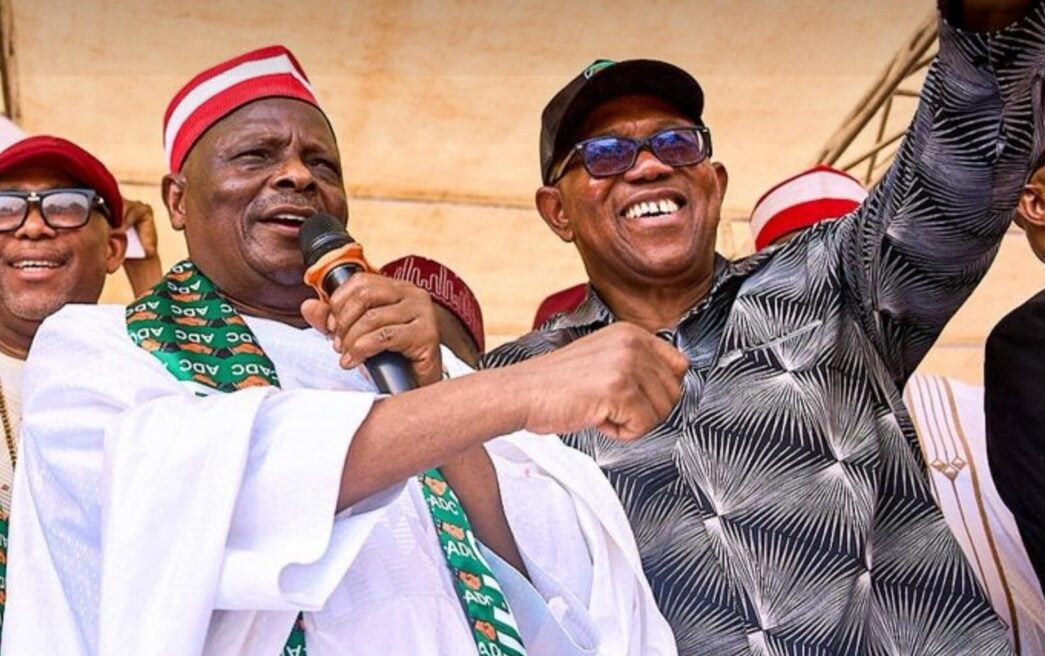
2027: NDC State Chairmen Reject Obi-Kwankwaso Movement’s Parallel Structures
State chairmen of the Nigeria Democratic Congress (NDC) have rejected the creation of parallel political structures by the Obi-Kwankwaso Movement (OK Movement) ahead of the 2027 general elections, insisting that support groups should not take over functions reserved for the political party.
The position comes amid an ongoing disagreement between the NDC and the OK Movement over the organisation of the campaign for the party’s presidential candidate, Peter Obi, and his running mate, Rabiu Musa Kwankwaso.
The dispute began after the OK Movement unveiled a 59-member Presidential Campaign Council on September 17. The structure included zonal and state coordinators as well as directors responsible for mobilisation, women’s affairs, strategy, security, legal affairs and other areas.
The movement named John Ughulu as Director-General of the campaign council and Saadatu Sani as secretary.
The NDC subsequently dissociated itself from the council, saying it was not authorised or constituted by the party. National Chairman Moses Cleopas said the public should disregard the structure and stressed that only the party’s appropriate organs could constitute or announce an official NDC campaign council.
READ ALSO:
- Abuja Police Arrest Woman, Two Hotel Workers Over Man’s Body Dumped Under Bridge
- Bauchi Police Arrest 26-Year-Old Man Over Rape Of 50-Year-Old Woman
- 2027: Lawal Challenges Wike To Clarify Allegiance Over Rainbow Coalition
The disagreement deepened after the OK Movement insisted that it was an independent political organisation with its own leadership, structures and internal processes.
The movement also said it would not collapse or surrender its national, state, local government and ward structures to the NDC.
However, NDC leaders have maintained that support groups can mobilise for the party’s candidates but should not establish structures that perform the functions of the political party or its official campaign organisation.
NDC National Leader Seriake Dickson has said support groups should complement the party rather than compete with it or operate as parallel structures.
The position has also received a response from Obi himself.
Obi, speaking on Arise TV’s Prime Time, said the NDC was the political party to which he and his supporters belonged, while the OK Movement, Obidient groups and Kwankwasiyya should operate as support groups.
He also said the creation of a presidential campaign council by a support group was not appropriate and disclosed that he had not been consulted before the OK Movement announced its 59-member council.
Despite the disagreement, the NDC has taken steps towards establishing its own official campaign machinery.
The party previously gave Obi and Kwankwaso authority to nominate key officials of the NDC Presidential Campaign Council, including the Director-General, Deputy Director-General for the North, campaign spokesman, deputy spokesman, Head of New Media and finance officials, in consultation with the party leadership.
The latest disagreement therefore centres on the distinction between the official NDC campaign structure and independent support organisations backing the Obi-Kwankwaso ticket.
While NDC state chairmen have insisted on the authority of the party’s structures, the OK Movement continues to maintain that it has the right to retain its own organisational framework.
The parties and support groups have not indicated that the dispute has affected the candidacy of Obi and Kwankwaso, but the disagreement has become a prominent issue in the organisation of the 2027 opposition campaign.
2027: NDC State Chairmen Reject Obi-Kwankwaso Movement’s Parallel Structures
-

 News2 days ago
Anambra Releases ₦473m Salary Arrears Document as Obi’s Debt Claim Sparks Fresh Dispute
-

 News2 days ago
Keyamo: ₦70,000 Minimum Wage No Longer Enough as Cost of Living Soars
-
 metro2 days ago
EFCC Chairman Raises Alarm Over Alleged Theft of Nigeria’s Public Funds
-
 Sports2 days ago
AFCON 2027 Qualifier: Nigeria Fight Back to Beat Madagascar 2-1 in Uyo
-
 Politics2 days ago
2027: Otti Explains Why He Supports Tinubu Despite Remaining in Labour Party
-
 metro2 days ago
Umahi Announces First Niger Bridge Reopening Next Week, Orders Tinubu Pictures
-

 metro2 days ago
Anambra Police Arrest 25-Year-Old Suspect Linked to 2023 Kidnap, Murder
-

 Entertainment2 days ago
Jetour Takes Adventure Beyond the Road, Brings Solar-powered Borehole to Ibeju-Lekki community