
Business
Bad Petrol: Shortage worsens as filling stations run out of stock, close doors

- Lagos, Abuja worst hit
- NMDPRC issues directive to depots, stations
- FCCPC moves to sanction importers, distributors
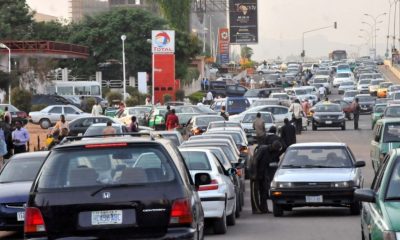
FRESH indications, emerged, yesterday, that shortage of petrol in the country has worsened as many filling stations decided to shut their doors against motorists and other buyers in Abuja as well as Lagos, Oyo and Ogun states.
Sunday Vanguard learnt that while many of the stations had exhausted their stock of quality petrol, others still had commercial stock of the bad product which utilisation, last week, culminated in the damage of many automobiles, generators and other equipment.
Some marketers, who pleaded anonymity, said it will take a while to bring in new product, especially because of limited space for storage.
According to the marketers, the bad product will have to be properly evacuated from depots and filling stations to authorised places before the new product could be moved into the domestic market.
Meanwhile, the situation has culminated in the emergence of illegal or black market, whose operators were seen hawking the product at between N200 and N350 per litre, depending on location in Lagos and environs.
READ ALSO:
- ASUU: I Don’t Believe In Strike – UNILORIN VC
- 19-month-old pupil flogged by teacher hospitalised, dies five days after
- Police nab couple with human parts in Ogun
NMDPRA orders depots, stations
Nigerian Midstream and Downstream Petroleum Regulatory Authority, NMDPRA, created to regulate operations under the newly established Petroleum Industry Act, PIA, responding to the development, yesterday, ordered all depots and filling stations to open their doors for inspection.
The inspection and quantification of the bad product will be carried out by various committees, including technical and commercial, established during the recent stakeholders engagement in Lagos.
FCCPC spits fire
Also yesterday, in line with Federal Government’s promise to deal with those behind the bad petrol, the Federal Competition and Consumer Protection Commission, FCCPC, commenced moves targeted at bringing importers and distributors of the product to book.
In a statement obtained by Sunday Vanguard, Executive Vice Chairman/Chief Executive, FCCPC, Babatunde Irukera, noted that its intervention was in consonance with Sections 17(a), (h), (i), (l), (t), (w), (y), (z), 131(a), (b), (d), 132, 133, 136 of the Federal Competition and Consumer Protection Act, 2018; and Sections 164(5)(b) and 210 of the Petroleum Industry Act, 2021.
Irukera stated: “The Federal Competition and Consumer Protection Commission has become aware that a certain but limited quantity of Premium Motor Spirit (PMS) that does not comply with established, applicable, and prevailing standards has been distributed and sold in certain parts of the country.
“The Commission in the process of its initial investigative assessment understands that consumers who purchased fuel that constitutes part of this consignment have experienced technical difficulties and or damage to their vehicles or other relevant equipment/machinery.
“In furtherance of its investigation; and pursuant to relevant laws, the Commission is currently engaging multiple regulators and entities relevant and involved in the PMS distribution value chain.
“The purpose of ongoing engagements include, addressing hardship or difficulties consumers may experience with respect to withdrawal of the implicated products from the market, securing assurance and promoting consumer confidence that supply constrains are addressed and will not persist and ensuring that the regulator’s recall effort under applicable laws and regulations including Petroleum Industry Act, 2021 and Federal Competition and Consumer Protection Act, 2018 (FCCPA) sufficiently excludes continuing distribution of the implicated product.
“It also includes encouraging and promoting additional and robust mechanisms to prevent reoccurrence and developing a meaningful and transparent mechanism to address demonstrated injury to affected consumers.
READ ALSO:
- Supporters dump Aregbesola’s APC faction, back Osun gov
- Abba Kyari: PSC gives IGP new orders, sets deadline for fresh report
- North Can’t Afford To Let Tinubu Down – Sen Shettima
“The Commission’s engagement with the key and relevant regulators/entities involved has been constructive and productive. The Commission commends this responsiveness and prioritisation of ensuring continuity of supply, containment of implicated product and sensitivity to consumer dissatisfaction and inconvenience.
“The Commission is continuing engagement, particularly with respect to a reasonable and acceptable mechanism to mitigate demonstrated injury and or loss experienced by consumers. The Commission intends to provide additional information as this rather dynamic situation evolves.”
Blame game
In a related development, Oando Plc, yesterday, joined other companies to deny its alleged involvement in the importation of the bad product.
In a statement obtained by Sunday Vanguard, the company stated: “Following media reports listing Oando as one of four importers that supplied methanol-blended Premium Motor Spirits (PMS) into the country, we hereby
state that Oando did not import and supply PMS that was adulterated or substandard.
“The PMS supplied by Oando met Nigeria’s import specification. We are committed to working assiduously with the NNPC and industry to identify the root cause(s) of the subsequent contamination of the PMS supplied.
“We want to assure the public that Oando as a responsible corporate citizen would not partake in the importation, distribution, or marketing of substandard petroleum products.”
Previously, MRS and Emadeb had refuted that they were among marketers that imported the bad fuel into the country.
A statement released by the lead partner, Emadeb Energy Services had explained that importation of the contaminated PMS was executed by a “member of the consortium.”
“Therefore, the blanket claims made against the consortium are misleading and contradict the actual events that happened; they do not fully reflect and/or represent what transpired. It is important to inform the public of these facts and provide clarifications relating to delivery of the said contaminated PMS to the country,”the statement said.
READ ALSO:
- One killed as thugs attack Igboho’s house, supporters in Ibadan
- I want to step in Buhari’s shoes, not his toes, says Tinubu
‘’We also deem it necessary to protect our image as we have invested a lot in building our respective brands in the industry”.
The company, which alleged that Brittania-U Nigeria Limited (Brittania-U) was the sole supplier of the 90,000MT of PMS delivered via MT Torm Hilde, had added: “At the formation of the consortium in May 2021, Brittania-U refused to execute the Service and Consortium Agreement submitted in fulfillment of the award of the DSDP Contract.”
On its part, MRS had claimed that the petrol brought into its facilities was imported by Duke that works for Government.
Buhari, Reps reaction
President Muhammadu Buhari and the House of Representatives had, last week, talked tough over the bad fuel, saying those behind the importation must be held accountable.
Meanwhile, a source close to Brittania-U told Sunday Vanguard that the company is innocent of the allegations.
VANGUARD









Auto
Lagos NURTW Chairman Sego Distributes Exotic Cars, Luxury Items to Cabinet Members (Video)

Lagos NURTW Chairman Sego Distributes Exotic Cars, Luxury Items to Cabinet Members (Video)
The Chairman of the Lagos State chapter of the National Union of Road Transport Workers (NURTW), popularly known as Sego, has distributed exotic cars, luxury items, and other valuables to members of his cabinet.
The development, which took place on Tuesday, drew attention across Lagos as beneficiaries reportedly received high-end vehicles and other expensive gifts as part of what insiders described as a reward and appreciation gesture.
READ ALSO:
- Canada Raises Permanent Residence, Citizenship Fees for Nigerians, Others
- Plateau Palm Sunday Massacre: US Lawmaker Warns Nigeria
- Cars Torched as South Africans Protest Alleged Nigerian ‘Igbo King’ Coronation
Sources within the union disclosed that the items shared included luxury cars, household equipment, and other high-value materials, aimed at boosting morale among cabinet members and strengthening loyalty within the leadership structure of the union.
Observers say the move highlights the growing influence and financial strength of transport unions in Lagos, particularly the NURTW, which plays a key role in the state’s transport sector.
While supporters of the chairman have praised the gesture as a sign of generosity and leadership, critics argue that such displays of wealth raise questions about transparency and accountability within union operations.
As of the time of filing this report, there has been no official statement from Sego addressing the distribution, but the development has continued to generate reactions among stakeholders in the transport industry and the wider public.
The Chairman of the Lagos State chapter of the National Union of Road Transport Workers (NURTW), popularly known as Sego, has distributed exotic cars, luxury items, and other valuables to members of his cabinet
Tonto Dike | Blessing CEO | Kaduna | Pastors and Imams | Jerry Eze pic.twitter.com/YWGLjMiJyZ
— Newstrends.Ng (@Newstrends_ng) March 31, 2026
Lagos NURTW Chairman Sego Distributes Exotic Cars, Luxury Items to Cabinet Members (Video)
Business
Naira Slides to ₦1,415 per Dollar in Parallel Market as Official Rate Weakens
Naira Slides to ₦1,415 per Dollar in Parallel Market as Official Rate Weakens
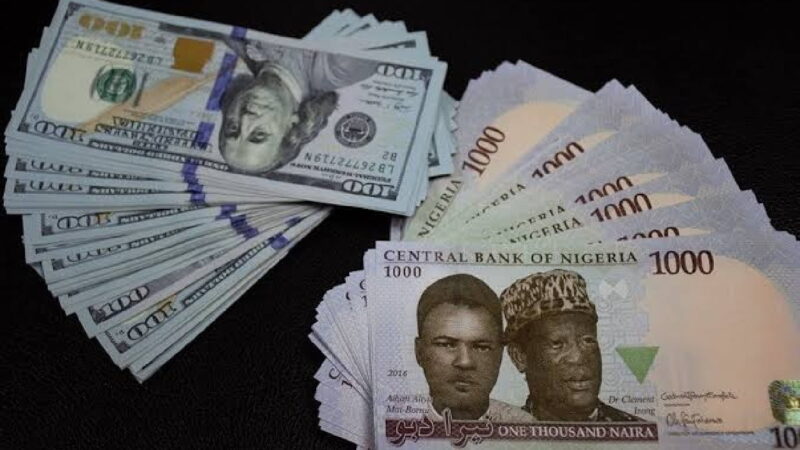
The Nigerian Naira continued its downward trend yesterday, trading at ₦1,415 per US dollar in the parallel (black) market, up from ₦1,405 per dollar last Friday. This latest depreciation underscores ongoing pressure on the currency amid high demand for foreign exchange and limited supply.
Data from the Central Bank of Nigeria (CBN) showed that the naira also weakened in the Nigerian Foreign Exchange Market (NFEM), trading at ₦1,386.75 per dollar, a drop from ₦1,384.25 recorded last week. This reflects a modest ₦2.50 decline at the official window.
READ ALSO:
- Plateau Attackers Spoke Fulfulde, Came on Motorbikes, Ex‑Rep Says
- US Lawmaker Urges King Charles to Meet Jeffrey Epstein Survivors During US Visit
- Spain Shuts Airspace to US Warplanes, Rejects Iran Conflict Involvement
The gap between the parallel and official rates widened further to ₦28.25 per dollar, compared with ₦20.75 over the weekend, highlighting persistent market distortions between formal and informal forex channels.
Analysts say the naira’s slide is largely driven by rising dollar demand from importers, investors, and corporate traders, while supply remains constrained despite CBN interventions aimed at stabilising the currency. Recent policy adjustments, including allowing oil exporters more flexibility to repatriate proceeds, have yet to significantly ease pressure on the naira.
The depreciation in both the parallel and official markets has direct implications for import costs, inflation, and the purchasing power of Nigerian households and businesses. Market watchers are closely monitoring the CBN’s next moves, with expectations that further policy actions may be needed to curb the naira’s decline.
Naira Slides to ₦1,415 per Dollar in Parallel Market as Official Rate Weakens
Business
NCC Orders MTN, Other Telcos to Compensate Subscribers for Poor Network Service

NCC Orders MTN, Other Telcos to Compensate Subscribers for Poor Network Service
The Nigerian Communications Commission (NCC) has directed major mobile network operators (MNOs), including MTN, Airtel, Glo, and 9mobile, to compensate subscribers affected by poor network quality in areas where performance falls below regulatory standards. The move is part of a broader shift toward a consumer-focused approach aimed at protecting users and strengthening accountability in Nigeria’s telecommunications sector.
In a statement on Sunday, Nnenna Ukoha, Head of Public Affairs at the NCC, emphasized that subscribers should not bear the full burden of service disruptions caused by operators’ failure to meet prescribed benchmarks. She explained that compensation will be provided in the form of airtime credits, calculated based on subscribers’ average spending patterns and the duration of service outages in affected areas.
READ ALSO:
- Abuja Convention: Wike PDP Faction Confirms Mohammed as Chairman, Anyanwu as Secretary
- Debate as OPM Pastor Marries Autistic Man to Older Woman
- Jos Attack: Plateau Govt Declares 48-Hour Curfew After Deadly Assault
“Erring operators will compensate affected users directly for breaches of quality of service key performance indicators within specified time frames,” Ukoha said. She added that while regulatory fines have traditionally served as a deterrent against poor service delivery, the commission is now adopting a more consumer-centric approach that ensures users directly benefit from enforcement actions.
Under the directive, tower companies and network providers are also required to reinvest fines and penalties into infrastructure upgrades, aimed at addressing coverage gaps and improving overall network quality. Subscribers are encouraged to report service interruptions to their operators and the NCC to ensure timely compensation.
Industry observers have welcomed the move, describing it as a significant step toward empowering telecom users, improving quality of service (QoS), and holding operators accountable for network performance failures. The NCC will monitor compliance closely and take further action against any operators that fail to meet the compensation and service standards.
NCC Orders MTN, Other Telcos to Compensate Subscribers for Poor Network Service

-

 Entertainment19 hours ago
Funke Akindele, Toyin Abraham Spark Reactions Over Alleged Snub at Iyabo Ojo’s Premiere
-
 metro1 day ago
Jos Attack: Plateau Govt Declares 48-Hour Curfew After Deadly Assault
-

 metro3 days ago
Tragedy in Aramoko: Trailer Rams Residential Building, Kills 300‑Level Student
-

 Entertainment3 days ago
Nollywood Actress Declares Love for Ibrahim Chatta, Offers to Pay Her Own Dowry
-

 Entertainment3 days ago
Streamer Peller Escorted Out of Alake of Egbaland’s Palace in Abeokuta
-
 metro3 days ago
ADC Chairman’s Daughter Joins Pro-Tinubu Campaign Organisation
-
 News19 hours ago
UK Raises Visa Costs, Tightens Immigration Rules From April 8
-
 International2 days ago
Iran Threatens US-Linked Universities in Middle East Amid Escalating Tensions