
News
Bandits shun Gumi, ask Buhari to lead peace talk
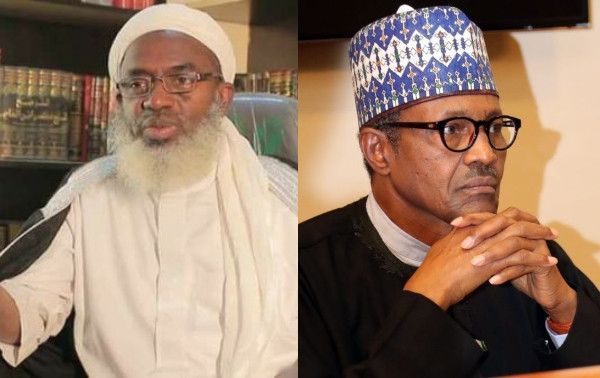
- No legal basis for dialogue with bandits – Senior lawyers
Bandits causing mayhem in many parts of the country through killings and kidnappings have asked President Muhammadu Buhari to personally lead peace talks with them.
They may have thus shunned the mediation being embarked upon by a popular Islamic cleric, Sheikh Ahmad Gumi, between them and the government for the release of students and other kidnapped people in their captivity.
But some senior lawyers have cautioned against the ongoing appeasement of bandits, terrorising several states through dialogue between them and some governors as well as non-state actors.
Some of the bandits who demanded this accused the President of not being serious about the ongoing peace talk or calls for amnesty for them to make them to stop their attacks.
In the past few months, bandits have carried out series of attacks and kidnappings, including secondary schools, especially in northern Nigeria.
Gumi had met with some of the bandits in the forests of Zamfara, appealing for peace.

But in an interview with Daily Trust, a masked bandit said if Buhari could travel around the country when he was campaigning, nothing should stop him from coming for peace talks.
He said an agreement was earlier reached with his group, but they were soon abandoned in the forest.
“An agreement was reached, but you left that person in the forest with a gun and nothing to substitute. What do you expect? How do you want that person to survive? All the promises made to us none of it was fulfilled,” he said.
“The president should personally come and preside over the talks. When he was campaigning, he travelled all over, why would he not do it now? He does not take these peace talks seriously and everyday people are being killed.
“There is no day that someone is not killed between Zamfara, Niger, Kaduna, Sokoto and Katsina. There is no tribe that is spared, gunmen kill, soldiers kill, vigilantes kill. Whoever you see with a gun today in Nigeria, he uses it to kill people. You may not know but if I were to tell you the situation of things in this country, you will cry. Even the president will cry.
“We supported this administration and accepted dialogue because we thought Buhari will fix this country, but he won’t fix this country. From the time he praised Goodluck, Obasanjo, and Yar’Adua, these were not praiseworthy. It would have been better if he had praised Abacha, because, under Abacha, pastoralists were being educated.
“During Abacha, there was allocation in the budget for the nomadic communities. There was no such thing again since Obasanjo became president. They stopped looking after the Fulanis. Their forests and grazing areas were taken over.”
He said they took up arms because they, as herders, were not carried along by the government.
According to him, the herders had no security as they were being killed, and the government didn’t do anything.
He also accused the government of not providing education and jobs for their young ones.
But some senior lawyers described dialogue with the bandits, who had kidnapped and killed hundreds of people in Katsina, Niger, Kaduna, Benue, Plateau, Zamfara and Sokoto States, among others, as illegal as there is no legal framework to support it.
The lawyers such as former Director-General of the Nigerian Institute of Advanced Legal Studies, Prof. Epiphany Azinge (SAN); former Chairman of the National Human Rights Commission (NHRC), Prof. Chidi Odinkalu; Mr. Dayo Akinlaja (SAN) and Prof. Yemi Akinseye-George (SAN), spoke in separate interviews with THISDAY against the backdrop of negotiations with the bandits in order for them to end attacks on various communities in the affected states.
Gumi recently after visiting the camps of the bandits called on the government to grant those willing to make peace ‘blanket amnesty’ if the current security situation must be tackled.
The Nigeria Governors’ Forum (NGF) has also reportedly expressed its readiness to enter into dialogue with the bandits to resolve the current security challenges.
Azinge said it is unacceptable to engage criminals.
“In all criminal jurisprudence, you will always see that the issue of conspiracy to commit a crime or the issue of aiding and abetting the crime has always been criminalised,” he stated.
He added that anyone who negotiates with suspected criminals, whether authorised or not, is aiding and abetting crime.
“This is not something that should be encouraged in any form. It is another way of saying that government is boldly and clearly saying that it has lost grip and is no longer in control,” he stated.
Similarly, Odinkalu condemned negotiation with bandits, saying they have committed offences against the laws of the land and must be punished, accordingly.
He said: “This is not necessarily a matter on which the constitution provides specific instructions. You have to read the tea leaves and other things. It is rather simple to do so.
“Look, the constitution guarantees a right to life for every Nigerian and makes it a crime to kill another without lawful justification.”
He added that reprisal, such as Gumi was speaking about, is not the lawful justification for killing.
“So, that is a crime. Government has a duty to ensure accountability for such crime, not to negotiate it away,” he said.
Akinlaja said there was no legal basis for negotiating with bandits or any criminals.
“Assuming without conceding that there is a legal rule that allows for negotiation with criminals, the very heinous, traumatic and pervasive nature of the banditry that has seemingly held our nation by the jugular would even make it an exception to that rule,” he stated.
Akinseye-George described negotiating with bandits as an admission of state failure.
“Those who negotiate with bandits may indirectly be encouraging banditry,” he said.
Akinseye-George distinguished between what is currently going on and amnesty, stating that amnesty involves a change of heart on the part of the wrongdoers and surrender of arms in exchange for amnesty.









News
American Woman, 64, Alleges Embassy Mocked 27-Year-Old Fiancé Before Visa Denial

American Woman, 64, Alleges Embassy Mocked 27-Year-Old Fiancé Before Visa Denial
A 64-year-old American woman has claimed that officials at the U.S. Embassy in Lagos, Nigeria mocked her relationship with her 27-year-old Nigerian fiancé before denying his K-1 fiancé visa, leaving her emotionally distressed. The woman, who identified herself as Deborah, shared her experience during a live call with U.S. immigration attorney Jim Hacking, highlighting the challenges and perceived bias in the visa process.
Deborah explained that her fiancé attended a formal interview at the embassy but was issued a 221(g) refusal form, a common administrative measure indicating that further processing or verification is required before a visa can be granted. The notice stated that the applicant “does not meet the qualifications for the visa class.” Hacking told Deborah that 221(g) refusals often occur when consular officers have unresolved questions about the authenticity of a relationship, especially in cases involving significant age differences or unusual circumstances.
According to Deborah, the interview proceeded normally until the consular officer asked about the couple’s age difference. When informed that she was 64 and her fiancé 27, she alleges the officer reacted with surprise, repeatedly referenced her age, and appeared to discuss the relationship with a colleague outside the room. She described seeing both officers laughing in the hallway before returning and issuing the visa refusal.
READ ALSO:
- CBN Policies, Foreign Inflows Drive Naira to Two-Year Peak
- Edo Governor Okpebholo Names Mercy Johnson-Okojie Special Adviser
- Many Feared Dead as Suspected Lakurawa Militants Attack Kebbi Communities
Deborah said her fiancé presented about 20 documents, including photographs and chat records, to prove the legitimacy of their nearly two-year-long relationship. However, she claimed the consular officer dismissed the evidence as unnecessary at that stage.
Hacking advised Deborah that under such circumstances, the couple might consider marrying first and applying for a spousal visa, rather than a fiancé visa. He explained that even then, the process could take up to two years, a timeline that left Deborah visibly distressed during the live call.
Visa denials under Section 221(g) of the U.S. Immigration and Nationality Act are not uncommon and typically signal the need for additional documentation or administrative review rather than permanent ineligibility. Recent U.S. visa policies for Nigerians have tightened, including additional social-media disclosure requirements, reflecting broader efforts to combat fraud and ensure compliance with immigration rules.
Deborah described the denial as a “devastating blow” to a relationship she and her fiancé have nurtured for years. Despite prior visits to Nigeria, she said she had been hoping to spend more time with her fiancé in the U.S., a plan now complicated by procedural delays and bureaucratic hurdles.
American Woman, 64, Alleges Embassy Mocked 27-Year-Old Fiancé Before Visa Denial
News
FG Seals Plateau Mine After 37 Killed in Toxic Gas Tragedy
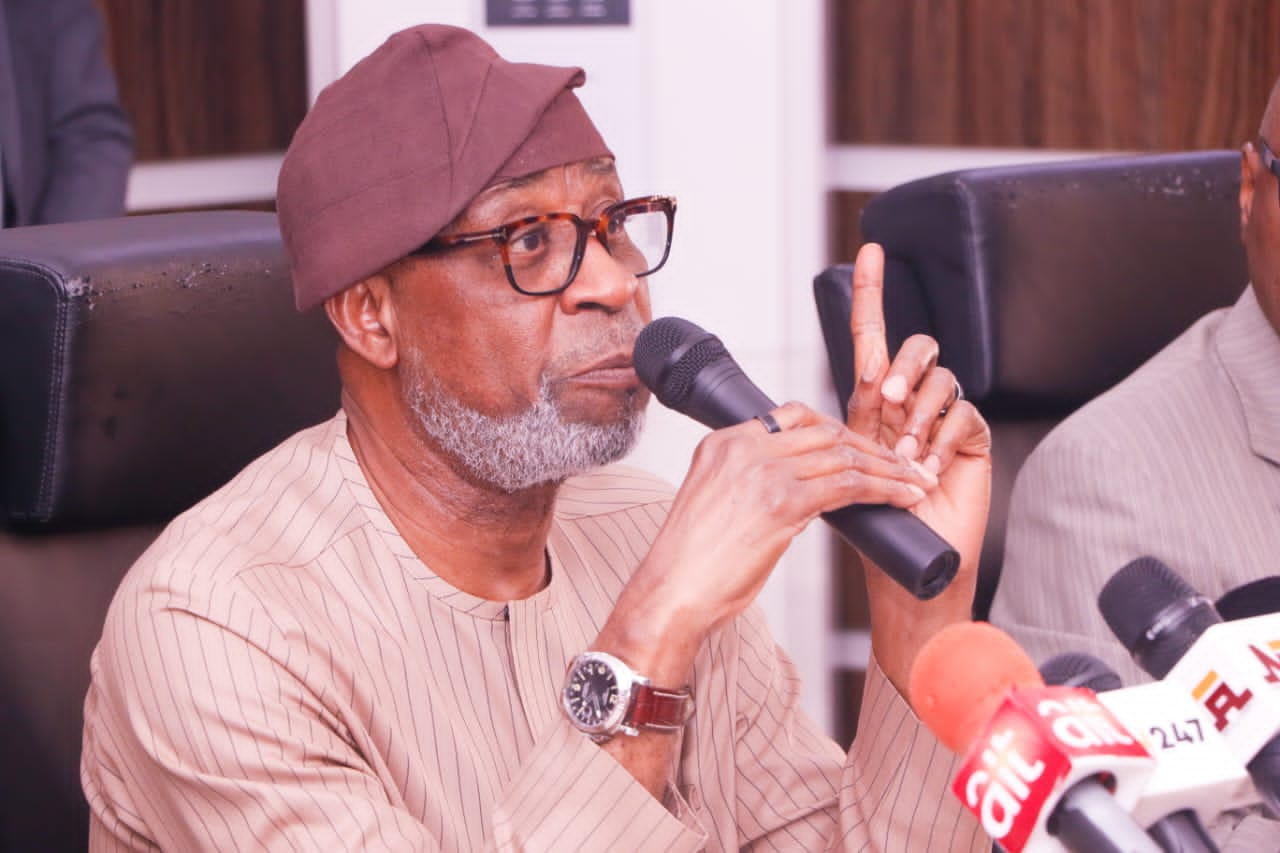
FG Seals Plateau Mine After 37 Killed in Toxic Gas Tragedy
The Federal Government has ordered the immediate closure of a mining site in Zuraq, Wase Local Government Area of Plateau State, following the death of 37 miners in a suspected toxic gas exposure.
Minister of Solid Minerals Development, Dr. Dele Alake, directed that the site be sealed to prevent further casualties and pave the way for a comprehensive investigation into the tragedy.
According to local authorities, the victims were exposed to poisonous gaseous emissions in the early hours of Tuesday while working in an underground pit. At least 25 other miners are currently receiving treatment in hospital.
In a statement issued in Abuja by his Special Assistant on Media, Segun Tomori, the minister disclosed that the affected site falls under Mining Licence 11810, operated by Solid Unit Nigeria Limited and owned by Abdullahi Dan-China.
READ ALSO:
- Troops Kill Five Kidnappers, Rescue Abducted Woman in Plateau
- Sowore Condemns Electoral Act 2026 as Threat to Nigeria’s Democracy
- DSS Takes El-Rufai into Custody After Two Nights at EFCC Headquarters
Alake said a high-level investigative team led by the ministry’s Permanent Secretary, Yusuf Yabo, has been deployed to the area to determine both the immediate and remote causes of the disaster and recommend appropriate sanctions. The team comprises mining engineers, environmental compliance officers and experts in artisanal mining operations.
Preliminary findings indicate that the licensed operator allegedly ceded the pit to members of the host community following agitation for economic empowerment. The area, reportedly an abandoned lead site, contained stored minerals capable of emitting sulphuric oxide — a hazardous substance.
Unaware of the danger, villagers engaged in mining activities and were exposed to the toxic fumes.
The minister described the incident as a tragic loss of innocent Nigerians striving to make a living and extended condolences to Plateau State Governor Caleb Mutfwang and families of the victims.
He assured that further updates would be provided as investigations progress, stressing the government’s commitment to enforcing safety and environmental standards in the mining sector.
FG Seals Plateau Mine After 37 Killed in Toxic Gas Tragedy
News
Tinubu Ends NNPCL Oil Revenue Deductions, Orders Full FAAC Remittance

Tinubu Ends NNPCL Oil Revenue Deductions, Orders Full FAAC Remittance
President Bola Ahmed Tinubu has signed a sweeping executive order mandating the direct remittance of all oil and gas revenues into the Federation Account Allocation Committee (Federation Account Allocation Committee), in what is regarded as one of the most significant fiscal reforms since the enactment of the Petroleum Industry Act (PIA).
The directive, announced by presidential spokesperson Bayo Onanuga, requires that all proceeds from royalty oil, tax oil, profit oil, and profit gas be paid in full into the federation account without deductions, before statutory distribution to the federal, state, and local governments.
A central element of the order strips Nigerian National Petroleum Company Limited (NNPCL) of its long-standing 30 per cent management fee on profit oil and profit gas, a deduction that has repeatedly drawn criticism for significantly reducing funds available for sharing among the three tiers of government. The presidency said the practice undermined constitutional revenue entitlements and weakened public finances.
In addition, the president directed that the 30 per cent Frontier Exploration Fund created under the PIA will no longer be retained or managed by NNPCL. Instead, all funds previously set aside under the arrangement will now flow directly into the federation account for FAAC distribution, altering the financing structure for frontier basin exploration activities.
READ ALSO:
- Lagos DSVA Confirms Mirabel Assault Happened in Ogun, Transfers Case
- Arsenal Blow Two-Goal Lead as Bottom Club Wolves Hold Gunners to 2–2 Draw
- Two Killed, Five Injured as Violence Erupts at APC Ward Congress in Ondo
The executive order also affects the handling of gas flare penalties. Payments into the Midstream and Downstream Gas Infrastructure Fund have been suspended, with all proceeds from gas flaring penalties now to be paid directly into the federation account. Officials said existing environmental remediation frameworks already cover such obligations, making the additional fund unnecessary.
According to the presidency, the reforms are aimed at blocking overlapping deductions, including management fees and profit retentions, which collectively divert more than two-thirds of potential oil and gas revenues before they reach FAAC. President Tinubu warned that shrinking net oil revenues pose serious risks to national budgeting, debt sustainability, and overall economic stability.
The president emphasised that the new framework will reposition NNPCL strictly as a commercially driven national oil company, removing quasi-fiscal responsibilities while strengthening transparency, accountability, and oversight in Nigeria’s oil and gas revenue management.
To ensure effective implementation, Tinubu approved the establishment of an inter-ministerial committee comprising senior officials from the economic management team, justice sector, and relevant regulatory agencies. The committee is expected to coordinate legal, financial, and operational steps required for immediate compliance.
The president also signalled plans for a broader review of the Petroleum Industry Act, indicating that further amendments may be pursued to address structural and fiscal concerns raised by stakeholders, particularly state governments.
With oil and gas revenues remaining central to Nigeria’s fiscal health, the executive order represents a decisive move to tighten revenue flows, strengthen FAAC allocations, and reinforce fiscal federalism across the country.
Tinubu Ends NNPCL Oil Revenue Deductions, Orders Full FAAC Remittance

-

 News3 days ago
Saudi Arabia Confirms Sighting of Ramadan Crescent, Fasting Begins Wednesday
-

 metro3 days ago
Lagos Woman Shares Ordeal After Alleged Rape, Sparks Nationwide Outcry
-

 News2 days ago
Ramadan Begins in Nigeria as Sultan Confirms Crescent Sighting
-

 metro2 days ago
Seven Killed in Horrific Crash at Ota Toll Gate
-

 International18 hours ago
Canada Opens New Express Entry Draw for Nigerian Workers, Others
-
 metro3 days ago
Deadlock at National Assembly as House Snubs Electoral Act Bill Meeting on E-Transmission Clause
-

 News2 days ago
Korope Drivers Shut Down Lekki–Epe Expressway Over Lagos Ban (Video)
-

 Health2 days ago
Ramadan Health Tips: Six Ways to Stay Hydrated While Fasting
You must be logged in to post a comment Login