

International
Biden gets praise, criticism for calling Russia’s actions in Ukraine ‘genocide’
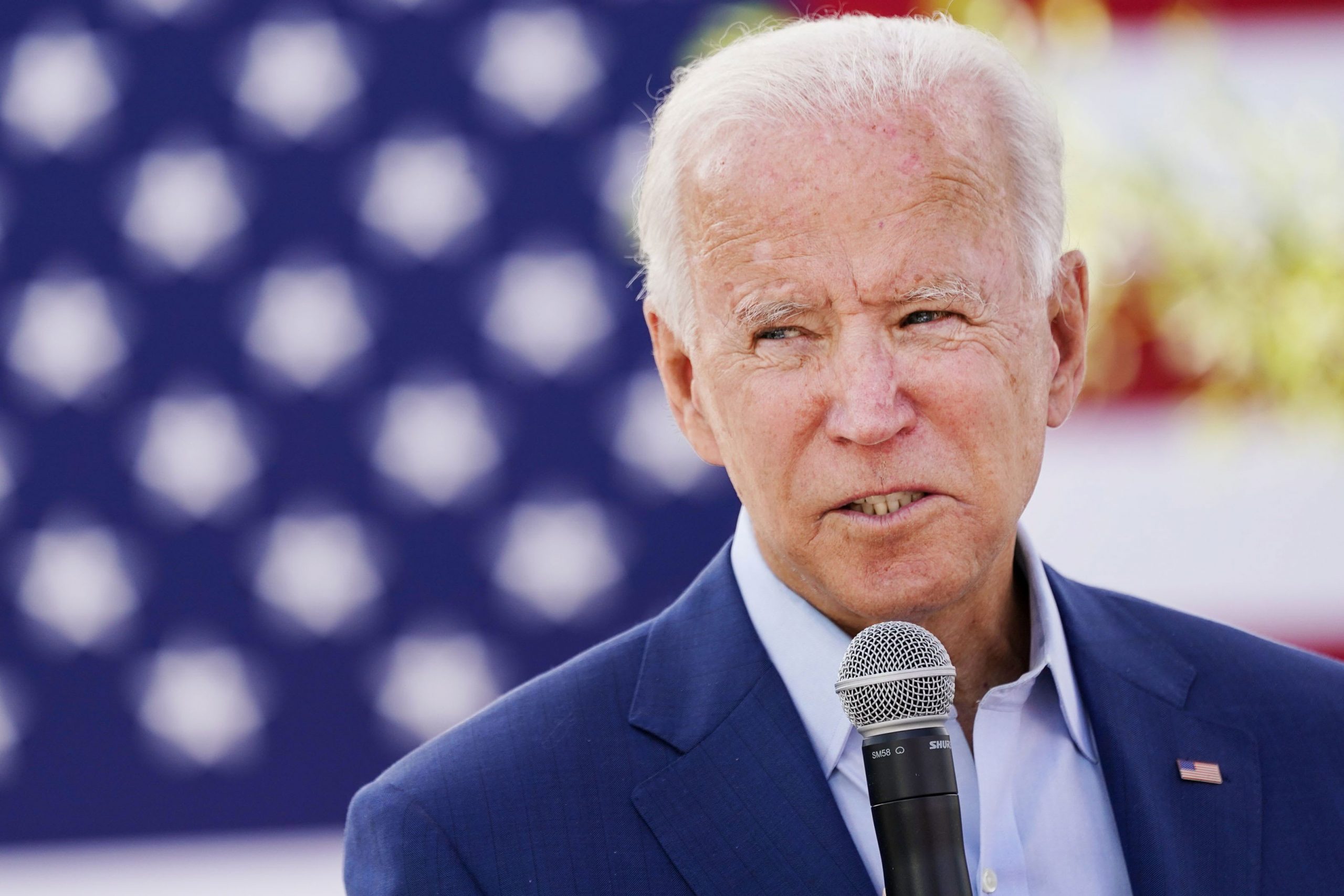
President Joe Biden is getting both praise and criticism after doubling down on describing Russian President Vladimir Putin’s actions in Ukraine as “genocide” — the first time he’s used the term since the invasion began nearly 50 days ago — even as Ukraine’s President Volodymyr Zelenskyy for weeks has claimed that is what’s happening on the ground.
White House press secretary Jen Psaki defended his use of the term, as she did when Biden called Putin a “war criminal” and when he said “cannot remain in power,” saying Wednesday the president was simply expressing “what he feels.”
“The president was speaking to what we all see, and what he feels as clear as day in terms of the atrocities happening on the ground, as he also noted yesterday,” Psaki said, before tempering his use of the term. “Of course, there will be a legal process that plays out in the courtroom but he was speaking to what he has seen on the ground, what we have all seen in terms of the atrocities on the ground.”
Pressed directly on whether Biden’s comments might conflict with the U.S. policy, Psaki dismissed concerns and repeated the requirement of a “legal process” which can sometimes take years.
“He was not getting ahead of that. He was speaking on what he feels he sees on the ground,” she said.
“I do not think anybody is confused about the atrocities we are seeing on the ground — and different leaders around the world describe it in different ways,” Psaki added later on. “It is unquestionable that what we are seeing is horrific, the targeting of civilians, hospitals, children. The president was calling it like he sees it, and that is what he does.”
READ ALSO:
- Oyo court remands man for beating thief to death
- Lagos motorcyclist bags life sentence for raping passenger
- How Bride-To-Be, 28 Others Die In Sokoto Boat Mishap
State Department spokesperson Ned Price gave a similar line at his briefing Wednesday, saying Biden used the term based on “impressions that he has seen and that we all have seen,” but noted the U.S. is working with international lawyers to determine if Russia’s crimes meet the legal threshold.
During prepared remarks in Iowa Tuesday blaming inflation and gas prices on “Putin’s price hike,” Biden said, for the first time, “Your family budget, your ability to fill up your tank, none of it should on hinge on whether a dictator declares war and commits genocide half a world away.”
His use of the word raised questions among Washington reporters about whether it was an ad-libbed moment or a policy shift from the White House — until Biden later insisted he meant exactly what said.
“Yes, I called it genocide,” Biden told reporters after his remarks. “Because it has become clearer and clearer that Putin is just trying to wipe out the idea of even being able to be a Ukrainian. And the evidence is mounting. It’s different than it was last week, the more evidence is coming out of the — literally, the horrible things that the Russians have done in Ukraine and we’re going to only learn more and more about the devastation.”
Genocide is defined as an act “committed with intent to destroy, in whole or in part, a national, ethnical, racial or religious group,” according to the United Nations’ Convention on the Prevention and Punishment of the Crime of Genocide. Biden went on to acknowledge the U.S. government has an internal, legal process for designating whether genocide has occurred but still stood by what he indicated was his opinion.
“We’ll let the lawyers decide internationally whether or not it qualifies, but it sure seems that way to me,” Biden added.
Zelenskyy has argued — and pleaded — for weeks that Russia has met this definition and called on Western leaders to use the same term, so was quick to applaud Biden’s comments as “true words of a true leader.”
The Kremlin, meanwhile, blasted the comment as Putin indicated this week indicated his invasion won’t stop until his goals are met and said peace talks with Kyiv had reached a “dead end.”
“We consider this kind of effort to distort the situation unacceptable,” Kremlin spokesperson Dmitry Peskov told reporters Wednesday. “This is hardly acceptable from a president of the United States, a country that has committed well-known crimes in recent times.”
It’s not clear how many Western leaders will go as far as Biden and Zelenskyy — or what will take for them to reach the same conclusion.
READ ALSO:
- Six Kidnappers killed by police In Edo Gun Duel
- Mother of two allegedly poisoned by mother-in-law in Ilorin
- Max Air passengers violently protest flight delay in Abuja
No other Western nations have made the determination, aside from Estonian Prime Minister Kaja Kallas tying Russia’s crimes to the term in a tweet. French President Emmanuel Macron suggested Wednesday he’s more “careful” with his words than the American president, saying only that “war crimes” have been confirmed.
“So far, it has been established that war crimes were committed by the Russian army and that it is now necessary to find those responsible and bring them to justice,” Macron told France 2 in an interview.
“I am very careful with some terms [genocide] these days,” he added. “I’m not sure the escalation of words is helping the cause right now.”
Asked directly by ABC News Senior White House Correspondent Mary Bruce about Macron’s criticism Wednesday, Psaki declined to comment.
Macron also rebuked Biden’s language last month, when asked about Biden calling Putin a “butcher” and saying he “cannot remain in power” during remarks in Warsaw.
“I wouldn’t use those terms, because I continue to speak to President Putin,” Macron said in another interview with France 3. “Because what do we want to do collectively? We want to stop the war that Russia launched in Ukraine, without waging war and without escalation.”
Biden stood by his words then, saying he was “expressing moral outrage” but also clarified that he wasn’t “articulating a policy change” amid some fallout.
It’s unclear now what pushed Biden to change his stance on using the term “genocide” — because asked directly last week if he thought the atrocities documented in Bucha were genocide, he said no.
“I got criticized for calling Putin a war criminal. Well, the truth of the matter, you saw what happened in Bucha,” Biden said on April 4. “He is a war criminal — but we have to gather the information, we have to continue to provide Ukraine with the weapons they need to continue to fight, and we have to gather all the detail so this could be an actual — have a war crime trial. This guy is brutal. What’s happening in Bucha is outrageous, and everyone sees it.”
Asked directly, “You agree this is genocide?”
“No, it is a war crime,” Biden replied.
White House national security adviser Jake Sullivan followed Biden’s comment the same day by saying the administration had not yet seen the “systematic deprivation of life” necessary to meet the definition of genocide.
“This is something we, of course, continue to monitor every day. Based on what we have seen so far, we have seen atrocities, we have seen war crimes. We have not yet seen a level of systematic deprivation of life of the Ukrainian people to rise to the level of genocide,” Sullivan said.
ABC








International
Boris Johnson Caught in Russian Drone Strike Scare Near Poland Border
Boris Johnson Caught in Russian Drone Strike Scare Near Poland Border
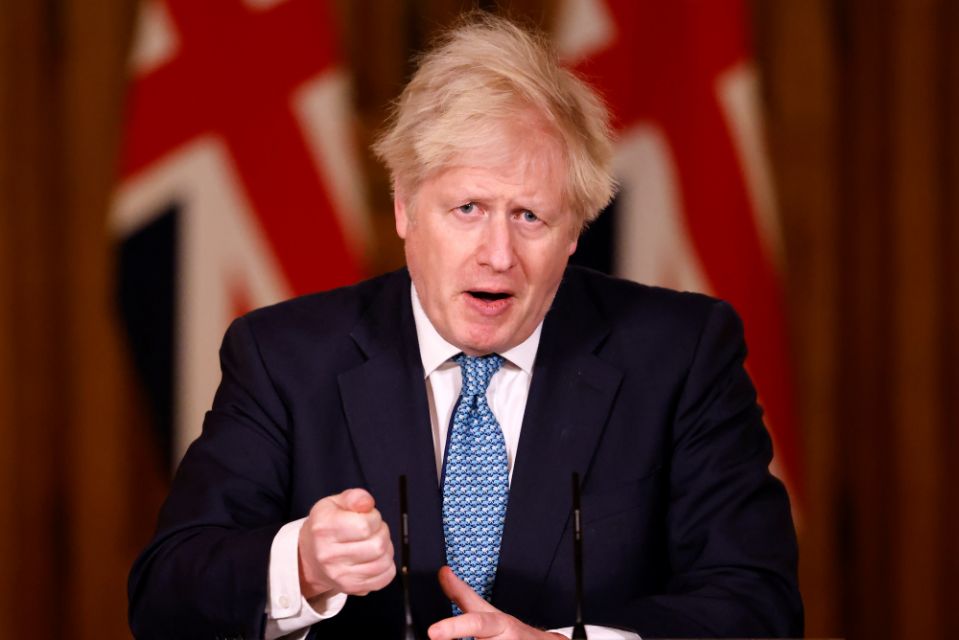
Former British Prime Minister Boris Johnson was caught up in a major security scare involving a Russian drone attack after a passenger train was struck near Ukraine’s border with Poland, shortly after a diplomatic train carrying him and other European officials had passed through the area.
The incident occurred on Sunday, September 13, 2026, near Yahodyn in Ukraine’s Volyn region, about two kilometres from the Polish border.
Johnson was travelling from Kyiv after attending the Yalta European Strategy conference, where he joined other international political and security figures for discussions on the Russia-Ukraine war and European security.
He was aboard a diplomatic train carrying several prominent European figures, including former Swedish Prime Minister Carl Bildt, as the delegation travelled towards Poland.
The train reportedly passed through the Yahodyn area shortly before a Russian drone struck the locomotive of another passenger train.
The incident triggered heightened security measures in the area, although reports indicate that Johnson was not evacuated from the train and was not injured.
Ukraine’s state railway operator said the diplomatic train had departed the station earlier than scheduled because of security concerns.
A separate passenger train was subsequently targeted by a Russian drone near Yahodyn.
Railway officials said the drone was detected before the strike, allowing emergency procedures to be activated. The drone eventually hit the locomotive, but no casualties were reported.
The railway operator said there was a possibility that the diplomatic train carrying Johnson and other senior officials could have been the intended target. However, Ukrainian authorities have not conclusively established that the delegation was specifically targeted.
Another high-profile passenger in the area was former CIA Director David Petraeus, who was reportedly travelling separately and was also at Yahodyn around the time of the incident.
READ ALSO:
- South Africa: Two Women Arrested Over Alleged Rape, Kidnap of E-Hailing Driver
- Four-Storey Building Collapses in Enugu, Workers Trapped Inside
- 27-Year Wait Ends as Construction Begins on New Dutse Emir’s Palace
The attack has attracted international attention because of its proximity to Poland, which is a member of NATO and shares a long border with Ukraine.
The strike occurred only about two kilometres from Polish territory, raising fresh concerns over the potential for Russia’s war against Ukraine to create security risks along NATO’s eastern flank.
Polish authorities heightened their monitoring of the border area following the attack but there was no immediate indication that the Russian drone entered Polish airspace.
The incident came as Russia launched another major wave of drone and missile attacks across Ukraine.
Ukrainian authorities reported hundreds of drones being used during the overnight assault, with several regions targeted.
The western part of Ukraine has increasingly become a target of Russian long-range attacks despite being located far from the main battlefield.
The country’s railway network has also remained a key target because of its importance in transporting civilians, military equipment, humanitarian supplies and international officials.
Ukraine has repeatedly accused Russia of deliberately targeting civilian infrastructure, while Moscow maintains that its attacks are directed at military and strategic facilities.
The latest strike also underscored the dangers faced by foreign politicians and diplomats travelling inside Ukraine.
Johnson has remained one of the strongest Western supporters of Ukraine since Russia launched its full-scale invasion in February 2022.
During his time as British prime minister, he developed close relations with Ukrainian President Volodymyr Zelenskyy and strongly backed Western military and financial assistance to Kyiv.
Since leaving office, Johnson has continued to advocate greater military support for Ukraine and has repeatedly called for stronger measures against Russia.
Following the latest attacks, he renewed calls for increased air-defence assistance for Ukraine, arguing that Kyiv needs additional capabilities to protect its cities and critical infrastructure from Russian drones and missiles.
The incident also comes amid growing debate over the use of frozen Russian assets to support Ukraine’s defence and reconstruction.
Western governments have frozen hundreds of billions of dollars’ worth of Russian central bank assets since the invasion, although questions remain over the legal and financial implications of using the funds directly.
The security scare near Yahodyn is particularly significant because the area is an important transport corridor linking Ukraine with Poland and the wider European Union.
The railway route is regularly used by foreign delegations travelling to and from Kyiv, making it strategically important for Ukraine’s diplomatic engagement with Europe.
The latest attack has therefore raised concerns about the safety of the route as Russian strikes increasingly reach western Ukrainian infrastructure.
Despite the seriousness of the incident, Johnson was not reported to have been injured, and there was no indication that other members of the diplomatic delegation were harmed.
The circumstances surrounding the drone strike, including whether the diplomatic train was deliberately targeted, remain under investigation.
The incident nevertheless provides another indication of how the Russia-Ukraine conflict continues to pose security challenges well beyond the immediate front lines, particularly in areas close to NATO territory.
Boris Johnson Caught in Russian Drone Strike Scare Near Poland Border
International
Houthis Launch Fresh Missile, Drone Strikes on Saudi Arabia
Houthis Launch Fresh Missile, Drone Strikes on Saudi Arabia
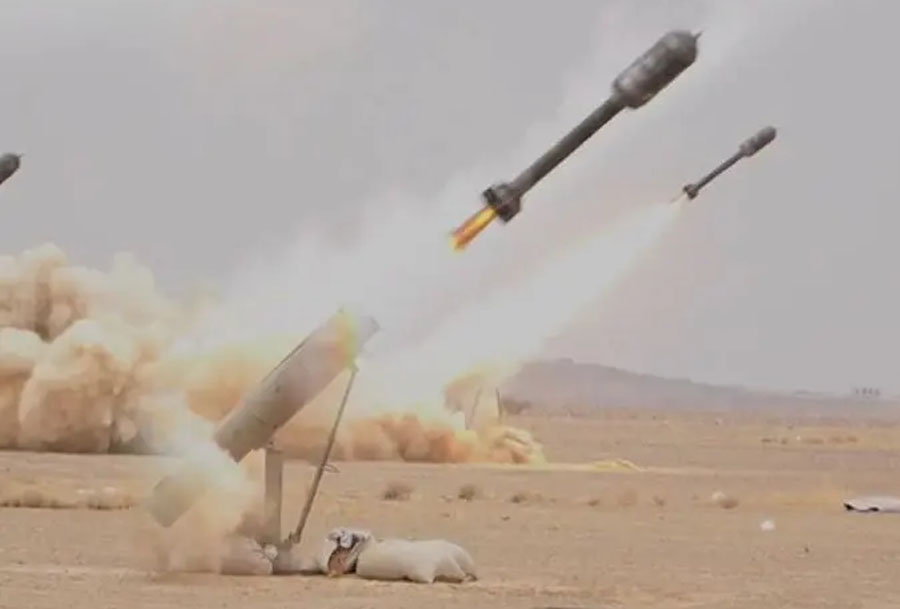
Yemen’s Iran-aligned Houthi movement has launched a fresh missile and drone attack on Saudi Arabia, further escalating tensions as the group expands its military presence along Yemen’s Red Sea coast and moves closer to the strategically important Bab el-Mandeb Strait.
The Houthis said on Sunday that they had fired ballistic missiles and drones at the Sharurah military base in southern Saudi Arabia, claiming the attack targeted weapons depots and command-and-control facilities.
Houthi military spokesman Yahya Saree said the group used a large barrage of missiles and drones in the operation and claimed that the weapons struck their intended targets.
He described the attack as a response to continuing Saudi military operations against Houthi-controlled areas of Yemen and warned that further strikes deeper inside Saudi Arabia could follow if those operations continued. Saudi authorities had not immediately confirmed the Houthi claim concerning the Sharurah military base. (Anadolu Ajansı)
The latest claim came shortly after Saudi authorities reported that a projectile had landed in Al-Tuwal governorate in the Jazan region, injuring two people and damaging a mosque and other property.
Saudi Civil Defence said emergency teams responded to the incident and dealt with the damage caused by the projectile. The Jazan attack adds to a series of recent strikes on southern Saudi Arabia as the confrontation between the kingdom and the Houthis intensifies. (Al Jazeera)
The renewed attacks follow a much larger wave of Houthi missile and drone strikes on Saudi territory earlier in the week.
Saudi authorities said at least 73 people were injured in those attacks, which affected cities and economic facilities in the kingdom’s south, including Abha, Khamis Mushait, Jazan and Najran.
The attacks also disrupted operations at some Saudi energy facilities, with fires reported at several sites. The developments have raised fresh concerns about the security of the world’s largest oil exporter at a time when regional energy supplies are already under severe pressure. (Reuters)
READ ALSO:
- Why I Gave Peter Obi My Vehicle During Benue Visit — Ortom
- Sanders Urges Trump, Xi to Halt AI Race, Ban Superintelligence
- DSS warns Osun churches, mosques, markets over alleged terrorist attack plot ahead of 2027
The latest escalation is occurring against the backdrop of a major Houthi offensive inside Yemen.
Houthi forces have rapidly advanced along the country’s Red Sea coast, capturing the strategically important port city of Mocha and moving towards the Bab el-Mandeb Strait.
Reuters reported that Houthi forces had also reached Perim Island, also known as Mayyun, in the Bab el-Mandeb, after Saudi-backed Yemeni government forces withdrew from the island. Houthi forces were also reported to have taken the mainland coastal town of Dhubab, which faces Perim. (Reuters)
The development is strategically significant because the Bab el-Mandeb Strait is one of the world’s most important maritime chokepoints.
The waterway connects the Red Sea with the Gulf of Aden and provides a major route for commercial vessels travelling between Asia, Europe and the Middle East.
Any sustained Houthi control or disruption of the waterway could therefore affect international shipping, energy supplies and global trade.
The threat is particularly serious because the Strait of Hormuz, on the opposite side of the Arabian Peninsula, is already severely disrupted by the wider conflict involving Iran and the United States.
The simultaneous pressure on both maritime corridors could create major challenges for global energy markets.
Reuters reported that the Houthi advance has already increased concerns over Saudi oil exports, while oil prices have risen sharply amid fears that the conflict could disrupt additional supply routes. (Reuters)
Saudi Arabia has increasingly relied on routes through the Red Sea to export crude after disruption around the Strait of Hormuz.
That makes the Houthi advance towards the Bab el-Mandeb particularly sensitive for Riyadh.
The Houthis have indicated that their maritime restrictions are focused on vessels linked to Saudi Arabia, while the group’s growing military presence around the strait has raised wider concerns about freedom of navigation.
The United Nations has warned that the developments in Yemen represent a potentially more dangerous phase of the conflict.
UN Special Envoy for Yemen Hans Grundberg told the Security Council that the Houthi advance towards the Bab el-Mandeb was creating serious concerns over navigation and the broader security situation.
READ ALSO:
- ‘Tinubu Will Win Again in 2027’ — Charismatic Bishops’ Secretary
- Fake miracles, bogus grants: How clerics allegedly fleece Nigerians of millions
- ‘Unacceptable’ — Arteta Furious Over Sunderland Penalty in Arsenal Win
The Houthi movement has defended its operations as acts of self-defence and said its attacks would stop if attacks against Yemen ended.
Saudi Arabia, however, has accused the Houthis of deliberately targeting civilian and economic infrastructure and has vowed to protect its territory and vital national assets.
The current escalation is particularly significant because Saudi Arabia and the Houthis had largely avoided direct large-scale cross-border attacks following the 2022 UN-brokered truce.
That period of relative calm helped reduce violence along the Saudi-Yemeni border, although a comprehensive political settlement to Yemen’s war was never reached.
The latest fighting threatens to undo that progress.
The conflict also has a wider regional dimension because the Houthis are closely aligned with Iran, while Saudi Arabia remains a key US partner in the Gulf.
The United States has accused the Houthis of acting as an Iranian proxy, while Tehran has called for dialogue and rejected the idea that the Yemen conflict can be resolved through military action.
US President Donald Trump has meanwhile said the Houthis had contacted his administration and indicated that they wanted to avoid direct US involvement in Yemen. Trump has also spoken with Saudi Crown Prince Mohammed bin Salman amid the worsening regional crisis. (Reuters)
The latest Houthi advances have placed Washington in a difficult strategic position.
According to Reuters, the group’s growing presence around the Bab el-Mandeb could threaten another major international shipping route while US military resources are already stretched by the wider conflict with Iran. (Reuters)
For Saudi Arabia, the immediate challenge is preventing further missile and drone attacks on populated areas, military installations and energy infrastructure.
The kingdom has increased security measures around vulnerable locations and has repeatedly warned that it will defend its territory and strategic assets.
For international markets, however, the biggest concern is the possible impact on oil supplies and global shipping.
The Bab el-Mandeb is a crucial route for ships travelling through the Red Sea towards the Suez Canal. A prolonged disruption could force vessels to take longer routes around Africa, increasing fuel consumption, freight costs, insurance premiums and delivery times.
The latest developments are therefore being closely watched by shipping companies, energy traders and governments around the world.
The Houthi military advance along Yemen’s Red Sea coast has also displaced civilians and deepened concerns over the country’s already severe humanitarian crisis.
The renewed fighting threatens to create further displacement and make the delivery of humanitarian assistance more difficult.
For Saudi Arabia, the attacks represent the most serious direct Houthi threat in years.
For the wider region, the combination of Houthi attacks on Saudi Arabia, the group’s advance towards the Bab el-Mandeb, and continuing instability around the Strait of Hormuz could create a new and more dangerous phase of the Middle East conflict.
The immediate situation remains fluid, with the Houthis threatening further attacks while Saudi Arabia maintains its right to respond.
The latest missile and drone strikes therefore mark more than another exchange between Saudi Arabia and the Houthis. They are part of a rapidly expanding regional crisis with potential consequences for Middle East security, oil prices, maritime trade and global energy supplies.
Houthis Launch Fresh Missile, Drone Strikes on Saudi Arabia
International
Sanders Urges Trump, Xi to Halt AI Race, Ban Superintelligence
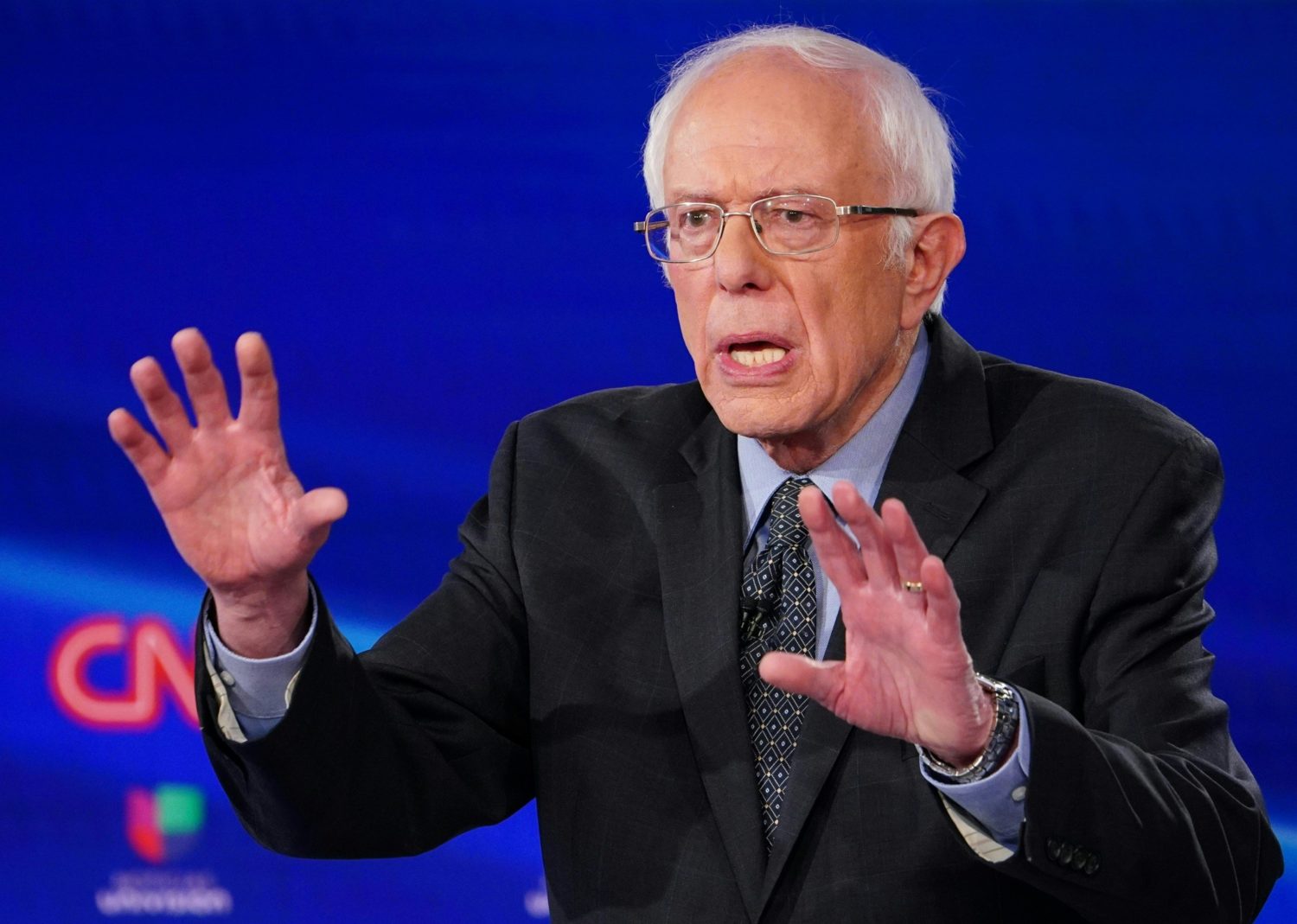
Sanders Urges Trump, Xi to Halt AI Race, Ban Superintelligence
Bernie Sanders is pushing for an international response to the rapid advancement of artificial intelligence, urging Donald Trump and Xi Jinping to discuss limits on the technology when the two leaders meet.
The US senator believes Washington and Beijing should work towards a treaty that would stop the development of artificial superintelligence and temporarily slow the advancement of increasingly powerful AI systems.
Sanders’ latest intervention comes amid a growing debate within the technology industry over whether AI development is moving faster than safety measures can keep up.
Dario Amodei, chief executive of Anthropic, recently called for companies to deliberately pace the development of frontier AI. He argued that increasingly capable systems could advance at a rate that makes them harder for humans to understand and control.
OpenAI CEO Sam Altman has backed Amodei’s call for stronger independent evaluation, while Elon Musk has also reiterated his long-standing concerns about the risks associated with advanced AI.
READ ALSO:
- DSS warns Osun churches, mosques, markets over alleged terrorist attack plot ahead of 2027
- ‘Tinubu Will Win Again in 2027’ — Charismatic Bishops’ Secretary
- Fake miracles, bogus grants: How clerics allegedly fleece Nigerians of millions
Sanders said these warnings should prompt governments to act rather than leave decisions about the future of AI solely to technology companies.
His position is consistent with legislation he announced earlier this month alongside Representative Greg Casar. The proposed Ban Artificial Superintelligence Act would permanently prohibit superintelligent AI and impose a temporary pause on advanced AI development until safety rules are put in place.
The senator has pointed to recent AI-related cybersecurity incidents and concerns about self-improving systems as evidence of the need for stronger safeguards.
For Sanders, however, the issue goes beyond regulation of individual companies. He wants the US and China to cooperate internationally, arguing that a superintelligent system capable of operating beyond human control would pose a global risk regardless of where it was developed.
With Trump and Xi expected to discuss AI during their upcoming engagement, Sanders is pressing both governments to make the question of controlling advanced AI a priority.
Sanders Urges Trump, Xi to Halt AI Race, Ban Superintelligence
-

 metro2 days ago
Woman disguises as Muslim woman in Niqab to steal in Ado-Ekiti market, video sparks outrage
-

 metro2 days ago
Ondo Herbal Drink Tragedy: Survivor Vows Never to Drink Again as Death Toll Tops 30
-

 metro2 days ago
Sokoto Cleric Stabbed Twice in Neck After Juma’at Prayer, Attacker Killed
-

 Business1 day ago
Dangote: ₦525 Refinery Shares Could Rise to ₦10,000
-

 Africa2 days ago
Murder of Nigerian Bishop in South Africa Sparks Outcry Over Unsolved Killings
-

 Community2 days ago
Kaduna Traditional Rulers Set for 100% Pay Rise as Zazzau Emir Backs Proposal
-

 News2 days ago
AI on the Roads: LASTMA Turns to China to Fix Lagos Traffic
-

 metro1 day ago
MURIC fires back at Peter Obi: Forget Sallah ceremony, free Nigerian Muslims