

Opinion
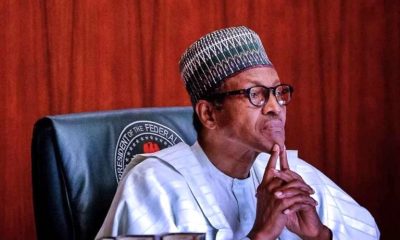
Buhari rests in London, Nigeria boils by Tunde Odesola

(Published in The PUNCH on Monday, April 12, 2021)
As a herdsman, ‘yowwa’ is the likeliest gratifying word to escape from the tight-lipped Nigerian President and Commander-in-Chief of the Armed Forces, Major General Muhammadu Buhari (retd.) if his cows nuzzle their muzzles against him as they eat hay from his outstretched hands during a random visit to his herd.
And as a devout Muslim, ‘Auzubillahi!’ is the likeliest word the President would utter if a dog mistakenly snuggles up against his ankle; Islam forbids human-dog embrace.
Aside from the religious injunction, however, the 78-year-old northern leader is unlikely to prefer the dog to the cow. Quite unlike the slow, witless and clumsy cow, the dog is a very intelligent, friendly, sensitive and witty creature. Universally, the dog is seen as man’s best friend, not the cow. Notwithstanding all these attributes, President Buhari’s preference will still be for the cow, not the dog, any day, anytime – for ancestral reasons.
The age-long ‘yes-sir!’ military mentality that upholds loyalty to superiors over patriotism to Nigeria, predisposes Buhari, a veteran soldier, to choosing the pliant cow over the witty dog.
Surely, the flunkey ‘yes-sir’ mentality is the reason why the Nigerian military, police, DSS and other security agencies put Buhari far above the country and the Constitution, and would shoot at innocent youths at Lekki tollgate even when such an order is in clear breach of the rules of engagement and the Constitution.
Indeed, the distinction between sycophancy and patriotism was what saved the US when subversive forces rose against its democracy on January 6, 2021 at the Capitol as the judiciary, the legislature, the military and all other institutions of government stood in defence of the American Constitution over the shenanigans of former President Donald Trump and his cohorts.
The understanding of the distinction between racism and patriotism is what is currently playing out in the trial of the white police officer, Derek Chauvin, who knelt on the neck of African-American George Floyd on May 25, 2020, sending him to an early grave in Minneapolis city of Minnesota, USA.
Chauvin’s ongoing public trial, which commenced on March 29, 2021, displays the unquestionable ability of the American nation to reinvent itself when faced with challenges.
For the average Nigerian like me, it beggars belief to think that serving and retired Nigerian police officers would enter the witness box and vehemently condemn one of their own as it’s being done in the trial of Chauvin, who faces up to 40 years in prison if the second degree murder charge, which presupposes that he didn’t intentionally kill Floyd, is upheld.
Since public hearings on police killings and brutality opened in various states of the Nigerian federation, following the #Endsars nationwide protests last year, no ex-security officer or serving security officer has come out to condemn army-police extrajudicial killings.
Public officials’ arrogant misuse of state power against the citizenry is one of the reasons for the overwhelming call for the restructuring of the country.
The monumental failure of the Buhari-led regime in tackling insecurity, corruption, nepotism, poverty, ethnicity and government insensitivity is the fuel to the agitation for the break-up of the federation.
Arrogant, insensitive and utterly reckless, the All Progressives Congress-led Presidency, in 2019, released the picture of Buhari picking his teeth, probably after drinking some (nunu) milk from his cows – while the citizenry groaned under the weight of unemployment, lack and dejection. Only our I-don’t-care President would pick his teeth after drinking milk.
Commenting on the tooth-picking picture, presidential aide on New Media, Bashir Ahmad, displayed the characteristic arrogance and insensitivity of the Buhari regime when he said in a tweet, “It’s hard to understand why some people are genuinely angry because of this innocent pic. When I innocently snapped it on Feb 27 and posted (it) on my Snapchat, it didn’t occur to me that it’s going to give wailers that strong hit…”
As Nigerians have been gnashing their teeth since the beginning in 2015, so shall it be till the end in 2023. Nothing will stop the plunge. Buhari is on an eight-year vacation.
Displaying his nonchalance to public outcry for the umpteenth time, Buhari, on march 30, 2021, embarked upon a two-week medical check-up in London, despite the nationwide strike by medical doctors in public hospitals back home.
Without a word on the plight of millions of sick Nigerians condemned to attend public hospitals nationwide, the President hopped on a plane and zoomed off to England, probably with two toothpicks in his mouth after a meal of tuwo and isi ewu.
Defending Buhari’s shameless medical trips, the most meritless of Buhari’s media aides, Lauretta Onochie, tweeted on April 7, 2021, “NEXT YEAR. PRES. @MBuhari WILL GO FOR A ROUTINE CHECKUP.
- We have been here since 2016. Its been the same wailing. So the response will also be the same. At least, once a year, People across the world see their personal Doctors especially one they have seen for about 40 years.’
It’s not hard to distinguish the noise of an empty barrel. So, Buhari, Onochie and the wastrels that make up the Presidency see nothing wrong in wasting Nigeria’s hard currency abroad in the last 40 years?
That Buhari cannot give Nigeria just one hospital he can attend, despite ruling Nigeria for eight years now, summarises his failure as a leader. It’s scandalous that Buhari didn’t feel ashamed about going to England still – for treatment – when he’s in an opportune position, in the last six year, to turn around Nigeria’s health sector.
The latest trip makes it Buhari’s 12th time to run off to London for medical treatment, despite his country having 72,000 registered medical doctors with over 50,000 of them, shamefully, out of the shores of the country due to lack of facilities and adequate welfare packages.
Buhari’s insensitivity doesn’t stop at the medical sector alone, where nurses, physiotherapists, health technologists etc are leaving the country in droves, the lethargy of his regime permeates every fabric of our national life, and holds the country down to slow death.
Even his wife, Aisha, left her matrimonial home, and took off to Dubai for six long months. It’s unheard of anywhere in the world that the wife of the president of a country, which isn’t at war, would go on vacation abroad for six months! Or, could it be that oga madam went on antenatal vacation ni?
Henceforth, I’ll be on the lookout for a bulge in the mid region of the beautiful Aisha. If Aisha gets pregnant penren? Eeeehhh!! Nigerians will put Buhari to the sword online. I bet you, trolls against the Buhari family will burn down the internet!
But seriously speaking, President Buhari won’t touch the dog. I’m sure he won’t touch the pig, either, because he’s a very pious Muslim. However, Buhari is the chichidodo, a bird that passionately hates feces but loves to eat the maggots in feces.
Buhari hates corruption, but corruption has been the signpost of his administration with millions of dollars yearly disappearing into non-working refineries and his former EFCC chair, Ibrahim Magu, enmeshed in financial scandals.
Buhari promised to stop medical tourism when campaigning to be President, but he and his family have made England, France, Germany, Canada, Dubai and the US their second homes.
Buhari promised to revamp the education sector, but his children never graduated from a Nigerian university.
Buhari, in 1983, promised to build infrastructure when he seized power in a military coup, but he cancelled the lofty Lagos metro line project initiated by the late Lateef Jakande administration, throwing the traffic of the lagoon city into eternal chaos. He came back in March 2019 to inaugurate a bus-stop in Lagos, though. Chai!
The alarming picture just keeps flashing in my head: Nigerian President on the bed of a random London hospital in an age when microchips can be implanted to monitor and control patients. Unmh!
Buhari rests peacefully in London while peace has fled his own country, Nigeria. Terrible.
Email: tundeodes2003@yahoo.com
Facebook: @tunde odesola
Twitter: @tunde_odesola






Opinion
2027: Tinubu May Get Less Than 10% of Northern Votes — Ard
2027: Tinubu May Get Less Than 10% of Northern Votes — Ard
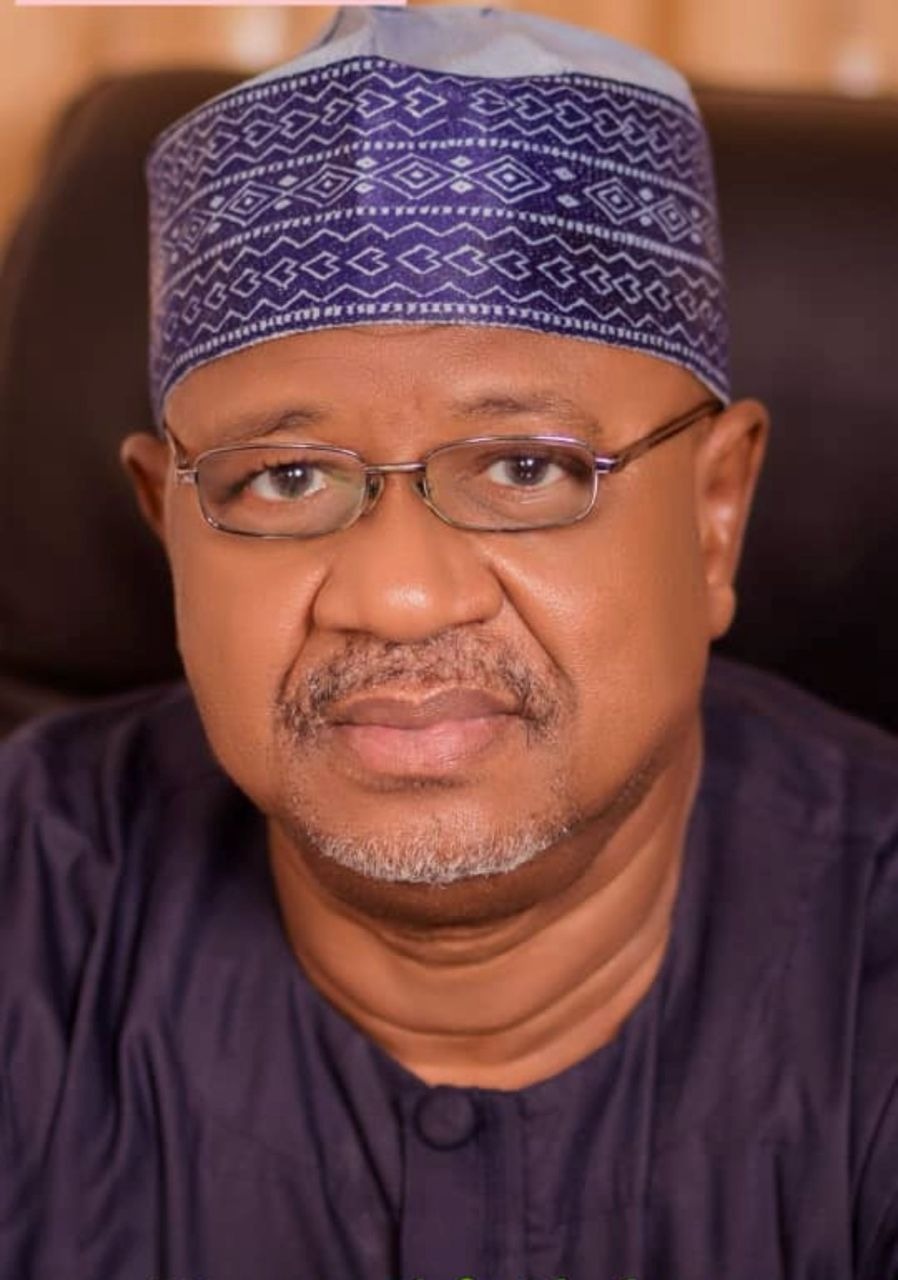
President Bola Tinubu could suffer a dramatic collapse in his Northern support in the 2027 presidential election, securing less than 10 per cent of votes from the region if the poll is free and credible, Convener of the League of Northern Democrats and key promoter of the All-Democratic Alliance (ADA), Dr Umar Ardo, has predicted.
Ardo made the prediction on Monday in an interview on Frontline, a current affairs programme on Eagle 102.5 FM, Ilese-Ijebu, Ogun State, arguing that the outcome would largely reflect how Northern voters assess the Tinubu administration’s performance.
He identified insecurity, worsening poverty, economic hardship and the rising cost of living as major issues likely to influence voting decisions in the region.
According to him, the persistent insecurity affecting communities, farmers, traders and businesses remains one of the administration’s biggest challenges.
READ ALSO:
- JUST IN: Tension in Benue as Suspected Thugs Attack Peter Obi’s Convoy, Block Access
- FIFA, CAF suspend NFF election as Nigeria football reforms face fresh review
- NNPC Disowns Cannabis-Laden Tanker, Threatens Legal Action Over Brand Misuse
“You can solve the issue of insecurity and insurgency in one year,” he said, insisting that the Federal Government could significantly reduce the crisis with the right strategy and sufficient political will.
Ardo also faulted the administration’s economic reforms, particularly the removal of fuel subsidy, questioning whether ordinary Nigerians had experienced corresponding benefits.
“Subsidy removal, is it a benefit?” he asked, arguing that the reforms had eroded purchasing power and made basic necessities increasingly unaffordable.
He said the impact had been particularly severe in Northern Nigeria, where a large proportion of the population is economically vulnerable.
“The economic reform has pushed from the state of poverty to destitution,” he said.
The political commentator also raised concerns about political representation under the Tinubu administration, arguing that the composition of government could shape public perception of its commitment to different regions.
Ardo said Northern voters should not be assumed to be permanently aligned with the voting pattern recorded in 2023, stressing that prevailing economic and security conditions would determine their choices in 2027.
“If a free, fair and credible election is conducted in Nigeria, Tinubu can’t get 10 percent of the Northern part,” he declared.
His prediction puts the spotlight on the opposition’s capacity to exploit any erosion of Tinubu’s Northern support, with former Vice President Atiku Abubakar and other opposition figures potentially positioned to benefit from any major electoral realignment.
2027: Tinubu May Get Less Than 10% of Northern Votes — Ard
Opinion
Beyond the Ballot: Shaping a Bar That Works for All
Beyond the Ballot: Shaping a Bar That Works for All
By Asiwaju Kunle Kalejaye, SAN
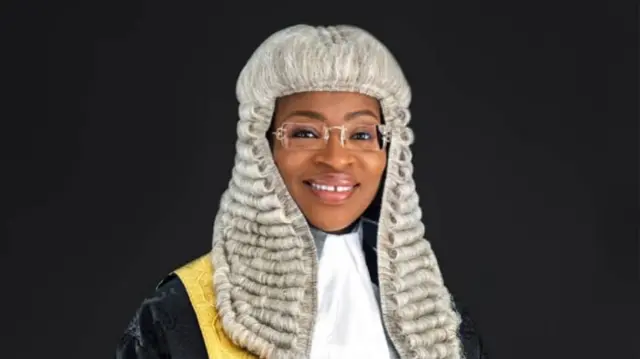
The inaugural address of Mrs. Oyinkansola Badejo-Okusanya, SAN, titled “From the Call to the Cause,” marks a historic turning point for the legal community as she officially assumes office as the 33rd President of the Nigerian Bar Association (NBA) as she wa sworn in by her predecessor, Afam Osigwe, SAN, at the High Court complex in Port Harcourt, Rivers State.
Her leadership, the hiccup of her emergence notwithstanding, represents a historic milestone as the first woman elected to the NBA presidency through a competitive, though highly disputed, national ballot. Her address presents a powerful vision for a “bolder Bar” that actively confronts internal fractures, deep professional disconnects, and economic vulnerabilities. Central to her message is the core understanding that an association tasked with safeguarding judicial independence and speaking truth to power cannot effectively fulfill its national mandate if it remains internally fragmented. By focusing on the professional survival of young lawyers and vowing to act decisively against public misconduct, Badejo-Okusanya highlights an urgent reality: institutional strength requires collective solidarity and institutional determination. Fostering lasting unity within the NBA under this administration demands a deliberate shift from performative governance to deeply institutionalized, structural changes that build bridges across classes, factions, generations, and geographical divides.
To bring the NBA together, the new administration must incorporate proactive mechanisms for post-election reconciliation directly into its governance framework. The leadership must deliberately distance itself from divisive rhetoric and provocative nuances. The competitive nature of Bar elections often leaves behind lingering bitter factions that can stunt long-term cooperation and slow down progressive policies. By building an “olive branch” initiative that integrates runner-up contestants and their core campaign stakeholders into strategic national committees, the leadership can transform former rivals into active co-creators of the Bar’s future. Indeed this strategy which I dubbed the Abraham Lincoln strategy remains an eternal clincher.
Abraham Lincoln won the 1860 presidential election and famously appointed his chief Republican nomination rivals to key cabinet positions. Lincoln believed the country faced extreme peril during the crisis leading into the Civil War l. He wanted the most capable and influential leaders in his administration regardless of past personal competition. He valued robust debate over agreement, using differing viewpoints to make better decisions. This inclusivity must simultaneously bridge the widening economic and generational gap between senior practitioners and younger advocates. Enforcing standardized minimum remuneration and welfare requirements across all local branches will help reduce the economic alienation felt by younger members. To make this sustainable, the administration should establish joint mentorship hubs where senior legal practitioners collaborate with tech-savvy young lawyers on modern areas of practice, such as artificial intelligence, data privacy, and digital commerce, turning a generational divide into a symbiotic avenue for mutual professional empowerment.
True unity also requires restoring civil digital discourse through a comprehensive Digital Ethics Enforcement framework, fulfilling the President’s explicit warning against the breakdown of professional etiquette on social media. The profession has lost some vast mileage due to the digital posture of some members. To achieve this, the NBA can look to established global precedents where foreign bar associations have successfully navigated the complexities of digital misconduct. For instance, the American Bar Association (ABA) successfully integrated technological expectations into its framework via the Ethics 20/20 Commission, explicitly modifying its Model Rules of Professional Conduct such as Rules 1.6 and 8.4 to govern online confidentiality, misleading public statements, and deceptive digital behaviour. Similarly, the Law Society of England and Wales updated its practice note and compliance frameworks to penalize offensive online remarks, reinforcing that comments made by a lawyer in a personal capacity can still be actively disciplined as professional misconduct if public trust is damaged. By adopting a similar structure, the NBA can expand its own Rules of Professional Conduct into a clear code for online behaviour, utilizing its network of regional Ethics and Disciplinary Committees to monitor digital spaces and safely review flagged misconduct via secure portals.
Backing this framework with public disciplinary actions and a tiered system of sanctions will allow the NBA to decisively penalize cyberbullying, transitioning professional disputes into mediated internal forums rather than chaotic public platforms. This digital accountability should be reinforced by introducing mandatory continuing legal education (CLE) modules in digital etiquette, ensuring that practitioners maintain technological and behavioral competence.
Immediately, the NBA must dismantle the persistent perception that it is a “Lagos-Abuja centric” organization. Actively decentralizing national activities, rotating National Executive Council (NEC) meetings across various geopolitical zones, and providing direct financial and technical resources to smaller, rural branches will make every lawyer feel valued regardless of geography. Ultimately, by integrating these targeted, practical strategies and internationally proven ethical standards into the foundational ideals of her inaugural address, the administration can successfully unite its members and establish a cohesive, resilient front capable of defending the rule of law across Nigeria.
The new administration must pursue a deliberate policy towards attracting many docile members back into its fold.
If the new administration must know, the opaque electoral processes that had dogged the association in recent history has adversely affected the morale of a significant number but silent members of the Association. Chief Yomi Alliyu graphically stated the disturbing position when he posited in an opinion piece that: “The NBA has been hijacked by political lawyers to the disaffection of real practitioners of law. “Elections from 2016 or so vide e-voting had been manipulated to favour members of this class.”
The new administration must therefore consciously pursue reconciliatory steps that rein in all members. As at now, the silent class war must end for NBA to achieve its full potential.
I was sorely tempted to headline this peice: Nigerian Bar Association: the road to Kigali. I refrained because I still saw a silver lining which this new administration can latch on to save the NBA from itself!
The “road to Kigali” serves as a grim warning about the risk of total institutional fracture, polarization, and potential irrelevance. If proactive steps are not taken to unify and reform the body, it faces the danger of fracturing into competing, ethnicized, or regionalized professional factions, effectively ending the era of a single, unified voice for the Nigerian Bar.
The 1992 Port Harcourt Conference Crisis, was a definitive moment that brought the NBA to the brink of permanent destruction. Today, unless we play the ostrich, the cries of war are abroad but the present leadership could etch their names in gold if the NBA is consciously, deliberately and clinically steered from self implosion. Their job is cut out for them.Failure to seize the moment may end up placing us all on the road to Kigali.
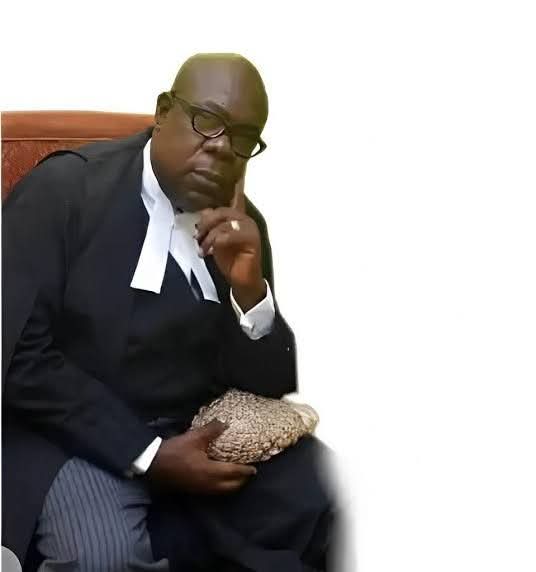
Asiwaju Kunle Kalejaye SAN
Eagle102.5 FM Ilese-Ijebu
Opinion
Why Atiku’s subsidy gambit rattles Tinubu, By Farooq Kperogi

Why Atiku’s subsidy gambit rattles Tinubu, By Farooq Kperogi
On Thursday, barely a day after official campaigns began for the 2027 presidential election, Atiku pledged to restore petrol subsidies if Nigerians elect him president. That pledge, more than anything he has done lately to dislodge Tinubu, is the clearest signal yet that he is prepared to wrest power from the president.
Before now, Atiku expended money, time and energy excavating Tinubu’s past, much of which Nigerians already know. Tinubu’s 1993 civil forfeiture of $460,000 to the US government in a case that grew out of a heroin-trafficking investigation has been public knowledge for years. It was Sahara Reporters that first reported it on September 15, 2008. Fresh FBI or DEA papers are unlikely to suddenly alter electoral attitudes.
The Chicago State University expedition was even less politically useful. Tinubu genuinely attended and graduated from CSU in 1979. Caleb Westberg, the university’s registrar, said so under oath. He agreed that the photocopy Tinubu submitted to INEC did not look like the 1979 samples shown to him, but CSU’s diploma templates changed over the years and the BBC found that Tinubu’s copy resembled replacement diplomas from the 1990s. Westberg also said the missing portion of the university logo could have been cut off during photocopying because American diplomas are unusually large and aren’t intended to be photocopied.
In America, diplomas are largely ceremonial documents that people frame and hang on walls. Transcripts are the official records routinely used to verify attendance and graduation. Atiku’s legal expedition ironically helped establish that Tinubu has a CSU transcript and graduated with honors.
The BBC Global Disinformation Team found no evidence for the claim that Tinubu forged the CSU diploma he submitted to INEC. The report, in fact, won “Fact-Check of the Year by a Working Journalist” at the 2024 African Fact-Checking Awards in Accra. In other words, Atiku spent enormous political energy helping to settle a question whose answer was electorally barren.
Tinubu understood this and mostly ignored the attacks. More importantly, Atiku offered little policy distance from Tinubu on the economic question that has tormented Nigerians since May 2023. He had promised during the last election to remove petrol subsidies within his first 100 days in office. On the most consequential economic policy of the Tinubu presidency, Atiku was traveling on the same ideological road.
READ ALSO:
- Tinubu’s order: EFCC lifts freeze on Osun government accounts
- IPOB Accuses UK of Hypocrisy Over Israel Stance, Demands Kanu’s Release Following UN Ruling
- Enugu ADC Chairman Found Dead Near Residence in Suspected Murder
That changed this week. Atiku asked the question millions of Nigerians have been asking: where is the money supposedly saved from subsidy removal? He then promised a new subsidy structure that would privilege locally refined petrol, give qualifying Nigerian refineries crude at preferential prices, impose a fixed annual spending ceiling, trace subsidized crude to actual domestic production and punish diversion. His formulation is that “the subsidy will follow the barrel.”
That is a more serious proposal than the Presidency’s caricature of it. And Tinubu suddenly found his voice. He personally dismissed Atiku’s pledge as a demonstration of “serious ignorance” of governance and the economy. Atiku’s previous assaults on Tinubu’s character produced studied presidential indifference. But his challenge to the economic orthodoxy that has pauperized Nigerians produced presidential irritation. That means he struck a raw nerve.
If Atiku’s proposal demonstrates ignorance, what does Tinubu’s policy demonstrate? Any honest person knows the answer: cruelty. Between ignorance and cruelty, which is more benign? You be the judge.
The anti-subsidy theology that Tinubu and his neoliberal choristers recite has always rested on a false premise. Subsidy simply means government assistance. Every functional society subsidizes something its people need for survival and economic productivity. Governments subsidize food, agriculture, housing, healthcare, transportation or energy according to the peculiarities of their societies.
For Nigeria, petrol occupies a uniquely central place because it doubles as an infrastructural substitute. People buy petrol because public electricity is unreliable. Small businesses generate their own power. Goods move mostly by road. Workers commute in vehicles powered by fuel. Farmers, artisans, traders and manufacturers absorb fuel costs and pass them on through prices.
A petrol subsidy therefore travels through the economy. Its removal travels through the economy too, only in the opposite direction. It raises transportation costs, production costs, food prices and the cost of nearly everything that depends on movement or power.
READ ALSO:
- N3.14 Trillion Spent on Electricity Subsidy in 31 Months – FG
- 100 Days in Captivity: Borno Families Beg Tinubu, Zulum to Rescue 78 Abducted Students
- Hamzat warns workers against spending over 40% of income on rent
I warned about this exactly one month before Tinubu was inaugurated. In my April 29, 2023 column titled “Six Agenda Items for Tinubu’s Success,” I warned that any policy that caused an arbitrary and unbearable increase in petrol prices without a corresponding improvement in incomes and living conditions would sink Tinubu. That warning was elementary commonsense.
The subsidy removal has since wreaked havoc on the economy, deepened poverty, killed businesses, murdered hope, hollowed out the middle class and democratized misery. Reuters now describes the aftermath of Tinubu’s reforms as the worst cost-of-living crisis in a generation. Nearly 80 percent of Nigerians in a recent voter tracker said the country was headed in the wrong direction.
The government’s answer is always the same sterile, tired, intentionally dishonest incantation: temporary pains will yield permanent gains. But we have heard that sermon before.
Ibrahim Babangida’s Structural Adjustment Program came with the same vocabulary of sacrifice, deregulation, currency devaluation, subsidy withdrawal and deferred prosperity. Nigerians were told to endure pain today for abundance tomorrow. By the time Babangida left in 1993, manufacturing had been battered, purchasing power had collapsed and social misery had spread. The promised gains vanished into the ether.
Only living people can enjoy future gains. A government that starves people in installments cannot redeem itself with a hypothetical prosperity scheduled for an undefined tomorrow.
Tinubu’s most frequently advertised dividend of subsidy removal is that states now receive more money and can pay salaries and pensions. That is useful to salary earners, pensioners and the relatives who depend on them. Every Nigerian with a functioning brain cell knows that formal salary and pension earners constitute only a small fraction of Nigeria’s population. The wellbeing of state treasuries is a poor substitute for the wellbeing of the vast majority of citizens.
What kind of economic triumph makes governors more solvent while making citizens poorer? Government has improved the liquidity of public treasuries by draining the liquidity of household economies.
Atiku has finally opened a policy flank that Tinubu cannot wave away with moral insults, ethnic mobilization or tales of macroeconomic “reform.”
Nonetheless, Atiku’s conversion deserves scrutiny. He promised in 2023 to remove the same subsidy he now wants to restore in a redesigned form. I disagreed with him then. A politician who changes his mind after observing the destructive consequences of a policy can reasonably plead that evidence changed his assumptions. Nigerians also have abundant reasons to distrust politicians who discover compassion during campaigns.
They campaign in poetry and govern in prose. Tinubu, after all, told Nigerians during the 2023 campaign that if he failed to give them electricity and returned for a second term, they should not vote for him, although he inserted an escape clause about giving “adequate reasons” for failure. Muhammadu Buhari promised a paradise of security, prosperity and integrity before power exposed the hollowness of his promises.
Atiku therefore has work to do. He must keep explaining the cost of his subsidy plan, its funding source, its legal path under the Petroleum Industry Act, its anti-corruption safeguards and the mechanisms that will ensure cheaper energy reaches households and industries. He should put these commitments in language that can be measured and used against him if he wins.
In spite of my well-justified distrust of the promises of politicians, including Atiku who supervised a ruinous privation program when he was vice president, I can’t help but concede that this is the first truly useful political argument of the 2027 campaign.
Policy contrast is finally replacing pointless and unproductive character assassination. Nigerians already know that Tinubu has a morally complicated past, but they live every day with something more immediate: the extortionate price of food, transport, electricity, medicine and survival.
Atiku has finally moved the contest from Tinubu’s old files in America to Nigerian kitchens, markets, factories and motor parks. That is where Tinubu is most vulnerable. Tinubu can survive old scandals, but the mass hunger his “reforms” have created is a more formidable opponent than impotent darts thrown at his character.
Kperogi is a renowned columnist and United States-based professor of journalism.
-
 metro3 days ago
APC rally: Suspected thugs attack journalists, smash Radio Nigeria vehicle in Kano
-
 Education3 days ago
FG Opens N2.5bn Grant Window For 50 Student Innovators Under “Next Moonshot Initiative”
-
 Politics2 days ago
Peter Obi, Others Challenging Tinubu Cannot Transform Nigeria — Datti Baba-Ahmed
-
 Politics3 days ago
Kano Political Earthquake: Kwankwaso Loyalists Dump NDC, Defect to APC in Major 2027 Blow
-
 Entertainment3 days ago
Wizkid Mocks Davido’s Family Wealth: “Rich and Empty” — Afrobeats Feud Escalates
-
 metro2 days ago
Socialite Igho ‘Tiny’ Ubiribo Dies After Penis Enlargement Surgery
-
 Auto2 days ago
Kaduna to Lead Govt Patronage of Local Vehicles as Sani Unveils Peugeot 5008
-
 Entertainment3 days ago
Kneeling to Propose Is Why Western Marriages Fail — Pete Edochie Sparks Fresh Debate