

metro
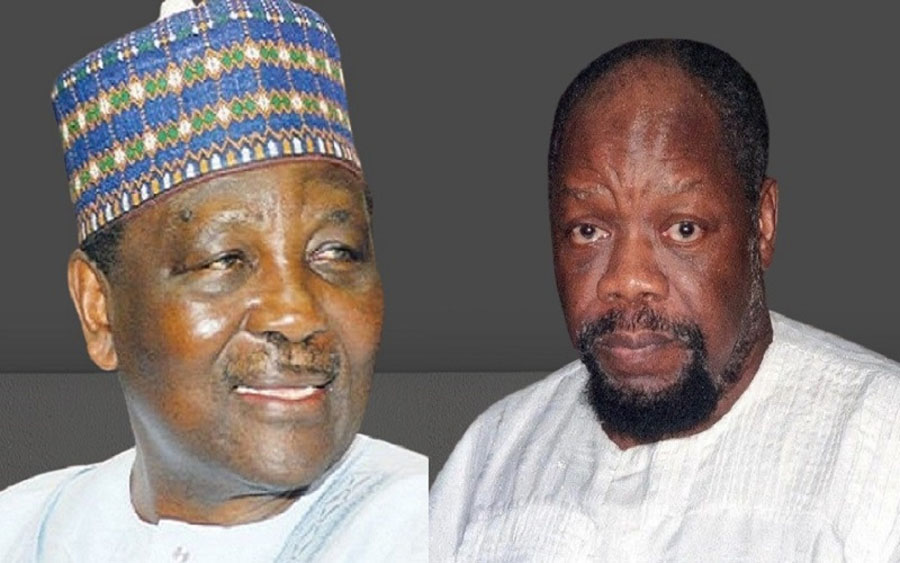
Onoh Counters Gowon, Says Federal Govt Betrayed Aburi Accord
Onoh Counters Gowon, Says Federal Govt Betrayed Aburi Accord
Josef Onoh, Chairman of the Forum of Former Members of the Enugu State House of Assembly and former Southeast spokesman to President Bola Ahmed Tinubu, has strongly challenged recent comments by former Head of State, General Yakubu Gowon, over the collapse of the historic Aburi Accord and the events that led to the Nigerian Civil War.
In a detailed statement made available to journalists, Onoh argued that the failure of the 1967 Aburi Accord was caused primarily by what he described as the Federal Government’s refusal to fully implement agreements reached in Ghana, rather than the alleged intransigence of the late Biafran leader, Col. Chukwuemeka Odumegwu Ojukwu.
The statement followed recent remarks credited to Gowon in his newly released memoir, My Life of Service and Allegiance, where the former military ruler reportedly accused Ojukwu of frustrating peace efforts and misrepresenting the agreements reached during the January 1967 talks in Aburi, Ghana.
However, Onoh insisted that available historical evidence contradicts that position.
Drawing from years of personal discussions with Ojukwu, who was his late brother-in-law, as well as interactions with late Biafran war commanders including Col. Joe Achuzie and former Biafran second-in-command, Maj. Gen. Philip Effiong, Onoh said his account reflects firsthand historical perspectives from key participants in the conflict.
READ ALSO:
- WHO Declares Ebola Emergency In Congo, Uganda As Death Toll Hits 139
- Army Arrests Four Suspected Terrorists, Collaborators in Kogi, Kwara Operations
- Putin Discusses Iran Uranium Storage Plan With Xi in Beijing
According to him, the Aburi meeting held between January 4 and 5, 1967, under the mediation of former Ghanaian leader Gen. Joseph Arthur Ankrah, produced clear resolutions aimed at preserving Nigeria’s unity amid worsening ethnic tensions and political instability after the 1966 coups.
He said the agreements included greater regional autonomy, decentralisation of military command, unanimous decision-making within the Supreme Military Council and commitments by all sides to avoid the use of force.
“The atmosphere was cordial, with both leaders actively participating. Upon his return, Ojukwu publicly broadcast the accords and adopted the position ‘On Aburi We Stand,’” Onoh stated.
According to him, opposition to the agreement emerged almost immediately after the Federal Government delegation returned to Lagos.
Onoh alleged that federal permanent secretaries and senior advisers opposed aspects of the accord because they believed the resolutions moved Nigeria toward a confederal arrangement that significantly weakened the central government.
He said the disagreement later resulted in the promulgation of Decree No. 8 of 1967, which the Eastern Region interpreted as a major departure from the original spirit of the Aburi Accord.
According to Onoh, the decree diluted understandings reached in Ghana, particularly on issues relating to military authority, emergency powers and regional autonomy.
“Ojukwu warned that non-implementation of the accord would leave the East with no option but self-help,” he said.
The former presidential spokesman further argued that several historical documents, eyewitness testimonies and declassified materials support claims that the Federal Military Government later retreated from key understandings reached during the talks.
He maintained that Ojukwu attended the peace meeting in good faith and remained committed to avoiding war, but growing distrust and the failure to reassure Eastern Nigerians after the anti-Igbo killings of 1966 ultimately deepened the crisis.
Onoh recalled Ojukwu expressing disappointment over what he perceived as betrayal by the Federal Government following the massacres of Easterners in parts of Northern Nigeria and disagreements over implementation of the accord.
He quoted Ojukwu as once referring to Gowon as “my friend Gowon turned bandit,” adding that similar sentiments were allegedly echoed years later by Maj. Gen. Philip Effiong.
The former Tinubu spokesman also noted that Ojukwu, an Oxford-trained historian and one of the most senior military officers of his era, later documented his interpretation of the crisis in his memoir, Because I Am Involved.
While acknowledging Gowon’s post-war “No Victor, No Vanquished” reconciliation policy, Onoh warned that renewed disputes over the Nigerian Civil War risk reopening painful national wounds more than 50 years later.
“A true statesman prioritises national healing over vindication, especially on wounds that are still healing slowly more than 50 years later,” he said.
Onoh urged Nigerians, historians and younger generations to rely on official recordings of the Aburi Accord, historical broadcasts, documentary evidence and balanced academic scholarship instead of one-sided narratives.
“History thrives on truth that unites, not narratives that divide. Let us learn from Aburi’s failure: genuine dialogue and faithful implementation matter far more than signed agreements in an atmosphere of mistrust,” he added.
Onoh Counters Gowon, Says Federal Govt Betrayed Aburi Accord





metro
Family seeks N10m to free kidnapped newlywed, other victims
Family seeks N10m to free kidnapped newlywed, other victims
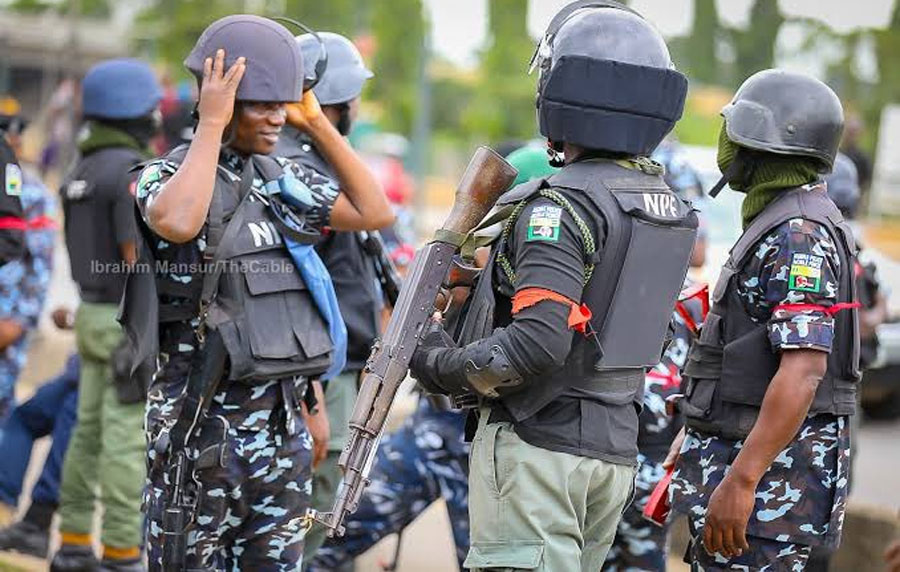
The family of a newlywed woman kidnapped in Kwara State has appealed to Nigerians for financial assistance to raise ₦10 million being sought for the release of her and other victims still held by their abductors.
The victims were among six passengers reportedly abducted along the Eruku-Iyemero Road, a route linking communities in Kwara and Kogi states.
The incident involved newlyweds Funmilayo Bamidele and Rev. Abiodun David, who were travelling with other passengers when suspected kidnappers intercepted their vehicle.
Following the abduction, the victims’ vehicle was reportedly found abandoned around Ayetoro in Ekiti State, prompting security agencies and authorities from Kwara, Kogi and Ekiti to intensify efforts to locate the victims and rescue them.
READ ALSO:
- JUST IN: WAEC appoints Suleiman Kum as new Nigeria National Office head
- Ojudu Reveals How Tinubu, He Narrowly Escaped Death In Third Mainland Bridge Crash
- Trump launches ‘Super Intelligence Force’ to keep US ahead in AI race
The family of Precious Alonge, one of those abducted, has now appealed for public support, saying they need to raise ₦10 million to secure the release of the captives.
The appeal comes amid growing concern over the safety of travellers using the route, which has witnessed security challenges and kidnapping incidents.
One of the six abducted passengers has reportedly been rescued, while efforts are continuing to secure the release of those still in captivity.
The families of the victims have continued to appeal for assistance as security agencies work to locate the kidnappers and secure the safe return of the remaining captives.
The incident has renewed concerns about kidnapping along inter-state roads in Nigeria, particularly routes connecting communities across Kwara, Kogi and Ekiti states.
Security authorities have yet to provide a full account of the circumstances surrounding the abduction or disclose details of any arrests made in connection with the incident.
The families are urging members of the public, community leaders and other well-meaning Nigerians to support their efforts to secure the safe release of the remaining victims.
Family seeks N10m to free kidnapped newlywed, other victims
metro
NDLEA intercepts N5bn worth of drugs at ports, arrests Milan-bound businessman
NDLEA intercepts N5bn worth of drugs at ports, arrests Milan-bound businessman
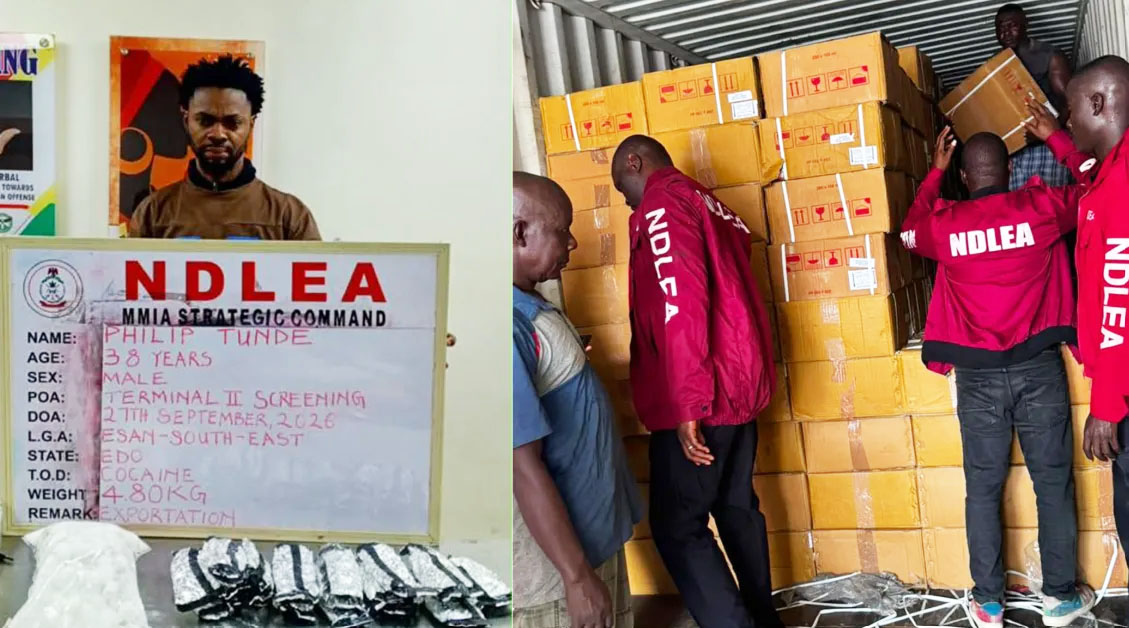
The National Drug Law Enforcement Agency (NDLEA) has intercepted illicit drug consignments worth more than N5 billion at major Nigerian seaports and arrested a businessman allegedly attempting to smuggle 4.8kg of cocaine to Milan, Italy.
The seizures were recorded during separate operations at the Apapa Port and Tin Can Island Port in Lagos, as well as the Onne Port in Rivers State, according to the anti-narcotics agency.
At Apapa Port, NDLEA operatives intercepted a container containing about 3.5 tonnes of skunk, a strain of cannabis. The agency said the consignment had been imported from Canada and was concealed among items declared as used vehicles and household goods.
At Tin Can Island Port, officers discovered another consignment of cocaine concealed in shoe soles during the examination of imported cargo from Canada.
A further seizure was made at Onne Port, where NDLEA operatives intercepted consignments containing cannabis and other illicit substances.
The agency put the combined value of the seized drugs at more than N5 billion.
READ ALSO:
- Madonna University expels final-year nursing student, suspends 14 over dance video
- JUST IN: WAEC appoints Suleiman Kum as new Nigeria National Office head
- Ojudu Reveals How Tinubu, He Narrowly Escaped Death In Third Mainland Bridge Crash
In a separate operation at the Murtala Muhammed International Airport (MMIA), Lagos, NDLEA officers arrested a businessman allegedly preparing to travel to Milan, Italy, with cocaine concealed in the soles of shoes.
The suspect was arrested during an outbound operation after officers discovered 4.80 kilogrammes of cocaine concealed in his luggage.
NDLEA said the suspect was scheduled to travel to Milan when he was stopped for further checks. The agency subsequently took him into custody as investigations continued.
The latest operations highlight the various methods allegedly used by drug trafficking networks to move illicit substances across Nigeria’s borders, including concealing drugs in commercial cargo and everyday items such as footwear.
The NDLEA has continued to strengthen surveillance at Nigeria’s seaports and international airports, with particular attention on consignments and passengers suspected of involvement in drug trafficking.
The agency said the latest interceptions demonstrate its continued efforts to disrupt the supply chain for illicit drugs and prevent Nigeria from being used as a transit point for international drug trafficking.
Investigations into the seizures and arrests are ongoing, with the agency expected to prosecute suspects where sufficient evidence is established.
The businessman and other suspects remain presumed innocent unless proven guilty in court.
NDLEA intercepts N5bn worth of drugs at ports, arrests Milan-bound businessman
metro
Ojudu Reveals How Tinubu, He Narrowly Escaped Death In Third Mainland Bridge Crash
Ojudu Reveals How Tinubu, He Narrowly Escaped Death In Third Mainland Bridge Crash
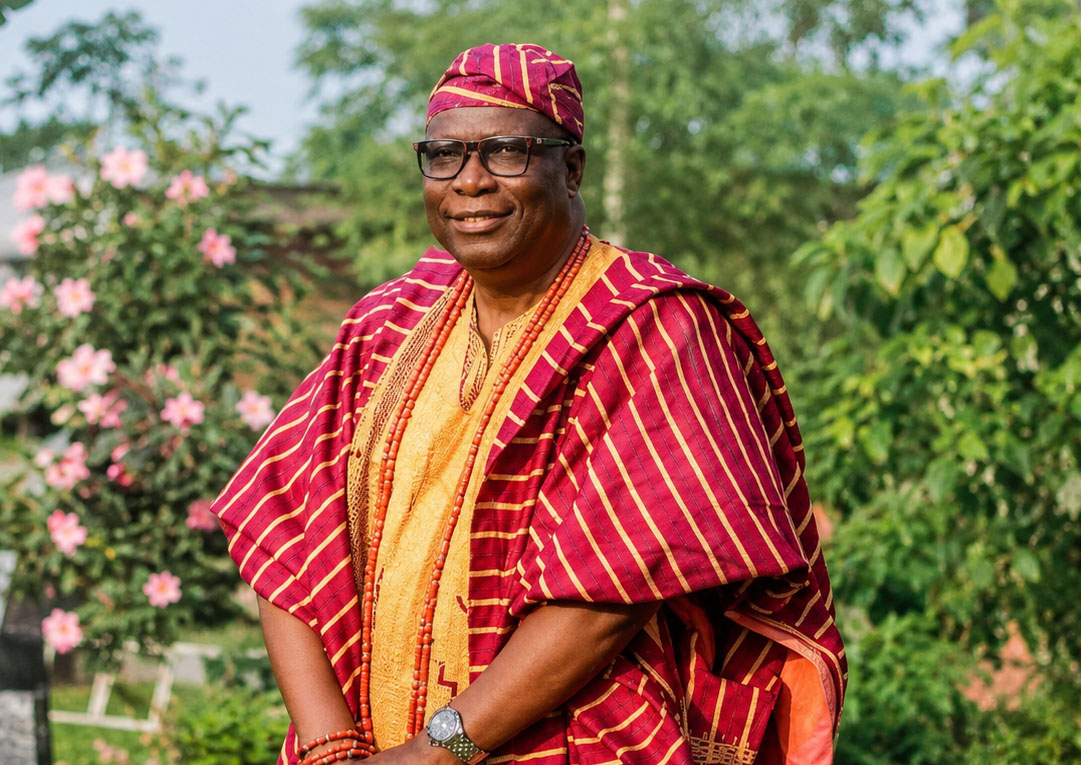
Former presidential aide and journalist Babafemi Ojudu has recounted how he and President Bola Ahmed Tinubu narrowly escaped death in a late-night accident on the Third Mainland Bridge in Lagos.
Ojudu disclosed the incident in an open letter to Tinubu, recalling events surrounding the 1999 Lagos State governorship election and his long relationship with the President.
According to him, the incident happened at about 1:30am, shortly before Tinubu was elected governor of Lagos State.
Ojudu said he had accompanied Tinubu to the Ikoyi residence of a senior security official, Ibrahim Solomon, because they were concerned about the possibility of the governorship election being manipulated against him.
He said Solomon assured them that the security apparatus would ensure a level playing field and that the assurance was eventually fulfilled.
However, while returning from the meeting through the Third Mainland Bridge, tragedy nearly struck.
Ojudu said Tinubu’s driver, the late Mustapha, apparently fell asleep while driving, causing the vehicle to crash into the bridge railing.
Both men survived the accident.
Ojudu recalled that after the crash, Tinubu asked him to take control of the vehicle and drive them to Alausa. He said he had never driven an automatic vehicle before but somehow managed to get them safely to their destination.
READ ALSO:
- ‘I Thought I Was Dead’ — Hairstylist’s Daring Escape From Kidnappers After Benin-Ore Ambush
- ‘We Can’t Raise N1bn’ — Parents of Abducted Corps Members Beg Olubadan
- 2027: Atiku, Amaechi Reiterate Plan to Cut Petrol Prices
The former presidential aide said the incident was one of several defining moments in his relationship with Tinubu, which began during their involvement in the struggle against military rule and continued through Tinubu’s political career in Lagos.
Following Tinubu’s victory in the 1999 election, Ojudu said he helped coordinate transition committees and preparations for the new administration but chose not to seek an appointment.
He explained that he preferred to remain outside government so he could continue to offer independent advice without being influenced by the expectation of political appointments or other benefits.
Ojudu said he maintained that role during Tinubu’s eight years as Lagos State governor, often challenging or questioning decisions when he believed they required reconsideration.
He said he was adopting the same approach in his latest message to Tinubu, despite acknowledging that their relationship had become strained.
Ojudu disclosed that he and Tinubu had not met since 2022 and that he had publicly stated that he neither worked for Tinubu’s 2023 presidential campaign nor voted for him.
He nevertheless said he considered it necessary to speak out because of concerns about the economic difficulties facing Nigerians.
A major part of his appeal focused on the rising cost of living, including the impact of fuel prices, transportation costs and food prices on households.
Ojudu urged Tinubu to assess the success of government policies not only through economic statistics but also through the daily experiences of ordinary Nigerians who are struggling to meet basic needs.
He also called for stronger action against insecurity, arguing that economic reforms would have limited meaning for citizens who remain afraid to travel, farm, trade or conduct other legitimate activities.
On the political front, Ojudu urged Tinubu to ensure that government institutions remain neutral as the country approaches the 2027 general elections.
He called for security agencies to protect voters, candidates and electoral officials without intimidation or political bias, while urging the Independent National Electoral Commission (INEC) to be adequately supported to conduct credible elections.
Ojudu also appealed to Tinubu to respect the independence of the judiciary and allow electoral disputes to be resolved according to the law.
Reflecting on their past, he recalled the sacrifices made during the struggle against military rule and said the right of Nigerians to freely choose their leaders was one of the principles for which they had fought.
Ojudu acknowledged Tinubu’s constitutional right to seek another term but stressed that Nigerians also have the right to assess the administration and make their choice at the ballot box.
He urged the President to respect the outcome of a free and credible election, regardless of its result.
Ojudu concluded his appeal by urging Tinubu to “finish well” and use the remaining years of his administration to ease the difficulties facing Nigerians, strengthen democratic institutions and leave the country safer, more united and more prosperous.
Ojudu Reveals How Tinubu, He Narrowly Escaped Death In Third Mainland Bridge Crash
-
 Entertainment3 days ago
Phyna Knocks Out Nkechi Blessing in Fourth Round, Wins ₦50m, New Car
-
 metro3 days ago
2027 Hajj: Nigeria Secures 10,000 Extra Slots, Allocation Hits 60,000
-
 metro2 days ago
NYSC Kidnap: Abductors Demand N950m for 19 Prospective Corps Members in Imo
-
 Entertainment3 days ago
Olu Jacobs Laid to Rest in Lagos as Dignitaries, Nollywood Stars Honour Screen Icon
-
 International3 days ago
Trump Threatens Iran With ‘Very Hard’ Response Over Flydubai Attack
-

 Politics2 days ago
2027: Oshiomhole Dares Opposition Over ₦500 Petrol Promise, Says APC Will Take Argument to Nigerians
-
 metro3 days ago
Nigeria Launches 11-Character Digital Postcode System for Every Addressable Building
-
 metro2 days ago
Amaechi: Tinubu’s Policies Made My Mother’s Drugs Unaffordable