

Business
Cooking gas demand falls by 38%, marketers clash over price

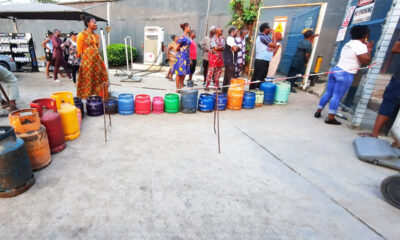
National cooking gas demand has dropped by 38 percent, according to the Nigerian Association of Liquefied Petroleum Gas Marketers, NALPGAM.
The revelation came on the heels of clamours by a group of experts on Tuesday that demand for Liquefied Natural Gas, popularly known as cooking gas, had dropped to a record low across the country.
The President of the Nigerian Gas Association, Ed Ubong, said at a downstream event in Lagos that national gas consumption had dropped due to high prices.
The Executive Secretary of NALPGAM, Bassey Essien, also confirmed the development to The PUNCH during a telephone interview.
Following the clamour, NALPGAM, President Oladapo Olatunbosun, on Wednesday, said gas demand had dropped from 1.2 million metric tonnes per annum (mmtpa) to around 750,000mtpa.
“We are aware that the local consumption of cooking gas has dropped from 1.2 million metric tonnes per annum (mmtpa) to around 750,000mtpa out of which about 600,000 mtpa is supplied by local producers,” he said, bringing the percentage drop in demand to 37.5 percent per annum.
This brings to fore, the achievement of President Buhari’s National Gas Expansion Programme which seeks to deepen local gas usage within the next decade.
READ ALSO:
- My ex-husband makes me scared of calm people – Kaffy
- Crisis hits APC NWC as Vice Chair accuses Adamu of acting unilaterally
- APC Senatorial Tickets: Aliero, Ohakim Pull Out As Yari, Goje, Oshiomhole, Others Win
The Federal Government had targeted a consumption of 5mn metric tonnes per annum.
Olatunbosunalso alleged that the Nigeria Liquefied Petroleum Gas Association inflated price of a 20metric tons by 100 percent.
According to him, gas importers who were members of NLPGA sold to plant owners at N12.7million per 20metric tons (MT) despite purchasing the product at around N7 million per 20MT from NLNG and other local producers.
While NALPGAM is the association of indigenous private companies with operating gas bottling plants with membership spread across the country, the NLPGA is the umbrella body of all stakeholders including importers, skid owners and also players in the LPG sector in Nigeria.
According to him, cooking gas, as at Monday, May 23, was N750 per kilogram(Kg) at the depot and was sold at N800/kg at the retail end in Lagos, Ogun and some states in the South West, while the same quantity went as high as N900 to N1000 per kg at retail end in Gombe and Bayelsa and other states.
He said, “It does not make economic sense to be supplied with a receipt of around N7 million per 20MT and sell to consumers at the same price that imported LPG landed in Nigeria.
“Give us the exact figure of LPG your members got from NLNG. We are aware that the local consumption of cooking gas has dropped from 1.2 million metric tonnes per annum(mmtpa) to around 750,000mtpa out of which about 600,000 mtpa is supplied by local producers.”
The General Manager, External Relations & Sustainable Development, NLNG, Andy Odeh, told Sunday PUNCH in an email response that it could not disclose its contractual agreement with its customers. “We have no comments on your enquiries as our sales terms are confidential and commercially sensitive information,” he said, when asked to disclose the price it sold to marketers.
While speaking during one of the technical sessions on the topic ‘Gas as a catalyst for sustainable economic development- The role of Nigerian Content’, at ‘The Nigerian Content Midstream and Downstream Oil and Gas Summit 2022’ organised by the Nigerian Content and Development Monitoring Board, NCDMB, in Lagos on Tuesday, gas stakeholders unanimously submitted that national gas consumption was currently very low and expressed worry over the dwindling purchasing power of Nigerians.





Auto
X90 Plus Leads Jetour’s Abuja Drive for Bigger SUV Market Share
X90 Plus Leads Jetour’s Abuja Drive for Bigger SUV Market Share
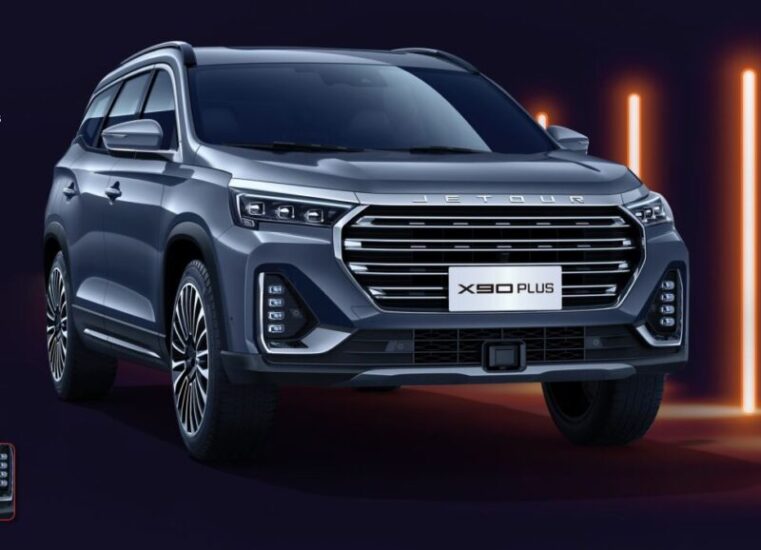
Jetour Nigeria is taking its premium SUV battle to Abuja, with the seven-seater X90 Plus set to headline the Jetour Experience Abuja from September 22 to 24, as the automaker moves to capture a larger share of Nigeria’s fast-growing high-end family SUV market.
The three-day motoring showcase will give prospective buyers, families and auto enthusiasts in the Federal Capital Territory and neighbouring states an opportunity to experience the X90 Plus and other models in the Jetour range through test drives and hands-on demonstrations.
The Abuja showcase follows the success of the brand’s earlier Jetour Experience in Lagos, where strong customer interest, inquiries and sales momentum reportedly encouraged the company to take the initiative to the Federal Capital Territory.
Jetour Nigeria said growing demand from customers in Abuja and neighbouring states was a major factor behind the decision to expand the experience to the northern market.
Positioned as a full-sized family SUV, the X90 Plus is designed for executives and families seeking a combination of space, technology, performance and comfort without the price tag associated with some luxury SUVs.
The model is offered with 1.6-litre and 2.0-litre turbocharged engines paired with a seven-speed dual-clutch transmission. The powertrain produces up to 254 horsepower and 390Nm of torque.
Inside the cabin, the X90 Plus features a 12.3-inch LCD touchscreen infotainment system, panoramic sunroof, Sony premium audio system and wireless charging.
Its safety and driver-assistance features include a 360-degree panoramic camera, Forward Collision Warning, Lane Departure Warning and electronic stability systems.
Jetour’s growing profile in Nigeria has also earned the brand recognition from the Nigeria Auto Journalists Association (NAJA), which named it Fastest Growing Auto Brand, while it was also recognised as Auto Brand of the Year at the Nigeria Transport Lecture.
To support its expanding customer base, Jetour Nigeria, the sole authorised distributor, operates through seven accredited dealer partners across the country: Elizade Nigeria Limited, Mandilas Autos, R.T. Briscoe Motors, Germaine Auto Centre, Kojo Motors, Tab Autos Limited and New Era Auto Vehicle Services Limited.
The Abuja Experience is expected to provide Jetour with another platform to engage potential customers and reinforce its position in Nigeria’s increasingly competitive SUV market.
Business
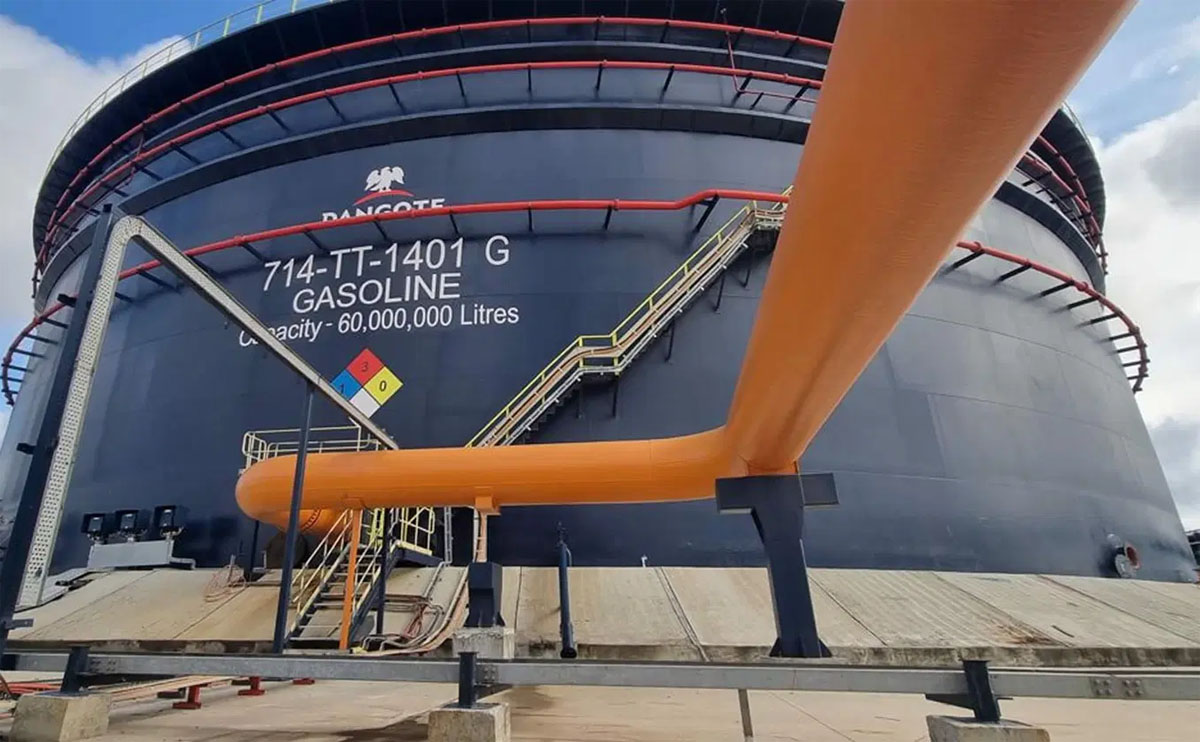
Dangote raises petrol price 6.7% to N1,350/litre
Dangote raises petrol price 6.7% to N1,350/litre
The Dangote Petroleum Refinery has increased its Premium Motor Spirit (PMS), popularly known as petrol, gantry price by 6.7 per cent, raising it from N1,265 to N1,350 per litre, with the new price taking effect from September 12, 2026.
The latest adjustment represents an N85 increase per litre and is the fourth upward review of Dangote Refinery’s petrol price since August 21, further raising concerns about the possible impact on petrol pump prices, transportation costs and the wider cost of living.
The refinery also increased its coastal price from N1,669,543 to N1,783,530 per metric tonne, representing an increase of N113,987, or about 6.8 per cent.
In a memo to customers, Dangote Petroleum Refinery announced the revised prices and directed customers with existing loading arrangements to return their Authority to Collect (ATC) documents for repricing.
The refinery said new volume contracts would subsequently be issued to allow loading to resume under the revised prices.
The latest increase means Dangote’s petrol price has risen by N185 per litre, or about 15.9 per cent, in 22 days.
The refinery had increased its gantry price from N1,165 to N1,185 per litre on August 21. It subsequently raised the price to N1,200 on August 26 and then to N1,265 on August 29, before the latest increase to N1,350.
The development comes amid renewed pressure in the international crude oil market, with Brent crude recently trading above $100 per barrel as geopolitical tensions and disruptions to oil supplies in the Middle East continue to affect global energy markets.
The pressure on global fuel markets is also being felt by refiners and petroleum traders as disruptions to Middle Eastern refining capacity and shipping routes create concerns over the availability of crude and refined petroleum products.
Dangote Refinery’s management recently said global fuel shortages could persist beyond the current Iran conflict because of damage to refining infrastructure, high refinery utilisation rates and the need to rebuild fuel inventories.
READ ALSO:
- Anambra Police Arrest Woman Over Alleged Sexual Abuse of Child, Rescue Four
- MURIC fires back at Peter Obi: Forget Sallah ceremony, free Nigerian Muslims
- Fani-Kayode Condemns Fresh Killing of Two Nigerians in South Africa
For Nigeria, the increase comes as the downstream petroleum market continues to operate under deregulation, meaning petrol prices are largely determined by market conditions rather than a fixed government-controlled price.
The Nigerian Midstream and Downstream Petroleum Regulatory Authority (NMDPRA) recently identified crude oil sourcing, refinery delivery timelines, imported cargoes, transportation, logistics and taxes among the factors influencing movements in petrol prices.
NMDPRA Head of Public Affairs George Ene-Ita said petrol prices are fully deregulated and therefore exposed to fluctuations across the supply chain.
Consequently, the new Dangote price does not necessarily mean motorists across Nigeria will immediately pay exactly N1,350 per litre at filling stations.
The price consumers pay will depend on the cost at which individual marketers obtain their supplies, transportation and distribution expenses, depot charges, operating costs, location, competition and profit margins.
However, the increase in the refinery’s gantry price is expected to put additional pressure on marketers who source petrol from Dangote Refinery, particularly as they replenish existing stocks.
Recent reports indicate that petrol prices in several parts of the country had already moved higher, with pump prices in some locations reaching the N1,310-N1,350 per litre range before the latest Dangote adjustment.
The latest price review could therefore trigger another round of adjustments by petroleum marketers, especially if the higher wholesale acquisition cost persists.
READ ALSO:
- FG Targets 2 Million Creative Jobs by 2030
- Donnarumma: Two Jailed Over Violent Paris Burglary of Man City Goalkeeper, Wife
- Police Clarify IGP Disu’s Position on Recording Officers
The development is also significant because Dangote Refinery has become an increasingly important source of locally refined petrol as Nigeria seeks to reduce its dependence on imported petroleum products.
The refinery has secured at least 16 million barrels of Nigerian crude for October delivery, equivalent to roughly 520,000 barrels per day, according to Reuters. The purchases represent a substantial portion of the refinery’s current 700,000-barrel-per-day capacity and underline its growing role in Nigeria’s domestic fuel supply.
Despite the increase in petrol prices, Dangote Refinery is pursuing plans to expand its capacity significantly. The company announced a $14.3 billion expansion programme that is expected to increase its processing capacity from about 700,000 barrels per day to 1.4 million barrels per day by 2029.
The refinery is also preparing for a major initial public offering (IPO) aimed at raising about N2.15 trillion, with the offer scheduled to run from September 14 to October 13.
For consumers and businesses, the immediate concern remains the potential effect of the latest petrol price increase on transportation, logistics and the cost of goods and services.
Petrol remains a major input for transportation and commercial activities in Nigeria. Any sustained increase in its price can raise the cost of moving people and goods and increase operating expenses for businesses that depend on petrol-powered vehicles and equipment.
The extent of the impact of the new N1,350 per litre Dangote petrol price, however, will depend on how marketers respond and whether international crude prices remain elevated.
For now, the latest adjustment establishes a higher wholesale benchmark for customers buying petrol from Dangote Refinery, while the retail market is expected to respond according to prevailing supply, distribution and competitive conditions.
Dangote raises petrol price 6.7% to N1,350/litre
Auto
Jetour Takes Award-Winning Dashing, Other SUVs to Abuja

Jetour Takes Award-Winning Dashing, Other SUVs to Abuja
Motorists in Abuja are set for a close encounter with Jetour’s award-winning Dashing and other models as Jetour Nigeria moves to deepen its foothold in the nation’s capital with the Jetour Experience Abuja, beginning September 22.
The three-day motoring event, which runs until September 24, is expected to draw prospective buyers and automobile enthusiasts to a hands-on experience featuring test drives, product demonstrations and direct engagement with Jetour’s seven authorised dealers and product specialists.
The participating dealer network comprises Elizade Nigeria Limited, Kojo Motors, Mandilas Autos, Germaine Auto Centre, R.T. Briscoe, Tab Autos and New Era Auto Vehicle Services Limited.
READ ALSO:
- Police Arrest Woman Over Alleged Drug Trafficking in Delta
- Dangote raises petrol price 6.7% to N1,350/litre
- Anambra Police Arrest Woman Over Alleged Sexual Abuse of Child, Rescue Four
The Abuja Experience follows the success of the Lagos edition, which attracted thousands of visitors for test drives and direct engagement with product specialists. According to the organisers, strong demand and inquiries from motorists in Abuja and neighbouring states prompted the expansion of the event to the Federal Capital Territory.
The Dashing has gained attention in Nigeria’s competitive compact SUV segment for its combination of modern styling, technology, performance and competitive pricing.
The SUV is available with 1.5-litre and 1.6-litre turbocharged engines, producing up to 145kW of power and 290Nm of torque, paired with six- or seven-speed dual-clutch transmissions.
Its features include a 15.6-inch central touchscreen infotainment system, panoramic sunroof, wireless charging and smartphone integration.
For safety, the vehicle comes with a 360-degree surround-view camera, automatic emergency braking, lane departure warning, blind-spot detection and multiple airbags.
Beyond vehicle sales, the authorised dealers provide warranty, genuine spare parts and after-sales support to Jetour customers across their respective locations.
The Abuja Experience is expected to strengthen customer engagement and give motorists in the FCT a closer look at Jetour’s growing range of vehicles, while further expanding the brand’s footprint in the northern market.
Jetour Takes Award-Winning Dashing, Other SUVs to Abuja
-

 metro3 days ago
Woman disguises as Muslim woman in Niqab to steal in Ado-Ekiti market, video sparks outrage
-

 metro2 days ago
Ondo Herbal Drink Tragedy: Survivor Vows Never to Drink Again as Death Toll Tops 30
-

 metro2 days ago
Sokoto Cleric Stabbed Twice in Neck After Juma’at Prayer, Attacker Killed
-

 Africa3 days ago
Murder of Nigerian Bishop in South Africa Sparks Outcry Over Unsolved Killings
-
 Business2 days ago
Dangote: ₦525 Refinery Shares Could Rise to ₦10,000
-

 Community3 days ago
Kaduna Traditional Rulers Set for 100% Pay Rise as Zazzau Emir Backs Proposal
-

 News3 days ago
AI on the Roads: LASTMA Turns to China to Fix Lagos Traffic
-

 metro2 days ago
MURIC fires back at Peter Obi: Forget Sallah ceremony, free Nigerian Muslims