
In addition, the secret police asked the court to issue an order of perpetual injunction, restraining Utomi, his agents and associates “from further taking any steps towards the establishment or operation of a ‘shadow government,’ ‘shadow cabinet’ or any similar entity not recognized by the Constitution of the Federal Republic of Nigeria, 1999 (as amended).”
metro
Court declares Utomi’s ‘Shadow government’ unconstitutional
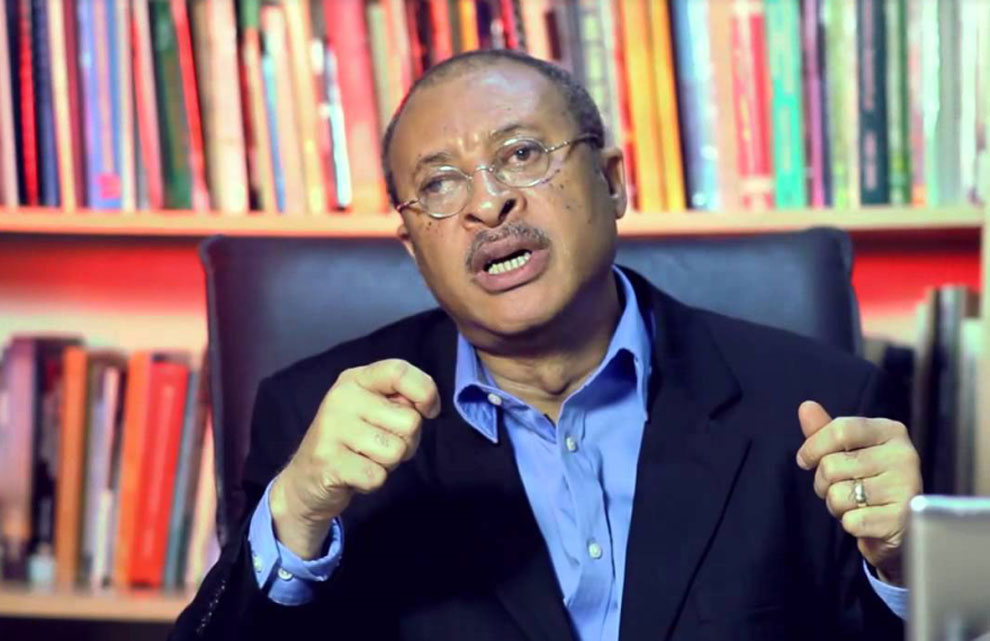
Court declares Utomi’s ‘Shadow government’ unconstitutional
A Federal high court sitting in Abuja on Monday declared as illegal, unlawful and unconstitutional the bid by Prof. Pat Utomi and some of his associates to form a shadow government in the country.
The court held that Utomi and his associates cannot hide behind the pillar of the rights of association to criticise the government to engage in unlawful activities.
Delivering judgement in a suit instituted by the Department of State Services (DSS) challenging the bid by Utomi and some associates of his to form a shadiw government, Justice James Omotosho declared the move as null, void and unconstitutional.
Instead, said the judge, Utomi and his associates should form or join a political party to run for office or to provide constructive opposition.
The judge further held that the association Utomi registered with the Corporate Affairs Commission (CAC), Big Tent Coalition Shadow Government (BTCSG), for the purpose of sponsoring his shadow government is ultra vires.
READ ALSO:
- Lewandowski scores winner as Barcelona gets 2-1 victory over Real Sociedad
- Omokri faults U.S. talkshow host on alleged killing of Christians
- Otedola to Tinubu: Make fuel subsidy report public, name those who looted funds
On the question of the suit by the DSS violated the fundamental human rights of the defendants, Justice Omotosho held that the action of the defendant is dangerous and non justifiable. He stressed that fundamental rights are not absolute but have limitations.
He commended the DSS for filing the suit and held among others, that it was within the right of the DSS to take steps to prevent acts capable of threatening the nation’s internal security.
Shortly after Utomi, in May, launched what he called the Big Tent Coalition Shadow Government (BTCSG), which he called a “national emergency response,” the DSS approached the Federal High Court to determine the constitutionality of shadow government in a presidential system of government.
In the suit marked FHC/ABJ/CS/937/2025, the DSS held that the “shadow government” being championed by Prof. Utomi, not only is alien to the Nigerian Constitution, but capable of causing anarchy and destabilizing Nigeria.
READ ALSO:
- RTEAN appoints Henry Ugwu as national secretary general
- Nigeria secures $750m World Bank loan for broadband expansion, health security
- Security of Gulf states under threat, warns ex-Saudi envoy
The DSS further contended that with a democratically-elected presidential government in place, any “shadow government as being promoted by Utomi or anybody, could incite, “trigger political unrest, cause intergroup tensions, and embolden other unlawful actors or separatist entities to replicate similar parallel arrangements, all of which pose a grave threat to national security.”
The secret police, whose constitutional mandate is to oversee internal security, prayed the curt to declare the purported “shadow government” or”‘shadow cabinet” being planned by Utomi and his associates as unconstitutional, arguing that it “amounts to an attempt to create a parallel authority not recognized by the Constitution of the Federal Republic of Nigeria, 1999 (as amended).”
The DSS further sought a declaration that “under Sections 1(1), 1(2) and 14(2)(a) of the Constitution, the establishment or operation of any governmental authority or structure outside the provisions of the Constitution of the Federal Republic of Nigeria, 1999 (as amended). is unconstitutional, null, and void.”
Court declares Utomi’s ‘Shadow government’ unconstitutional






metro
Court Dismisses Sowore’s Suit Against DSS, Meta

Court Dismisses Sowore’s Suit Against DSS, Meta
The Federal High Court in Abuja on Thursday dismissed a fundamental rights enforcement suit filed by Omoyele Sowore, publisher of Sahara Reporters and political activist, against the Department of State Services (DSS), its Director‑General, and Meta Platforms Incorporated (formerly Facebook). The court held that the suit, which challenged the removal of a social media post and deactivation of Sowore’s Facebook account, lacked merit, and awarded a total of ₦1.5 million in costs against him.
Justice Mohammed Umar, who delivered the judgment, explained that the suit failed on all key legal issues, including claims relating to fair hearing, freedom of expression, and freedom of association under the Nigerian Constitution. Sowore had alleged that Meta, acting on instructions from the DSS and its Director-General, removed his post on August 26, 2025, in which he referred to President Bola Tinubu as a “criminal”, and subsequently deactivated his account.
Sowore’s legal team argued that the removal of the post and account action violated his constitutional rights to fair hearing, free expression, and association. He joined the DSS, its DG, Meta Platforms Inc., Meta Platforms Ltd., and Facebook Nigeria Operations Ltd. as respondents in the suit. The case, marked FHC/ABJ/CS/1887/2025, sought declaratory reliefs against the respondents for allegedly infringing these rights.
READ ALSO:
- Obidients Movement Escalates Pressure on INEC, Demands Joash Amupitan Step Down
- Kano APC Chieftain Dies in Abuja Hotel Elevator Accident
- VeryDarkMan Dares Sowore Over Blord’s Kuje Prison Remand
In his ruling, Justice Umar stated that the right to fair hearing under Section 36(1) of the Constitution applies only to proceedings before courts or tribunals, not to complaints made by non-judicial bodies or private platforms. The judge emphasized that Sowore’s claim on fair hearing was therefore not justiciable under the fundamental rights enforcement procedure.
The court also found that Sowore’s freedom of expression and association were not violated, noting that constitutional rights are not absolute and may be restricted to protect the rights and reputation of others. The judge clarified that the DSS’s complaint to Meta and the platform’s action to remove the post were lawful steps under existing policies, and did not constitute a violation of Sowore’s rights.
Regarding the reliefs sought, Justice Umar held that Sowore failed to prove that his constitutional rights had been or were likely to be violated, and that the reliefs were therefore unwarranted. The suit was dismissed in its entirety.
Following applications for costs by counsel to the DSS and its DG, as well as Meta, the court awarded ₦500,000 each to the DSS, its DG, and Meta Platforms, totaling ₦1.5 million to be paid by Sowore.
The case highlights ongoing debates in Nigeria over online freedom of expression, state interventions, and the role of global tech platforms in moderating content following complaints by government agencies. Sowore, known for his activism and political engagement, has previously been involved in legal disputes and protests concerning government accountability and free speech.
Court Dismisses Sowore’s Suit Against DSS, Meta
metro
Kano APC Chieftain Dies in Abuja Hotel Elevator Accident
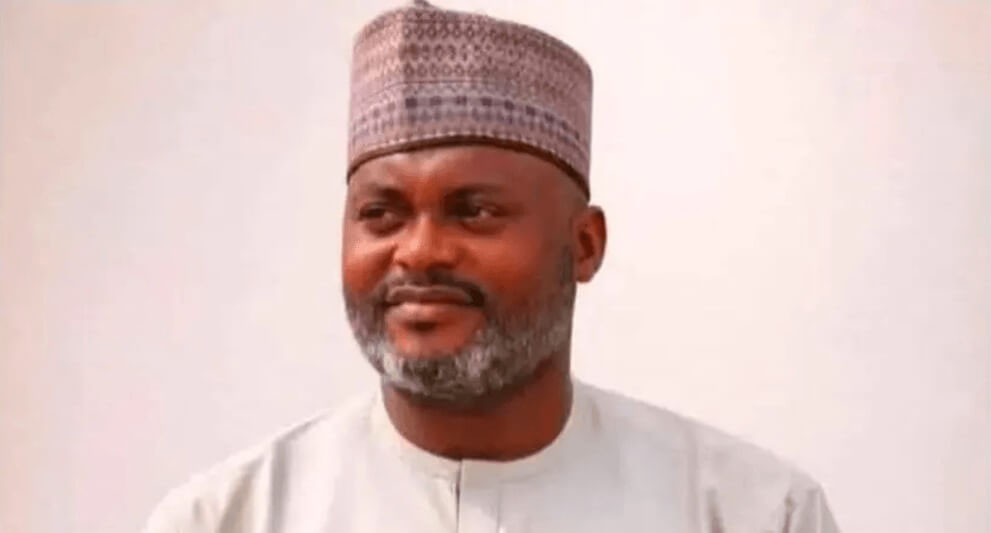
Kano APC Chieftain Abdulsalami Ginsau Dies in Abuja Hotel Elevator Accident
Tragic details have emerged surrounding the death of Abdulsalami Ginsau, the Assistant Organising Secretary of the All Progressives Congress (APC) in Kano State, who died after being trapped in a faulty elevator at Chida Hotels in Utako District, Abuja. The incident occurred on Friday, March 27, 2026, during the APC national convention.
Ginsau, a respected lawyer and party stalwart, had travelled to Abuja to coordinate accommodation for APC delegates from Kano State. After settling the delegates, he checked into Chida Hotels, unaware of the malfunctioning elevator in the facility. Sources reveal that although 150 rooms had been booked, over 1,000 delegates arrived, overwhelming the hotel’s capacity. The hotel reportedly raised concerns over elevator safety, but these warnings were reportedly ignored.
In the early hours of Friday, Ginsau reportedly entered the malfunctioning elevator on the third floor. The lift shaft was empty, and he tragically fell, going unnoticed until the following day, when staff detected a strong odor, prompting a search that led to the discovery of his remains.
READ ALSO:
- VeryDarkMan Dares Sowore Over Blord’s Kuje Prison Remand
- First Lady’s National Community Food Bank Programme Attracts Over ₦66bn
- Muslim Nations Condemn Israel’s New Death Penalty Law for Palestinians
The Utako Police Division confirmed the incident, stating that the hotel management reported the accident on Saturday, March 28, 2026. An autopsy and police investigation are ongoing to determine the circumstances surrounding his death.
The Kano State APC has called for a thorough investigation, alleging potential negligence by the hotel. Party leaders noted that Ginsau was in good health before the trip. A committee has been set up to work with security agencies to uncover the facts. The Kano State Government has also reached out to the family to ensure accountability and transparency.
Speaking for the family, Hamza Haladu described the death as “a complete shock,” highlighting Ginsau’s good health before the trip. The APC stalwart, known for his expertise in corporate, commercial, and property law, is survived by two wives and two children. His funeral is scheduled to take place in Kano on Thursday, April 3, 2026, in accordance with Islamic rites.
Ginsau held several leadership roles in the legal profession, including CEO of Ginsau & Sons and litigation work with Ginsau & Co. Advocates, specialising in labour, corporate, estate, and family law. Within the APC, he was a key strategist, playing a central role in party organisation in Kano State.
Kano APC Chieftain Abdulsalami Ginsau Dies in Abuja Hotel Elevator Accident
metro
VeryDarkMan Dares Sowore Over Blord’s Kuje Prison Remand

VeryDarkMan Dares Sowore Over Blord’s Kuje Prison Remand
Controversial social media activist VeryDarkMan has fired back at politician and activist Omoyele Sowore following his criticism of the incarceration of cryptocurrency entrepreneur Blord. The case has ignited widespread discussion about identity theft, impersonation laws, and online accountability in Nigeria.
Blord, whose real name is Linus Williams Ifejirika, was remanded at the Kuje Correctional Centre on April 1, 2026, after being charged with criminal conspiracy, impersonation, and unauthorized use of VeryDarkMan’s identity for commercial purposes. Court proceedings have been scheduled to continue with Blord in custody until April 27, 2026.
The legal action arose after Blord allegedly used VeryDarkMan’s image without consent, including on promotional materials and advertisements, falsely presenting himself as a partner or endorser of certain businesses. VeryDarkMan claimed Blord even went as far as forging flight tickets in his name to promote events.
READ ALSO:
- First Lady’s National Community Food Bank Programme Attracts Over ₦66bn
- Muslim Nations Condemn Israel’s New Death Penalty Law for Palestinians
- Lagos Ranks Fourth Most Expensive City for House Rent in Africa — Report
In response to Sowore’s public condemnation of the case, VeryDarkMan took to Instagram to express disappointment that Sowore opted to speak publicly instead of contacting him privately. He warned Sowore against unauthorized use of his identity and threatened legal action if similar actions occurred.
“Dear Omoyele Sowore… because of the respect I have for you, if you had asked me to let it go, I might have,” VeryDarkMan wrote. “But instead, you chose to test your strength… On God, if you cross this path and use my face or name to promote any business without my approval, I, Martins Vincent Otse, will send you to prison… you might end up begging to discontinue the case.”
VeryDarkMan emphasized that the case highlights how wealth and influence do not place anyone above the law, pointing out that Blord—despite being perceived as well-connected—was remanded. This, he asserts, sends a strong message about the consequences of identity theft and impersonation in Nigeria.
Sowore, for his part, condemned the “celebration” of Blord’s incarceration, warning that the law should not be weaponized to target individuals. He pledged to work toward having the case dropped and Blord released, asserting that justice must be fair and impartial.
The dispute has sparked heated debates on social media, with some supporting VeryDarkMan’s strict stance on protecting personal identity, while others echo Sowore’s concerns about legal overreach and fairness. Observers note that the case has also raised questions about digital rights, online reputation management, and enforcement of impersonation laws in Nigeria’s fast-growing tech ecosystem.
As the case continues, it remains a flashpoint for discussions on law, online influence, and accountability, highlighting the challenges that arise when social media personalities, politicians, and entrepreneurs collide in Nigeria’s legal and digital spheres.
VeryDarkMan Dares Sowore Over Blord’s Kuje Prison Remand

-

 Education3 days ago
WAEC Releases 2026 WASSCE Timetable for School Candidates
-

 Auto3 days ago
Lagos NURTW Chairman Sego Distributes Exotic Cars, Luxury Items to Cabinet Members (Video)
-

 metro3 days ago
Cars Torched as South Africans Protest Alleged Nigerian ‘Igbo King’ Coronation
-

 Railway2 days ago
Easter train: NRC increases Lagos-Ibadan trips, offers free Osun holiday transit
-

 Sports3 days ago
Osimhen Among Highest-Paid African Footballers in 2026 — See Full List
-

 Education3 days ago
JAMB Releases 2026 UTME Mock Results, Delists Over 20 CBT Centres
-

 Business3 days ago
Bottles of Death: SWAN rallies media to combat ₦472bn illicit alcohol crisis
-

 Politics2 days ago
Adebayo Adelabu Resigns as Power Minister to Run for Oyo State Governorship