
Business
Debt service exceeds FG revenue by N310bn in four months
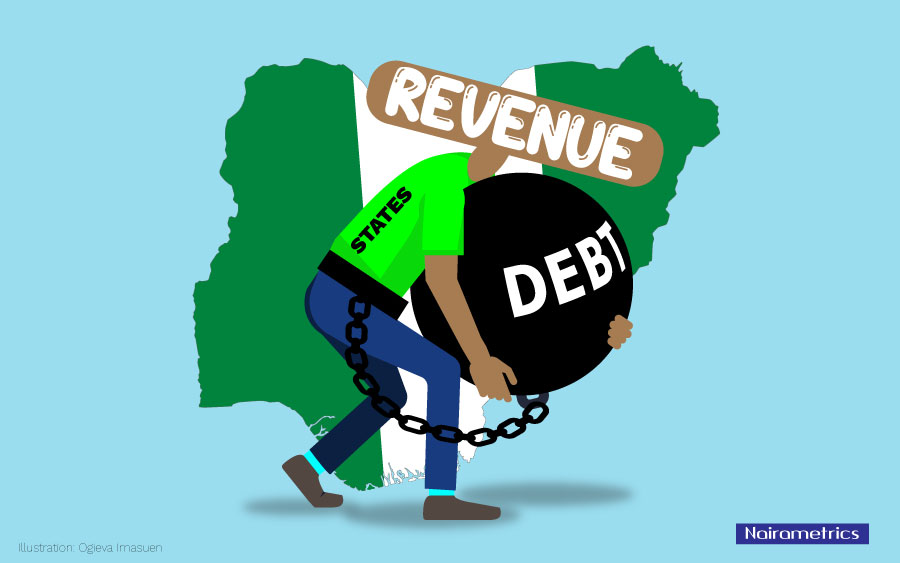
The cost of servicing debt exceeded the Federal Government’s retained revenue by N310 billion in the first four months of this year, a report of its 2022 fiscal performance has revealed.
According to the document, the Federal Government’s total revenue for the period was N1.63 trillion, while debt service gulped N1.94 trillion.
Minister of Finance, Budget and National Planning, Zainab Ahmed, while giving the updates on the budget performance, said urgent action was required to address revenue underperformance and expenditure efficiency at national and sub-national levels.
“The aggregate expenditure for 2022 is estimated at N17.32 trillion, with a prorata spending target of N5.77 at end of April,” the document reads.
“The actual spending as of April 31st was N4.72 trillion. Of this amount, N1.94 trillion was for debt service, and N1.26 trillion was for personnel costs, including pensions.
“As at April, N773.63 billion has been spent on capital expenditure.
“As of April 2022, FGN’s retained revenue was only N1.63 trillion, 49 percent of the prorata target of N3.32 trillion.”
The document added that the Federal Government’s share of oil revenues was N285.38 billion (representing 39 percent performance), while non-oil tax revenues totalled N632.56 billion — a performance of 84 percent.
Based on the figures, the government generated N401.8 billion from company income tax (CIT) and value-added tax (VAT).
It stated, “CIT and VAT collections were N298.83 billion and N102.97 billion, representing 99 percent and 98 percent of their respective targets,” the document added.
“Customs collections (made up of import duties, excise and fees, as well as federation account special levies) trailed target by N76.77 billion (25.42 percent).
“Other revenues amounted to N664.64 billion, of which independent revenue was N394.09 billion.”







Business
FG Moves to End Used Vehicle Imports, Targets Auto Policy Passage in 2026

FG Moves to End Used Vehicle Imports, Targets Auto Policy Passage in 2026
The Federal Government has intensified moves to reduce Nigeria’s heavy reliance on imported used vehicles, signalling a decisive policy shift aimed at boosting local automobile production, improving vehicle quality and strengthening the country’s industrial base.
This position was reaffirmed in Lagos at the 18th edition of the Nigeria Auto Journalists Association (NAJA) International Auto Awards, where the Director-General of the National Automotive Design and Development Council (NADDC), Otunba Oluwemimo Joseph Osanipin, said government strategies are now deliberately aligned to discourage the influx of used vehicles into the country.
Osanipin explained that the NADDC, working with relevant stakeholders, is tightening standards to ensure that only quality vehicles enter Nigeria, while government gradually phases out used vehicle imports in favour of locally assembled and manufactured alternatives.
According to him, a key instrument driving the new direction is the National Auto Industry Development Policy (NAIDP), which has remained pending for years but is now receiving renewed attention. He disclosed that the council is targeting the passage of the policy into law by the National Assembly by the second quarter of 2026.
“We are committed to strengthening local manufacturing in Nigeria. One of our major targets is to ensure the Auto Policy is enacted by the second quarter of 2026. We will soon forward it to the National Assembly and engage stakeholders extensively during the public hearing process,” Osanipin said.
He added that the campaign against imported used vehicles is further reinforced by the End-of-Life Vehicle (ELV) Recycling Regulation introduced in March 2025.
The regulation, he noted, is designed to formalise vehicle recycling, promote a circular economy, enhance environmental protection and improve road safety, while also creating new employment opportunities.
The Federal Government’s efforts have also gained momentum following the approval of the Nigeria Industry Policy (NIP) by the Federal Executive Council (FEC), a move regarded as a critical foundation for the eventual enactment of the NAIDP.
Minister of State for Industry, Senator John Enoh, who was represented by Osanipin, said the NIP provides a clear roadmap for Nigeria’s industrial development, with the automotive sector identified as a strategic priority.
“The Nigeria Industry Policy has been approved by the FEC and will guide the country’s industrial growth. The next major step is the enactment of the Auto Policy. These are deliberate actions to give the automotive sector the attention and priority it deserves,” he said.
Osanipin also praised NAJA for sustaining the annual auto awards, describing the initiative as a platform that fosters healthy competition, collaboration and growth within the automotive industry.
Industry analysts say that with the approval of the Nigeria Industry Policy and the renewed push for auto legislation, the Federal Government’s clampdown on imported used vehicles signals a clear commitment to building a sustainable and locally driven automotive industry in Nigeria.
Auto
Jetour Dashing Claims NAJA 2025 Car of the Year as Industry Stars Shine in Lagos (with photos)

Jetour Dashing Claims NAJA 2025 Car of the Year as Industry Stars Shine in Lagos (with photos)
Jetour Dashing has been named Nigeria’s 2025 Car of the Year by the Nigeria Auto Journalists’ Association (NAJA), emerging tops after a closely fought assessment of leading vehicles competing in the market.
The announcement was made on Tuesday night at the 18th NAJA International Auto Awards held at the Oriental Hotel, Victoria Island, Lagos.
The tech-focused compact crossover SUV edged out strong rivals, including the Changan CS55 and Chery Tiggo, to secure the industry’s most coveted title.
With the honour, Jetour Dashing joins an exclusive list of past winners such as the Changan CS55, Honda HR-V, Toyota Corolla and Kia Rio, further affirming its growing acceptance among Nigerian consumers and industry stakeholders.
Beyond the Car of the Year category, the awards celebrated excellence across the automotive value chain. Mikano was named Auto Company of the Year, while Toyota Nigeria’s Isolo facility won Workshop of the Year.
Dangote Sinotruk clinched Heavy-Duty Truck Brand of the Year, Iron Products Industries (IPI) Ltd emerged Truck Assembler/Body Builder of the Year, Lanre Shittu Motors (JAC) won Truck Plant of the Year, and Innoson Vehicle Manufacturing (IVM) was named Passenger Car Assembly Plant of the Year.
In the alternative energy segment, Saglev emerged EV Brand of the Year, while Jet Automobiles Ltd was recognised as CNG Vehicle Assembler of the Year. Massilia Motors (Mitsubishi) won Most Innovative Auto Company of the Year, and Suzuki by CFAO was named the Most Competitive Priced Brand of the Year.

Model-based awards saw the Mercedes-Benz S-Class win Luxury Car of the Year, Range Rover Autobiography (Coscharis Motors) clinch Luxury SUV of the Year, Kia Seltos take Compact SUV of the Year, and Changan CS55 (Mikano Motors) emerge Midsize SUV of the Year.
Toyota Hilux was named Pick-Up of the Year, Toyota Hiace won Minibus of the Year, while the Mercedes-Benz E-Class emerged Most Popular Luxury Model of the Year.
Corporate resilience was also recognised, with Stallion Motors, R.T. Briscoe Nigeria Plc and ANAMMCO Ltd honoured as Resilient Auto Companies of the Year. Coscharis Motors won Multiple Brand Auto Company of the Year, CFAO Mobility emerged Most Enterprising Auto Company of the Year, and GUO Transport Ltd was named Transport Company of the Year.
Several brands were honoured as New Entrants of the Year, including New Era Automobile Services, JIM–ISUZU Pick-Up (Cedric Autos Ltd), JEGO EV, NORD A9 and Jetour X50, reflecting the increasing vibrancy of Nigeria’s auto market. NORD Automobiles also emerged Fastest Growing Auto Brand of the Year.

In aftersales and services, Carloha won both Auto Aftersales Company of the Year and Pre-owned Company of the Year, while Winpart clinched Auto Aftersales Service Provider of the Year (Parts & Workshop).
Individual honours featured prominently, with Oluwatobi Ajayi, Chairman/CEO of NORD Automobiles, named Auto Personality of the Year (Private Sector), while Otunba Joseph Osanipin, Director General of the National Automotive Design and Development Council (NADDC), won Auto Personality of the Year (Public Sector). Ifeanyi Agwu, Managing Director/CEO of BKG Exhibitions Ltd, was honoured as Auto Show Promoter of the Decade, and Sonu Singh of Stallion Motors emerged Marketing/Media Manager of the Year.

Speaking at the event, NADDC Director General Joseph Osanipin praised NAJA for sustaining a credible platform that promotes excellence, innovation and professionalism in the automotive industry, noting that auto journalists play a vital role in shaping public understanding and industry accountability.
In his welcome address, NAJA Chairman, Mr. Theodore Opara, described the awards as one of the sector’s most respected platforms, adding that the initiative has remained relevant over 18 years despite rapid technological and policy changes.
The 2025 NAJA International Auto Awards once again underscored its role as a key benchmark for recognising progress, resilience and innovation within Nigeria’s automotive ecosystem.
Business
Dangote–NMDPRA Conflict: House Launches Investigation to Stabilize Petrol Supply
Dangote–NMDPRA Conflict: House Launches Investigation to Stabilize Petrol Supply
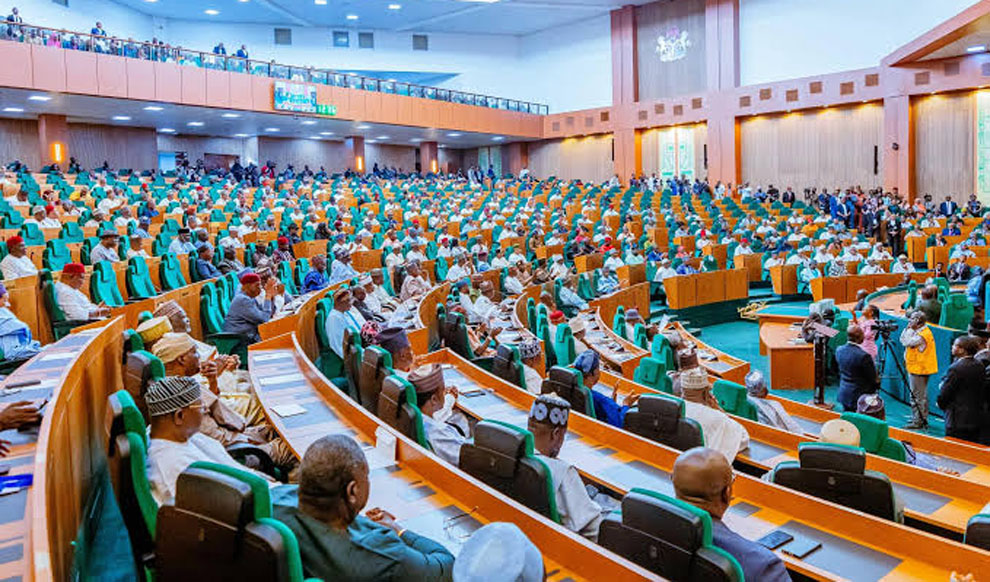
The House of Representatives has resolved to investigate the ongoing dispute between Aliko Dangote, chairman of the Dangote Group, and Farouk Ahmed, CEO of the Nigerian Midstream and Downstream Petroleum Regulatory Authority (NMDPRA). The decision follows the adoption of a motion of urgent public importance during Tuesday’s plenary session.
The motion was moved by Midala Balami, representing Askira Uba/Hawul federal constituency in Borno State, and unanimously adopted after a voice vote presided over by Deputy Speaker Benjamin Kalu.
The dispute escalated after Dangote alleged in a newspaper advertisement that Ahmed spent about $5 million on the secondary education of his four children in Switzerland over six years, including tuition, airfare, and upkeep. The total claimed cost, according to Dangote, amounted to $4.8 million.
READ ALSO:
- Why Buhari Retained Underperforming Appointees for Eight Years – Aisha Buhari
- Revealed: Why Buhari Withheld Support for Osinbajo’s Presidential Bid
- CBN Cracks Down on Mortgage Banks, Revokes Licences of Two Non-Compliant Firms
Tensions between the billionaire industrialist and the NMDPRA CEO initially peaked in July 2024, when Ahmed claimed that local refineries, including the Dangote Refinery, produce inferior fuel products compared with imports. Dangote denied the allegations and conducted tests on diesel from his refinery during an oversight visit by federal lawmakers.
Moving the motion, Balami warned that the unresolved feud could threaten domestic petrol supply, fuel pricing stability, and foreign exchange conservation. He emphasized Dangote’s critical role in reducing Nigeria’s dependence on imported fuel.
The House directed the Committees on Petroleum Resources (Midstream and Downstream) to investigate the dispute, engage relevant stakeholders, and propose actionable solutions within four weeks. Committee Chairman Ikenga Ugochinyere said the panel is prepared to address the matter and called for a media “ceasefire” between the parties to prevent further escalation.
The resolution underscores the legislature’s commitment to stabilizing Nigeria’s fuel supply chain, ensuring fair regulation, and mitigating conflicts affecting the energy sector.
Dangote–NMDPRA Conflict: House Launches Investigation to Stabilize Petrol Supply

-
 Business2 days ago
Nigeria FX Market: Dollar Demand Surges, Naira Slides Slightly in Festive Season
-

 metro2 days ago
End Biafra Agitation, Tinubu Has Integrated Ndigbo Into National Development — Umahi
-

 International2 days ago
(UPDATED) Sydney Bondi Shooting: Anti-Semitic Attack Leaves 16 Dead, 40 Injured
-

 Politics3 days ago
Ashimolowo Casts Doubt on Obi’s Northern Support as Opposition Coalition Wobbles
-

 Politics2 days ago
Peter Obi Poised to Dump Labour Party as Leadership Crisis Worsens
-

 metro2 days ago
Retired General Alleges Terror Financiers Were Freed Under Buhari Government
-

 News11 hours ago
Trump Adds Nigeria to List of Countries Facing US Entry Restrictions Over Security Concerns
-
 metro2 days ago
Bello Turji Accuses Ex-Governors of Creating Insecurity in Zamfara, Sokoto