

metro
Dozens of Nigerian Fishermen Feared Dead in Chad Air Strikes on Boko Haram

Dozens of Nigerian Fishermen Feared Dead in Chad Air Strikes on Boko Haram
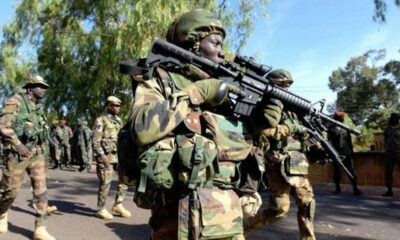
Dozens of Nigerian fishermen are feared dead following air strikes carried out by the Chadian military targeting Boko Haram positions in the Lake Chad region, according to a local fishermen’s union leader who spoke to the BBC. The incident has raised fresh concerns over civilian safety in one of West Africa’s most volatile conflict zones.
Abubakar Gamandi Usman, chairman of the Lake Chad Basin Fisheries Association of Nigeria, said several members of the association are still missing and estimated that more than 40 fishermen may have died. He explained that while no bodies have been recovered, many are believed to have been caught in the strikes or drowned while attempting to escape in overcrowded boats.
Authorities in both Chad and Nigeria have not issued an official response to the reported civilian casualties at the time of filing this report.
The Chadian presidency, however, confirmed that its military conducted “intensive air strikes” in the Lake Chad basin, describing the operation as retaliation for recent attacks on Chadian military bases. According to the statement posted on its official Facebook page, Boko Haram had launched coordinated attacks on military positions, resulting in the deaths of at least 24 soldiers, including two senior generals.
READ ALSO:
- ₦31bn Fraud Trial: Court Issues Fresh Bench Warrant Against Ex-Minister
- Arewa Youths Allege Plot to Destabilise APC, Block Tinubu’s Re-Election
- Tinubu Appoints Retired Maj.-Gen. Fadewa as Homeland Security Adviser
The Lake Chad basin, shared by Nigeria, Chad, Niger, and Cameroon, is a vast network of waterways and islands that has long served as a stronghold for Boko Haram and its splinter group, the Islamic State West Africa Province. The region’s geography makes it difficult for security forces to distinguish between militant hideouts and civilian fishing settlements.
Usman told the BBC that Boko Haram fighters retreated to island bases after attacking Chadian troops, and that fishermen also live and operate in those same areas. He said panic spread when Chadian air force jets began circling the region, forcing both militants and civilians to flee hurriedly across the waterways.
The fishermen leader also alleged that Boko Haram exerts significant control over parts of the fishing economy in the region, including access to fishing grounds, transportation of fishermen, and informal taxation on fish sales in local markets. These claims reflect long-standing concerns about militant influence over livelihoods in the Lake Chad basin.
He further explained that search and rescue efforts have been slow due to the difficult terrain, with deep waters, scattered islands, and limited access to boats. Many canoes in the area, he said, are controlled or restricted by armed groups, making recovery operations even more difficult.
The Chadian military has previously faced allegations of civilian casualties during operations in the region. In October 2024, reports claimed that air strikes on Tilma Island in Lake Chad killed dozens of Nigerian fishermen while targeting Boko Haram positions, raising renewed concerns about the risks faced by civilians during counter-insurgency operations.
The latest incident adds to growing insecurity in the Lake Chad region, where recent months have seen increased attacks on security forces, kidnappings, and raids on rural communities despite ongoing multinational military operations aimed at degrading insurgent networks.
Dozens of Nigerian Fishermen Feared Dead in Chad Air Strikes on Boko Haram








metro
KC Luxury Remanded After Pleading Not Guilty to 22-Count Drug, Money Laundering Charge
KC Luxury Remanded After Pleading Not Guilty to 22-Count Drug, Money Laundering Charge
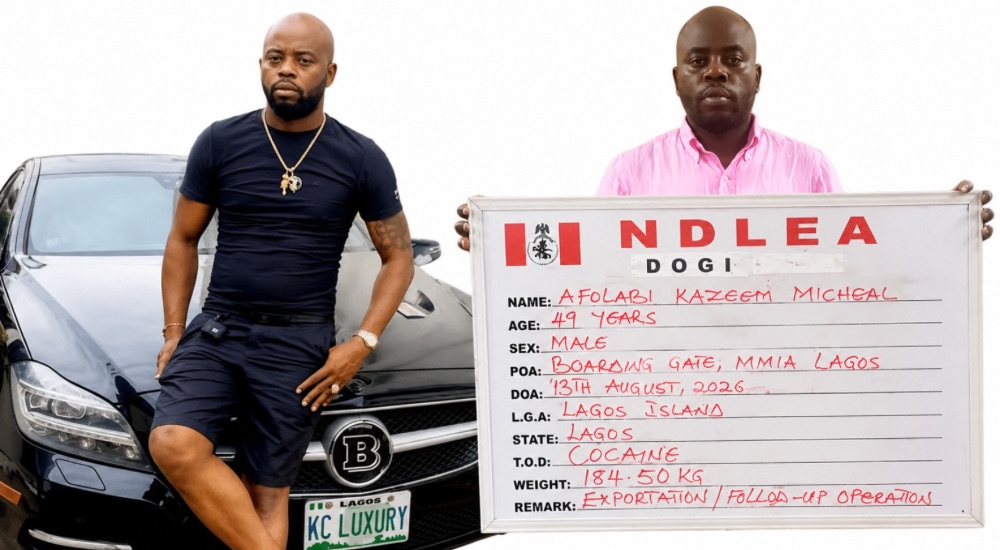
Luxury goods dealer and social media personality Afolabi Kazeem Michael, popularly known as KC Luxury, has been remanded in the custody of the National Drug Law Enforcement Agency (NDLEA) after pleading not guilty to a 22-count charge bordering on alleged cocaine trafficking, unlawful export of narcotics and money laundering.
KC Luxury was arraigned alongside Boniface Freeman Ochoche Sule and Ikechukwu Ekugo Patriarch before Justice Ayokunle Olayinka Faji of the Federal High Court in Lagos on Friday.
The three defendants pleaded not guilty after the charges were read to them.
Following their pleas, the prosecution asked the court to remand the defendants in NDLEA custody pending the hearing of their bail applications.
Justice Faji granted the request and ordered that the defendants remain in NDLEA custody. The court fixed October 2, 2026, to rule on their bail applications.
The case arose from an alleged 184.5kg cocaine shipment which the NDLEA said was intercepted at a DHL facility in Ikeja, Lagos.
According to the prosecution, the cocaine was allegedly packed into five consignments and shipped through a courier logistics company from Lagos to London, United Kingdom.
The alleged offences were said to have occurred between July 28 and August 1, 2026.
The prosecution alleged that KC Luxury, Sule and Ekugo conspired with two other persons, Atandare Oladipupo Oluwarotimi and Latifat Yusuf, who were reportedly arrested in London in connection with the shipment.
The charge alleged that the consignments were shipped under the name Yemi Ejide and assigned five separate airway bill numbers.
The prosecution further alleged that Sule procured Ekugo to facilitate the shipment, while KC Luxury allegedly arranged for a staff member of BOT Express Logistics to process the consignments.
READ ALSO:
- Anambra Police Arrest 25-Year-Old Suspect Linked to 2023 Kidnap, Murder
- 2027: Otti Explains Why He Supports Tinubu Despite Remaining in Labour Party
- EFCC Chairman Raises Alarm Over Alleged Theft of Nigeria’s Public Funds
The NDLEA also alleged that ₦13.2 million was transferred from a Mallamawa Ventures Zenith Bank account to BOT Express Logistics in connection with the shipment.
Beyond the alleged drug offences, KC Luxury is facing additional allegations relating to money laundering.
The prosecution reportedly alleged that 16 of the counts relate to financial transactions involving several companies and personal bank accounts.
The agency also alleged that billions of naira were moved through various accounts and that some of the funds were used to acquire vehicles and landed properties.
KC Luxury was further accused of allegedly failing to declare certain assets as required by law.
The charges followed the seizure of the alleged 184.5kg of cocaine at the DHL facility in Ikeja.
The NDLEA subsequently arrested KC Luxury on August 13 at the departure hall of the Murtala Muhammed International Airport, Lagos, while he was preparing to travel to Paris, France.
The agency had earlier obtained a court order extending his detention for 30 days to allow investigators to complete their investigation.
KC Luxury later challenged the detention in court. However, Justice Akintayo Aluko of the Federal High Court in Lagos upheld the detention extension order on September 17, ruling that the order was validly made.
The court also held that the Federal High Court had jurisdiction over drug-related offences and that the NDLEA had presented sufficient material to establish reasonable suspicion of a drug-related offence.
With Friday’s arraignment, the allegations against KC Luxury and the two other defendants have formally moved into the trial process.
The prosecution will be required to present evidence in support of the charges, while the defendants will have the opportunity to challenge the allegations through their legal representatives.
The remand order does not amount to a conviction. KC Luxury, Sule and Ekugo remain presumed innocent unless and until they are found guilty by a competent court.
KC Luxury Remanded After Pleading Not Guilty to 22-Count Drug, Money Laundering Charge
metro
Anambra Police Arrest 25-Year-Old Suspect Linked to 2023 Kidnap, Murder
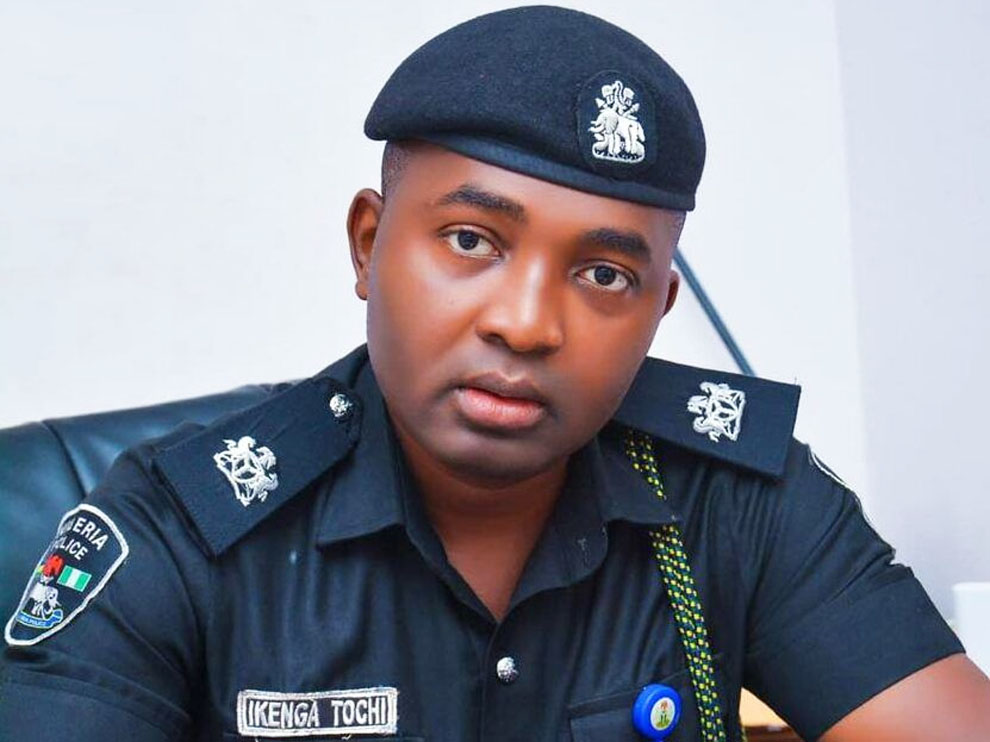
Anambra Police Arrest 25-Year-Old Suspect Linked to 2023 Kidnap, Murder
The Anambra State Police Command has arrested a 25-year-old man, Olisa Oyelu, also known as “Obele,” over his alleged involvement in a 2023 kidnapping operation that resulted in the death of a victim.
Oyelu was arrested in the early hours of Wednesday, September 23, 2026, by operatives of the State Criminal Investigation Department (SCID) following sustained intelligence gathering and investigations into the incident.
The arrest was disclosed by the command’s Public Relations Officer, SP Tochukwu Ikenga, in a statement issued on Thursday, September 24.
According to the police, Oyelu is allegedly an active member of a notorious armed robbery and kidnapping gang led by a suspected criminal identified as “Pincode.”
The command described Oyelu as the last identified member of the gang to be arrested in connection with the 2023 kidnapping case.
Police said investigations were launched after the incident with the aim of identifying, arresting and prosecuting all persons allegedly connected with the crime.
The command said the investigation eventually led to the arrest of Oyelu after he had allegedly remained at large for about three years.
The police did not disclose the identity of the victim or provide further details about the circumstances surrounding the victim’s death.
The command said that, after the completion of the ongoing investigative proceedings, Oyelu would be handed over to the correctional authorities.
The police also disclosed that “Pincode” and four other suspects linked to the case are already being held on remand at a correctional facility while awaiting the determination of their cases by the court.
READ ALSO:
- 2027: Otti Explains Why He Supports Tinubu Despite Remaining in Labour Party
- EFCC Chairman Raises Alarm Over Alleged Theft of Nigeria’s Public Funds
- Abia Police Arrest 20-Year-Old, Recover Gun, Suspected Cannabis, Three Motorcycles
The arrest, according to the command, represents a significant development in the investigation and reflects its efforts to identify and prosecute all persons allegedly involved in the crime.
The Commissioner of Police in Anambra State, CP Nnanna Ama, commended the operatives involved in the investigation for their perseverance, dedication and intelligence-led approach.
Ama assured residents that the command would continue to pursue suspected criminal elements operating within and outside Anambra State, with the aim of bringing suspects before the law.
He also urged members of the public to provide the police with credible and timely information that could assist ongoing investigations and improve security across the state.
The latest arrest comes amid continued police operations targeting suspected kidnapping and armed robbery networks in Anambra and other parts of the South-East.
Oyelu remains a suspect, and the allegations against him have not been established in court.
Anambra Police Arrest 25-Year-Old Suspect Linked to 2023 Kidnap, Murder
metro
Umahi Announces First Niger Bridge Reopening Next Week, Orders Tinubu Pictures
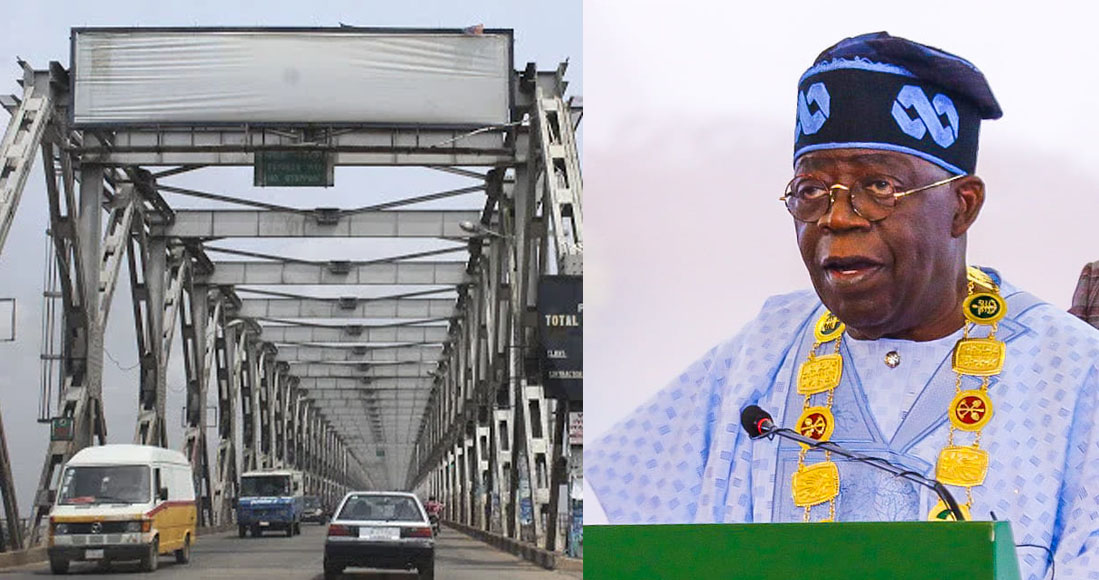
Umahi Announces First Niger Bridge Reopening Next Week, Orders Tinubu Pictures
Minister of Works David Umahi has directed that President Bola Ahmed Tinubu’s pictures be displayed on the First Niger Bridge after the completion of ongoing rehabilitation work on the major transport link between Anambra and Delta states.
Umahi gave the directive during an inspection of the rehabilitation work at the Onitsha end of the bridge, which has been closed to traffic following the reported vandalisation of critical structural components.
The minister also ordered the removal of illegal advertisements displayed on the bridge, directing that any future advertisement on the facility must receive approval from the Federal Ministry of Works.
Umahi further directed the Senior Special Assistants to the President in the South-East and South-South to coordinate the beautification of the bridge with photographs of Tinubu.
The minister said the directive was intended to acknowledge the President’s intervention in the rehabilitation of the bridge and the quality of work being undertaken.
The directive has generated reactions, with some groups questioning the appropriateness of displaying the photographs of a sitting president on federal infrastructure.
The controversy comes as the Federal Government works to complete emergency rehabilitation of the First Niger Bridge, which was shut to traffic after vandals allegedly removed bolts, nuts and other components of the bridge’s expansion joints.
The Federal Ministry of Works initially announced that the bridge would be closed from September 7 to September 21 for emergency repairs. The reopening was later extended by one week because persistent rainfall affected construction activities.
Umahi said the Federal Government expects the bridge to reopen next week, but stressed that it would only be reopened after the critical structural work had been completed and the necessary safety requirements met.
According to the minister, contractors have made progress in replacing the vandalised components, including bolts and the specialised expansion joint removed from the bridge.
He also directed additional work, including the repainting of structural components, bridge caps and sections of the inner carriageway.
As part of efforts to improve security around the facility, Umahi ordered the installation of additional solar-powered streetlights and the completion of closed-circuit television (CCTV) cameras on the bridge.
READ ALSO:
- 2027: Otti Explains Why He Supports Tinubu Despite Remaining in Labour Party
- EFCC Chairman Raises Alarm Over Alleged Theft of Nigeria’s Public Funds
- Abia Police Arrest 20-Year-Old, Recover Gun, Suspected Cannabis, Three Motorcycles
He directed that the CCTV system be linked with the Second Niger Bridge to improve surveillance around the two major infrastructure facilities.
The minister also disclosed that a committee had been established to assess the condition of the bridge both above and below the water level.
The assessment is expected to provide information on the structural condition of the facility and guide future maintenance and rehabilitation work.
Umahi further directed that no security checkpoint should be established within 200 metres of the bridge, saying checkpoints in the immediate vicinity could contribute to traffic congestion and place additional pressure on the facility.
He also called on the governments of Anambra and Delta states to strengthen monitoring of scrap markets following concerns that vandals could be removing components from public infrastructure and selling them as scrap.
The First Niger Bridge, which links Onitsha in Anambra State with Asaba in Delta State, is a major route connecting the South-East and South-South with other parts of Nigeria.
The current rehabilitation became necessary after the reported vandalisation of components considered important to the bridge’s structural integrity.
Umahi said the Federal Government would prioritise safety rather than rush the reopening, adding that the bridge would return to service once the outstanding repairs had been completed.
The minister also used the inspection to highlight the Federal Government’s infrastructure projects in the South-East and urged residents of the region to take such projects into account ahead of the 2027 general election.
Umahi noted that the South-East did not strongly support Tinubu in the 2023 presidential election but argued that the administration had continued to execute projects in the region.
He also questioned supporters of former Anambra State governor Peter Obi, the presidential candidate of the Nigeria Democratic Congress (NDC), over projects Obi had attracted to the South-East.
The comments have added a political dimension to the debate surrounding the rehabilitation of the First Niger Bridge, particularly as political parties and candidates prepare for the 2027 elections.
Umahi Announces First Niger Bridge Reopening Next Week, Orders Tinubu Pictures
-
 metro2 days ago
Lagos Arrests Man Over Viral Video of Toddler Being Flogged
-
 Health3 days ago
MTN, Gates Foundation Launch $25m AI Maternal Health Initiative for 500,000 Nigerian Women
-
 metro2 days ago
Police Probe Alleged Self-Kidnapping of Adeleke’s Aide in Osun
-

 Politics2 days ago
Osun APC Warns Adeleke Govt Over Alleged Victimisation of Local Govt Workers
-

 News13 hours ago
Anambra Releases ₦473m Salary Arrears Document as Obi’s Debt Claim Sparks Fresh Dispute
-
 metro2 days ago
Tinubu, Fani-Kayode Face Proposed $36m US Lawsuit Over Alleged Threats
-
 metro2 days ago
Kwara Police Deny Shooting Motorcyclist at Oyun Bridge, Explain Viral Video
-
 Politics3 days ago
2027: Tompolo-Backed Group Deploys 44 Vehicles for Tinubu-Shettima Campaign in Borno