
Business
Govt paying N600bn for fuel subsidy monthly — Rainoil CEO

Govt paying N600bn for fuel subsidy monthly — Rainoil CEO
The CEO of Rainoil Limited, Gabriel Ogbechie, has claimed that the federal government resumed the payment of the controversial fuel subsidy following the devaluation of the Naira in the foreign exchange market.
Ogbechie made this statement on Tuesday during the Stanbic IBTC Energy and Infrastructure Breakfast Session held in Lagos.
He pointed out that with Nigeria’s daily fuel usage at 40 million liters and the foreign exchange rate at N1,300, the government’s subsidy per liter of fuel falls between N400 and N500, culminating in a monthly total of approximately N600 billion.
He said; “When Mr. President came in May last year, one of the things he said was that Subsidy is gone. And truly, the subsidy was gone, because immediately the price of fuel moved from 200 to 500 per liter. At that point truly, subsidy was gone.
“During that period, Dollar was exchanging for N460, but a few weeks later, the government devalued the exchange rate. And Dollar moved to about N750. At that point, subsidy was beginning to come back.
READ ALSO:
- North Central Support Group rejects Northern Elders, pledges allegiance to Asiwaju
- Gunmen kidnap 2 FRSC officers along Abakaliki-Enugu highway
- Driver killed, 16 passengers abducted on Abuja-Lokoja road
“The moment the two markets officially closed, officially the market went to about N1,300. At that point, that conversation was out of the window. Subsidy was fully back on petrol. If you want to know where petrol should be, just look at where diesel is. Diesel is about N1,300 and petrol is still selling for N600.
Furthermore, he said that NNPC being the only petrol importer in the country implies that there is an ongoing subsidy, as prices had to be fixed.
Earlier yesterday, the former governor of Kaduna State, Nasir El Rufai, said the federal government is spending more on petrol subsidy than before.
In addition, the Special Adviser to the President on Energy, Mrs. Olu Veŕheijen, said that the Federal Government reserves the right to pay fuel subsidy intermittently to cushion hardship in the country.
“The subsidy was removed on May 29. However, the government has the prerogative to maintain price stability to address social unrest. They reserve the right to intervene.
“If the government feels that it cannot continue to allow prices to fluctuate due to high inflation and exchange rates, the government reserves the right to intervene intermittently and that does not negate the fact that subsidy has been removed,” she said.
Govt paying N600bn for fuel subsidy monthly — Rainoil CEO









Business
CBN Mops Up $190 Million to Slow Rapid Naira Appreciation
CBN Mops Up $190 Million to Slow Rapid Naira Appreciation
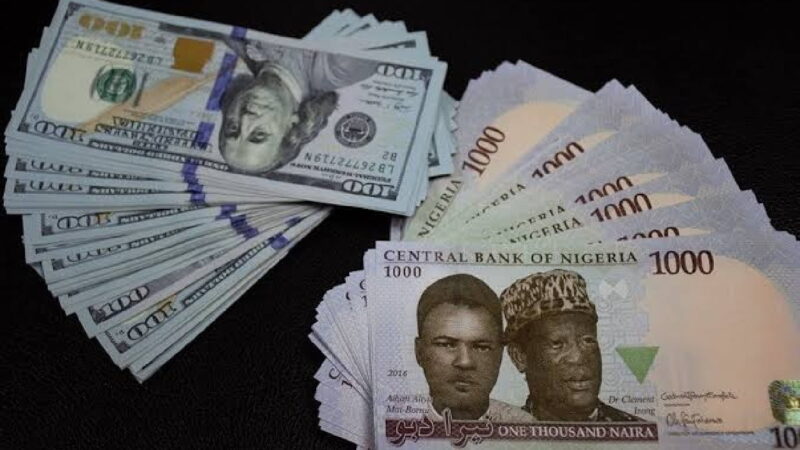
The Central Bank of Nigeria (CBN) last week intervened in the foreign exchange (forex) market, buying about $189.8 million to slow the rapid appreciation of the Nigerian naira at the official window. Analysts say the move aims to absorb excess US dollar supply, stabilise the currency, and prevent market disruptions that could affect investors and the broader economy.
The naira had strengthened sharply in recent weeks, closing at around ₦1,346.32/$ in the official market — a week-on-week gain of ₦9.09. The parallel market also recorded gains, with rates improving by ₦60 to about ₦1,340/$. As a result, the FX spread — the difference between official and parallel rates — narrowed significantly to 0.47% from 3.29% the previous week, signalling improved convergence between the markets.
TrustBanc Financial Group noted that the naira’s successive rally could have prompted foreign investors to exit the fixed-income market, selling their holdings to repatriate profits. This scenario could have triggered higher US dollar demand, putting additional pressure on the naira and weakening market stability.
READ ALSO:
- FCT Poll: Falana Queries Wike’s Power to Declare Public Holiday
- Iran Threatens ‘Ferocious’ Retaliation as Trump Weighs Military Action
- Tinubu to Governors: State Police Must Begin Now
Normally, central banks sell dollars to support the currency, but the CBN reversed this trend for the first time in months, buying dollars to moderate gains and prevent speculative surges. Analysts said this measured intervention reflects the bank’s commitment to exchange rate stability and orderly FX market operations.
On the macroeconomic front, Nigeria’s external reserves have remained robust, surpassing $46 billion, supporting the CBN’s ability to manage market dynamics. Strong oil prices, rising reserves, and reform-driven FX inflows have contributed to the naira’s stability, even amid lingering geopolitical risks.
Economists warn that excessive naira appreciation could reduce the competitiveness of Nigerian exports and prompt capital flight, affecting domestic investment. By moderating gains, the CBN seeks to balance currency stability, investor confidence, and the nation’s economic fundamentals.
Investors and businesses are being urged to monitor the FX market closely, as central bank interventions may influence short-term forex availability and pricing. Analysts expect the CBN to continue careful market management while promoting long-term currency stability.
CBN Mops Up $190 Million to Slow Rapid Naira Appreciation
Business
Dangote Opens Refinery Investment to Nigerians With Public Share Sale Plans

Dangote Opens Refinery Investment to Nigerians With Public Share Sale Plans
Aliko Dangote, President of the Dangote Group, has announced that ordinary Nigerians will soon be able to buy shares in the $20 billion Dangote Petroleum Refinery, a move aimed at expanding public participation in one of Africa’s largest industrial projects. The announcement was made during a guided inspection of the refinery by NNPC Limited management, led by Group CEO Bayo Ojulari, and senior officials of the company.
Dangote stated that arrangements are being finalised to allow individual investors to acquire shares within the next four to five months, giving Nigerians direct ownership in the refinery. “Individually, Nigerians too will have an opportunity… in the next maximum four or five months, they will actually be able to buy their shares,” he said.
The Nigerian National Petroleum Company (NNPC) currently holds a 7.25 % stake in the refinery on behalf of Nigerians, ensuring that public interest remains a key aspect of the project. Dangote further explained that investors will have flexibility in receiving returns, saying, “People will have a choice either to get their dividends in naira or to get their dividends in dollars because we earn dollars.”
READ ALSO:
- SERAP Urges Tinubu to Repeal ‘Unlawful’ Mass Surveillance Regulations
- Trump Imposes 15% Global Tariff Hours After Supreme Court Blocks Previous Tariffs
- APC Wins Rivers Ahoada East State Constituency II Bye‑Election
Beyond the public share offering, Dangote highlighted ongoing collaboration with NNPC to enhance operations and explore opportunities across the oil and gas value chain, including potential upstream partnerships. “Most likely… we will partner with them, maybe in some of the upstream. They, too, will partner with us here because here is not a refinery. It’s an industrial hub,” he said.
The refinery is also set to support additional industrial ventures, including the production of linear alkylbenzene (LAB), a key raw material for detergents. Dangote noted that production will be sufficient to meet demand across the African continent within 30 months, underscoring the facility’s industrial significance.
Industry analysts expect the refinery to list on the Nigerian Exchange (NGX) through a phased public offering of 5–10 % equity, similar to earlier listings of Dangote Cement and Dangote Sugar. The move is aimed at enhancing market liquidity, transparency, and public participation, while retaining majority ownership by the Dangote Group.
The public share offering represents a milestone in Nigeria’s industrial and energy sector, offering citizens an opportunity to participate in a globally competitive infrastructure project while benefiting from dividends in local and foreign currency.
Dangote Opens Refinery Investment to Nigerians With Public Share Sale Plans
Business
CBN Policies, Foreign Inflows Drive Naira to Two-Year Peak
CBN Policies, Foreign Inflows Drive Naira to Two-Year Peak
Nigeria’s naira has extended its recent rally, trading at one of its strongest levels against the U.S. dollar in nearly two years, supported by sustained foreign portfolio inflows, tighter liquidity management, and targeted policy interventions by the monetary authorities.
A macroeconomic update by CardinalStone shows that the local currency has appreciated 6.9 per cent year-to-date at the official foreign exchange market, closing at ₦1,347.78/$—its strongest performance since early 2024. The appreciation reflects improved FX liquidity and growing confidence in the official trading window.
Despite the gains, a gap persists between the official and parallel markets. However, the premium narrowed from about 5.7 per cent to roughly 3.2 per cent following renewed foreign exchange interventions by the Central Bank of Nigeria. According to CardinalStone, the compression of the spread indicates stronger liquidity conditions in the official market, reducing incentives for speculative trading and arbitrage.
As part of efforts to further stabilise the FX market, the CBN recently authorised licensed Bureau de Change (BDC) operators to access foreign exchange from approved dealers at prevailing market rates, subject to a weekly cap of $150,000 per BDC and strict Know-Your-Customer (KYC) requirements. Under the framework, operators must sell unused FX balances within 24 hours, limit cash transactions to 25 per cent of total trades, and settle transactions through licensed financial institutions.
READ ALSO:
- Edo Governor Okpebholo Names Mercy Johnson-Okojie Special Adviser
- Many Feared Dead as Suspected Lakurawa Militants Attack Kebbi Communities
- AMAC Polls Shock: Another PDP Candidate Withdraws from FCT Race, Backs APC
With 82 licensed BDCs currently operating, CardinalStone estimates that potential FX supply to the segment could rise to about $50 million monthly. Although this remains significantly below pre-pandemic levels, the renewed supply has helped ease retail FX demand pressures and compress the premium in the parallel market.
While foreign inflows have strengthened the naira, analysts caution that continued appreciation could prompt profit-taking by offshore investors. CardinalStone estimates outstanding foreign portfolio investment (FPI) exposure at between $12 billion and $14 billion, noting that Nigeria’s carry trade remains one of the most attractive across emerging and frontier markets.
The firm added that assuming many investors entered the market at around ₦1,500/$, a move toward ₦1,200–₦1,250/$ could deliver over 22 per cent FX gains on currency alone. Such gains could heighten the risk of portfolio rebalancing or exits, particularly as political and election-related uncertainties begin to build.
Ahead of the latest meeting of the Monetary Policy Committee, analysts describe the macroeconomic signals facing policymakers as mixed. Inflation has started to moderate, while short-term interest rates have converged near 22 per cent, about 500 basis points below the 27 per cent Monetary Policy Rate (MPR).
However, the CBN has signalled low tolerance for excess liquidity, intensifying Open Market Operations (OMO) issuances and keeping the Standing Deposit Facility (SDF) attractive to absorb surplus funds and prevent renewed inflationary pressure. Analysts also point to concerns around election-related liquidity, which is expected to intensify in the second half of the year, with over 75 per cent of projected 2026 liquidity expected in the first half.
Looking ahead, CardinalStone expects the CBN to hold the policy rate while adjusting the asymmetric corridor to align SDF rates with OMO yields and preserve the attractiveness of naira assets for foreign investors. Forward market indicators suggest a softer currency path later in the year, with the naira projected to trade within a ₦1,350–₦1,450/$ range in 2026, despite the recent rally.
CBN Policies, Foreign Inflows Drive Naira to Two-Year Peak

-

 Business2 days ago
Dangote Opens Refinery Investment to Nigerians With Public Share Sale Plans
-

 Education3 days ago
UTME: JAMB Clarifies Position on Hijab During Biometric Capture
-
 Politics2 days ago
Tinubu Hails Wike as APC Dominates 2026 FCT Area Council Elections
-

 Entertainment2 days ago
Regina Daniels Takes Delivery of ₦150m 2026 GAC Trumpchi M8 SUV
-

 Politics3 days ago
ADC Defeats APC to Win First Polling Unit in FCT Area Council Election
-

 Politics2 days ago
FCT Council polls: APC Wins Four Chairmanship Seats as PDP Takes Gwagwalada
-
 News2 days ago
Yoruba Muslim Group Dismisses Viral Ramadan Date Claim, Reaffirms Sultan of Sokoto’s Authority
-

 Politics2 days ago
Opposition Weakens as Another Governor Eyes APC Move