US report says no evidence of massacre at Lekki tollgate - Newstrends
Connect with us

News

US report says no evidence of massacre at Lekki tollgate
Published

on

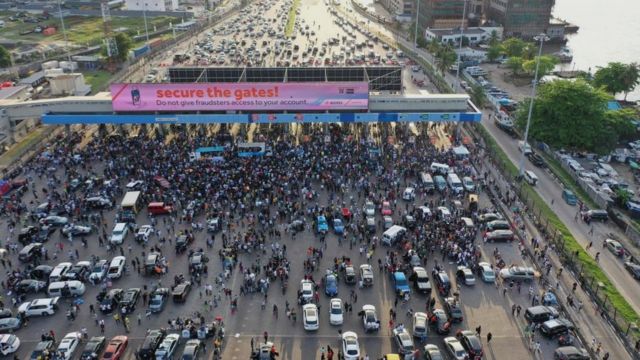
A report just released by the United States Department of States says there is no verifiable evidence of killings of #EndSARS protesters at the Lekki tollgate on October 20, last year, over five months after the protest.

This is stated thiins in a report entitled: ‘2020 Country Reports on Human Rights Practices: Nigeria’.

There had been reports and claims of massacre at the toll gate by the military during the protests by youths against the activities of the now-disbanded Special Anti-Robbery Squad and bad governance.

A special report by Cable News Network (CNN) had also said soldiers shot at protesters, killing many.

But the US report stated that accurate information on fatalities resulting from the shooting was not available.

The report read in part, “Although the protests were allowed to proceed unimpeded in most places, civil society observers reported the arrest of some peaceful protesters in Lagos, Osun and Kano states on charges of conduct likely to cause a breach of public peace. All those arrested were released within days of their arrest.

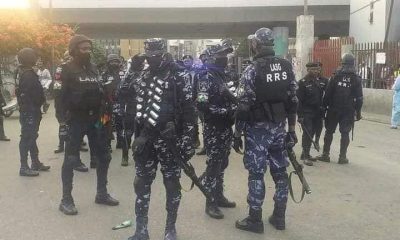
“In October, #EndSARS protests were staged in states across the country to demand an end to police brutality. Demonstrations were largely peaceful, but some protests turned violent after criminal elements infiltrated the protests and security forces fired at protesters at the Lekki Toll Gate on October 20.

“According to #EndSARS Legal Aid, by year’s end, a network of volunteer lawyers had secured the release of 337 protesters, but it was unable to confirm how many remained in detention.”

The report also stated, “Accurate information on fatalities resulting from the shooting was not available at year’s end.

“Amnesty International reported 10 persons died during the event, but the government disputed Amnesty’s report, and no other organisation was able to verify the claim. The government reported two deaths connected to the event. One body from the toll gate showed signs of blunt force trauma. A second body from another location in Lagos State had bullet wounds.

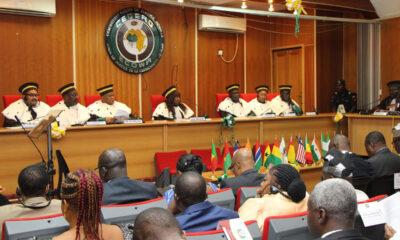
“The government acknowledged that soldiers armed with live ammunition were present at the Lekki tollgate. At year’s end, the Lagos State Judicial Panel of Inquiry and Restitution continued to hear testimony and investigate the shooting at Lekki tollgate.”

On human rights abuses generally, the report asserted that there were reports that the government or its agents committed arbitrary, unlawful, or extra-judicial killings.

On insurgency, the department noted that Boko Haram and the Islamic State in West Africa continued attacks on “civilians, military, and police; recruited and forcefully conscripted child soldiers; and carried out scores of person-borne improvised explosive device attacks–many by coerced young women and girls–and other attacks on population centers in the Northeast and in Cameroon, Chad, and Niger. Abductions by Boko Haram and the Islamic State in West Africa continued.

“According to credible international organisations, prior to their dissolution, SARS units sometimes used torture to extract confessions later used to try suspects. President Buhari disbanded SARS units in October, 2020 following nationwide #EndSARS protests against police brutality.

“Of the states, 28 and the FCT (Federal Capital Territory) established judicial panels of inquiry to investigate allegations of human rights violations carried out by the Nigerian Police Force and the disbanded SARS units.”

The report also asserted that local non-governmental organisations (NGOs) and international human rights groups accused the security services of illegal detention, inhuman treatment, and torture of criminal suspects, militants, detainees and prisoners.

The report also condemned “unlawful and arbitrary killings by both government and non-state actors; forced disappearances by the government, terrorists, and criminal groups; torture and cases of cruel, inhuman, or degrading treatment or punishment by the government and terrorist groups; harsh and life-threatening prison conditions.

Loading

News

BREAKING: Tinubu appoints Prof Segun Aina as new JAMB registrar

Published

on

BREAKING: Tinubu appoints Prof Segun Aina as new JAMB registrar
Professor Segun Aina

BREAKING: Tinubu appoints Prof Segun Aina as new JAMB registrar

ABUJA – President Bola Tinubu has approved the appointment of 39-year-old Professor Segun Aina as the new Registrar and Chief Executive Officer of the Joint Admissions and Matriculation Board (JAMB), signaling the end of Professor Is-haq Oloyede’s decade-long tenure.

The appointment, announced in a statement issued late Wednesday by the Director of Information at the Office of the Secretary to the Government of the Federation, confirmed that Professor Oloyede’s tenure will officially expire on July 31, 2026. Professor Aina, a Professor of Computer Engineering at Obafemi Awolowo University (OAU), Ile-Ife, is set to make history as the youngest Registrar ever to lead the nation’s premier examination and matriculation body. He holds a Doctorate in Digital Signal Processing from Loughborough University, United Kingdom.

President Tinubu, in the appointment letter, tasked the new Registrar with leveraging his extensive background in engineering and information technology to build upon the transformative reforms introduced by his predecessor. Under Professor Oloyede’s watch, JAMB became globally recognized for its deployment of the Central Admission Processing System (CAPS) and biometric verification, drastically reducing admission fraud and the incidence of fake results. Observers believe Prof. Aina’s core competence in computer engineering signals the government’s intention to further digitize the admission process, enhance cybersecurity, and introduce next-generation innovations.

READ ALSO:

Furthermore, Professor Aina is not a stranger to high-stakes examinations. He brings a wealth of practical experience from previous roles with the National Examinations Council (NECO) and the National Business and Technical Examinations Board (NABTEB). Interestingly, the new JAMB boss began his career with the very organization he is now set to lead—serving as a corps member during his National Youth Service Corps (NYSC) year.

As Professor Is-haq Oloyede prepares to leave office after two terms of five years each, he is widely celebrated for clearing the backlog of unclaimed admission spaces, blocking financial leakages that saw JAMB’s remittances to the federal purse rise from N3 million to over N50 billion, and sanitizing the system of fake ‘cut-off’ marks. Stakeholders in the education sector have described the transition as “a changing of the guard from consolidation to innovation.” Professor Aina is expected to assume office immediately following the formal handover on August 1, 2026.

BREAKING: Tinubu appoints Prof Segun Aina as new JAMB registrar

Loading

Continue Reading

News

Hajj 2026: Arafat Sermon to be Translated into Yoruba, Hausa, 33 Other Languages

Published

on

Hajj 2026: Arafat Sermon to be Translated into Yoruba, Hausa, 33 Other Languages

Hajj 2026: Arafat Sermon to be Translated into Yoruba, Hausa, 33 Other Languages

MAKKAH — As pilgrims continue to arrive in the Kingdom of Saudi Arabia ahead of the 2026 Hajj exercise scheduled to commence on Monday, the Head of Religious Affairs at the Grand Mosque and the Prophet’s Mosque, Sheikh Professor Dr. Abdulrahman bin Abdulaziz Al-Sudais, has announced that this year’s Arafat Day sermon will be translated into 35 international languages, including Hausa and Yoruba, to enable non-Arabic speaking Muslims to benefit from the sermon’s spiritual and humanitarian messages.

According to Al-Sudais, the Presidency of Religious Affairs would not only translate the sermon to be delivered by Sheikh Dr. Ali bin Abdulrahman Al-Hudhaifi, an Imam and preacher in the Prophet’s Mosque in Madinah, into the 35 languages, but also broadcast it via digital platforms and channels affiliated with the Presidency. This initiative, he said, is aimed at conveying the message of Islam and the content of the sermon to Muslims across the world, adding that the translation is an extension of efforts being made by the Kingdom of Saudi Arabia to serve Islam and Muslims. Al-Sudais described the Arafat sermon translation project as “one of the qualitative initiatives in which the Presidency has accumulated experiences over many years,” contributing to enriching religious content in various international languages. The translation of the Arafat sermon is designed to enable non-Arabic-speaking Muslims to benefit from the contents of the sermon and the comprehensive faith and humanitarian messages it carries. Al-Sudais noted that the Presidency has harnessed its technical and media capabilities, along with specialized teams, to ensure the sermon reaches the widest possible global audience with high professionalism and advanced quality standards. He emphasized that the translation project helps deliver the sermon’s themes to Muslims worldwide and convey Islam’s message of moderation. “The initiative enables non-Arabic-speaking Muslims to benefit from the sermon’s spiritual and humanitarian messages,” Al-Sudais stated.

Al-Sudais informed that the languages approved for translating the Arafat sermon include a diverse range of languages spoken across Africa, Asia, Europe, and other regions. The major global languages include English, French, Spanish, Chinese, Russian, German, Italian, Portuguese, and Swedish. Asian languages include Indonesian, Urdu, Turkish, Persian, Bengali, Hindi, Malay, Pashto, Punjabi, Tamil, Filipino (Tagalog), Uzbek, Tajik, Nepali, Sinhala, and Malayalam. African languages include Hausa, Yoruba, Swahili, Amharic, Somali, Oromo, Tigrinya, and Ugandan. European languages include Bosnian and Lithuanian. According to Al-Sudais, the Presidency of Religious Affairs has accumulated experiences over the years in the translation project, noting that the initiative is meant to enrich religious content in various languages and enable non-Arabic-speaking Muslims to benefit from the contents of the Arafat sermon.

READ ALSO:

Al-Sudais further informed that the Arafat Day sermon this year will be delivered by His Eminence Sheikh Dr. Ali bin Abdulrahman Al-Hudhaifi, an Imam and preacher in the Prophet’s Mosque in Madinah. The sermon is scheduled to be delivered on Tuesday, May 26, 2026, corresponding to the 9th of Dhul-Hijjah 1447AH, from the pulpit of Masjid al-Namirah on Mount Arafat. Sheikh Ali Al-Hudhaifi is widely regarded as one of the most distinguished Quran reciters and influential religious personalities in the Muslim world. He has served not only as Imam of Masjid-e-Nabawi but has also previously led prayers at Quba Mosque and Masjid al-Haram. Al-Sudais described the sermon as “one of the greatest comprehensive faith messages followed by Muslims in the east and west of the earth,” noting that it enjoys wide attention because of the Sharia contents and comprehensive directives it contains that confirm the tolerance and mercy of Islam and its call for goodness, peace, and harmony among peoples.

This year’s five-day Hajj exercise will commence on Monday, when pilgrims will depart from Makkah for Mina, also known as Tent City, to begin their Hajj journey. Pilgrims will spend the 8th day of Dhul-Hijjah (Day of Tarwiyah) in Mina, praying and preparing for the central rites ahead. On Tuesday, May 26, pilgrims will converge on Mount Arafat, also known as Jabbal Rahma (Mount of Mercy), and its valley. The Day of Arafat marks the zenith of the Hajj exercise. Following the Sunnah of Prophet Muhammad (peace be upon him), pilgrims will perform the Dhuhr and Asr prayers together at noon time in the Namira Mosque. As the sun sets on Arafat, pilgrims will proceed to Muzdalifah, where they will perform the combined Maghrib and Isha prayer and spend the night until dawn of the 10th day of Dhul-Hijjah. After praying Fajr, they will proceed to Mina to begin the stoning of the Jamarat ritual. Pilgrims will spend the next three days engaging in, among other activities, stoning the Jamarat (the pillars representing Satan). The exercise will come to an end on May 29, when pilgrims are expected to return to Makkah, preparatory to their departure for their various countries.

For Nigerian pilgrims, the inclusion of Hausa and Yoruba among the 35 languages is particularly significant. Nigeria, with one of the largest Muslim populations in Africa, sends tens of thousands of pilgrims to Saudi Arabia annually. The ability to follow the Arafat sermon in their native languages will deepen their spiritual experience and understanding of the profound messages delivered on the most important day of the Hajj. According to Al-Sudais, the sermon will be broadcast live through digital platforms and channels affiliated with the Presidency of Religious Affairs. The Presidency has mobilized its technical and media capabilities to ensure the sermon reaches the largest possible segment around the world with high professionalism and advanced quality. As the 2026 Hajj season approaches, millions of pilgrims from around the world are expected to converge on the holy city of Makkah. The Presidency of Religious Affairs will continue to provide updates and guidance for pilgrims through its digital platforms and official channels. For the millions of Muslims who will not be able to make the journey this year, the translated and broadcast Arafat sermon will offer an opportunity to spiritually connect with the proceedings from their homes across the world.

Hajj 2026: Arafat Sermon to be Translated into Yoruba, Hausa, 33 Other Languages

Loading

Continue Reading

News

Fuel Subsidy, FX Reforms: Cabals Plot to Destabilise Nigeria — Tinubu

Published

on

Fuel Subsidy, FX Reforms: Cabals Plot to Destabilise Nigeria — Tinubu
President Bola Ahmed Tinubu

Fuel Subsidy, FX Reforms: Cabals Plot to Destabilise Nigeria — Tinubu

Published: May 20, 2026 | Read Time: 6 minutes


President Bola Ahmed Tinubu has raised a strong alarm that certain vested interests are attempting to destabilise Nigeria in retaliation for his administration’s removal of fuel subsidy and unification of the foreign exchange market. The President’s warning was delivered by former Ogun State Governor, Chief Olusegun Osoba, during the launch of The NADECO Story and awards ceremony for pro-democracy heroes held at the MUSON Centre in Lagos, where Tinubu also hinted at more reforms if he secures a second term in office.


President Tinubu’s message was delivered on Wednesday by Chief Olusegun Osoba, a former governor of Ogun State, during the launch of The NADECO Story and an awards presentation to democracy heroes and activists held at the Shell Hall of the MUSON Centre, Onikan, Lagos. The President, who was the special guest of honour at the event, commended pro-democracy activists and political associates for their contributions to the struggle for democratic governance in Nigeria. According to Osoba, President Tinubu said he “would not have been where he is today” without the sacrifices of those who fought for democracy in the country.

Osoba also revealed that the President promised to address several political reforms and demands being canvassed by stakeholders if he secures a second term in office. “He has asked me to tell you that, by the grace of God, many of what you have been asking him to do, he would start implementing when he gets his second term,” Osoba said. The former governor of Ogun State stated that Tinubu’s immediate focus remains economic recovery and national security .

Speaking on the economy, Osoba stated that the President believed the administration’s reforms were already producing tangible results. He pointed to the narrowing gap between the official and parallel foreign exchange markets as evidence of progress. “You can see the difference between the parallel and the official markets is virtually zero. The naira, which was about N2,000 to one dollar, is now around N1,380,” he said . According to recent data, the gap between the official and parallel market exchange rates, which previously exceeded 30 per cent, has now fallen below two per cent . The administration has also recorded significant improvements in foreign reserves, which rose from about 32billioninmid−2024to∗∗49.4 billion by the end of March 2026**, representing approximately 13 months of import cover .

READ ALSO:

On security, Osoba said the President was worried about rising threats in the South-West and alleged that some interests were attempting to disrupt the country in reaction to the ongoing economic reforms. “He is aware that there is a deliberate attempt to disrupt the peace of the country by those he knew he had offended by cancelling the multiple exchange rate regime and removing fuel subsidy,” Osoba said . Osoba added that despite opposition from entrenched interests benefiting from the old system, Tinubu remained committed to continuing reforms aimed at repositioning the economy. “Those cabals are still round-tripping, but he is determined that if this is the only thing he would do to rearrange the economy, he is ready to face it,” he added.

The President’s allegations of destabilisation come amid escalating political rhetoric as the 2027 election cycle approaches. Opposition figures have intensified criticism of the administration’s economic management, with some labelling the reforms as “organised hardship” and accusing the government of running a “Ponzi economy” . Former Vice President Atiku Abubakar, who has formally submitted his nomination forms to contest the 2027 presidential election on the platform of the African Democratic Congress, has been among the most vocal critics, describing the current economic reality as “organised hardship dressed up as reform” .

Earlier in his remarks at the MUSON Centre event, the Secretary-General and spokesman of the National Democratic Coalition (NADECO) , Chief Ayo Opadokun, described the occasion as a defining moment in Nigeria’s democratic history. According to him, the ceremony was organised to correct what he described as a long-standing omission in the country’s collective memory by formally recognising patriots, media organisations, human rights activists, diplomats and others who resisted military rule during the regime of late Head of State, Sani Abacha . Opadokun said the period between 1994 and 1998 remained one of the darkest eras in Nigeria’s political history, marked by repression, suppression of human rights and intimidation of dissenting voices. “Yet, in the face of that darkness, a courageous light persisted,” he said. “That light was carried by men and women of conviction within NADECO and beyond who chose resistance over silence, truth over fear and sacrifice over comfort.”

READ ALSO:

Also speaking at the event, Nobel laureate Professor Wole Soyinka described Nigeria as “a republic of liars” but said the newly presented book on the country’s democratic struggle stood out for its honesty and authenticity. “I have had the occasion to describe Nigeria as a republic of liars. But this is one instance in which the nation is redeemed from that reputation of violent lies,” Soyinka said. The literary icon said he had carefully read the book and found its contents credible and truthful. “Every page of this book, which I have read carefully, rings of truth,” he stated, adding that the account was strengthened by documentary evidence and firsthand participation by the author. “The author doesn’t pretend that this is the whole story, but he tells his part of it, which is investigated,” Soyinka added.

Also speaking, the Olubadan of Ibadanland, Oba Rasheed Ladoja, said many individuals contributed to the democratic struggle away from public attention. “People think we have to be on the streets to show commitment to a cause. I don’t think so. Some of us worked in the background and did so effectively,” he said. “I am a democrat at heart and I will do anything to protect democracy.” Ladoja recalled that he went into exile following political persecution and said many untold stories remained from the pro-democracy struggle. “There are many things that happened during the democratic struggle which many people do not know. I want to urge Pa Osoba to tell his story,” he said.

During the ceremony, participants observed a minute of silence in honour of pro-democracy activists, politicians, professionals and nationalists who lost their lives during the struggle against military rule and in subsequent years. A major highlight of the event was the launch of The NADECO Story, a publication chronicling the coalition’s role in resisting authoritarian rule and defending democratic ideals. Describing the book as “a repository of truth and a chronicle of resistance,” Opadokun said the publication would help preserve the history of the pro-democracy struggle for future generations. “It offers younger generations an opportunity to understand the price of the freedoms they enjoy today, while providing scholars, policymakers and citizens with a credible account of one of the most defining periods in our national history,” he said.

The NADECO event unfolded against a backdrop of heightened political tensions. Peter Obi, the former Labour Party presidential candidate, has recently criticised the Tinubu administration, stating that “yesterday defenders of democracy, today’s destroyers” and suggesting that the late dictator Sani Abacha was “more democratic” than some former NADECO members now in power . Meanwhile, the Emir of Kano, Muhammadu Sanusi II, has raised concerns over the federal government’s continued reliance on borrowing, despite the removal of petrol subsidy, warning that weak fiscal discipline could undermine the gains expected from recent economic reforms .

Fuel Subsidy, FX Reforms: Cabals Plot to Destabilise Nigeria — Tinubu

Loading

Continue Reading

Trending