
News
Lagos warns of COVID-19 second wave, fresh lockdown

The Lagos State Government has said residents of the state are at risk of a second wave of coronavirus should they continue to ignore precautionary measures to guide against the spread of the pandemic.
This, it said, in a statement on Tuesday, could lead to a fresh shutdown of the economy and stay-at-home order.
The warning is contained in the statement by the Director, Public Affairs of the Ministry of Health, Tunbosun Ogunbanwo.
The statement quoted the Commissioner for Health, Prof. Akin Abayomi, as saying that many countries around the world had imposed a second lockdown and restriction of movements with significant socio-economic and security consequences.
“The continuous flagrant disregard of safety guidelines by citizens heralds danger and may lead to a second wave of new infections in Lagos,” the commissioner said.
The statement read in part, “The Lagos State Government has once again stressed the need for residents to strictly adhere to precautionary measures against COVID-19 infection transmission to prevent a recurrence of the situation that led to the lockdown of the economy.
“A resurgence of cases in Lagos may lead to the reversal of the strategically calculated measures put in place by the government to open up the economy.
“The first wave of coronavirus started in December 2019 and swept through an unprepared world. The first case of COVID-19 in Nigeria was recorded in Lagos on the 27th of February 2020. Lagos has since become the epicentre of the outbreak in Nigeria with a record of 21,107 confirmed cases and 212 deaths from the virus till date.
“The containment measures put in place at the time included COVID-19 testing, isolation and treatment, surveillance, total shutdown of the state for about 12 weeks and partial shutdown of social, economic and academic activities for over four months.”
Abayomi advised citizens against unnecessary movement and social gatherings, “unless it is absolutely necessary, stressing that travelling into and outside the country should be discouraged except when absolutely necessary.”
He said, “The erroneous belief that COVID-19 has been conquered and is no more in Nigeria should be discarded. Based on our data, this assumption is invalid. It creates a false sense of security amongst the citizens, causing many to abandon the use of face masks and other safety measures and protocols put in place by the government.
“Though we have reached our peak as predicted and are now experiencing a decline in the number of positive cases, this is not a reason to conclude that all is over. COVID-19 is still very much with us as evidenced in the number of cases being recorded in the community daily and occasional deaths from severe complications.
“The reason for the decline in COVID-19 cases in Lagos is attributable to a number of factors, including public adherence to safety regulations of physical and social distancing, hand hygiene, use of face mask in public places, expanded testing strategy and contact tracing, among others, and this is the more reason why citizens should not relent in this regard if we don’t want to experience a second wave of the disease.”









News
Nigeria Wins $6.2 Million Arbitration Against UK Tech Firm

Nigeria Wins $6.2 Million Arbitration Against UK Tech Firm
Nigeria has scored a landmark legal victory, securing $6.2 million in an international arbitration against UK-based technology firm European Dynamics UK Ltd over a disputed national electronic government procurement (e-GP) contract. The ruling reinforces Nigeria’s commitment to performance-based government contracts and protecting public resources.
The arbitration decision, delivered on February 3, 2026, by sole arbitrator Funmi Roberts at the International Centre for Arbitration and Mediation, dismissed all claims by the UK contractor. The award is final and not subject to appeal, according to the Attorney-General of the Federation, Lateef Fagbemi, SAN.
The dispute originated from a Bureau of Public Procurement (BPP) contract to design, develop, and implement a national e-procurement platform, supported by the World Bank to enhance transparency and efficiency in federal procurement.
READ ALSO:
- US Adds 19 More Nigerians to ‘Worst of the Worst’ Deportation List
- Gunmen Storm Gbugbu in Kwara, Residents Flee as Panic Spreads
- FG to Launch Monthly Revenue Transparency Dashboards to Improve Fiscal Accountability
European Dynamics had claimed over $6.2 million, including:
- $2.4 million for alleged milestone completions
- $3 million in general damages
- $800,000 in settlement costs
However, the tribunal ruled the claims lacked merit, citing deficiencies during User Acceptance Testing (UAT) such as functional gaps and performance errors, which the contractor was required to fix at no additional cost.
The BPP insisted payments must be strictly tied to verified deliverables, rejecting earlier efforts at an out-of-court settlement. The tribunal upheld this stance, emphasizing that software development and customization contracts are performance-based and must meet technical and statutory standards before payments are made.
Nigeria’s legal team, led by Johnson & Wilner LLP with Basil Udotai heading the arbitration, achieved what the BPP Director-General, Adebowale Adedokun, described as a historic victory. European Dynamics had previously won arbitration cases in other African countries but lost against Nigeria, signaling a shift in how government procurement disputes are handled.
Attorney-General Fagbemi stated that this ruling sends a clear message that Nigeria will no longer be taken for granted, demonstrating strengthened legal and technical capacity in managing complex international contracts. Experts suggest the outcome will influence future e-procurement reforms to ensure compliance, accountability, and efficient management of public contracts.
Nigeria Wins $6.2 Million Arbitration Against UK Tech Firm
News
Yoruba Muslim Group Dismisses Viral Ramadan Date Claim, Reaffirms Sultan of Sokoto’s Authority
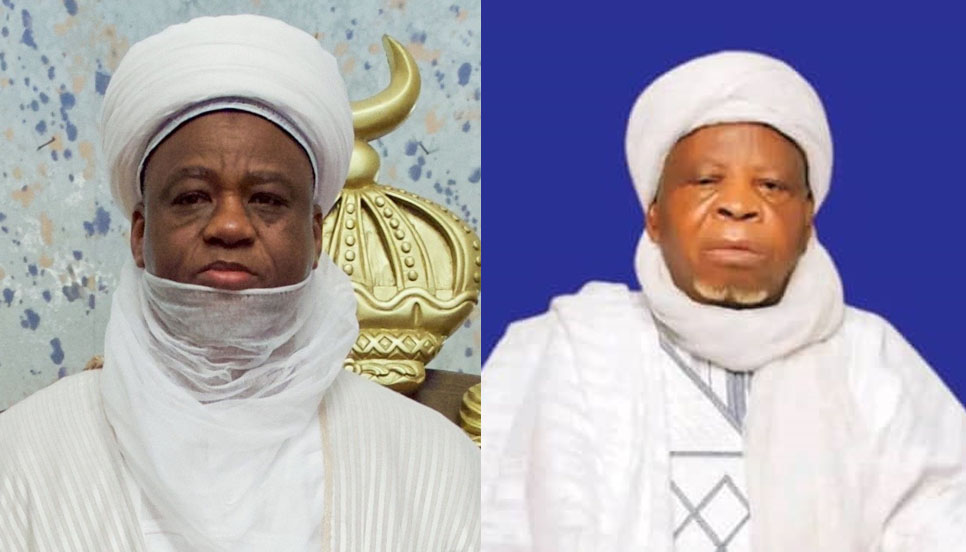
Yoruba Muslim Group Dismisses Viral Ramadan Date Claim, Reaffirms Sultan of Sokoto’s Authority
A Yoruba Muslim group, Concerned Indigenous Yoruba Muslims, has dismissed as false, misleading, and divisive a viral social media report alleging that the Chief Imam of Ibadanland and the League of Imams in Yorubaland rejected the authority of the Sultan of Sokoto in determining the commencement of Ramadan in South-West Nigeria.
The report, which circulated online ahead of Ramadan 1447AH, claimed that Yoruba Muslim leaders had resolved to disengage from the Sultan’s traditional role of announcing moon sighting for the fasting period and instead align with indigenous religious structures. The group, however, said the claim was entirely fabricated and designed to sow discord within the Muslim community.
In a statement issued on Saturday, February 21, 2026 — the fourth day of Ramadan, and signed by public affairs analyst Nasrudeen Abbas, the group said the comments attributed to the Chief Imam of Ibadan, reportedly over 90 years old, could not have emanated from him. It described the publication as a calculated attempt to create unnecessary religious tension and misrepresent the position of Yoruba Muslims.
The group reaffirmed that Islamic affairs in Nigeria operate under established leadership structures, particularly the Nigerian Supreme Council for Islamic Affairs (NSCIA), which is headed by the Sultan of Sokoto, Muhammad Sa’ad Abubakar, as President-General. It explained that the NSCIA structure includes the President of the Muslim Ummah of South West Nigeria (MUSWEN) as Deputy President-General (South), the Shehu of Borno as Deputy President-General (North), alongside other national officers.
READ ALSO:
- FCT Council polls: APC Wins Four Chairmanship Seats as PDP Takes Gwagwalada
- Dangote Opens Refinery Investment to Nigerians With Public Share Sale Plans
- SERAP Urges Tinubu to Repeal ‘Unlawful’ Mass Surveillance Regulations
According to the group, any attempt to distance Yoruba Muslims from this nationally recognised structure threatens the unity of the Muslim Ummah in Nigeria and contradicts Islamic principles that emphasise cohesion, collective leadership, and obedience to constituted authority.
The group also faulted claims that the Sultan’s position is merely a traditional title limited to Sokoto State. It stressed that the Sultan’s authority in Islamic matters is rooted in scholarship and the historical caliphate system, noting that emirs in Northern Nigeria often combine traditional authority with religious leadership. As an example, it cited Muhammadu Sanusi II, who regularly delivers Friday sermons and performs Islamic rites.
It further explained that in Yorubaland, traditional rulers generally do not head religious affairs, except in rare cases. The group referenced the late Awujale of Ijebu Land, who once served as President-General of the Ogun State Muslim Council, stressing that such roles remain exceptions rather than the norm.
The statement also recalled the position of the late Kazeem Yayi Akorede, former President-General of the League of Imams and Alfas in the South West. According to the group, Sheikh Akorede initially questioned the Sultan’s leadership role but later accepted it after clarifications that the position was based on Islamic scholarship and caliphate leadership, not mere traditional kingship. It added that until his death, he consistently aligned with the Sultan’s announcements on the commencement and termination of Ramadan.
Describing the viral publication as unethical, the group criticised claims that Yoruba Muslims are not religiously bound to the Sultan’s authority and that religious leadership should go beyond duties such as moon sighting announcements. It alleged that such narratives were politically motivated and aimed at advancing a separatist agenda under the guise of religious autonomy.
The group warned that politicising religious matters could undermine religious harmony and national unity, urging those behind the report to desist from actions capable of creating discord among Muslims across the country. It concluded by stressing that the unity of the Muslim Ummah in Nigeria remains paramount and must not be compromised by what it described as sectarian or politically engineered narratives.
Yoruba Muslim Group Dismisses Viral Ramadan Date Claim, Reaffirms Sultan of Sokoto’s Authority
News
NNPC CEO Ojulari Receives Prestigious Energy Institute Fellowship in London
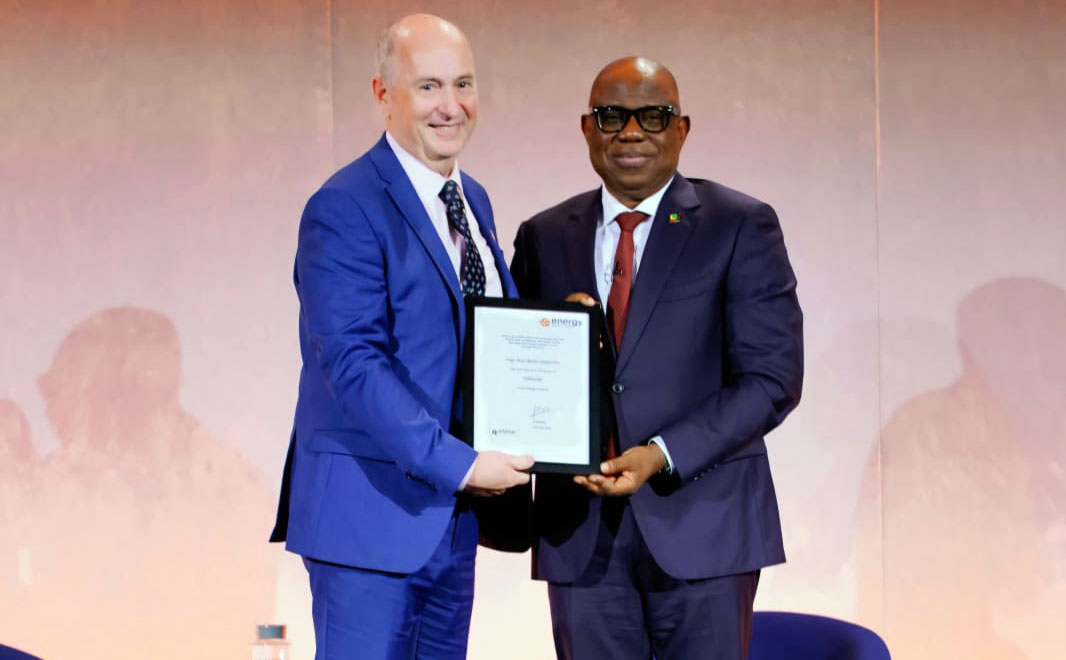
NNPC CEO Ojulari Receives Prestigious Energy Institute Fellowship in London
The Nigerian National Petroleum Company Limited (NNPC Ltd.) has earned international acclaim as its Group Chief Executive Officer, Engr. Bashir Bayo Ojulari, has been conferred with the Fellowship of the Energy Institute (FEI), United Kingdom — one of the highest honours in the global energy industry.
The Fellowship recognises senior energy leaders who have demonstrated sustained, high-impact contributions to the advancement of the energy sector. It was formally conferred on Ojulari during International Energy Week (IEW) in London, a leading platform for energy policy, finance, and industry leadership. (punchng.com)
The honour was presented by Andy Brown, President of the Energy Institute, who praised Ojulari’s transformative leadership of NNPC Ltd., highlighting his role in strengthening governance, embedding a performance-driven culture, and repositioning the company for long-term value creation.
Under his stewardship, NNPC Ltd. has implemented investor-focused reforms, enhanced operational excellence, and expanded strategic global partnerships, all contributing to increased confidence in Nigeria’s energy sector. The recognition reinforces NNPC’s ongoing transformation into a commercially driven, globally competitive, and transparent energy company.
READ ALSO:
- FCT Polls: CSO Situation Room Flags Late Voting, Vote Buying, Logistical Challenges
- ADC Defeats APC to Win First Polling Unit in FCT Area Council Election
- Trump Moves to Indefinitely Suspend Work Permits for Asylum Seekers
Significance for Nigeria and Africa
Experts note that the FEI Fellowship is not only a personal achievement for Ojulari but also a major institutional endorsement of NNPC Ltd.’s reform agenda. Being recognised at International Energy Week, which convenes policymakers, financiers, regulators, and industry leaders, positions the company at the centre of critical global energy discussions on sustainability, energy transition, and capital formation.
The award also signals growing international confidence in NNPC Ltd. and highlights Nigeria’s strategic role in Africa’s energy security and global energy transition ambitions. (vanguardngr.com)
Ojulari’s Leadership Achievements
Since assuming office, Engr. Ojulari has overseen multiple strategic reforms at NNPC Ltd., including:
- Driving governance and operational reforms to boost accountability.
- Expanding strategic partnerships and investor-focused initiatives.
- Enhancing execution efficiency across the company’s subsidiaries.
- Positioning NNPC Ltd. as a credible, investment-ready energy enterprise.
These efforts have not only improved the company’s profitability and performance but also strengthened Nigeria’s energy security and market competitiveness. (punchng.com)
Ojulari described the Fellowship as a reflection of collective effort within NNPC and reiterated his commitment to sustainable value creation, global best practices, and energy sector innovation.
NNPC CEO Ojulari Receives Prestigious Energy Institute Fellowship in London

-

 Business1 day ago
Dangote Opens Refinery Investment to Nigerians With Public Share Sale Plans
-

 Politics3 days ago
Peter Obi Launches ‘Village Boys Movement’ to Rival Tinubu’s City Boys Ahead of 2027
-

 Education2 days ago
UTME: JAMB Clarifies Position on Hijab During Biometric Capture
-
 Politics22 hours ago
Tinubu Hails Wike as APC Dominates 2026 FCT Area Council Elections
-

 Education3 days ago
Ogun Gov Rewards Nigeria’s Best Primary School Teacher with Car, Bungalow
-

 Entertainment3 days ago
Tacha Condemns False Rape Allegations After Mirabel Admits Fabrication
-

 Politics2 days ago
ADC Defeats APC to Win First Polling Unit in FCT Area Council Election
-

 Entertainment22 hours ago
Regina Daniels Takes Delivery of ₦150m 2026 GAC Trumpchi M8 SUV
You must be logged in to post a comment Login