
Railway
New Lagos-Ibadan railway for inauguration, full operation next month – Amaechi
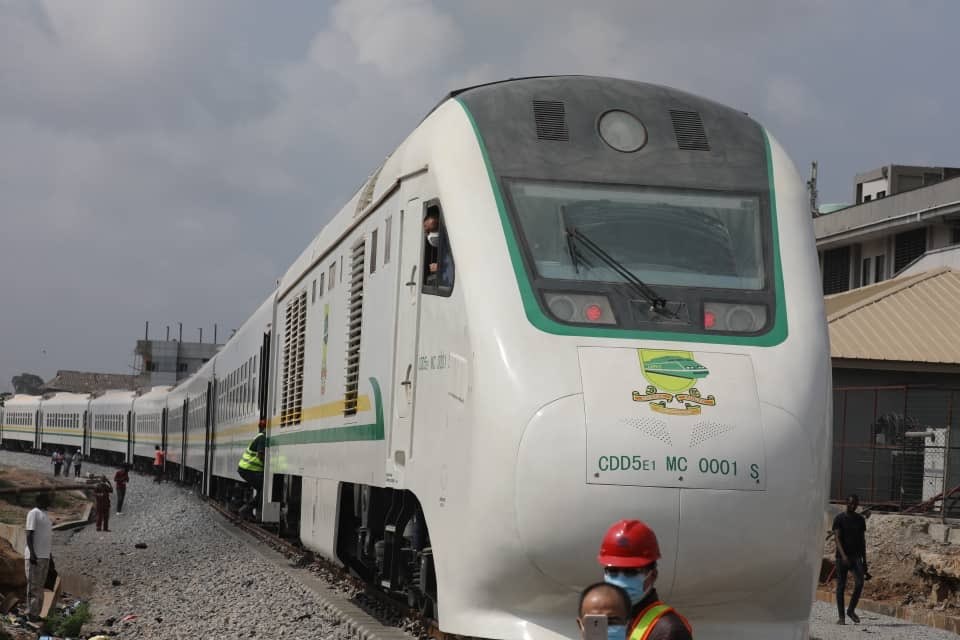
Minister of Transportation, Rotimi Amaechi, has said the new Lagos-Ibadan rail line will be fully ready for formal inauguration and commence full operation in June (next month).
Already, he said about 90 per cent of the project being handled by China Civil Engineering Construction Corporation was ready, adding that the remaining work should be completed in two-three weeks.
Amaechi, who spoke in Ibadan, Oyo State on Saturday after a train ride from Lagos on an inspection of the line, also ordered the arrest of buyers of vandalised rail track facilities and other equipment.
He said he would need to obtain the approval of President Muhammadu Buhari to give the actual date of the inauguration of the line currently on skeletal service/trial run.
He said, “I hope the Office of the President will approve the commissioning of this project in June. We will communicate the actual date in the next one or two weeks but certainly, I think it is in June.
“We are not 100 percent ready for commissioning but if for nothing, we are 89 to 90 percent ready for commissioning and we are hoping that by the next three weeks we will be ready and by then, they will give us a date fron the office of the president. One thing is that by the time they give us a date, we will be ready for commissioning.”
The minister also said the e-ticketing platform would be deployed to Lagos-Ibadan rail in order to manage the envisaged passenger traffic.
“I have directed the MD of NRC to advertise for the e-ticketing and we hope the traffic that we will witness on this axis will be managed with that platform,” he said.
On how the project would be maintained after completion, Amaechi said, “There is maintenance plan between us and the CCECC within the next three to five years. And by then, I would have left government but for me and within the period I am serving as minister, there is an agreement between us and the CCECC for the purpose of maintenance.”
The minister, while commenting on the stealing and vandalization of rail track, not only the vandals or thieves should be arrested and prosecuted but also buyers of such stolen rail materials.
According to him, cases of vandalisation exists because there are those who have indicated interest in the vandalised facilities.
He also said the rate of vandalisation would reduce if the judiciary system could dispense justice without delay, adding that state government must create more jobs.
He said, “I don’t know why some Nigerians are like the way they are. I have told the Managing Director of NRC to arrest the buyers of the equipment. It is not enough to arrest the vandals.
“It is likened to those who said why should the National Assembly punish those who pay ransom, that law was first passed by the Rivers State House of Assembly when I was a speaker and the reason is, that, when there is no demand, there will be no supply.
“If we don’t pay ransom, they will be tired and they will stop. The same way, if they don’t buy those metals, slippers and others, nobody will steal them.
“Also, we must approach the Judiciary to have court that can dispense justice readily so that people are sent to jail early enough to deter others and we will also encourage our governors to create jobs.”
The minister said some of the people vandalising the facilities had been arrested.

- New Ebute-Meta Railway Terminal in Lagos








Railway
Railway track vandalism: Urgent need for laws prohibiting scrap/metal picking to protect critical assets
Railway track vandalism: Urgent need for laws prohibiting scrap/metal picking to protect critical assets
By Onyedikachi Stanley Onovo
The wanton destruction and theft of Nigeria’s railway infrastructure and other critical public assets represent one of the gravest threats to national development and security.
Across the nation—from the Warri-Itakpe line to Abuja-Kaduna, the Eastern and Western Districts, Lagos-Ibadan, and throughout the Northern network—vandals systematically dismantle tracks, steal armoured cables, and pillage essential equipment. This crisis demands an immediate and robust legislative response.
The unending menace
The vandalism is perpetrated by a network of individuals, from local miscreants (“iron condemn”) to organised merchants who purchase and export stolen materials. Security reports and countless arrests underscore the scale of the problem:
In December 2023, a private security firm arrested 13 suspects for vandalising Abuja Mass Transit Rail assets. The suspects were said to be casual workers engaged by a Chinese company working on the railways, but said to have used the opportunity to steal the materials.
On June 2024, The Cable reported that the Nigerian Army arrested 47 suspected rail track vandals in Kaduna State.
In October 2025, police arrested a suspect vandalising railway electrical installations also in Kaduna State.
Radio Nigeria in December 2025 announced the arrest of three persons in Kwara State for vandalizing and stealing Railway clips and nuts in Offa.
In May 2021, TVC reported some individuals, including one Ejike Okeke were apprehended in Enugu with stolen sleepers and tracks.
On the 30th of January 2026 the Nigerian Television Authority reported that the NSCDC, Bauchi State Command arrested five suspects and intercepted a truck carrying vandalized railway tracks.
This relentless assault has plagued successive management of the Nigerian Railway Corporation (NRC), defying conventional counter-strategies.
A transformative leadership initiative
A pivotal shift began under the administration of President Bola Ahmed Tinubu with the appointment of Dr. Kayode Opeifa as Managing Director/CEO of the NRC.
Dr. Opeifa introduced a fundamental paradigm shift by redesignating what was carelessly termed “scrap” as “unserviceable critical national assets.”
This reframing has driven a transformative partnership with experts to manage these assets responsibly. The era of controversial public auctions—which often saw valuable national iron assets disappear, depriving Nigeria of materials for repurposing and industrialisation—is now over.
Today, a systematic process ensures these materials are reused or responsibly processed, with revenue reinvested into the Corporation. This home-grown solution is a commendable breakthrough that proves Nigerians can effectively solve national challenges.
The critical legislative gap: Targeting the market
While the NRC’s internal reforms are laudable, they alone cannot stem the tide. The root enabler of this vandalism is the thriving, unregulated market for stolen metal. To kill the vandal’s incentive, we must eradicate the demand.
Therefore, there is an urgent need for the National Assembly to enact legislation that:
1. Prohibits the buying and selling of any railway materials (serviceable or unserviceable) on the open market.
2. Imposes severe penalties on buyers and merchants of vandalised public assets, effectively targeting the economic drivers of this crime.
3. Mandates stringent federal regulation of all scrap metal dealers nationwide.
THE SCRAP DEALER NEXUS
The opaque operations of scrap dealers are a major concern. Their compounds are often shrouded, hiding the provenance of their materials. This unregulated space fuels not only railway vandalism but also community theft—from iron crossing bars in homes to street lamp holders.
Trailers loaded with questionable materials move freely from cities and expressways to unknown destinations. Without regulating this sector, our fight against vandalism remains superficial.
CONCLUSION
The partnership and innovation under Dr. Opeifa’s leadership at the NRC demonstrate what is possible with commitment and vision.
However, to secure our railways, power installations, and other critical assets, we must complement this institutional resolve with strong, deterrence-based law. Legislation that dismantles the market for stolen public property is not an option; it is a national imperative for Nigeria’s security and industrial future.
*Onyedikachi Stanley Onovo, Ph.D
FCAI, ANIPR
onyedikachionovo1@gmail.com excellentdikachi@yahoo.com
Entertainment
NRC, Entertainers Finalise Plans for 2026 Valentine Train Ride

NRC, Entertainers Finalise Plans for 2026 Valentine Train Ride
A team of leading Nigerian artistes and entertainment executives has paid a courtesy visit to the Managing Director of the Nigerian Railway Corporation (NRC), Kayode Opeifa, ahead of the 2026 Valentine Love Train experience.
The delegation included celebrated musician Sunny Neji, Managing Director of Ojez Entertainment Limited, Joseph Odobeatu, and veteran vocalist Yinka Davies.
The high-profile visit formed part of final preparations for the Valentine-themed train ride scheduled for Saturday, February 14, 2026, at the Mobolaji Johnson Train Station.
Dr. Opeifa received the artistes and commended the creative industry for choosing the national rail system as the venue for the annual Valentine event. He noted that the partnership reflects growing public confidence in the corporation’s safety standards, operational improvements, and renewed focus on customer experience.
READ ALSO:
- 2027 General Elections: INEC Announces February 20 for Presidential Poll
- EFCC Nabs Three in Borno Over Viral ₦500 Naira Mutilation Video
- Omokri Accuses El-Rufai of Rights Abuses During Kaduna Governorship
“The 2026 edition aims to deliver an unforgettable experience while deepening public engagement with the rail service,” Opeifa said, reaffirming the NRC’s commitment to providing secure and efficient transport for passengers during special events.
Organisers disclosed that this year’s edition will feature an expanded entertainment lineup, including performances and appearances by Charles Inojie, Yinka Davies, Sunny Neji, and Segun Arinze. Guests are expected to enjoy live music, comedy, a couple’s game show, fashion showcases, and special performances throughout the Lagos–Ibadan–Lagos train ride, culminating in a Valentine banquet ball.
The Valentine Love Train has in recent years become a fixture on the NRC’s festive calendar, attracting couples, families, and leisure seekers with its blend of travel, romance, and entertainment. The initiative also aligns with ongoing efforts by the corporation to promote rail transportation as a viable and enjoyable alternative for intercity travel.
With final logistics being fine-tuned, organisers say the 2026 edition promises to combine safety, comfort, and premium entertainment for participants.
NRC, Entertainers Finalise Plans for 2026 Valentine Train Ride
Railway
LASG Moves to End Years of Flooding in Ebute-Meta Railway Corridor
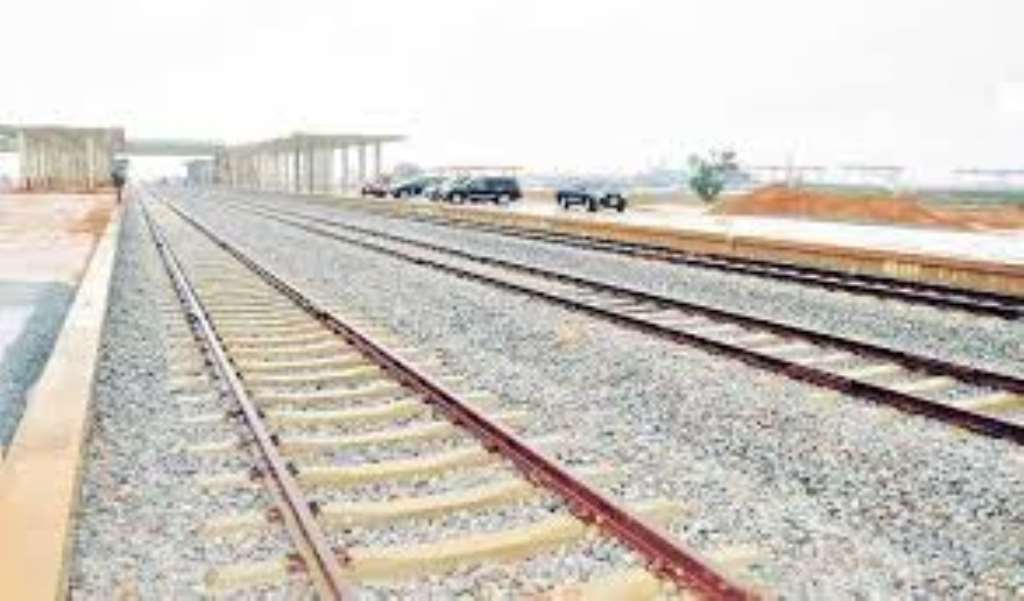
LASG Moves to End Years of Flooding in Ebute-Meta Railway Corridor
The Lagos State Government has taken steps to address persistent flooding within the Ebute-Meta railway corridor and adjoining communities with the construction of a major stormwater drainage channel in collaboration with the Nigerian Railway Corporation.
The NRC said the state government had awarded a contract for the construction of the Carter-Railway Channel, also known as System 4, aimed at deflooding the railway compound as well as parts of Olaleye and neighbouring areas within Lagos Mainland Local Government Area.
The reinforced concrete drainage channel will run from Murtala Muhammed Way in Ebute-Meta through the railway corridor to a discharge point at Iponri on Western Avenue.
Speaking at a stakeholders’ meeting held at the railway premises, the Director of Drainage Services at the Lagos State Ministry of Environment and Water Resources, Engr.
READ ALSO:
- Outrage Mounts Over ‘Ministry of Sex’ Proposal Ahead of General Election
- Nollywood in Mourning as Family Confirms Death of Actress Aunty Ajara
- Kwankwaso Condemns Kwara Massacre, Calls for Strong Federal Response to Terrorism
Adedapo Ajadi, said the project would permanently address the perennial flooding that has affected residents, institutions and businesses in the area for years. He added that construction work is expected to last about 18 months and urged stakeholders to cooperate with contractors to ensure smooth execution.
Stakeholders at the meeting included representatives of St Saviour’s School, NTA Channel 10, the Railway Museum, Federal Medical Centre Ebute-Meta, CCECC quarters, churches, mosques, as well as industrial and small business operators within the railway corridor.
Managing Director of the Nigerian Railway Corporation, Dr Kayode Opeifa, described the intervention as timely, assuring that the corporation would give full support to the multi-billion-naira project.
He noted that the infrastructure, when completed, would significantly reduce flooding and improve safety within the railway environment and neighbouring communities.
Some stakeholders welcomed the development, saying annual flooding had disrupted academic, medical and commercial activities in the area and posed risks to lives and property.
Officials of the Lagos State Government and the NRC later carried out a joint inspection of the proposed corridor to assess the alignment and identify areas that may be affected before construction begins.
LASG Moves to End Years of Flooding in Ebute-Meta Railway Corridor

-

 Business2 days ago
Dangote Opens Refinery Investment to Nigerians With Public Share Sale Plans
-

 Education2 days ago
UTME: JAMB Clarifies Position on Hijab During Biometric Capture
-
 Politics2 days ago
Tinubu Hails Wike as APC Dominates 2026 FCT Area Council Elections
-

 Entertainment2 days ago
Regina Daniels Takes Delivery of ₦150m 2026 GAC Trumpchi M8 SUV
-
 Politics3 days ago
ADC Defeats APC to Win First Polling Unit in FCT Area Council Election
-

 Politics2 days ago
FCT Council polls: APC Wins Four Chairmanship Seats as PDP Takes Gwagwalada
-

 Politics2 days ago
Opposition Weakens as Another Governor Eyes APC Move
-
 News2 days ago
Yoruba Muslim Group Dismisses Viral Ramadan Date Claim, Reaffirms Sultan of Sokoto’s Authority