

metro
Nigerian military secretly aborts 10,000 pregnancies of women raped by terrorists

The Nigerian military has aborted over 10,000 pregnancies secretly of women and girls reportedly raped by Boko Haram terrorists in the North-East.
According to a report by Reuters, many of the women and girls had been kidnapped and raped by the terrorists.
Fati, who was kidnapped by terrorists and later rescued by the military, narrated her ordeal.
She lost contact with her family one night during an attack by insurgents on Monguno.
She was later captured by the terrorists, whipped and shunted into one of two pickup trucks with the other women, she said.
They drove through the night to the shores of the vast Lake Chad, where fighters loaded the women into canoes. As the sun rose, the captives were ferried out toward the lake’s myriad islands.
Fati said she was married off three times, forced to take a new husband whenever the previous one didn’t return from the war. The third, who impregnated her, “was the worst out of all of them,” she said. “He would hit me with the butt of his gun … He would beat me until I was sick.”

Fati was four months pregnant when liberated from the insurgents. Soon after, she says, soldiers medically aborted the pregnancy without telling her. And she was warned: “If you share this with anyone, you will be seriously beaten.” Photo Credit: REUTERS/Paul Carsten
When the Nigerian soldiers came that day about three years ago, she welcomed them.
Now in her 20s, Fati said shortly after being rescued with four months of pregnancy, uniformed men gave her and five other women mysterious injections and pills in a dim room at a military barracks in Maiduguri, the Borno state capital.
READ ALSO:
- EFCC to conclude auction of 435 forfeited vehicles in Lagos Thursday
- Court throws out suit challenging Tinubu’s candidacy
- Police launch manhunt for woman who burnt parents
After about four hours, Fati, who said she was about four months pregnant, felt a searing pain in her stomach and black blood seeped out of her. The other women were bleeding as well, and writhing on the floor. “The soldiers want to kill us,” she thought.
According to her, the soldiers aborted the pregnancies without telling them. And she was warned: “If you share this with anyone, you will be seriously beaten.”
The abortions mostly were carried out without the person’s consent – and often without their prior knowledge, according to the witness accounts. The women and girls ranged from a few weeks to eight months pregnant, and some were as young as 12 years old, interviews and records showed.
This investigation is based on interviews with 33 women and girls who say they underwent abortions while in the custody of the Nigerian Army. Just one said she freely gave consent. Reporters also interviewed five civilian healthcare workers and nine security personnel involved in the programme, including soldiers and other government employees such as armed guards engaged in escorting pregnant women to abortion sites. In addition, Reuters reviewed copies of military documents and civilian hospital records describing or tallying thousands of abortion procedures.
Three soldiers and a guard said they commonly assured women, who often were debilitated from captivity in the bush, that the pills and injections given to them were to restore their health and fight diseases such as malaria. In some instances, women who resisted were beaten, caned, held at gunpoint or drugged into compliance. Others were tied or pinned down, as abortion drugs were inserted inside them, said a guard and a health worker.
Bintu Ibrahim, now in her late 20s, recounted how soldiers gave her two injections without her consent after picking her up with a group of other women who fled the insurgents about three years ago. When the blood came, and the terrifying pain, she knew she and the others had undergone abortions. The women protested and demanded to know why, she said, until the soldiers threatened to kill them.
“If they had left me with the baby, I would have wanted it,” said Ibrahim, whose account was confirmed by a fellow former captive, Yagana Bukar.
At military facilities and in the field, some abortions proved fatal. Although Reuters could not determine the full scope of the deaths in nearly 10 years of the programme, four soldiers and two security officers said they witnessed women die from abortions, or saw their corpses afterward.
Ibrahim said she also witnessed a woman die after an injection at the time of her own abortion near a small village in the bush – an event corroborated by her companion Bukar.
READ ALSO:
- Auditor General report: 100 govt establishments risk zero allocation
- Senate cautions CBN over cash withdrawal limit
- Rita Ofili-Ajumogobia returns as high court judge four years after her dismissal
“That woman was more pregnant than the rest of us, almost six or seven months,” Ibrahim said. “She was crying, yelling, rolling around, and at long last she stopped rolling and shouting. She became so weak and traumatised, and then she stopped breathing.
“They just dug a hole, and they put sand over it and buried her.”
Reuters was unable to establish who created the abortion programme or determine who in the military or government ran it.
Nigerian military leaders denied the programme has ever existed and said Reuters reporting was part of a foreign effort to undermine the country’s fight against the insurgents.
“Not in Nigeria, not in Nigeria,” said Major General Christopher Musa, who heads the military’s counterinsurgency campaign in the northeast, in a November 24 interview with Reuters that addressed the abortion programme.
“Everybody respects life. We respect families. We respect women and children. We respect every living soul.”
General Lucky Irabor, Nigeria’s chief of defence staff, did not respond to requests for comment from Reuters. On December 2, a week after Reuters sought an interview with Irabor and shared detailed findings and questions with his office, the military’s director of defence information released a five-page statement to reporters, and later posted it on Facebook and Twitter. Major General Jimmy Akpor said Reuters was motivated by “wickedness” and a “bullying” mentality, according to the statement.
“The fictitious series of stories actually constitute a body of insults on the Nigerian peoples and culture,” Akpor added. “Nigerian military personnel have been raised, bred and further trained to protect lives, even at their own risk, especially when it concerns the lives of children, women and the elderly.”
Central to the abortion programme is a notion widely held within the military and among some civilians in the northeast: that the children of insurgents are predestined, by the blood in their veins, to one day take up arms against the Nigerian government and society. Four soldiers and one guard said they were told by superiors that the programme was needed to destroy insurgent fighters before they could be born.
“It’s just like sanitising the society,” said a civilian health worker, one of seven people who acknowledged performing abortions under army orders.
Four of the health workers interviewed by Reuters also said that the programme was for the good of the women and any children they might bear, who would face the stigma of being associated with an insurgent father.
The army-run abortion programme has been in place since at least 2013, and procedures were being performed through at least November of last year, according to accounts from soldiers.
The procedures have occurred in at least five military facilities and five civilian hospitals in the region, according to witness accounts and documentation reviewed by Reuters. Many occurred in Maiduguri, the largest city in Nigeria’s northeast and the command centre of the government’s war on Islamist extremists.
READ ALSO:
- NAF bombs bandit hideouts, kills scores in Kaduna
- JUST IN: Pastor Ayo Oritsejafor, wife finally part ways
- Hijab circular: MURIC expresses appreciation to Tinubu, Sanwo-Olu
The Maiduguri sites include the detention centre at Giwa Barracks, where Fati said she was forced to have an abortion. Other sites include the Maimalari Barracks, which is the city’s main military base, and two civilian hospitals – State Specialist and Umaru Shehu. The two hospitals did not comment on this story.
Forced abortions may amount to war crimes and crimes against humanity, according to four legal experts briefed by Reuters on its findings. Although forced abortions are not specifically criminalised under the Rome Statute of the International Criminal Court, the experts said, they could be construed as torture or other inhumane treatment and be prosecuted as such.
The International Criminal Court’s prosecutor found in 2020 that grounds existed to investigate possible war crimes and crimes against humanity by both Nigerian security forces and insurgents. But the court has not opened a probe.
The ICC’s Office of the Prosecutor declined to comment on Reuters’ findings.
SaharaReporters had reported how in April 2014, Boko Haram terrorists kidnapped 276 schoolgirls in Chibok town in Borno, prompting the #BringBackOurGirls campaign. About 98 of the kidnapped girls are still missing.
Two young women, Felerin and Aisha, described undergoing abortions after being taken into custody by the Nigerian military.
Other women interviewed by Reuters offered similar accounts of captivity and rescue – including being raped by insurgents and escaping with the help of soldiers who took them into custody and transported them under armed guard to military facilities or civilian hospitals. Many said they were made to give urine or blood samples before receiving unspecified injections and pills.
Nigerian facilities often used misoprostol, which helps induce labour or contractions, according to the documentation reviewed by Reuters. The drug is also used to treat ulcers and post-partum hemorrhaging, and is widely available in Nigerian cities, including through unofficial abortion-drug distribution networks. Women sometimes were also given the progesterone-blocker called mifepristone, which in many countries is used in conjunction with misoprostol in medication abortions.
Also given was the drug oxytocin, which is widely used during labour to stimulate contractions and safe to use when under medical supervision. Though experts say it is not recommended for abortions, it was sometimes given at military bases to trigger terminations, said two soldiers who performed the procedures.
Using oxytocin to induce abortion is dangerous, several international medical experts told Reuters, particularly if it is injected intramuscularly, as soldiers involved in the Nigerian programme said it was. If the drug is administered too quickly, the results can be fatal, the experts said.
The medications misoprostol and mifepristone are considered safe for abortions when the standard medical protocol is used, according to the World Health Organization and other authorities.
Among those forced to undergo an abortion was a girl named Hafsat.
She arrived at an army base in March 2019, a skinny teen of 14 or 15, clad in a turquoise dress and covered in mosquito bites, according to a soldier present that day.
The soldier said he and other troops injected Hafsat and three others with oxytocin while they lay on the ground outside the army clinic.
Within an hour, the soldier said, he heard cries and turned to see Hafsat bleeding heavily from between her legs. He grabbed her a cloth to stanch the blood.
Hafsat began crying out for a man named Ali, and for her mother. “Half an hour later, maybe, she just went quiet,” he said. “She died.”
The soldier said he and his comrades wrapped her in her turquoise dress and buried her. The memory haunts him.
“I can’t forget her name,” he said.
The details of the soldier’s account were corroborated by a second soldier at the base, who said he also witnessed the girl’s abortion and death.
In all, eight sources, including four soldiers, said they witnessed deaths or saw corpses of women who died from abortions performed at military barracks or administered in the field.








metro
24 Hours in Darkness: Iju Ishaga Residents, Businesses Count Losses as Ikeja Electric Fails to Restore Power

24 Hours in Darkness: Iju Ishaga Residents, Businesses Count Losses as Ikeja Electric Fails to Restore Power
Residents of Iju Ishaga, Ake-Ayo and adjoining communities in Lagos have been thrown into frustration as a prolonged blackout entered its second day, forcing households and businesses to battle with the consequences of more than 24 hours without electricity.
The power outage began at about 5pm on Sunday, September 27, 2026, and had persisted as of Monday evening, leaving residents scrambling for alternative sources of electricity.
For many residents, the blackout has gone beyond the inconvenience of darkness, with business owners counting losses and households spending additional money on fuel to power generators.
Small businesses that depend heavily on electricity have been particularly affected.
Operators of laundries, barbing salons, hairdressing shops, restaurants, food businesses, refrigeration outlets and other electricity-dependent enterprises have either had to suspend operations or resort to generators at additional cost.
Residents said the prolonged outage was putting further pressure on household finances, with many already struggling with the rising cost of fuel and other essential commodities.
One resident said electricity supply disappeared around 5pm on Sunday and had still not returned as of Monday evening.
The resident said many people initially expected the fault to be resolved within a few hours but became increasingly frustrated as the outage stretched into the following day.
The situation has also affected households dependent on electricity-powered water pumps, while residents with refrigerators and freezers have expressed concern about food and other perishable items.
Residents demand explanation
Frustrated consumers contacted personnel of Ikeja Electric Distribution Company to demand information about the cause of the outage and when supply would be restored.
A conversation with an Ikeja Electric staff member on Monday indicated that the company was aware of the problem and that efforts were being made to resolve it.
However, residents were still waiting for full restoration as of Monday evening.
The specific cause of the latest outage affecting Ake-Ayo, Iju Ishaga and surrounding communities had not been independently established as of the time of filing this report.
Previous prolonged outages in parts of Ikeja Electric’s network have been linked to faults involving distribution infrastructure as well as incidents on the transmission network.
Businesses bear the brunt
The prolonged blackout has created a fresh financial burden for small business operators in the affected communities.
For laundry operators, every hour without electricity can mean delayed jobs and customers waiting longer for their clothes.
Barbers and hairdressers have also been forced to depend on generators, while restaurants, food vendors and businesses dealing in frozen products face the additional challenge of preserving their stock.
Some business owners said the cost of purchasing fuel to run generators could further reduce their already narrow profit margins.
For households, the situation has also meant additional expenditure on fuel and other alternatives to electricity.
Anger mounts
As the outage continued into Monday evening, residents became increasingly frustrated over the absence of electricity and uncertainty surrounding the restoration time.
They appealed to Ikeja Electric to provide regular and transparent updates whenever prolonged faults occur, particularly when large communities are affected.
Residents also called for improved maintenance of electricity infrastructure to reduce the frequency and duration of outages.
The latest incident has once again highlighted the difficulties faced by residents and small businesses that depend on public electricity supply but are often forced to maintain generators as backup.
For the affected residents of Iju Ishaga, Ake-Ayo and neighbouring areas, the immediate demand is simple: restore the power and end the darkness.
But with the outage already stretching beyond 24 hours, many households and businesses are left counting the financial cost of another prolonged blackout.
24 Hours in Darkness: Iju Ishaga Residents, Businesses Count Losses as Ikeja Electric Fails to Restore Power
metro
Why Akpabio Rejected ‘Acting President’ Title — Rufai Oseni

Why Akpabio Rejected ‘Acting President’ Title — Rufai Oseni
LAGOS — Arise Television Morning Show anchor, Rufai Oseni, has offered insight into why Senate President Godswill Akpabio reportedly rejected the title of “Acting President” during the recent absence of President Bola Tinubu and Vice President Kashim Shettima from the country.
In a commentary that has sparked widespread debate across political circles, Oseni suggested that Akpabio’s refusal to embrace the title was not merely a matter of constitutional propriety, but a reflection of the legislature’s unwillingness to assert its independence as a co-equal branch of government.
The controversy arose when, with both the President and Vice President out of the country, some political associates reportedly began referring to Akpabio as the acting president. Akpabio swiftly moved to quell the speculation, clarifying that he remains the Senate President and that there is no vacancy in the presidency, noting that President Tinubu was still running the country from abroad.
However, Oseni, speaking on his morning show, argued that the situation raises fundamental questions about the balance of power in Nigeria’s presidential system. He contended that the Senate President’s eagerness to dismiss the acting title highlights a deeper issue: the National Assembly’s reluctance to genuinely challenge or check the executive arm of government.
Oseni pointed to the legislature’s earlier endorsement of a state of emergency in Rivers State as evidence that the current leadership under Akpabio would not stand up for the independence of the parliament. He questioned whether a Senate President who shies away from the constitutional implications of a power vacuum can effectively champion the legislature’s role as a separate arm of government.
“The refusal to accept the acting president title is not just about protocol; it is about the willingness of the National Assembly to assert its constitutional independence,” Oseni said during the broadcast. “If the Senate President cannot stand up for the legislature in a moment like this, it raises serious questions about the checks and balances in our democracy.”
The political analyst’s remarks have reignited conversations about the relationship between the executive and the legislature under the current administration, with critics arguing that the National Assembly has become increasingly subservient to the presidency.
While Akpabio’s allies maintain that his decision was a mark of respect for constitutional order and the sitting president, Oseni’s analysis suggests that the move may have wider implications for the balance of power in Abuja.
As the debate continues, observers say the incident underscores the ongoing tension between constitutional duty and political reality in Nigeria’s democratic experiment.
Why Akpabio Rejected ‘Acting President’ Title — Rufai Oseni
metro
Lagos Club Robbery: Police Arrest Suspect After N5m Bounty
Lagos Club Robbery: Police Arrest Suspect After N5m Bounty
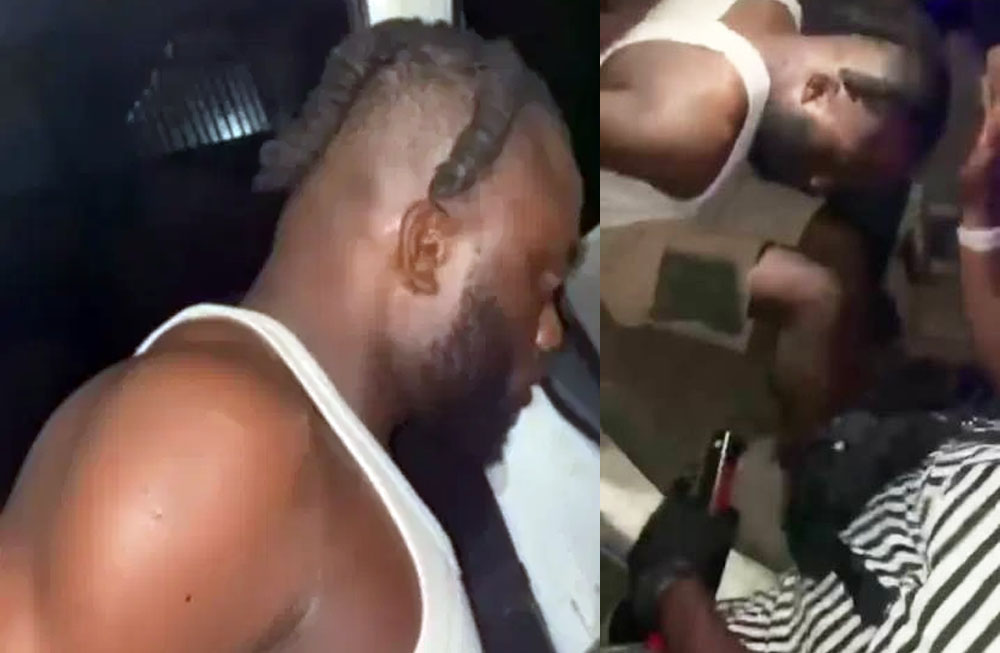
The Lagos State Police Command has arrested a suspected member of the gang that allegedly robbed clubgoers outside Ghost and Spirits Lounge on Ekoro Road, Abule Egba, Lagos.
The suspect was reportedly identified from video footage of the incident, which showed several people being attacked outside the entertainment venue in the early hours of the morning.
The Lagos club robbery reportedly occurred at about 4am on Saturday after some customers had left the lounge and gathered around their vehicles.
Footage from the scene showed several clubgoers sitting around a vehicle when the suspected robbers approached.
READ ALSO:
- Five Arrested Near US-Used RAF Fairford in UK Terror Probe
- Kano Upgrades Five PHCs to General Hospitals, Begins Assessment
- Iran Claims Capture of Second US Underwater Drone in Strait of Hormuz
One of the suspects, reportedly dressed in a green shirt and cap, appeared to move among the people before allegedly targeting one of the victims.
Another member of the group was reportedly seen in an SUV parked across the road before a gunshot was fired, causing some of the people at the scene to run for safety.
The suspect in the green shirt was then allegedly seen taking a wristwatch from one of the victims, while other members of the group reportedly collected valuables before escaping in their vehicle.
Following the incident, the management of the lounge announced a N5 million reward for information leading to the arrest of the perpetrators.
The reward and subsequent investigation helped the police identify and track one of the suspects, who was eventually arrested.
A police source said the suspect was in custody and being interrogated, with investigators seeking information that could lead to the arrest of the other alleged members of the gang.
The Lagos Police Command has also intensified efforts to locate the remaining suspects, who are reportedly still at large.
The incident has raised concerns among residents and nightlife customers in Abule Egba, particularly over the security of people leaving entertainment venues during the early hours.
Police authorities have urged residents with useful information about the suspects or the robbery to assist the investigation.
The arrested suspect remains presumed innocent unless proven guilty in court, while investigations continue into the alleged robbery and the identities and whereabouts of the other suspects.
Lagos Club Robbery: Police Arrest Suspect After N5m Bounty
-

 News3 days ago
Keyamo: ₦70,000 Minimum Wage No Longer Enough as Cost of Living Soars
-
 Sports3 days ago
AFCON 2027 Qualifier: Nigeria Fight Back to Beat Madagascar 2-1 in Uyo
-
 metro3 days ago
Viral Anti-Obi Video: Lagos Police Move Against Inspector Osumah Frank
-

 Entertainment3 days ago
Jetour Takes Adventure Beyond the Road, Brings Solar-powered Borehole to Ibeju-Lekki community
-
 News1 day ago
Fake Agency Scandal: Gbajabiamila Says He Never Betrayed Tinubu’s Trust
-

 metro2 days ago
$155m Left Behind, $750m Liabilities: Anambra Govt Opens Fresh Obi Files
-
 metro2 days ago
Ogun Man Arrested Over Alleged Killing of Neighbour After ‘Rough Play’ With Child
-

 Politics2 days ago
2027: Fayemi Denies Galadima’s Claim He Is Coordinating Opposition Group Against Tinubu