

News
NNPCL, Dangote, others shift oil industry tussle to Senate panel
NNPCL, Dangote, others shift oil industry tussle to Senate panel
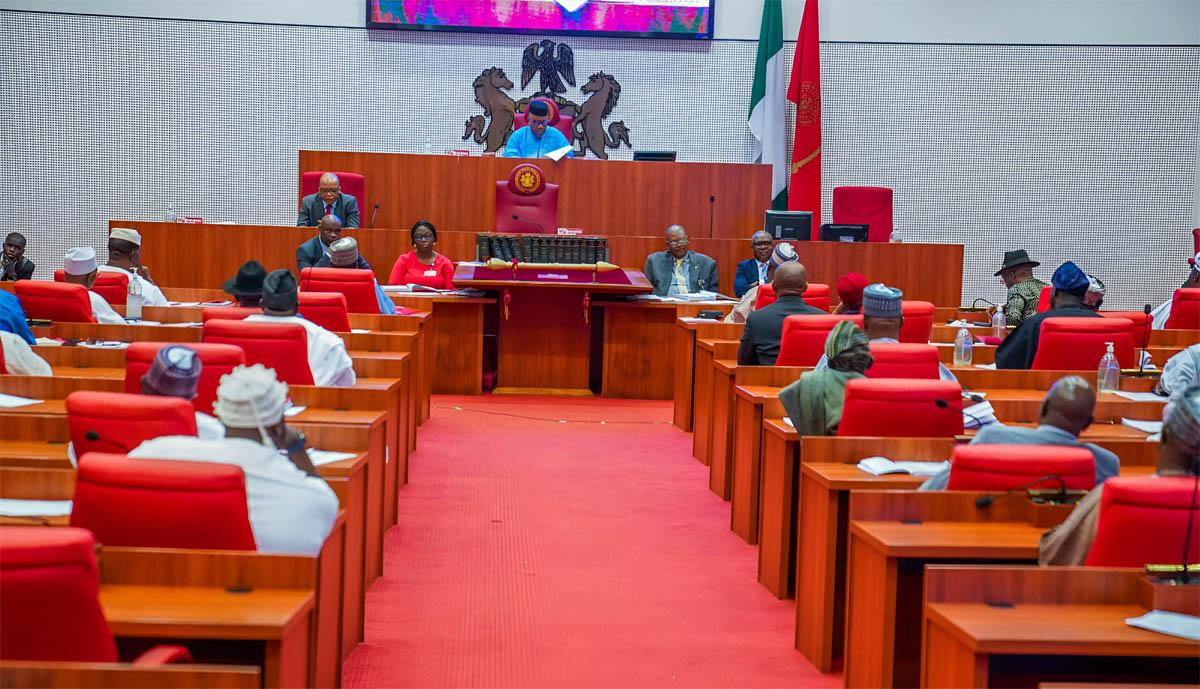
Major stakeholders in Nigeria’s oil and gas industry on Wednesday vowed to speak up on the dirty deals, regulatory breaches and other malpractices in the sector that had defied solutions over years as the Senate opened another round of probe.
They demanded that the investigation should be conducted on live television broadcasts so that Nigerians would hear and know the truth about the happenings in the industry.
The stakeholders spoke during an interactive session with the Senate Ad-hoc Committee investigating “Alleged Economic Sabotage in the Nigerian Petroleum Industry”, particularly the importation of adulterated and substandard products into the country.
The committee, which is chaired by the Majority Leader of the Senate, Sen. Opeyemi Bamidele (APC, Ekiti-Central), will begin its full public hearing on September 10.
At a pre-hearing interactive session, it called on Wednesday, major stakeholders sought a transparent investigation to be conducted on live broadcast so that Nigerians would be well aware of the “misinformation” about the operations of the industry.
Among others, the probe will “seek to identify and hold accountable all parties involved in the importation and distribution of the adulterated petroleum products, especially Premium Motor Spirit and Automotive Gas Oil and such other acts that are detrimental to the operations of the petroleum industry.”
Bamidele, in an opening remark, said, “This includes suppliers, importers, regulatory bodies, and any other entity that may have contributed to lapses in the petroleum industry.
“We will conduct a thorough review of current regulatory frameworks and procedures to identify deficiencies and recommend necessary reforms to prevent such occurrences in the future.”
The Minister of State Petroleum (Oil), Sen. Heineken Lokpobiri; the Group Chief Executive Officer of the Nigerian National Petroleum Company Limited (NNPCL); Mr Mele Kyari; the MD of the Nigerian Midstream & Downstream Petroleum Regulatory Commission (NMDPRA), Mr Farouk Ahmed; the MD of the Nigerian Upstream Petroleum Regulatory Commission (NUPRC), Mr Gbenga Kololafe; Depot and Petroleum Products Marketers Association (DAPMAN); Independent Marketers Association of Nigeria (IPMAN); Dangote Refinery; and modular refiners, addressed the panel.
READ ALSO:
- Kano: Dethroned Emir Bayero chief of staff pays allegiance to Emir Sanusi
- NYSC Akwa Ibom coordinator, driver declared missing on Onitsha-Owerri highway
- Protest: Niger senator calls for emergency summit of Northern leaders
It was a session where many of the stakeholders opposed the Dangote refinery, as speakers warned against the consequences of what they considered to be an emerging monopoly in the industry.
Lokpobiri, for example, promised to cooperate with the panel by supplying all the information to help it unearth the truth.
“We will fully cooperate and supply all the relevant information to address all the misinformation.
I will suggest that this investigation should be conducted on live television”, he stated.
Lokpobiri, who denied claims that the government was frustrating local investors, added, “We are also committed to supporting the Dangote refinery and modular refineries.”
Kyari, who spoke in the same vein, complained that he had been the target of all forms of attacks, including being called a criminal, and a thief.
He said, “We are faithful, loyal, and committed to the development of this country,” adding that “We are not criminals and we are not thieves.”
Kyari made a reference to the row between regulatory agencies and the Dangote refinery over the latter’s allegation that its $ 19 billion investment was being frustrated, saying, “We have done nothing to sabotage any domestic refinery. But, there is a law that guides what we do.
“The law says that for crude oil, there must be a willing buyer and a willing seller. Go and check the Petroleum Industry Act, it is there.
Although Kyari admitted that there could be adulterated products in the country, he insisted that NNPCL was not to blame as the company did not man the borders or control smuggling, which he said was the role of the Nigeria Customs Service and security agencies.
“There are things we know that we won’t say, but we will say them during the public hearing. Let the public hearing be done on live broadcast,” he told the session.
On adulterated products, Kyari said, “NNPCL is not and cannot be responsible for the importation of substandard products. But, we know that smuggling of all sorts takes place, which is not caused by NNPCL.”
According to Kyari, vandalism of oil installations and product theft remain the biggest threats to the industry that need urgent solutions, or else serious investors will not risk their money.
READ ALSO:
- 864 civil servants receiving multiple salaries in Taraba exposed
- Nigeria’s D’Tigress bow to US 88-74, exit Olympics
- Senate probes $1.5bn Port Harcourt refinery rehabilitation funding
The representatives of DAPMAN, IPMAN and other local operators called for an operating environment that would be fair to all, including existing investors and new entrants like the Dangote refinery, as against handing over the industry to a monopoly.
However, the Group Strategy Officer, Dangote Refinery, Mr Aliyu Suleiman, expressed worries that the company did not get the expected support and backing from the government and regulators.
He raised three issues, “We would like to basically have three questions that we think we should look at, ask the committee, and also ask Nigerians.
“The first question is, do local refineries deserve protection from the government? The second question is, should Nigeria protect its infant industries in order to improve investment? And then the third question is, should local refineries have preferential access to Nigeria?.”
Aliyu went on, “Those really are the questions that we want this committee to consider. On the first one, as I have said, we produced five million tons of products, but of those 5 million tonnes, about 90% of them had to be exported. While at the same time, the products we were producing had been imported into Nigeria.
“We find ourselves competing against Russian products that were produced, that have been produced with oil that is valued at $60. We all know that because of the cap that has been put on Russian oil, the value of Russian oil today in the market is $60.
“And that’s what Russia is using to produce their products, and those products are being sent in large quantities into Africa to compete with products that are produced in refineries that buy proof at $90.
“We don’t think this will be a fair competitive environment and I think on that, even on that when you have such unfair competition, it is normal to put protective measures in place.”
He informed the panel that all the company had asked for was for the regulatory environment to support it, considering its huge investment in excess of $19 billion as part of the efforts to solve the domestic product supply challenges.
Meanwhile, the Minister of Finance and Coordinating Minister of the Economy, Mr Wale Edun, confirmed that the government had yet to meet the 2024 budget’s crude oil target, though he gave assurances that everything was being done to achieve it.
Addressing the panel, the minister said while the government set a daily crude production target of 1.87 million barrels for the budget, it had so far achieved 1.6mbpd.
He stated that the government planned to surpass the budget’s target and achieve 2mbpd.
On oil prices, the minister said, “Outlook for oil prices is positive and we expect prices to remain stable.”
NNPCL, Dangote, others shift oil industry tussle to Senate panel










News
Ilorin Youth Group Demands Disbandment of Iru-Ekun Over Alleged Obstruction of Tani-Olohun’s Arrest
Ilorin Youth Group Demands Disbandment of Iru-Ekun Over Alleged Obstruction of Tani-Olohun’s Arrest
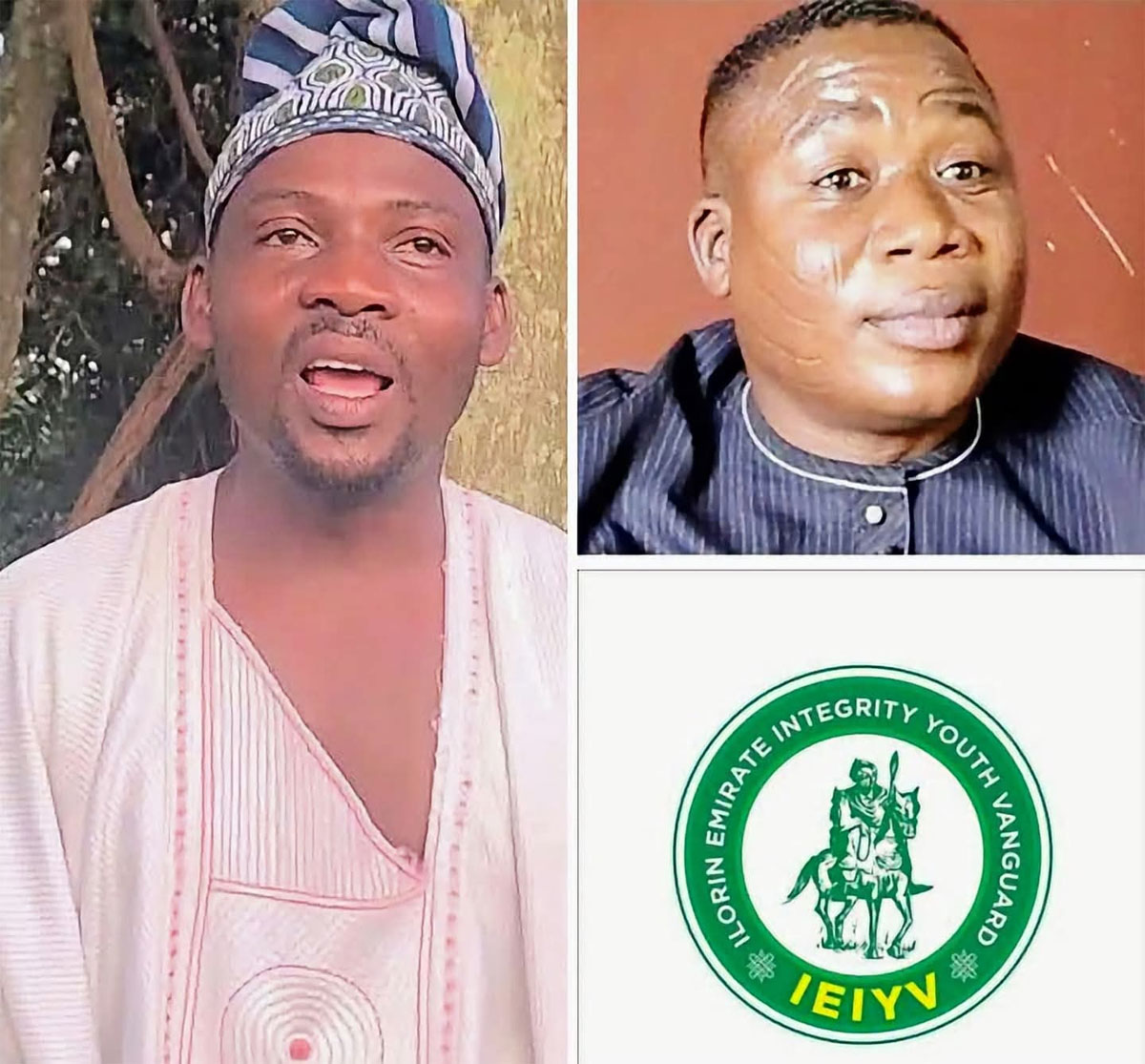
The Ilorin Emirate Integrity Youth Vanguard (IEIYV) has called for the immediate disbandment of the Iru-Ekun group in Kwara State, following allegations that its members obstructed law enforcement officers during an attempted arrest of social commentator Azeez Adegbola Tani-Olohun.
The group also called for a thorough investigation into the alleged obstruction and prosecution of anyone found to have committed an offence in connection with the incident.
The position was contained in a statement issued on Friday, August 28, 2026, by the National President of the IEIYV, Mallam Alaburo Abdulsalam Sherif.
The youth organisation said its position was taken under the leadership and royal guidance of the Emir of Ilorin, His Royal Highness, Alhaji (Dr.) Ibrahim Sulu-Gambari, CFR.
According to the group, the alleged incident occurred in connection with attempts by law enforcement authorities to arrest Tani-Olohun over allegations bordering on criminal defamation, cyberstalking and cyberbullying.
The IEIYV condemned what it described as any attempt by individuals, organisations, traditional institutions, political interests or pressure groups to obstruct law enforcement officers from carrying out what it considers a lawful duty.
It maintained that no individual or group should place itself above the law or interfere with the judicial process, stressing that allegations of criminal conduct should be resolved through investigation and adjudication by competent authorities and courts.
The group also emphasised the importance of respecting court orders, describing them as expressions of the authority of the Nigerian judiciary which must be obeyed by citizens and organisations.
READ ALSO:
- Lagos Govt Warns Husbands: Forcing Sex on Wife Can Lead to Life Imprisonment
- ‘They will hang me’: Putin reportedly fears ending Ukraine war without victory
- Tinubu Confirms Rescue of 15 NYSC Members, 6 Others Abducted in Kogi
It said where a person is accused of committing an offence, the appropriate course of action is to allow the relevant authorities to investigate the allegations and, where necessary, bring the matter before a competent court.
The IEIYV stressed, however, that its demand for legal action against Tani-Olohun should not be interpreted as a call for extrajudicial treatment of the accused.
It said Tani-Olohun should be afforded all rights and protections guaranteed under the Constitution and other relevant laws, while the allegations against him should be properly investigated.
Sherif said the association would not support any action capable of undermining the rule of law or creating the impression that influential individuals or organised groups could obstruct lawful processes without consequences.
He called for the allegations against Tani-Olohun to be subjected to proper investigation and, if the evidence establishes a prima facie case, for him to be prosecuted before a competent court.
The IEIYV also called for an investigation into all individuals alleged to have participated in the obstruction of the attempted arrest, saying anyone found to have incurred criminal liability should face prosecution in accordance with the law.
Five-point demand
Specifically, the group demanded the immediate disbandment of Iru-Ekun in Kwara State, subject to the appropriate legal and administrative procedures.
It further called for a comprehensive investigation into the alleged obstruction of Tani-Olohun’s arrest and urged the authorities to investigate every individual allegedly involved in the incident.
The group also demanded that Tani-Olohun be prosecuted before a competent court if investigations establish sufficient grounds for charges relating to criminal defamation, cyberstalking, cyberbullying or any other offences properly brought against him.
It equally urged all parties involved to adhere strictly to due process and the rule of law.
The youth group appealed to security agencies and other relevant authorities to handle the matter professionally and impartially, warning against actions capable of escalating tensions within the Ilorin Emirate.
It urged all parties to avoid conduct that could threaten peace, unity and peaceful coexistence in the emirate.
The association said its position was aimed at strengthening respect for constitutional institutions and ensuring that disputes involving individuals and groups were handled through established legal channels.
The IEIYV reaffirmed its commitment to the rule of law, peaceful coexistence and the protection of the dignity and unity of the Ilorin Emirate.
It maintained that justice should be allowed to take its proper course and that every person involved in the matter, including the accused, should be treated in accordance with Nigerian law.
The group concluded by stressing that the law must remain supreme and that no individual or organisation should be allowed to place itself above the law.
Ilorin Youth Group Demands Disbandment of Iru-Ekun Over Alleged Obstruction of Tani-Olohun’s Arrest
News
Itauma loses unbeaten record to Hrgovic, discharged from hospital
Itauma loses unbeaten record to Hrgovic, discharged from hospital
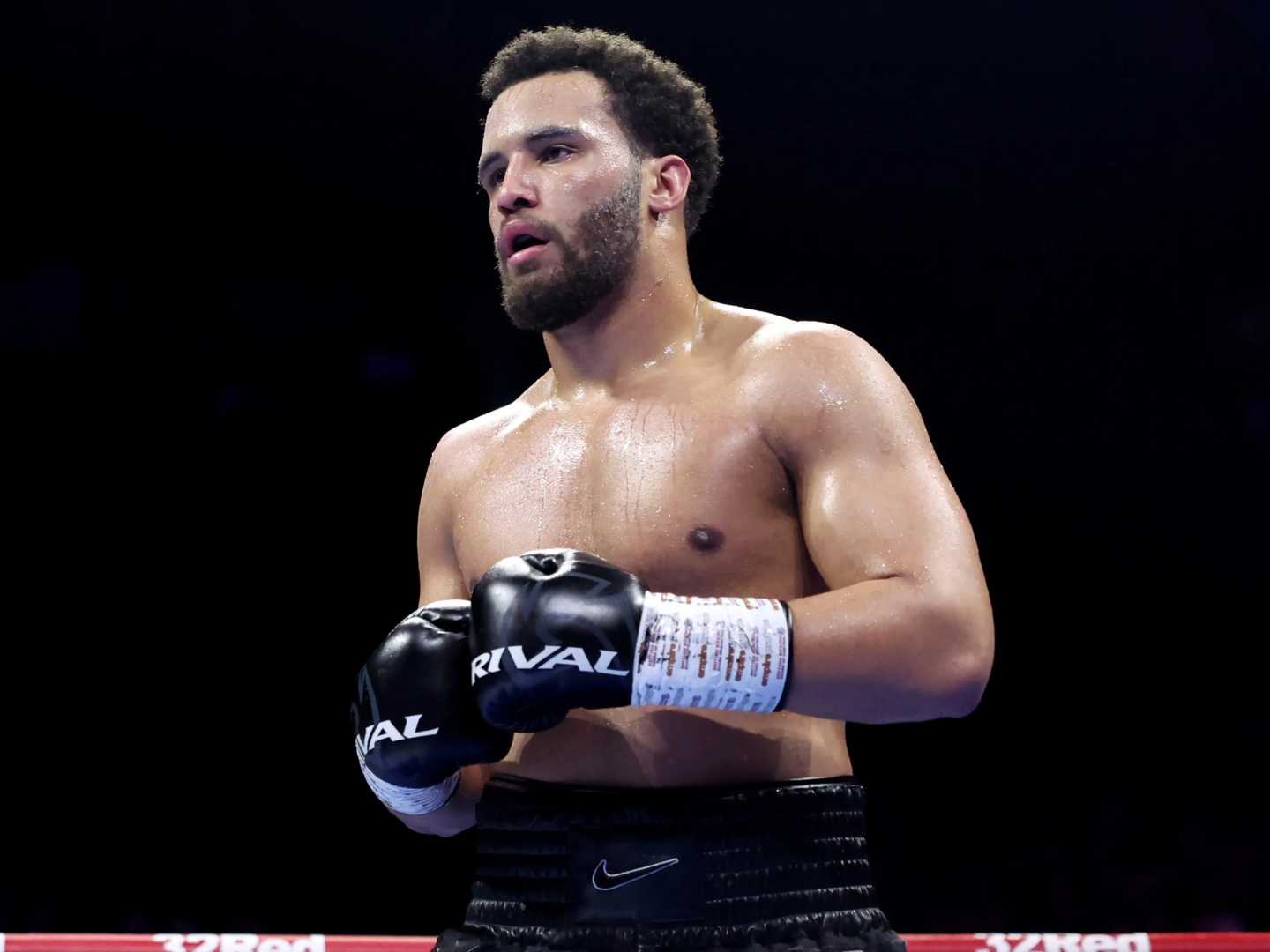
Nigerian-British heavyweight prospect Moses Itauma has returned home after spending a night in hospital following the first defeat of his professional boxing career.
The 21-year-old was taken to hospital for medical checks after Croatia’s Filip Hrgovic stopped him in the ninth round of their vacant IBF heavyweight title bout at The O2 Arena in London.
Itauma, who had built a reputation as one of the most promising young heavyweights in world boxing, was carried from the ring on a stretcher after appearing exhausted and struggling to defend himself in the closing stages of the contest.
His promoter, Frank Warren’s Queensberry Promotions, subsequently confirmed that Itauma had received medical attention and was discharged after doctors completed their assessment.
“Moses is well. He left the hospital last night and, after being checked over, he is now back home with his family,” Queensberry said in a statement.
The defeat brought an abrupt end to Itauma’s unbeaten professional record and came after he had appeared to control much of the fight against the more experienced Hrgovic.
Itauma was reportedly ahead on the judges’ scorecards before the Croatian began to turn the contest around in the later rounds. The British-Nigerian showed increasing signs of fatigue in the eighth round, allowing Hrgovic to step up the pressure.
READ ALSO:
- DSS moves to halt Sowore’s cybercrime trial until after 2027 election
- Kogi Abduction: Kidnappers Demand ₦20m Ransom for Each NYSC Member
- Deadly Ikola clash: Lagos demolishes shanties beneath high-tension lines
Referee Howard Foster eventually halted the fight at 2:27 of the ninth round when Itauma was no longer able to adequately defend himself.
There were initial concerns that the young boxer might have suffered a leg injury, with Warren confirming immediately after the bout that Itauma had been taken to hospital.
“Moses has gone to hospital. He has done something to his leg. He did something to his leg and he was exhausted, is the truth of it. It was a very fast-paced fight,” Warren said.
Despite the setback, Warren believes the defeat can serve as an important learning experience for Itauma, who is regarded as a major prospect in the heavyweight division.
“He got caught and the fighting instinct was to stand there and let his shots go,” Warren said.
“That’s what it is at the top level. You have to tick all the boxes. He has got to learn from the fight and will hopefully do that.”
Hrgovic also acknowledged that Itauma had given him a difficult fight before his late surge changed the outcome.
“I was getting outboxed, but somehow I found the energy and the punch to change it all,” the Croatian said.
The 34-year-old praised Itauma as the toughest opponent he had faced, while pointing to the youngster’s lack of experience at the highest level.
“He is the best fighter I have been in with but he needs more experience. He gassed out. I knew I had the pace in my favour. He gassed out but he is one of a kind,” Hrgovic said.
Itauma’s defeat may have ended his perfect record, but his rapid rise and the quality of his performance before fatigue set in are expected to ensure that the setback does not derail his career.
With the young heavyweight now back home recovering with his family, attention will turn to his rehabilitation and how he responds to the first major adversity of his professional career.
Itauma loses unbeaten record to Hrgovic, discharged from hospital
News
Tinubu Joins US Court Battle to Block Release of FBI, DEA Records
Tinubu Joins US Court Battle to Block Release of FBI, DEA Records
Nigerian leader intervenes in FOIA lawsuit, citing privacy protections and arguing that public curiosity about his past does not override personal privacy rights under U.S. law.
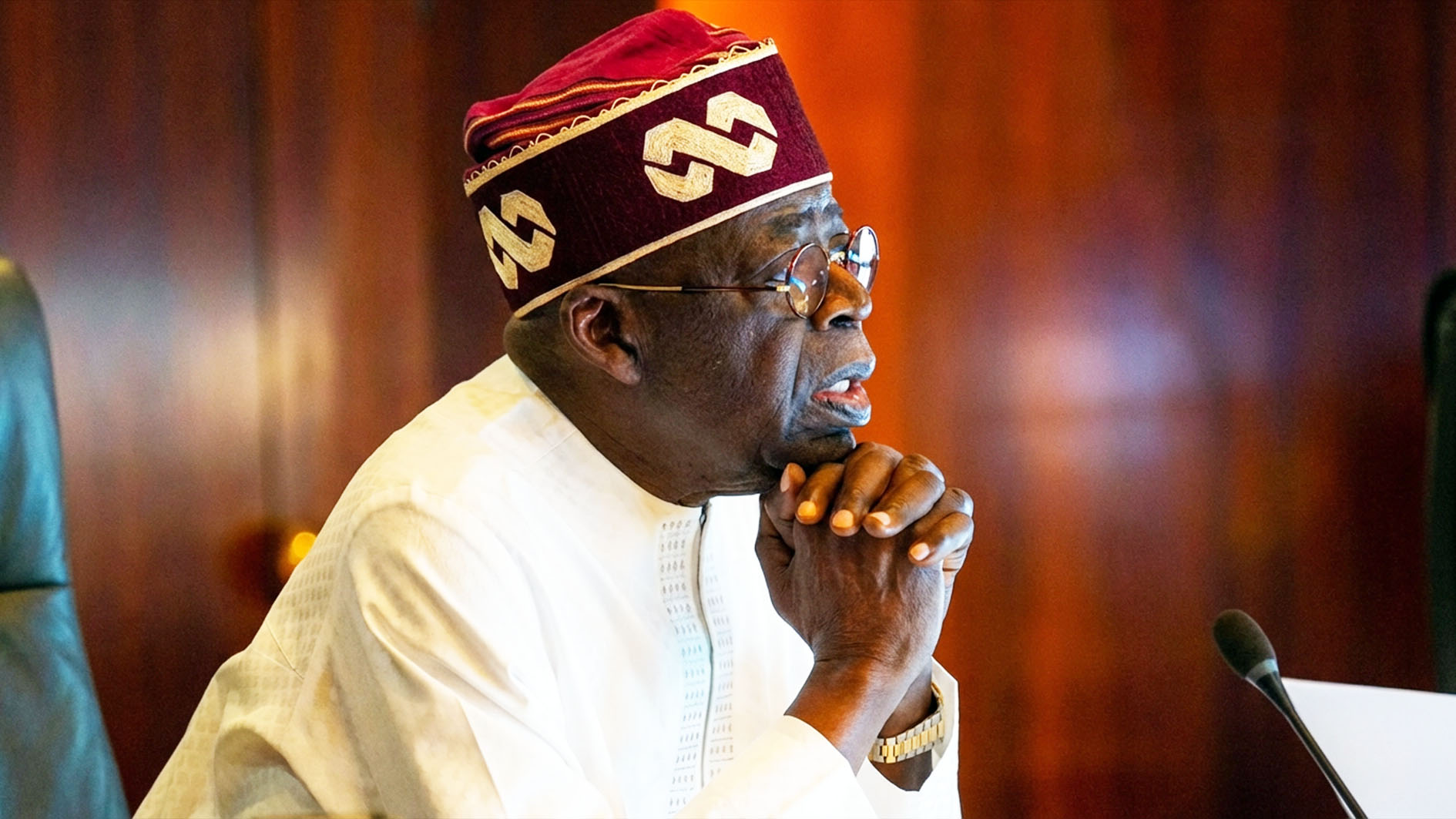
The Legal Showdown Over Historical Investigative Files has drawn international attention as President Bola Ahmed Tinubu formally intervened in a United States federal court case to prevent the further release of FBI and DEA records related to a decades-old drug investigation. The Nigerian president filed a 16-page legal response on August 28, 2026, before the U.S. District Court for the District of Columbia, urging the court to reject a motion by American transparency activist Aaron Greenspan that seeks to compel the disclosure of unredacted investigative files. Tinubu’s legal team, led by attorneys Christopher W. Carmichael, Victor P. Henderson, and Oluwole O. Afolabi, argues that the Freedom of Information Act (FOIA) was never intended to serve as a tool for unearthing private information about individuals, even when that information resides in government files.
How the Case Began traces back to 2022 and 2023, when Greenspan—founder of the transparency website PlainSite—submitted 12 FOIA requests to six U.S. federal agencies. These included the Federal Bureau of Investigation (FBI), the Drug Enforcement Administration (DEA), the Central Intelligence Agency (CIA), the Internal Revenue Service (IRS), the Executive Office for United States Attorneys, and the U.S. Department of State. Greenspan sought records connected to a Chicago heroin trafficking ring that operated in the early 1990s, and the requests specifically named four individuals: Tinubu, Lee Andrew Edwards, Mueez Abegboyega Akande, and Abiodun Agbele. Several agencies initially issued “Glomar” responses—a legal maneuver that allows government bodies to neither confirm nor deny the existence of records—citing privacy and national security concerns.
READ ALSO:
- Petrol price heads towards N1,500 per litre despite falling crude oil prices
- Bashir El-Rufai Vows Never to Forgive APC, Threatens to ‘Terrorise’ Party Over Family Ordeal
- Niger coup attempt: Gunfire, explosions rock Niamey as soldiers revolt
Judge Howell’s April 2025 Ruling marked a pivotal development when U.S. District Judge Beryl Howell ruled that the FBI and DEA had improperly employed Glomar responses. The judge determined that the agencies had failed to establish a sufficient privacy interest in keeping secret whether Tinubu had been the subject of a criminal investigation. Judge Howell ordered both agencies to conduct comprehensive searches for responsive records, process all non-exempt documents, and release records with appropriate redactions where legally justified. However, the judge sustained the CIA’s Glomar response, allowing the intelligence agency to maintain its refusal to confirm or deny the existence of records related to Tinubu—a decision that has itself become a point of contention.
The Disputed Document Release followed Judge Howell’s order, with the FBI and DEA releasing thousands of pages of documents. However, these releases came with significant redactions and withholdings, accompanied by a Vaughn index—a detailed document explaining the legal basis for each redaction. Dissatisfied with the extent of the redactions, Greenspan filed a motion for summary judgment, asking the court to order the release of additional unredacted materials, compel the agencies to conduct more thorough searches, and challenge the validity of the agencies’ exemption claims. It was at this juncture that President Tinubu formally intervened in the case to protect his personal privacy interests.
Tinubu’s Core Legal Arguments were advanced in his August 28 filing, beginning with the assertion that FOIA’s primary purpose is to shed light on government activities, not to expose private information about individuals contained in government files. Tinubu’s lawyers cited a 1989 U.S. Supreme Court decision, which held that disclosure of records concerning private citizens generally reveals little about government operations. The legal team invoked FOIA Exemption 7(C), which protects law enforcement records where disclosure could constitute an “unwarranted invasion of personal privacy,” and also cited protections under the U.S. Privacy Act, arguing that the FBI and DEA “properly redacted or withheld exempt information.” Crucially, Tinubu’s lawyers rejected Greenspan’s argument that Judge Howell’s April 2025 ruling against the Glomar responses removed the president’s remaining privacy interest in the files. The filing argued that Judge Howell had distinguished between Tinubu’s privacy interest in keeping secret whether he had been investigated and his separate privacy interest in the contents of any investigative files, while recognizing that individual portions of files could still be protected through redactions. The legal team firmly challenged the notion that Tinubu’s position as Nigeria’s president creates a public interest justifying disclosure, arguing that “plaintiff’s interest in an individual or that individual’s activities is not a ‘public interest’ that FOIA recognizes.” They maintained that public curiosity about Tinubu’s background, political career, or fitness for office does not meet the legal threshold for public interest under FOIA. Tinubu’s lawyers also dismissed suggestions of a “secret prosecution” or government cover-up as “unsubstantiated allegations” that do not justify releasing law enforcement records concerning an individual, arguing that Greenspan has failed to provide sufficient evidence of government wrongdoing.
READ ALSO:
- 2027: Atiku Pledges $100bn Start-up Fund, Slams Tinubu Over Cost-of-Living Crisis
- Borno: Troops kill 26 Boko Haram fighters, destroy 10 motorcycles in Kukawa
- Police Rescue Two Colombian Women Held Captive by Trafficking Syndicate in Lagos
The FBI’s Confidential Submission came in a parallel development that underscores the sensitivity of the case, as the FBI filed a separate motion on August 20, 2026, seeking permission to submit a confidential declaration for Judge Howell’s private review (ex parte and in camera). The agency argued that it could not publicly explain the full basis for its redactions without potentially exposing sensitive law enforcement techniques and procedures (protected under Exemptions 7(E) and 7(F)), endangering the safety of individuals mentioned in the files, or compromising ongoing or future investigations. Judge Howell granted the FBI’s application, allowing the agency to submit the sensitive materials under seal for her private evaluation.
What’s at Stake in this case carries significant implications for the balance between transparency and privacy, as it tests the boundaries between FOIA’s disclosure mandate and individual privacy protections. The case also has international relations implications, involving a sitting foreign head of state in U.S. legal proceedings, and could set a precedent that influences how U.S. agencies handle FOIA requests involving foreign nationals. Additionally, the case centers on historical accountability, focusing on investigations from over 30 years ago.
Tinubu’s Consistent Denial of any wrongdoing linked to the allegations that form the basis of the historical investigation has been maintained throughout this process. His legal intervention in the U.S. court represents his most direct legal challenge to the disclosure of records that could contain details about his past. The case now rests with Judge Beryl Howell, who is reviewing the unredacted materials privately to determine whether the FBI and DEA’s redactions and withholdings are legally justified under FOIA exemptions. This is a developing story, and the U.S. District Court for the District of Columbia is expected to issue a ruling on Greenspan’s motion for summary judgment in the coming weeks.
Tinubu Joins US Court Battle to Block Release of FBI, DEA Records
-
 metro2 days ago
Kogi Abduction: Kidnappers Demand ₦20m Ransom for Each NYSC Member
-

 metro2 days ago
Anambra Police Arrest 28-Year-Old Suspected Drug Dealer, Recover ₦5.8m Illicit Consignment
-

 metro2 days ago
Igboho, Iru Èkùn: Act Now Before Parallel Authority Emerges — Agunbiade
-

 metro2 days ago
Deadly Ikola clash: Lagos demolishes shanties beneath high-tension lines
-

 Railway2 days ago
Nine Oxygen Cylinders Recovered as NRC, NSCDC Thwart Rail Vandalism in Osogbo
-

 metro3 days ago
IMAX Lekki Attack: Two Dead as Machete-Wielding Man Storms Cinema in Lagos
-
 Education1 day ago
FG Opens N10 Billion TETFund Research Grant Applications — How Lecturers Can Apply
-

 metro2 days ago
DSS moves to halt Sowore’s cybercrime trial until after 2027 election