

Politics
Obi struggles to maintain clout in ADC coalition amid rising influence of Atiku’s loyalists

Obi struggles to maintain clout in ADC coalition amid rising influence of Atiku’s loyalists
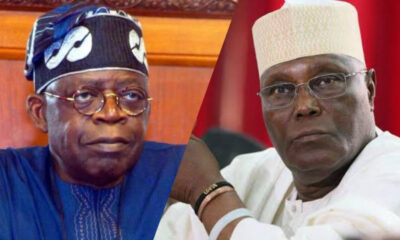
Former Labour Party presidential candidate, Peter Obi, is facing a difficult battle to maintain political influence within the African Democratic Congress (ADC)-led opposition coalition, as loyalists of former Vice President Atiku Abubakar tighten their grip on the party’s structures ahead of the 2027 general elections.
Multiple sources within the coalition say Atiku’s allies have been quietly consolidating control since the alliance was formed.
These allies reportedly leveraged early entry into the ADC and substantial financial resources to outpace rival factions.
A senior member familiar with the developments said Atiku’s faction has seized control of the coalition.
“Over 70 per cent of the entire structure of the ADC has already been taken over by Atiku’s camp, largely because they joined the party early and have more resources.
“Members of key organs of the party, the NWC, Board of Trustees, state chapters, and others that will play a critical role in determining who becomes the party’s candidate in the next election are largely loyal to Atiku.
“In fact, in some states where the chairmen have refused to cooperate with Atiku’s group, there are ongoing efforts to forcefully implement leadership changes. These moves are aimed at ensuring that party decisions favour Atiku.
“As far as the ADC is concerned, Atiku is in charge, and many of his loyalists have taken over the structure ahead of his declaration or directive, as the case may be. Though Obi is still part of the coalition, he is struggling to catch up with Atiku’s moves.”
Another insider claimed that funding was key to the takeover.
“From day one of the coalition, Atiku’s camp was ahead in the game. In fact, they made a huge amount of dollars available to persuade some ADC members to step aside and make way for the coalition leaders.
“So, it’s not surprising. That was the plan, and that is exactly what’s happening, they’ve taken over the structure. Atiku wouldn’t spend such massive resources and then fold his arms. Beyond the money, many of his loyalists and even strategists have joined the ADC. He’s clearly doing this for himself.
“If Atiku is not contesting — but I believe he will — he will still determine whatever happens within the ADC coalition. So, while Obi, Amaechi, and others are part of the ADC, they appear to be working for Atiku, directly or indirectly.
“Look at the Mark-led NWC, Obi only nominated the National Organising Secretary in the National Working Committee out of over 25 members of the NWC.”
The growing dominance of Atiku’s loyalists has unsettled Obi’s support base, particularly the Obidient Movement, which has accused the ADC leadership of sidelining them from key decision-making.
READ ALSO:
- Israeli Security Cabinet approves plan to take over Gaza
- US offers $50m reward for arrest of Venezuelan president
- Kenyan pastor, two daughters face deportation after Canadian court rejects asylum claim
In a memo dated July 29, 2025, and signed by National Coordinator Tanko Yunusa, the group alleged, “Our people are deliberately excluded at all levels… This creates an impression of marginalisation and undermines trust, which is essential for building a sustainable partnership.”
Speaking on the matter, Yunusa, however, insisted Obi was not being edged out, saying, “Obi is not struggling for relevance… these are works in progress… His Excellency Peter Obi has said that he’s joining the coalition for the 2027 general election. At the moment, he’s made it clear that he’s a member of the Labour Party. So, when that time comes, he will take his decision.”
Commenting on the development, the ADC said Atiku has not taken control of it’s ADC structures.
The ADC interim National Publicity Secretary, Bolaji Abdulahi assured that all aspirants would be given a level playing field in the buildup to the 2027 election.
He stated, “All stakeholders are carried along in the ADC activities. The party is not loyal to anybody and has not been taken over by anyone. The National Organizing Secretary was nominated by Peter Obi. This is the most powerful party position. So, every stakeholder is carried along.
“So, the structure of ADC, from the NWC to other structures, does not belong to Atiku or anyone. We are working alongside all our stakeholders equally to unseat President Tinubu in 2027.
“The ADC as a coalition platform is beyond 2027. We are united to rescue Nigerians from Tinubu’s APC and bring about good governance. So no division anywhere.
“There’s nothing to manage in their (Atiku, Obi and Amaechi) ambitions. Everybody has the right to express their interest in any of those. But for us, at the level we are, we are not having that conversation at all.
“The only thing we can say is that we are going to provide a level playing field for everybody who has an ambition to pursue.
We don’t have any preferred candidates or aspirants. We are going to ensure that we deliver transparently. So, there’s nothing to manage.
“As long as the system is clear to everyone, we are sure that’s the best possible guarantee that we are able to hold everything together.”
Obi struggles to maintain clout in ADC coalition amid rising influence of Atiku’s loyalists










Politics
2027: NDC Predicts Wider Obi Victory Over Tinubu in Lagos
2027: NDC Predicts Wider Obi Victory Over Tinubu in Lagos
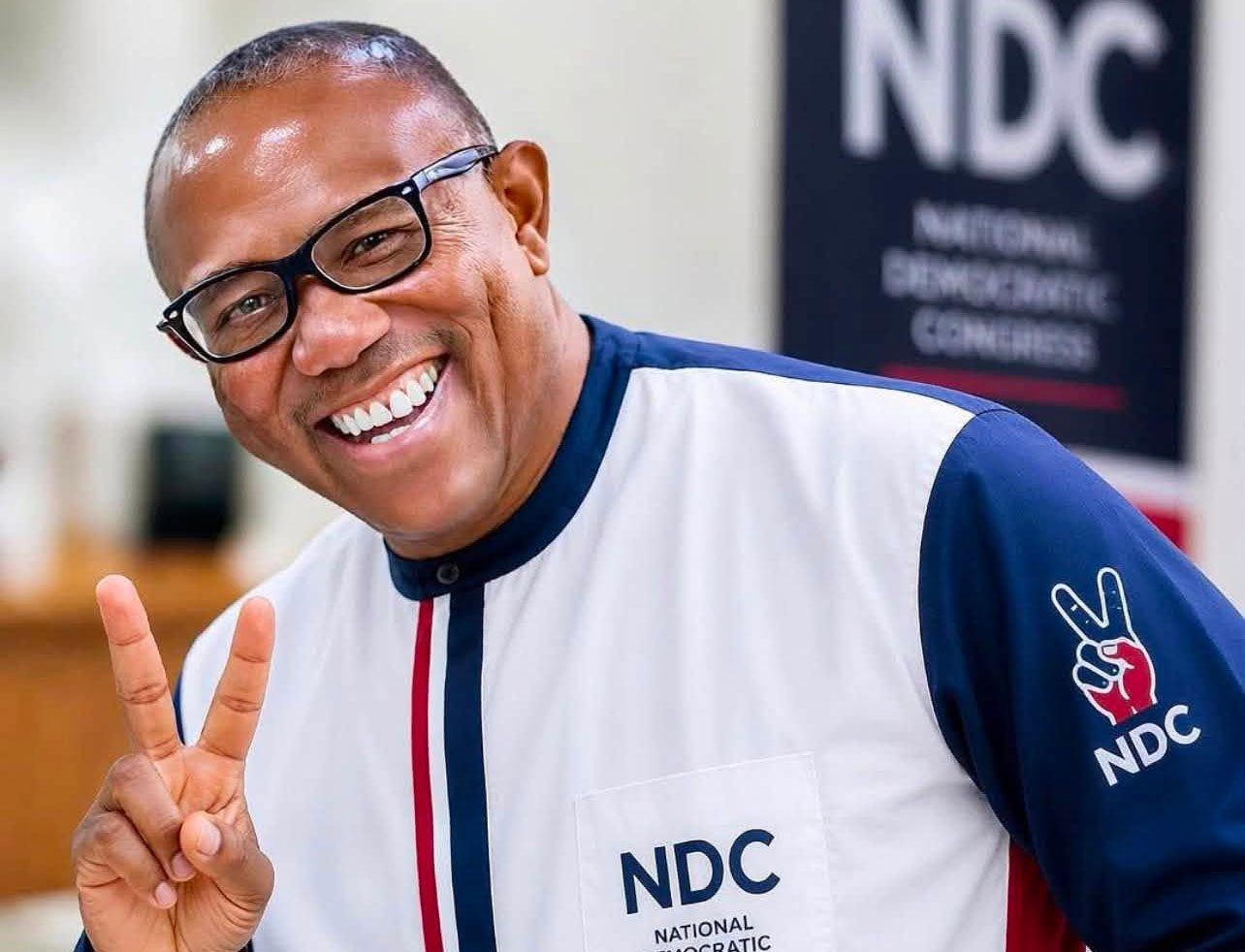
The Nigeria Democratic Congress (NDC) has expressed confidence that its presidential candidate, Peter Obi, will defeat President Bola Ahmed Tinubu in Lagos State in the 2027 presidential election, predicting that the former Anambra State governor will win by a wider margin than he did in 2023.
The party’s National Publicity Secretary, Osa Director, said Obi’s victory over Tinubu in Lagos during the 2023 presidential election was not accidental, describing it as a reflection of the political mood in the state.
Director said the NDC expected Obi to build on his previous performance if the 2027 election was conducted under conditions the party considers free and fair.
He also challenged the All Progressives Congress (APC) and its supporters to allow voters to determine the outcome of the election without intimidation, violence, inducement or other forms of electoral malpractice.
According to him, the NDC has studied the lessons of the 2023 election and is preparing to strengthen its structures and protect its votes across the country.
Director said the party was prepared to confront any challenges that could arise during the election, including alleged attempts to intimidate voters or disrupt the electoral process.
Another NDC candidate in Lagos, Ladipo Johnson, also expressed confidence in Obi’s prospects in the state, attributing the expected improvement to what he described as dissatisfaction with the Tinubu administration.
Johnson said Obi would win Lagos again and by a wider margin, adding that the NDC had become stronger following the realignment of opposition politicians and political groups ahead of the 2027 election.
READ ALSO:
- Olawepo-Hashim: My Political Ideology Differs From Obi, Atiku
- Ortom and His 23 Cars’ ‘Bonus’, by Dele Sobowale
- Abuja Demand Rises as Jetour Brings X70 Plus Experience to FCT
He also raised concerns about possible voter intimidation, harassment and vote buying, urging Nigerians to protect their votes and ensure that electoral choices are respected.
However, the claims by Director and Johnson about Obi’s expected performance in Lagos are political predictions by NDC officials and do not constitute an established election outcome.
The 2023 presidential election remains the latest completed presidential contest in Lagos. Obi won the state with 582,454 votes, narrowly ahead of Tinubu, who polled 572,606 votes, according to results declared by the Independent National Electoral Commission (INEC).
Obi won nine of Lagos State’s 20 local government areas, including Ajeromi-Ifelodun, Amuwo-Odofin, Eti-Osa, Ikeja, Kosofe, Oshodi-Isolo, Somolu, Ojo and Alimosho.
Tinubu won the remaining 11 local government areas: Agege, Apapa, Badagry, Epe, Ibeju-Lekki, Ifako-Ijaiye, Ikorodu, Lagos Island, Lagos Mainland, Mushin and Surulere.
The result made Lagos one of the closely watched states in the 2023 presidential contest, particularly because Tinubu had previously served as governor of the state and maintained a significant political structure there.
The political landscape has since changed considerably ahead of the 2027 election.
INEC has published its final list of presidential candidates, with 18 candidates cleared to contest the January 16, 2027 presidential election.
Tinubu is listed as the APC presidential candidate, while former Vice President Atiku Abubakar is contesting under the African Democratic Congress (ADC). Obi is listed as the presidential candidate of the NDC, with former Kano State Governor Rabiu Musa Kwankwaso as his running mate.
The changes mean that the party alignments and political structures involved in the 2027 contest are different from those that shaped the 2023 election.
Obi’s move from the Labour Party to the NDC has also changed the political platform through which he is seeking the presidency, while Kwankwaso’s emergence as his running mate has brought another major political bloc into the NDC structure.
For the NDC, Lagos remains an important target as it seeks to expand Obi’s support beyond the areas where he performed strongly in 2023.
The party’s argument is based partly on the margin by which Obi won Lagos in 2023 and its assessment of the current political environment in the state.
The APC, meanwhile, remains a major political force in Lagos, where it has maintained a strong organisational structure over several election cycles.
The 2027 contest will therefore take place against a different political backdrop, with new party alliances, candidates and campaign structures competing for the support of Lagos voters.
Beyond Lagos, the NDC is seeking to build a nationwide campaign around Obi’s candidacy, while the APC and other parties are also working to consolidate their respective support bases.
Issues likely to shape the campaign include the economy, cost of living, security, employment, governance, electoral credibility and the performance of the federal government.
The NDC has continued to emphasise the need for a credible electoral process, with its officials urging security agencies, electoral authorities and political parties to ensure that voters can cast their ballots without intimidation.
For now, the prediction that Obi will defeat Tinubu by a wider margin in Lagos remains the stated expectation of the NDC and its candidates.
The actual result will depend on the votes cast and officially declared in the 2027 presidential election.
2027: NDC Predicts Wider Obi Victory Over Tinubu in Lagos
Politics
Olawepo-Hashim: My Political Ideology Differs From Obi, Atiku

Olawepo-Hashim: My Political Ideology Differs From Obi, Atiku
Accord Party presidential candidate Gbenga Olawepo-Hashim has sought to distinguish his political philosophy from those of former Anambra State Governor Peter Obi and former Vice President Atiku Abubakar, saying the three politicians do not share the same political ideology.
Olawepo-Hashim’s position comes as political parties and opposition figures continue to realign ahead of the 2027 presidential election, with competing platforms emerging from the broader opposition movement.
The former presidential aspirant has repeatedly argued that Nigerian politics should be driven by clearly defined policies and ideology rather than alliances formed principally around personalities or the immediate objective of winning elections.
His comments also reflect his longstanding emphasis on economic policy, federalism, electoral reform, institutional governance and political restructuring.
Olawepo-Hashim has particularly used the issue of fuel subsidy removal to highlight differences between his position and that of Atiku.
He has criticised Atiku’s past position on petroleum subsidy and questioned subsequent calls for a targeted subsidy, arguing that politicians who change their positions on major economic policies should explain the reasons for such changes to Nigerians.
The Accord candidate has maintained that he opposed the removal of petroleum subsidy and believes government policy should take into account its effect on households, businesses and the productive economy.
Beyond subsidy policy, Olawepo-Hashim has argued that Nigeria’s political challenges cannot be resolved simply by changing the occupants of political offices.
READ ALSO:
- Ortom and His 23 Cars’ ‘Bonus’, by Dele Sobowale
- Abuja Demand Rises as Jetour Brings X70 Plus Experience to FCT
- Enough Is Enough: Muslim Supporters Demand New Man United Owners
He has advocated stronger institutions and a more decentralised political system, while distinguishing federalism from the practice of rotating political offices among geopolitical zones.
His position on political restructuring has been a recurring feature of his public interventions, including his criticism of the country’s electoral system and the role of institutions in guaranteeing credible elections.
The politician has also become embroiled in a legal dispute over his status as the Accord Party presidential candidate for the 2027 election.
Following the publication of the final list of candidates, Olawepo-Hashim’s name was omitted. He subsequently maintained that he remained the party’s duly nominated candidate and that the dispute was before the courts.
He said he emerged from an Accord presidential primary held on May 30, 2026, which he said was monitored by electoral officials, and argued that an administrative decision could not finally determine a candidate’s eligibility where a court case was pending.
The development has added another dimension to the political contest involving Olawepo-Hashim and Accord as parties prepare for the 2027 election.
Meanwhile, the opposition landscape has continued to change following the formation of a coalition involving Atiku, Obi and other political figures.
Obi is now the presidential candidate of the Nigeria Democratic Congress (NDC), while Atiku is the presidential candidate of the African Democratic Congress (ADC). The earlier coalition that brought the two politicians and other opposition leaders together has since developed into separate political platforms.
Olawepo-Hashim has therefore positioned his campaign separately from both politicians, stressing what he describes as differences in political philosophy and policy priorities.
His comments come against the backdrop of renewed efforts by opposition groups to build alliances ahead of the 2027 poll. However, disagreements over presidential candidates, party structures, zoning and policy positions have continued to shape the opposition landscape.
For Olawepo-Hashim, the distinction between his political approach and those of Obi and Atiku goes beyond party affiliation.
He has argued that Nigerians should assess political leaders based on their policy programmes, ideological positions, institutional reform proposals and approach to governance, rather than simply on the strength of political alliances.
His campaign has continued to focus on issues including economic restructuring, democratic reform, electoral credibility, federalism and strengthening institutions.
The differences he has highlighted between himself, Obi and Atiku are therefore part of his broader effort to establish a distinct political identity ahead of the 2027 Nigeria presidential election.
As the election approaches, the competing positions of opposition politicians are likely to remain a major feature of the political debate, particularly as parties continue negotiations and legal disputes over candidates and alliances.
Olawepo-Hashim: My Political Ideology Differs From Obi, Atiku
Politics
Ogun 2027: APC Highlights Adeola’s Projects, Challenges Adebutu
Ogun 2027: APC Highlights Adeola’s Projects, Challenges Adebutu
The All Progressives Congress (APC) Student Affairs Committee of the Ogun State 2027 Campaign Council has challenged the Peoples Democratic Party (PDP) governorship candidate, Ladi Adebutu, to present his personal record of public service and verifiable achievements ahead of the 2027 Ogun State governorship election.
The committee said the forthcoming Ogun 2027 governorship election should be centred on ideas, policies, measurable achievements and the capacity of the candidates to address the needs of residents rather than political rhetoric, personal attacks or distractions.
The challenge was contained in a statement issued on Saturday by the committee’s chairman, Comrade Samson Ajasa Adeyemi.
Adeyemi urged Adebutu to bring his record to the table and allow voters to assess what he has personally contributed to the development of Ogun State, particularly in areas affecting students, teachers, young people, artisans, traders and other residents.
According to the APC committee, the election should provide an opportunity for the candidates to explain their previous public service records, policy proposals and plans for the state.
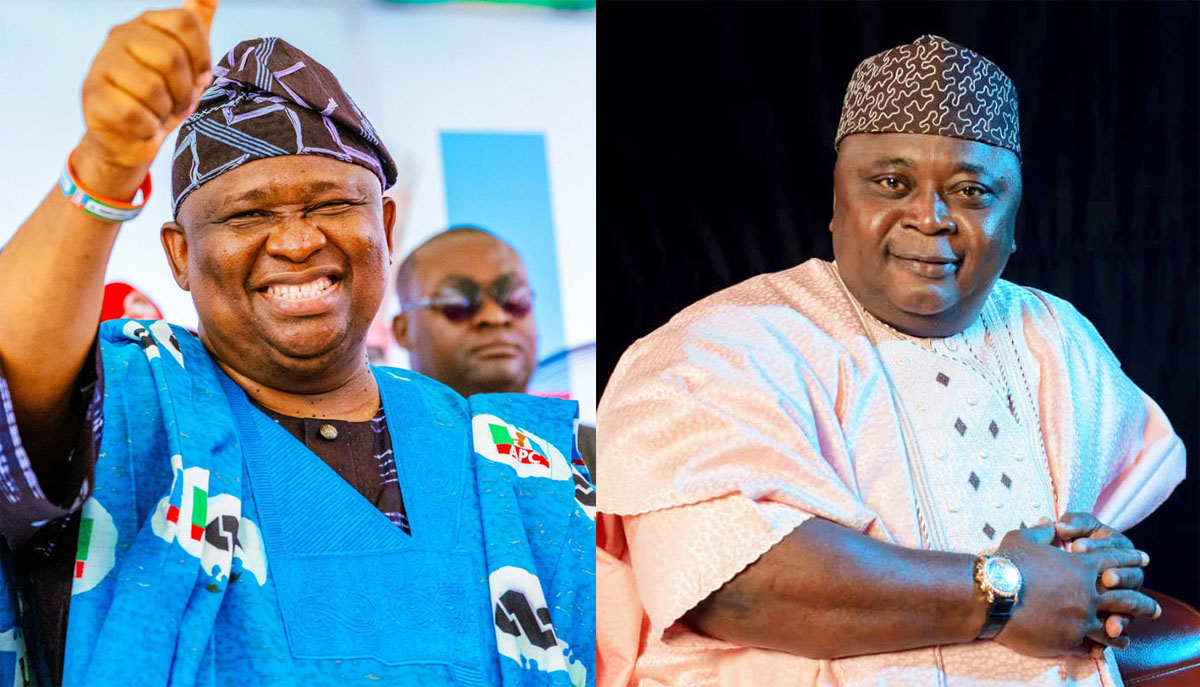
The committee specifically highlighted the activities and interventions of the APC governorship candidate, Senator Solomon Olamilekan Adeola, popularly known as Yayi, as examples of what it described as measurable constituency and community interventions.
It claimed that 5,513 Ogun students benefited from the third edition of Adeola’s scholarship and bursary programme in July 2026.
READ ALSO:
- Akpabio Links Okowa’s APC Defection to EFCC Investigation
- Barau Sacks Aide Over ‘Abba Must Go’ Social Media Posts
- Niger Miners’ Deaths: FG Suspends 21 NSCDC Officers, Releases Names
The committee also cited what it said were 53 constituency projects covering areas including roads, education, healthcare, security and commerce during the third anniversary of Adeola’s tenure.
It further claimed that the Oloja Yayi Market Support Fund provided ₦750 million in direct grants to 10,000 traders across Ogun State’s three senatorial districts.
The APC group said such interventions should be subjected to public scrutiny and compared with the records and programmes of other candidates in the 2027 Ogun governorship race.
Adeyemi challenged Adebutu to similarly identify projects, programmes or other measurable interventions he had personally undertaken or facilitated for the people of Ogun State.
He said the committee was not interested in achievements associated with family background or inherited business interests, but wanted the PDP candidate to present his own record of public service and contributions.
The chairman said the challenge was particularly important because students and other young people needed to understand what each candidate had done previously and what they intended to do if elected governor.
The APC committee also called for a campaign focused on issues affecting education, human capital development, infrastructure, economic empowerment and employment opportunities.
The latest exchange is part of the emerging political contest ahead of the 2027 Ogun State governorship election, with Adeola representing the APC and Adebutu representing the PDP.
Questions surrounding political experience, development records, policy proposals and campaign messaging are expected to feature prominently as the election approaches.
The debate has also included arguments over the relevance of ancestry and political identity in the governorship contest. In a separate intervention, APC chieftain Kayode Oladele had urged political parties to focus their campaigns on candidates’ records, policies and programmes rather than ancestry.
Oladele argued that the constitutional qualifications for a governorship candidate do not include belonging to a particular ancestral group or part of a state, while urging political parties to present alternative policies and programmes for voters to assess.
The APC Student Affairs Committee similarly said Ogun residents should be presented with sufficient information to compare the candidates’ records, programmes and development proposals.
The committee’s position, however, represents the campaign council’s political assessment and claims, which remain subject to verification and comparison with the records and policy positions presented by other candidates and political parties.
With the Ogun 2027 election still ahead, the emerging campaign rhetoric is increasingly shifting towards questions of experience, previous performance, development interventions and the policy direction each candidate intends to pursue if elected.
Ogun 2027: APC Highlights Adeola’s Projects, Challenges Adebutu
-
 News2 days ago
ECOWAS Biometric Card Expands as Seven Countries Begin Rollout
-
 metro2 days ago
FG Suspends Niger NSCDC Commandant As 37 Suspected Illegal Miners Die In Custody
-

 Sports2 days ago
Ballon d’Or 2026: Mbappe Responds to Yamal’s Bold Claim
-

 International2 days ago
Ninth Body Discovered in South Africa: Nigeria Issues Urgent Safety Alert to Nationals
-

 Politics2 days ago
Toyin Abraham Rejects Lagos APC Campaign Council Inclusion
-

 Entertainment3 days ago
Adunni Ade Reveals Christian Fans Unfollowed Her After Publicly Identifying as Muslim
-

 Politics2 days ago
2027: Sowore Says He’d Rather Die Than Travel Abroad For Medical Treatment
-
 Politics2 days ago
2027: Tinubu May Mediate Wike-APC Governors Rift In France