Ondo Assembly vows to continue impeachment process against deputy gov, despite court order - Newstrends
Connect with us

News

Ondo Assembly vows to continue impeachment process against deputy gov, despite court order
Published

on

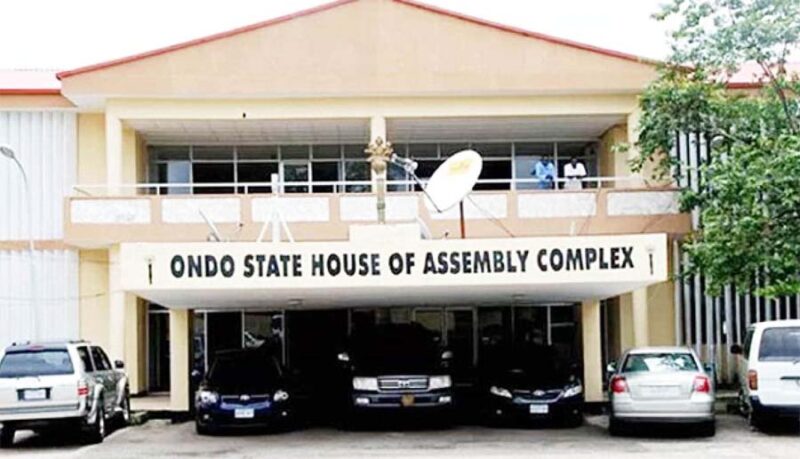
Ondo State House of Assembly

Ondo Assembly vows to continue impeachment process against deputy gov, despite court order

Despite a court injunction, the Ondo State House of Assembly has vowed to resume impeachment procedures against Deputy Governor Lucky Aiyedatiwa.

The lawmakers instructed their attorneys to look into the order obtained by Mr Aiyedatiwa from the Federal High Court in Abuja, which barred the house from advancing with the procedure until the lawsuit filed by the deputy governor was resolved.

The House stated that its conclusion is informed by Section 188(2) (b) of the 1999 Federal Republic of Nigeria Constitution (as amended).

The speaker, Olamide Oladiji, in a statement made available to journalists in Akure on Tuesday, said the House served Mr Aiyedatiwa the notice of allegation of gross misconduct on Monday, within seven days after the notice was presented to him (Mr Oladiji).

He said the notice was signed by 11 members of the House, which is more than one-third of the members required under Section 188(2) of the constitution.

“The impeachment notice contains Fourteen (14) specific allegations of gross misconduct with detailed particulars to which the Deputy Governor is expected to react to not later than Seven (7) days from the day he was served,” Mr Oladiji said in the statement.

“Hitherto, the House has refrained from publishing the allegations because of the need to accord the Deputy Governor the courtesy of being served with the notice, first.”

READ ALSO:

Mr Oladiji said the lawmakrs were shocked when they learnt that the deputy governor had gone to court to secure an injunction from “a certain Judge of the Federal High Court sitting in Abuja to halt the process.”
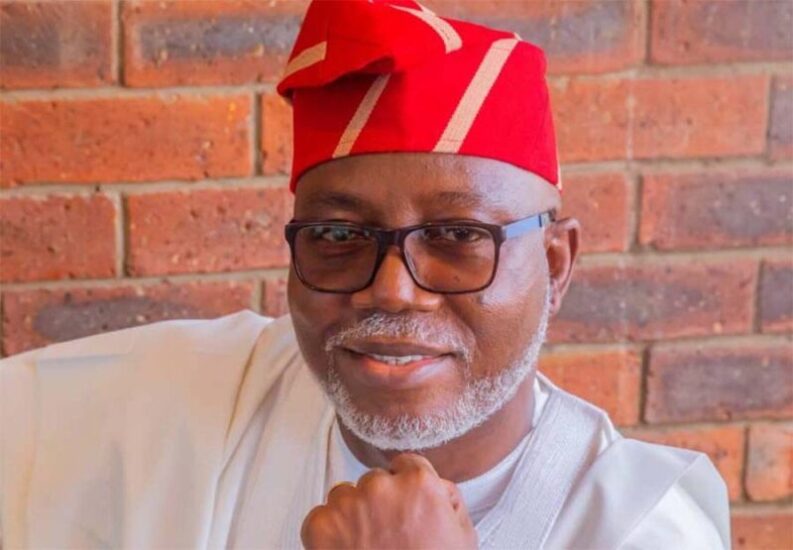
Deputy Governor Lucky Aiyedatiwa

“The House is shocked that rather than wait to be served with notice of the allegation of gross misconduct, and react to same as required by the constitution, the deputy governor has been running from pillar to post and filing multiple suits in both at the Abuja Division of the Federal High Court and the Ondo State High Courts in a bid to stop the legislative process,” the speaker said.

“For the avoidance of doubt, the House is fully conscious of Section 188 (10) of the Constitution which clearly states that ‘No proceedings or determination of the panel or of the House of Assembly or any matter relating to such proceedings or determination shall be entertained or questioned in any court.’

“In the case of Abaribe V. Abia State House of Assembly (2022) 14 NWLR (Pt. 788) 466, the Court of Appeal emphatically stated that it was wrong for the Appellant to jump the gun by rushing to the Court to stop his impeachment process on the ground of alleged breach of fair hearing when the panel to investigate and hear him had not even been constituted. The Court of Appeal then restated that by the provision of Section 188 (10) of the Constitution, no court has the jurisdiction at that stage to interfere in the legislative proceedings for impeachment.

“The Supreme Court has repeatedly restated that the Court can only intervene when the procedures for impeachment have been breached. In this case, however, the deputy governor rushed to court even before the notice of impeachment was served on him. For the records, no procedures have been breached in any way.

READ ALSO:

“In view of these, the House has directed its team of lawyers to investigate the purported injunction secured by the deputy governor and report any judicial officer who might have abused his office in granting the unconstitutional ex-parte injunction to the appropriate institution for necessary disciplinary action.

“In conclusion, the House wishes to assure the general public that it would proceed with the legislative process to a logical conclusion, but in doing so, will strictly follow the Constitutional procedures.

“The House will not abdicate or compromise its sacred constitutional duty to hold elected public officers accountable, particularly where there are prima facie serious allegations of corruption and abuse of power levelled against the Deputy Governor in this case.”

The house had earlier directed the chief judge of the state to constitute a panel of inquiry to investigate the allegations against the deputy governor.

However, the federal high court order restrained the House from proceeding further in the impeachment of the deputy governor pending the determination of a substantive suit before it.

It also restrained Governor Rotimi Akeredolu from nominating a replacement and forwarding same to the assembly for ratification.

Those joined in the suit were the Inspector General of Police, State Security Security Services, Governor of Ondo State, the Speaker of the House of Assembly and the Chief Judge of Ondo State.

The judge also gave an order restraining the respondents from harassing, intimidating or preventing the deputy governor from performing his official duties.

The case was adjourned to 9 October for consideration.

Ondo Assembly vows to continue impeachment process against deputy gov, despite court order

(PremiumTimes)

Loading

News

Publicity Helps Terrorists, Not Victims — Reno Omokri Warns

Published

on

Publicity Helps Terrorists, Not Victims — Reno Omokri Warns 
Ambassador-designate to Mexico, Reno Omokri

Publicity Helps Terrorists, Not Victims — Reno Omokri Warns 

Former presidential aide and author, Reno Omokri, has argued that excessive publicity and global attention on terrorist activities often benefit perpetrators rather than pressure them into releasing victims.

In a detailed statement, Omokri maintained that terrorists thrive on attention and deliberately use media coverage to spread fear, attract influence, and strengthen their operations. He referenced former British Prime Minister Margaret Thatcher’s famous remark that “publicity is the oxygen of terrorism,” arguing that this principle remains relevant in modern counterterrorism strategy.

Omokri said public reactions to high-profile abductions, including global campaigns and celebrity involvement, can unintentionally increase the value of hostages in the eyes of kidnappers, making their release less likely.

He cited the case of the #BringBackOurGirls campaign following the 2014 Chibok schoolgirls’ abduction, claiming that international attention elevated the profile of Boko Haram and complicated rescue efforts. According to him, what began as a humanitarian movement eventually made the girls “high-value hostages” in the hands of their captors.

READ ALSO:

The former presidential spokesman also said he personally engaged in international advocacy efforts to secure the release of abducted Leah Sharibu, including meetings with world leaders and funding personal initiatives. However, he claimed security experts later advised that excessive publicity around her case may have inadvertently increased her value to terrorists.

Omokri further referenced guidance allegedly contained in journalism and security manuals on terrorism coverage, arguing that responsible reporting should avoid amplifying fear or giving undue attention to terrorist acts.

He insisted that government security agencies continue to work behind the scenes to secure the release of abducted victims, while urging Nigerians to avoid emotionally driven reactions that may, in his view, complicate rescue operations.

According to him, terrorists are strategic actors who benefit from attention, and reducing publicity around their actions may weaken their psychological impact and operational incentives.

Omokri concluded that counterterrorism efforts require a more rational and less emotional public response, warning that sustained global amplification of kidnapping incidents may unintentionally serve the interests of criminal groups rather than victims.

Publicity Helps Terrorists, Not Victims — Reno Omokri Warns

Loading

Continue Reading

News

Democracy Day: Tinubu Unveils Security, Economic Plans, Honours June 12 Heroes

Published

on

Democracy Day: Tinubu Unveils Security, Economic Plans, Honours June 12 Heroes
President Bola Ahmed Tinubu

Democracy Day: Tinubu Unveils Security, Economic Plans, Honours June 12 Heroes

President Bola Ahmed Tinubu has reaffirmed his administration’s commitment to strengthening Nigeria’s democracy, improving national security, deepening economic reforms, and delivering prosperity to citizens as the country marked Democracy Day 2026.

In his nationwide Democracy Day address on Friday, Tinubu celebrated Nigeria’s 27 years of uninterrupted democratic rule, describing it as the longest stretch of civilian governance in the nation’s history.

The president said that despite existing challenges, democracy remains the foundation of Nigeria’s progress and called on citizens to continue defending and strengthening democratic institutions.

According to him, Nigerians have consistently chosen their leaders through elections, witnessed peaceful transfers of power, and resolved political disputes through constitutional means rather than violence.

Tinubu urged the Independent National Electoral Commission (INEC), security agencies, political parties and voters to ensure peaceful and credible elections in Ekiti and Osun states, warning that democracy suffers whenever citizens lose confidence in the electoral process.

Addressing young Nigerians, the president encouraged them to build their future at home rather than seeking opportunities abroad. He urged the youth to innovate, create businesses, participate in governance and contribute actively to national development.

On security, Tinubu acknowledged growing concerns over recent kidnappings and insecurity, including the abduction of schoolchildren in Oyo and Borno states. He stressed that democracy cannot thrive without security and assured Nigerians that his administration remains committed to protecting lives and property.

The president disclosed that the Federal Government had declared a security emergency and approved the recruitment of more than 50,000 police officers alongside thousands of military personnel to strengthen the country’s security architecture.

He further revealed that the 2026 Budget allocates N5.41 trillion to defence and security, describing it as the largest security allocation in Nigeria’s history.

Providing updates on counter-terrorism efforts, Tinubu said Nigerian security forces have significantly degraded terrorist operations across the country. He noted that troops recently destroyed an ISWAP command centre in Arege, Borno State, while terror-related deaths have reportedly declined by 81 per cent since 2015.

According to the president, more than 13,000 terrorists have been neutralised within the past year, while over 124,000 insurgents and their dependants have surrendered through the government’s Operation Safe Corridor deradicalisation programme since 2023.

READ ALSO:

Tinubu warned bandits, kidnappers and sponsors of terrorism to either surrender or face decisive military action, stressing that the government would show no mercy to individuals who continue to threaten national peace and security.

Reflecting on the significance of June 12, the president paid tribute to the late Chief Moshood Kashimawo Olawale Abiola, widely recognised as the winner of the annulled June 12, 1993 presidential election, and his wife, Alhaja Kudirat Abiola.

He also honoured several pro-democracy activists and national figures whose sacrifices contributed to the restoration of democratic governance in Nigeria. Among those recognised were Chief Gani Fawehinmi, Chief Bola Ige, Chief Alfred Rewane, Pa Abraham Adesanya, Chief Anthony Enahoro, Dr Beko Ransome-Kuti, Frank Kokori, Shehu Musa Yar’Adua and many others.

The president said the greatest tribute Nigerians can pay to the heroes of June 12 is to strengthen democratic institutions, uphold justice, protect freedoms and create opportunities for citizens.

On the economy, Tinubu defended the reforms introduced by his administration since assuming office in 2023, insisting that they were necessary to rescue the country from fiscal instability and restore investor confidence.

According to him, the reforms have improved public finances, increased federation revenues, enhanced fiscal transparency and attracted investments into critical sectors such as agriculture, energy, technology, manufacturing, mining and transportation.

The president noted that Nigeria’s domestic refining capacity has expanded significantly, helping to improve energy security and reduce dependence on imported petroleum products.

Tinubu also highlighted efforts to reform the electricity sector, which he described as one of the most challenging areas inherited by his administration.

He said the signing of the Electricity Act has empowered states to generate, transmit and distribute electricity independently, while the Presidential Power Sector Task Force is working to address the country’s metering deficit and settle legacy debts within the power sector.

The president revealed that the Rural Electrification Agency, with support from the World Bank and the African Development Bank, has expanded off-grid and mini-grid electricity projects to underserved communities, universities, hospitals and markets nationwide.

On infrastructure and agriculture, Tinubu disclosed that the National Agricultural Development Fund is implementing a plan to deploy 10,000 tractors over five years to boost food production and agricultural productivity.

He also announced that more than 1,000 small and medium-sized enterprises (SMEs) have been certified for exports, while Nigeria’s non-oil exports grew by 21 per cent in the past year.

Despite these gains, the president admitted that many Nigerians continue to face economic hardship and rising living costs. He said his administration remains focused on reducing inflation, creating jobs, increasing food production and improving living standards.

Tinubu reiterated his support for financial autonomy for Nigeria’s 774 local government councils, arguing that effective grassroots governance is critical to national development and security.

According to him, the collapse of local governance structures over the years contributed significantly to insecurity and underdevelopment in many communities.

In a major highlight of the address, the president announced national honours for dozens of pro-democracy activists, journalists, politicians and civil society leaders who played significant roles in Nigeria’s democratic struggle.

Among those listed for national recognition were Joe Okei-Odumakin, Richard Akinnola, Debo Adeniran, Niran Malaolu, Femi Aborisade, Babajide Kolade-Otitoju, Gbemiga Ogunleye, Muyiwa Adekeye, Ike Okonta and several others.

Tinubu also recognised a number of military officers who supported the June 12 democratic struggle and announced that the honours list would be formally released in the coming days.

Additionally, the president approved the renaming and revitalisation of the completed Institute of Petroleum Studies in Kaduna as the General Shehu Musa Yar’Adua University of Geological Sciences and Engineering Technology in honour of the late military officer and pro-democracy advocate.

Concluding his address, Tinubu urged Nigerians to reject division, despair and cynicism, and instead embrace unity, hope and national purpose.

He said the generation that fought for June 12 secured political freedom for Nigeria, while the responsibility of the current generation is to secure economic prosperity and ensure democracy delivers tangible benefits to every citizen.

“June 12 reminds us that Nigerians do not break. We bend, we bleed, but we do not break,” the president said.

He called on citizens to renew their commitment to democracy and work together towards building a united, prosperous and secure nation.

Democracy Day: Tinubu Unveils Security, Economic Plans, Honours June 12 Heroes

Loading

Continue Reading

News

Full Text of President Bola Ahmed Tinubu’s Democracy Day Address

Published

on

Full Text of President Bola Ahmed Tinubu’s Democracy Day Address
President Bola Ahmed Tinubu

Full Text of President Bola Ahmed Tinubu’s Democracy Day Address

Fellow Nigerians

Today, we celebrate democracy and the enduring Nigerian spirit. For 27 unbroken years, since May 29, 1999, Nigerians have chosen their leaders through the ballot, witnessed peaceful transitions of power, and resolved disagreements in courtrooms and legislative chambers—not through violence. We have experienced the longest stretch of civilian rule in our history. Our democracy is not perfect, but it is ours, and we must continue to defend and strengthen it.

In the coming days, Ekiti and Osun States will hold elections. I urge INEC, security agencies, and all parties to ensure these polls are peaceful and credible. Democracy fails when citizens doubt the process. To our National Assembly, Judiciary, the Press, and Civil Society: you are the guardrails of our republic. Criticise me, disagree with me, but never stop believing in Nigeria.

To our young people: Nigeria is your home and your future. Build here, code here, work here, and vote here. Every great nation was built by those who stayed to solve problems, not by those who abandoned ship.

To our armed forces, police, and intelligence services: Nigeria salutes your sacrifice. To our traditional rulers, faith leaders, and community heads: thank you for your support of peace and reconciliation. The government cannot do it alone.

Today, we honour the resilience of Nigerians who refused to surrender their faith in freedom, and the courage of those who stood firm against intimidation. We pay tribute to patriots who endured persecution, imprisonment, exile, and even death so that future generations could enjoy democracy. I salute labour leaders, journalists, activists, students, women, professionals, political leaders, and soldiers—both those who have passed and those still with us—for their patriotic contributions.

Though this year’s mood is dampened by the abduction of our children in Oyo and Borno, we remain hopeful for their safe return. Democracy without security is not solid enough. That is why this administration declared a security emergency and approved the recruitment of more than 50,000 new police officers and thousands of military recruits. Our 2026 budget commits N5.41 trillion—our largest ever—to defence and security. Our administration is ever ready to do much more to secure our people.

We have moved from training with our allies, the United States, France and other European countries, to precision targeting. In Arege, Borno State, we degraded ISWAP’s command centre. Terror-related deaths are down by 81% since 2015. Over 13,000 terrorists have been neutralised in the past year. But we also keep the door of surrender open. Over 124,000 fighters and dependents have laid down their arms since 2023 through Operation Safe Corridor.

To bandits, kidnappers, and sponsors of terror: Surrender or face the full force of the Nigerian State. These windows of surrender will not remain open forever. No mercy will be shown to those who trade in the blood of Nigerians.

READ ALSO:

At a time like this, let us not assign blame or point fingers. Crime has no ethnicity. We must stand united and be assured that the enemies of our nation shall soon be history. We will triumph over terror and continue to build a more prosperous nation.

June 12 occupies a sacred place in our national memory. It represents more than an election; it is a defining chapter in our story. We remember Chief M.K.O. Abiola, who won a pan-Nigerian mandate transcending ethnicity and religion. We remember Alhaja Kudirat Abiola.

Full Text of President Bola Ahmed Tinubu’s Democracy Day Address

Loading

Continue Reading

Trending